

The step stool comes out because the back of the pantry has become a small museum. There’s a bag of rice behind the holiday napkins and a spice jar with a date that makes you wince. Meanwhile, the oil beside the stove has been sitting in the light all summer.
A printed date helps you plan meals. It doesn’t inspect the food for you. That takes a look, a sniff when appropriate, and some attention to how the package was stored. The trick is knowing which pantry staples keep their quality for years and which ones need a different rule.
#24 The white sugar behind the holiday sprinkles
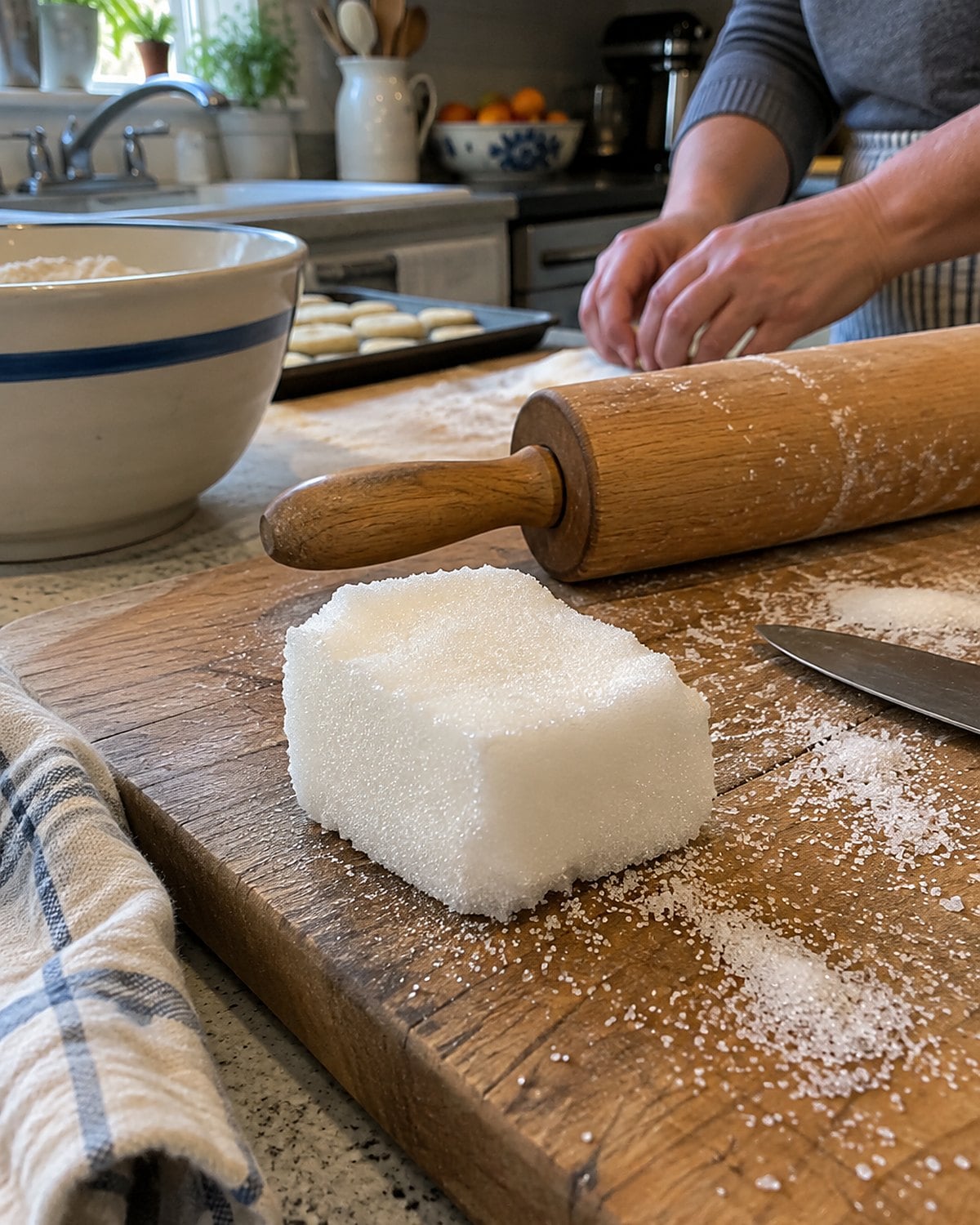
You reach past the sprinkles for a bag of white sugar and find a brick. It feels old enough to throw away, but hardening alone doesn’t mean the sugar has spoiled. Sugar pulls moisture from the air; when that moisture shifts, the crystals stick together.
Break off what you need with a sturdy spoon, or put a few lumps in a sealed bag and tap them with a rolling pin. Don’t run the whole bag through the food processor just to make one cake. The dust gets everywhere, and you’ve still got a storage problem afterward.
Pour the rest into a dry container with a tight lid. Check that the scoop is dry before it goes back in. If the sugar smells odd, shows mold, or has evidence of pests, discard it. Otherwise, the hard lump at the back of your cupboard is still sugar.
#23 The brown sugar packed like a stone
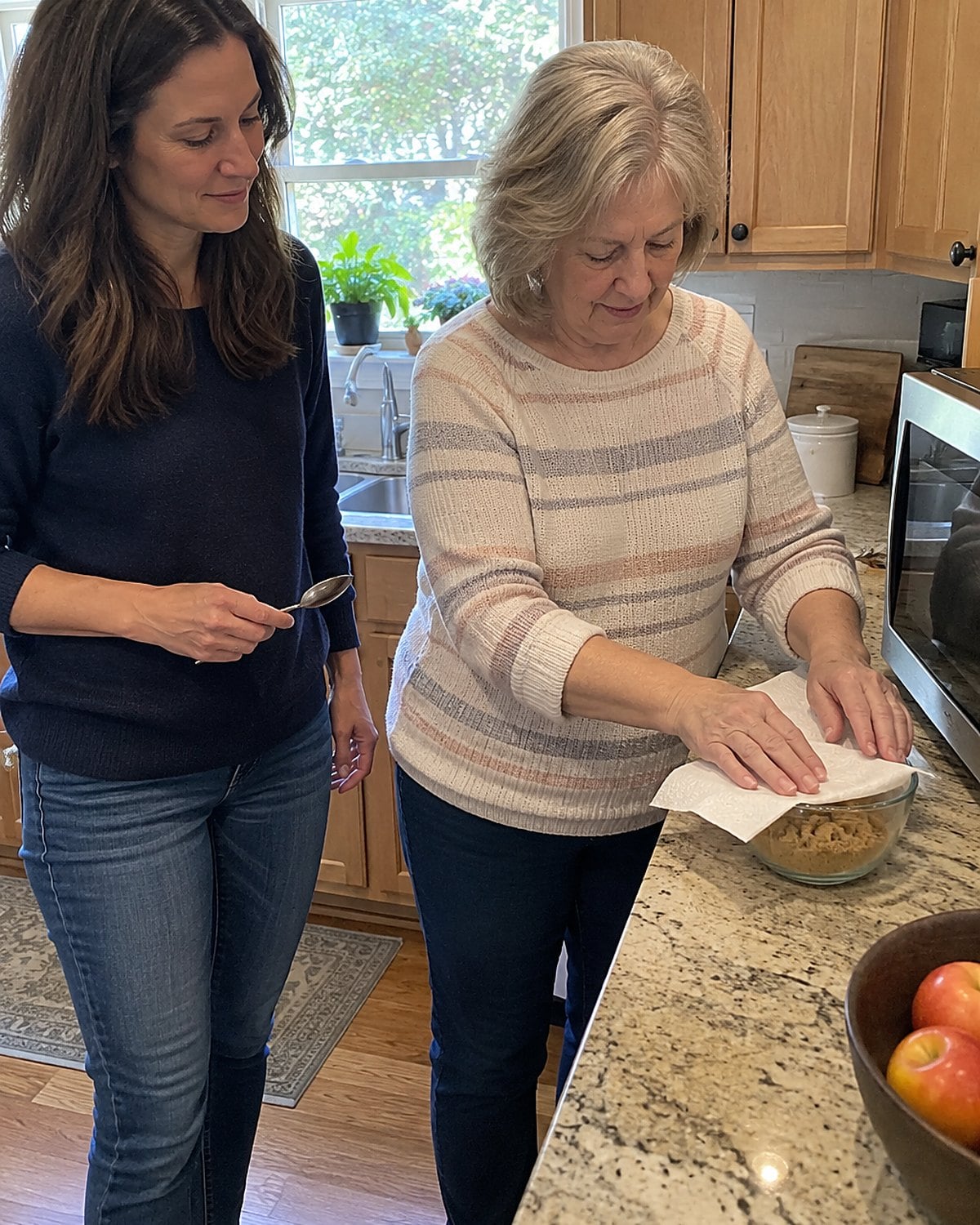
Brown sugar has its own version of the pantry brick. Its molasses coating holds moisture, and the sugar hardens when that moisture escapes. You don’t need to buy a fresh bag every time a cookie recipe calls for half a cup.
For a small amount, put the hard sugar in a microwave-safe bowl, cover it with a damp paper towel, and heat it in short bursts. Check it between bursts. It’ll stiffen again as it cools, so measure what you need while it’s pliable.
A tight container does more than a folded-over bag clipped with a twist tie.
Check for pests or mold before you try to rescue the rest. A clean, hard block is a texture problem. A contaminated bag belongs in the trash.
#22 The honey with crystals at the bottom
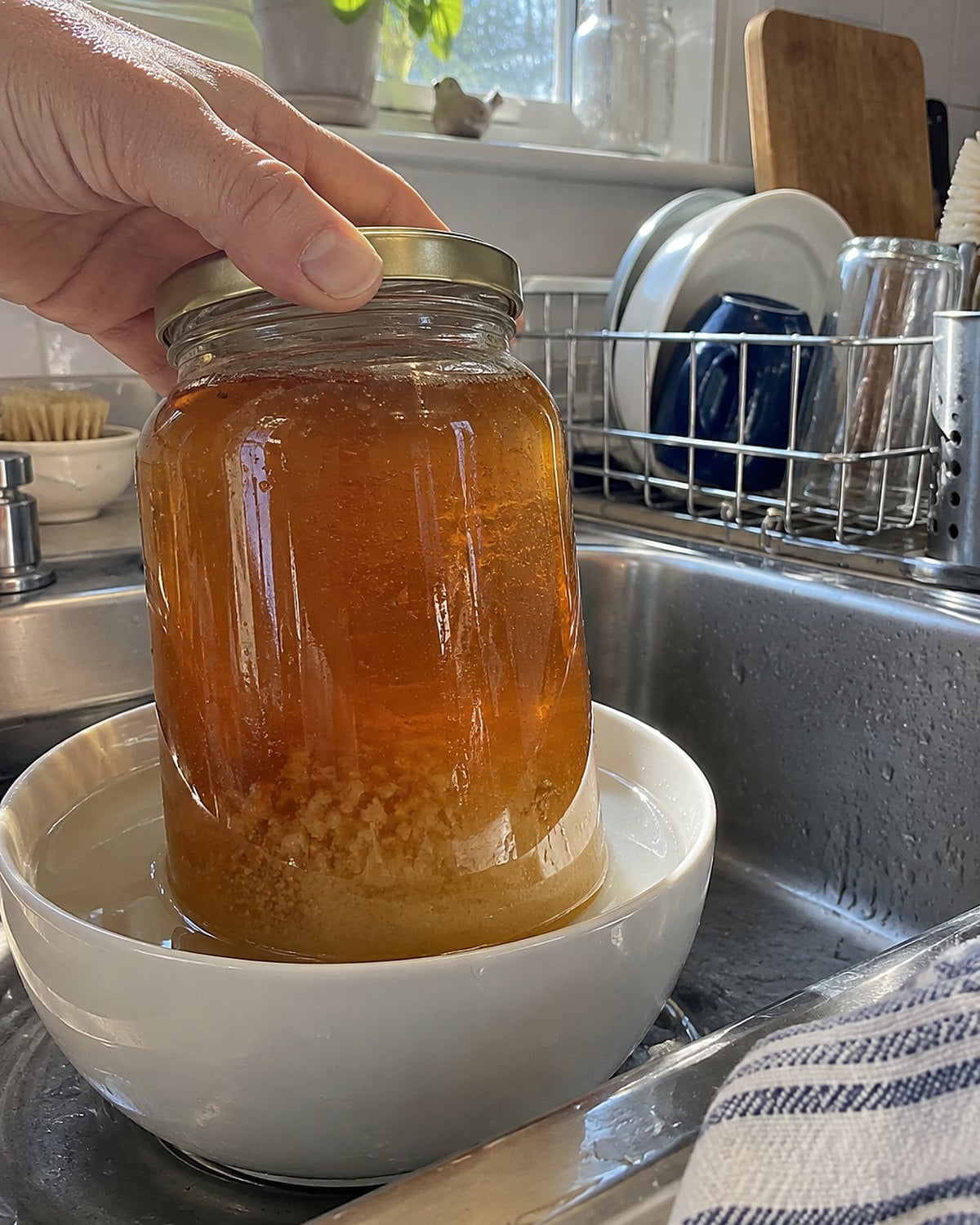
The last inch of honey in the jar looks grainy. You’ve seen that before, and you’ve probably bought another jar because the old one seemed finished. Those crystals are glucose separating from the liquid honey, not a sign that it has gone bad.
Set the closed jar in a bowl of warm water and stir the honey after it loosens. Skip boiling water, especially with a plastic container. A spoonful of crystallized honey also works as it is in hot tea or oatmeal.
Keep the lid clean and closed, and use a clean spoon. If you find mold or notice a fermented smell, discard the honey.
Plain honey keeps remarkably well because its low moisture makes it unfriendly to spoilage microbes. One separate family rule matters here: never give honey to a child under 1 year old. The CDC’s infant botulism guidance explains why that rule applies even to fresh honey.
#21 The maple syrup after the seal breaks
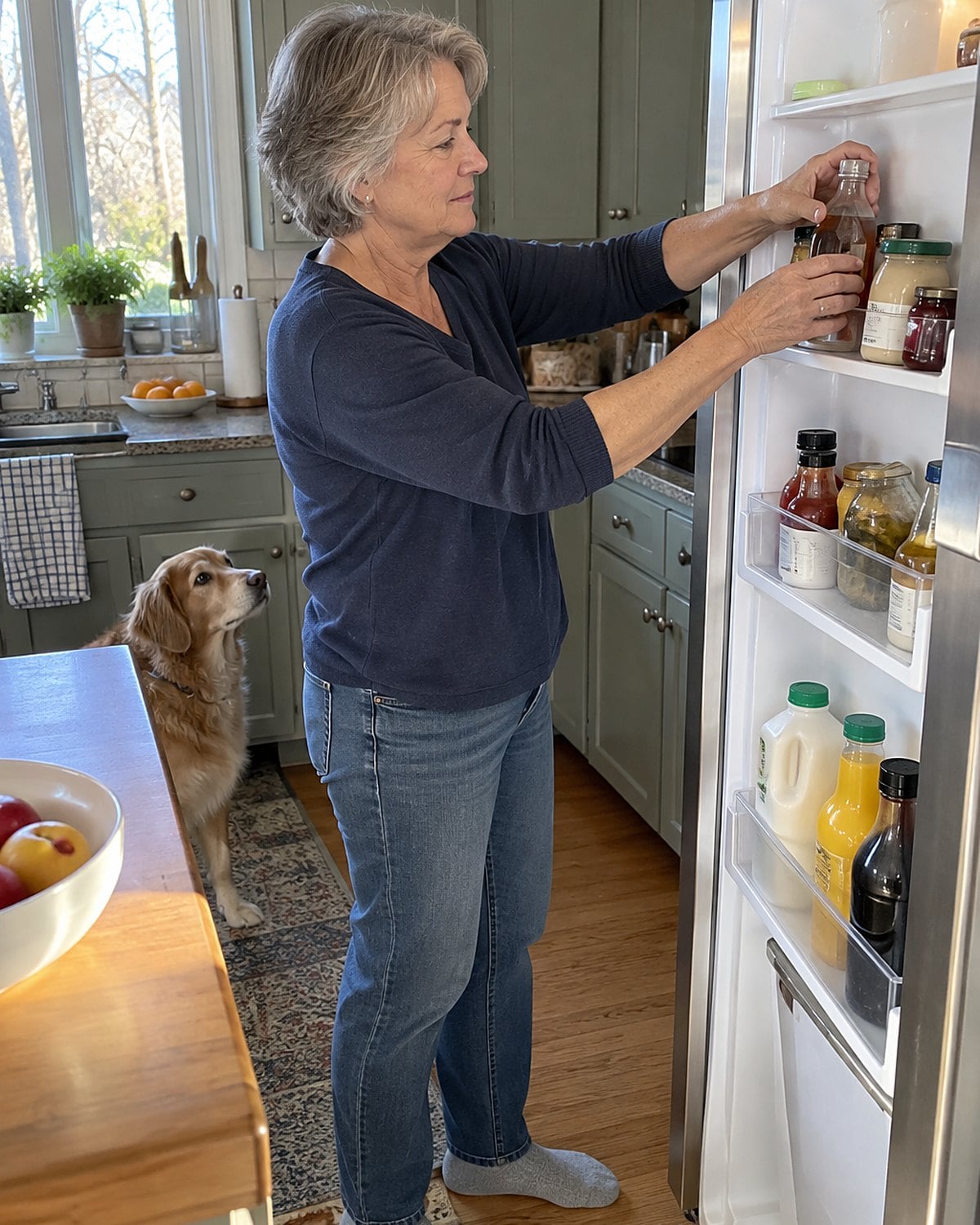
The pantry shelf is the right place for an unopened bottle of pure maple syrup. Once you break the seal, move the bottle to the refrigerator. That little move matters more than the date printed on the label.
Pure maple syrup and pancake syrup aren’t the same product. Read the ingredients if the bottle has been sitting around since the last grandchild visit. A blend made mostly from corn syrup follows its own label directions.
Mold changes the plan. Throw out the whole bottle if you see it; don’t skim the surface and boil what remains.
Before opening a bottle found at the back of the shelf, check the cap and seal. Then make room for it in the fridge door, where you’ll see it before you buy another.
#20 The salt that clumps by the stove
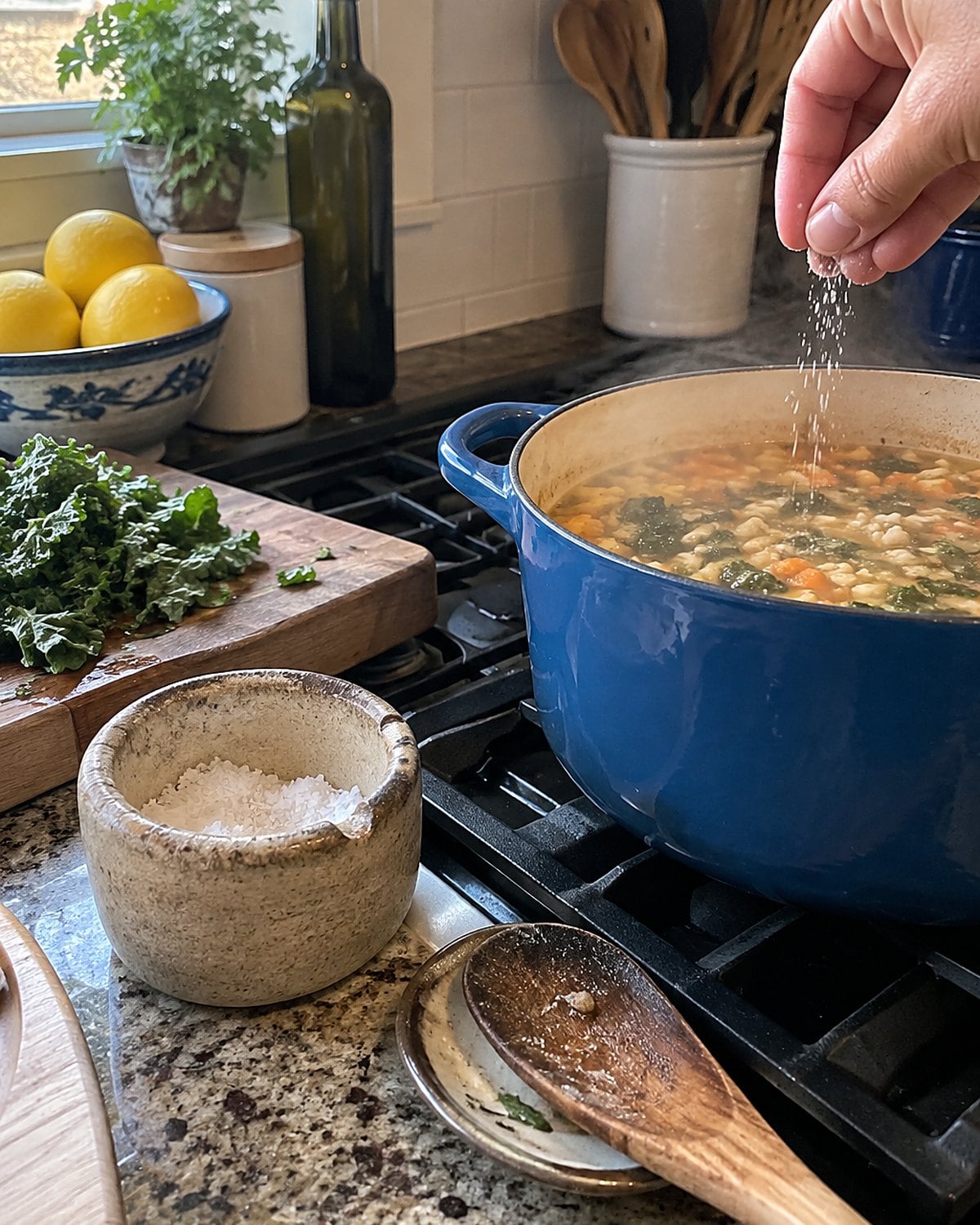
A salt cellar beside the stove has earned its place there. It has also caught steam from every pot you’ve lifted. When the salt clumps, moisture is the first suspect, not age.
Break up clean clumps and move the salt into a dry container. Fine table salt, kosher salt, and sea salt are all stable pantry ingredients when kept dry. Iodized salt is a little different: the salt itself remains, but iodine content declines over time.
If you rely on iodized salt for iodine, replace an old container rather than treating it as an endless supply.
Watch what goes into the cellar, too. Fingers damp from rinsing vegetables and spoons that touched raw meat don’t belong there. Empty and wash a dirty cellar before refilling it. You’re saving the salt, not the grime around it.
#19 The cornstarch waiting for Sunday gravy
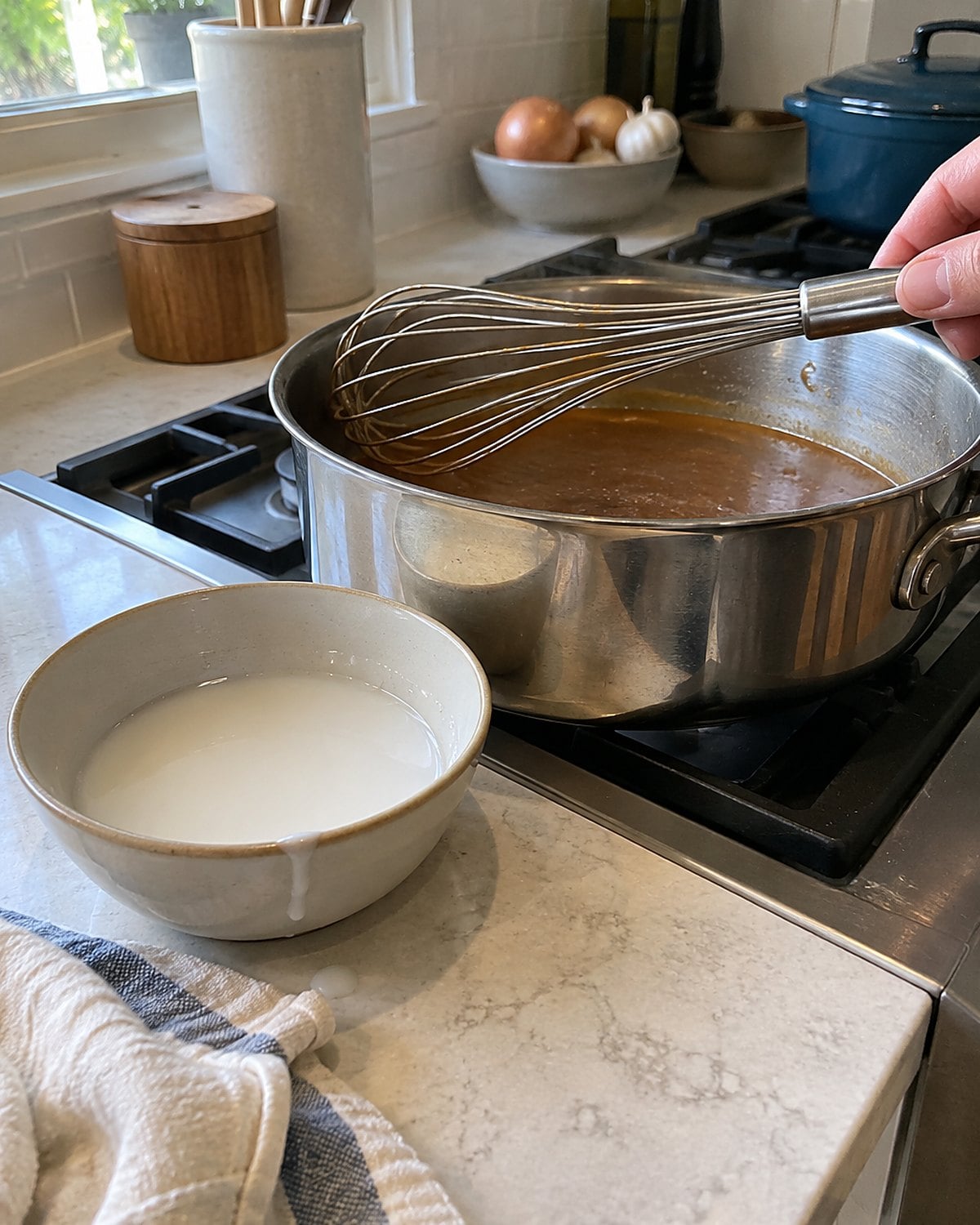
When everyone comes over, the gravy seems to need thickening at the exact moment someone asks where the serving spoon went. Cornstarch is worth keeping for that moment, even if the box has been open for years.
The powder needs to stay dry. If you stir it straight into hot liquid, the outside of each clump thickens before the middle gets wet. Mix cornstarch with cold water first, then whisk that slurry into simmering gravy. Keep stirring until the gravy thickens; taste before adding more.
After dinner, close the box or transfer the powder to a sealed container. If it has picked up a musty smell, shows mold, or has pests, replace it. A clean, dry box doesn’t need to go just because the family calendar turned another year.
Try it: Best Instant Pot Gravy (Quick & Easy, No Drippings!)
#18 The unopened baking soda beside the flour
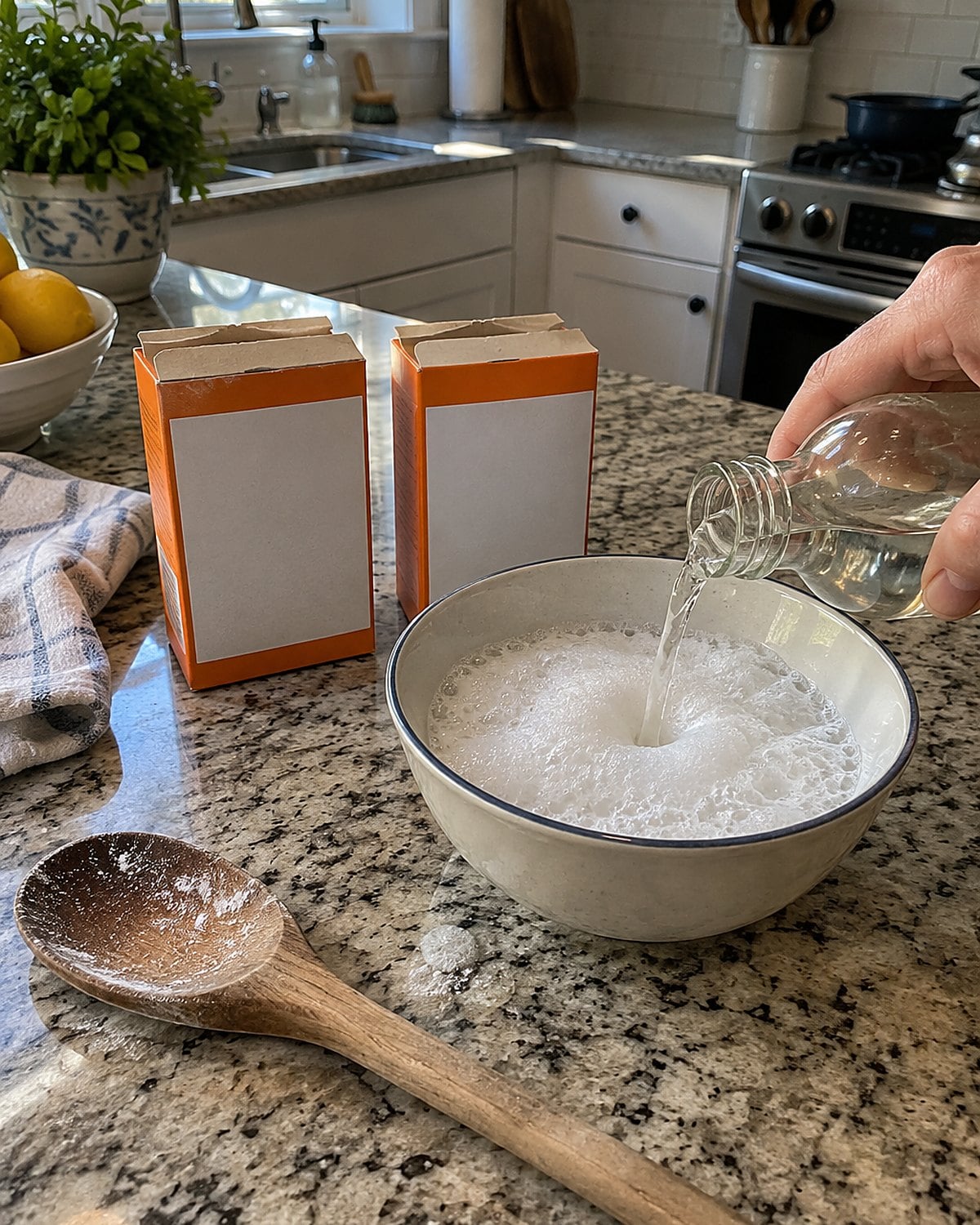
There are two jobs hiding in that orange box. Baking soda used to absorb refrigerator odors has spent its working life exposed to air and smells. Don’t tip that box into your biscuit dough.
The unopened box in the pantry is another matter. Baking soda is sodium bicarbonate, and dry, sealed baking soda stays useful for years. Once opened for baking, keep it covered so it doesn’t gather moisture or cupboard odors.
Before trusting an old opened box with a cake, put a little baking soda in a bowl and add a splash of vinegar. A lively fizz tells you it still reacts. No fizz means it’s time for a baking box that will do its job.
Label the fridge box when you set it out. Otherwise, the two look much too alike on a rushed morning. The USDA’s FoodKeeper is another place to check storage guidance when a pantry box has lost its label.
#17 The baking powder before the birthday cake
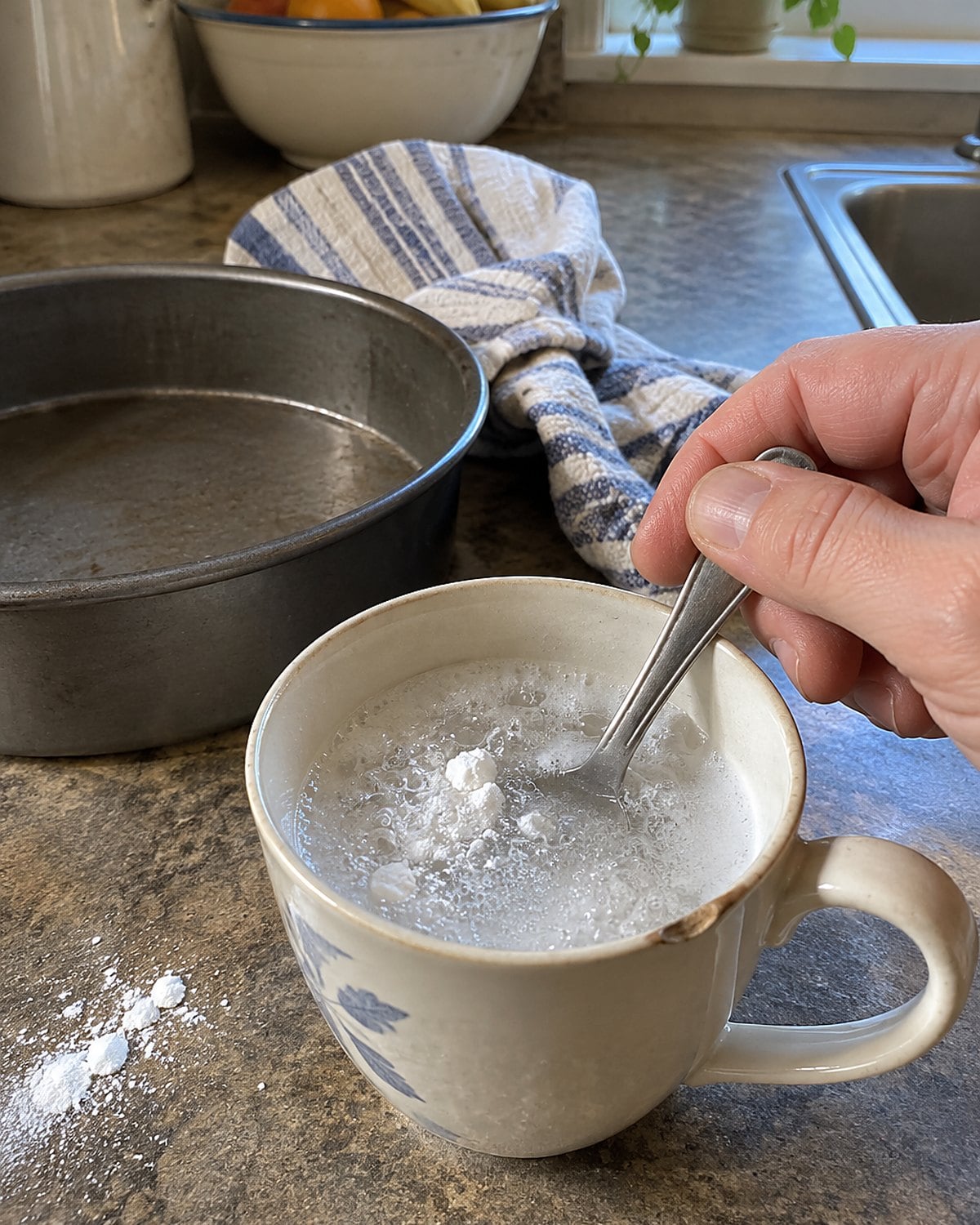
Baking powder deserves a stricter test than baking soda. It contains the ingredients for its own reaction, and moisture gradually uses up that lift. A tin that has been open for years belongs on the counter for a test, not straight into birthday cake batter.
Stir a spoonful into a little hot water. Look for an immediate, vigorous fizz. If it barely bubbles, replace it before you commit eggs, butter, and the afternoon to the cake.
Write the opening date on the lid of the new tin. For a storage estimate, check baking powder in the USDA’s FoodKeeper; the fizz test settles the question for the tin in your hand.
Keep the old dry baking soda after it passes its own test. Don’t keep weak baking powder out of loyalty to the date on the bottom. The oven won’t give flat batter its lift back.
 You might also like27 Things People Over 60 Still Do With Leftovers That Food-Safety Experts Beg Them to Stop
#16 The cream of tartar in the spice rack
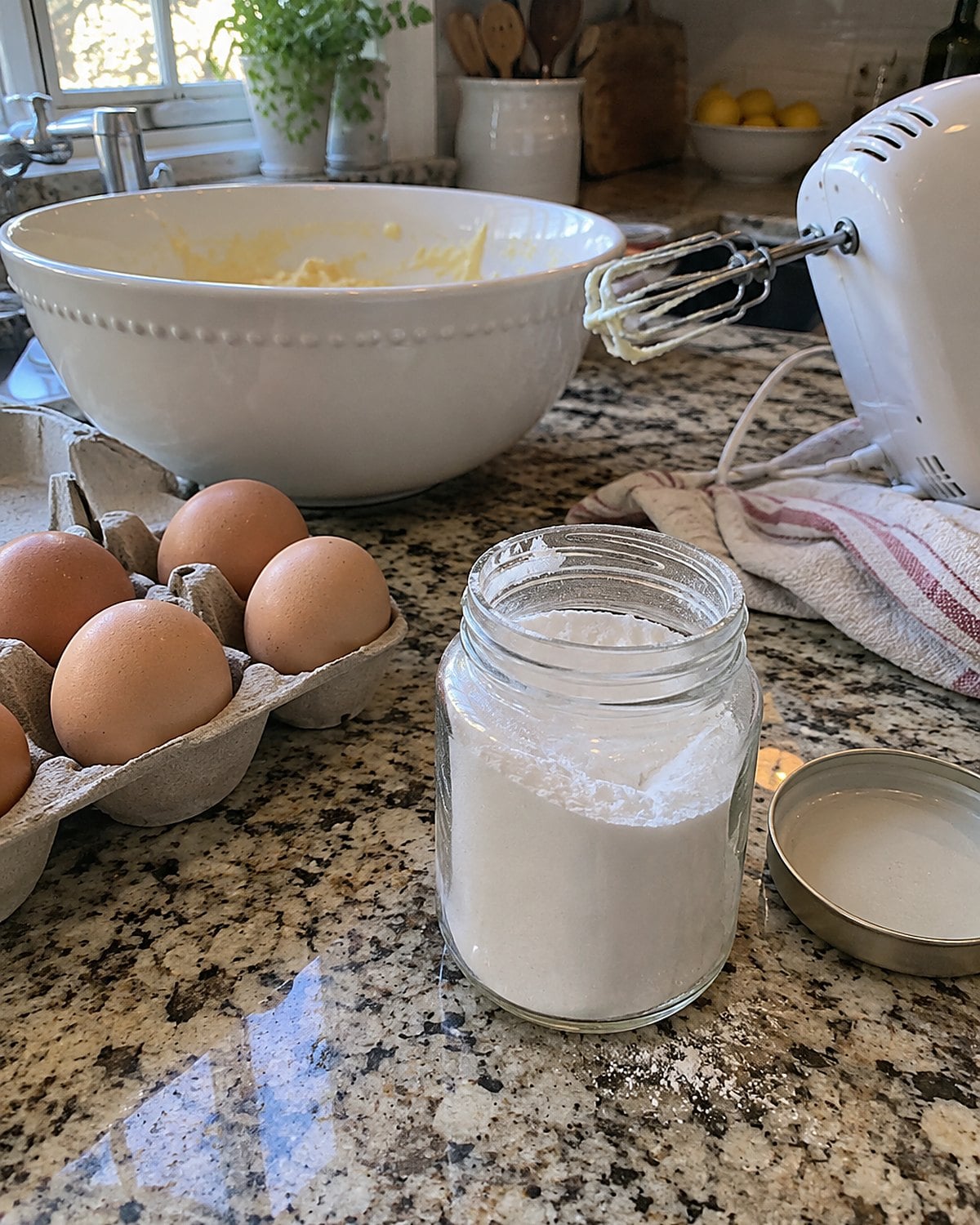
Cream of tartar looks like a spice you forgot to use. It isn’t one. This dry acid helps stabilize whipped egg whites and gives snickerdoodles their familiar tang. Kept sealed and dry, it remains useful long after the spice jars around it have lost their aroma.
You don’t have to replace it because you haven’t made meringue since the last family reunion. Check the lid for moisture and the powder for discoloration or pantry pests. Clean powder that pours or breaks apart easily is ready for the next batch.
There’s a practical reason to know what it does. When a recipe calls for cream of tartar, more cinnamon won’t stand in for it. Put the little jar where you’ll find it on baking day, rather than buying another because it disappeared behind the nutmeg.
#15 The vanilla bottle from the old pantry
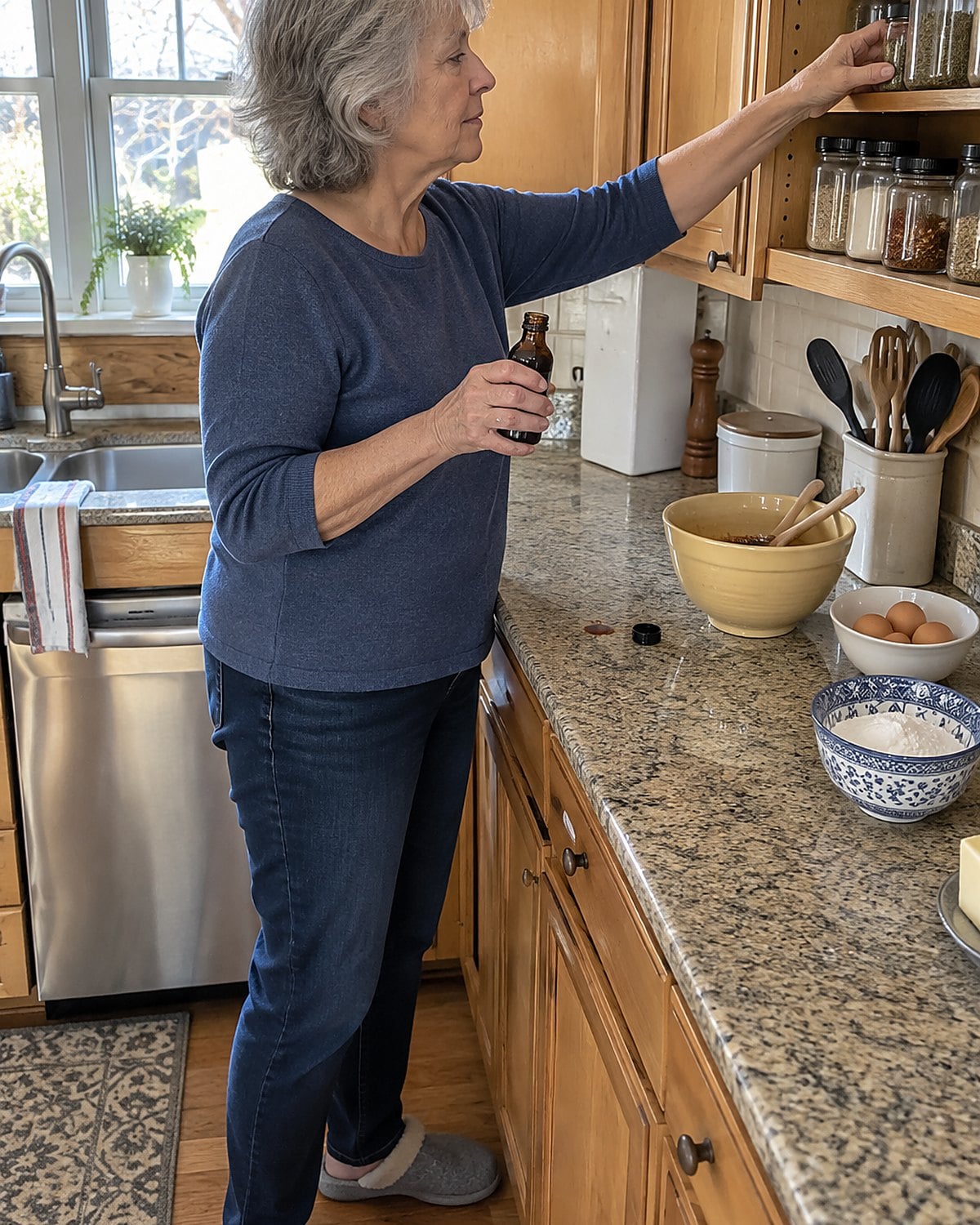
Open the vanilla and smell it. That aroma is a better guide for tonight’s cookies than a quick glance at the printed date.
Pure vanilla extract contains alcohol, which helps preserve it. Keep the bottle tightly closed in a cool, dark cupboard, away from the stove. Light and heat work against its flavor. If the bottle is still fragrant and there’s no sign of contamination, use it.
Vanilla flavoring and imitation vanilla have different ingredients, so read the bottle rather than applying one rule to every brown liquid on the baking shelf. A cap glued shut with old drips deserves a wash and a careful look inside.
Once you’ve checked it, put the bottle back where your hand expects it. The next batch of cookies shouldn’t require another purchase.
#14 The vinegar parked next to the dishwasher
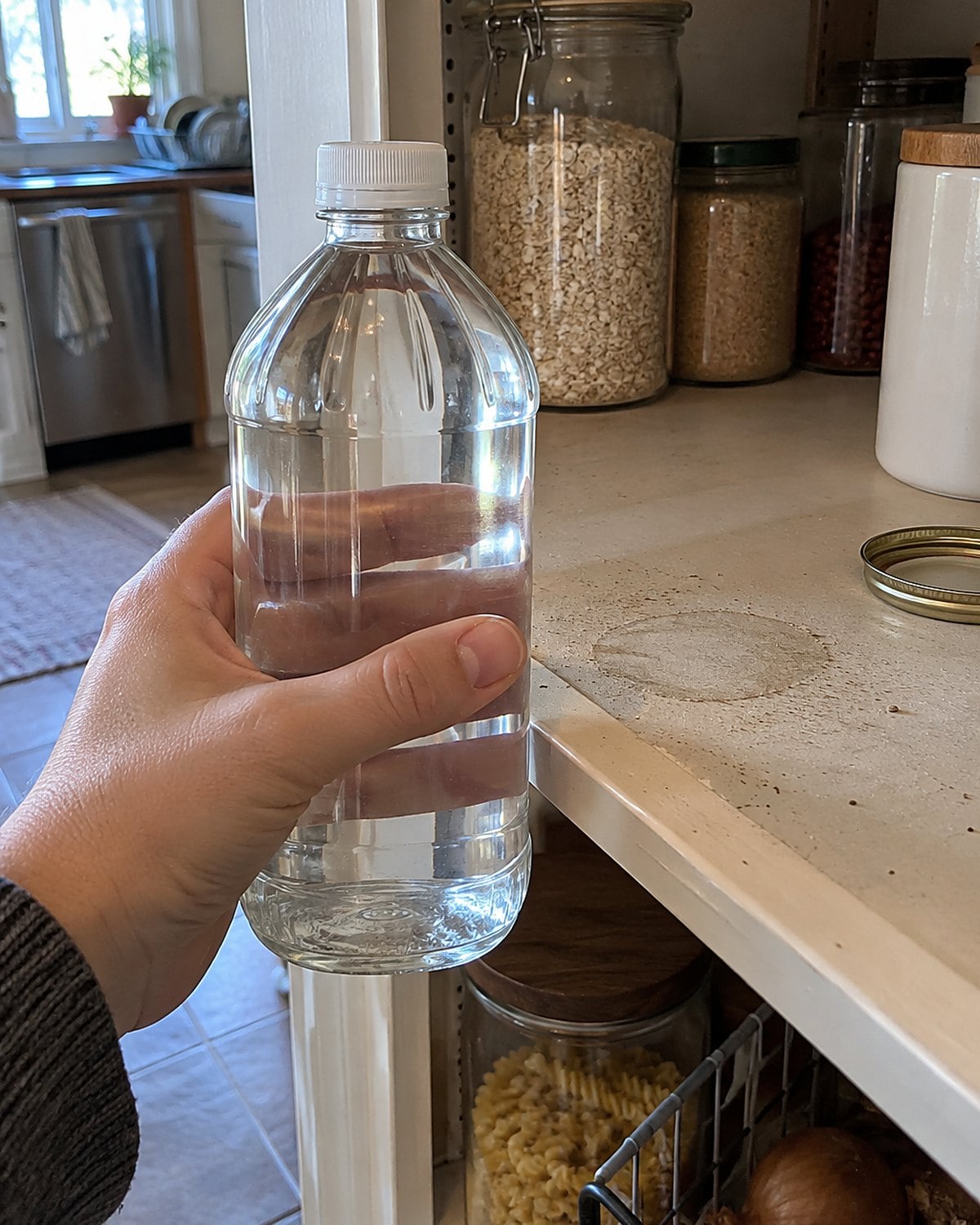
That big bottle of distilled white vinegar has probably outlived several dish towels. Its acidity helps it keep, and a clean, tightly capped bottle doesn’t need routine replacement because the date looks old.
Store it away from heat and keep crumbs out of the neck. Cloudiness or sediment in less-filtered vinegars deserves a look at the label; some bottles contain harmless sediment from production. If you see mold or the bottle smells unlike vinegar, discard it.
One caution is worth keeping beside the bottle. Don’t swap an unknown homemade vinegar into a tested canning recipe. For pickling and canning, use vinegar with the acidity specified by the recipe, commonly 5%. The National Center for Home Food Preservation has tested recipes.
Dinner vinaigrette is forgiving; a jar meant to sit on a shelf is not. For an opened bottle’s quality estimate, check the product in the USDA’s FoodKeeper rather than guessing from its color.
#13 The unopened soy sauce for stir-fry night
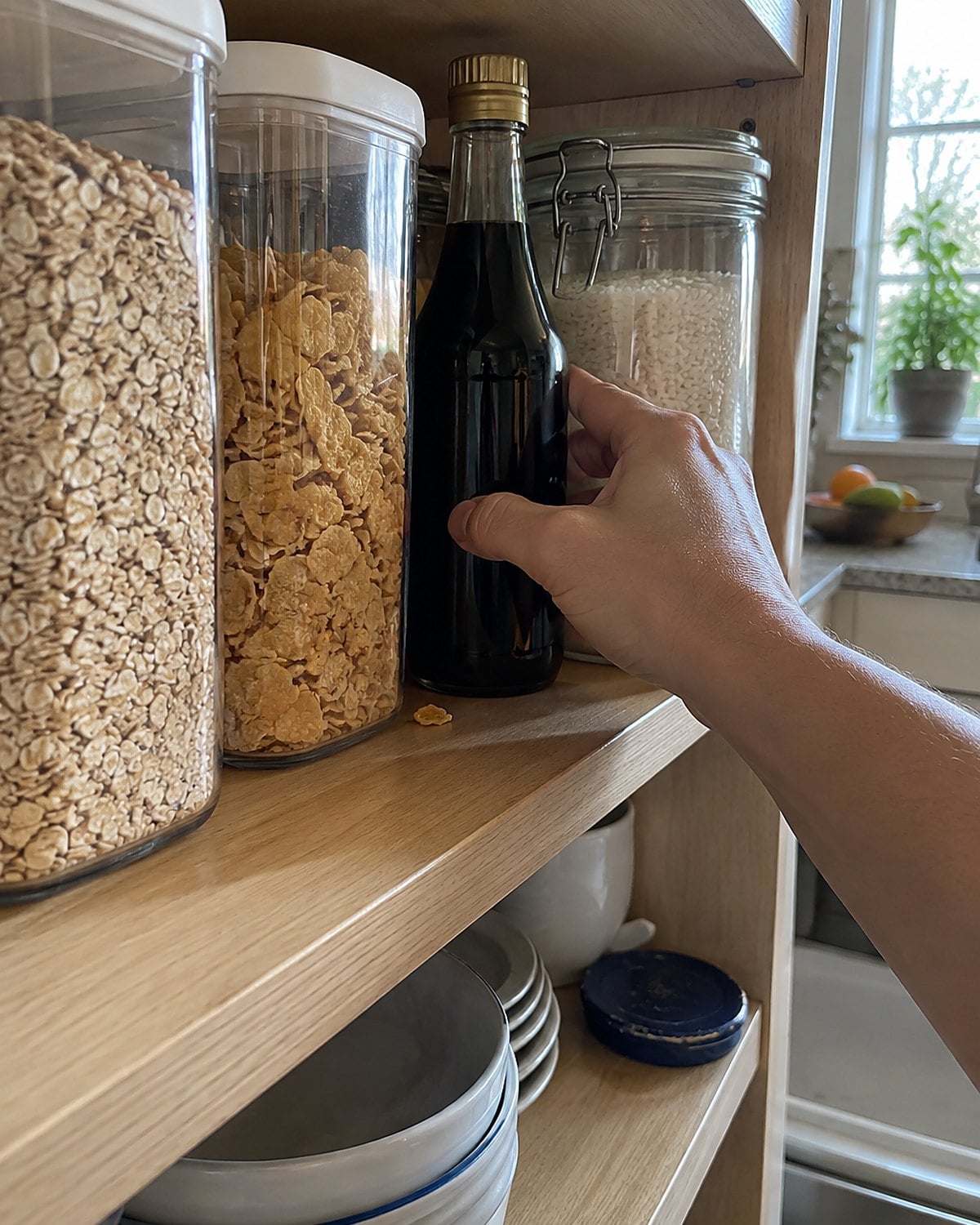
“I already have soy sauce.” Say it before another bottle goes into the cart.
An unopened bottle looks much the same each time you clean the pantry. Salt and fermentation help preserve soy sauce, but storage instructions change after opening. Read the label on the bottle in your hand.
Refrigeration after opening helps preserve flavor, especially when you take longer to finish a bottle than you once did. Keep the cap clean. Dried sauce around the rim has a way of fastening it shut.
If a bottle has leaked, its seal is damaged, or you find mold, discard it. Otherwise, don’t replace an intact unopened bottle just because it has waited through several stir-fry plans. Before buying another, look behind the tall cereal boxes. That’s where the spare seems to go.
#12 The dried pasta behind the cereal
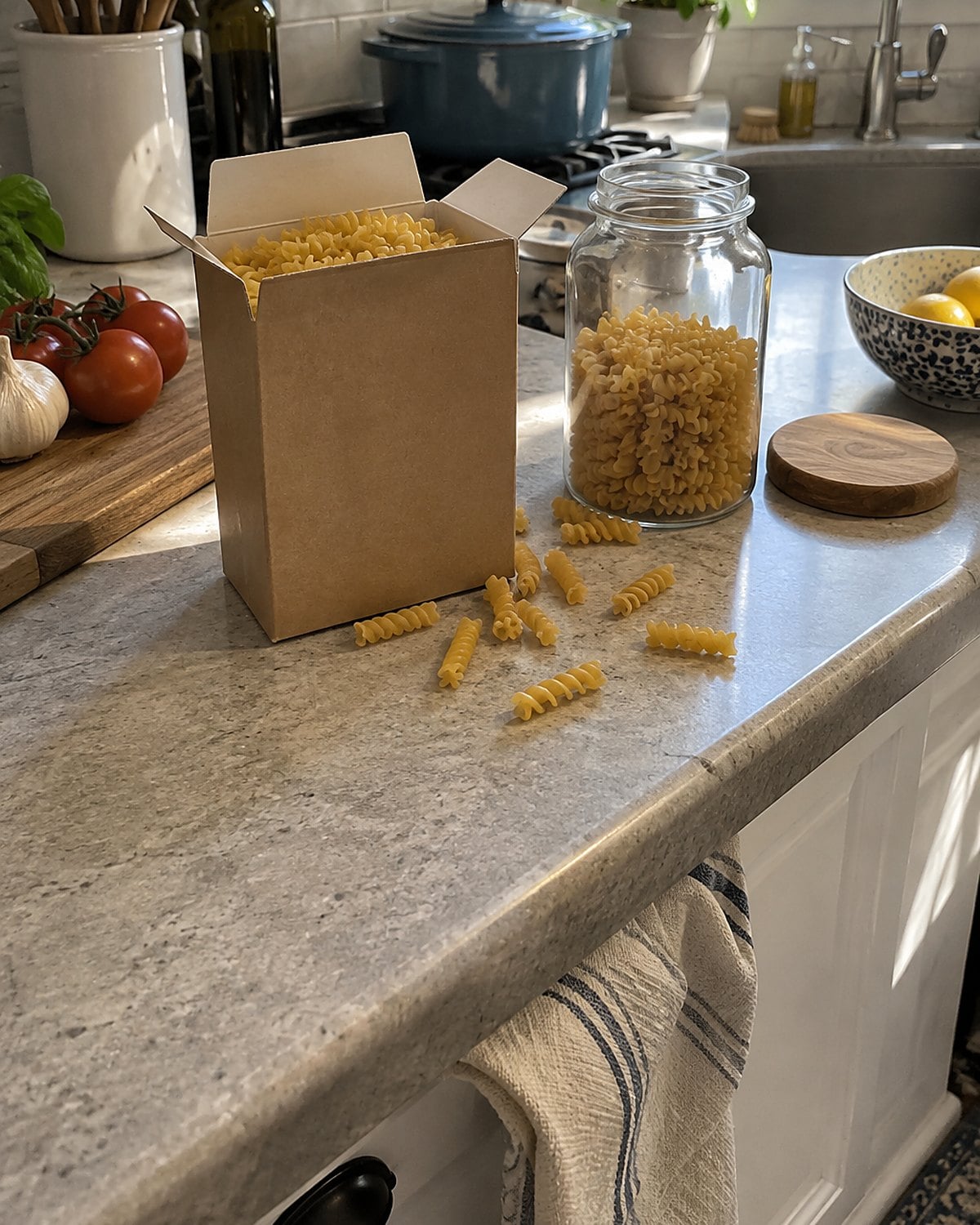
A box of dried pasta is good backup dinner. A box of fresh pasta is a different food with different storage needs, so check which one you’re holding before applying pantry logic.
For dry pasta, inspect the package for holes, insects, moisture, and an off smell. An intact box stored in a cool, dry cupboard keeps its usefulness well past a hurried pantry cleanout. Once opened, move the remainder into a sealed container if the cardboard flap won’t stay shut.
Then cook one serving rather than taking the printed date as a verdict. Taste and texture settle the question at dinner. If you’ve gone from feeding a full house to feeding two, smaller batches also stop a sound pantry staple from becoming a refrigerator leftover you didn’t want.
Try it: Instant Pot Pasta Primavera
#11 The white flour in the old canister
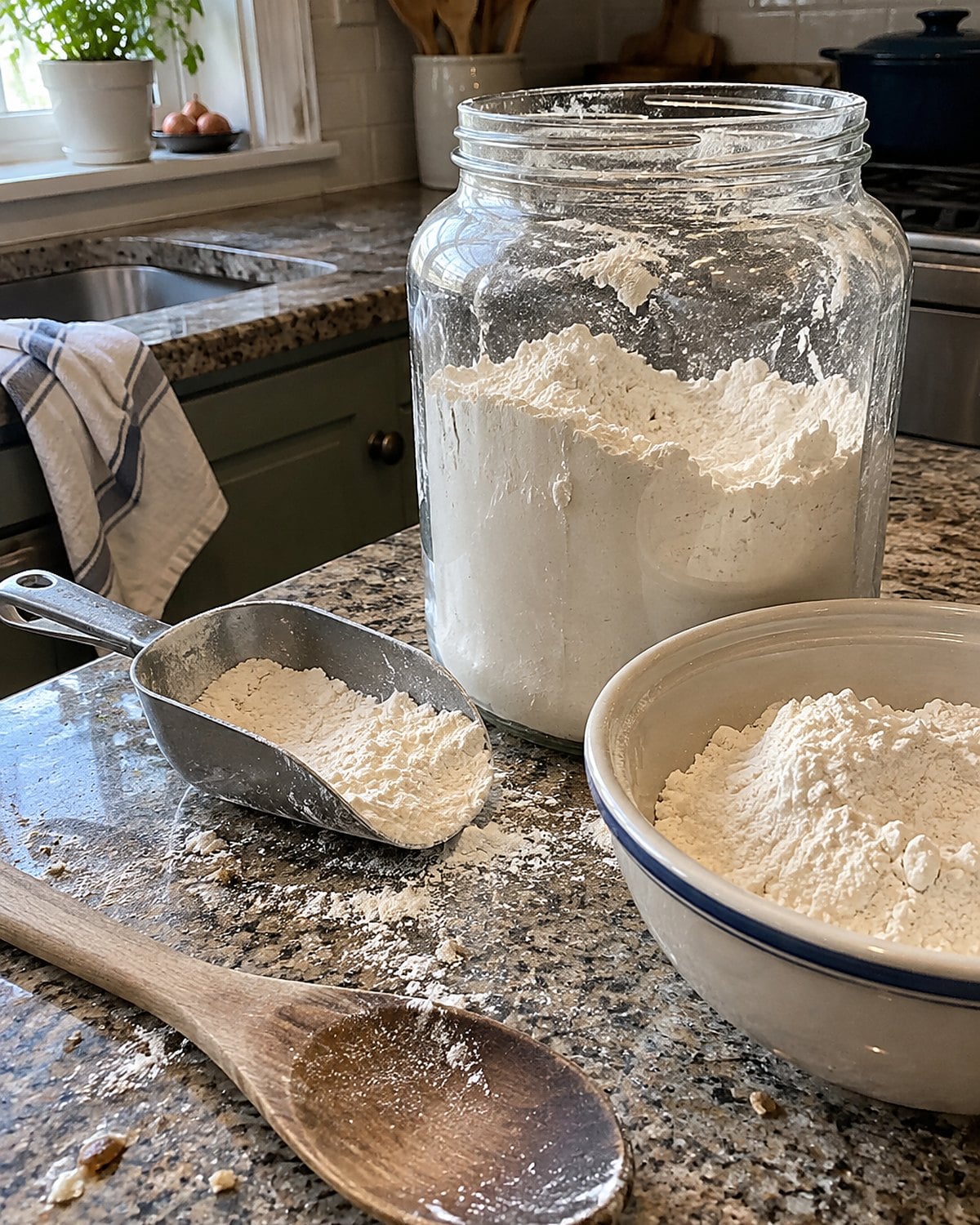
The heavy flour canister has been on the counter for years, but that doesn’t mean the flour inside has. White all-purpose flour lasts longer than whole-wheat flour because much of the grain’s oil-rich germ and bran has been removed.
Scoop a little into a bowl and smell it. Fresh flour smells mild. A stale, sour, or rancid odor means it’s time for a new bag. Check the canister for insects and moisture before refilling it; pouring fresh flour on top of old crumbs gives pests a head start.
There’s another reason to treat the bag with care. Flour is a raw food. Don’t taste dough or batter made with raw flour, even if the flour smells fine. The FDA’s raw flour advice is clear on that point. Bake the biscuits, then judge the biscuits.
#10 The cocoa powder for one-pan brownies
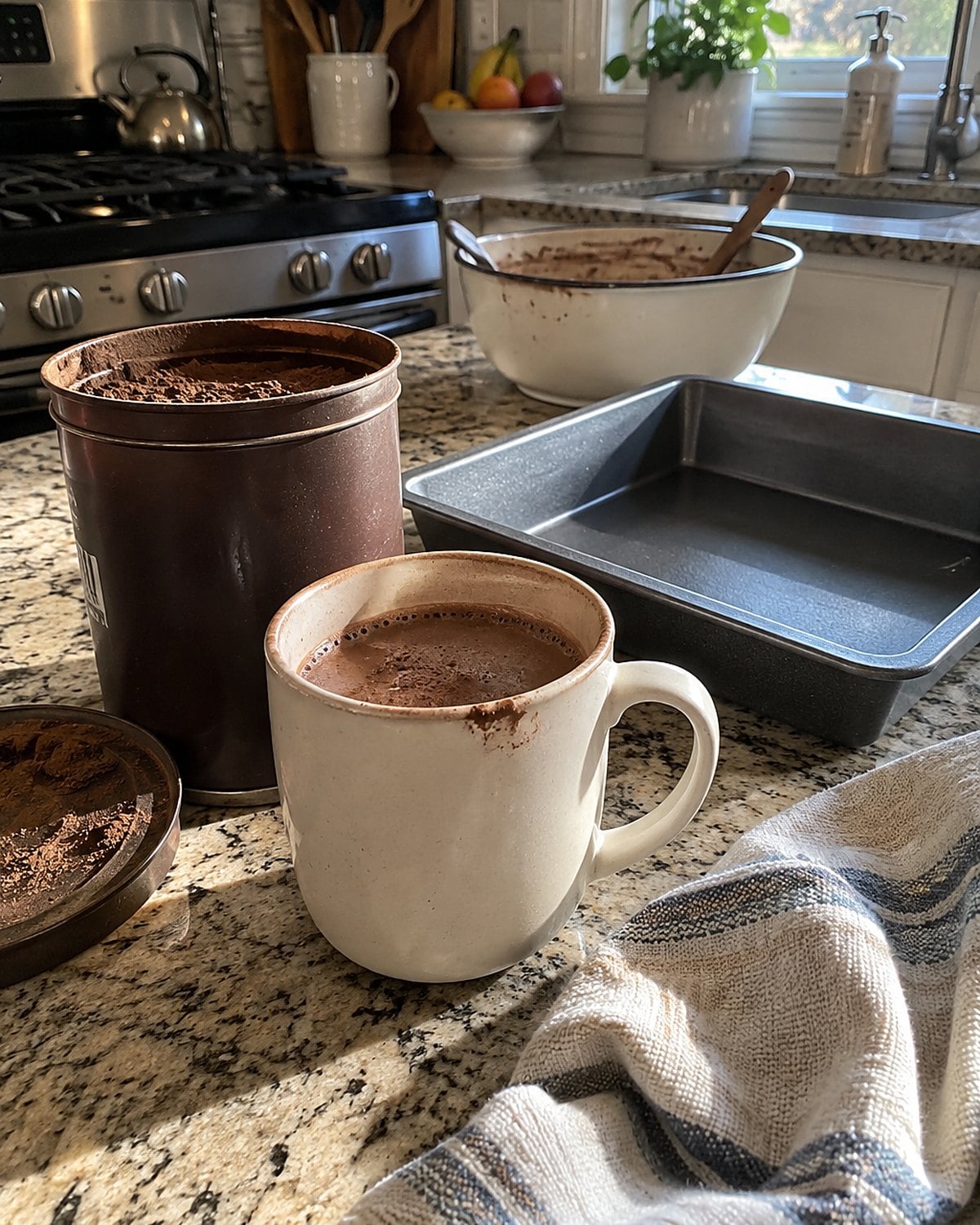
Unsweetened cocoa powder doesn’t become useless on its printed date. It loses flavor slowly when air, light, and moisture reach it. A tightly closed tin in a cool cupboard gives it a better chance than a torn paper packet beside the oven.
Rub a little between clean fingers. It should feel dry, and it should smell distinctly of cocoa. A musty odor, damp clumps, or signs of pests end the discussion.
If it passes, make a small mug of hot cocoa before using it in a full pan of brownies. You’ll notice weak flavor there without spending the last of your butter.
Keep cocoa separate from drinking chocolate mixes, which contain other ingredients. Check the label before you decide what stays. The plain powder is the one worth checking rather than replacing by habit.
#9 The white rice behind the stockpot
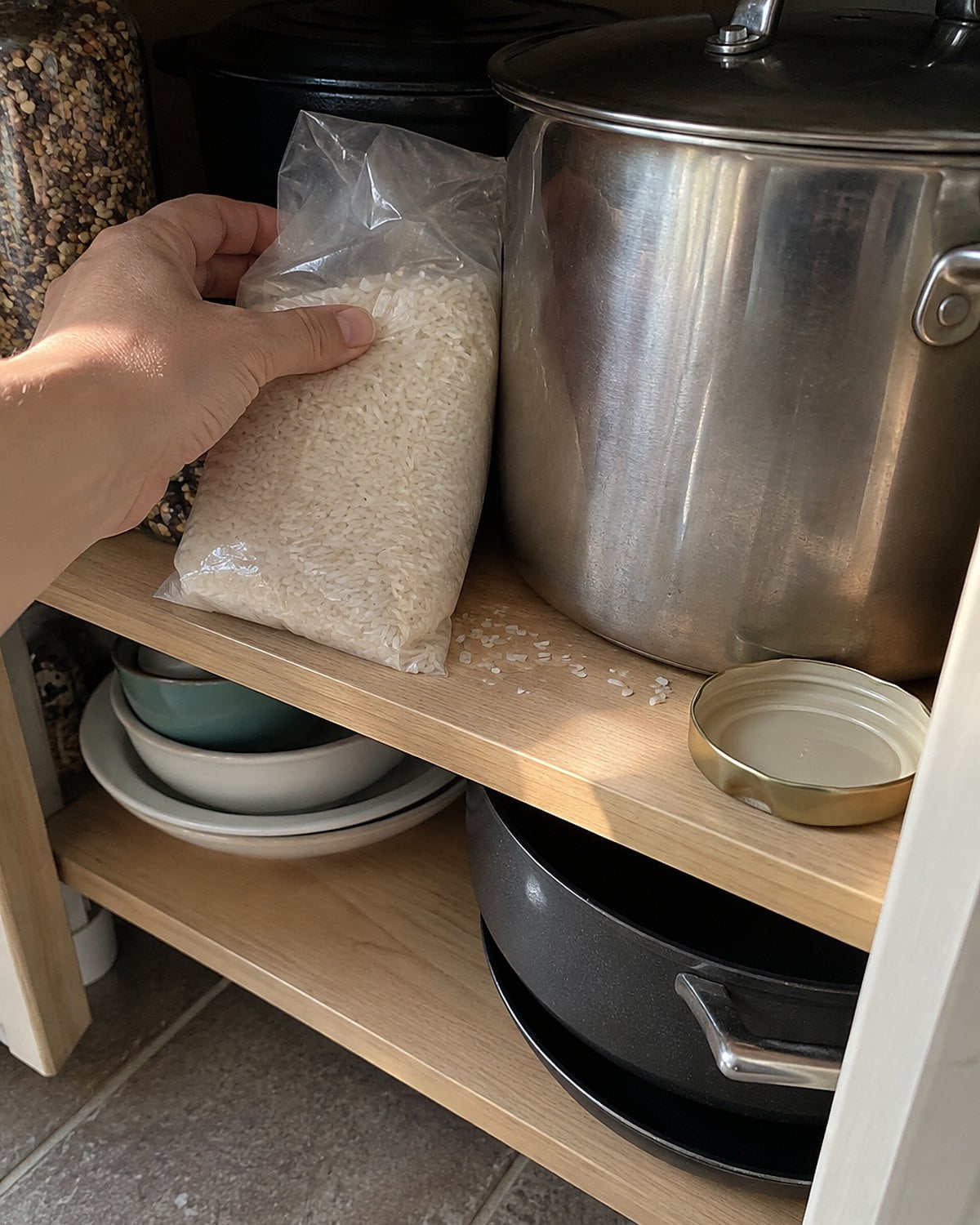
“Check behind the stockpot.” That’s where the extra bag turns up after you’ve bought another.
White rice keeps its quality for 4 to 5 years when sealed and stored cool and dry, according to the USDA’s FoodKeeper. Brown rice follows a shorter clock because its oil-rich bran remains. Smell the brown rice before cooking; a rancid odor means it goes.
For either kind, inspect the bag for moisture and insects. Transfer an opened bag to a tight container, and write down what’s inside if your containers all look alike.
Cooked rice has a separate rule. Refrigerate leftovers promptly in shallow containers; pantry storage advice no longer applies once water and heat have entered the pot. If you want a storage time for those leftovers, look up cooked rice in FoodKeeper rather than borrowing the dry bag’s date.
Try it: How To Cook Rice In Instant Pot
 You might also like27 Things Home Cooks Over 60 Do Without Thinking That Chefs Would Never Do
#8 The dried lentils for soup night
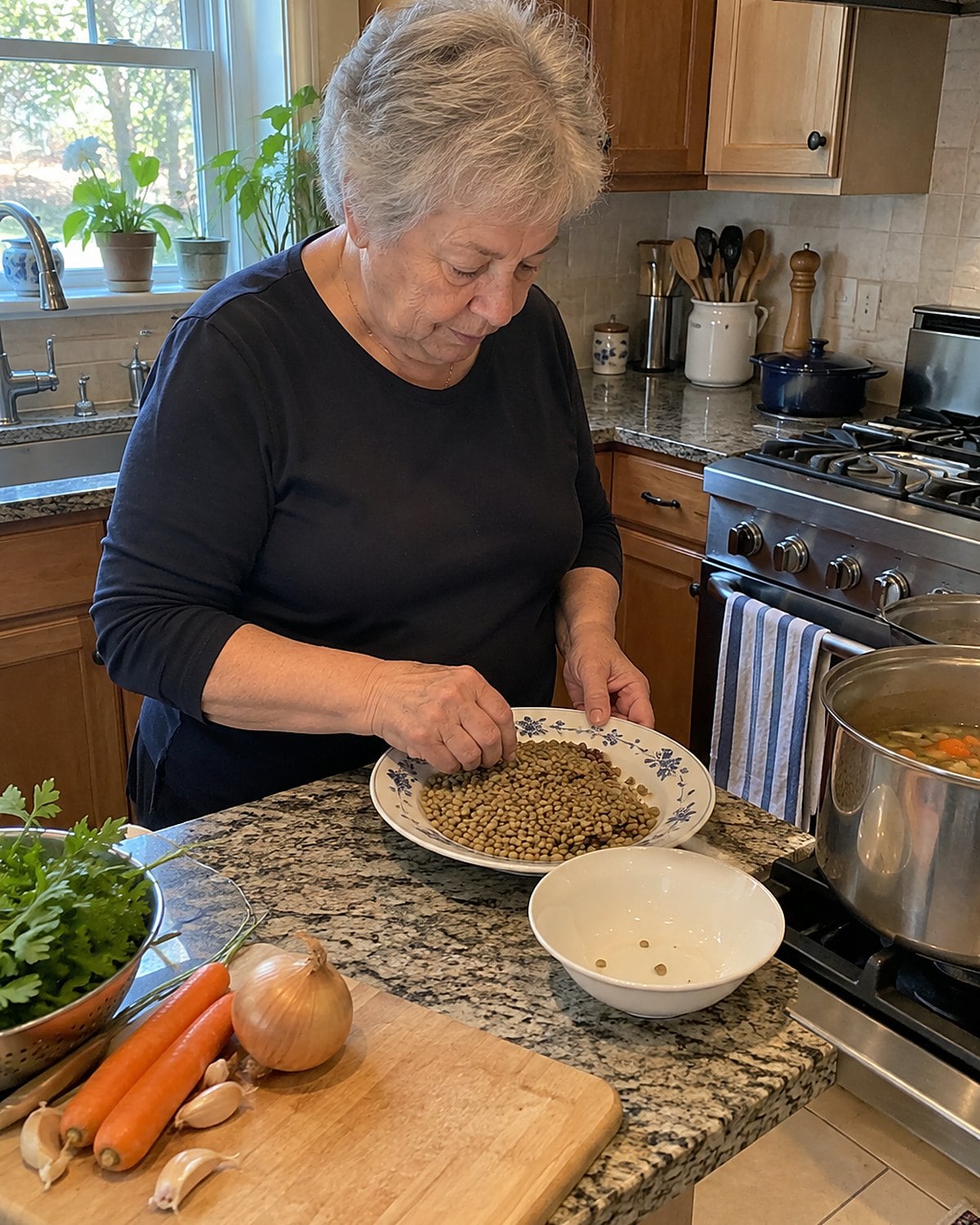
There’s an old bag of lentils beside the soup pot, and you’re wondering if they’ll ever soften. Dried lentils keep well when stored dry, but age changes their cooking time and texture.
Sort through them on a plate for small stones or bits of packaging, then rinse. Cook a small batch before building a whole soup around an elderly bag. If the lentils stay stubbornly firm after plenty of cooking, you’ve learned that before the carrots and broth went in.
Don’t add acidic tomatoes early when tenderness is in question; acid slows softening. Put tomatoes in after the lentils have softened. A sealed container protects the next bag from damp air and pests. Tonight’s test pot tells you more than a date glimpsed through a folded plastic seam.
Try it: Instant Pot Lentil Stew (Veggie-Loaded , Step-By-Step)
#7 The dried beans in the deep cupboard
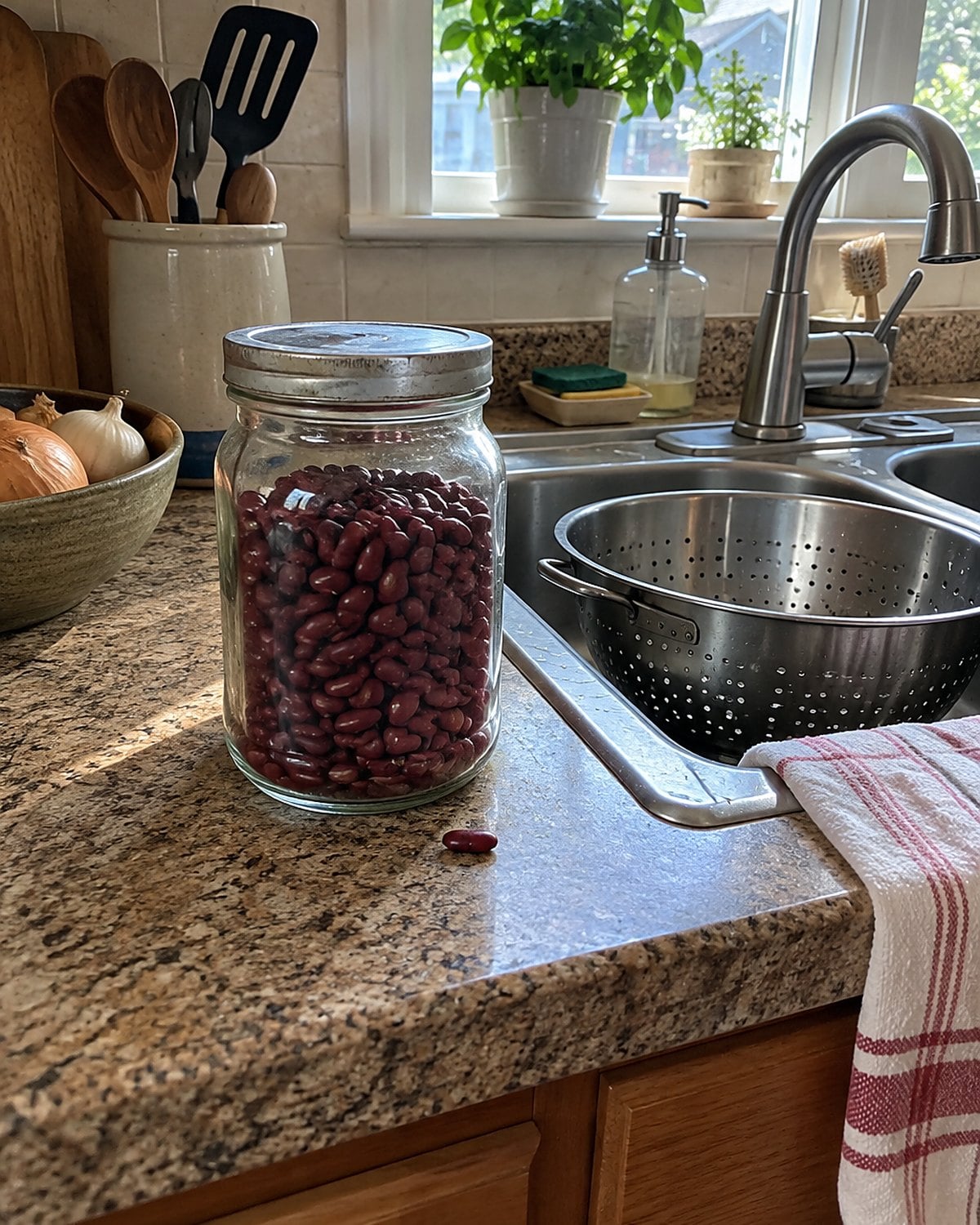
Dried beans reward patience, but there’s a limit to what patience fixes. Very old beans become harder to soften. If you’ve simmered a pot for hours and the centers remain firm, don’t build Sunday’s chili around that bag.
Keep dried beans sealed, cool, and dry. Sort and rinse before cooking. Kidney beans need another check before they reach the table: undercooked beans contain a toxin. Read the kidney bean section of the FDA’s Bad Bug Book for its cooking guidance. Don’t improvise with a slow cooker.
Dry beans with no pests or moisture aren’t automatically trash because they’re old. Age still hurts their texture. Test a small batch before adding the vegetables and broth you meant for dinner.
Try it: Instant Pot Bean Soup (Only 5 Ingredients)
#6 The loose tea beside the mugs
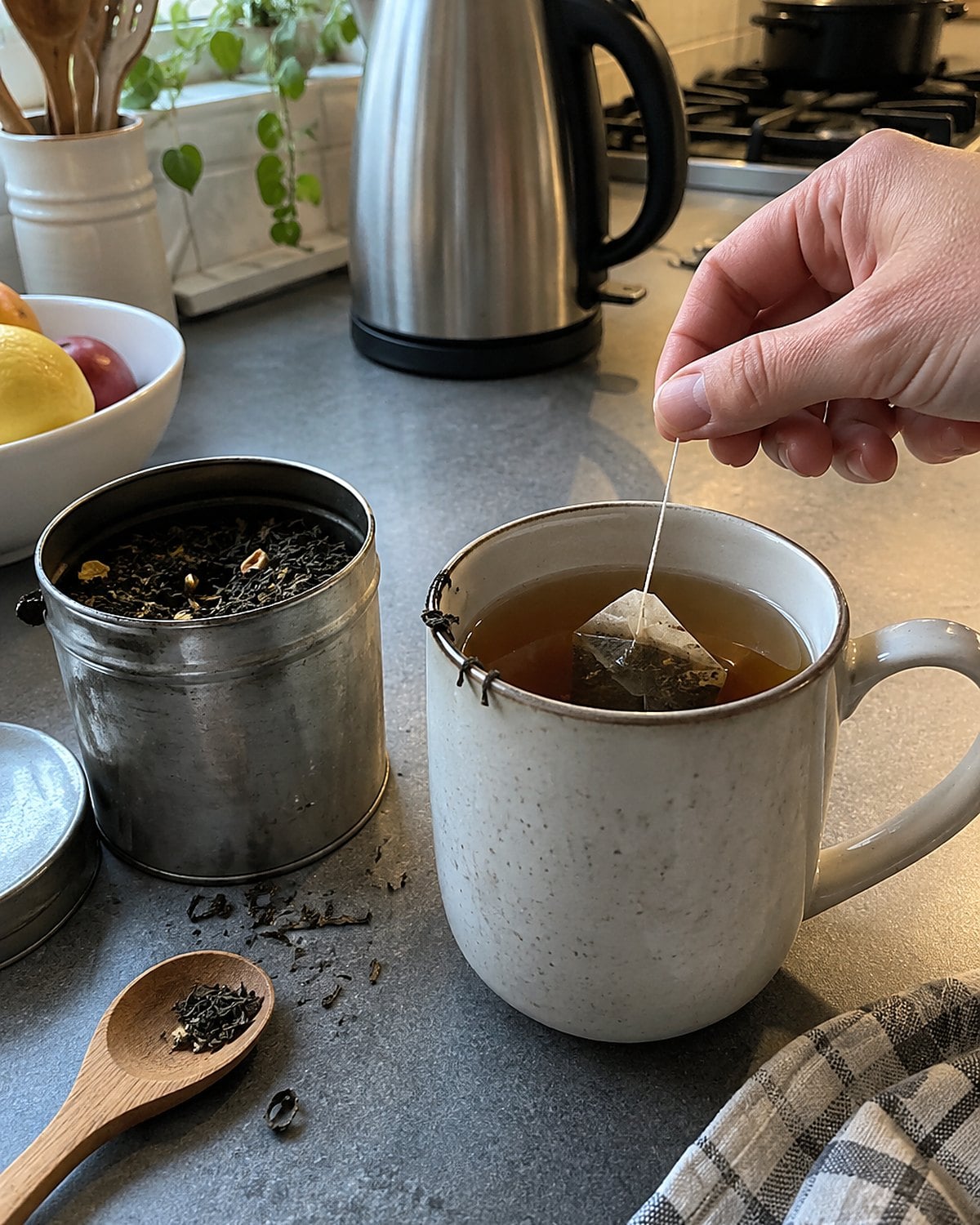
Tea tells on itself in the cup. The leaves or bags dry out and lose aroma over time, but a dry, sealed package doesn’t need replacing solely because you found it behind the mugs.
Brew a cup at the strength you normally like. If it tastes flat, try a fresh package before blaming the kettle. Don’t keep tea that smells musty or shows moisture or pests. Those are reasons to discard it, not to keep brewing it anyway.
A tin with a good lid beats a box that sits open near the stove. Keep strong-smelling spices away from it, too. Tea picks up neighboring odors, and nobody planned for a cup that tastes faintly of garlic powder. Make the test cup now; the answer takes less time than another pantry rearrangement.
#5 The dried chiles above the Dutch oven
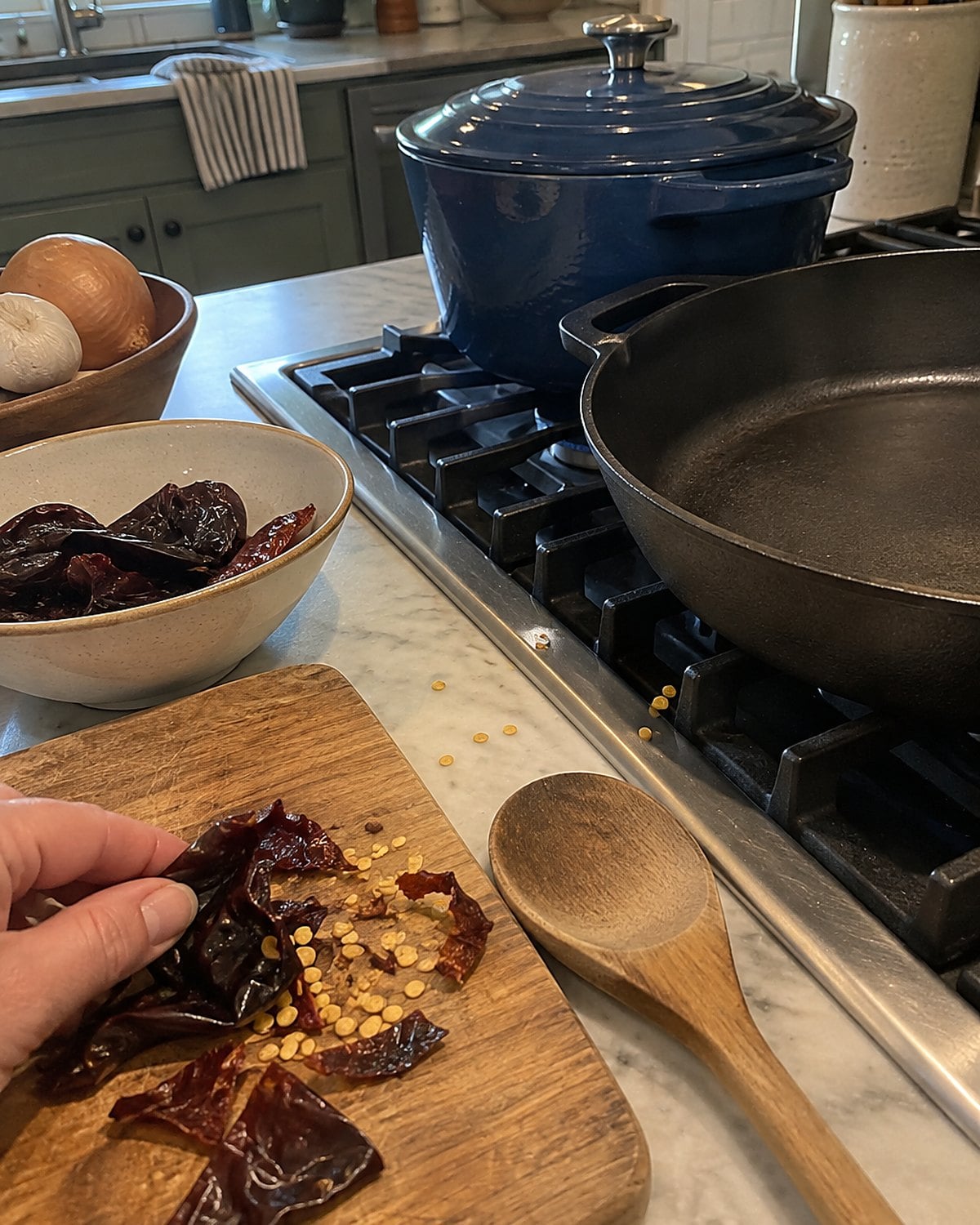
A handful of dried chiles adds depth to a pot of beans, but only if the chiles still have something to give. Bend one. It should have some flexibility, not crumble into dust at the touch.
Smell it after tearing it open. A clean chile has an aroma you recognize; a musty smell or visible mold means discard the package. Wash your hands after handling hot chiles, especially before touching your eyes.
For dinner, remove the stem, toast the chile briefly in a dry pan, and soak it in hot water before blending it into sauce. Don’t burn it; blackened chile tastes bitter. That small test in the pan shows whether the old bag still belongs in your cooking.
Seal the rest away from light and heat instead of leaving the top rolled down beside the Dutch oven.
#4 The unopened canned tomatoes on the shelf
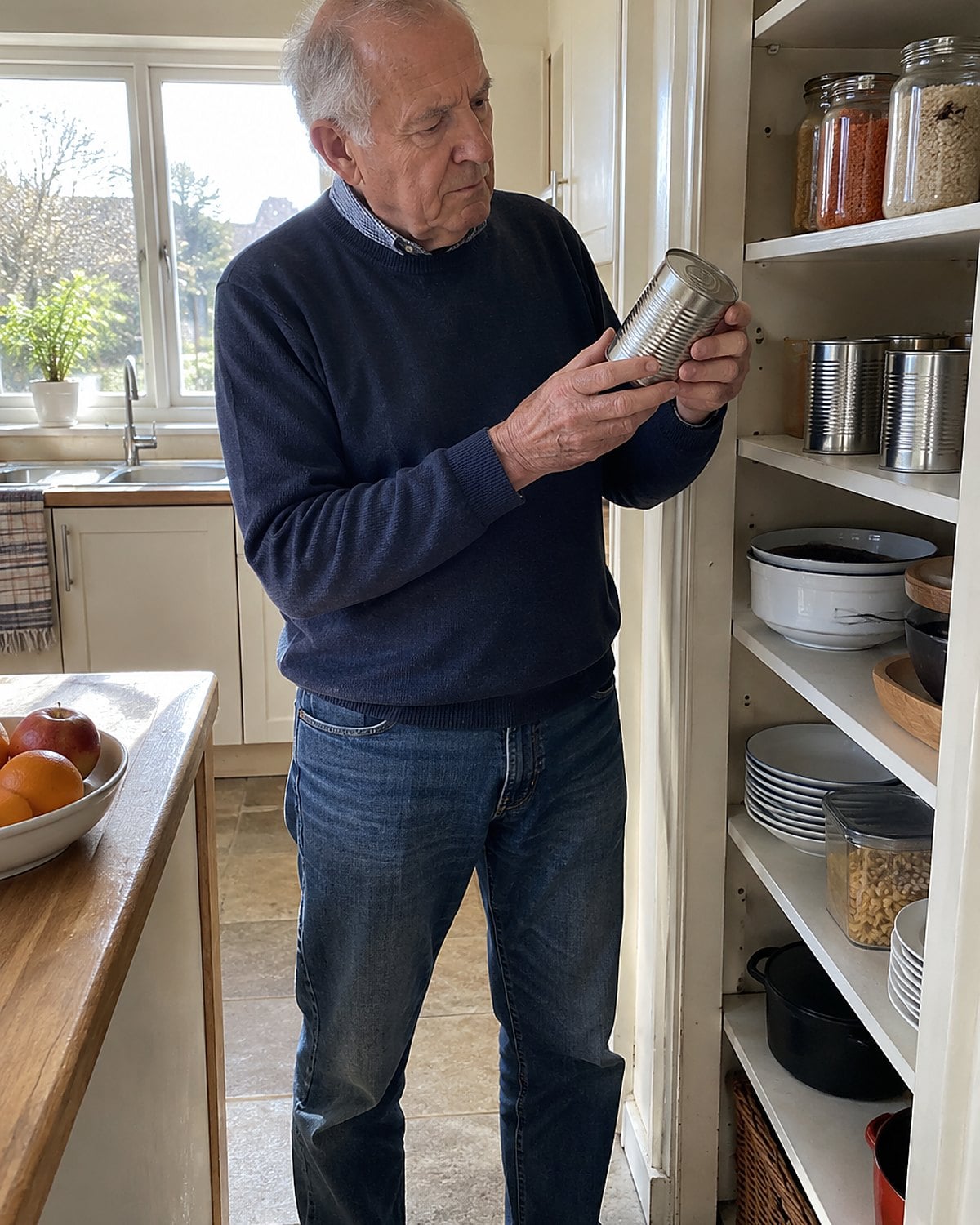
The date on a can of tomatoes is a quality clue. It isn’t permission to ignore the can itself. Tomatoes are acidic, so their quality changes sooner than that of many low-acid canned foods.
Before you plan sauce, inspect the can. A leaking, bulging, badly dented, or heavily rusted can goes in the trash. Pay special attention to damage along a seam. Don’t taste the contents to decide.
The USDA’s canned-food guidance gives a 12 to 18 month quality range for high-acid canned foods such as tomatoes. It also explains why a sound can and proper storage matter. That range is about quality, not permission to use a damaged can.
Store sound, unopened cans in a cool, dry spot, not beside a hot appliance. Put newer cans behind older ones when you unpack groceries. Once opened, follow the label’s refrigeration directions and cover the tomatoes before putting them away.
Try it: Instant Pot Tomato Basil Sauce
#3 The broth carton under the sink
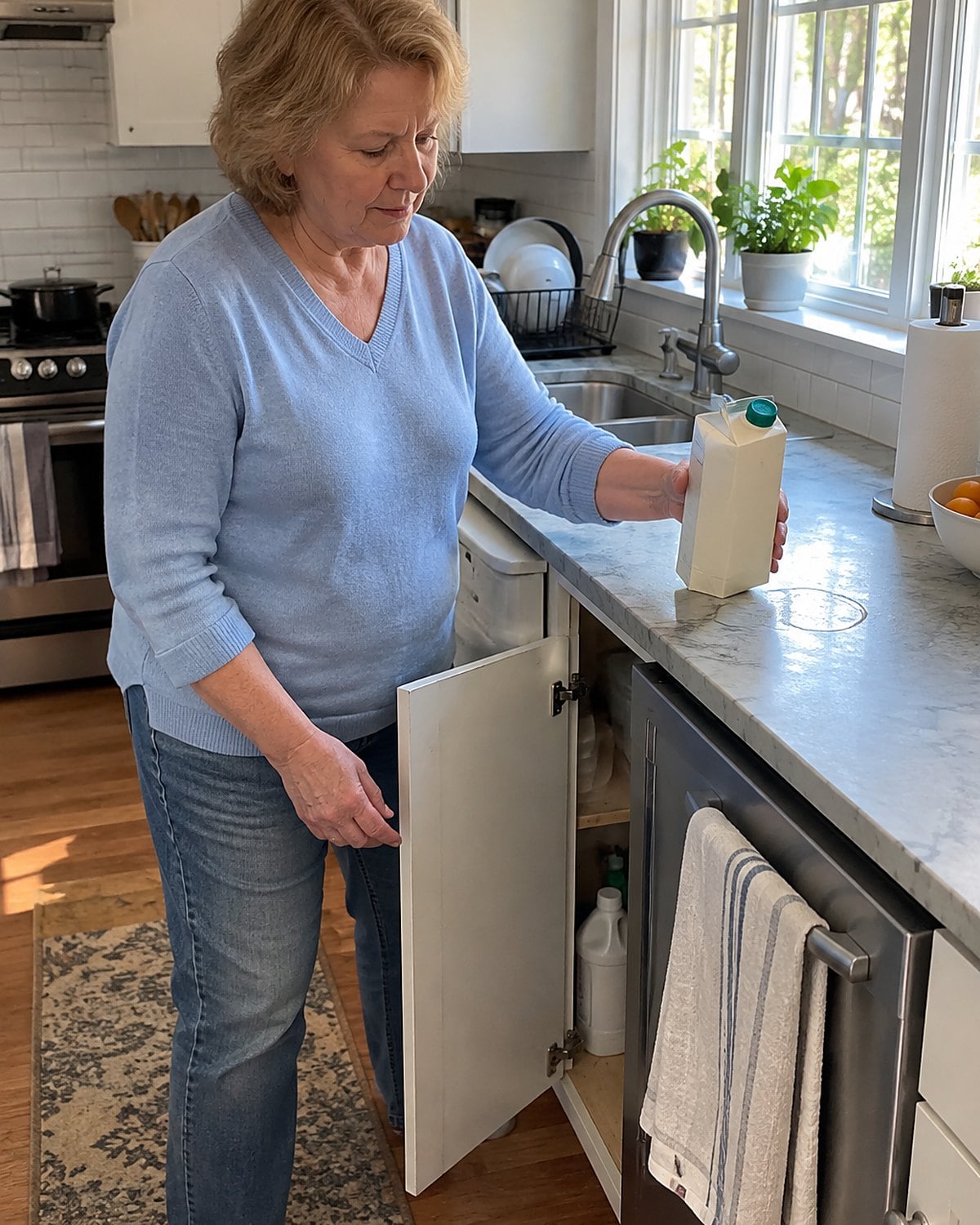
Broth cartons look sturdy, which is why an extra one gets tucked wherever there’s room. The cabinet under the sink isn’t a good place: leaks, cleaning products, and damp cardboard make for a poor pantry shelf.
Move an unopened, shelf-stable carton to a clean, dry cupboard. Check for swelling, leaks, or damage before opening it. Then read the package for its after-opening directions and refrigerate it promptly. The sealed carton’s pantry life ends when you twist the cap.
If you cook for one or two, pour unused broth into freezer containers in portions you’ll reach for. Leave room for expansion and write the date on each container.
That’s better than keeping an open carton in the fridge until you no longer remember which Tuesday you used it. For a storage estimate after opening, look up broth in the USDA’s FoodKeeper and check the carton’s directions too.
Try it: Instant Pot Stocks & Broths (Meat, Fish, Mushroom, Veggie)
#2 The unopened evaporated milk for pie
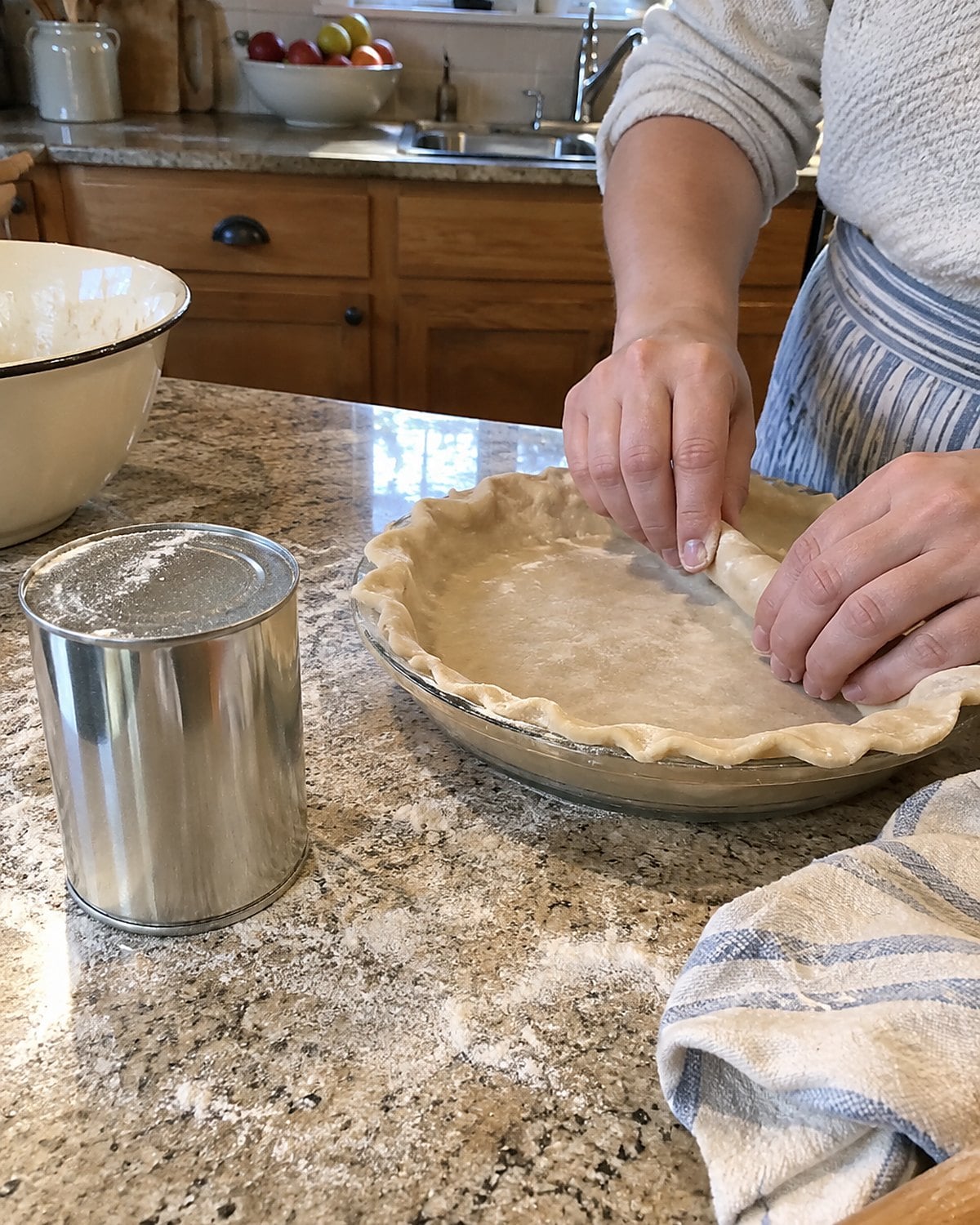
Evaporated milk has saved many a pie when fresh milk was gone. It’s shelf-stable while the can remains sealed and sound, so the unopened can deserves inspection rather than automatic replacement.
Look for bulging, leaks, heavy rust, or a deep dent at a seam. Discard a damaged can without tasting it. If the can is sound, open it and check the contents before using it in a pie. An off odor is a reason to stop.
Once opened, follow the label’s refrigeration directions. If you need another container for easy pouring, cover it before it goes into the fridge. Check evaporated milk in the USDA’s FoodKeeper when you need a storage estimate.
Don’t confuse evaporated milk with sweetened condensed milk. The cans look alike in a crowded cupboard, but the sugar and the results in a recipe are entirely different.
#1 The unopened jar of peanut butter
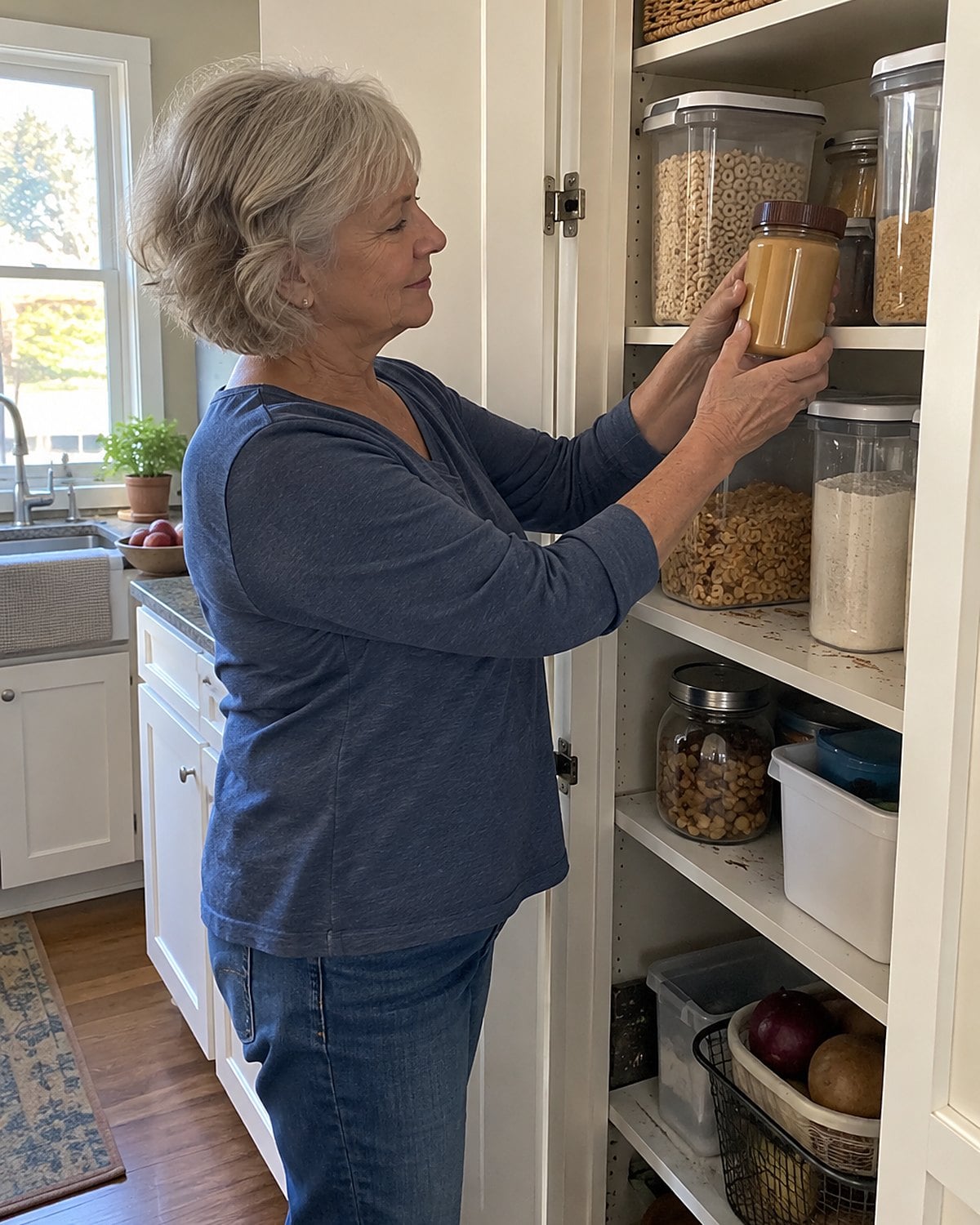
A jar gets pushed behind the cereal when breakfast for a full house becomes breakfast for two. Then the next shopping list says peanut butter, and the old jar stays hidden. Pull it forward before you buy another.
Read the label first. An unopened jar belongs where its maker says it does. Some peanut butters have oil that separates; an intact seal and a layer of oil alone don’t settle every question about quality. Open the jar, look for mold, and smell it. A rancid odor means discard it.
After opening, follow the jar’s storage directions. Natural peanut butter and shelf-stable blends don’t always carry the same instructions. Use a clean knife, close the lid, and keep crumbs out.
The useful move is small: turn the jar so the label faces you and put it ahead of the new groceries. You’ll know what’s there before the next list starts.
Try it: Instant Pot Blueberry Oatmeal With Maple Peanut Butter
Keep reading
 26 Things in Your Fridge Right Now That Should Have Been Thrown Out
See all 26 →
More you’ll remember
 25 Fridge Habits That Waste Money Every Week Without Anyone Noticing
 23 Food Safety Rules Your Mother Taught You That Are Wrong, and the Ones That Still Hold
 27 Things People Over 60 Still Pay Full Price for That the Store Would Rather You Didn't Notice
The bottom line
Dryness, a sound seal, and the right storage spot do more work than an old date can explain. Once you open a package, check the new rules on its label.
You’ve already kept the tools for this in your kitchen: your eyes, your nose, a clean spoon, and a place to write a date. Which item at the back of your cupboard deserves a closer look tonight?


Leave a Reply