

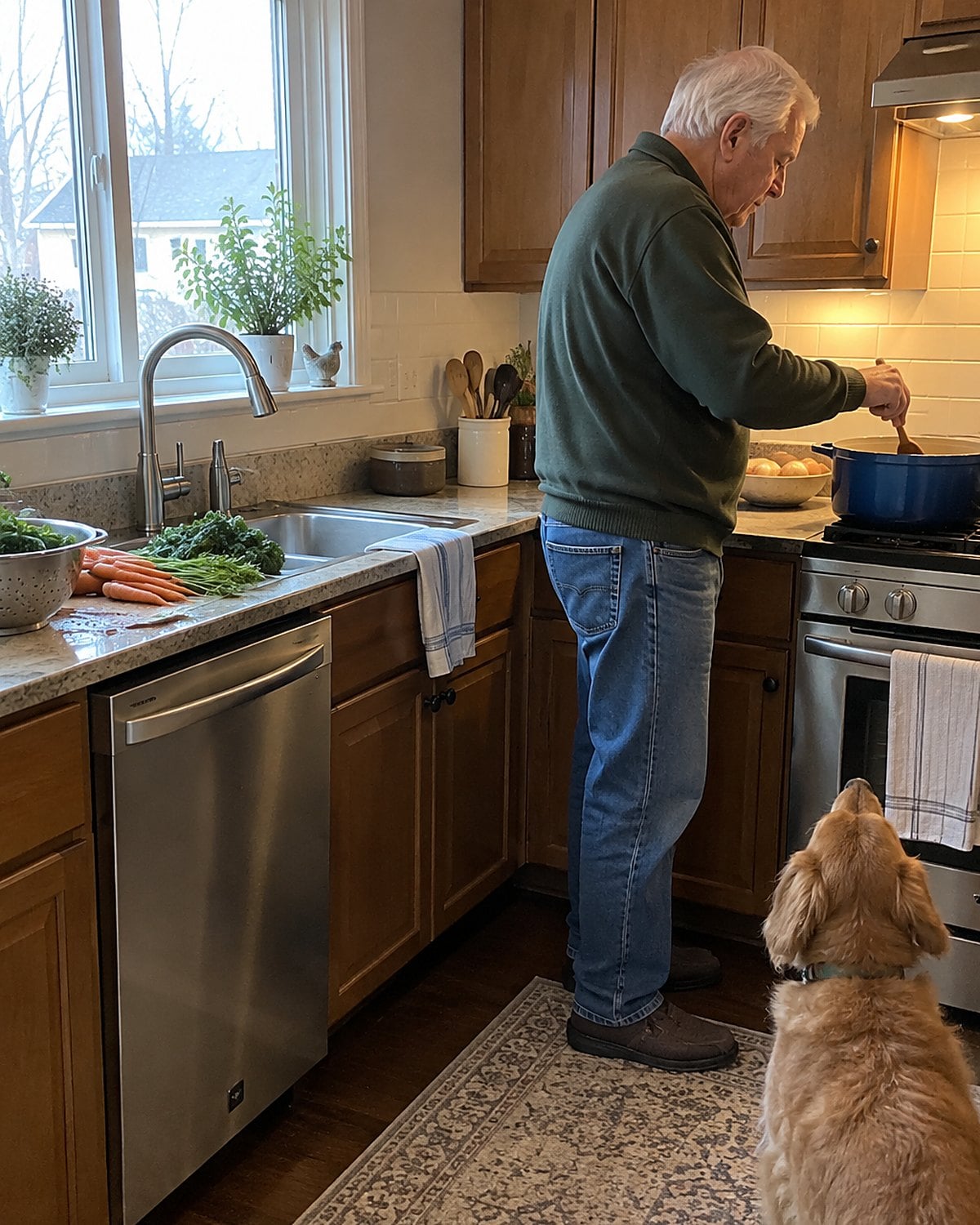
The drawer slides out with a wooden scrape. Inside, the peelers sit beside the knives, not under a heap of takeout forks. Across the room, a dish towel hangs where a wet hand will reach for it. You don't have to remember where anything went.
That feeling survives even if the kitchen has new cabinets, a microwave, and an air fryer. Plenty of 1950s kitchens had cramped counters and awkward plumbing. Some also got a basic idea right: the room should follow the work. Keep the parts that still earn their space.
#24 The Drawer Divider Beside the Stove
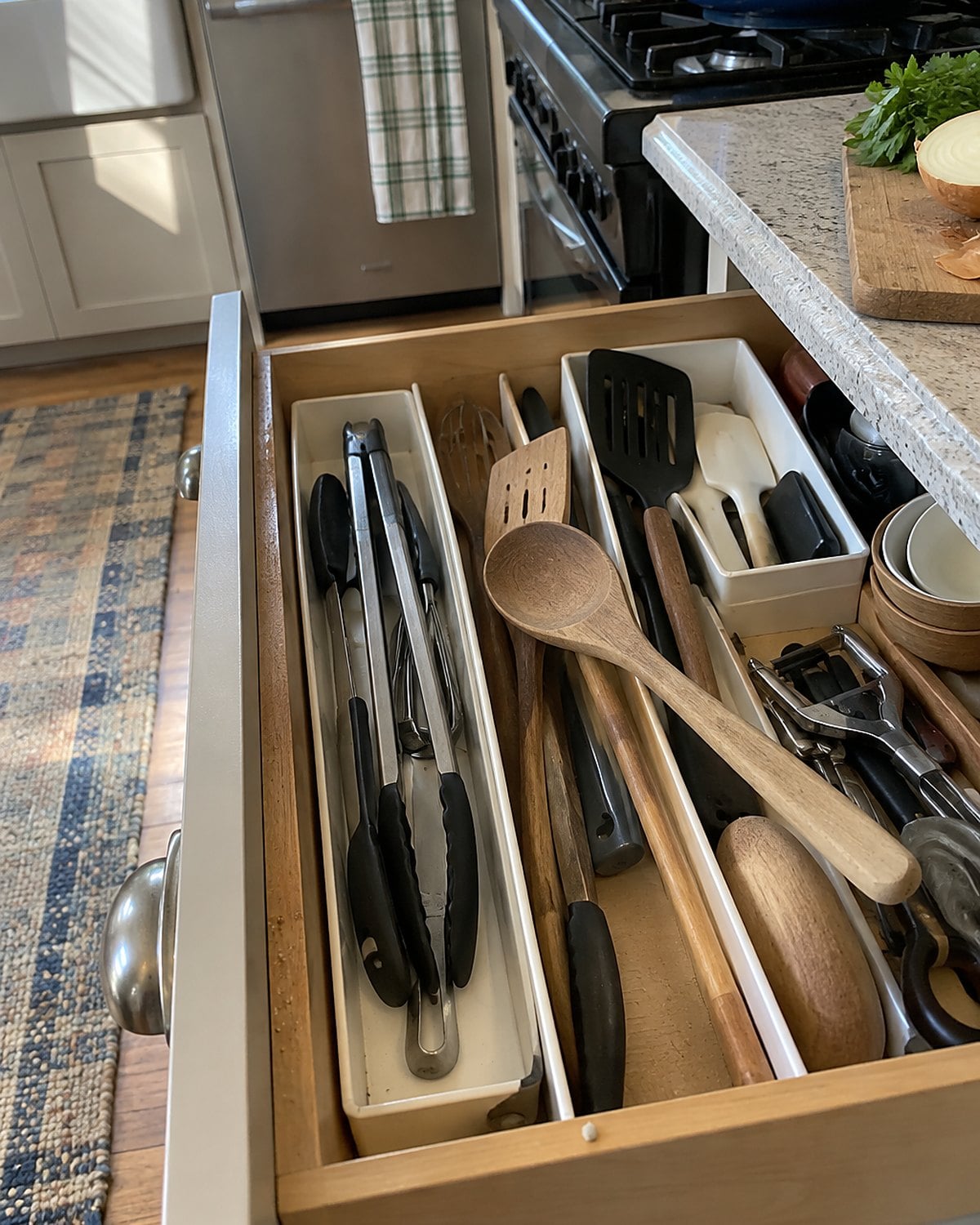
A shallow drawer beside the stove once held the tools needed at the stove. Open it and the turner was right there. There was no hunt through birthday candles, spare batteries, and the little plastic parts whose appliances left years ago.
Start with the drawer you open while something sizzles. Empty it onto a towel. Return the turner, tongs, wooden spoon, and anything else your hand reaches for during dinner. Give each a lane with a divider or a small box. Put the rest elsewhere.
Try it with one hand.
Open the drawer while holding a pot lid in the other. If you have to dig, the drawer still has too many jobs. The divider doesn't need to be pretty. It needs to let your fingers find the tongs before the onions burn.
#23 The Dish Drainer Over the Sink
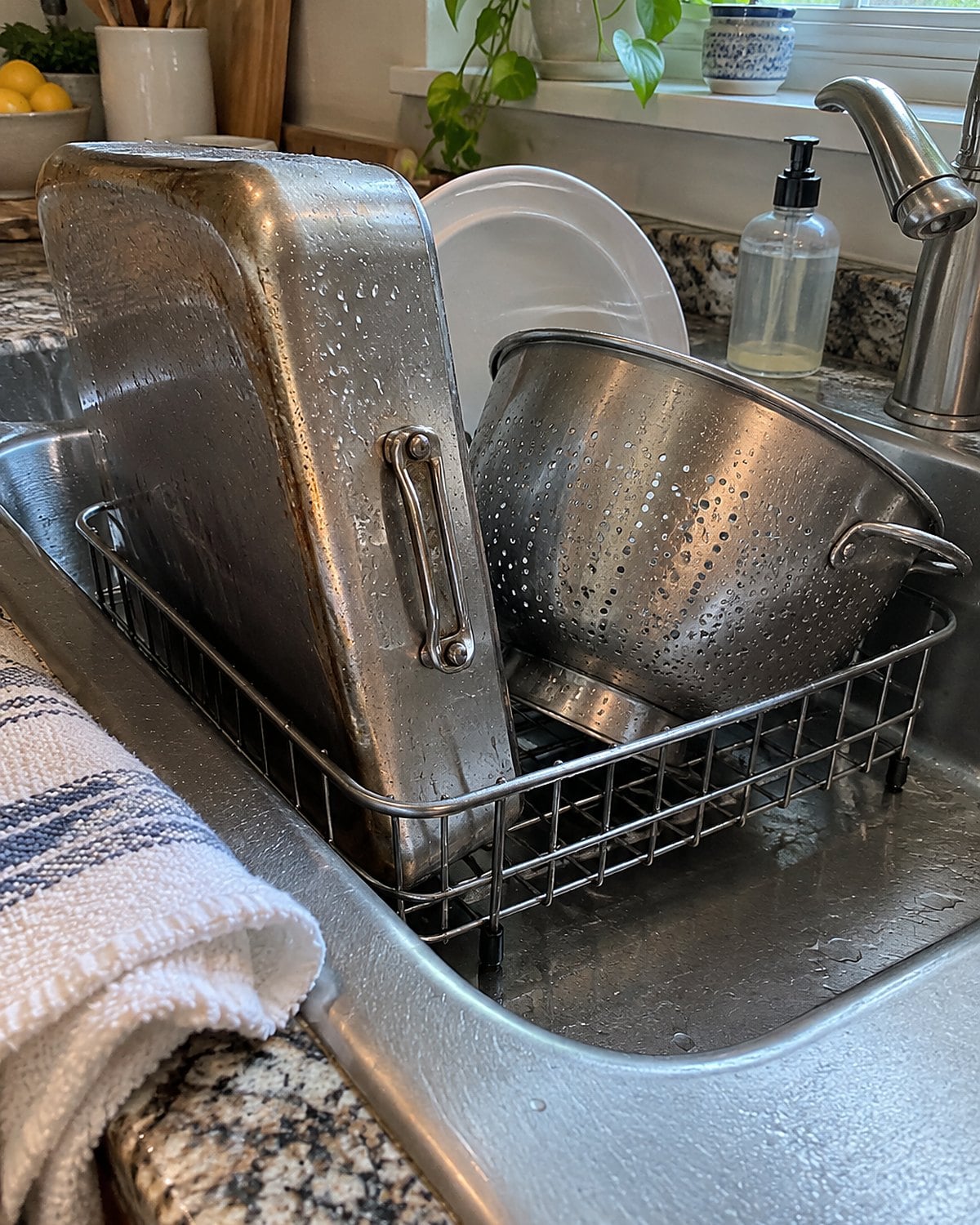
In a compact kitchen, a dish drainer sitting in the sink made the drying dishes part of the washing area. Water went down the drain instead of spreading across the counter. The space beside it stayed free for chopping.
The idea still works, especially when dinner leaves a colander and a roasting pan that won't fit in the dishwasher. Put a rack in a clean sink, or choose one that straddles it without blocking the faucet. Keep the rack far enough from the disposal opening that a spoon won't slip in.
Don't make the drainer permanent storage. Once the dishes are dry, put them away and clear the rack.
A stack left there until tomorrow turns the sink into an obstacle. You notice it when you carry over a full pot.
Try this tonight: wash the largest item first and let it drain while you finish the small things. The pot gets a place to land, and you still have the counter for the rest of supper.
#22 The Towel Hook Within Reach
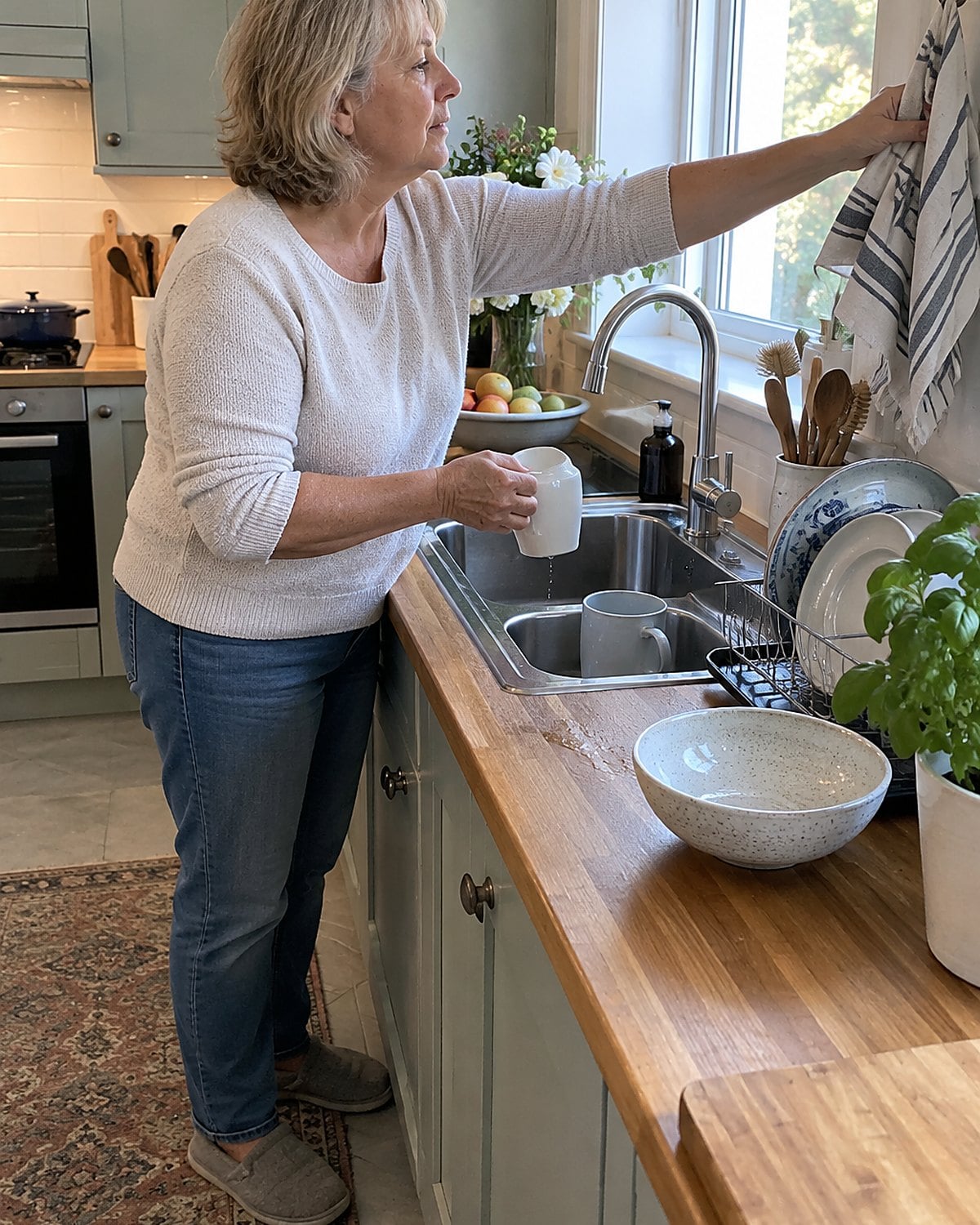
Where does your wet hand go after you rinse a tomato? In some kitchens, it travels across the room to a towel hanging from the oven handle. By then, the floor has its answer.
A hook near the sink gives the towel an address. Set it where the towel hangs clear of the counter and away from a burner. If cabinet doors are the only nearby surface, an over-door hook gets the job done without drilling.
Keep the hand towel separate from the cloth used to wipe counters.
This small placement has a second benefit. When someone else washes up, they can find the towel without asking. Watch where your hand reaches after the next rinse. That's where the hook belongs, even if the wall looks tidier somewhere else.
#21 The Landing Spot Beside the Burner
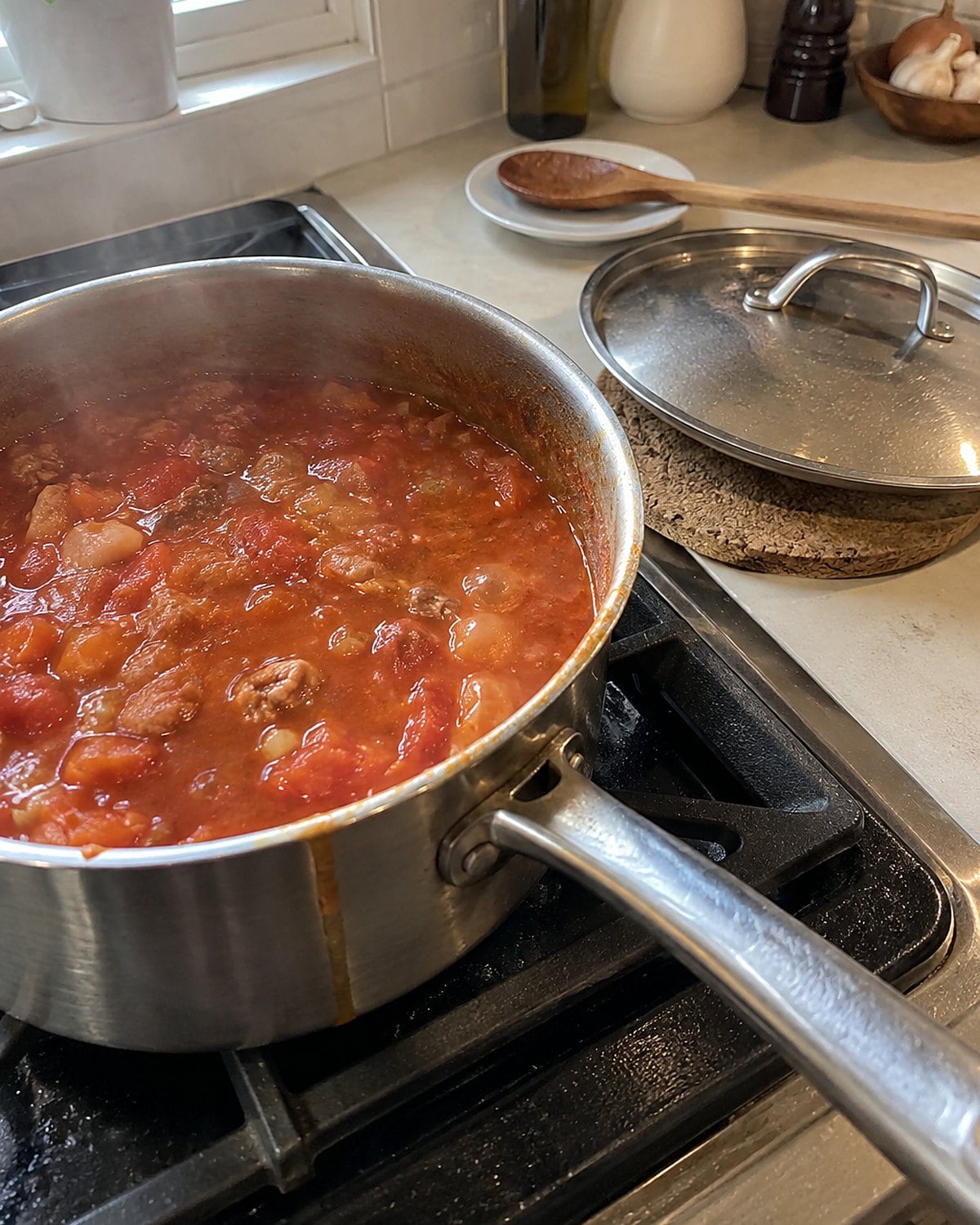
A pot lid needs somewhere to go while the pot is bubbling. The cutting board holds chopped parsley. The counter has a grocery bag. So the lid goes in the sink, and the next thing you need is a towel.
Older kitchens made good use of the small stretch beside the stove. That space was a landing spot for a hot lid, a spoon, or a pan coming off the heat. It mattered as much as another cabinet.
Clear a patch before you turn on the burner. Set down a heat-safe trivet or a sturdy plate for the spoon and lid. Keep paper towels, mail, and dishcloths away from the stove.
If the counter is tight, move the coffee supplies rather than balancing a hot pan at the edge.
Then cook and notice how little attention the cleared spot asks of you. A safe place to set something down should already be waiting. The best kitchen arrangement saves you a decision at the exact moment both hands are full.
#20 The Bread Box Off the Counter Edge
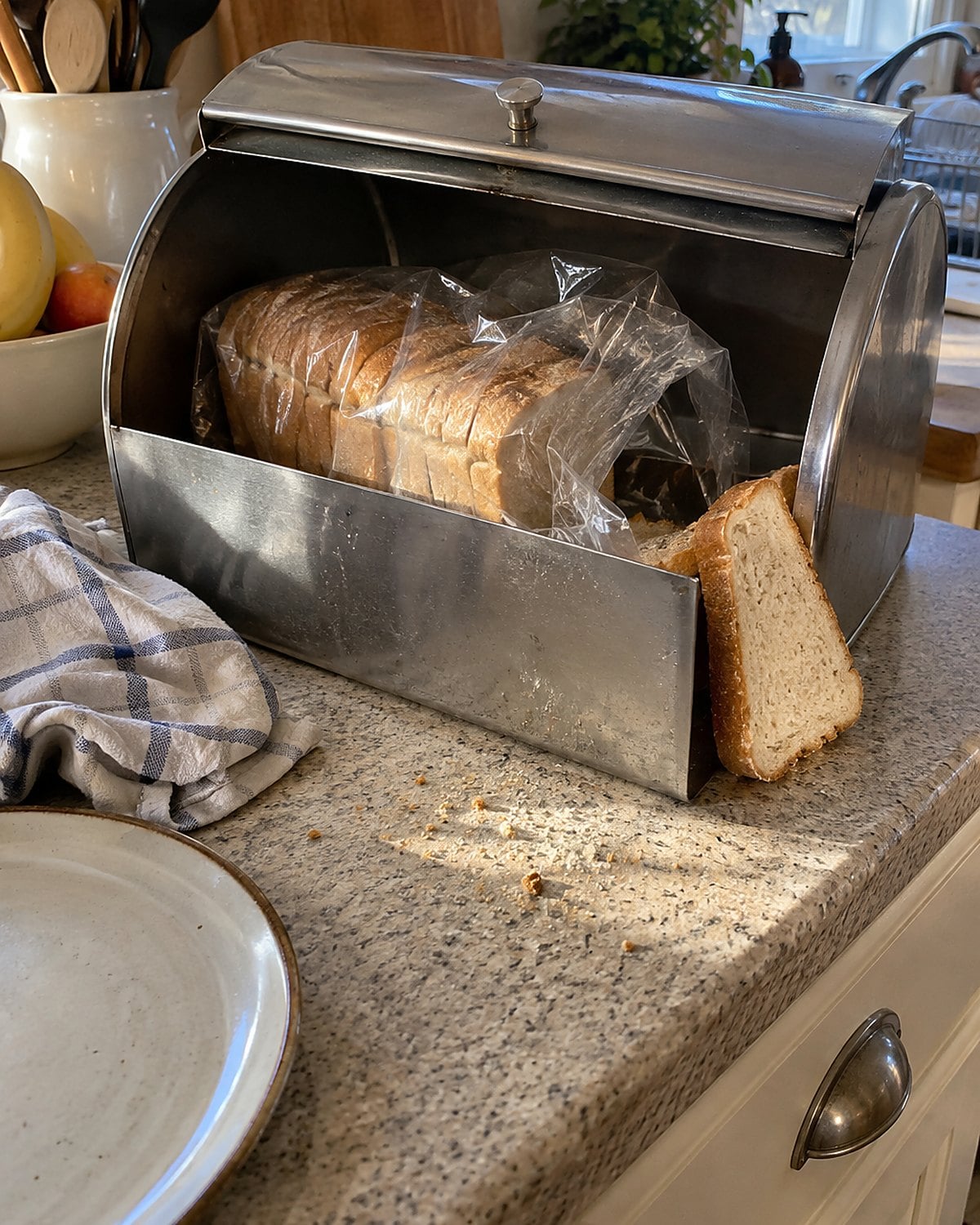
A bread box gave bread a place that wasn't the refrigerator or the pile beside the toaster. It also kept the bag from becoming a work surface for keys, coupons, and the afternoon mail.
You don't need the old metal box to keep the habit. Choose a dry cupboard or one clear part of the counter, away from the sink and stove.
Close the loaf bag after taking out slices, and check the bread before using it. If you see mold, the USDA says to discard the loaf rather than cut around the spot. Bread is porous, so mold extends beyond what you see.
The real gain is the assigned space. When the bread comes home, it goes straight there. When that spot fills up, use what you have before another loaf joins it.
#19 The Cutting Board at Counter Height
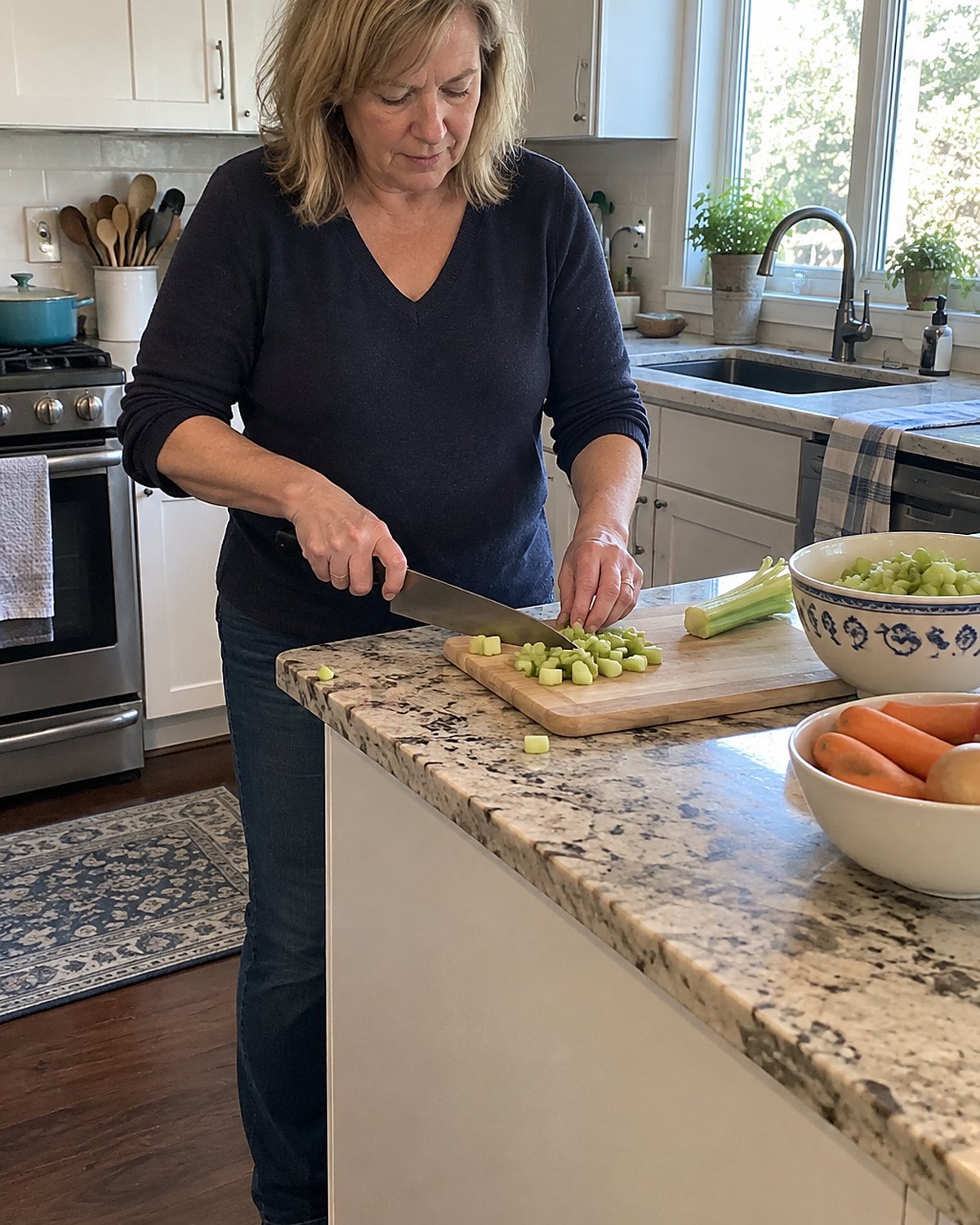
A pull-out cutting board under the counter had an appeal you felt in your shoulders. Pull it toward you, chop the celery, and push it back when supper moved to the stove. No board had to live across the only stretch of open counter.
The old built-in board has a drawback. Deep knife grooves are hard to clean, and raw meat juices don't belong in them. The USDA recommends separate cutting boards for raw meat and foods that won't be cooked. A modern board gives you the convenient reach without asking one surface to handle every ingredient.
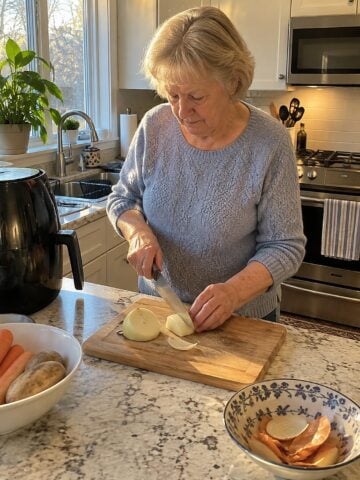
Try placing a sturdy board where your elbows stay near your sides. Slide a damp towel underneath if the board skates across the counter. Gather onion skins into a bowl beside it instead of sweeping them onto the floor.
Now notice the path from fridge to board to pan. If the path doubles back around a mixer or a dish rack, move the obstacle. The pull-out board understood something worth keeping: prep works better when the board is where you stand.
#18 The Step Stool by the Pantry
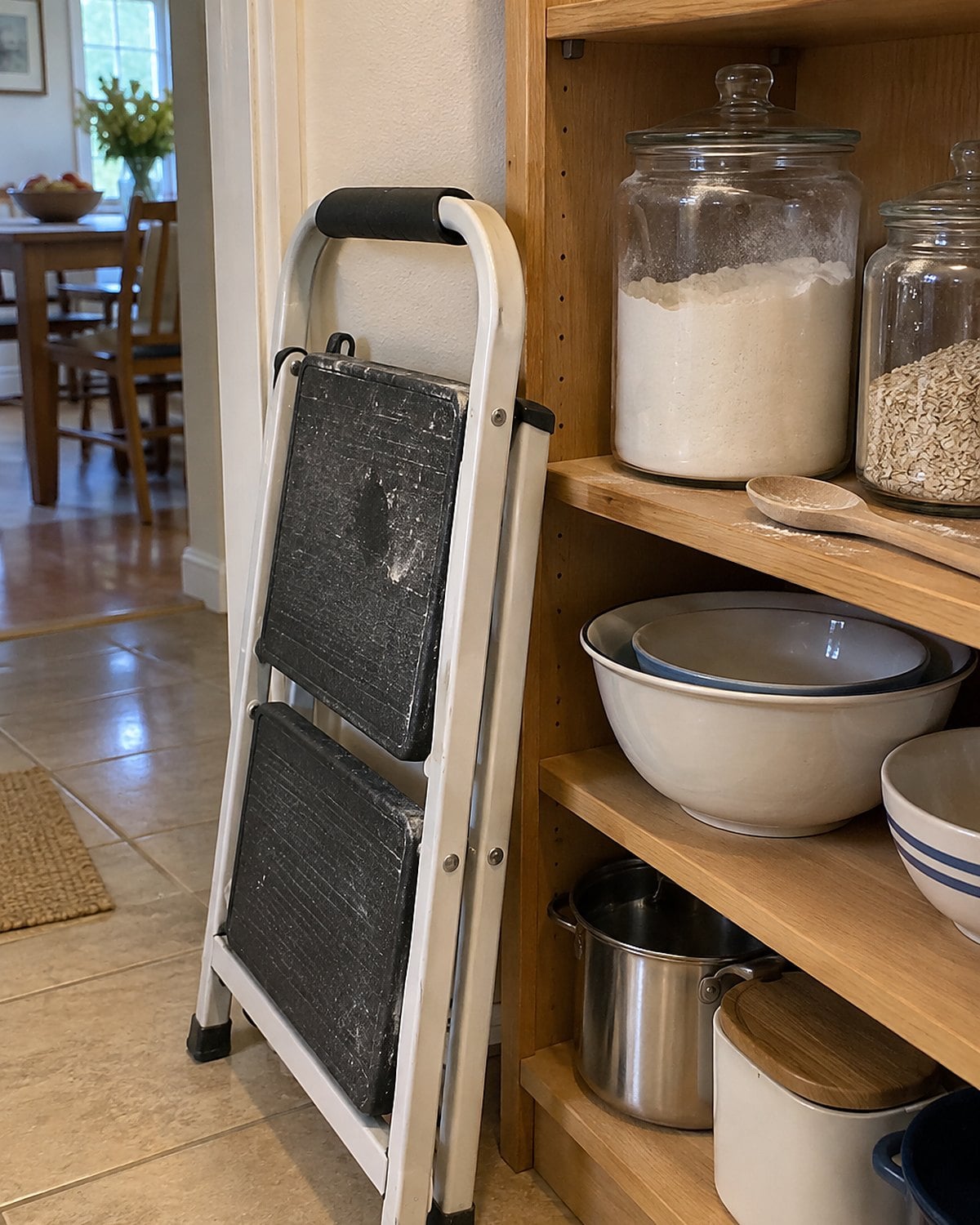
The stool had a job. It waited near the pantry so the flour tin on the high shelf didn't require a climb onto a chair. When you finished, it folded away.
Keep that part of the arrangement and question the shelf. Daily ingredients belong where you can reach them with both feet on the floor. Put the rarely used cake stand higher. Bring the oats, oil, and flour down to a comfortable shelf.
For anything that stays overhead, use a sturdy step stool on a level floor. Don't reach sideways from the top step with a heavy jar in your hand. Bring the item down, then step off before opening it.
If the stool comes out every morning for the same container, that container has the wrong home.
Move it today. You'll notice the difference before breakfast is over.
#17 The Shallow Shelf for Pantry Cans
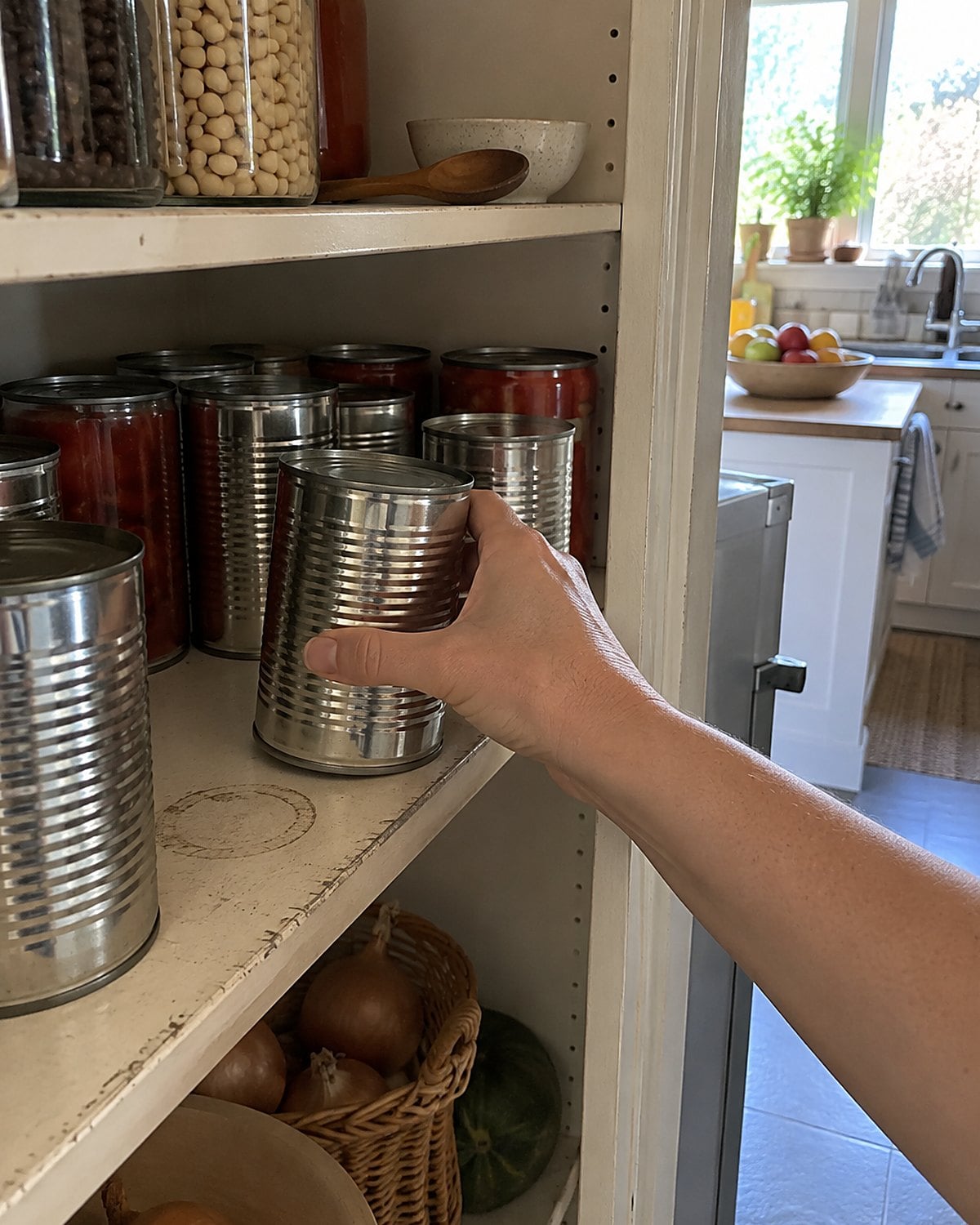
Three cans of tomatoes hide behind the cereal in a deep cabinet. A shallow shelf showed what was there. You bought from the shelf instead of guessing at the store.
You can borrow that advantage without rebuilding the pantry. Use a riser for cans, or pull them forward so their labels face you. Put the newest cans behind the older ones. Check the pantry before you write the grocery list, and build dinner around the can already waiting there.
Keep an eye on condition as well as date. The USDA's guidance on shelf-stable foods says to discard cans that are bulging, leaking, or badly dented at a seam. Set questionable cans aside instead of trying to make the meal work around them.
A shallow shelf does something deeper cabinets struggle to do: it lets you see an entire category at once. Give the beans one section and the tomatoes another.
When the tomato section is empty, the list gets tomatoes. When it's full, the list doesn't. No memory test required.
 You might also like26 School Lunchbox Foods From the 1960s That Would Horrify a Parent Today
#16 The Flour Tin with a Scoop
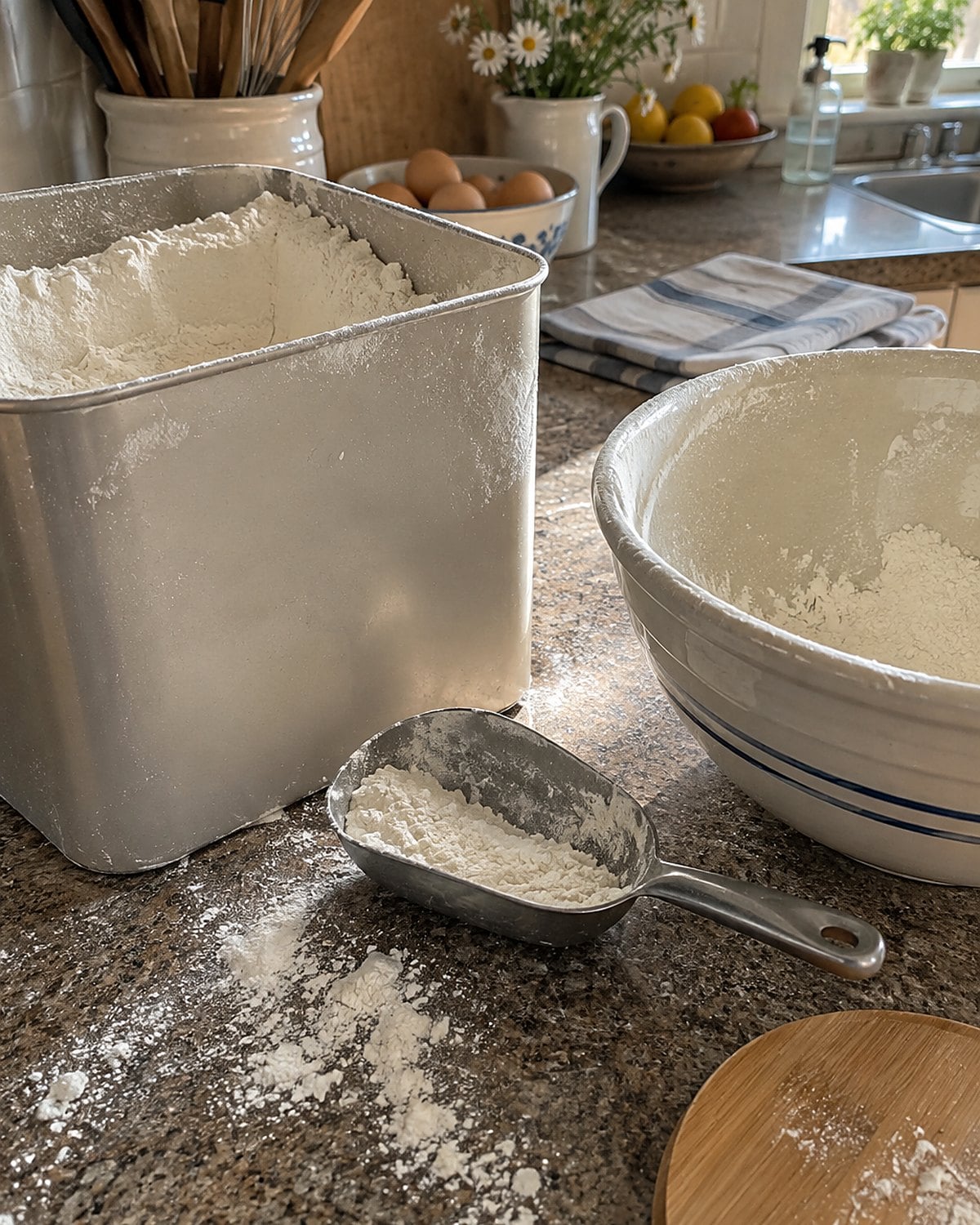
A flour tin made sense when flour came home in a paper bag. The tin protected it from spills, and the scoop meant nobody had to plunge a damp measuring cup into the bag.
Keep the useful part, but leave the flour label nearby. An unlabeled white powder in a handsome tin becomes a guessing game once cake flour, bread flour, and all-purpose flour share a shelf. Tape the name and purchase date to the container, or tuck the bag's label inside a clear lid.
Use a dry scoop and close the lid after each use.
If you bake by volume, spoon flour into the measuring cup and level it rather than packing it down with the cup. Then check what the recipe calls for before reaching into that tidy tin.
#15 The Metal Tray Beneath the Mixer
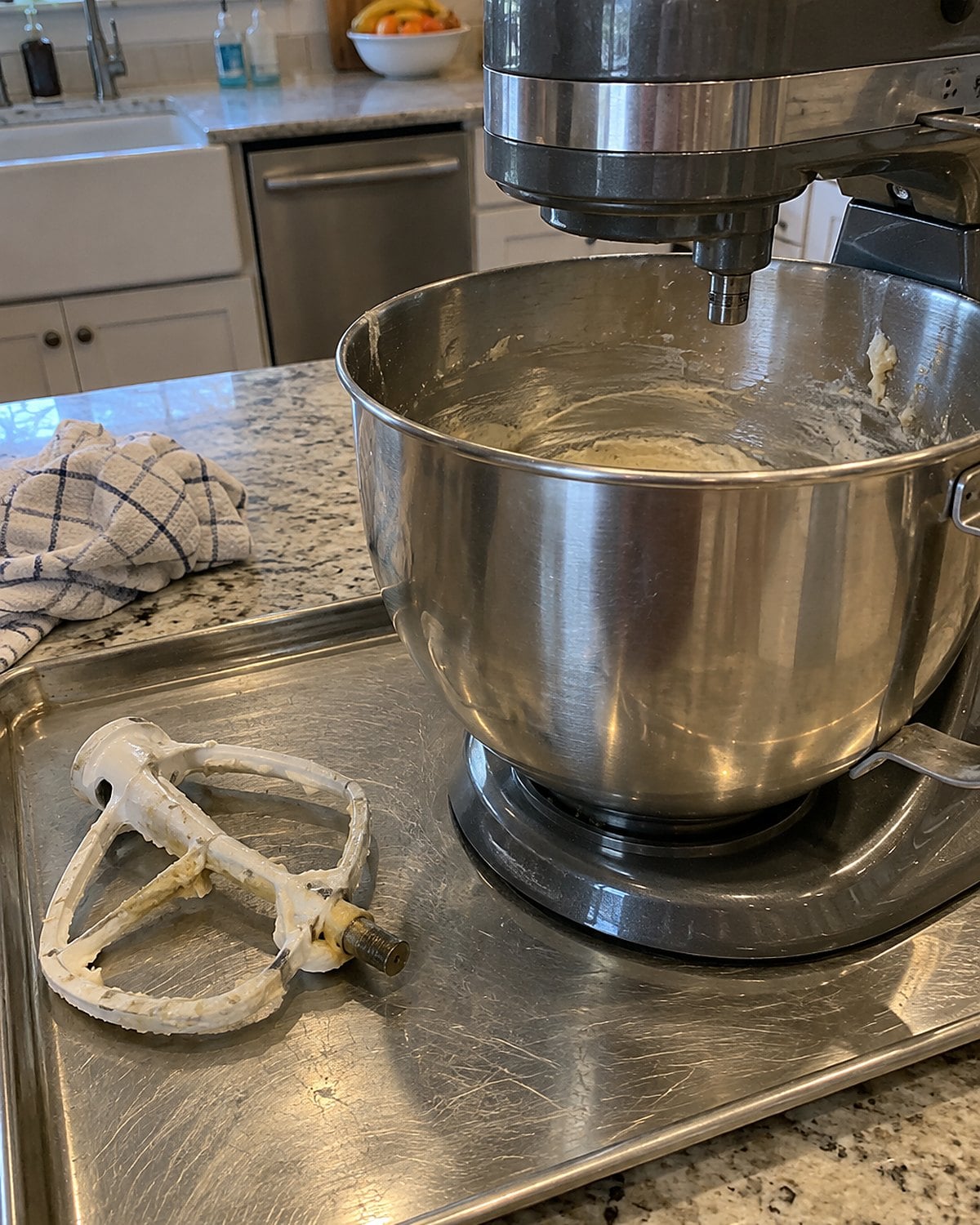
A heavy stand mixer is easy to admire and less fun to drag forward. Older counters used trays and smooth work surfaces to give heavy tools a clear place. That saved the flour canister from being pushed aside every time someone wanted to bake.
Check whether the mixer stays put while running before adding a tray. A sliding machine isn't a clever shortcut. Give it a stable counter spot with room to tilt or lift the head. Store the beaters and dough hook close enough that you don't have to search another cabinet.
If the mixer comes out only for holiday baking, let it live elsewhere and give the counter to daily work.
If it earns its spot every week, clear the space around it. You should be able to set down a bowl beside the machine without moving the toaster.
The tray is only helpful when it supports that routine. A sensible kitchen doesn't display every appliance you own. It keeps the ones you use ready, with enough room to use them.
#14 The Kitchen Timer on the Wall
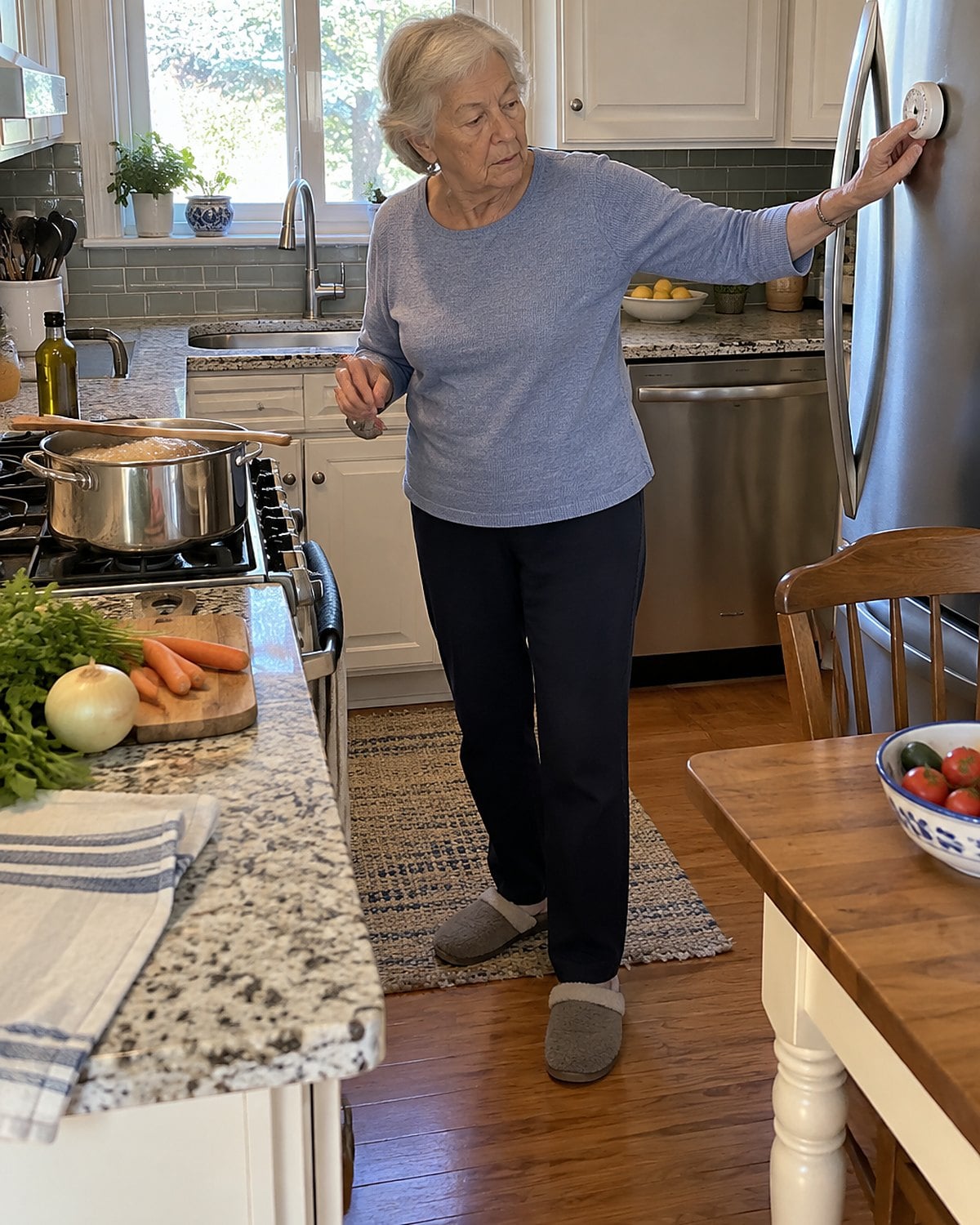
The wall timer's ring was hard to ignore. It didn't arrive mixed with a phone call, a news alert, and a photograph somebody sent from the garden.
Set a small magnetic timer when the food goes into the oven, not when you remember the oven is on. For a dish that needs a check halfway through, set the first timer for that check. Reset it after you've looked.
Give the timer one home where you can hear it from the sink.
When it rings, walk to the stove and look at the food. The sound is a prompt, not proof that dinner is done. That simple distinction kept a lot of cakes from coming out pale.
#13 The Peg Rail for Everyday Pans
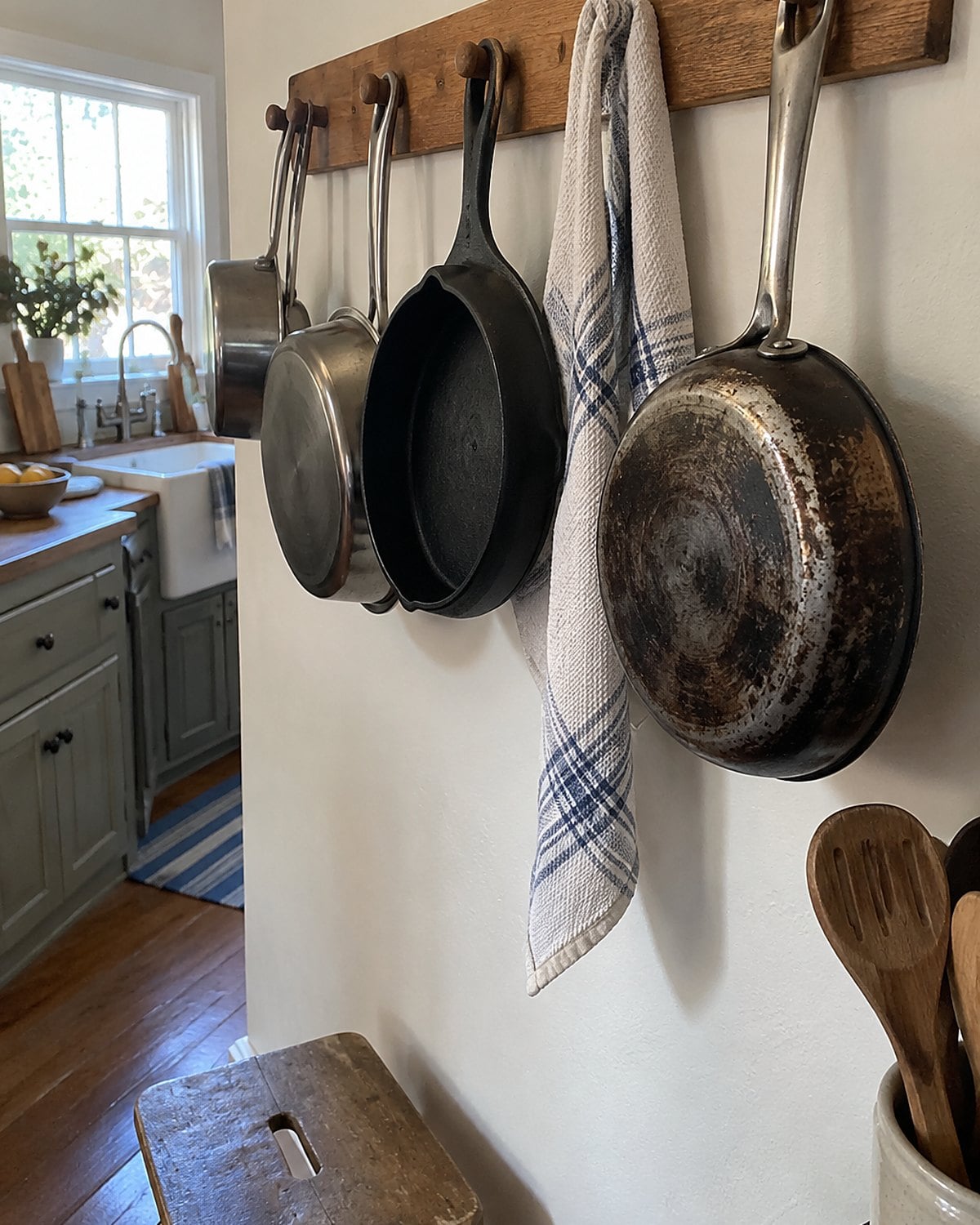
The cast-iron skillet didn't have to come out from under a tower of lids and roasting pans. A peg rail put the pan you used most where your hand could find it.
Before hanging anything, match the rail to the load. Heavy pans need hardware secured into wall studs or into a properly installed support. A decorative hook in drywall is no place for a skillet. Keep the rail clear of the burner, where handles and hanging towels pose a fire hazard.
Then choose what truly earns a hook. Hang the colander if it gets used every evening. Leave the oversized holiday pan in a cabinet. The point is a short reach, not a wall covered in cookware.
Look at your stove after a normal week. Which pan spent the most time out? Give that one the easiest spot.
A good rail turns the end of cleanup into a small favor for the person making the next meal. This time, that person is probably you.
#12 The Pot Lid Stored Upright
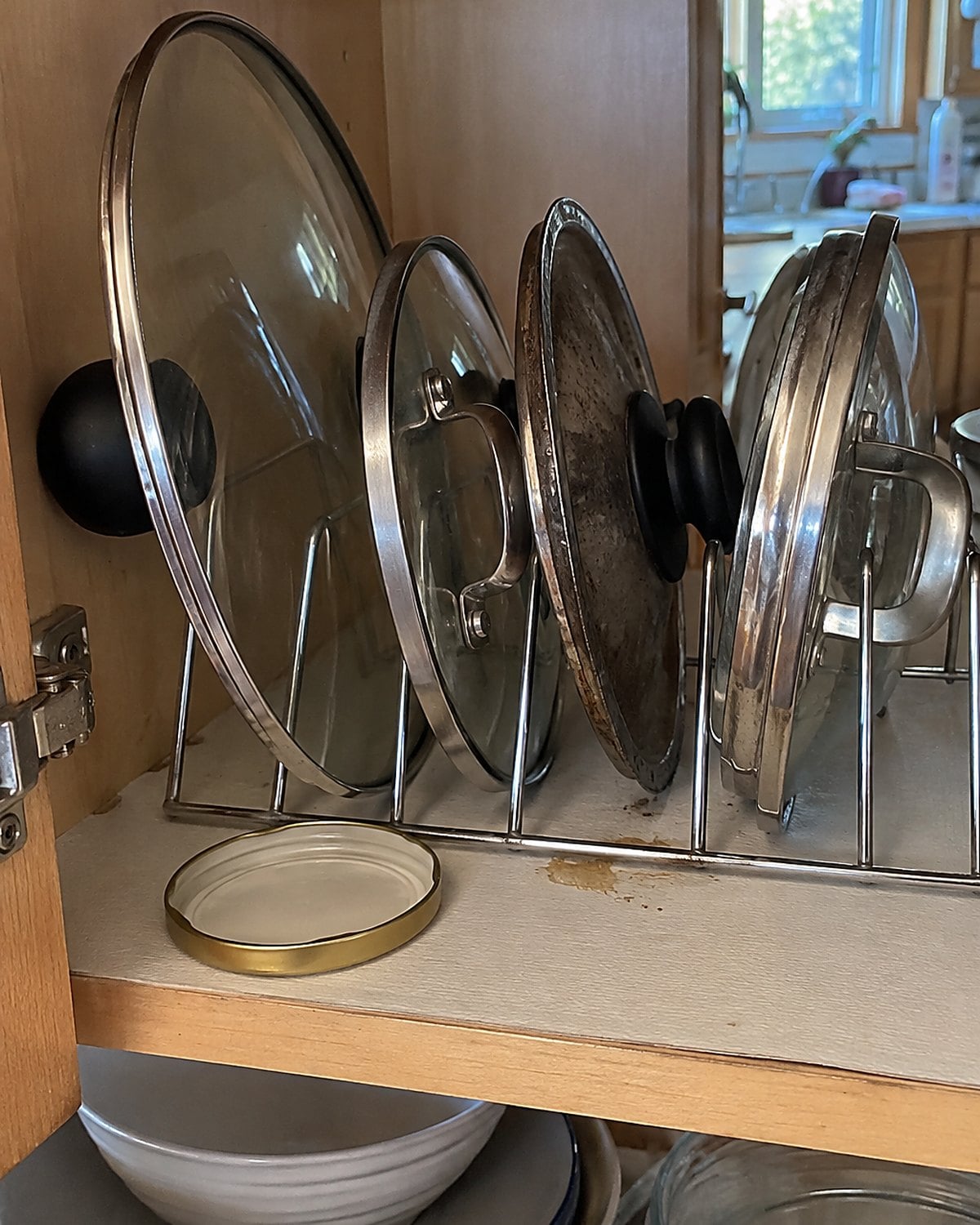
The cupboard door opens. Lids slide out in a bright, clattering pile. Somewhere under them sits the one that fits tonight's saucepan.
Stand lids on edge by size, with handles facing out. A dish rack inside a cabinet works if the lids fit and the rack stays stable. Keep the largest lid near the largest pot. Measure the cabinet before buying an organizer; lid handles take up more room than their metal rims suggest.
Check the fit before the pot starts steaming.
Set the lid on the pot and see that it sits flat, without rocking. Then put it back in its slot until you need it. Order in the cupboard matters most when the burner is already on.
#11 The Enamel Pot for Supper Soup
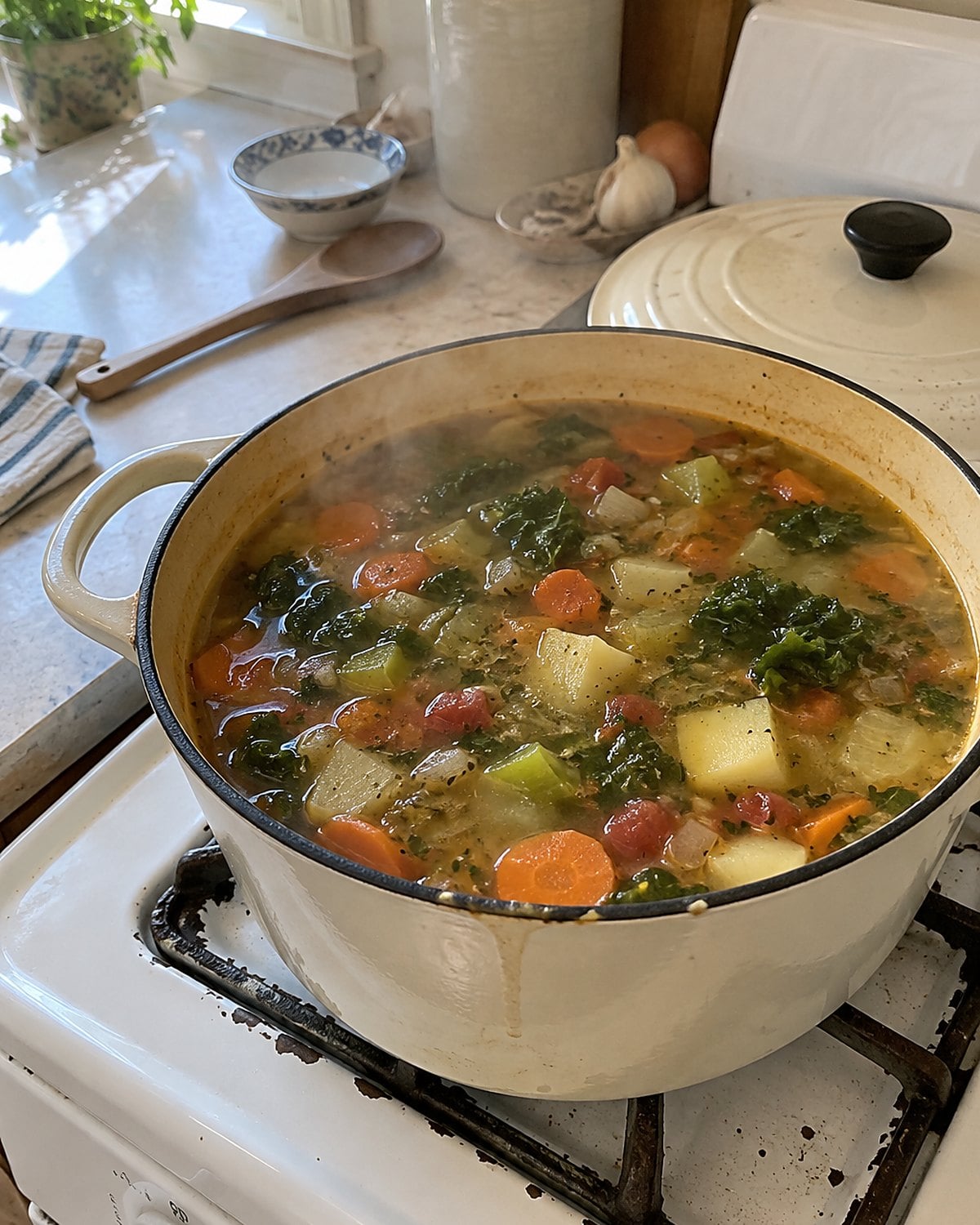
An enamel pot went from sautéing onions to simmering soup without a change of pan. That saved a wash-up and kept the browned bits where they belonged: in the meal.
Start the onions in a little oil and let them take on color. Add the liquid and scrape the bottom with a wooden spoon. Those brown bits dissolve into the broth. If the pot has a chipped cooking surface, reach for an intact pot instead.
Add delicate greens near the end so they don't lose all their shape.
Taste after the beans or potatoes are tender, then adjust the salt. If you started with packaged broth, tasting first is especially useful.
A wide pot also gives you room to see the simmer. Aim for small bubbles breaking the surface rather than a hard boil that beats the vegetables around. You already know how to make soup. The old pot's lesson is that a clear sequence and one good vessel make the work easier to follow.
#10 The Pull-Out Bin for Potato Peels
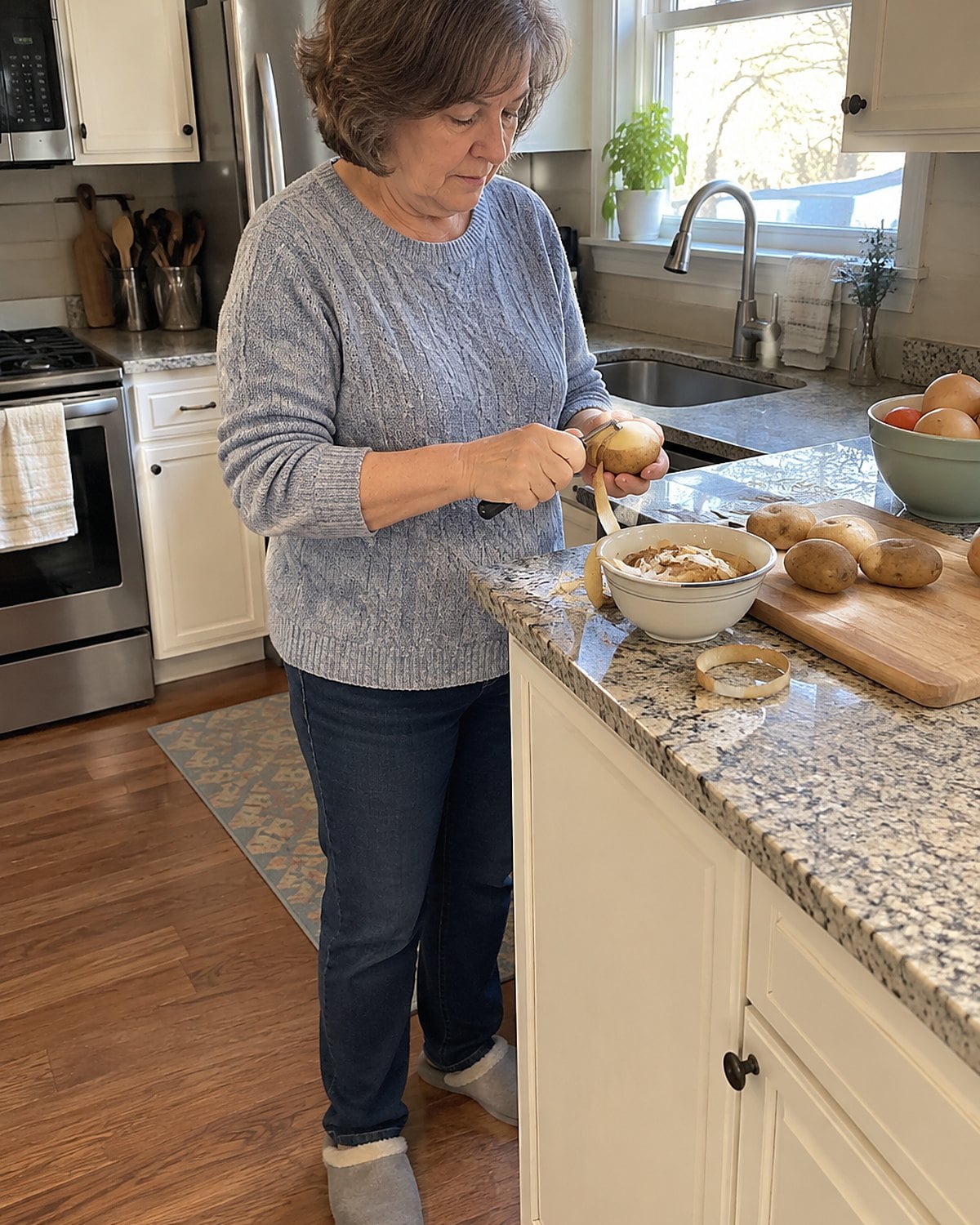
The potato is half peeled when you realize the trash is across the kitchen. Some older cabinets had a pull-out bin beneath the prep area. Peels went down and away without a walk across the room, dripping potato water along the way.
A small bowl on the counter gives you the same short trip. Set it beside the board before you peel. Scrape onion ends, carrot tops, and eggshells into it as you go. Empty the bowl into the trash or your compost container when prep is done.
Don't leave food scraps sitting in a cabinet bin. A convenient spot should make cleanup faster, not leave you with an unpleasant cabinet to open tomorrow.
If the bowl is full before you've started cooking, choose a larger one next time.
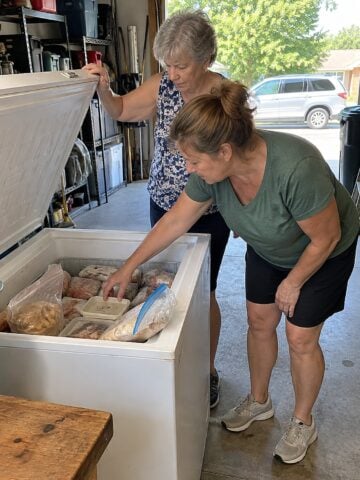
#9 The Freezer Package Marked for Dinner
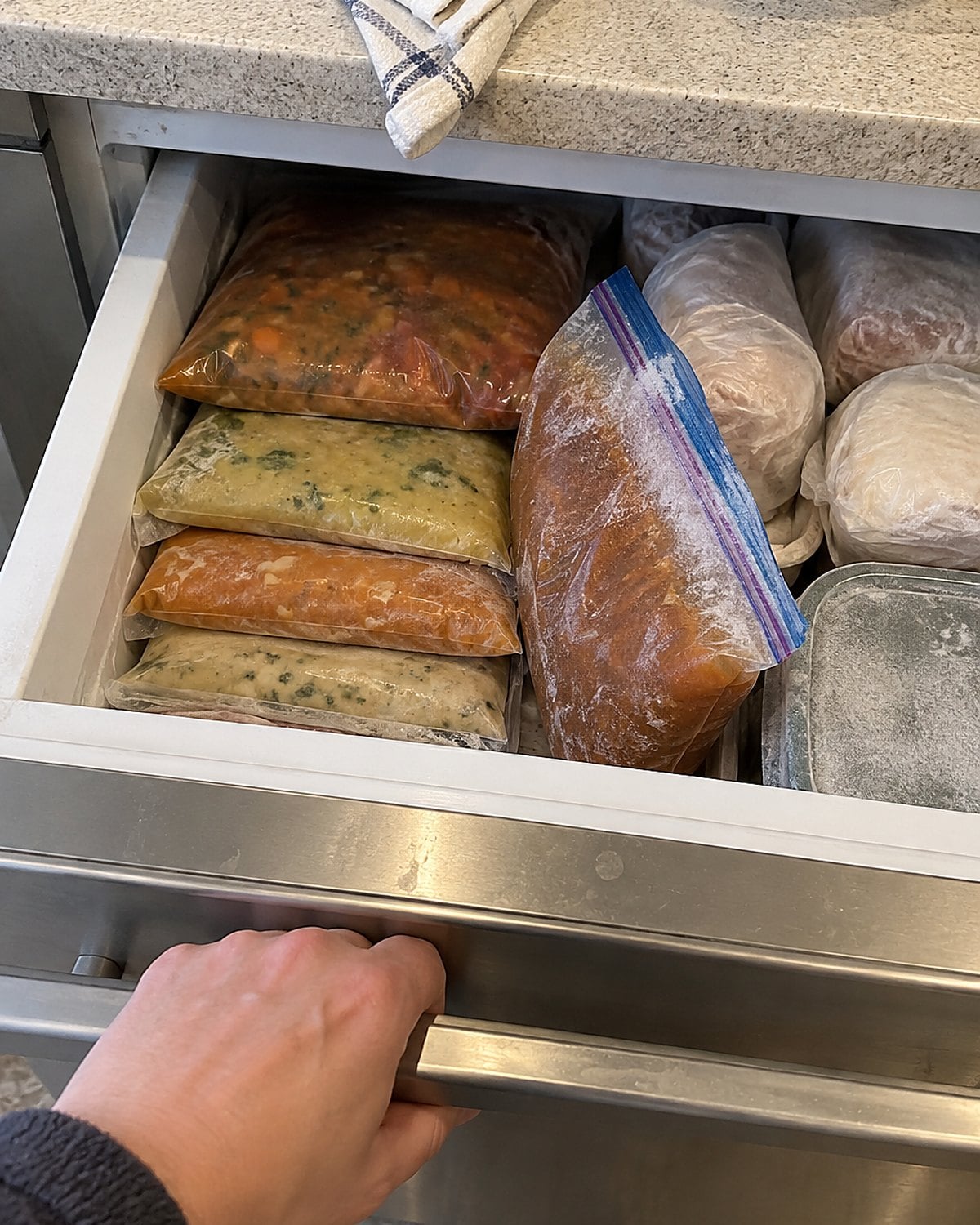
A paper-wrapped package with a clear label answered two questions before anyone opened the freezer: what is this, and when did it go in? The same habit matters now that leftovers hide in identical plastic containers.
Label a freezer bag before filling it. Write the food name and the date, then press out excess air and seal it. Freeze soup flat on a tray so the bags stack neatly once solid.
For cooked leftovers, the USDA's cold storage chart gives a freezer-quality window of 2 to 6 months. Frozen food kept continuously at 0°F stays safe longer, though its quality declines.
Cool leftovers promptly and refrigerate or freeze them within 2 hours of cooking. Divide a large pot into shallow containers so it cools faster. The FDA says to keep the refrigerator at 40°F or below and the freezer at 0°F.
The label spares you the frozen-rectangle guessing game. Pull out a package for supper and you know what needs thawing before you've committed to a side dish.
 You might also like27 Things Home Cooks Over 60 Do Without Thinking That Chefs Would Never Do
#8 The Recipe Box Behind the Coffee Tin
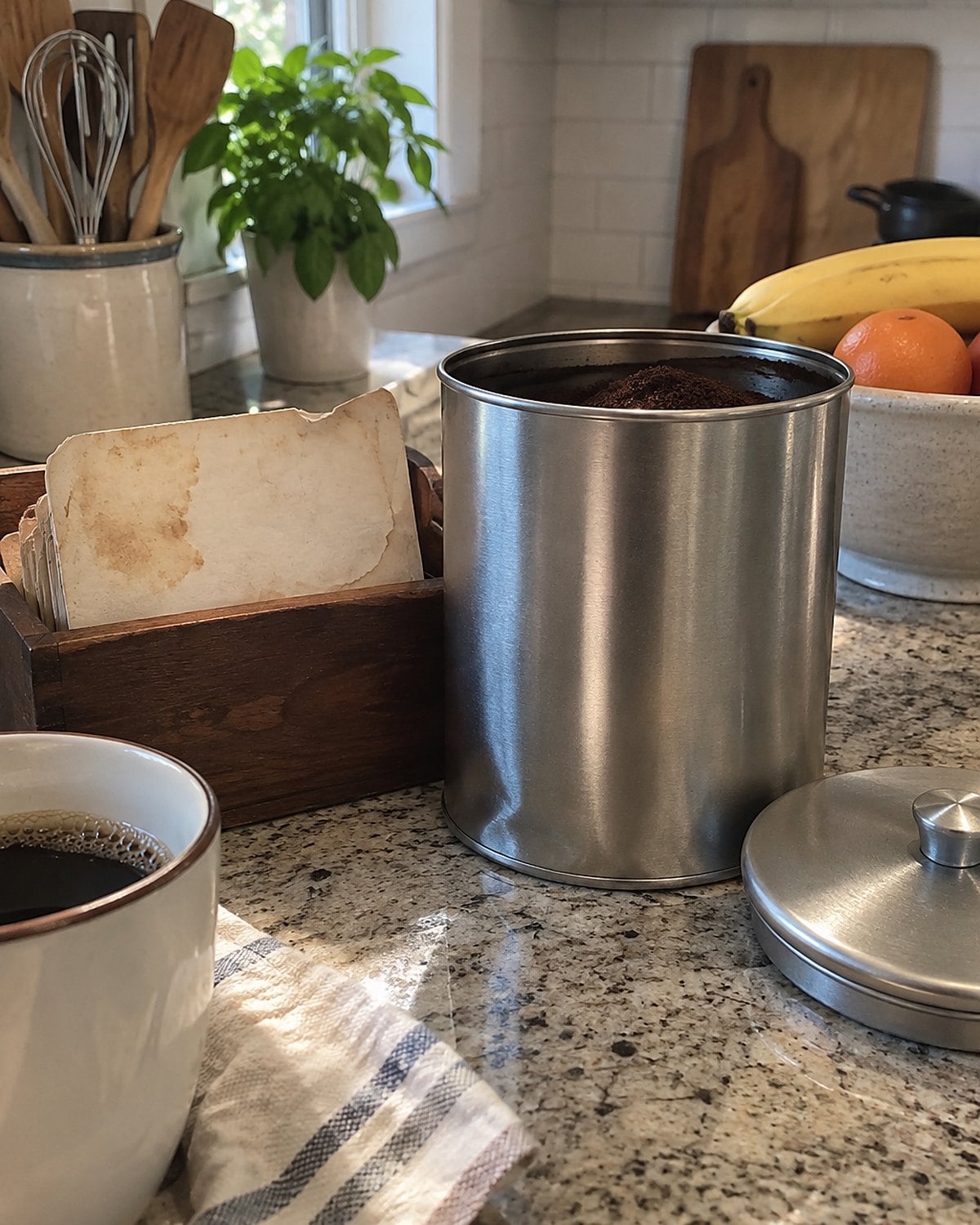
A recipe box held the dishes people actually made. Its cards had stains, crossed-out amounts, and notes about which pan worked. A phone full of saved recipes has more choices, but it doesn't always tell you which one your household liked.
Pick one recipe you make without much thought.
Write down the detail you never see in print: the pan size, the lemon you add at the end, or the moment the edges look done. Keep that note with the recipe, on paper or in your phone.
Next time someone asks for the dish, you'll have something better than a link. You'll have your version. The recipe box was smart because it kept the changes alongside the instructions.
#7 The Dish Cabinet Above the Dishwasher
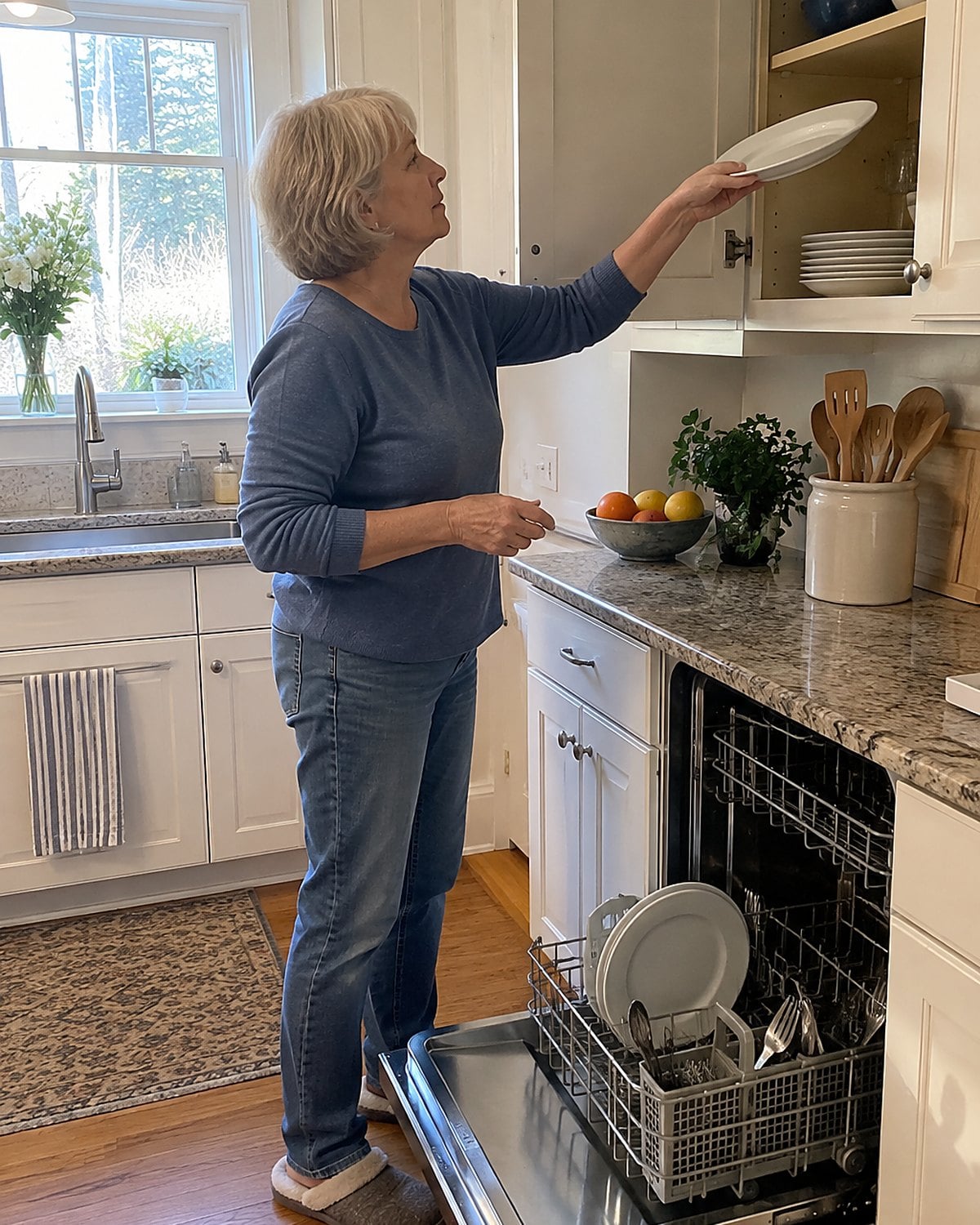
Unloading the dishwasher is dull enough without carrying every plate across the kitchen. A cabinet directly above or beside the machine shortened that job. You lifted plates out and put them away from the same spot.
Watch where the clean dishes travel tonight. Put everyday plates and bowls in the nearest comfortable cabinet. Keep heavy stacks low enough to lift without stretching overhead. Glasses belong where a wet glass won't pass above your head on its way out of the rack.
Don't let the cabinet's old labels decide the layout.
If fewer people eat supper at home now, the good dishes don't need to wait in a distant cupboard. Put the plates you use at the easy height and move the seldom-used serving platter away.
Then unload the next load. You should be able to stand in one area for most of it. That is the kind of convenience a kitchen earns through use, not through a floor plan that looked nice before anyone cooked there.
#6 The Drop-Leaf Table for Extra Chairs
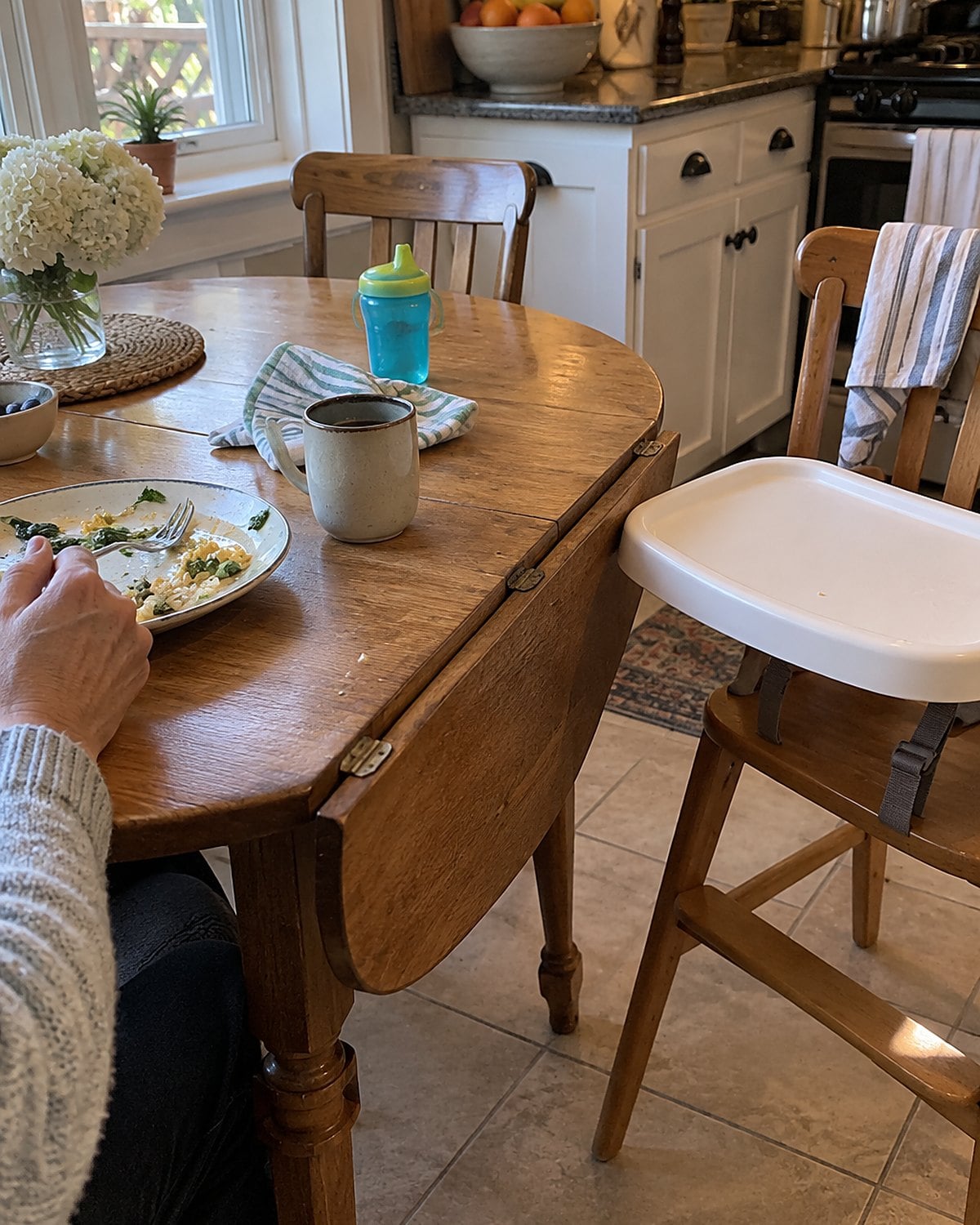
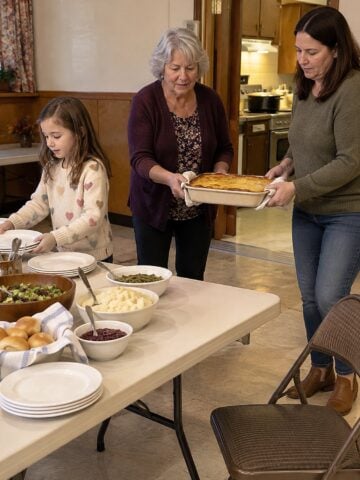
A drop-leaf table understood that the number at supper changes. Folded down, it left room to walk through the kitchen. Raised up, it made space for grandchildren, a neighbor, or a second bowl of salad.
Keep the everyday eating area sized for the people who eat there most nights. Store extra chairs where you can bring them out without moving a pantry's worth of boxes.
Before a visit, test the walking path with the chairs in place.
If a grandchild uses a high chair, leave enough room to pull it out and clean beneath it. The table should change shape for the occasion, then give the floor back afterward. There is no prize for keeping every place set all week.
#5 The Window Above the Kitchen Sink
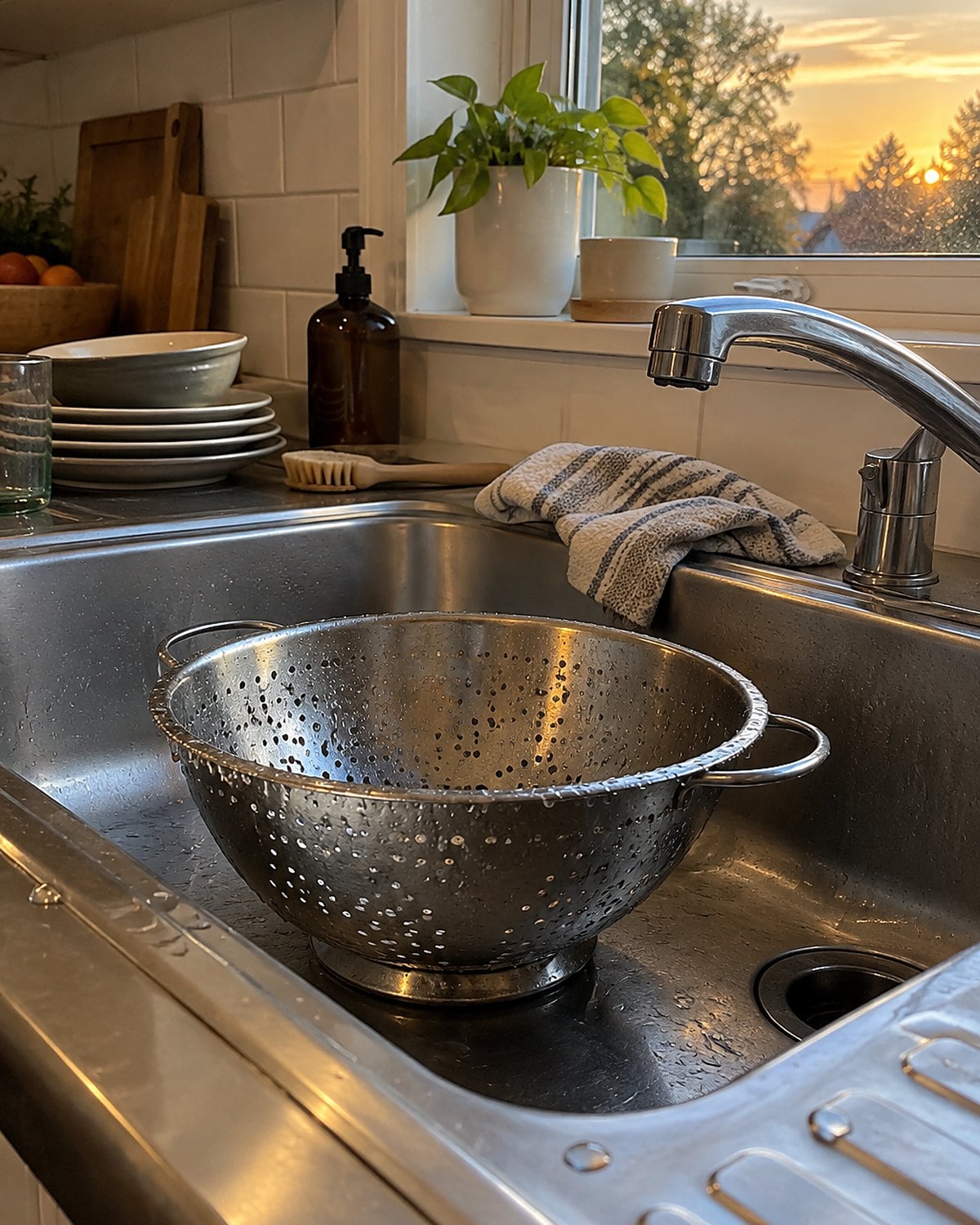
The window above the sink gave you daylight where you spent time washing and rinsing. You could look up from the dishpan, see the yard, and judge whether it was time to turn on a lamp.
Daylight is helpful at the sink, but it doesn't replace good task lighting for a knife or a food label. If the ceiling fixture throws your shadow across the counter, put a light under the cabinet over your prep spot.
You'll see the onion's cut side and the color in the pan without leaning closer.
Keep the windowsill clear enough to wipe after splashes. A row of plants and bottles looks lovely until you need to scrub the glass or open the window. Leave the latch reachable, and check that an open sash won't interfere with the faucet.
The older room gave the sink a view. Keep it if you have it. Then make sure the work beside the sink has light of its own, especially when dinner starts after sunset.
#4 The Counter Space Beside the Fridge
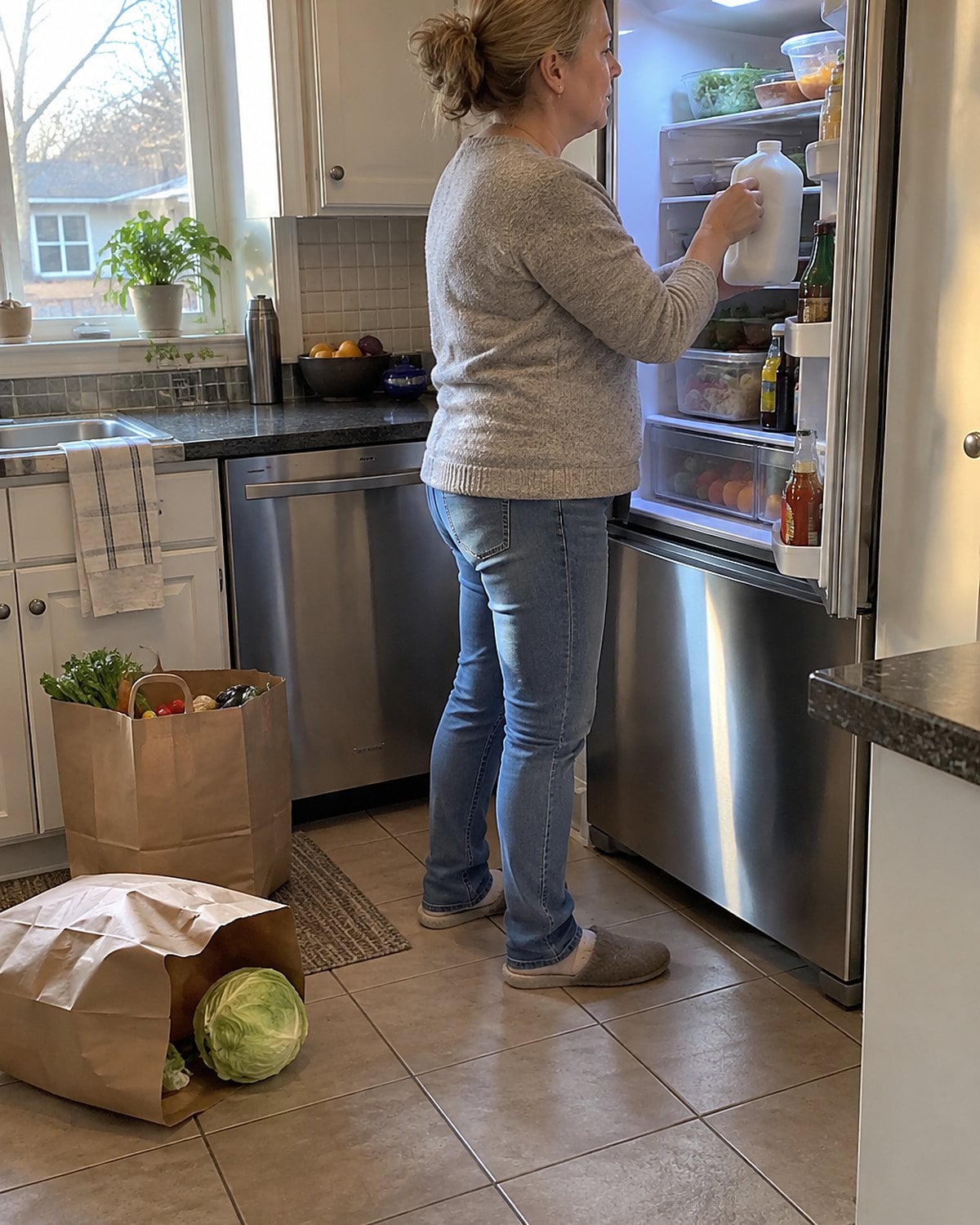
Open the refrigerator with a carton of milk in your hand. Where does the carton go while you move the soup pot? A stretch of counter beside the fridge answers before the juggling begins.
Give that stretch a clear job. It catches groceries on their way into the fridge and ingredients on their way out. Move the mail, the charging cords, and the empty shopping bags to another home.
Leave enough room to set down a tray or a mixing bowl.
Test the space after your next grocery trip. Set the cold food there first, then put it away promptly. If a vase or appliance blocks the spot, you've found the thing to move. That bare patch will do more work than another organizer.
#3 The Pantry List Beside the Door
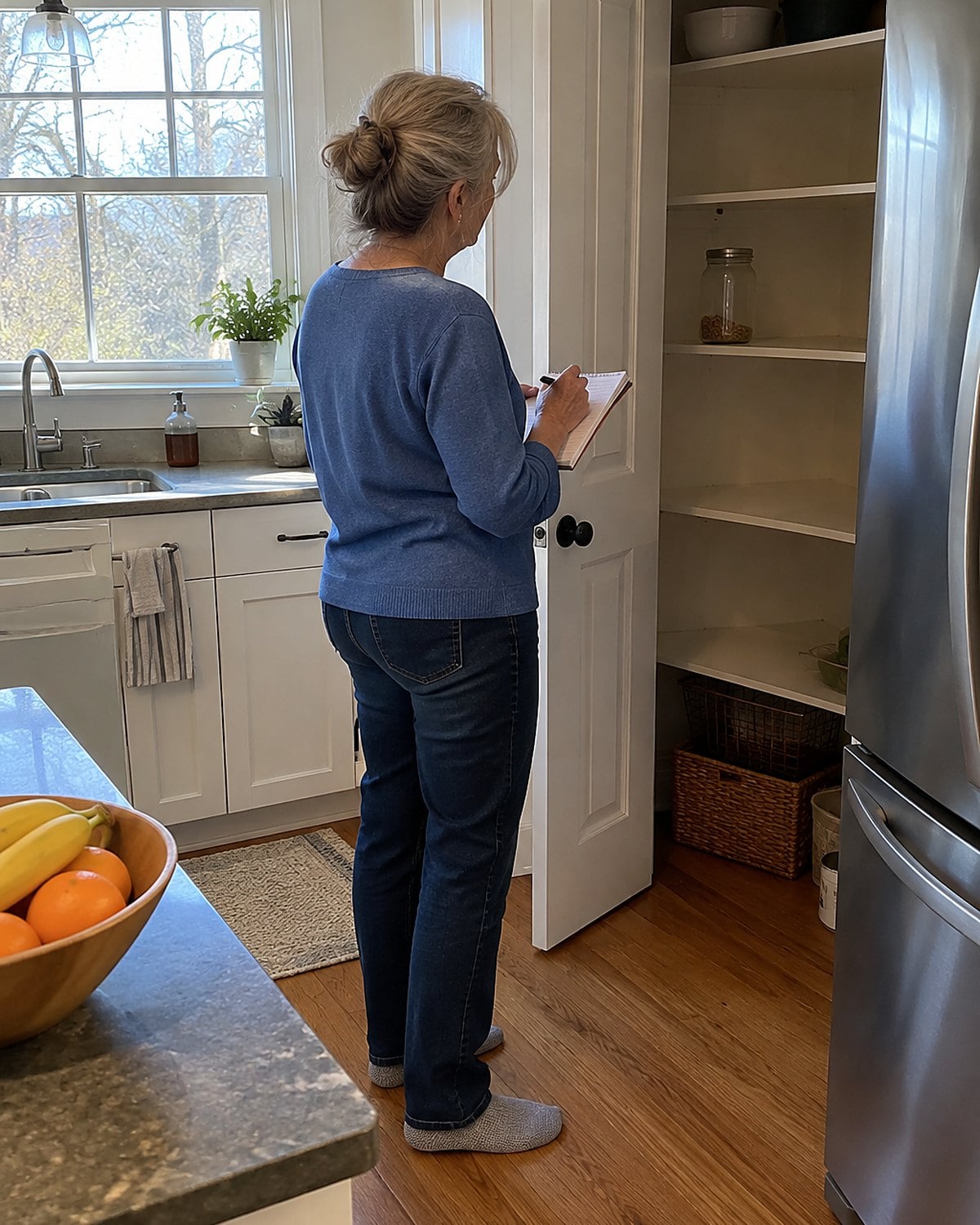
A pencil and a scrap of paper beside the pantry door caught a missing ingredient at the moment it ran out. You didn't have to recall it three days later while standing at the store.
Give the list one place. A notepad on the fridge works, or a note on your phone that you open every shopping trip. When you use the last can of chickpeas, add chickpeas then. When someone finishes the milk, ask them to write it down.
The habit is more reliable than a cupboard full of backup food.
Before shopping, look through the pantry and refrigerator. Cross off anything you already have and add ingredients for the dinners you plan to make. The USDA's MyPlate shopping guidance recommends checking what is on hand before making a list.
Leave the list where a household member can use it, too. The clever part isn't the paper. It's catching the need while the empty shelf is still in front of you.
#2 The Smaller Pot for Tuesday Supper
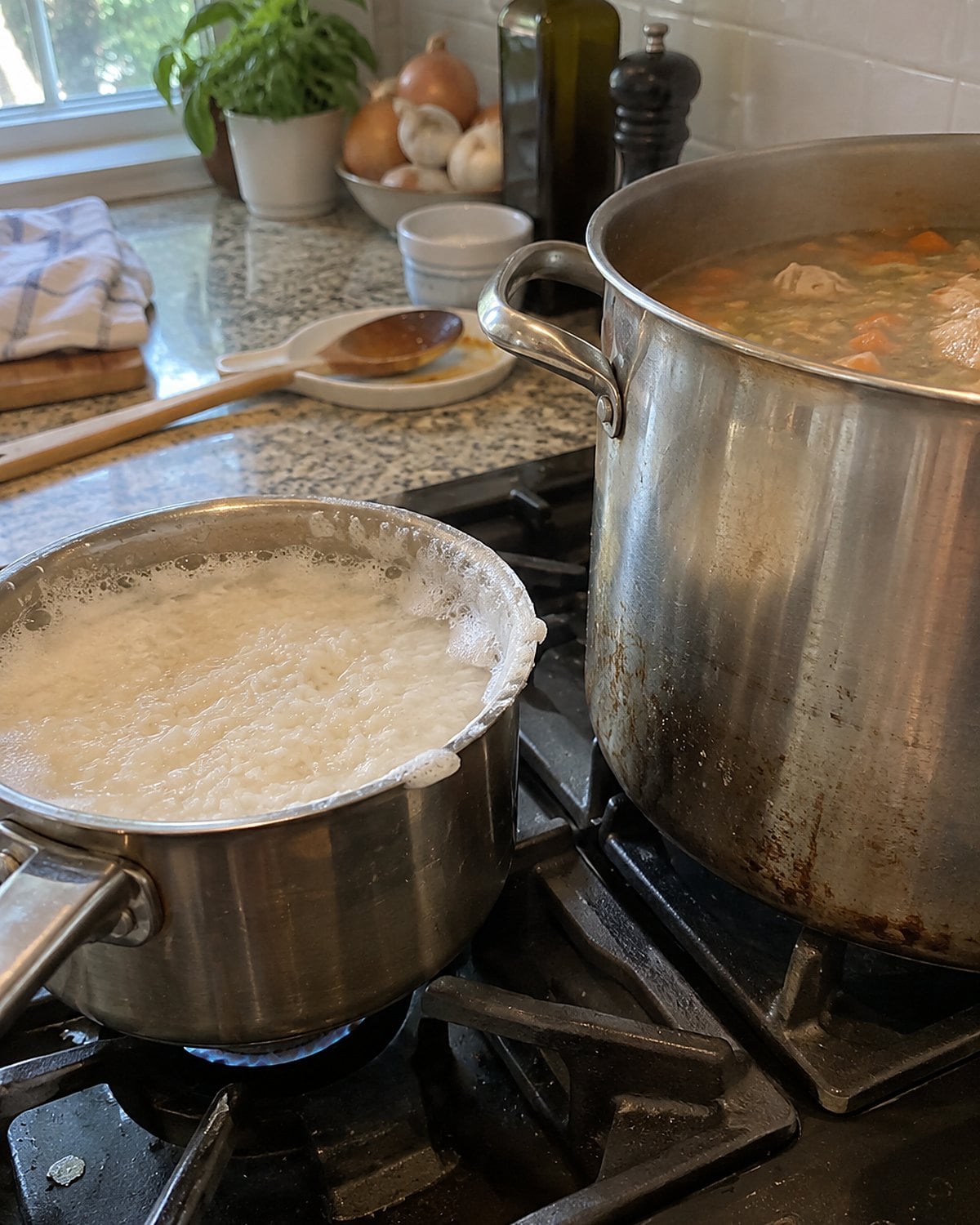
A big stockpot earned its place when the whole household ate at home. Now it sits on the burner while you make soup for two, and the leftovers crowd the refrigerator.
Keep the pot. Give the smaller saucepan the easier shelf.
A pan that fits the meal heats more evenly and leaves room on the stove for a second dish. For a small batch of rice or oatmeal, check that the burner flame stays beneath the pan instead of licking up its sides.
When family comes over, bring out the big pot again. The point isn't to cook less well because fewer people are eating. It's to let your everyday tools fit the table you set on an ordinary Tuesday.
#1 The Clear Path Through Supper Prep
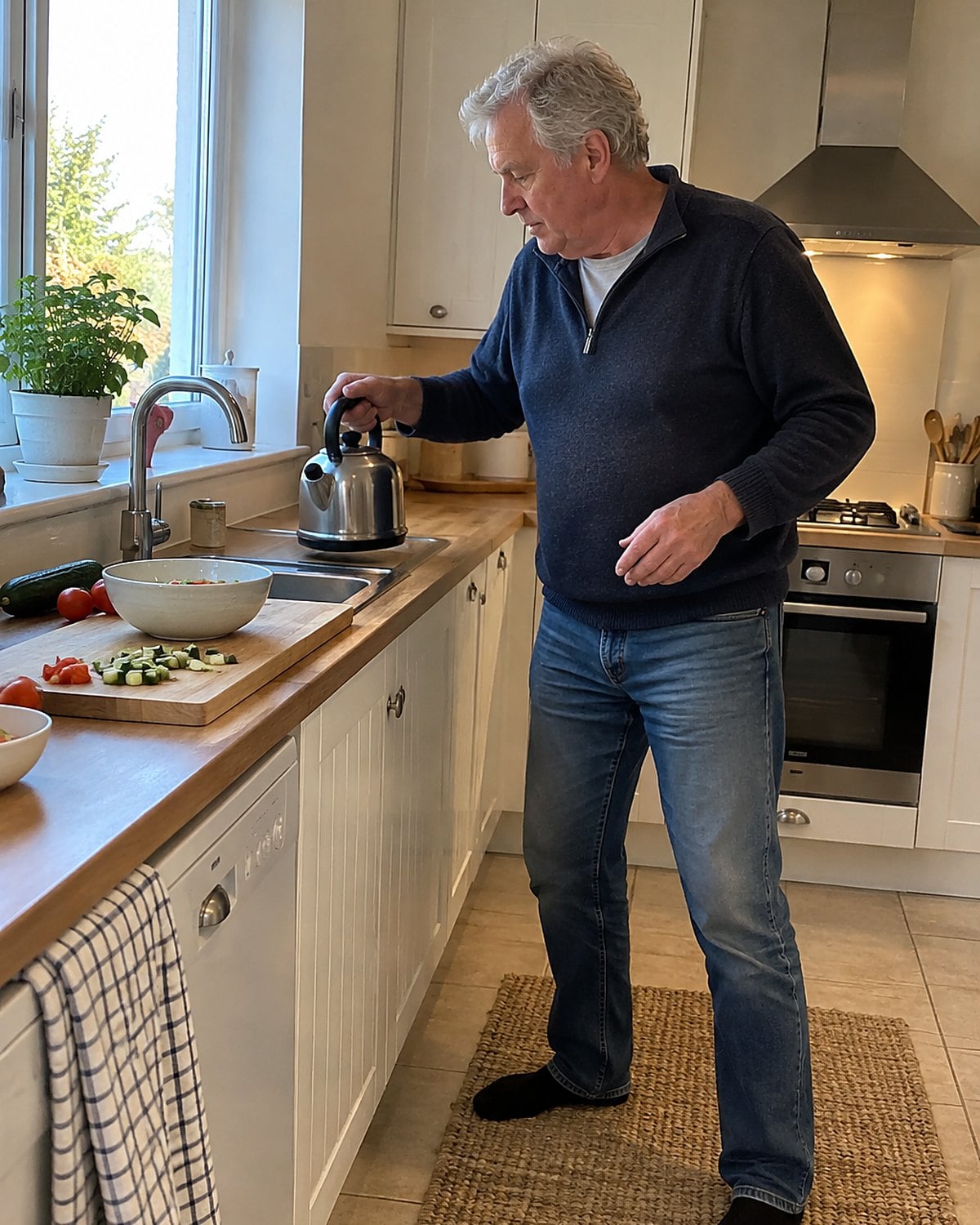
Stand where you begin dinner, before you take anything out. Look toward the fridge, the sink, the board, and the stove. The smartest part of an older working kitchen was the short trip between those places. You could bring food in, wash it, cut it, cook it, and carry it out without circling a pile of things that belonged somewhere else.
Try the walk with tonight's meal. Take the ingredients from the fridge. Rinse what needs rinsing, then put it near the board. Notice each point where you must turn back, move an appliance, or set something down because both hands are full.
Now change one thing.
Put the trash bowl beside the board. Move the kettle off the stretch where you set washed vegetables. Shift the everyday pan to the cabinet nearest the stove. Don't reorganize the whole room; fix the turn that interrupts supper most.
New countertops won't make the walk shorter if the tools still live at the wrong end of it. Tonight's dinner gives you a floor plan to follow.
Keep reading
 27 Things That Were Always on the Table in the 1960s and Never Are Now
See all 27 →
More you’ll remember
 27 Things Nobody Under 40 Knows How to Make From Scratch
 27 Breads Your Mother Baked Weekly That You Can Still Make Without a Machine
 23 Foods That Were Made at Home Until the Store Started Selling Them
The bottom line
The best ideas in those older kitchens had a plain rule: put each thing near the work it helps you do. A shelf, a hook, or an empty patch of counter earned its place through use.
By the time supper starts, the well-prepared version of you has a clear spot for the hot lid and knows where the tongs are. Start there, then look around your own kitchen. Which turn do you make every evening that you shouldn't have to make?
Leave a Reply