

This article draws on the USDA’s guidance for leftovers, cold storage, and reheating, plus the FDA’s refrigerator and power-outage guidance.
You lift the lid on yesterday’s soup. It smells like onions and chicken, the same as it did when you made it. That smell feels like evidence. After enough years at the stove, you trust your nose, and most days it serves you well.
But bacteria that cause food poisoning don’t have to change a food’s smell, taste, or appearance. A good pot of soup gives you no special warning. The useful clues are less satisfying: when it went into the fridge, how cold that fridge is, and what happened between the pot and the bowl.
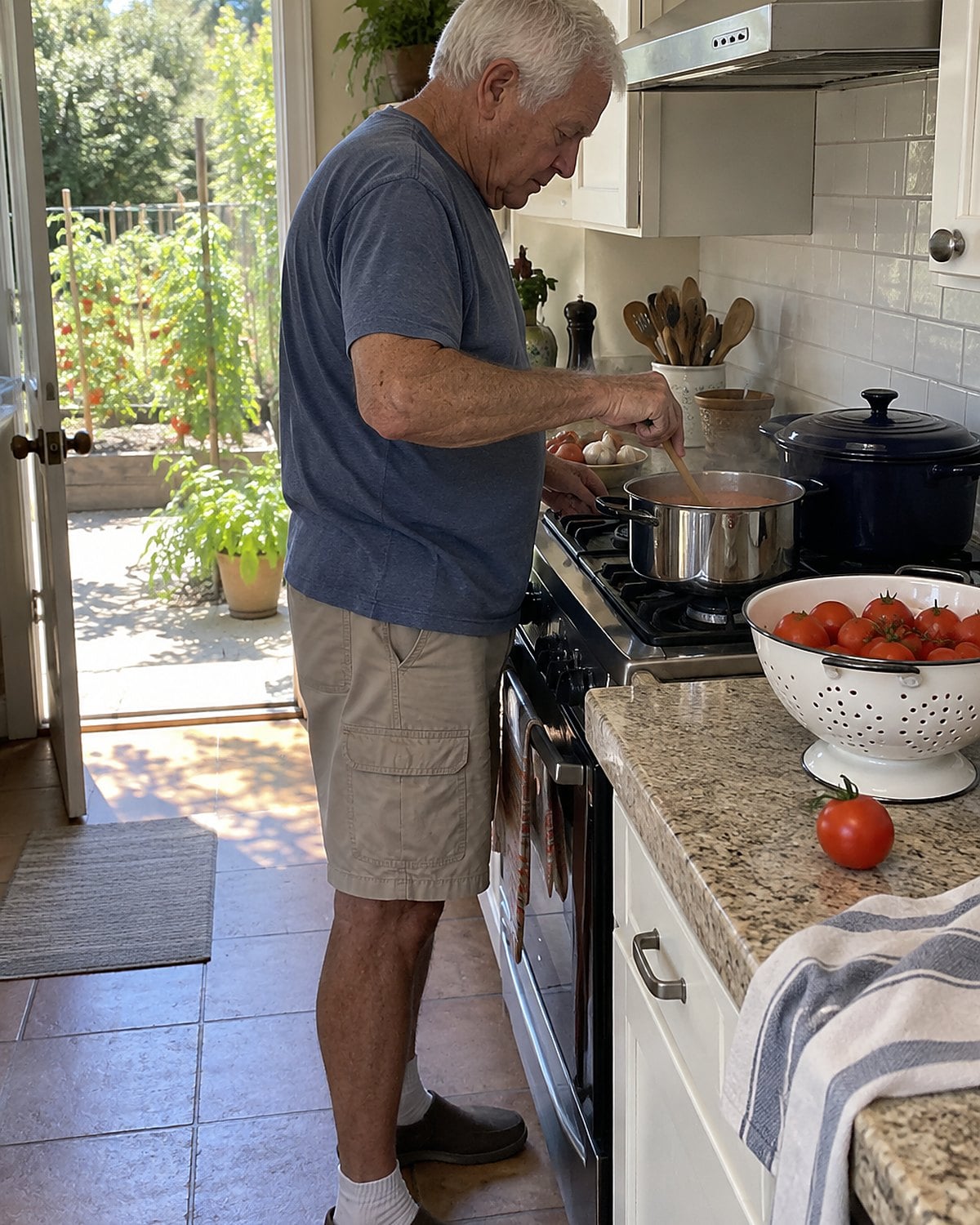
#27 The Soup Pot Left on the Stove
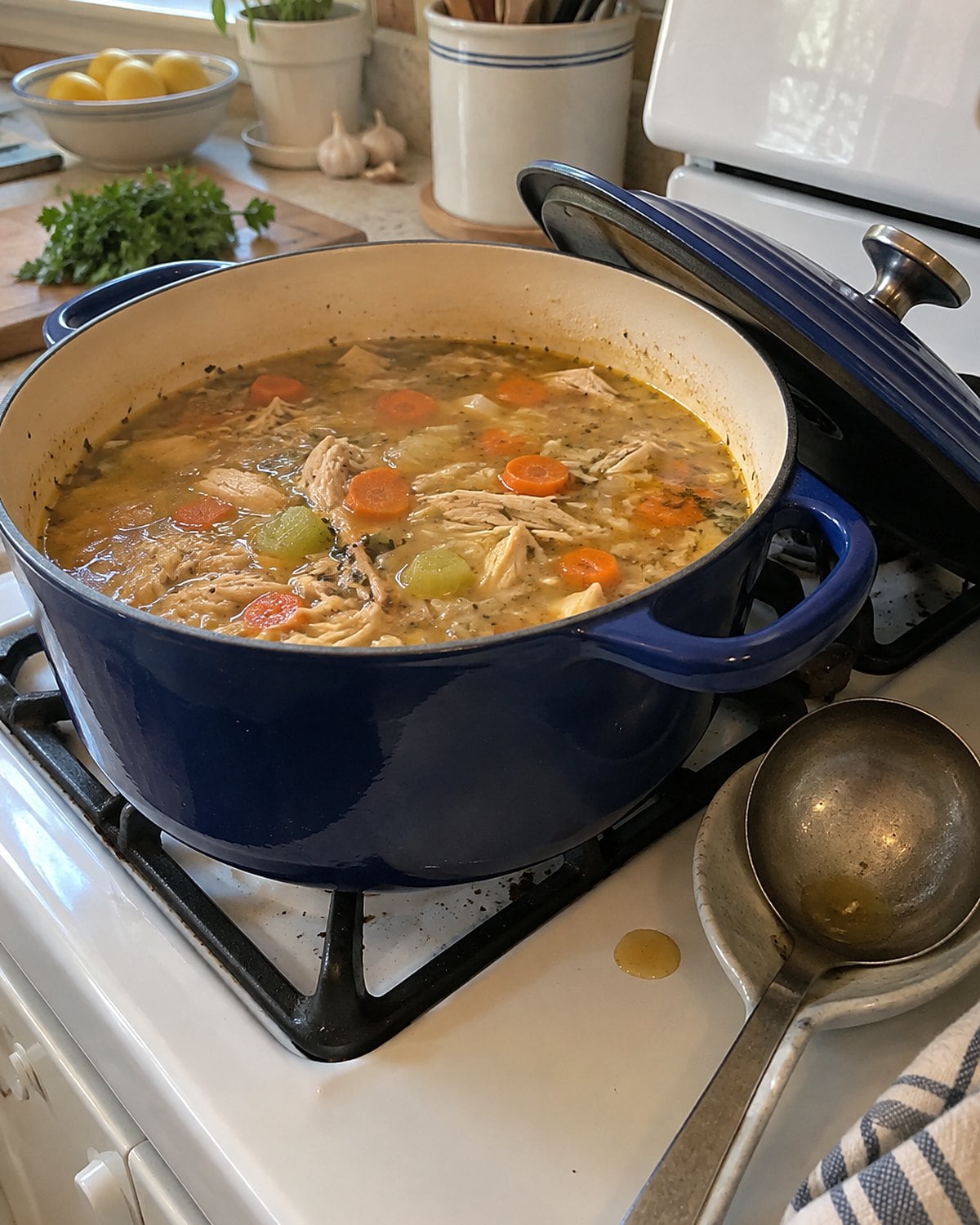
Dinner’s over, the burner is off, and the big pot is still there when you turn out the kitchen light. Leaving it until morning saves a round of washing up tonight. It also leaves the soup at room temperature far beyond the time the USDA allows.
Refrigerate perishable food within 2 hours of cooking, or within 1 hour when the air temperature is above 90°F. Those limits apply even when the soup was boiling when you turned off the heat.
Move what’s left into shallow containers and put them in the fridge. You don’t have to wait for every spoonful to feel cold. The job tonight is to get it out of the pot and into the refrigerator while the clock still allows it.
#26 The Rice That Smells Fine
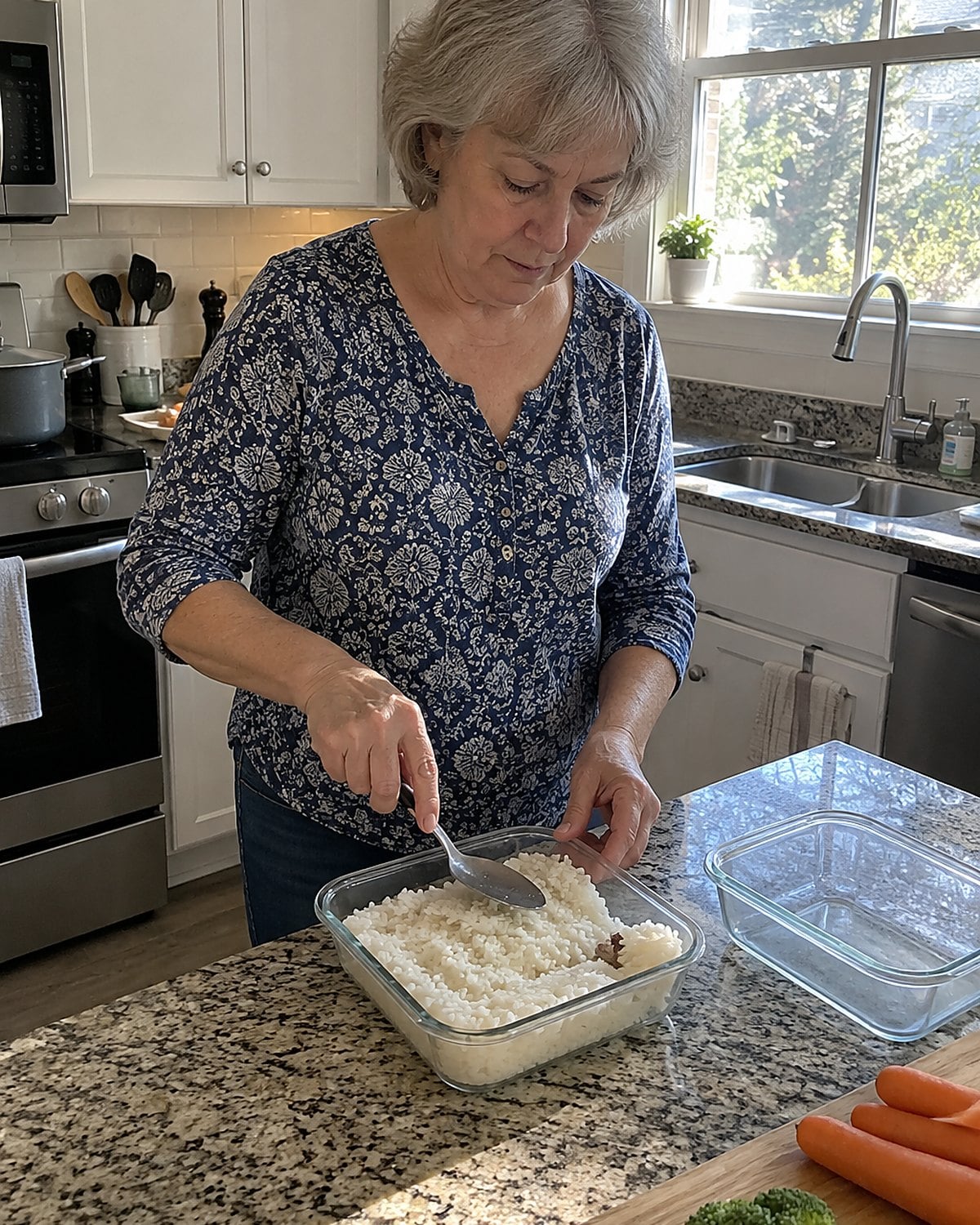
You’ve eaten leftover rice all your life. Then someone tells you it deserves special attention, and the question is fair: what changed?
Nothing about your nose changed. Bacillus cereus spores survive cooking, and rice left at room temperature gives them time to grow. Reheating doesn’t reliably make badly stored rice safe. The FDA’s guidance on Bacillus cereus food poisoning describes the problem; the smell test won’t settle it.
After dinner, spread the rice in a shallow container and refrigerate it promptly. Use cooked rice within the USDA’s 3 to 4 days for leftovers, or freeze it. If the rice sat out overnight, throw it away. A bowl that still looks fluffy tells you nothing about the hours it spent warm.
#25 The Dutch Oven Packed Straight Into the Fridge
The Dutch oven fits on the shelf if you shift the milk. You put the lid on and close the door, pleased that cleanup is done. By morning, the outside of the pot feels cold.
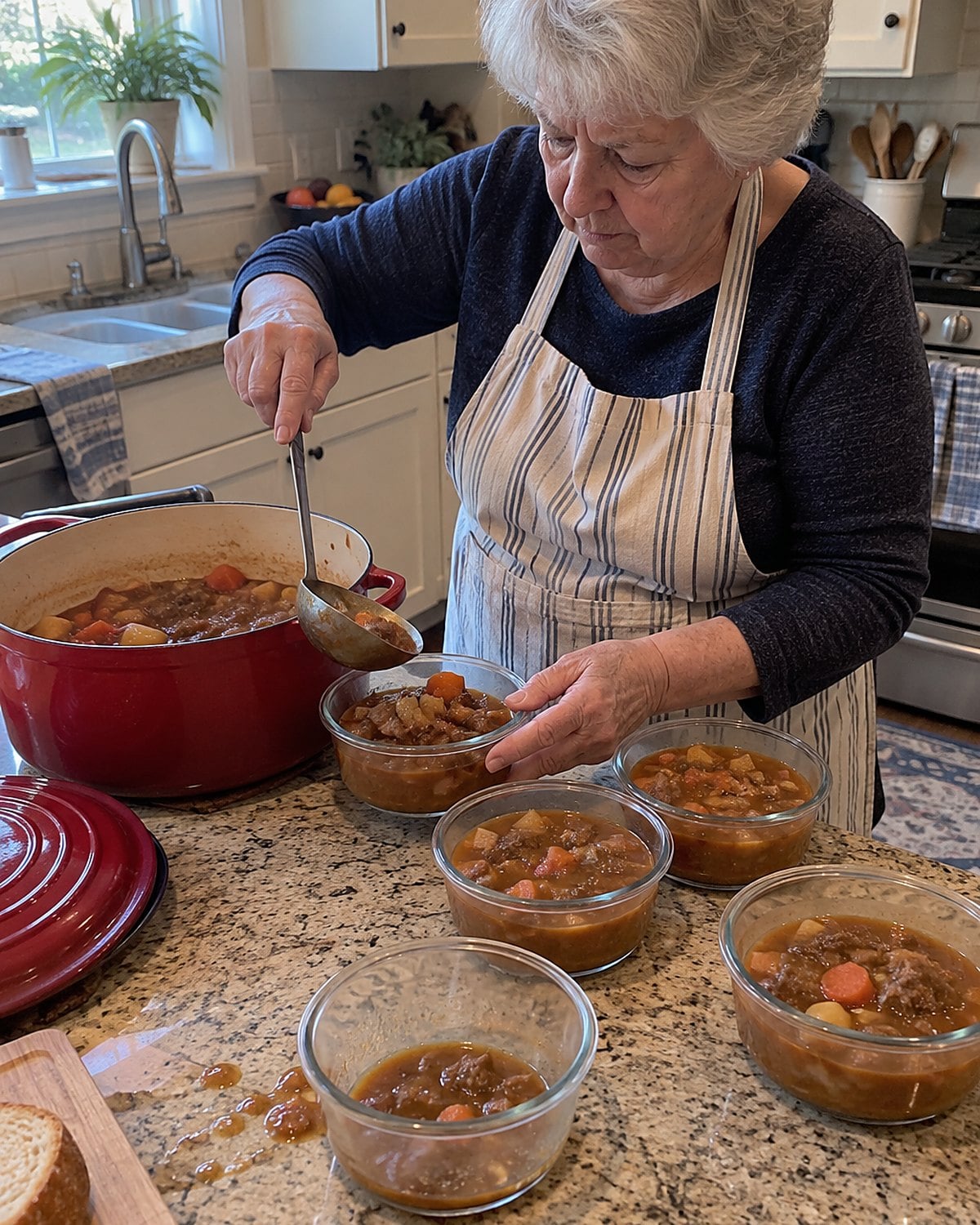
The middle is the part to worry about. A deep mass of stew cools slowly, even inside a refrigerator. The USDA advises dividing large amounts into shallow containers so they cool faster. A snug lid on a heavy pot doesn’t do that work for you.
Ladle the stew into smaller containers before it goes in. Leave room around them for cold air to move, and check that the fridge door closes fully.
Don’t leave the pot on the counter first. Hot food goes into the refrigerator.
That advice sounds odd if you grew up hearing that hot food would spoil everything in the fridge. A huge hot pot is still a poor way to cool supper. Smaller portions cool faster and give the refrigerator less hot food to handle in one place.
#24 The Chicken Plate After Sunday Dinner
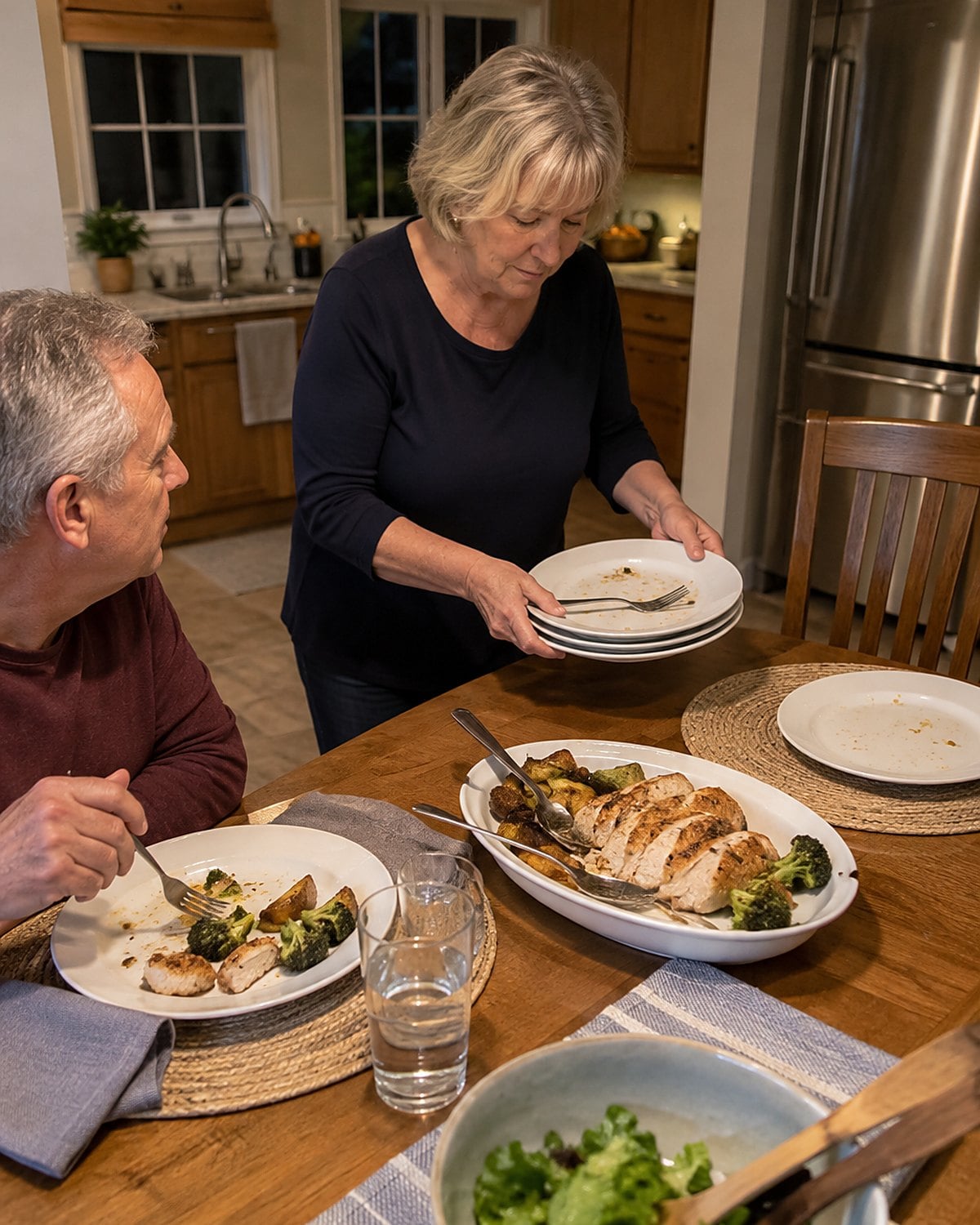
You clear the good plates, put on coffee, and stay at the table. Later, you remember the chicken on the serving platter. The room felt cool, and the meat still looks lovely.
Start the clock when the cooked chicken leaves temperature control, not when the guests leave. The USDA’s 2-hour limit covers the time it spends on the table and the time you spend clearing up afterward. When the air is above 90°F, that limit drops to 1 hour.
Set aside the portions you want to keep when you first clear dinner. Get them into the fridge before coffee stretches into another conversation. If the platter has crossed the limit, don’t save it for sandwiches. The next chicken dinner deserves its own clock.
#23 The Grandchild’s Half-Eaten Macaroni
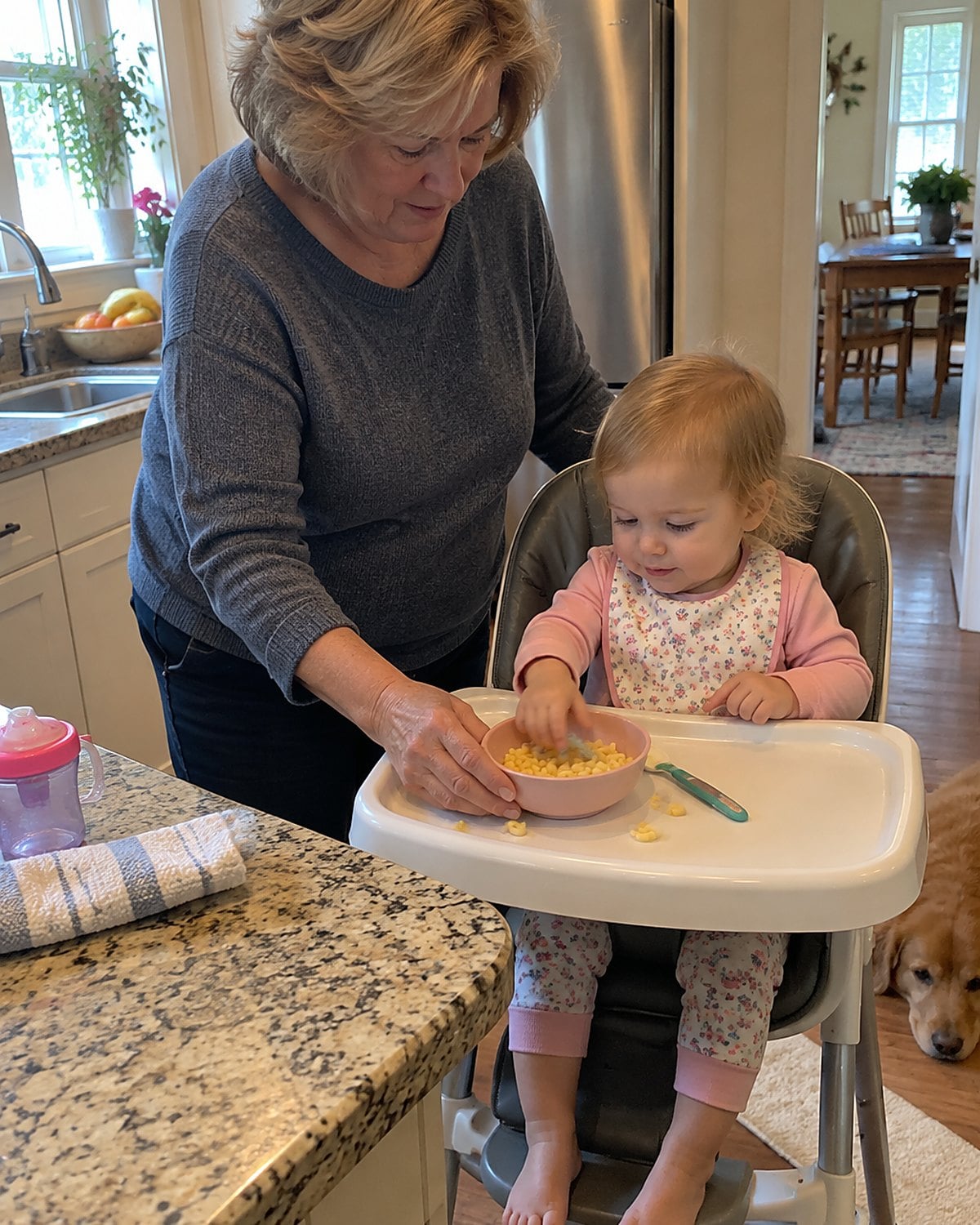
The high chair tray holds three peas, a damp spoon, and most of the macaroni you served. Throwing out a nearly full bowl feels wasteful, especially when you remember making enough for everyone.
Food on that tray has had a different evening from food left in the baking dish. A child’s spoon goes from mouth to bowl and back again. Small hands reach in, too. Scraping the tray serving into your clean leftovers brings all of that along.
Before you serve, put the macaroni you expect to save into a clean container. Refrigerate it promptly. Then give the child a smaller first helping; you can always offer more from the serving dish with a clean spoon.
After the meal, discard food left on the tray or in the child’s bowl. Keep the untouched portion that stayed apart. This isn’t a verdict on a grandchild’s table manners. It’s a way to save dinner without treating every bowl as though it spent the evening in the same place.
Try it: Easy Instant Pot Macaroni & Cheese (Step-By-Step Recipe)
#22 The Meat Thermometer Still in the Drawer
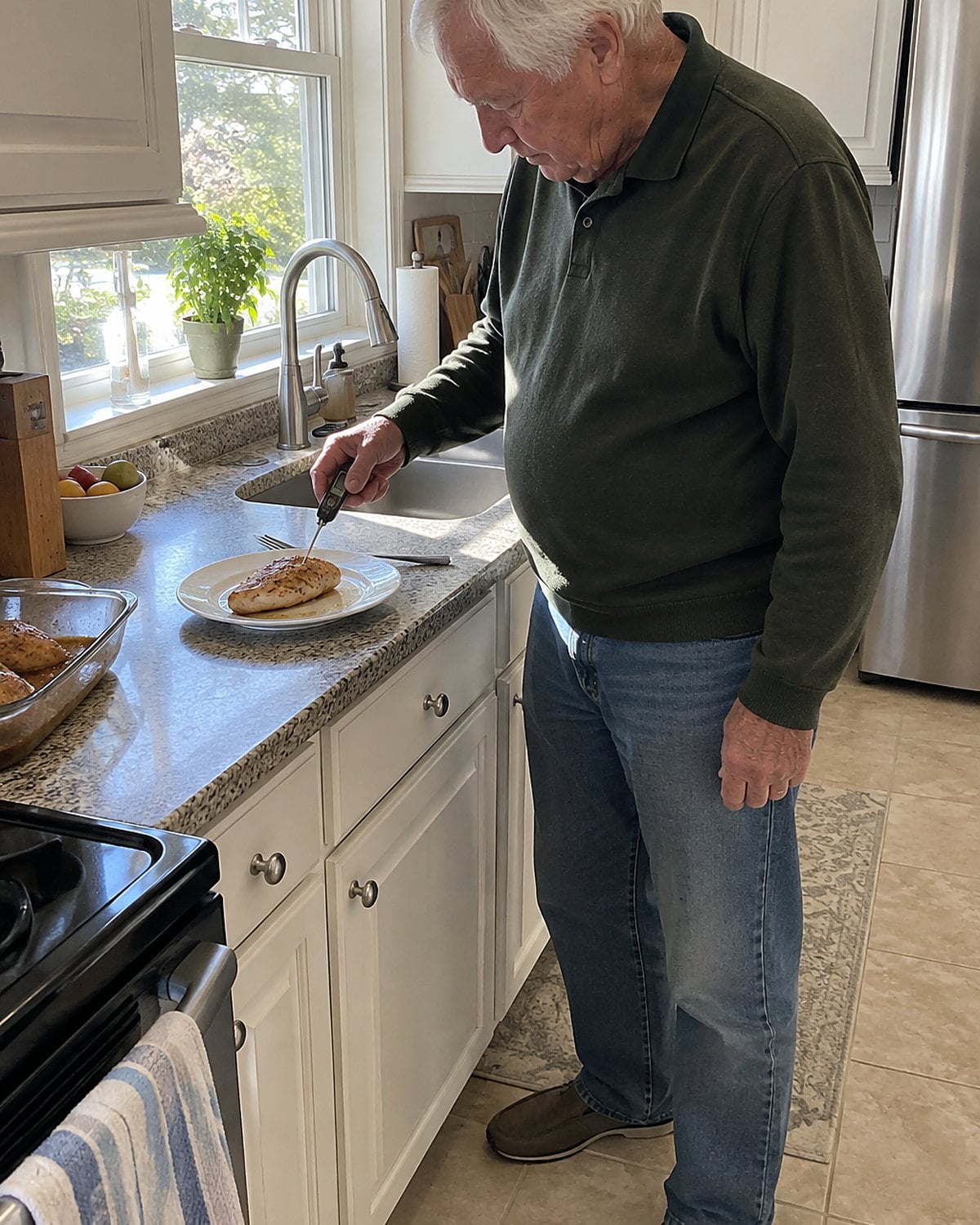
The leftover chicken is steaming at the edges. Is the middle hot enough? A glance through the microwave window won’t answer that, and touching the dish tells you about the dish.
The USDA says to reheat leftovers to 165°F. Push a food thermometer into the thickest part of the food, away from the container. For a casserole or a bowl of chicken and vegetables, check more than one spot.
If a spot falls short, heat the food again and retest. Wash the probe after use. The thermometer turns a familiar guess into a quick answer, especially when dinner has come out of the fridge in a thick piece. Steam looks convincing, but it rises from the surface first.
#21 The Casserole Warmed by Its Brown Top
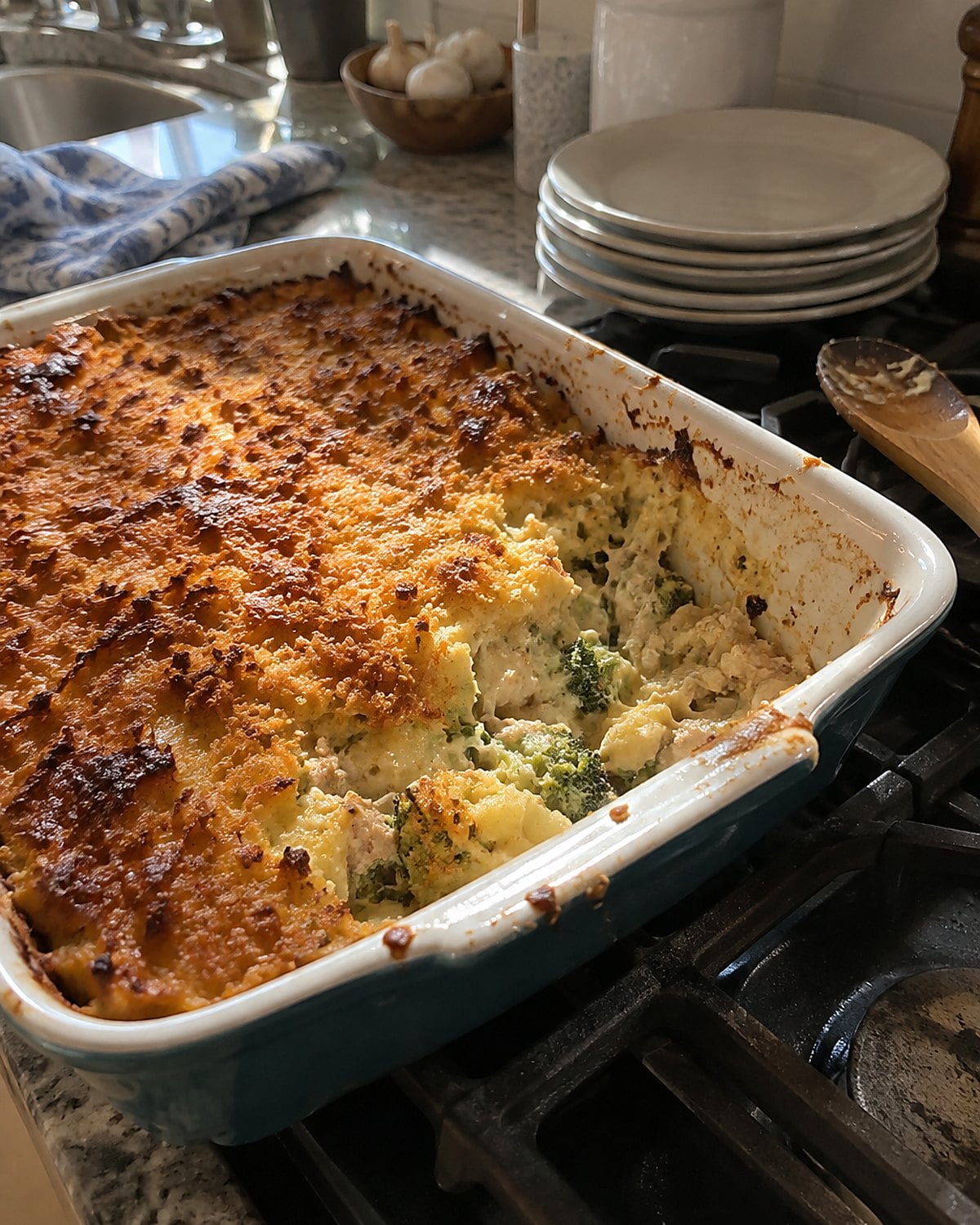
The top of the casserole bubbles. You take it from the oven, scoop into the middle, and find a cold bite under the browned crumbs. The pan was hot; dinner wasn’t heated through.
A dense casserole warms from the outside inward. Its topping changes color long before the center catches up.
Cover the dish while it heats so the top doesn’t dry out. Uncover it near the end if you want the crumbs crisp. Check the center with a food thermometer and keep heating until it reaches 165°F.
A smaller portion in a shallow baking dish heats more evenly than the whole deep pan. If you’re feeding one or two tonight, take out only what you’ll eat. Leave the rest cold in the fridge instead of warming the full casserole and putting most of it back.
Let the brown top be the finish. The thermometer is the test.
#20 The Egg Salad with an Uncertain Birthday
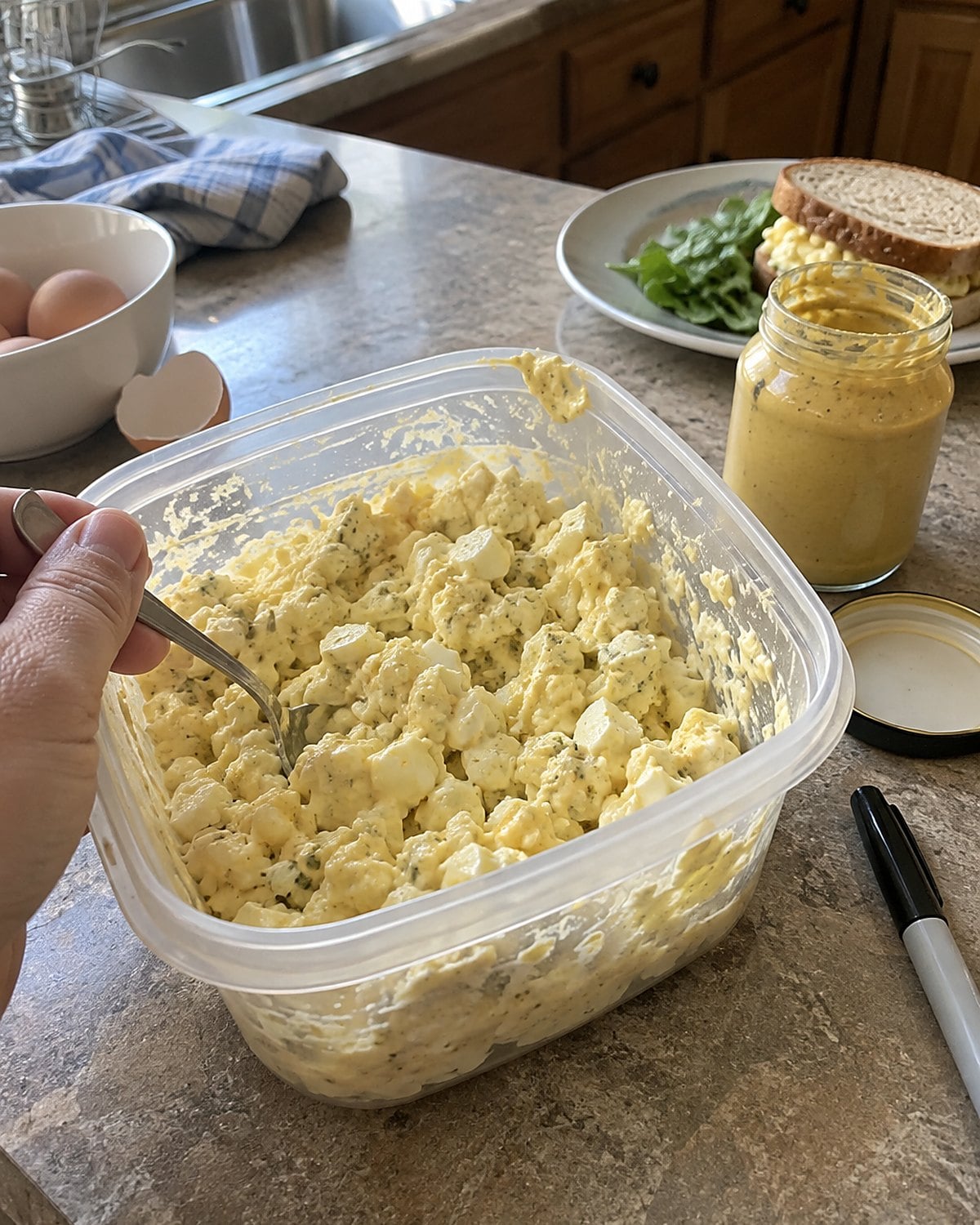
You find the egg salad behind the mustard. It smells of celery, mustard, and eggs, exactly as it should. You remember making it, but was that Sunday or the Sunday before?
The USDA’s leftover window is 3 to 4 days in a refrigerator at 40°F or below. If you can’t place the day, a taste won’t fill in the date. Throw it out rather than asking the first sandwich to settle the question.
Next time, write the preparation date on the container before it goes behind the mustard. Put the marker where you pack lunch, not in a drawer you’ll forget to open.
That small mark saves you from standing with the fridge door open, trying to reconstruct a busy week. It also spares you a second decision when the last spoonful looks as fresh as the first.
Try it: Instant Pot Egg Salad (Keto, Gluten-Free)
#19 The Milk-Shelf Spot for Every Leftover
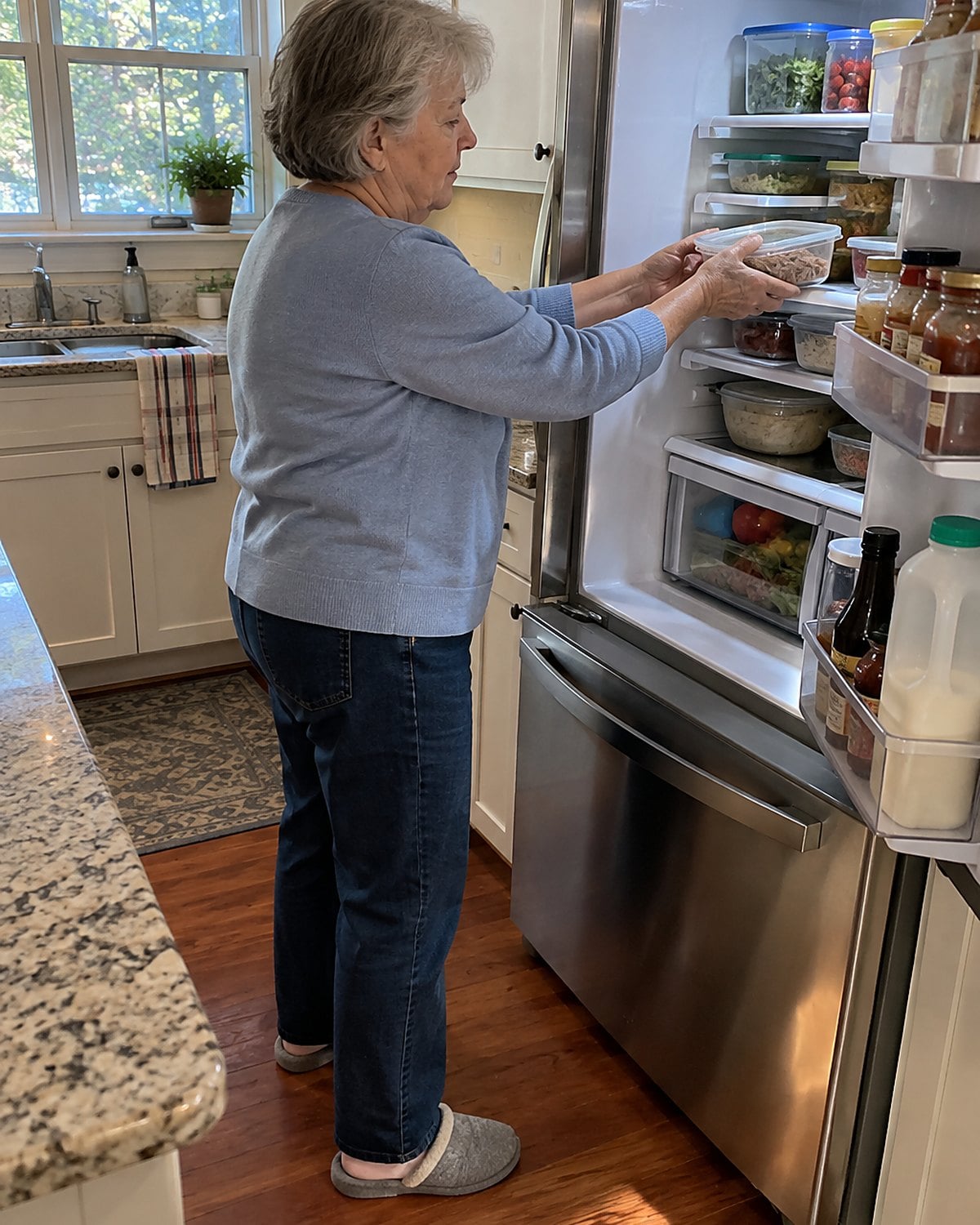
There’s an easy space in the refrigerator door. You slide a container of last night’s pork beside the milk and pickles, where you’ll see it tomorrow.
The door gets a wash of warmer air each time you open it. Keep perishable leftovers on a shelf inside the fridge, where the temperature stays steadier. The FDA’s refrigerator guidance calls for 40°F or below; you want your food stored where the appliance does its best work.
Put condiments in the door and move the pork onto a shelf. Don’t pack containers tight against each other, either. Cold air needs a path around them. If the shelf is crowded after a holiday meal, clear space before you start putting food away.
An easy-to-see container helps only if it’s kept cold enough. Save the door for things you reach for often, not the supper you’re counting on for lunch.
#18 The Freezer Bag Full of Warm Stew
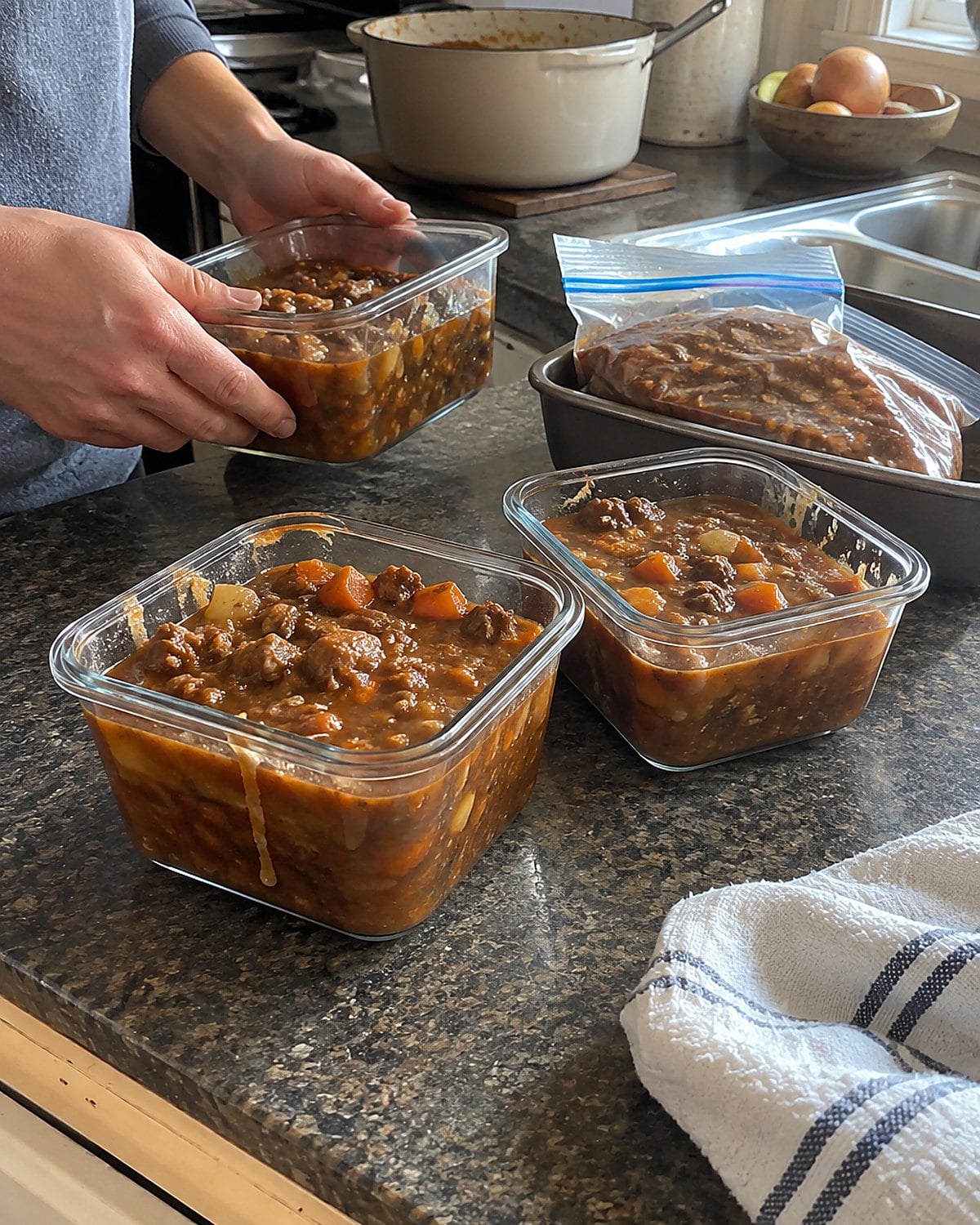
The bag seems clever: lay it flat, freeze it thin, and stack it later. But right now it’s full of hot stew, and you’re balancing its open top against the counter.
Cool the stew promptly in shallow containers before packing it into freezer bags. A thin layer cools faster than a deep pot, and chilled stew is easier to pour without a spill. Don’t let the cooling step turn into an evening on the counter.
Once chilled, portion the stew into bags, press out excess air, seal, and freeze. Leave enough space for liquids to expand. A tray under the bags catches leaks while they freeze flat.
That stack will be easier to sort if each bag holds one supper’s worth. Write the contents on the bag before the outside gets wet.
#17 The Frozen Roast Thawing in the Sink
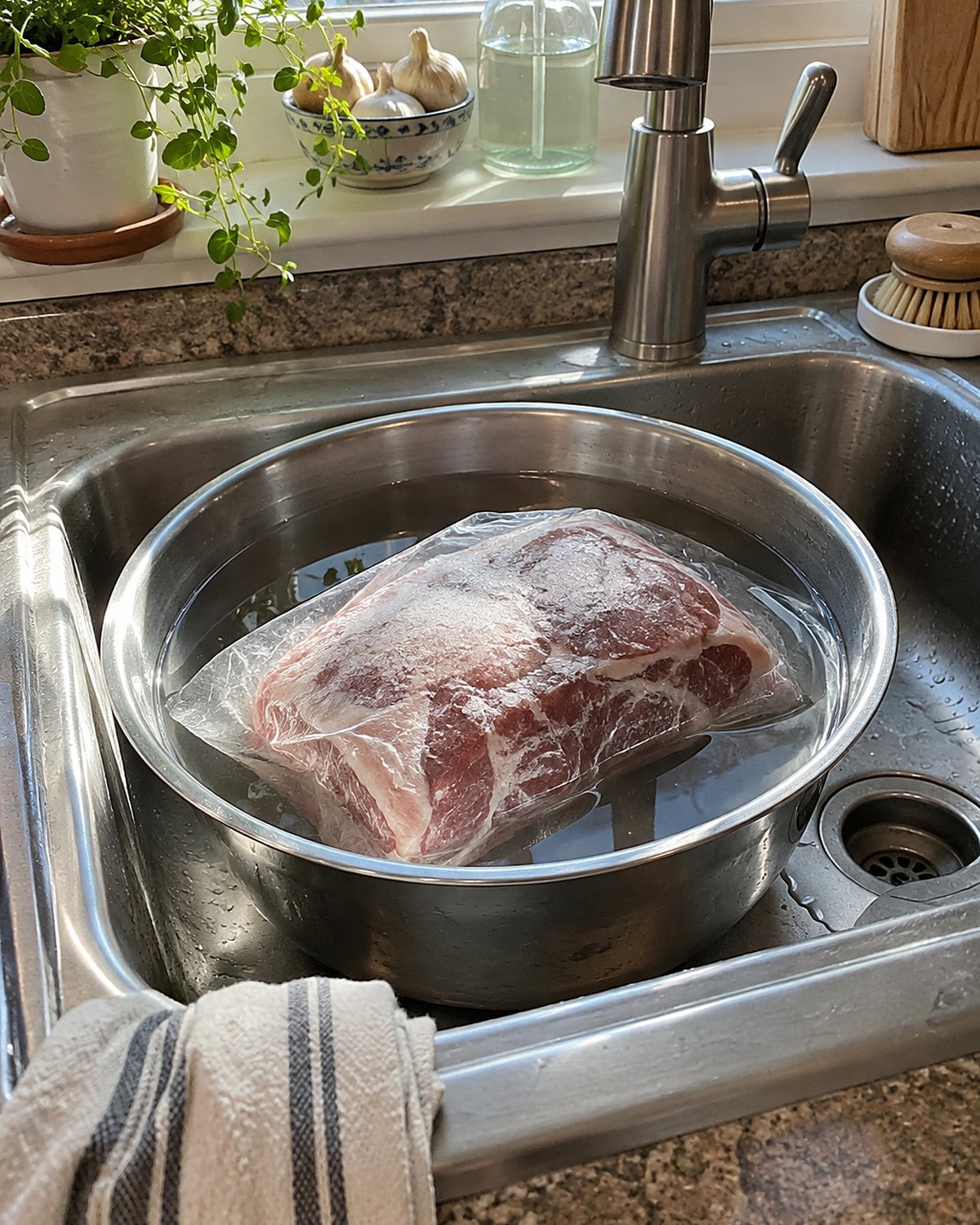
The roast went into the freezer after Sunday dinner. Now you want sandwiches, so you set the wrapped meat in the sink before breakfast. By lunch it still has ice in the center, though the outside feels soft.
That uneven thaw is the problem. The outside warms while the middle stays frozen. The USDA lists the refrigerator, cold water, and microwave as safe thawing methods. A countertop or empty sink isn’t one of them.
Give refrigerator thawing time. Put the roast on a rimmed plate so drips stay contained.
Need it sooner? Seal the roast in a leakproof bag, submerge it in cold tap water, and change the water every 30 minutes. Reheat food thawed by cold water or microwave right away, following USDA guidance.
If you forgot to plan ahead, reheat a frozen portion until it reaches 165°F throughout. It takes longer, but it beats waiting while the outside sits warm. Wipe down the sink after handling the package, then get back to those sandwiches.
#16 The Microwave Bowl with a Cold Center
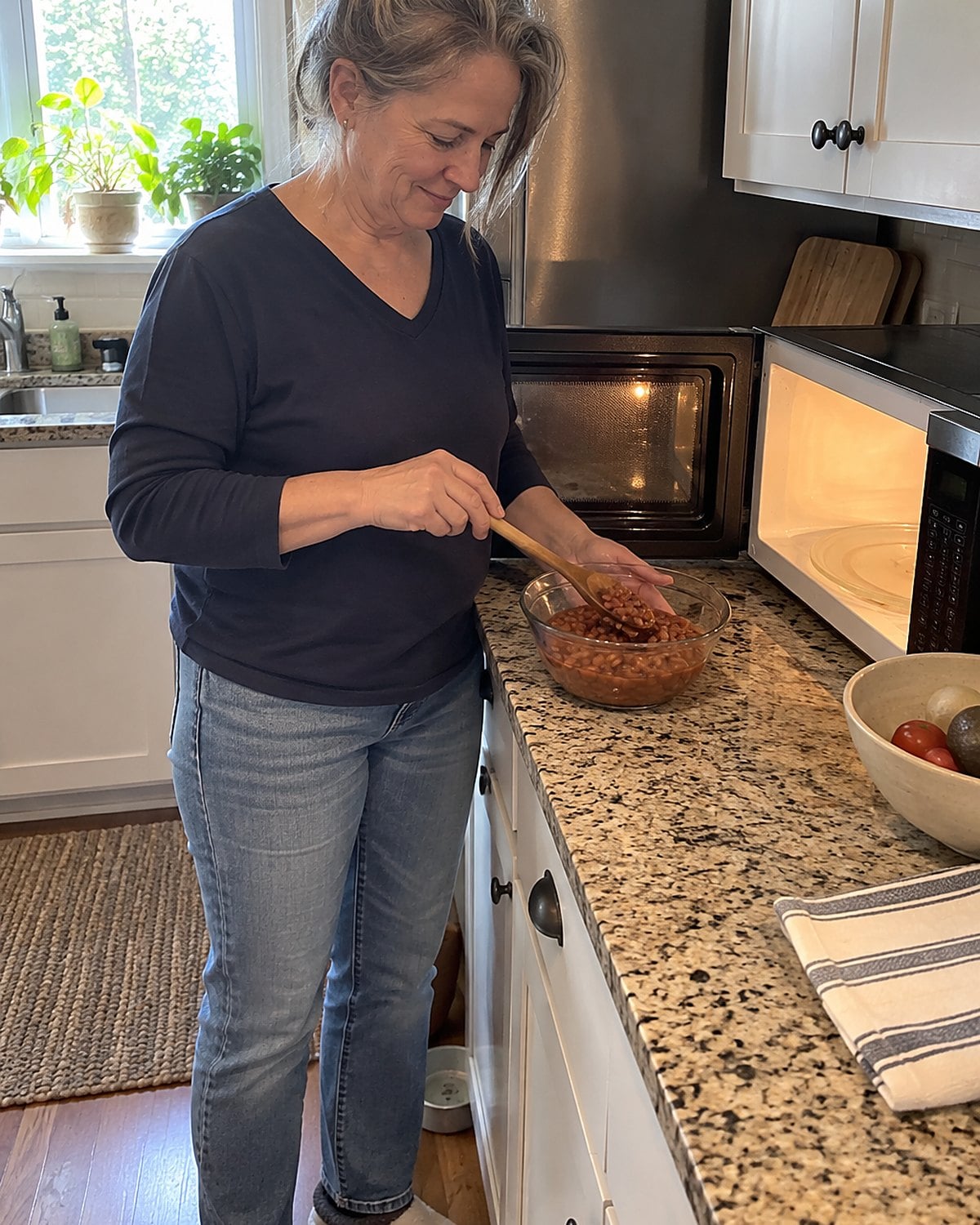
You stir leftover beans, heat them, and see bubbles along one side of the bowl. The first spoonful from the other side is barely warm. Microwaves leave cold spots, especially in thick food.
Stop partway through heating and stir from the edges into the center. Cover the bowl to hold in moisture, using a microwave-safe cover that lets steam escape. Then give it time to stand after heating so the heat spreads through the food.
Check the center and the thicker spots with a food thermometer. Leftovers need to reach 165°F throughout. If they haven’t, stir and heat again.
A hot rim and a cold middle aren’t a small flaw in dinner. They’re your cue to stop before you carry the bowl to the table.
#15 The Gravy Pot That Barely Simmered
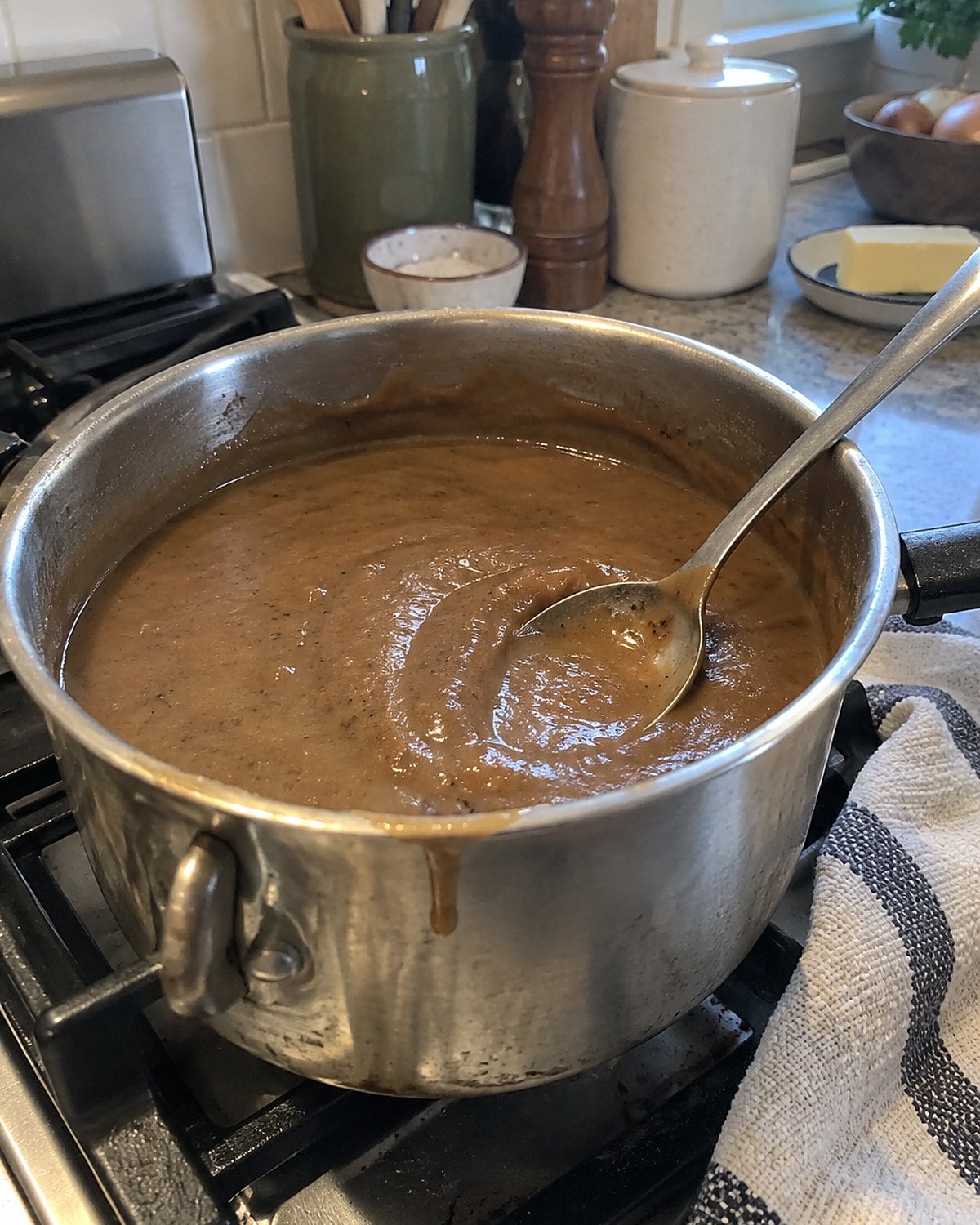
For leftover gravy, the USDA calls for a rolling boil. A few bubbles at the rim don’t tell you what’s happening in the middle.
Gravy is back on the stove, and you’re stirring to keep it from catching on the bottom. The potatoes are already on the plates. Keep the spoon moving through the thick part and into the corners of the pan until the whole pot boils.
If it’s too thick, add a little liquid and keep stirring as it heats. Taste for salt after the gravy is hot; reducing it on the stove changes the flavor. Don’t use the tasting spoon as a test for whether reheating is done.
Then pour it while the potatoes are waiting.
Try it: Best Instant Pot Gravy (Quick & Easy, No Drippings!)
#14 The Picnic Potato Salad on the Porch
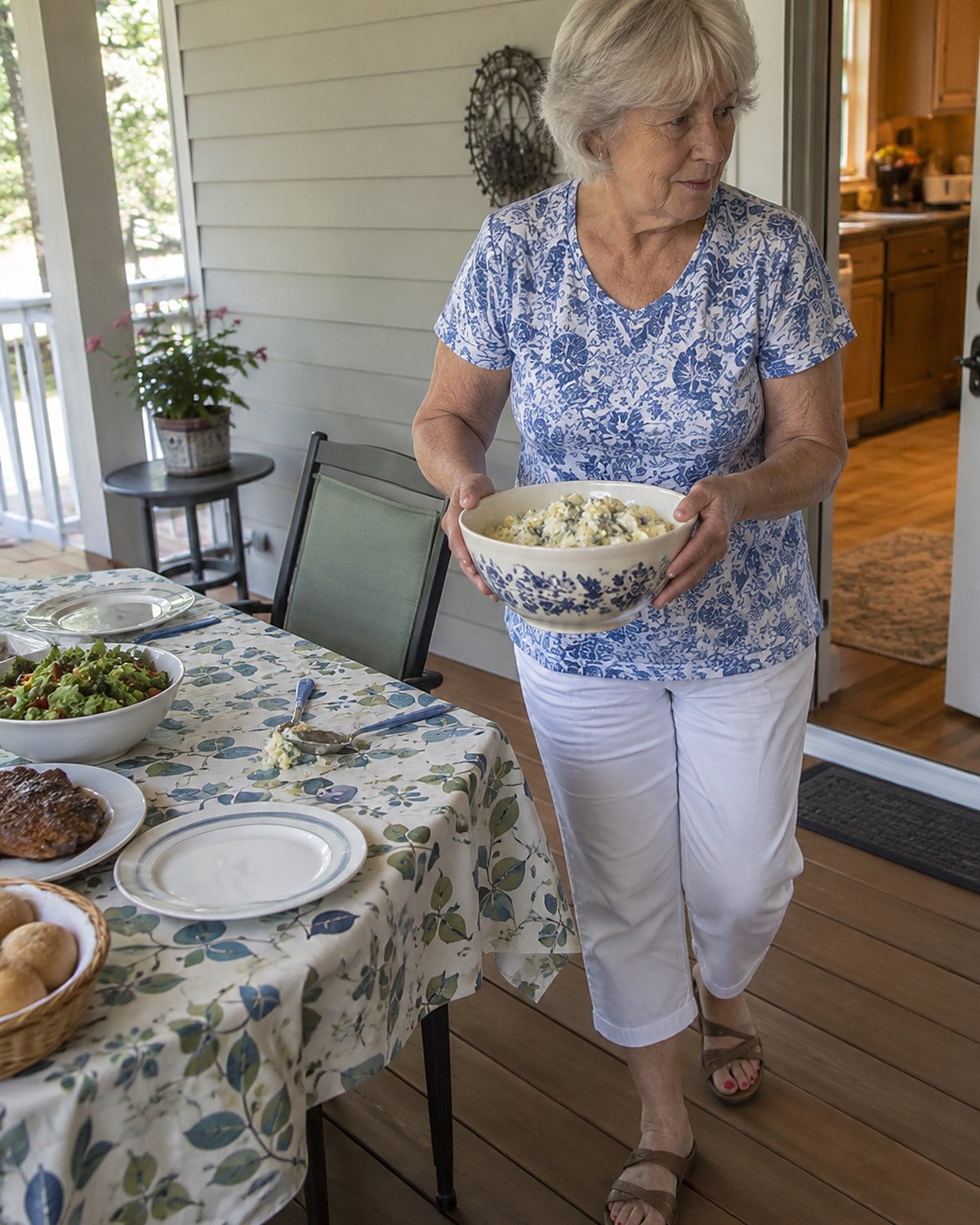
You’ve moved the chairs into the shade. The potato salad sits on the porch table while everyone goes back for another slice of ham. Shade makes the afternoon pleasant, but it doesn’t refrigerate lunch.
Perishable food needs chilling within 2 hours, or 1 hour when the air is above 90°F, according to the USDA. Count the time it spent on the table, including the part before anyone thought about leftovers.
Serve a smaller bowl and keep the rest in the fridge or a cooler packed with ice. Refill with a clean serving spoon. When the time limit is up, discard what sat out. The portion that stayed cold is the one to enjoy tomorrow.
Try it: Instant Pot Potato Salad With Eggs & Creamy Dressing
#13 The Slow Cooker Holding Yesterday’s Chili
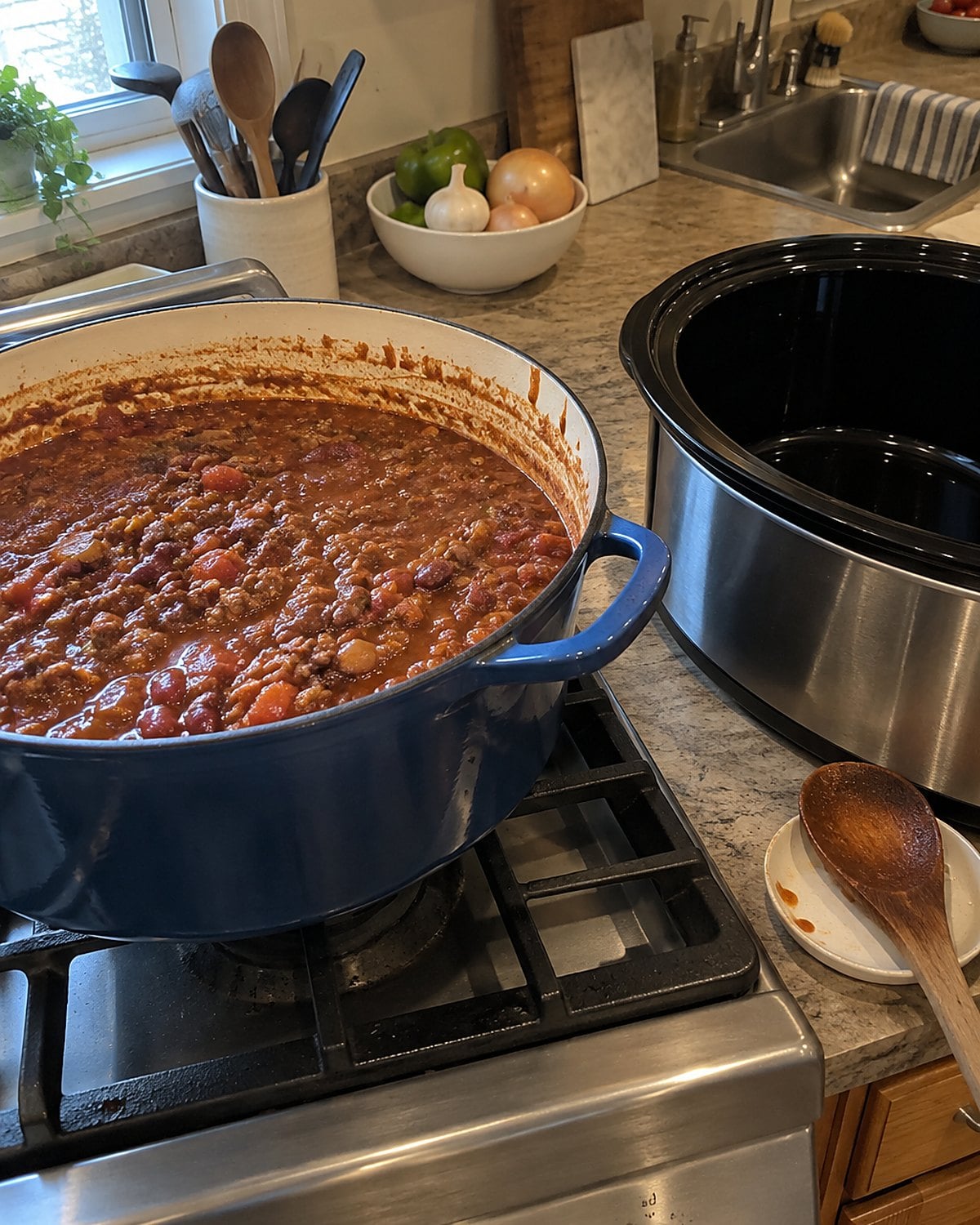
The slow cooker has a warm setting, and the chili is already in its crock. Reheating yesterday’s batch there seems tidy: fewer dishes, no transfer, lid on until supper.
The USDA says not to reheat leftovers in a slow cooker. Food warms too slowly on the way through temperatures where bacteria grow. Reheat the chili on the stove or in the microwave to 165°F first. Then transfer it to a preheated slow cooker to hold it hot for serving.
Stir the chili while reheating, especially if beans have settled at the bottom. Check a thick spoonful from the center with a thermometer, not just the thinner liquid along the side. Once it’s hot enough, the slow cooker earns its place on the counter.
That distinction matters: holding hot food and reheating cold food are different jobs. Give the pot the job it does well, after the stove has done the first one.
#12 The Church-Hall Pan After Cleanup
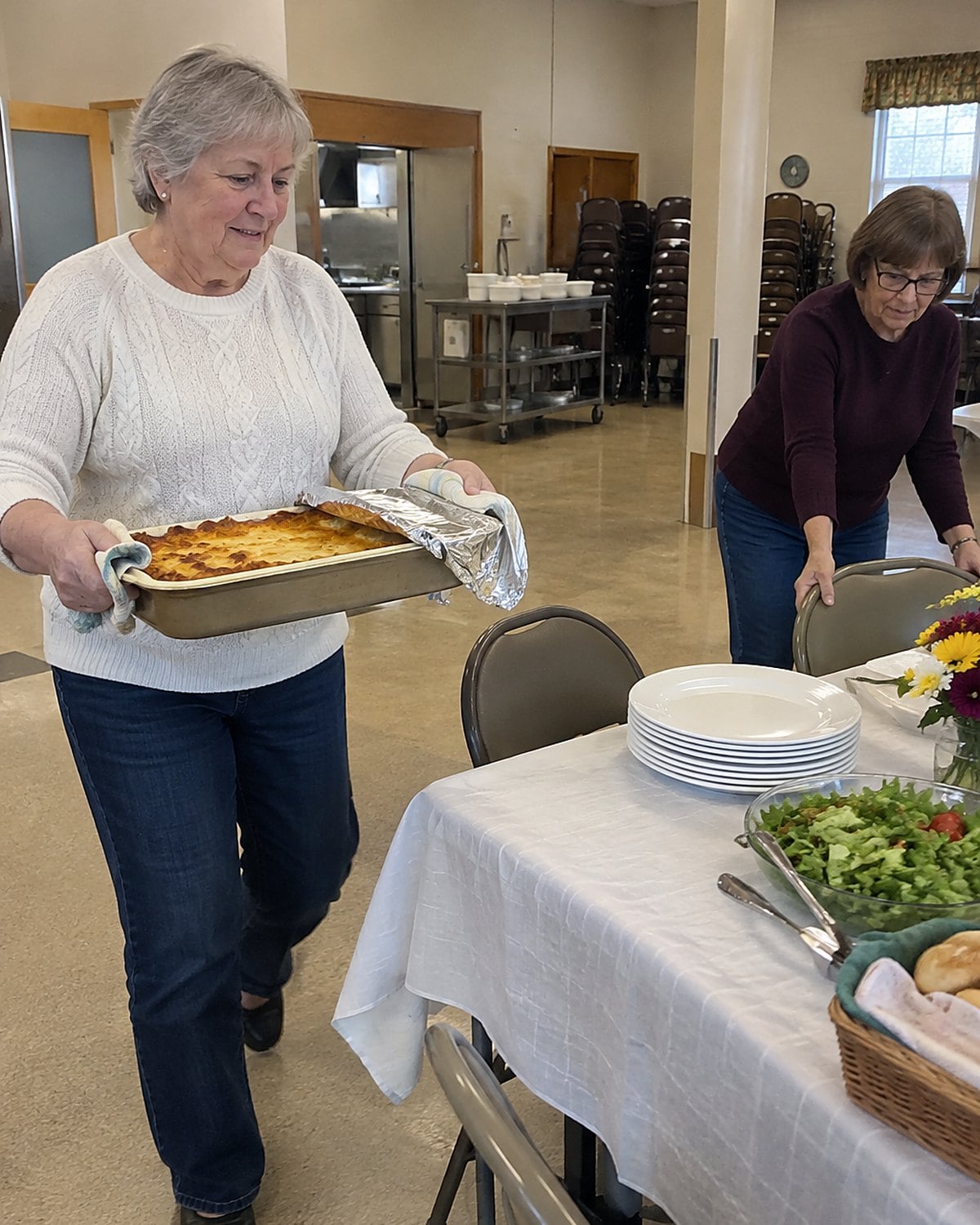
The last chair is stacked, and someone offers you the remaining pan of baked pasta. It’s a generous offer. Nobody, though, remembers when the pan left the oven or how long it sat on the serving table.
The missing time is the deciding detail. Hot food needs to be held at 140°F or above; perishable food left without temperature control has the USDA’s 2-hour limit. A warm-feeling pan won’t tell you which side of those rules dinner was on.
Ask who kept track before you take it home. If nobody did, leave the pasta behind. Next time you help serve, put someone in charge of the clock and the hot-food thermometer. It’s a small task that makes packing up much easier.
#11 The Takeout Carton from the Passenger Seat
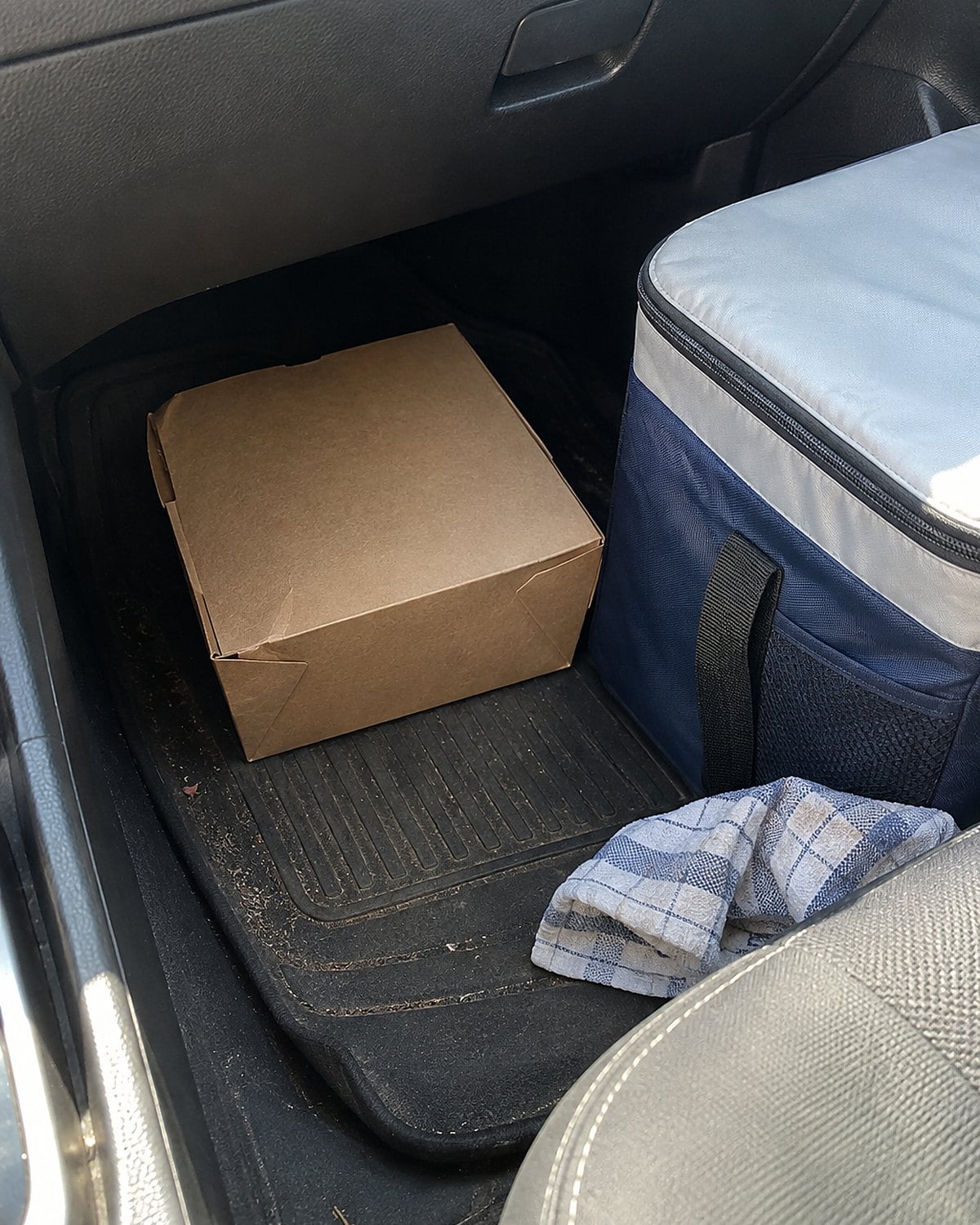
The 2-hour clock applies to takeout leftovers. Above 90°F, it shrinks to 1 hour. Start counting when the food stops being kept hot or cold, not when you reach home.
The restaurant packed your leftovers while you paid. Then came a pharmacy stop, a long conversation in the parking lot, and the drive home. The carton still smells wonderful when you open the car door. None of that tells you how warm the food got.
Head home with the food, or bring an insulated cooler with ice packs when errands are part of the plan. Put the carton in the refrigerator as soon as you arrive.
If it spent too long in the car, discard it, even if the restaurant charged enough to make that hurt. Next time, make the pharmacy a separate trip.
#10 The Tasting Spoon Back in the Container
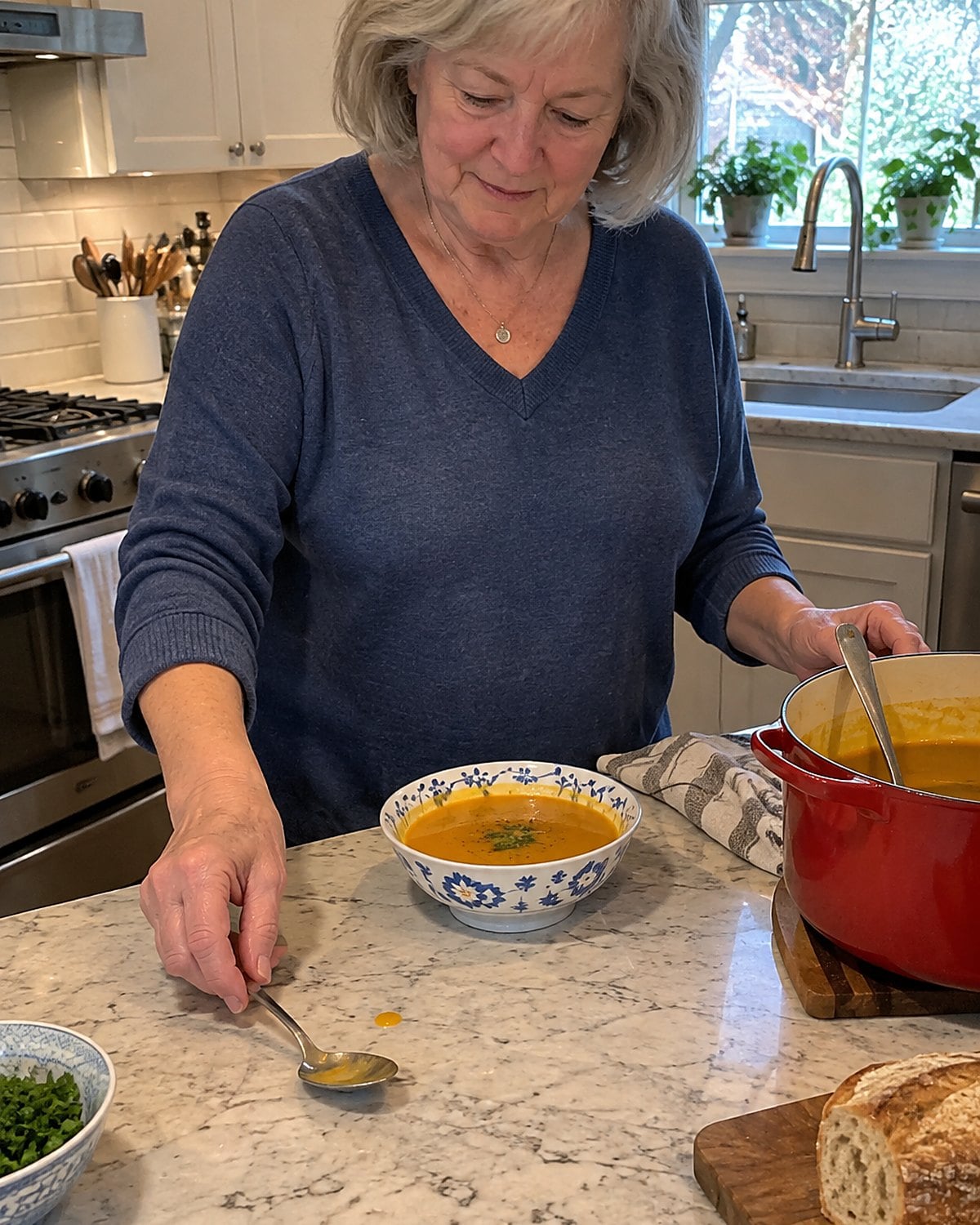
You taste the leftover soup while deciding whether it needs pepper. It does. The spoon goes back in for another taste, then rests inside the container before the lid goes on.
Each trip from your mouth brings saliva back to food you intend to store. Set aside the portion you’re eating or seasoning, and use a clean spoon to move soup from the main container. Keep the stored portion out of the tasting loop.
This matters even when the food is headed straight to the fridge. Refrigeration slows bacterial growth; it doesn’t undo what happened with the spoon. Your good habit here is ordinary: a clean utensil for food you’re saving, and a tasting spoon for the bowl in front of you.
#9 The Stockpot Filled with Turkey Carcass Broth
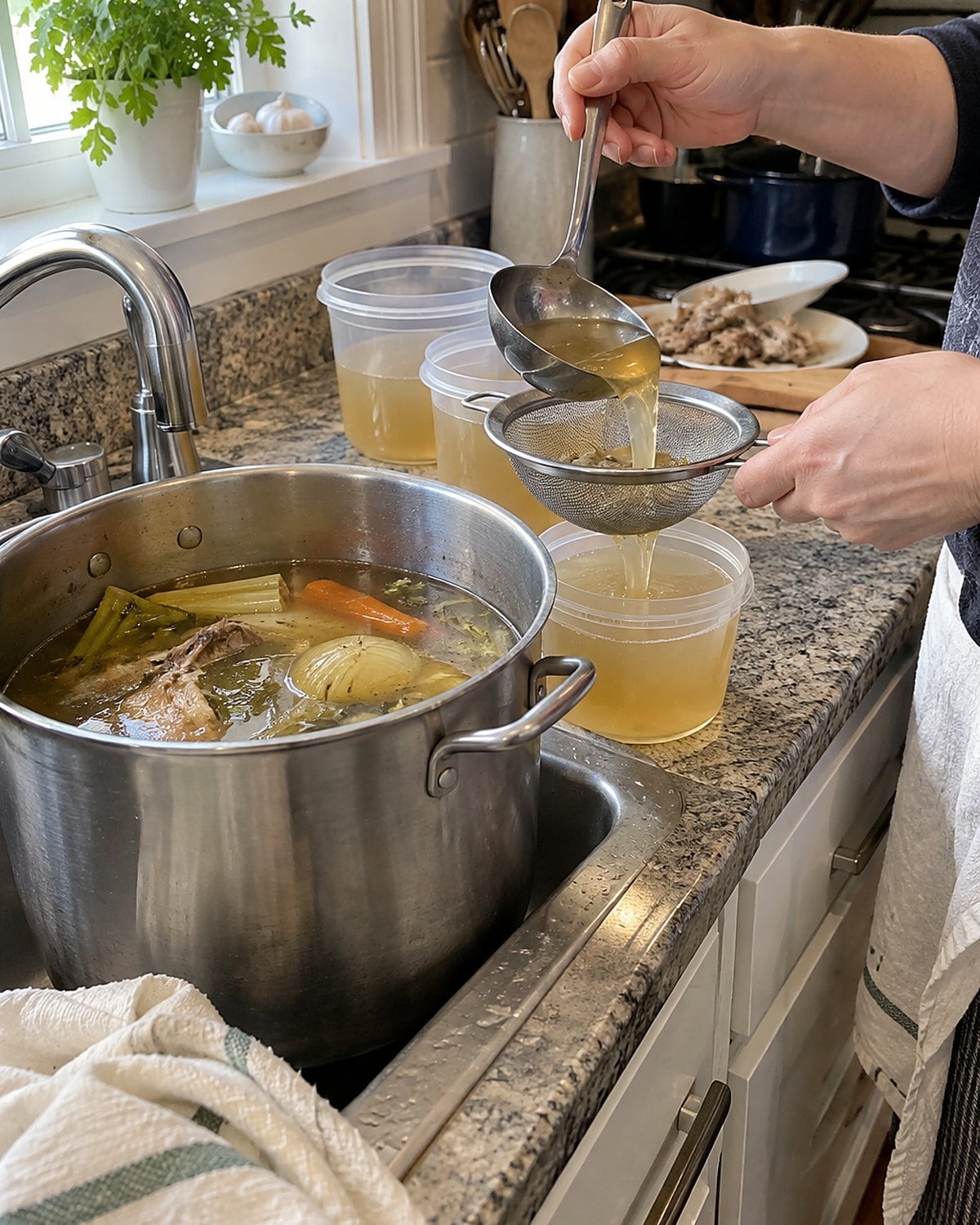
There’s a satisfying thrift to broth. You simmer the bones, strain the liquid, and look at the full stockpot. It seems a shame to dirty more dishes just to put it away.
Broth has the same cooling problem as any other deep pot of food. Move it into shallow containers and refrigerate promptly. An ice bath helps cool it: set a smaller pot or metal bowl of broth in a sink of ice water and stir it. Keep sink water out of the broth.
Refrigerate or freeze the broth promptly. The USDA’s 3 to 4 days for refrigerated leftovers applies to homemade broth, too. If you won’t use it in that window, freeze portions you’ll reach for.
Straining removes bones and bits, but it doesn’t change when the broth needs to go into the fridge. Set out the extra containers before you start pouring.
Try it: Instant Pot Stocks & Broths (Meat, Fish, Mushroom, Veggie)
#8 The Shrimp Pasta Kept for Friday
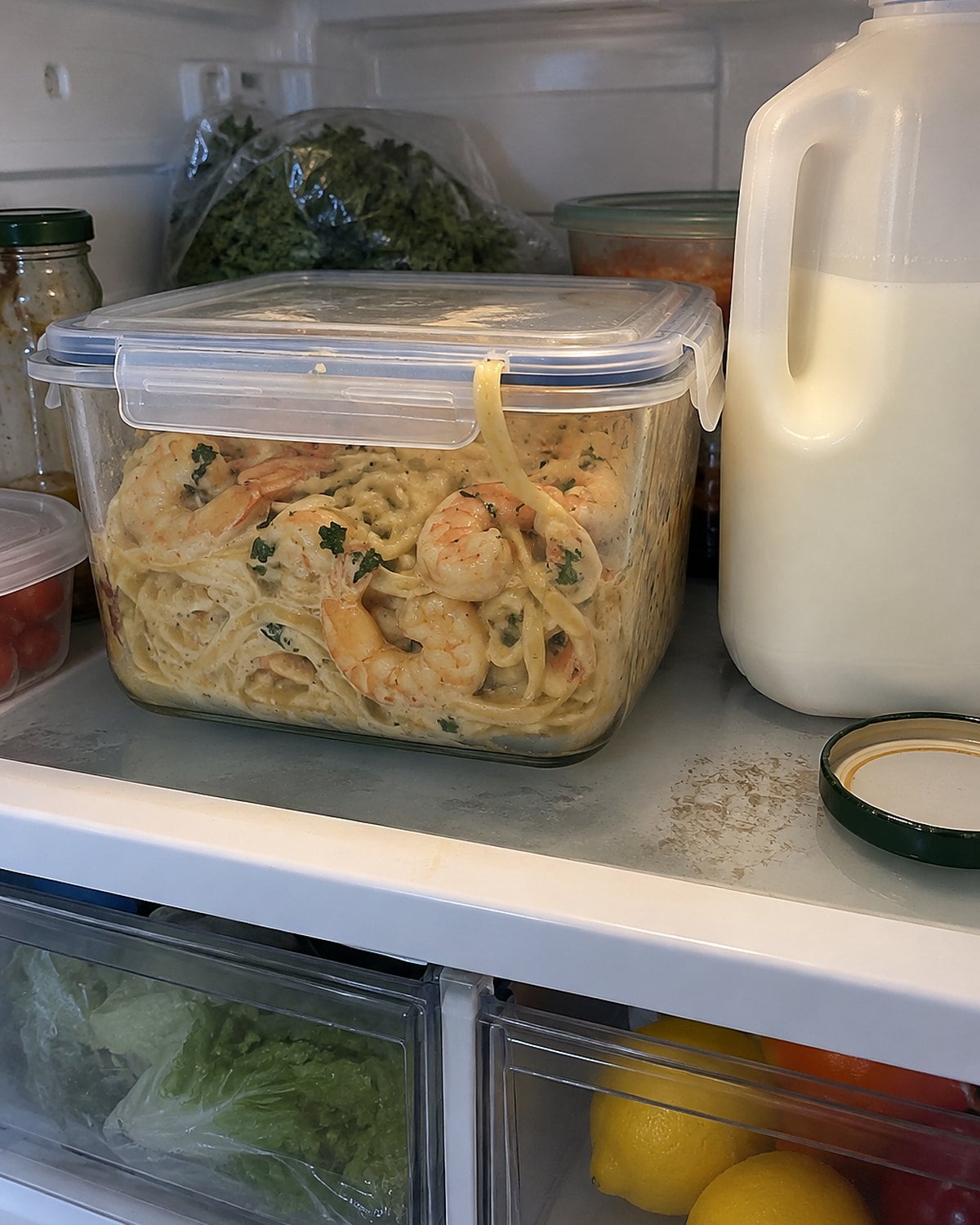
Tuesday’s shrimp pasta tasted excellent. By Friday, you’re tempted to make a quick lunch from what’s left. Was Tuesday night recent enough?
The USDA gives cooked leftovers 3 to 4 days in a fridge at 40°F or below. Count from the day you cooked the pasta, and include that evening’s time on the counter. If it went away promptly, Friday falls within that window. If you don’t know how long it sat out, the calendar alone won’t help.
Reheat the portion you’ll eat to 165°F. Shrimp turns rubbery when heated too long, so stir and check the thick pasta in the middle rather than running the microwave without a pause. If Friday lunch won’t happen, freeze the pasta sooner instead of giving it one more day in the fridge.
Try it: Instant Pot Spaghetti With Shrimp Scampi
#7 The Chili Topped Up with Fresh Beans
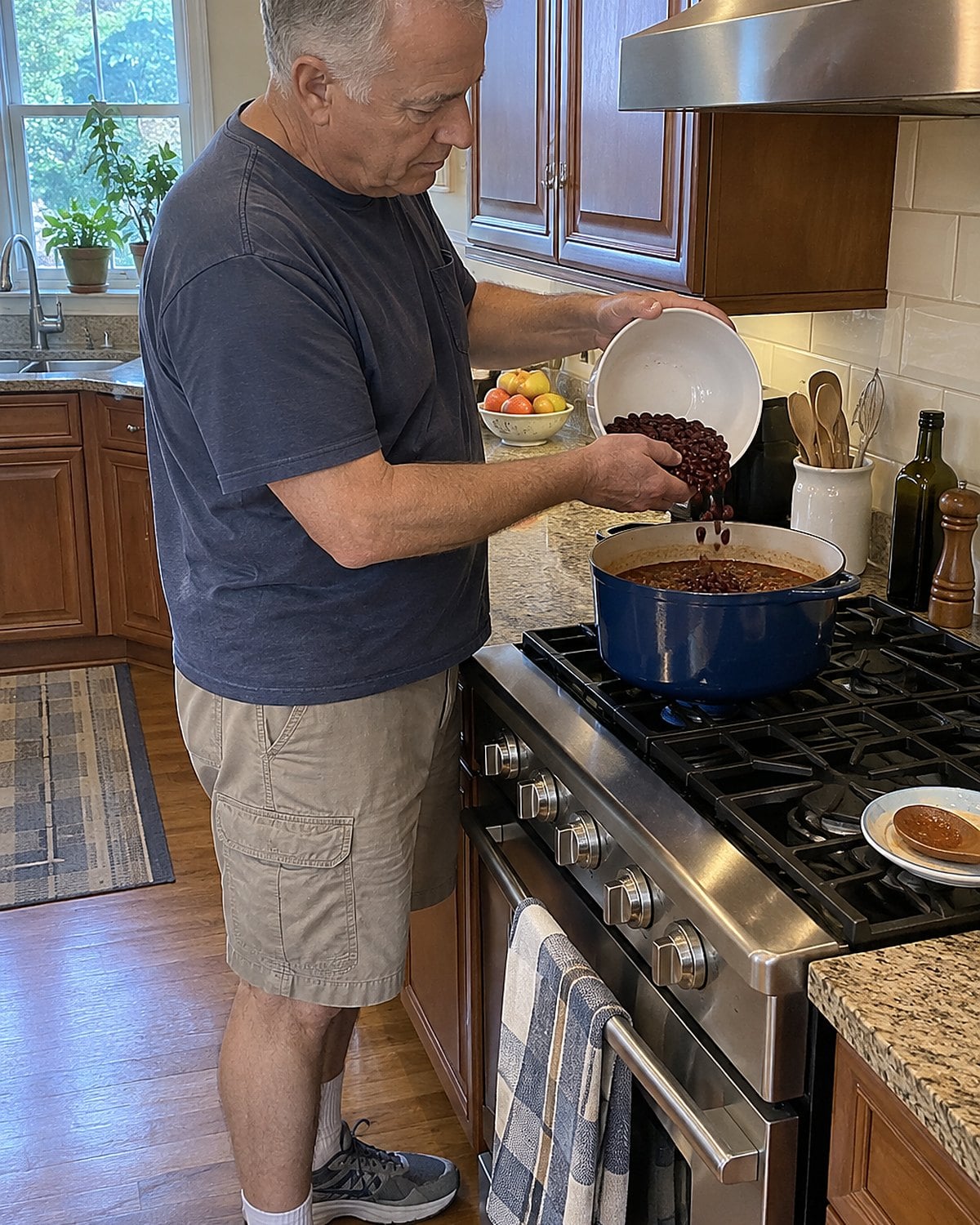
There’s chili left, but not quite enough for dinner. You add fresh beans and tomatoes to the old batch, bring it to a simmer, and picture tomorrow’s lunch from the enlarged pot.
Adding fresh ingredients doesn’t restart the leftover clock. Track the chili from the day the original batch was cooked. The USDA’s 3 to 4 days in a fridge at 40°F or below still applies to that older food.
Heat the combined chili thoroughly to 165°F, then refrigerate any portion you’re keeping promptly. Better yet, heat only the old chili you plan to eat and add the new ingredients to that portion. Keep newly cooked food separate if you want its storage time to be clear.
The pot looks new after those beans go in. Your calendar still remembers the first batch.
Try it: Instant Pot Creamy Taco Chili
#6 The Turkey Left on the Carving Board
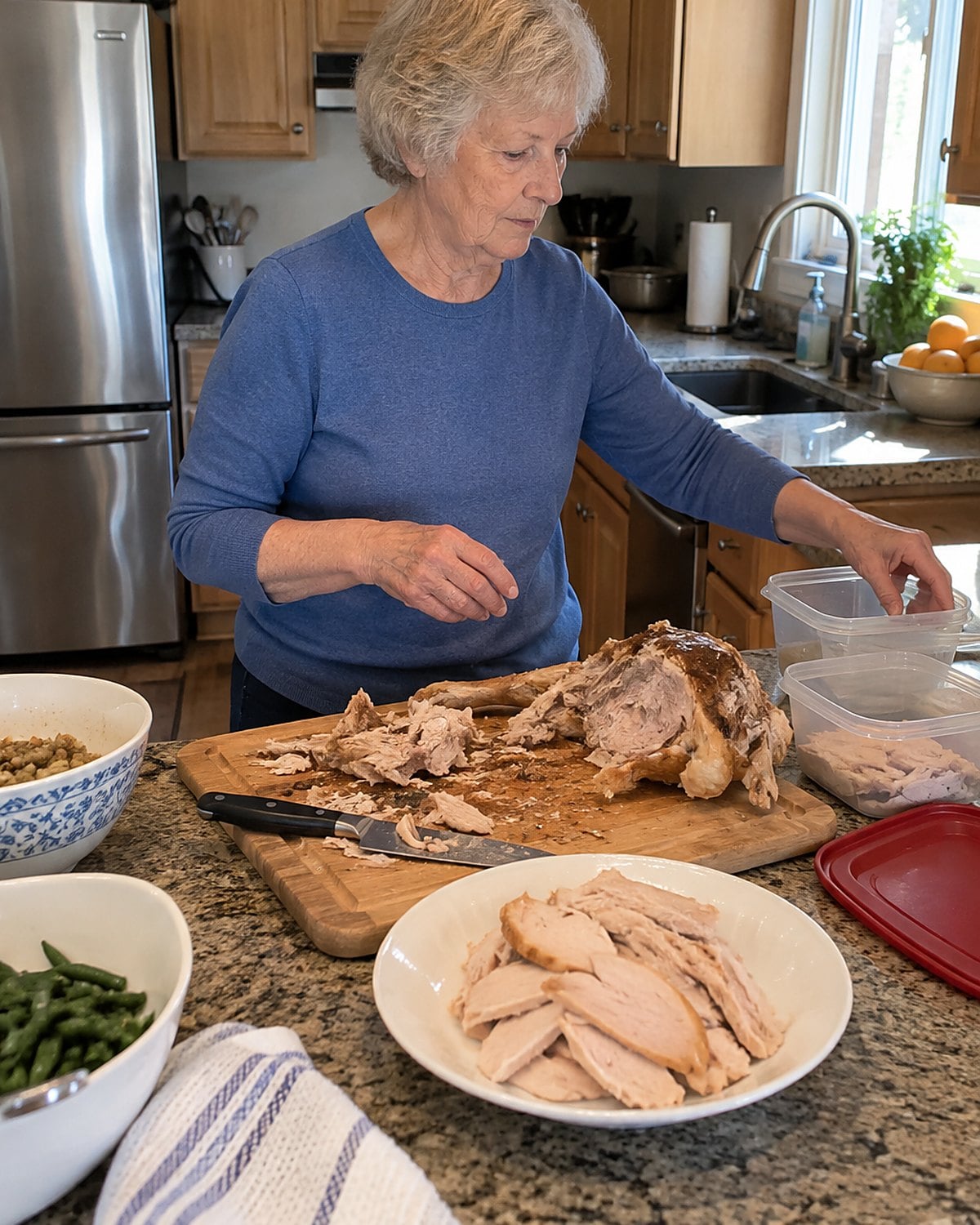
The turkey is carved, the family is eating, and the bones and sliced meat remain on the board. You’ll deal with them when the pie plates are cleared. Then everyone asks for coffee.
The USDA says to refrigerate perishable food within 2 hours. Don’t leave the carved meat out for the full meal while you decide who wants a second helping. Put the portions you’ll save into shallow containers and get them cold promptly.
Handle the carcass for broth within that same window. If cleanup has run past it, cooking the bones later doesn’t erase the time they spent out. Ask someone to help pack the turkey while you make coffee. The leftovers you wanted for sandwiches get priority over the carving board.
#5 The Refrigerator After the Lights Went Out
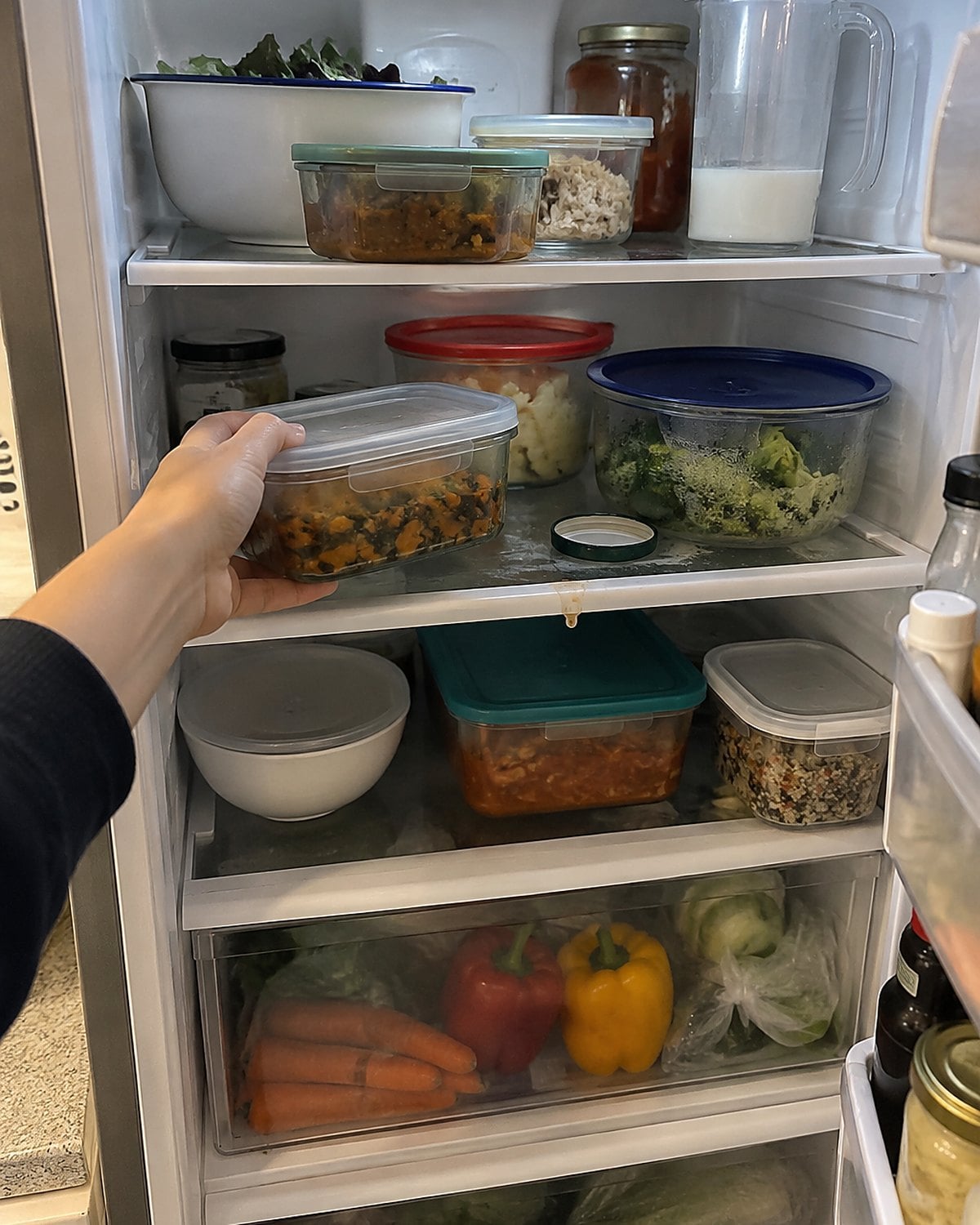
The power goes off during the night. By morning the clock on the stove is blinking, and the fridge light is back. You open the door and find cold-looking containers of leftovers. How long was the power out?
The FDA says an unopened refrigerator keeps food cold for about 4 hours during a power outage. A full freezer holds its temperature for about 48 hours if unopened, or about 24 hours if half full. Those figures assume the doors stay shut.
For refrigerated perishables, check how long power was out and the temperature the food reached. The FDA’s outage guidance says to discard perishable food held above 40°F for 2 hours or more. Don’t taste it to decide.
A temperature reading helps when the lights return. If you don’t know how warm the food got or how long it stayed warm, throw out the doubtful leftovers. It’s a hard call after a full refrigerator, but a cool-feeling container cannot tell you what happened overnight.
#4 The Grocery Bag Beside the Leftovers
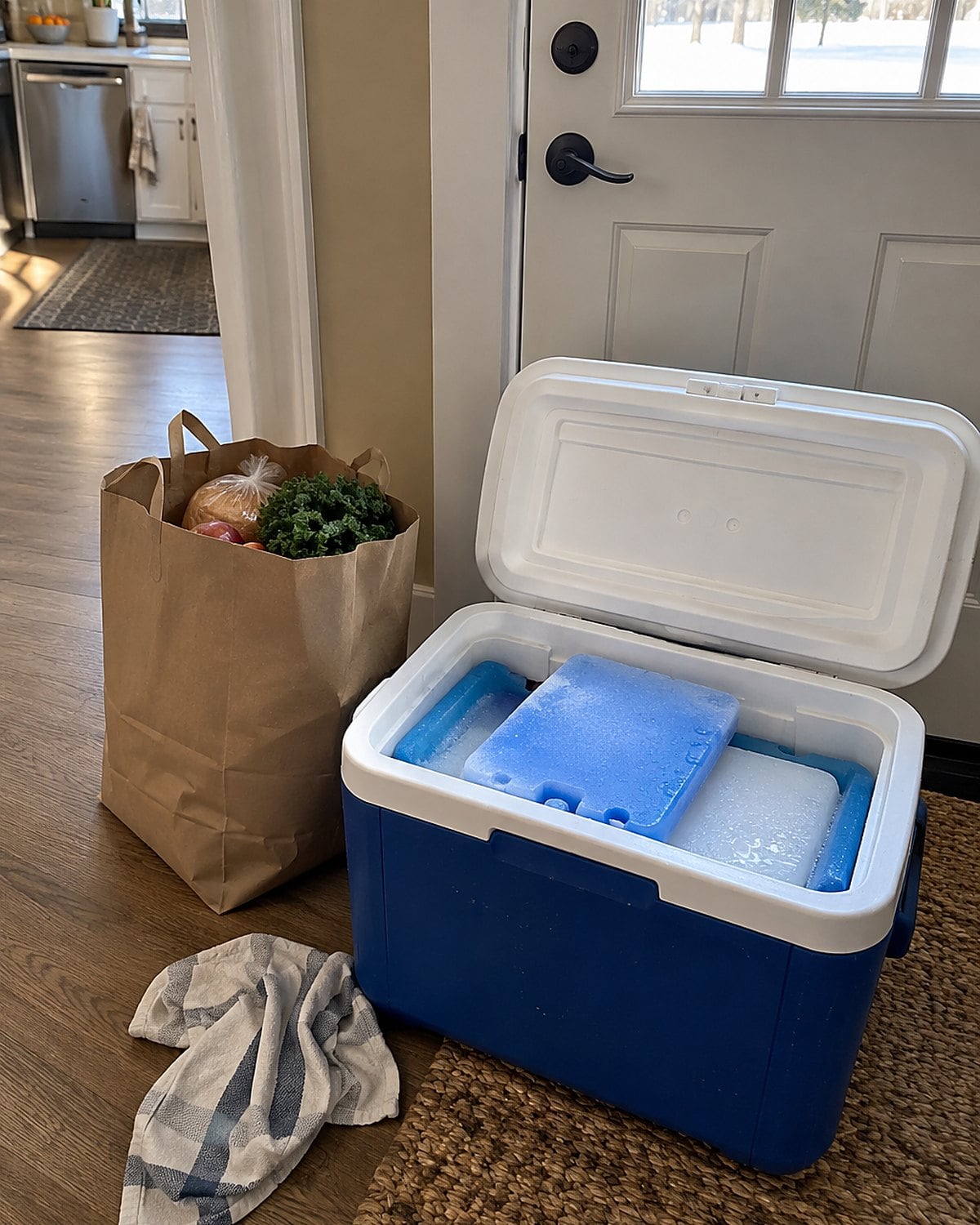
You’ve packed yesterday’s roast in a container to take to your sister. Before leaving, you stop for groceries. The roast rides in the car while you shop, tucked beside a bag of apples.
Carry cold leftovers in an insulated cooler with ice packs. Refrigerate them when you arrive. The same 2-hour limit applies to time out of refrigeration, and it drops to 1 hour above 90°F.
If the trip has several stops, put the cooler in the car just before you leave and make delivery the first stop. Apples travel well without ice. Cooked roast needs the cold space, even when the visit is short and the drive feels familiar.
#3 The Frozen Lasagna Saved Past Its Best Day
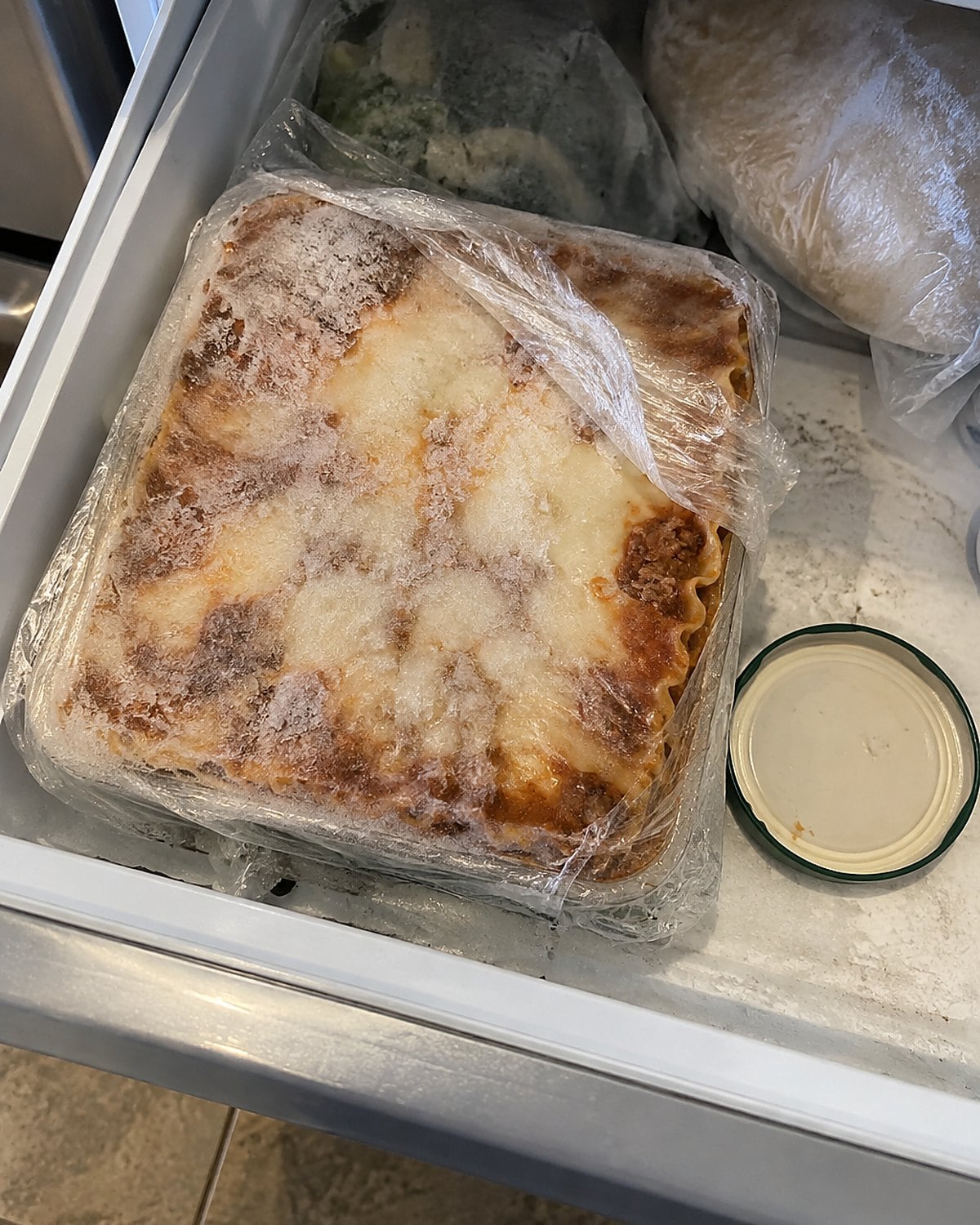
You find a square of lasagna at the back of the freezer. The wrapper has frost, and you can’t read what you wrote on it. Is it unsafe because it has been there so long?
The USDA says food kept continuously frozen at 0°F stays safe indefinitely, though quality declines. Freezing stops bacterial growth; it doesn’t repair food that sat out too long before freezing. The state of the lasagna before it went in still matters.
If you know it was cooled and frozen promptly, thaw it in the fridge or reheat it from frozen. Bring the center to 165°F. Dry edges or freezer burn affect how good it tastes, not whether continuous freezing kept it safe.
If you have no idea when it was made or how it was handled, you don’t owe that mystery parcel a place at dinner. Next time, wrap portions well before they go into the freezer and keep them where you can see them.
Try it: How To Reheat Leftovers In Instant Pot (From Fridge & Freezer)
#2 The Twist-Tie Bag with No Date
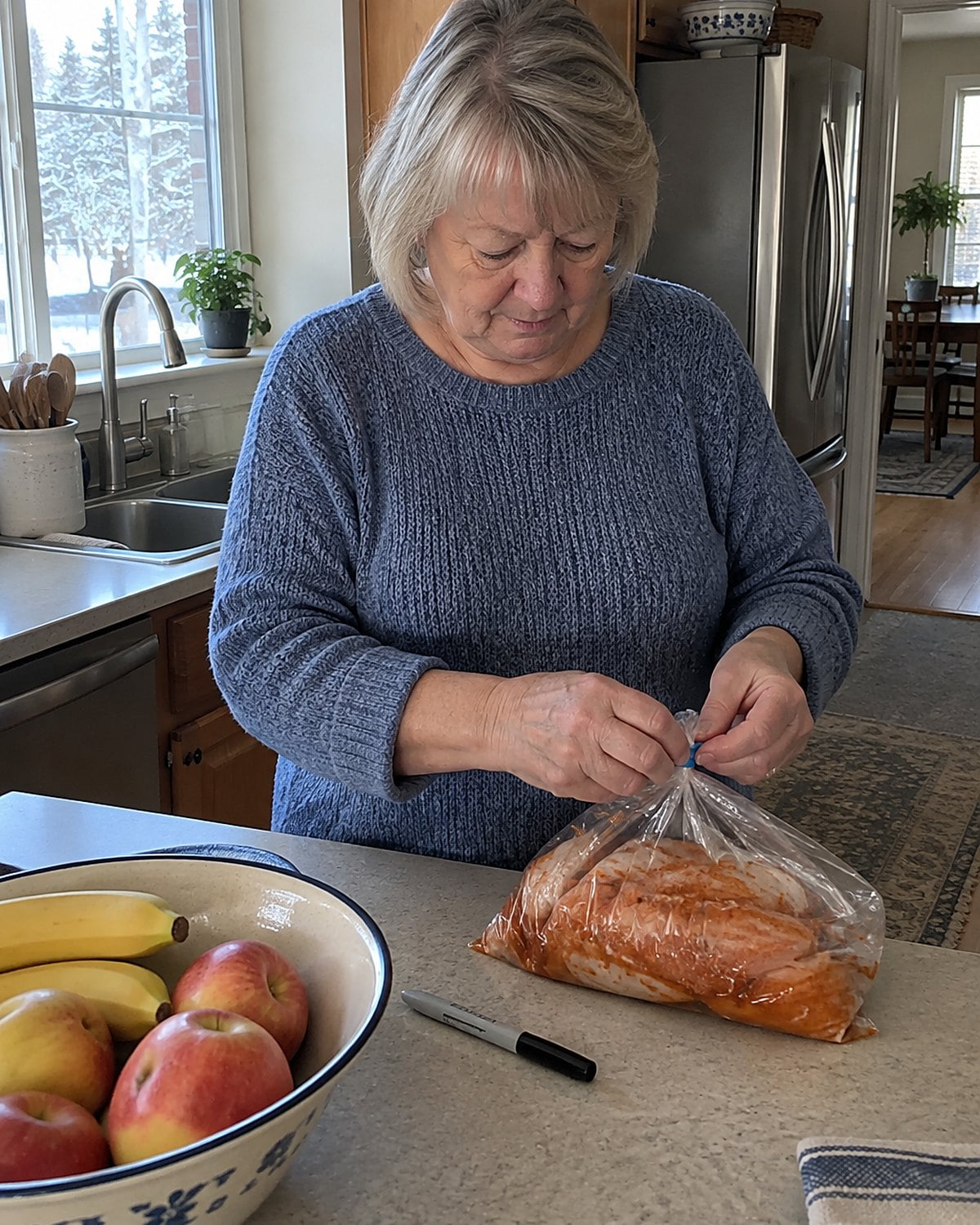
A twist tie closes the bag. Inside: something brown, frozen, and familiar enough that you’re sure you’ll recognize it later. Three weeks from now, you won’t.
Write the food name and the date on the bag before filling it. Ink grips a dry bag better than one smeared with sauce or frost. If tape is your system, put it on a clean, dry container where it won’t peel off in the freezer.
Dating food won’t fix late cooling or a warm fridge. It will keep you from treating an old meal as new because it looks good. For refrigerated leftovers, mark the cooking date and use them within 3 to 4 days at 40°F or below.
The drawer with the twist ties is still useful. Give it a marker, too.
#1 The Fridge Thermometer Behind the Milk
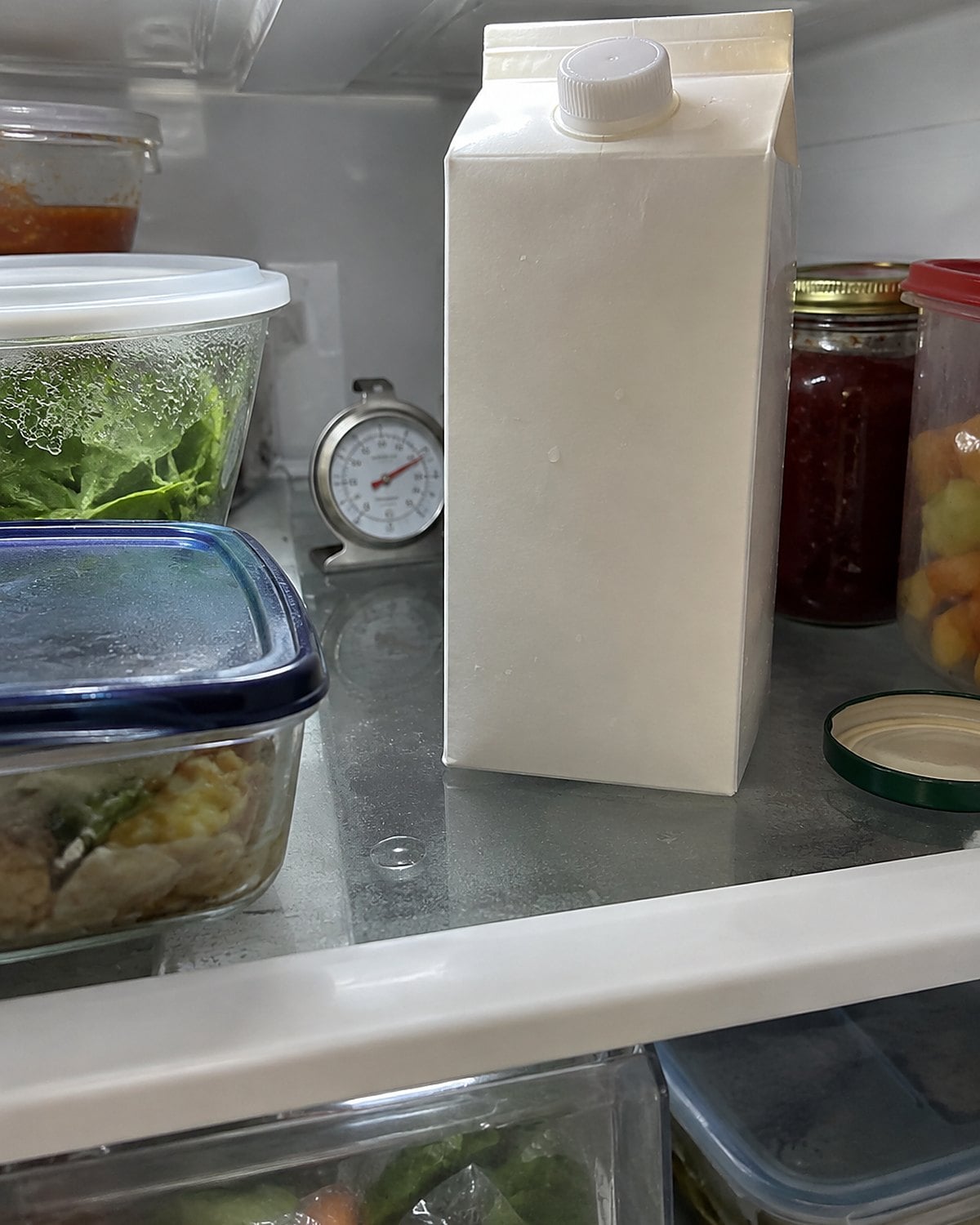
You’re careful about the clock. You cool the food promptly, label the containers, and leave room on the shelf. There’s one question left: how cold is the refrigerator actually keeping them?
Set a refrigerator thermometer on a middle shelf, away from the door and the back wall. The FDA says the fridge should be 40°F or below, and the freezer should be 0°F. Read it after the door has stayed closed for a while, then check it again when you’ve changed a setting.
If the reading is above 40°F, adjust the control and recheck. Make sure the door seals and that food isn’t blocking cold air from moving. If the temperature won’t come down, the appliance needs attention; don’t trust its dial over the thermometer.
That little gauge answers a question your hand can’t. A container pulled from the fridge feels cold, but you need a number to judge its storage conditions. Read the gauge before you plan dinner around yesterday’s food.
The bottom line
The smell of a good leftover tells you what’s in the container. It doesn’t tell you how long it sat out, how fast it cooled, or how cold the fridge stayed.
You’ve done this well when the food is portioned, dated, and put away promptly, with a thermometer reading 40°F or below.
Leave a Reply