

The lid comes off with that familiar puff of steam. You set it beside the stove, grip the Dutch oven, and feel the handles turn against your fingers. There's dinner inside and nowhere clear to put it. For a second, the pot has your full attention.
That second matters. A pot changes as it fills: the weight rises, the hot contents shift, and the route from burner to counter suddenly counts. Years of cooking don't make those forces go away. They do give you the good sense to change the setup before the lift.
This is kitchen setup advice, not a substitute for advice about an injury or a change in your grip. For food storage and appliance limits, follow the USDA and the maker's instructions.
#24 The wet towel beside the burner
A damp towel seems harmless until you use it to grab a hot handle. Steam forms where the moisture meets the metal, and heat passes through before you've finished lifting. A slick towel also slides between your hand and the pot. That small shift is enough to send a full Dutch oven sideways.
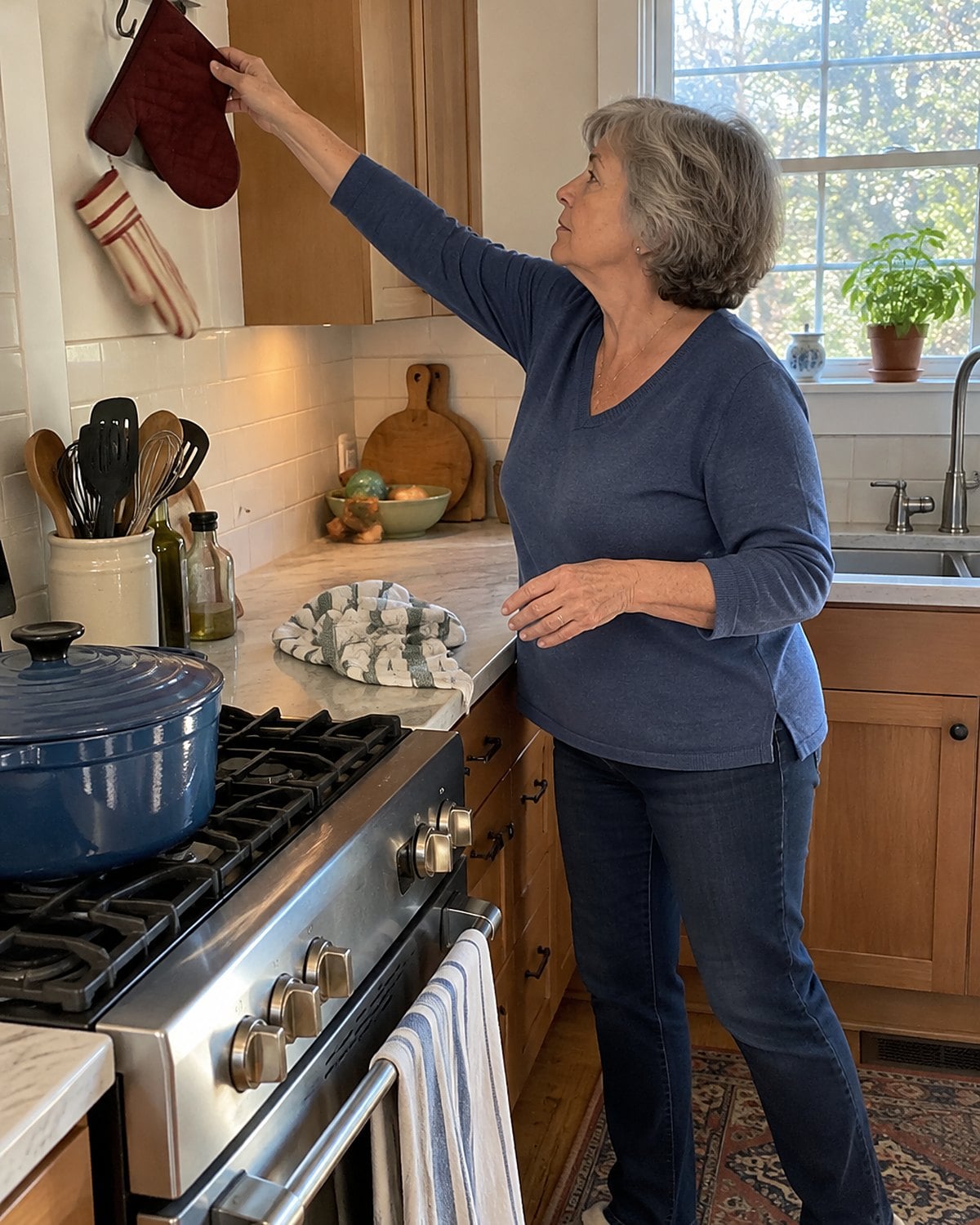
Set a pair of dry, thick oven mitts beside the stove before dinner goes on. Check that they cover the palms and the backs of your hands.
If a mitt has a thin spot where the thumb bends, retire it from heavy-pot duty. Take a look at the other mitt, too. You need a secure grip on both handles.
If a towel gets wet during cooking, leave it on the counter. A fresh dry one costs you one trip to the drawer. A hot handle gives no warning twice.
#23 The lid balanced on one handle
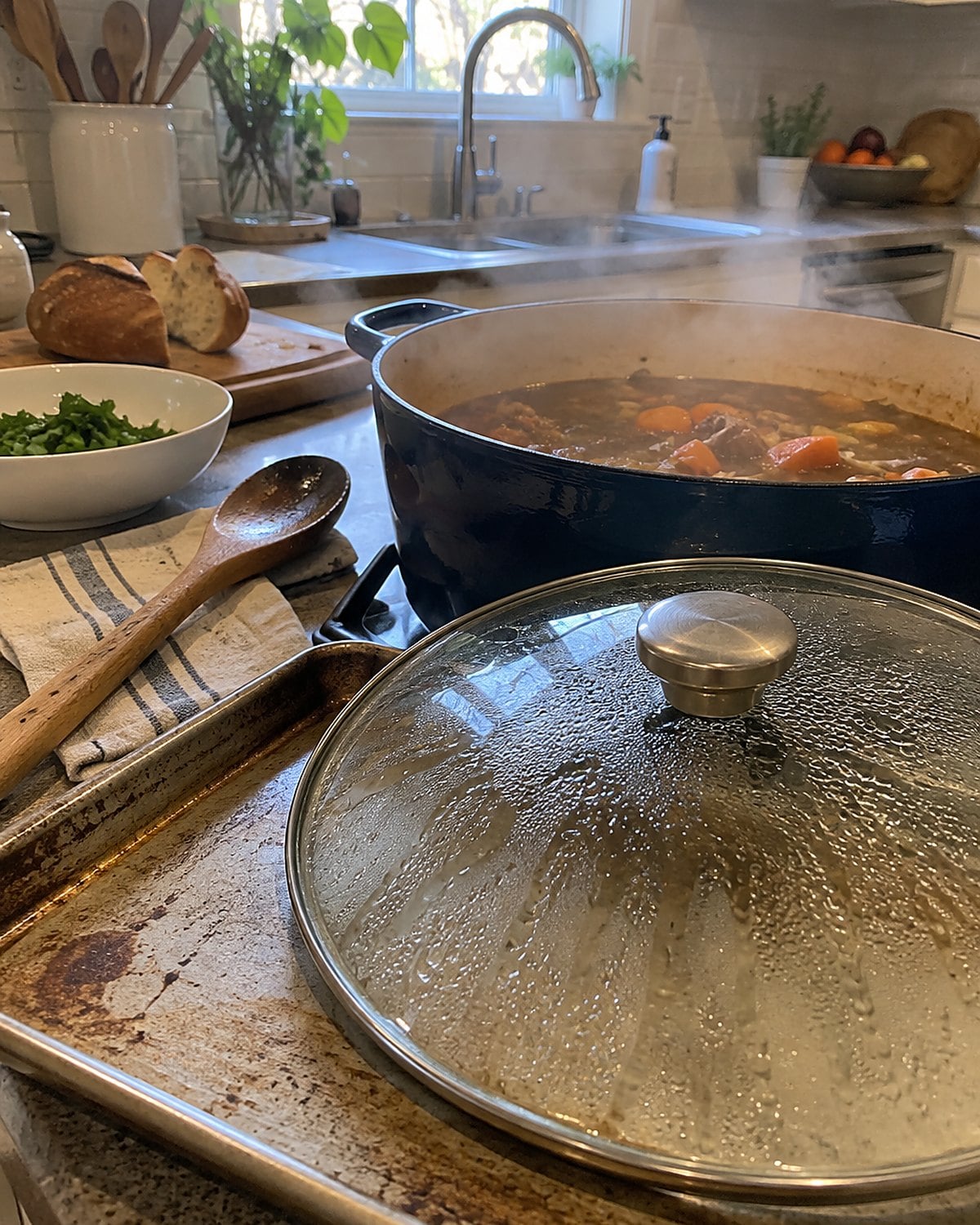
A lid parked across the pot's handles leaves you nowhere to put your fingers. It also adds weight at the very moment you're trying to get a steady hold. Move it first.
Give the lid a landing place before you lift it. A rimmed sheet pan on the counter catches drips, and its flat surface keeps a round lid from rolling. Turn the lid away from your face as you open the pot so the steam escapes on the far side.
Then look at the pot itself. If you can't see both handles clearly, you're too close to hurry. Set down the spoon, clear the stove edge, and take the handles with two hands. The lid doesn't need to travel with dinner.
#22 The stockpot filled almost to its rim
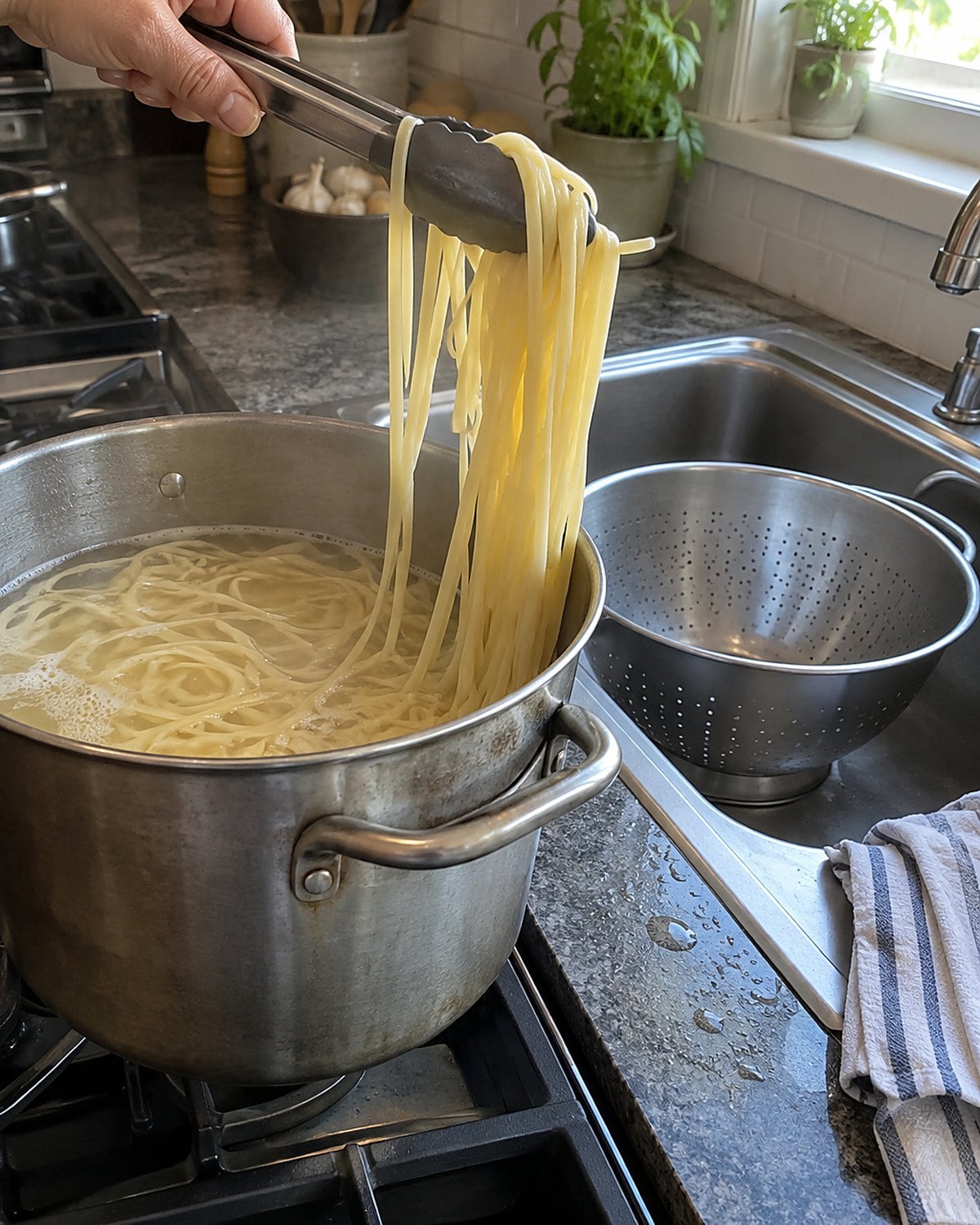
A big pot invites a big batch. Then the pasta water rolls, the handles heat up, and a short walk to the sink becomes a balancing job. Water weighs about 8 pounds per gallon. That figure doesn't include the pot or the food.
Don't carry a full stockpot across the kitchen to drain it. Set a colander firmly in the sink and transfer pasta with tongs or a spider. For vegetables, use a slotted spoon.
If the water itself has to go, let the pot cool first and remove some with a heat-safe ladle. Keep your face back from the steam.
Before cooking, look at the space around the sink. Is a chair in the way? Does the faucet crowd the colander? Your kitchen has a traffic pattern, and a full pot exposes every awkward turn in it.
Smaller batches change the job. Two rounds of pasta take a few extra minutes. Each round leaves room for boiling, and the water stays at the stove while dinner goes to the sink.
#21 The slick enamel Dutch oven
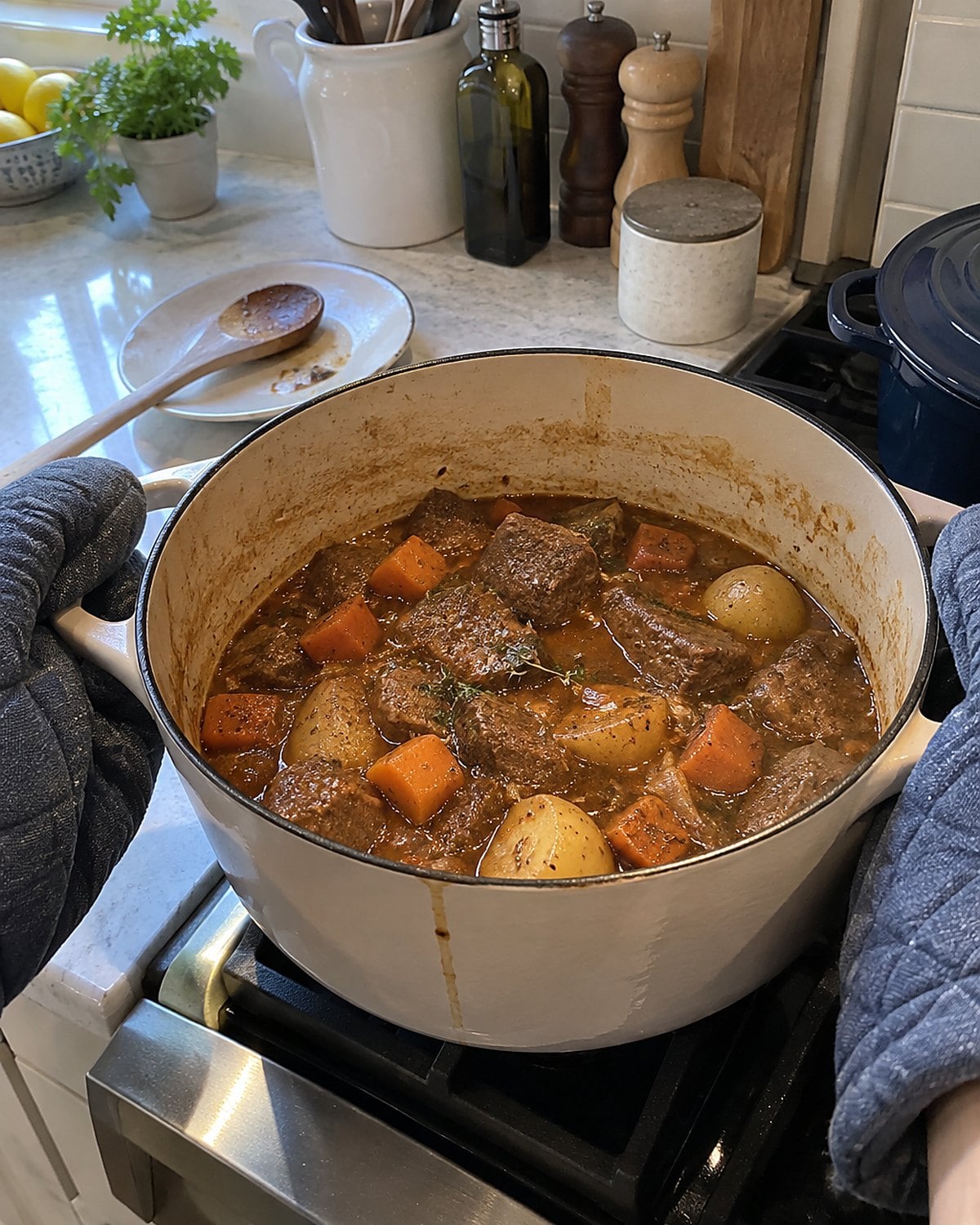
An enamel finish cleans up beautifully. It also turns a wet handhold into a poor place to trust your grip. Before you start a stew, run dry fingers under each handle. Some offer plenty of room; others leave barely enough space once thick mitts go on.
Look at the gap between handle and pot. Will a covered hand fit without brushing the hot side? If the handle is narrow, keep this Dutch oven for bread or a dish that stays on the stovetop.
For soup you'll need to move, use a lighter pot with handles that leave room for mitts. You already know how the recipe works. This check is about how the pot fits your hands.
Consult the cookware maker's care instructions before putting an enameled pot into the oven. Knobs and handles have their own limits, even when the pot body looks ready for anything.
#20 The low oven rack for supper
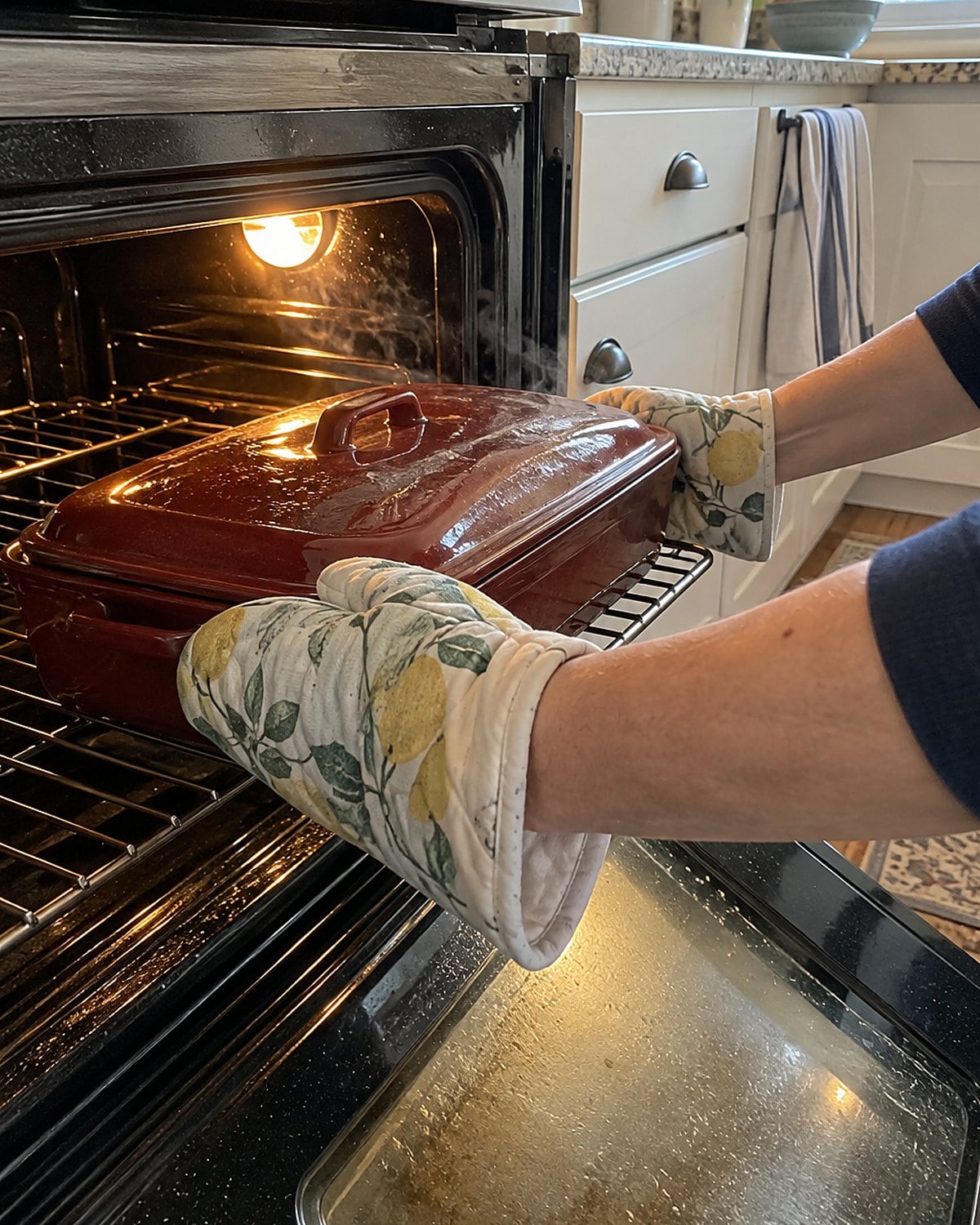
The casserole goes in easily enough. Taking it out is different. You have to bend, grip hot handles, straighten up, and keep the pan level while the filling moves toward one side. A Dutch oven makes that sequence harder because its own weight stays with you, even after dinner is gone.
Set the rack while the oven is cold. Choose a height where you can see into the pot and pull it toward you without reaching above your shoulders. If a tall pot needs a low rack for clearance, change the vessel instead of accepting a blind lift.
For a braise, a covered oven-safe baking dish spreads the food into a shallower layer. Set that dish on a sturdy sheet pan if its handles are narrow. Before it goes into the oven, check that the combined pan and dish are comfortable for you to carry.
Check the dish and lid for their oven temperature limits; glass, ceramic, and plastic knobs don't all share the same rating. The maker's instructions settle that question.
Pull the oven rack out far enough to grasp both sides of the dish. Keep the trip to the counter short. A trivet should already be waiting, not coming out of a drawer while you stand there holding dinner.
#19 The countertop with nowhere to land
A hot pot needs an address.
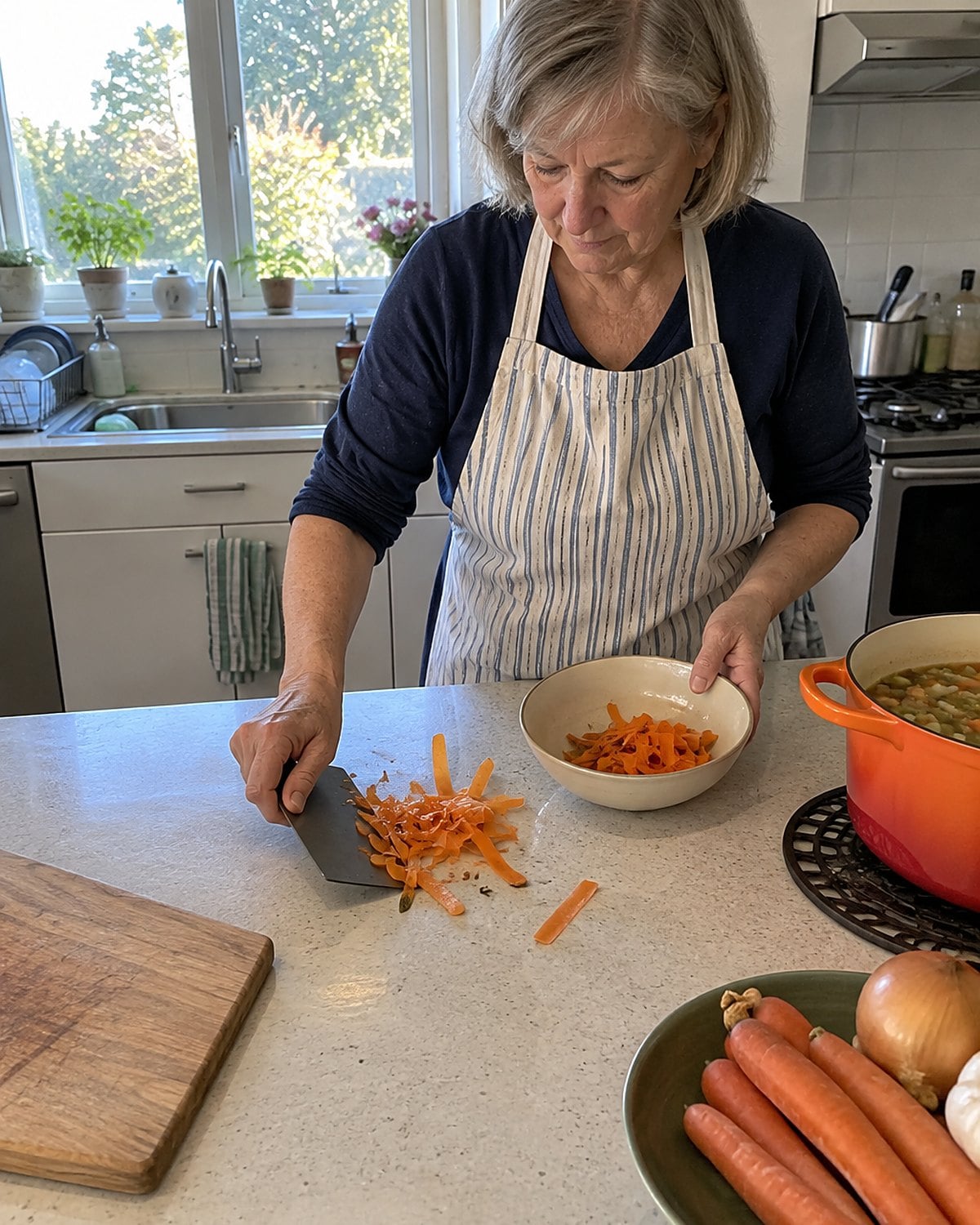
If the counter is covered with a cutting board, mail, and the bowl of carrot peels, you end up holding its weight while you clear a spot. That's the moment a good grip starts to fail.
Before you turn on the burner, place a trivet within a step of the stove. Make it wide enough for the pot's base, with no corner hanging off. Push the knife and scraps out of the route between burner and trivet.
When dinner is ready, pause with both hands free. Turn off the heat, confirm the landing spot, then lift. You shouldn't have to call across the room for someone to move a chair while you're carrying supper. A clear counter isn't a tidy-kitchen rule. It's a place to stop.
#18 The glass lid with a loose knob
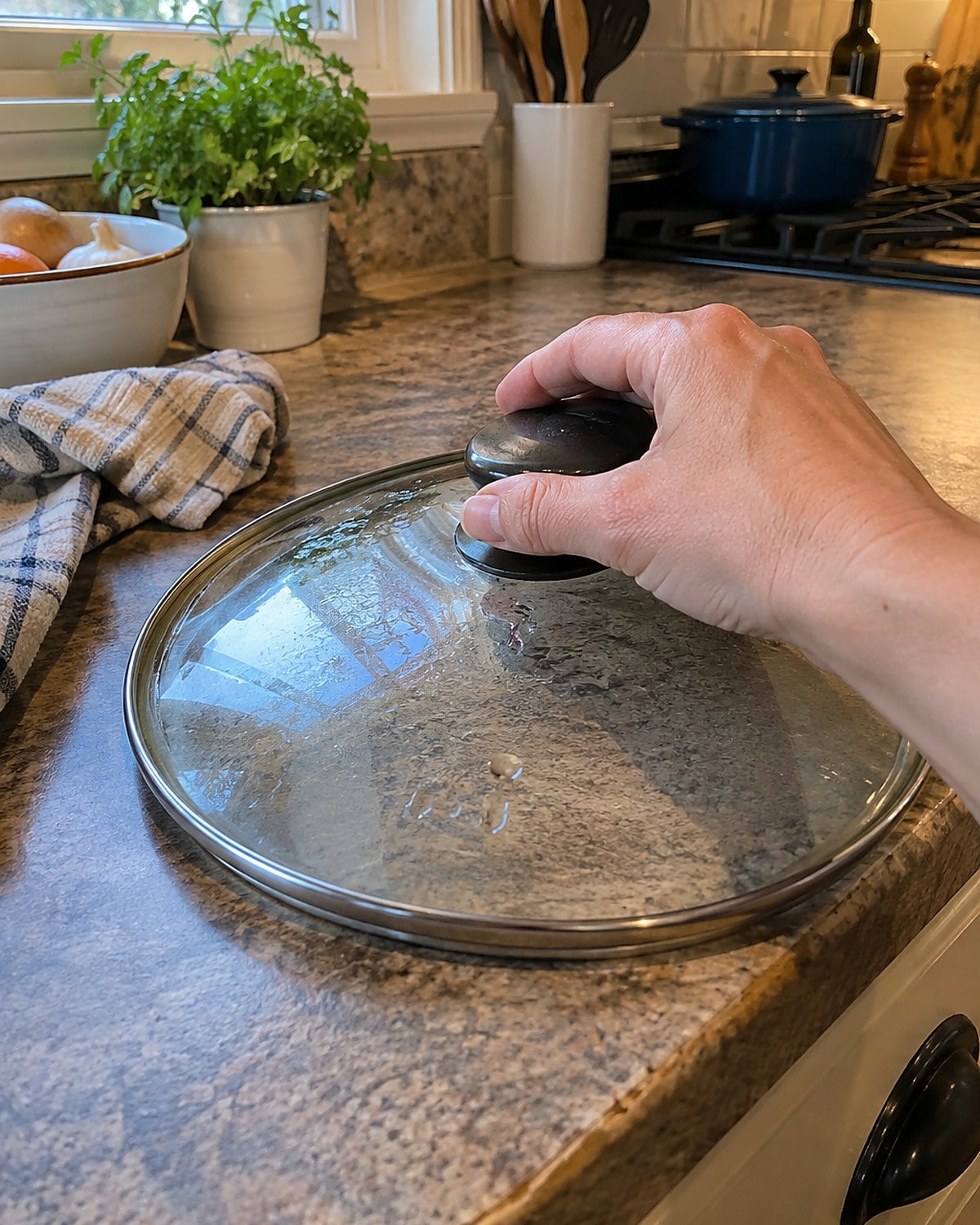
A lid knob can loosen so gradually that you don't notice until the lid tilts in your hand. Now you're trying to catch hot glass above a steaming pot. Deal with that knob while everything is cool.
Turn it lightly with your fingers. If it rocks, check the fastening underneath and follow the lid maker's directions for tightening or replacing it. Don't substitute a random screw that leaves the knob unstable or puts the wrong material in a hot oven.
Use a separate lid rest beside the burner. Lift the lid by its knob only after checking that it sits firmly, and angle steam away from your wrist. If the knob still moves after you've tightened it, stop using that lid.
A pan lid that fits securely is the better choice tonight.
#17 The old pot for two people
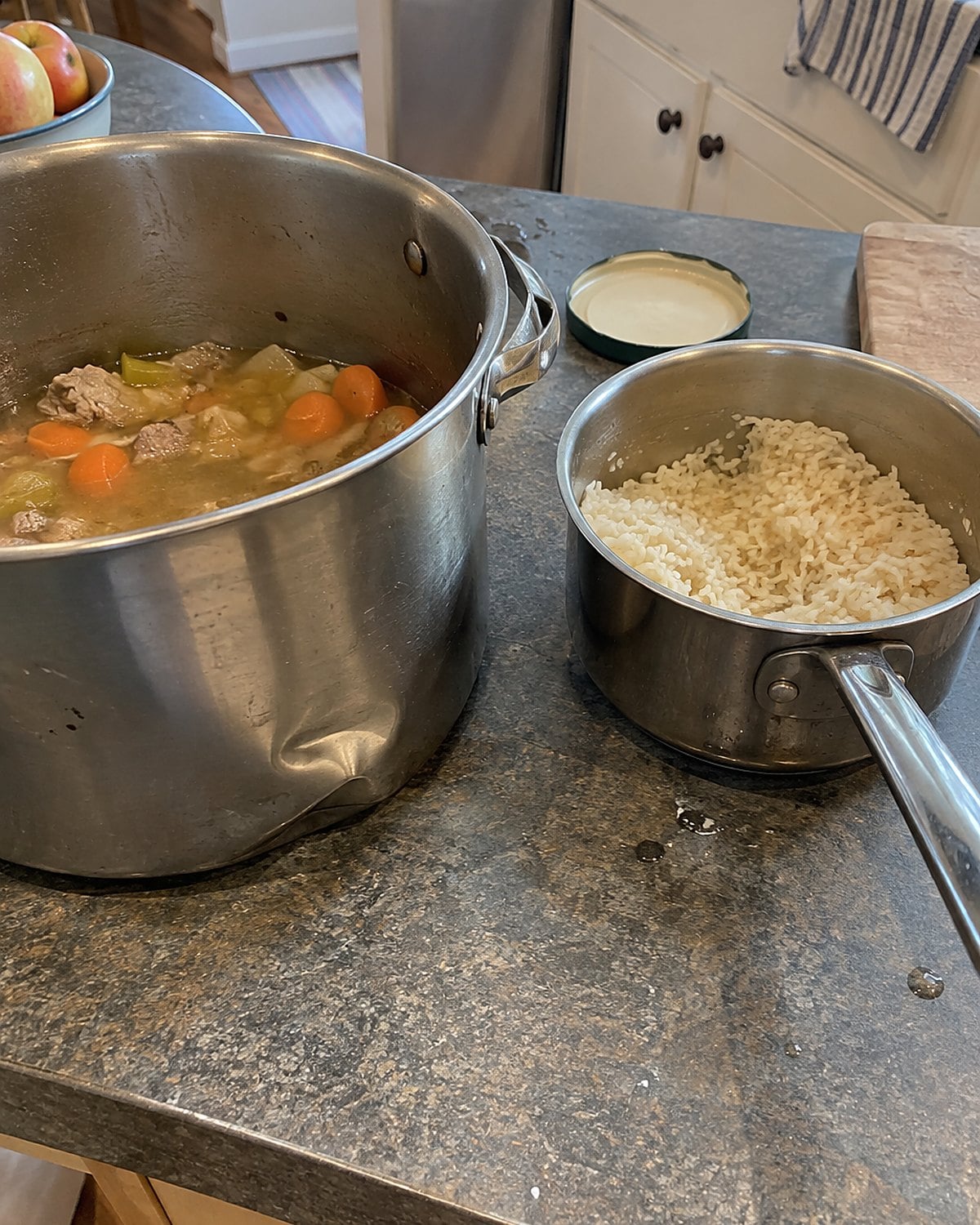
For years, the large pot earned its shelf space. There were children at the table, a second helping to plan for, and lunch to pack the next day. Now you might be cooking for two, yet the same heavy pot still comes down from the cupboard.
Match the vessel to the meal before the ingredients come out. A smaller saucepan handles a modest pot of beans. A deep skillet holds chicken and vegetables without making you lift a Dutch oven to stir or serve.
Look at the food, not the pot's history. Does the smaller pan leave room to stir without spilling? Will a lid sit squarely on it? If so, the large one has no work tonight.
You can still make extra for a weekend visit. On a regular Tuesday, the old family-size pot doesn't need an invitation. The smaller pan saves a lift before cooking and another one at the sink.
 You might also like27 Things a Woman Learns When Her Husband Starts Cooking in Retirement
#16 The market bundle meant for a crowd
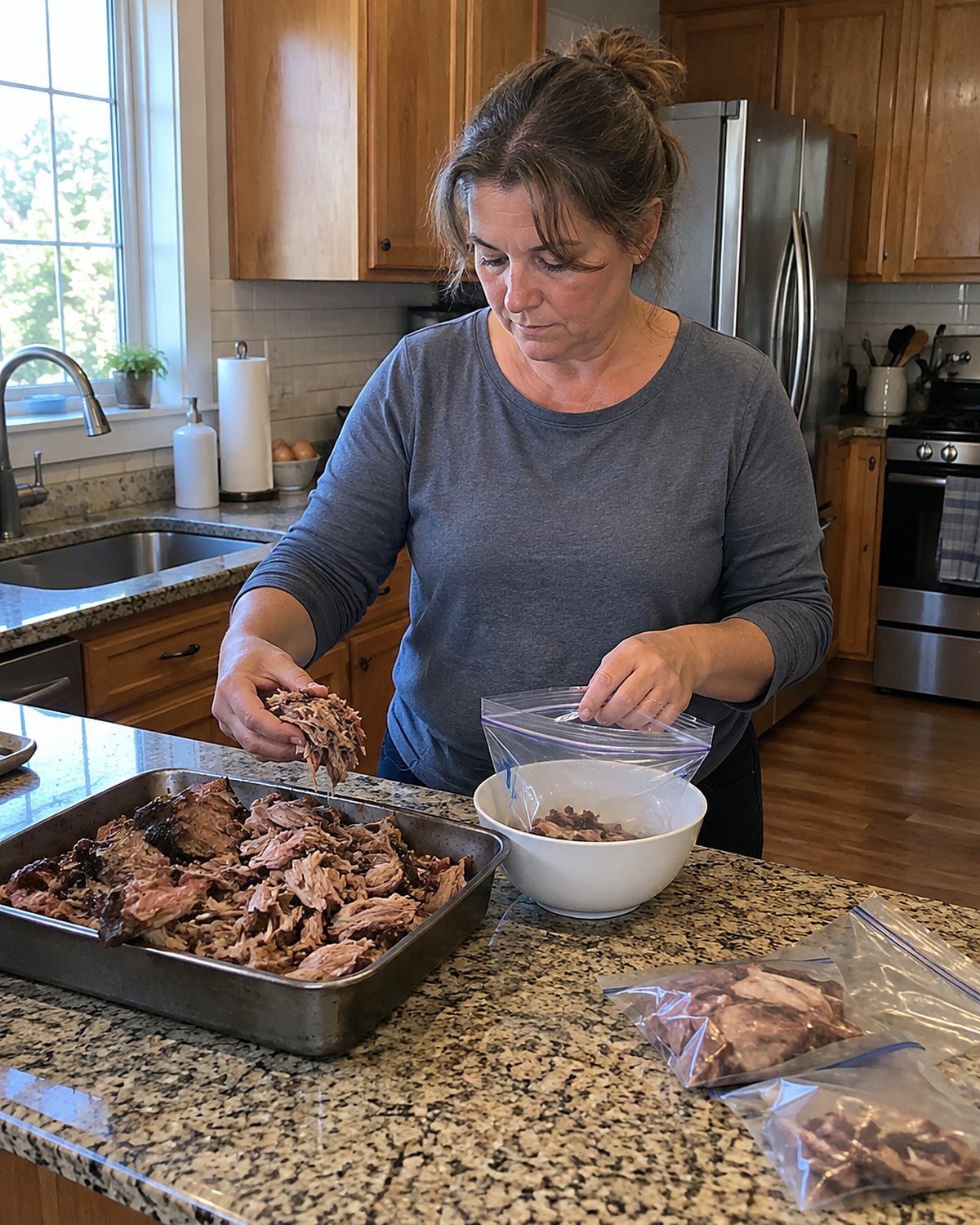
The family package is on sale, but you don't have to cook it as one piece. That's the grocery decision that keeps a roasting pan from turning into a load of several dinners.
Ask the butcher to divide a large cut, or portion the package at home while it's cold. Keep raw meat contained and away from food you'll eat without cooking. The FDA's food safety guidance is worth a look when you're setting up that counter.
Label freezer bags with the contents and date. Keep the fridge at 40°F or below, and use the USDA's cold storage chart for the safe window for a particular cut.
The guest-night portion stays separate from tonight's dinner. You get to buy the package that suits you without letting its size choose your roasting pan.
#15 The serving dish beside the table
You've carried the heavy pot from stove to counter. Dinner is done. Then someone asks if you can bring the whole thing to the table.
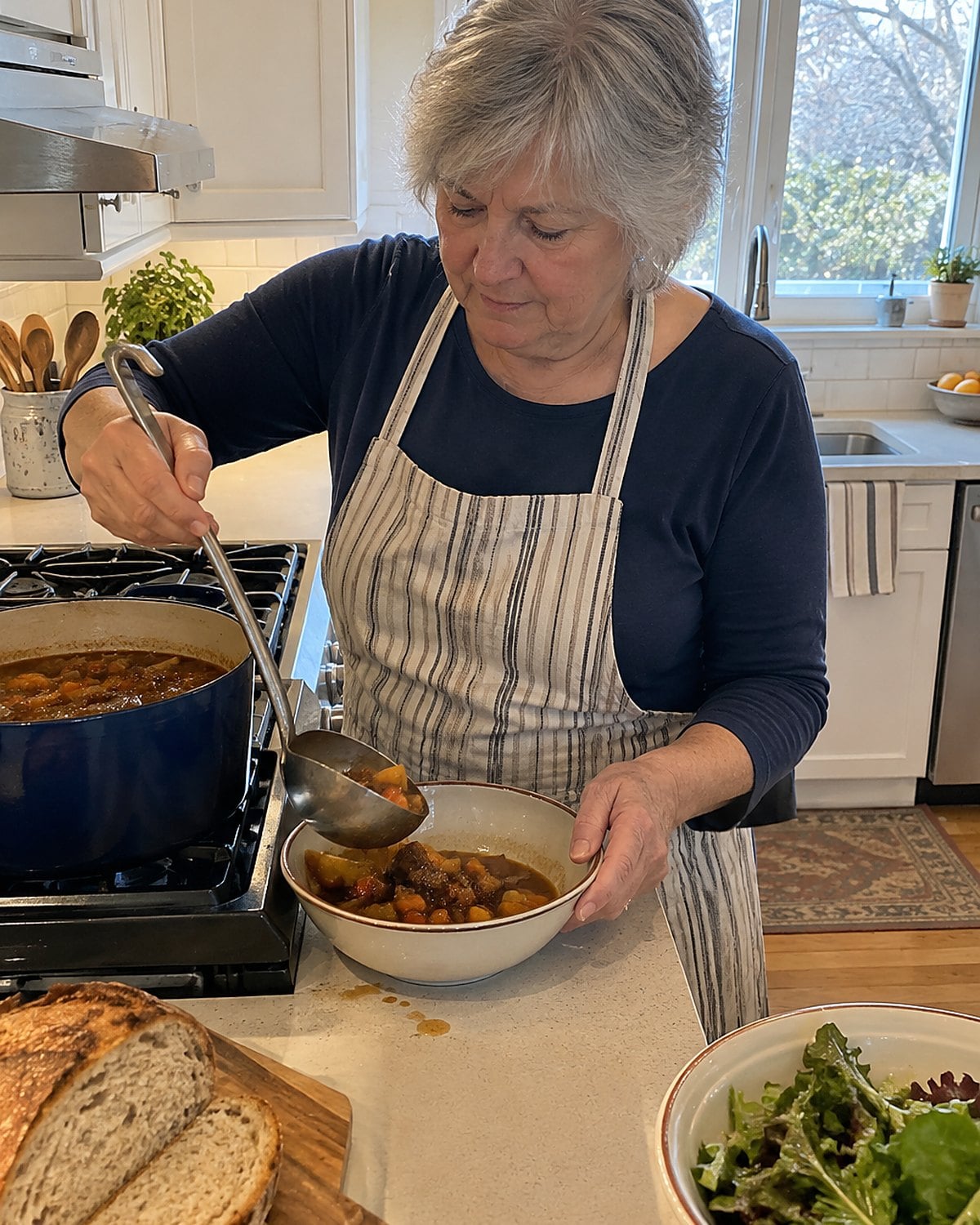
That second trip crosses chairs, feet, and perhaps a rug, with a hotter handle than the first time. Set a sturdy serving bowl near the stove instead and move the food into it with a ladle or spoon. For a roast, lift the meat onto a platter and bring the juices separately.
There's no rule that every meal needs a serving dish. Plates can come to the stove. If a grandchild is eating in a high chair, dish up away from reaching hands, then carry the plate. The hot pot stays out of the walking path.
Try saying, "Bring your plate over; I'll serve from here." It isn't an apology or an announcement about age. It's how you keep a pot of hot food from crossing a crowded room twice. The people at the table get supper all the same.
#14 The handle that twists in your hand
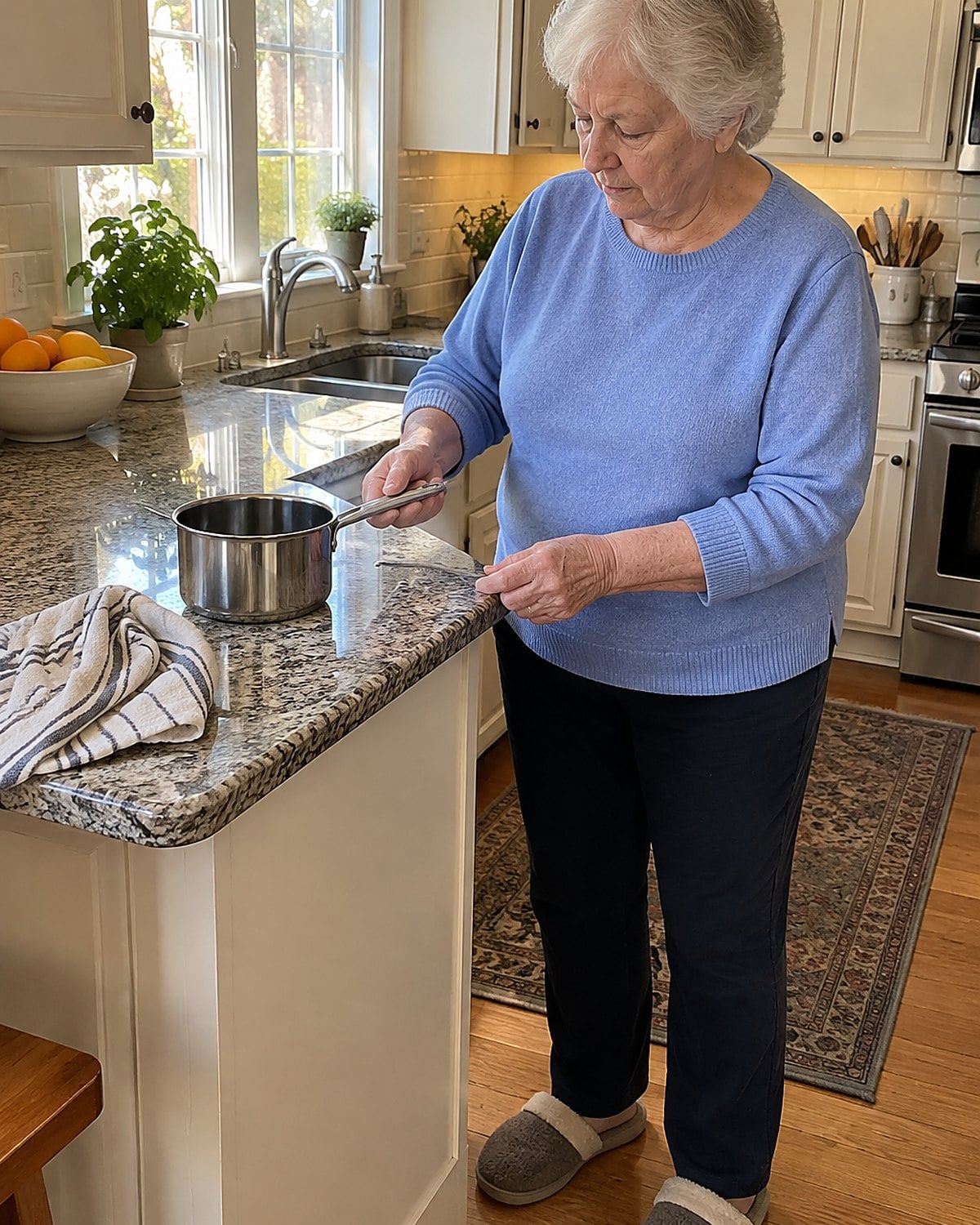
A long saucepan handle gives you leverage. It also puts the pan's weight on one wrist as you turn toward the counter. If the joint is loose, the pan shifts before your hand does.
Check the handle when the pan is cold. Hold the body still and try to move the handle from side to side. There should be no wobble at the joint.
If the manufacturer provides a way to tighten it, follow those directions. A cracked or persistently loose handle means that pan leaves the stove rotation.
For a heavy sauce, choose a pot with two secure side handles. Each hand gets a firm place to hold, and your wrist no longer has to steer the whole pan alone.
#13 The pan dragged across the burner
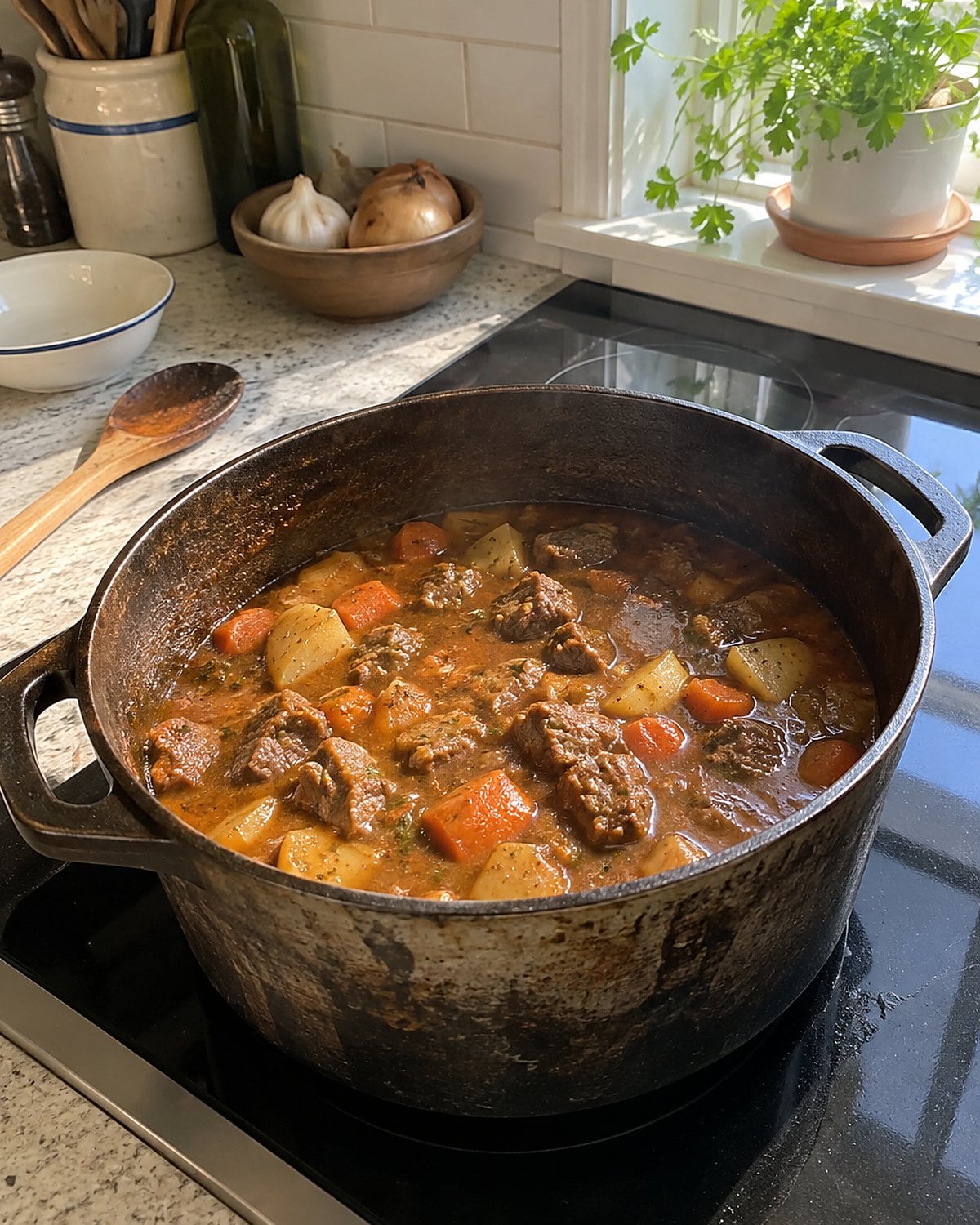
Sliding a full pot across a smooth cooktop looks easier than lifting it. The trouble comes when it keeps moving after your hand stops. It reaches a control, the stove edge, or the towel you left nearby.
Turn off the heat before repositioning cookware. If the pot has to leave the stove, move the food into another container first. Asking for help is another choice to make before the handles are hot.
Check the manual for your stove before using a heavy cast-iron pot on its surface. The CPSC's home safety information is another place to check kitchen hazards, but your stove maker sets the cookware rules for that cooktop.
Choose a pan you can position without dragging a full meal across glass.
#12 The full sink at cleanup time
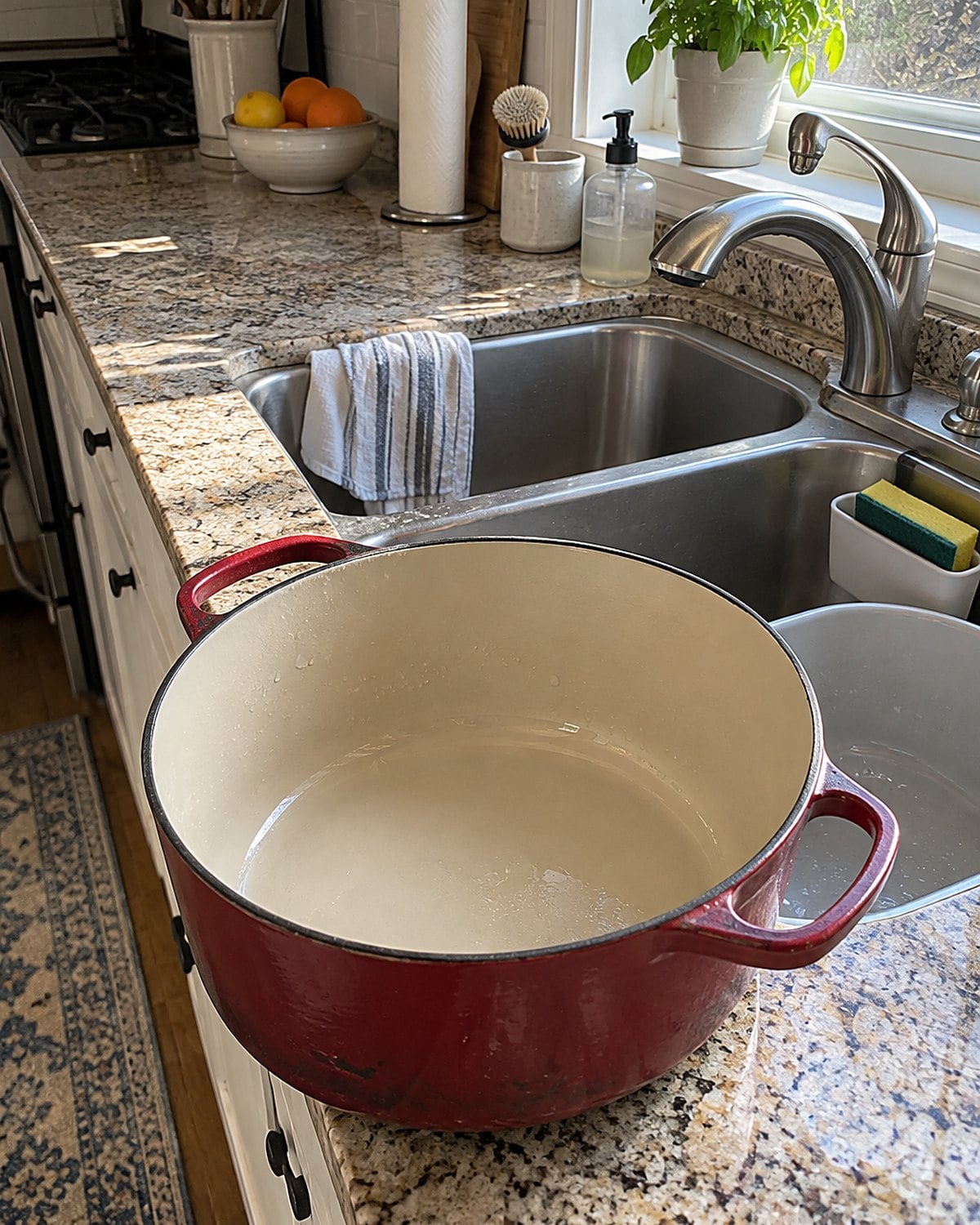
What's waiting in the sink after supper? A glass, a knife, yesterday's sponge, and no room for the Dutch oven. Add water to the handles, and every change of grip gets harder.
Let the pot cool on a stable surface, out of children's reach. Don't add cold water to a very hot enameled or glass vessel; a sudden temperature change can damage cookware.
Once it's cool, scrape the food into a container or the trash as appropriate. Move the empty pot, not the loaded one.
Clear the sink before lifting. If the pot fits poorly under the faucet, wash it on the counter with a small basin and carry the water to the sink separately. Set a towel beneath the basin so it doesn't skid.
Check the cookware maker's cleaning directions before using abrasive pads or putting a heavy piece in the dishwasher. The pot that cooked dinner still needs a workable route after everyone has left the table.
#11 The wooden spoon left inside
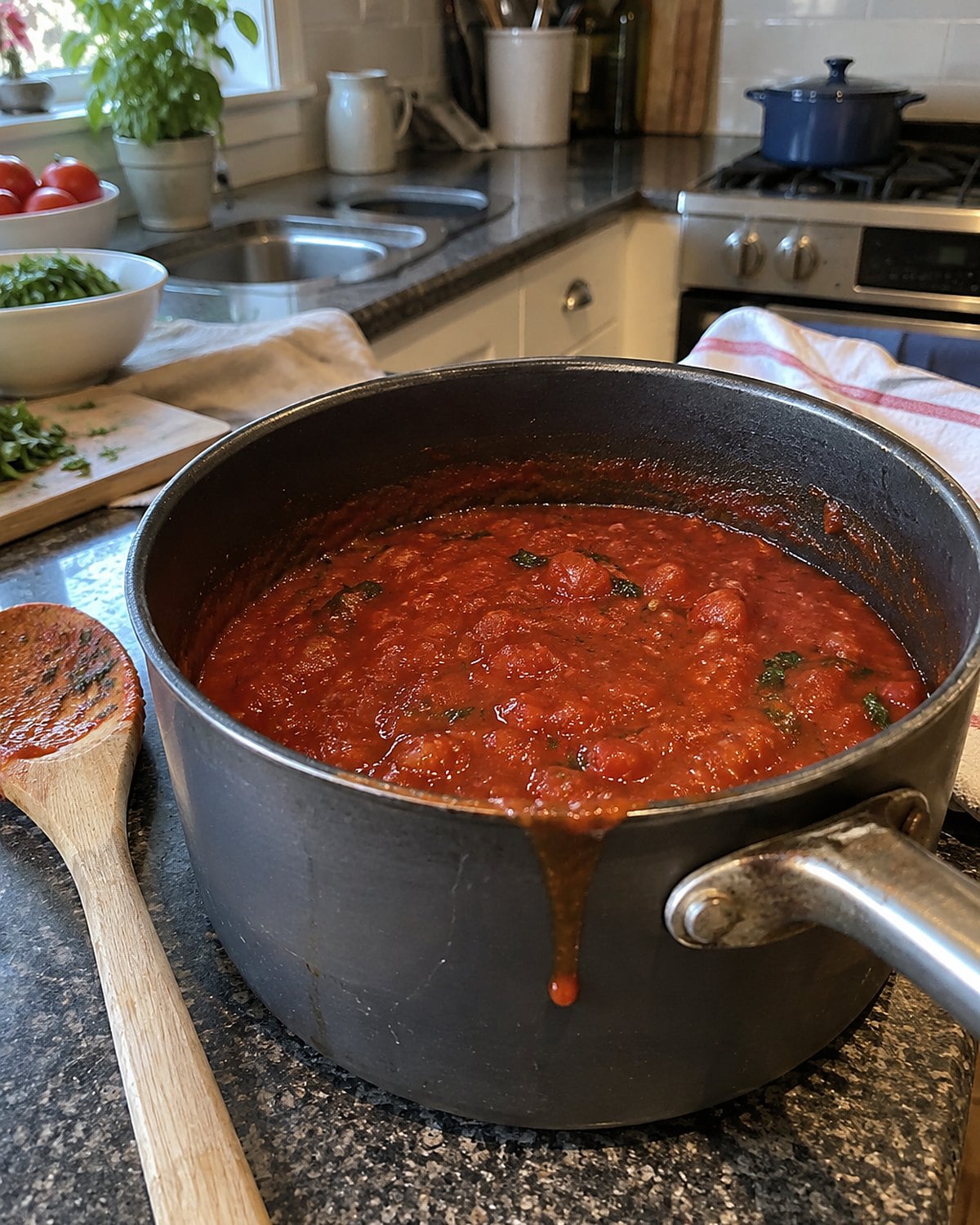
A spoon propped against the rim seems ready for the next stir. It can also block one handle when you need to move the pot. Reaching across steam to grab it, with a mitt already on, is a poor exchange.
Set a spoon rest beside the burner. Take the utensil out before lifting the pot, and keep the work area free of handles that stick into your path.
If the sauce needs frequent stirring, do the chopping at a stable seat nearby. Keep that chair away from the active burner so your knees don't crowd the stove.
Stir from a position where you can see the pot's bottom. Then step back and look at both handles before touching either. It's a small pause, and it catches the spoon, the towel, and the forgotten burner control in one glance.
#10 The cast-iron skillet with one handle
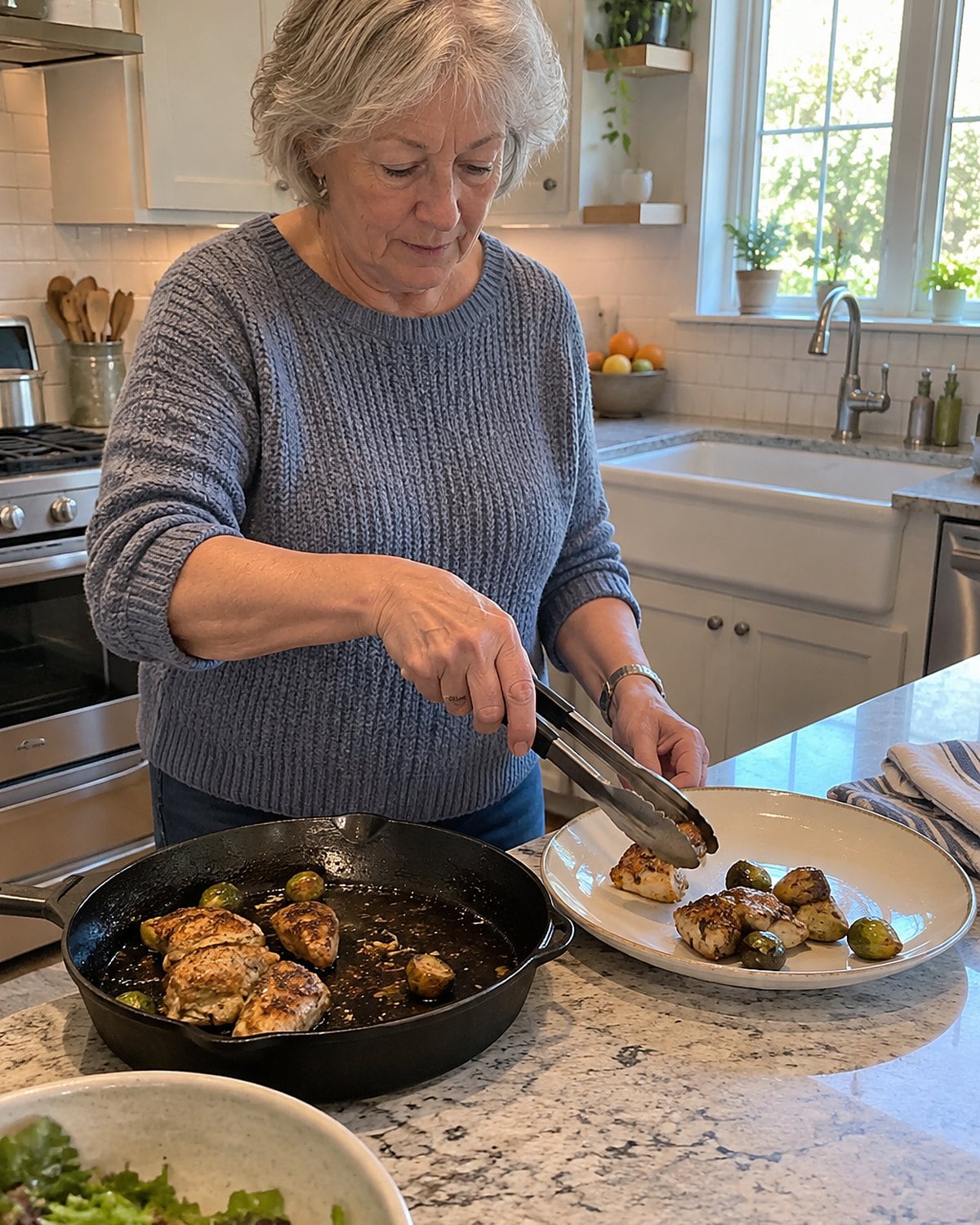
A cast-iron skillet is worth keeping if you love its sear. But a single long handle asks one wrist to carry the pan and everything in it. The short helper handle gives your other hand a place to help only if you can reach it through a mitt.
Where will the skillet go when it leaves the oven? If the counter forces a turn past a cabinet or an open door, put a trivet somewhere closer before cooking. Keep both handles clear of other pans.
For a skillet supper, a lighter oven-safe pan with two roomy handles earns its place. Check its stated oven limit, including the lid and handle materials. A pan that's safe on the stovetop isn't automatically meant for the oven.
Keep the cast iron for jobs where it stays put. You can sear on the stove, take the food out with tongs, and let the skillet cool in place. Good cookware doesn't have to handle every dinner.
#9 The high cupboard above the stove
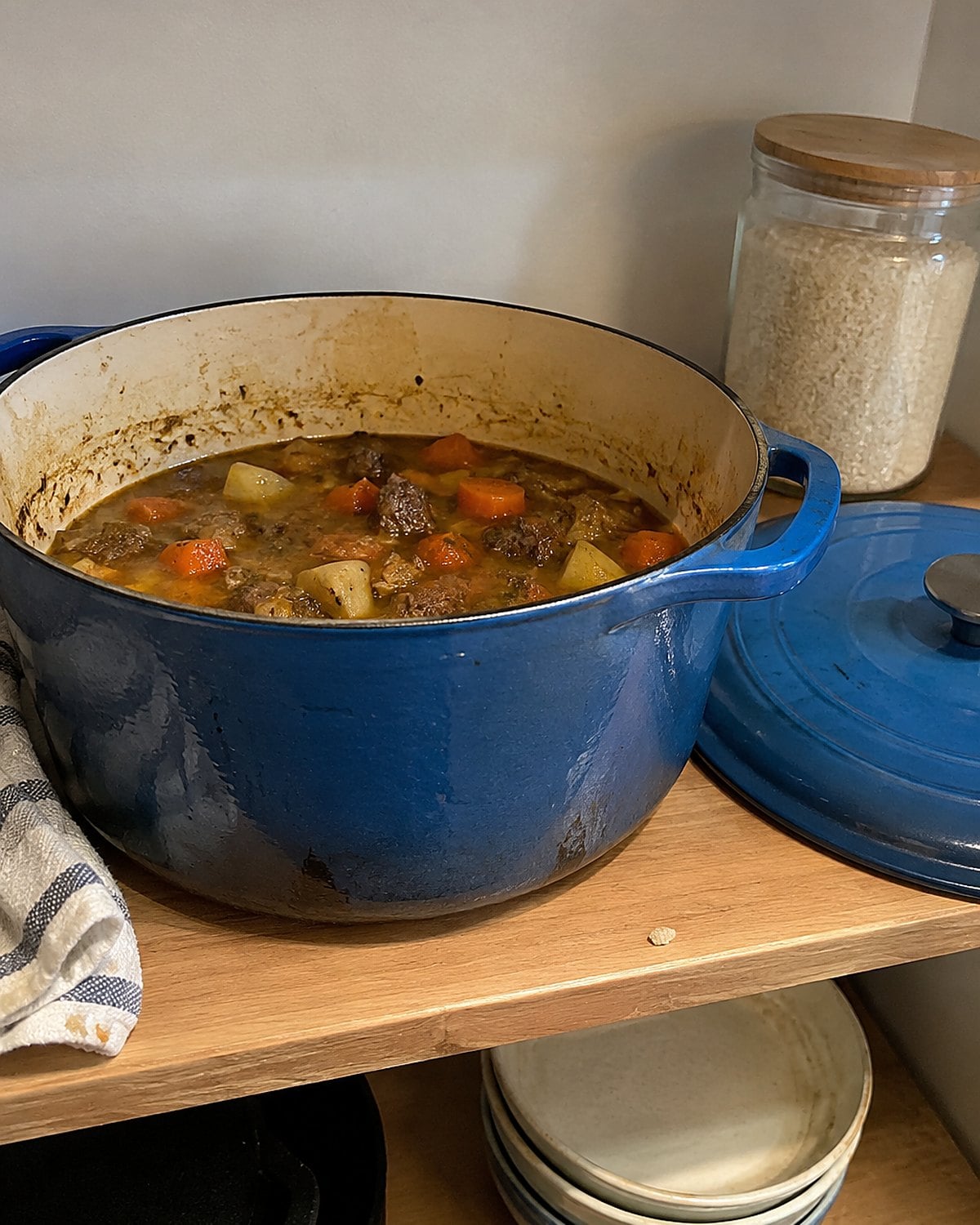
The heaviest pot belongs on a shelf you can reach without stretching. Above-stove storage asks you to raise it over your face, clear a door, and lower it toward burners. Taking it down empty is enough trouble. Putting it back after washing adds a slippery grip.
Move the pot to a waist-height shelf, even if that means relocating less-used baking tins. Keep the lid beside it rather than stacked on top. You should see both handles before you touch them.
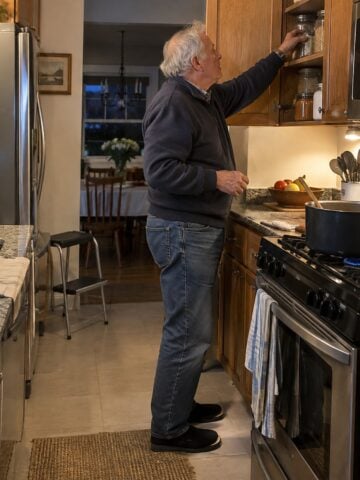
Do this rearrangement when the kitchen is cool and the counter is clear. If the shelf change calls for a step stool while you hold the pot, choose another location. Your best storage spot is the one that lets you pick up the pot without climbing.
 You might also like26 Things Home Cooks Over 60 Do on Thanksgiving That Chefs Would Never Do
#8 The rice pot tipped toward a colander
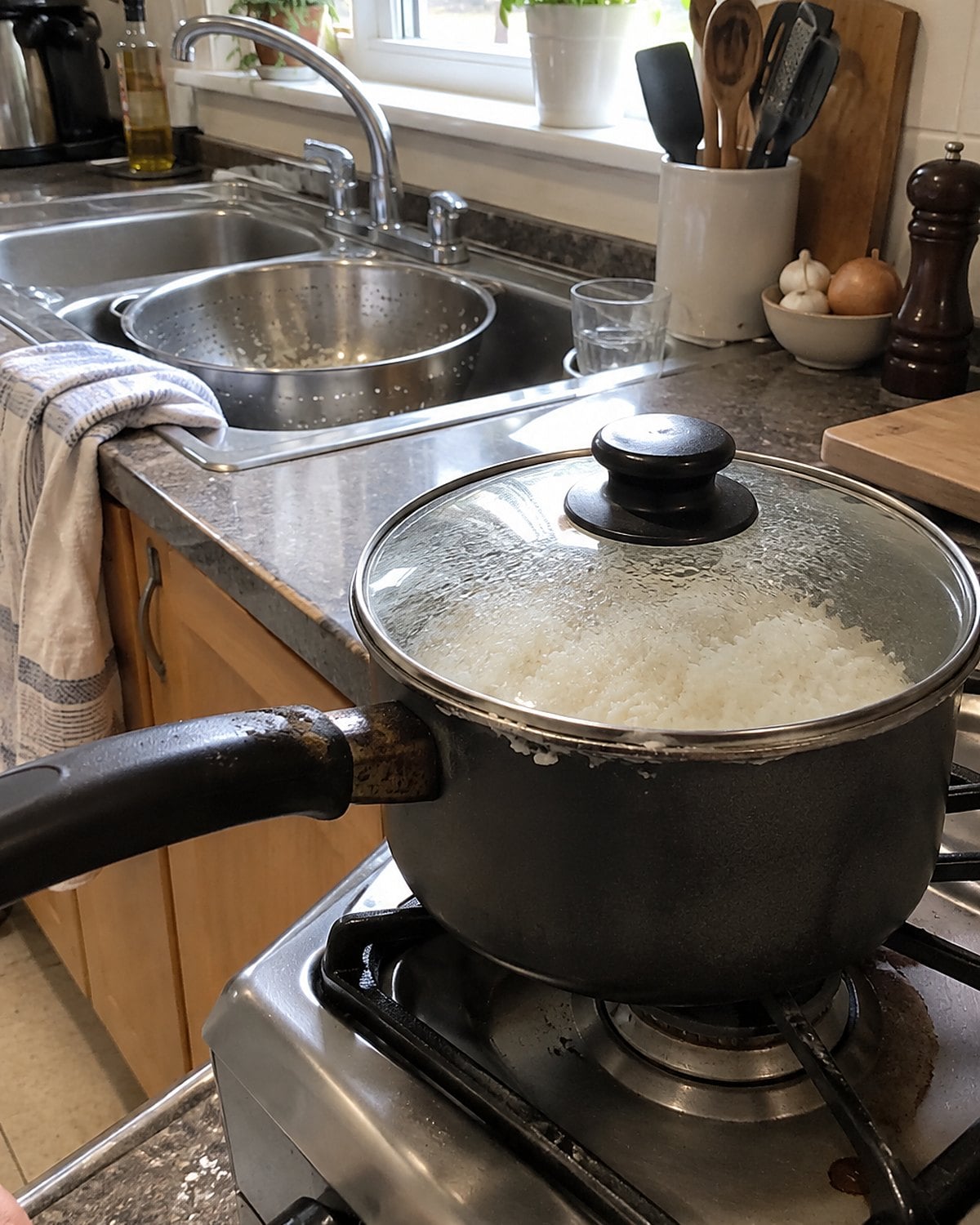
Rice doesn't need the same draining trip as pasta. If you're lifting a saucepan full of rice and water to a sink colander, change the cooking method first.
For ordinary white rice, a covered absorption method leaves no full pot of hot water to pour away. Follow the rice package for its water amount and timing. Bring the water to a boil, cover the pot, and lower the heat as directed.
Keep the lid on through the covered cooking time. Then let the rice rest off the heat before fluffing. The moisture settles through the grains instead of escaping in a cloud of steam.
Use a saucepan with a secure lid and enough room that it won't boil over. Check the package for brown rice or another variety; the water and time differ. No heavy draining maneuver is required.
The same thought works elsewhere: when a method ends with hot liquid at the sink, look for a way to lift out the food instead.
Try it: How To Cook Rice In Instant Pot
#7 The oven mitt too bulky to grip
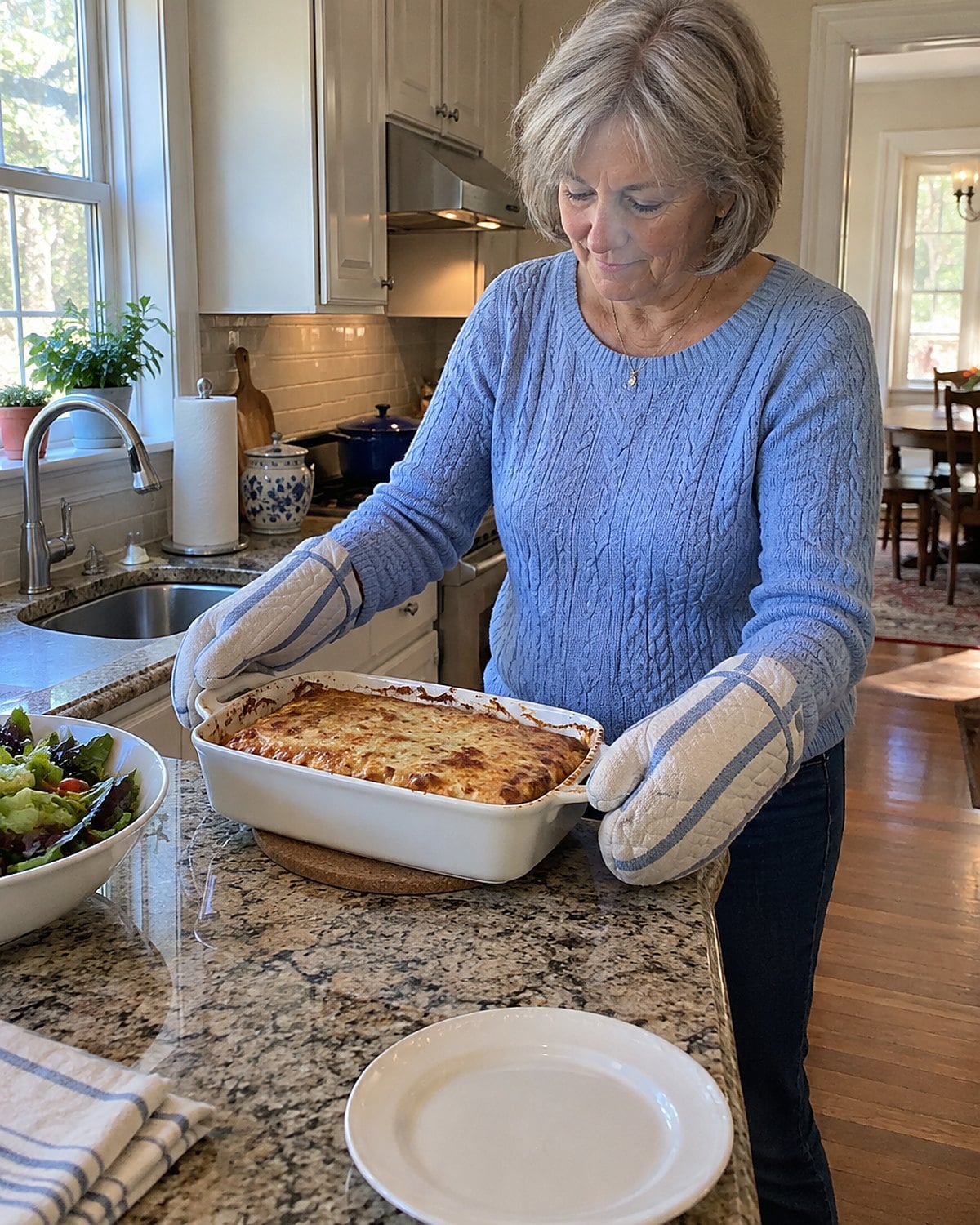
Thick mitts protect against heat, but padding that swallows a narrow handle costs you control. If your fingers won't close around the handle through a dry mitt, choose a dish with wider handles.
Look at your thumb. Does it press against the side of the dish while your fingers hunt for a grip? That handle leaves too little room for the protection you're wearing.
Skip a thin towel folded around the handle. It can slip or unfold mid-lift. Well-fitting, dry mitts belong beside cookware you can grasp with them on.
#6 The grandchild's chair near the stove
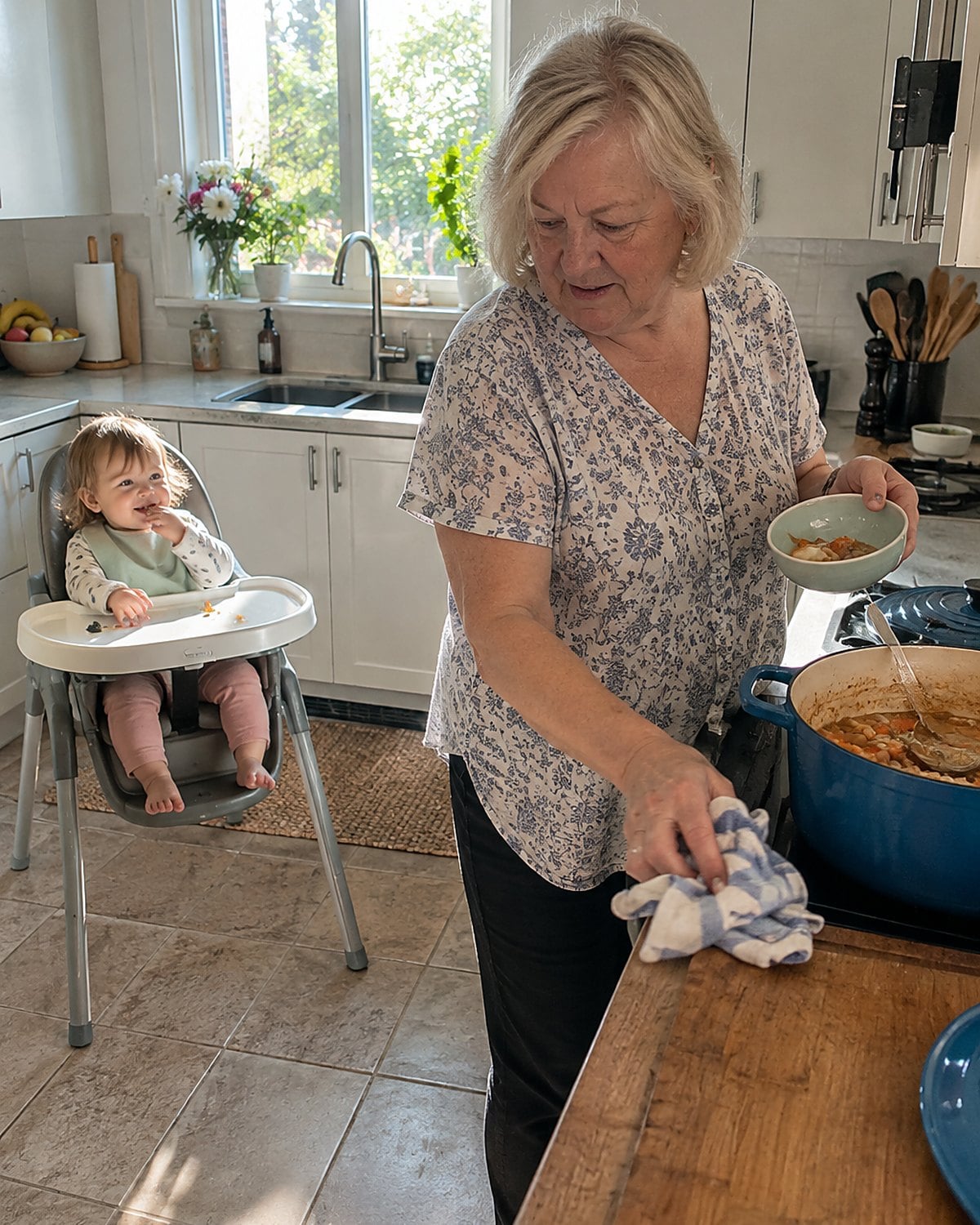
Company changes the kitchen's traffic. A high chair appears beside the counter, someone pulls out a dining chair, and a grandchild follows you to see what's for supper. The route you know by heart has changed before the pot even boils.
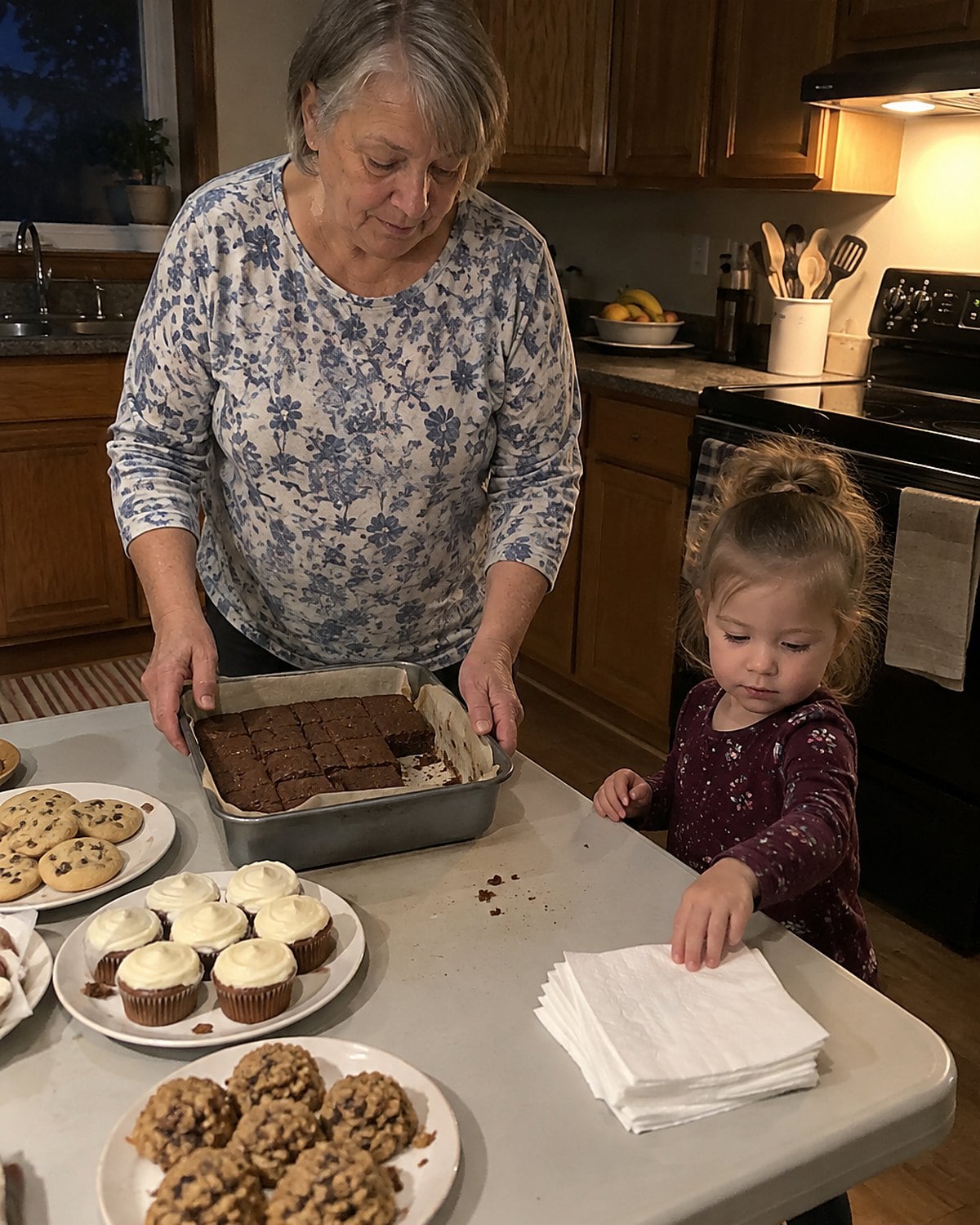
Before heating a heavy pan, walk its planned route with empty hands. Move the chair and set a boundary around the stove. A clear sentence works: "Stay by the table while I move the hot food." Give a child a job away from the burners, such as putting napkins down.
Keep pan handles turned away from the edge without pointing them over another hot burner. The American Academy of Pediatrics has guidance on preventing burns around children. The National Fire Protection Association also publishes home cooking safety guidance.
When it's time to serve, have another adult stay with the child or bring plates to the stove. You shouldn't have to carry a full pot while watching a small person from the corner of your eye. The stove stays your workspace until the hot food is settled.
#5 The roasting pan with flimsy grips
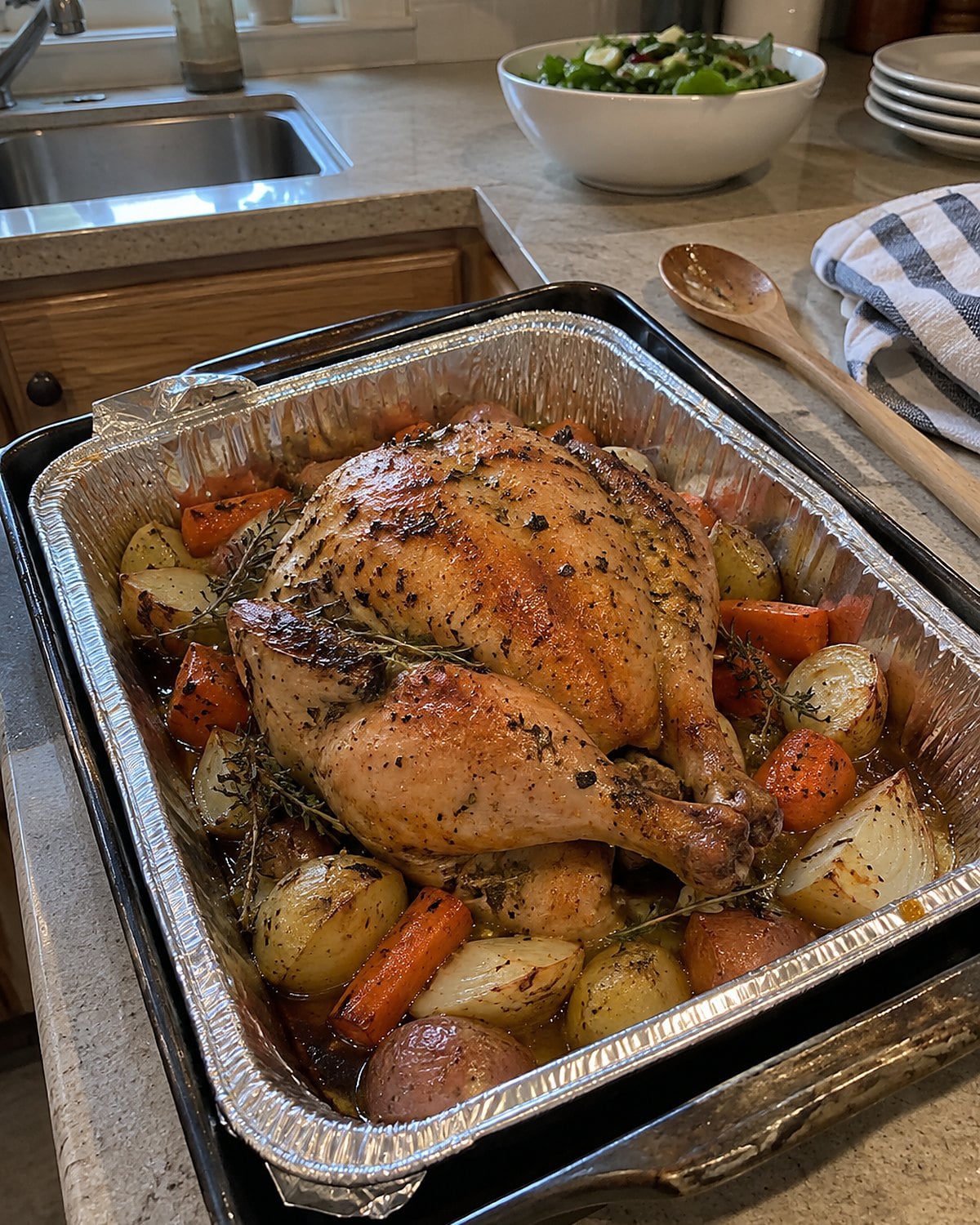
A disposable foil roasting pan looks light on the counter. Fill it with a roast and juices, and the thin sides bend when you lift. Hot liquid runs toward the lowered corner.
If you use a foil pan, set it inside a rigid roasting pan before filling it. Lift the supporting pan, not the foil edges. Check that it sits flat and that its handles leave room for mitts.
Better still, roast a smaller cut in a pan you already trust. Ask at the meat counter for a piece that suits the number eating.
When the roast rests, transfer it with tongs or a carving fork to a board. Leave the hot juices behind until the pan is light enough to handle. There's no reason to carry the roast and all its drippings in one trip.
#4 The leftovers waiting in the Dutch oven
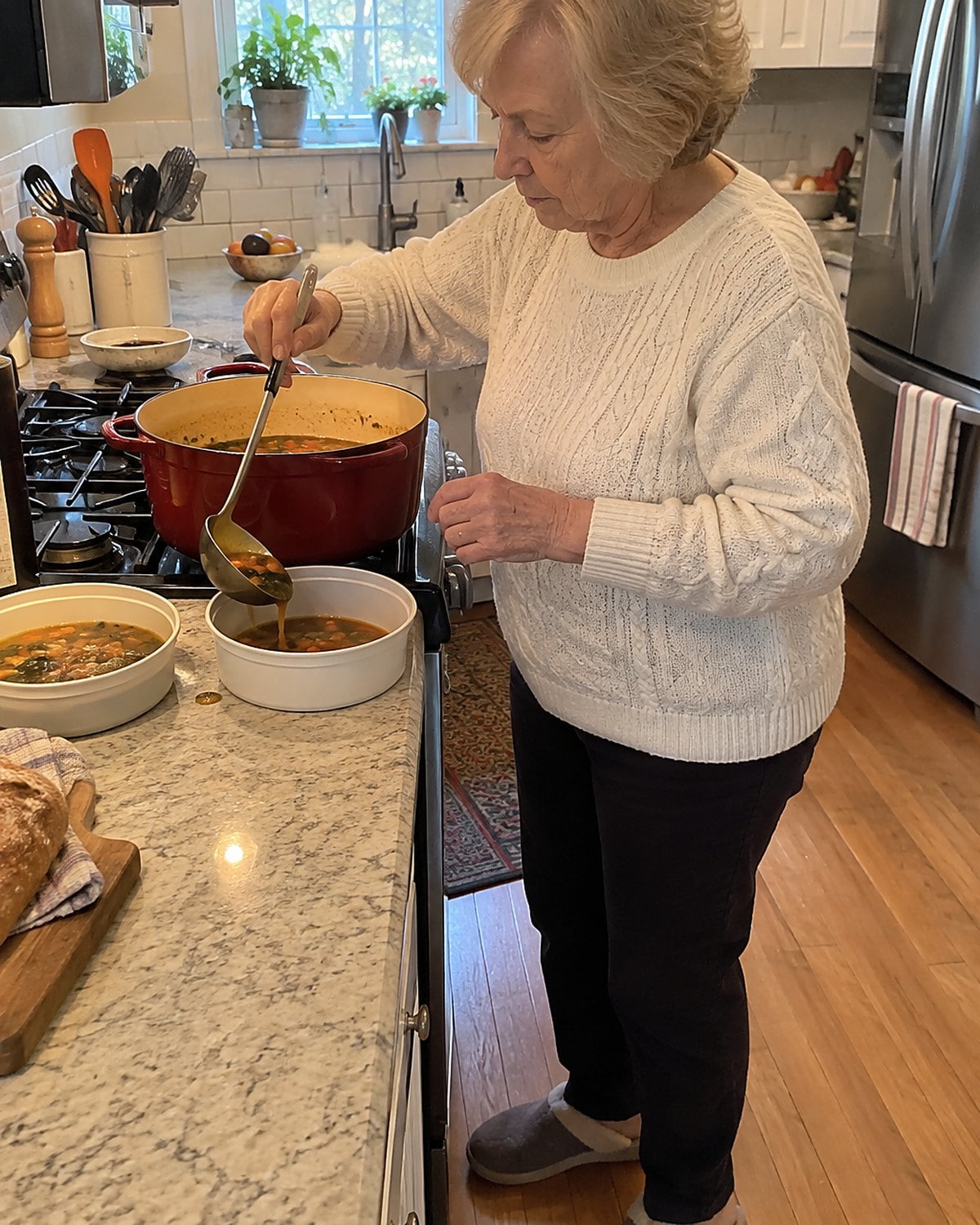
A large pot of soup holds heat for a long time. Leaving leftovers in that heavy vessel creates two problems: food cools slowly in a deep mass, and you still have to lift the loaded pot later.
Use shallow containers and move the food into them promptly. The USDA Food Safety and Inspection Service says to refrigerate perishable food within 2 hours, or within 1 hour when the temperature is above 90°F. Keep the refrigerator at 40°F or below.
For a particular leftover, consult the USDA's cold storage chart. It gives you the storage window without guessing from the way a container looks.
Set the containers beside the stove first. Ladle the soup or stew into them, leaving the pot where it is. Label what you want to freeze after portioning. A shallow container is easier to lift and stack than a Dutch oven packed with yesterday's dinner.
Don't wait for a giant pot to reach room temperature on the counter. Portioning moves dinner toward the fridge and takes the weight out of cleanup at the same time.
#3 The slow cooker lifted by its insert
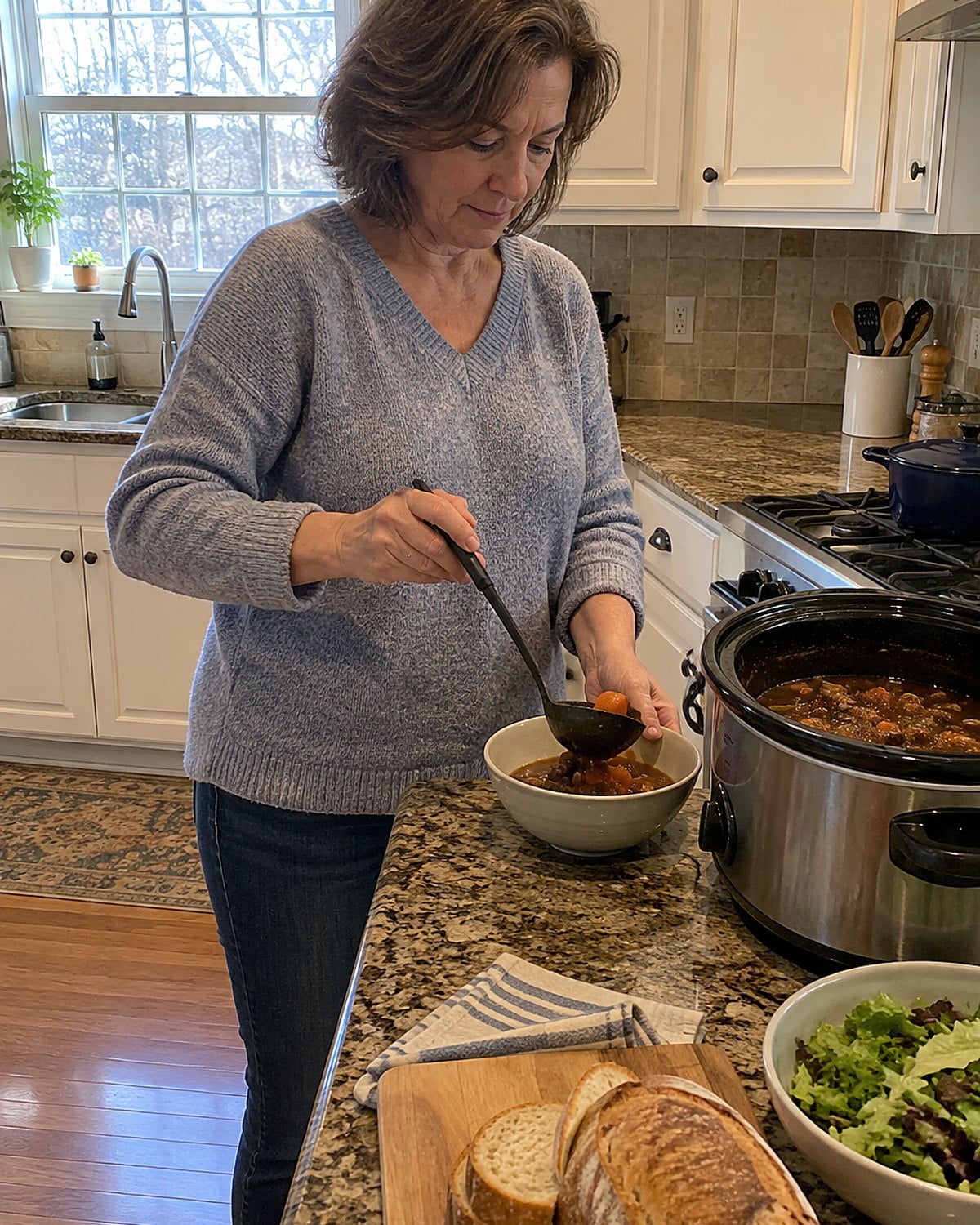
A slow cooker earns its place when stew can stay on the counter from cooking through serving. Trouble starts when you lift its full ceramic insert to carry dinner elsewhere. The insert is heavy, hot, and slick where your hands need to hold it.
Set the appliance on a stable, heat-safe counter before cooking. Check its cord and placement against the manufacturer's instructions, and keep the serving area there. Ladle portions into bowls rather than carrying the full insert to the table.
If the insert needs washing, wait until it cools and empty it first. Don't put a hot ceramic insert into cold water. You chose the slow cooker to spare yourself work, so let it stay put for the part where it helps most.
#2 The full pot nobody needs to carry
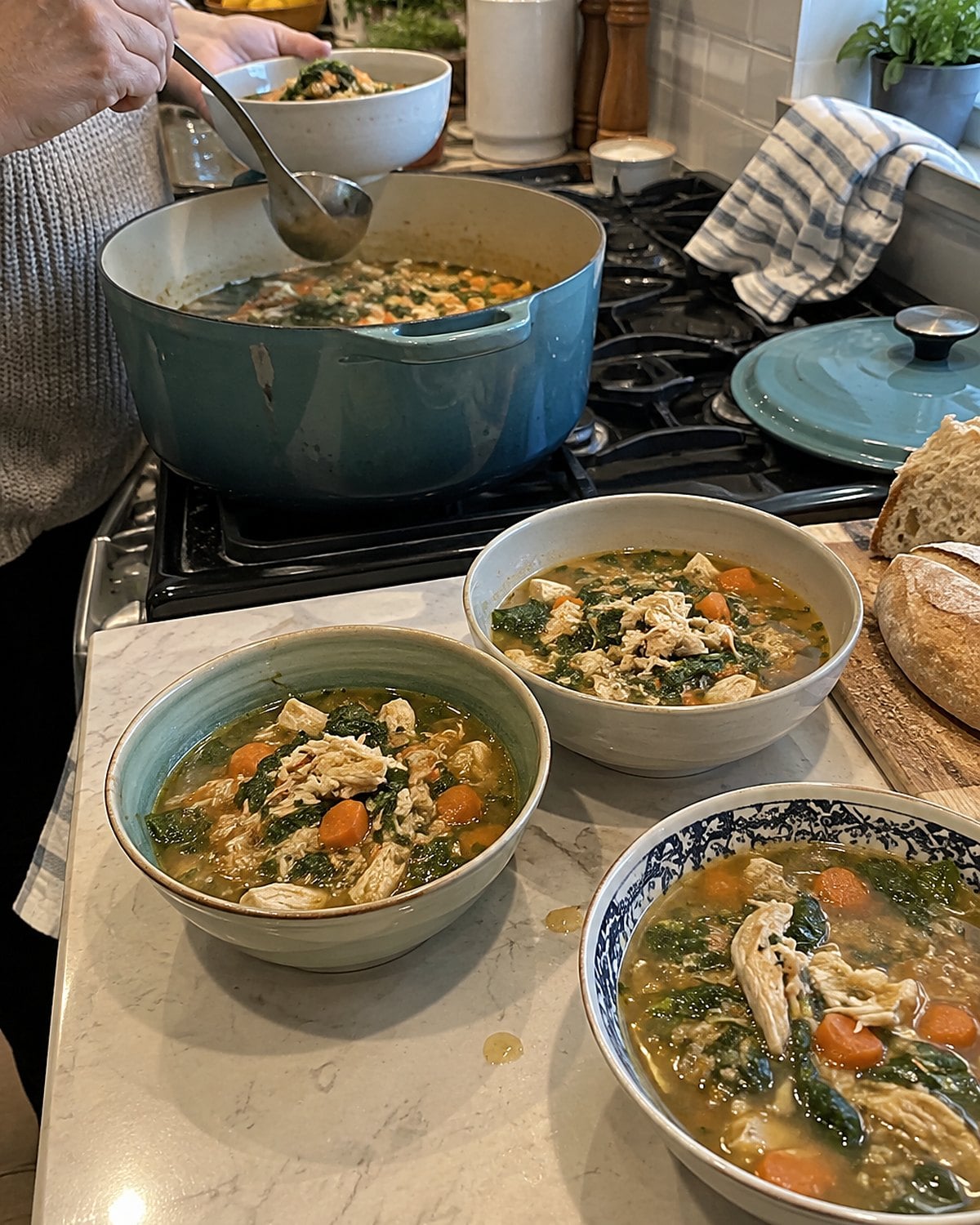
There's a particular stubborn moment at the stove: dinner is finished, the pot is full, and you want the job done without asking anyone. Pause before that lift. Set the ladle down. Nothing says the whole pot has to move because the food is ready.
Look at what needs to reach the table. Soup needs bowls. Pot roast needs a platter and perhaps a small pitcher for juices. Pasta needs a serving bowl.
Move the food in manageable portions and leave the cookware on the burner after turning the heat off. Use a trivet if you bring any hot vessel to the counter.
If another pair of hands is available, be specific: "Please clear that spot," or "Please carry these bowls." Don't split one heavy pot between two people without agreeing where you're going and where you'll set it down. A sudden change of grip transfers the weight to the other person.
Some nights, your own answer is to leave everything in the kitchen and serve plates there. That's a plan, not a concession. Supper reaches the table while the riskiest trip never happens.
#1 The empty pan test before cooking
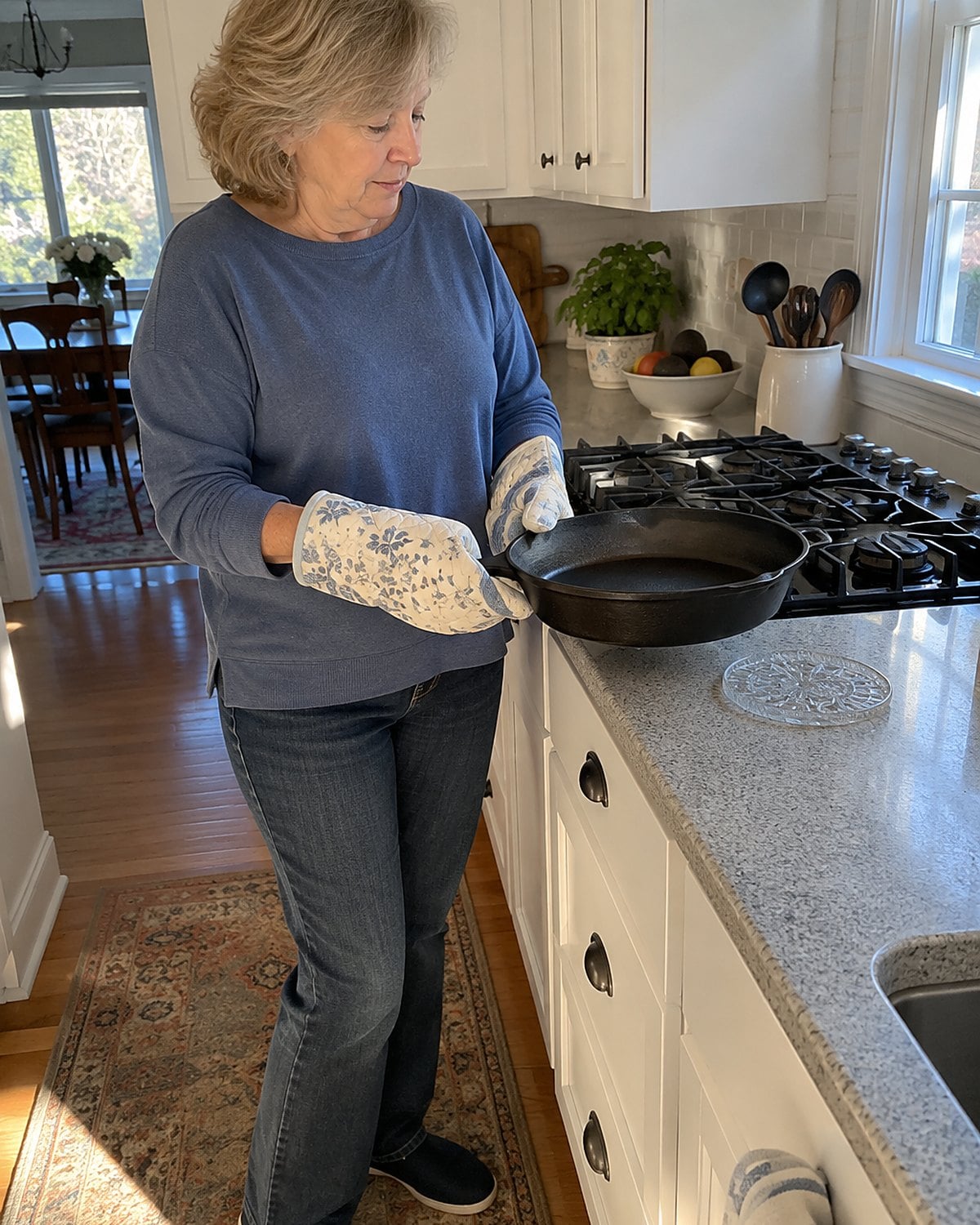
Do this before you cut an onion: pick up the empty pan you intend to use and put on the mitts you'll use later. Then trace the trip from cooking spot to landing spot.
Open the oven door if the dish goes inside. Notice where your hands fit and where your elbows travel. Set the pan down and picture it full.
If the empty version strains your grip, there's no reason to fill it. Choose a smaller or lighter vessel, cook in batches, or plan to serve the food without moving the pan. Decide while everything is cold.
The test catches details that recipes miss. A shelf is too high. The oven door blocks your step. The trivet is across the room. A handle is narrower with mitts on. You get to fix each one before heat and dinner turn it into a hurry.
That is the swap worth keeping: trade the last-minute heavy lift for a cold, empty rehearsal. Tonight's pot has to pass the trip before it gets the job.
Keep reading
 27 Things Home Cooks Over 60 Do Without Thinking That Chefs Would Never Do
See all 27 →
More you’ll remember
 27 Things People Over 60 Still Do With Leftovers That Food-Safety Experts Beg Them to Stop
 23 Food Safety Rules Your Mother Taught You That Are Wrong, and the Ones That Still Hold
 26 Things in Your Fridge Right Now That Should Have Been Thrown Out
The bottom line
The weight is only part of the problem. Heat, shifting food, a poor grip, and an unclear landing spot turn an ordinary lift into a close call.
The prepared version of you has chosen the pan, cleared its route, and decided how to serve before the burner goes on. Which pot in your kitchen would fail the empty-pan test tonight?
Leave a Reply