

The oven door is open again. Steam hits your glasses, the roasting pan tilts, and someone asks when the rolls go in. You’ve handled harder dinners than this. Still, Thanksgiving has a way of making old habits feel like obligations: baste the bird, fill every dish, keep everything hot until the last person sits down.
Some of those habits earn their place. Others spend the heat, time, or counter space you need for the next job. The difference shows up right before dinner, when all four burners are busy and nobody wants to wait for gravy.
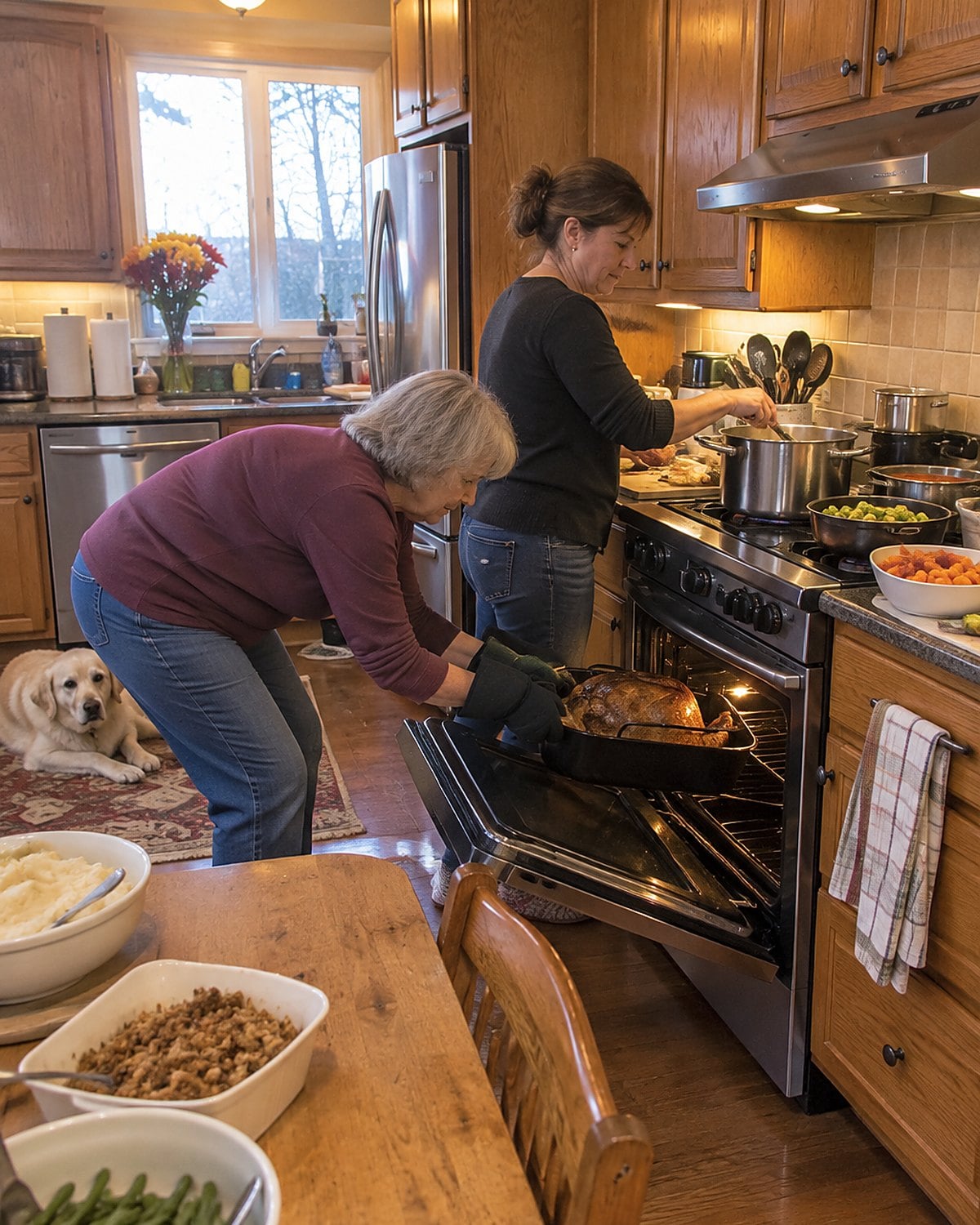
#26 The oven door opened for basting
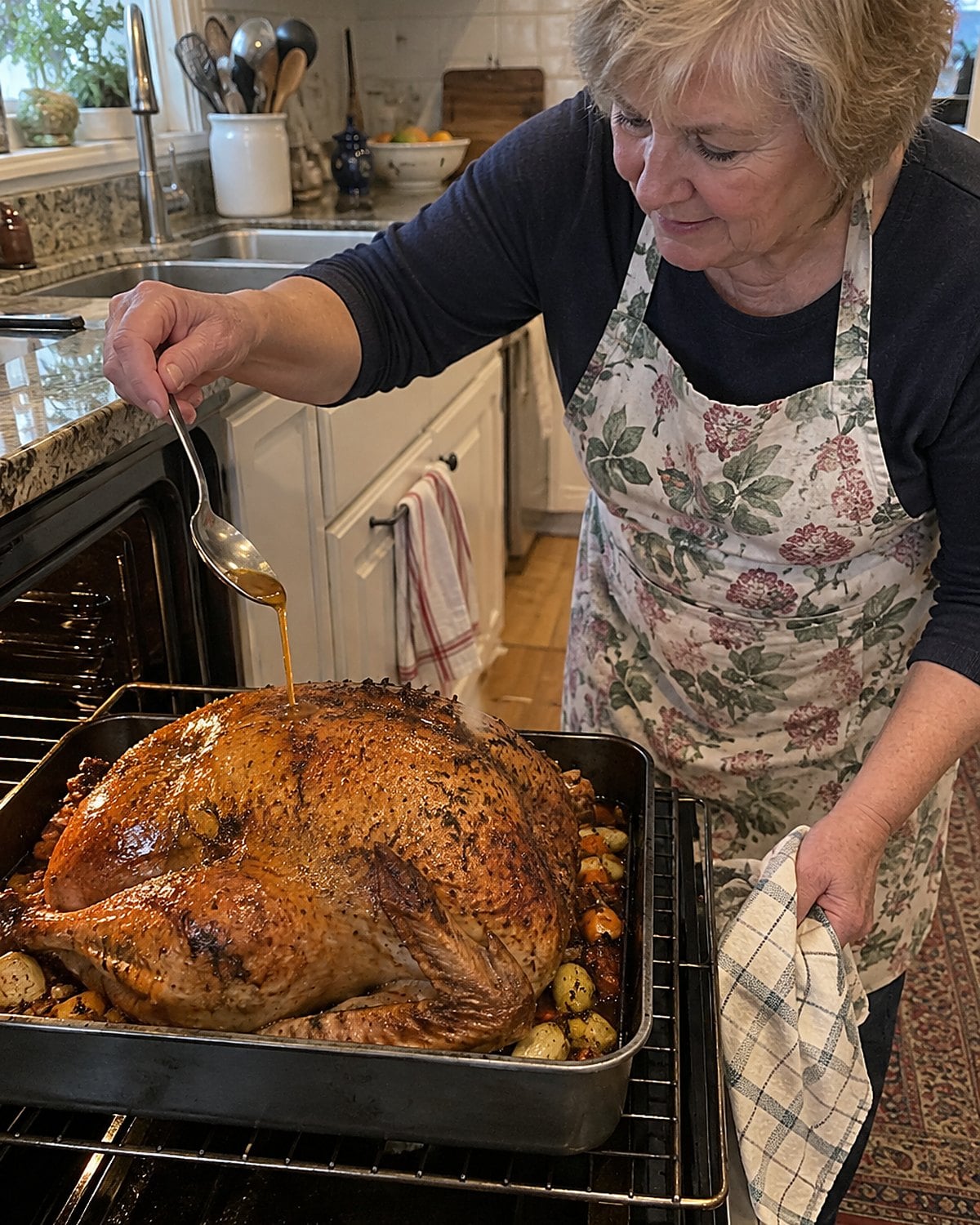
You hear the oven fan stop as you pull out the rack. There’s the turkey, looking dry on top, so you spoon pan juices over it again. Half an hour later, you repeat the trip.
That spoonful wets the skin briefly. It doesn’t reach the meat beneath it. Opening the door also lets heat escape, and the oven needs time to recover. If crisp skin matters to you, repeated basting works against it.
Try brushing the skin with oil or melted butter before roasting. Then leave the door shut until it’s time to check the temperature. If the pan drippings look close to burning, add a little water to the pan, not over the bird.
You don’t have to abandon the family roasting pan. Just give the oven an uninterrupted stretch to do its work.
#25 The carving knife beside the hot turkey
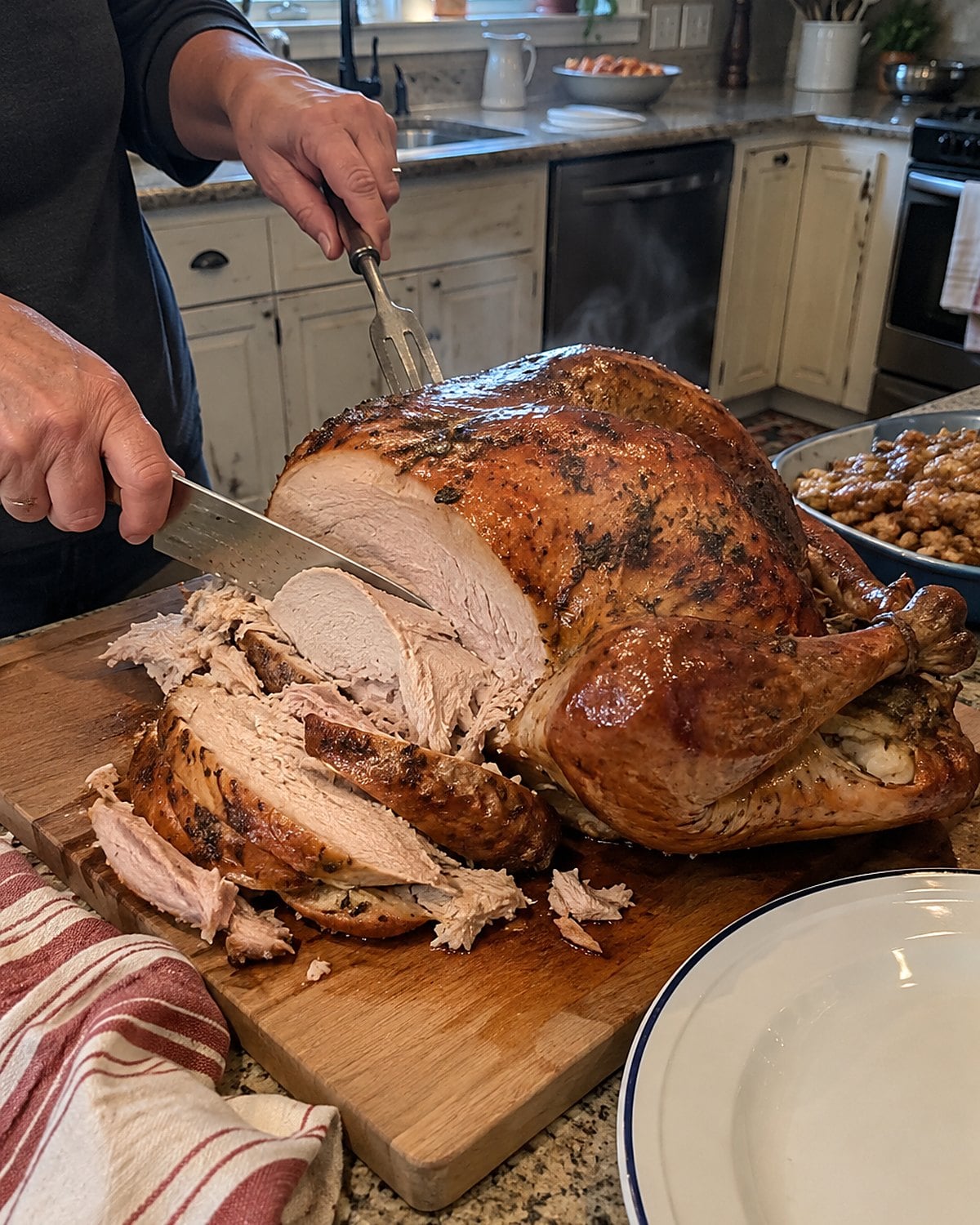
The bird comes out. Someone reaches for the good knife. You’ve kept everyone waiting long enough, so the first slice lands on the board while the turkey still hisses.
Pause there. Hot juices run across a board more readily when you cut straight away, and that first rush leaves less in the meat. Give the turkey about 20 minutes before carving. Set it on a clean board or platter and cover it loosely with foil.
That wait buys time for the gravy, too. While the turkey rests, tip the pan juices into a separator or skim the fat after the juices settle. Take the foil off before carving if steam has gathered underneath it.
The person asking for the first slice gets a job instead: “Put the serving platter where I can reach it.”
#24 The pop-up button in the breast
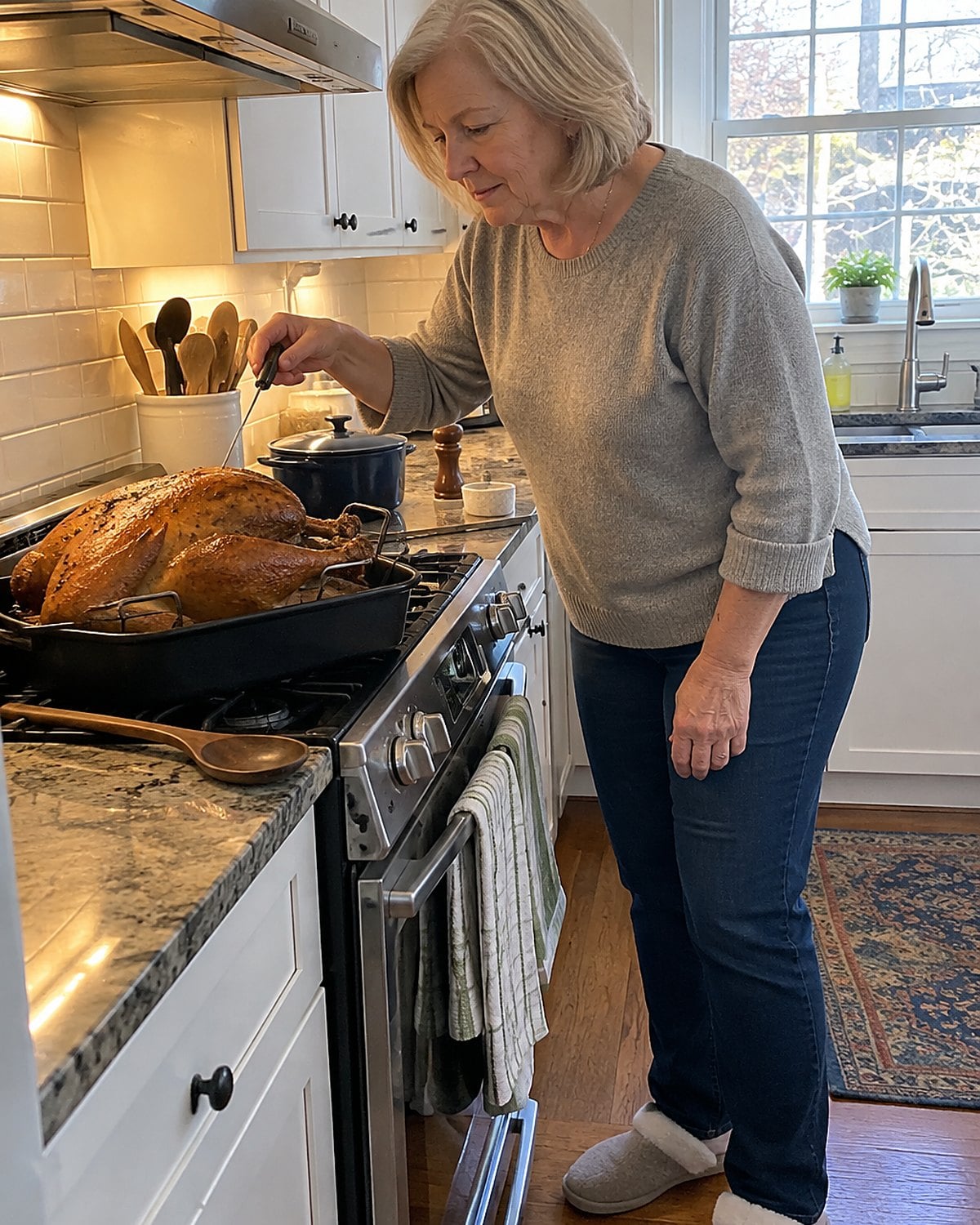
A little plastic button looks reassuring through the oven window. It also gives you one answer from one spot. The thick thigh and the center of the stuffing need their own answers.
Use a food thermometer in the thickest part of the breast and the innermost part of the thigh, without touching bone. USDA Food Safety and Inspection Service guidance calls for 165°F in poultry.
If you cook stuffing inside the bird, its center must also reach 165°F. A browned breast or clear-looking juices cannot replace those readings.
You’ve likely cooked turkey by sight for years. The thermometer doesn’t erase that judgment; it tells you what the skin can’t. Check several places before the bird leaves the oven.
Keep the probe near the roasting pan before dinner gets loud. Hunting through the drawer while everyone watches is a Thanksgiving job worth avoiding.
#23 The raw turkey rinsed in the sink
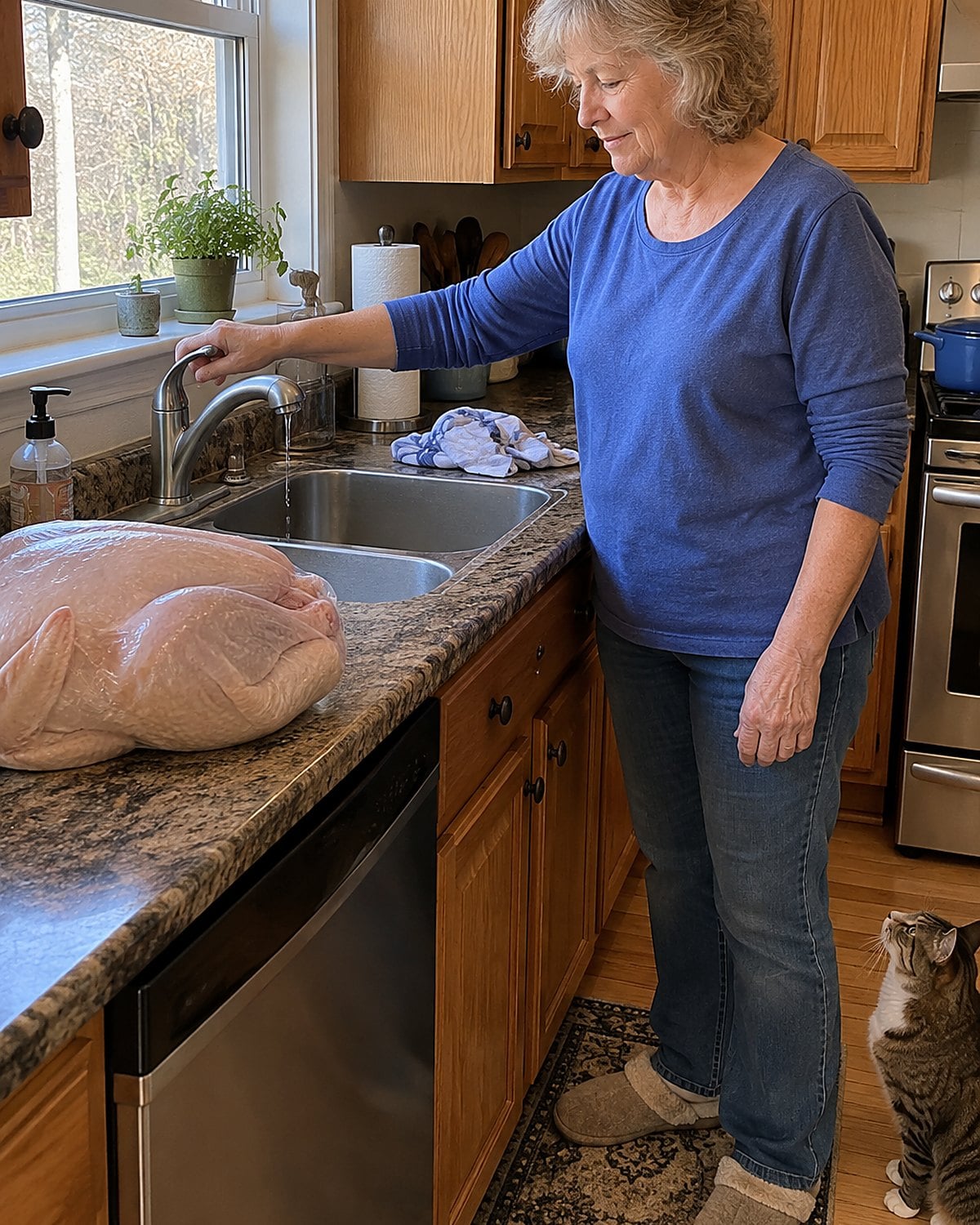
The bird sits in the sink, and the faucet is already running. Maybe rinsing poultry was the first instruction in the cookbook you learned from. This time, skip it.
Water splashes from the turkey onto the faucet, the counter, and anything waiting nearby. The CDC’s food safety guidance says washing raw poultry spreads germs around the kitchen. Cooking it to the proper temperature handles the germs on the bird.
Take the turkey from its wrapping straight to the roasting pan. Pat the skin dry with paper towels if you want better browning, then throw the towels away. Wash your hands and clean the surfaces the raw bird touched.
That leaves the sink free for the colander, which will be busy soon enough.
#22 The stuffing seasoned before it bakes
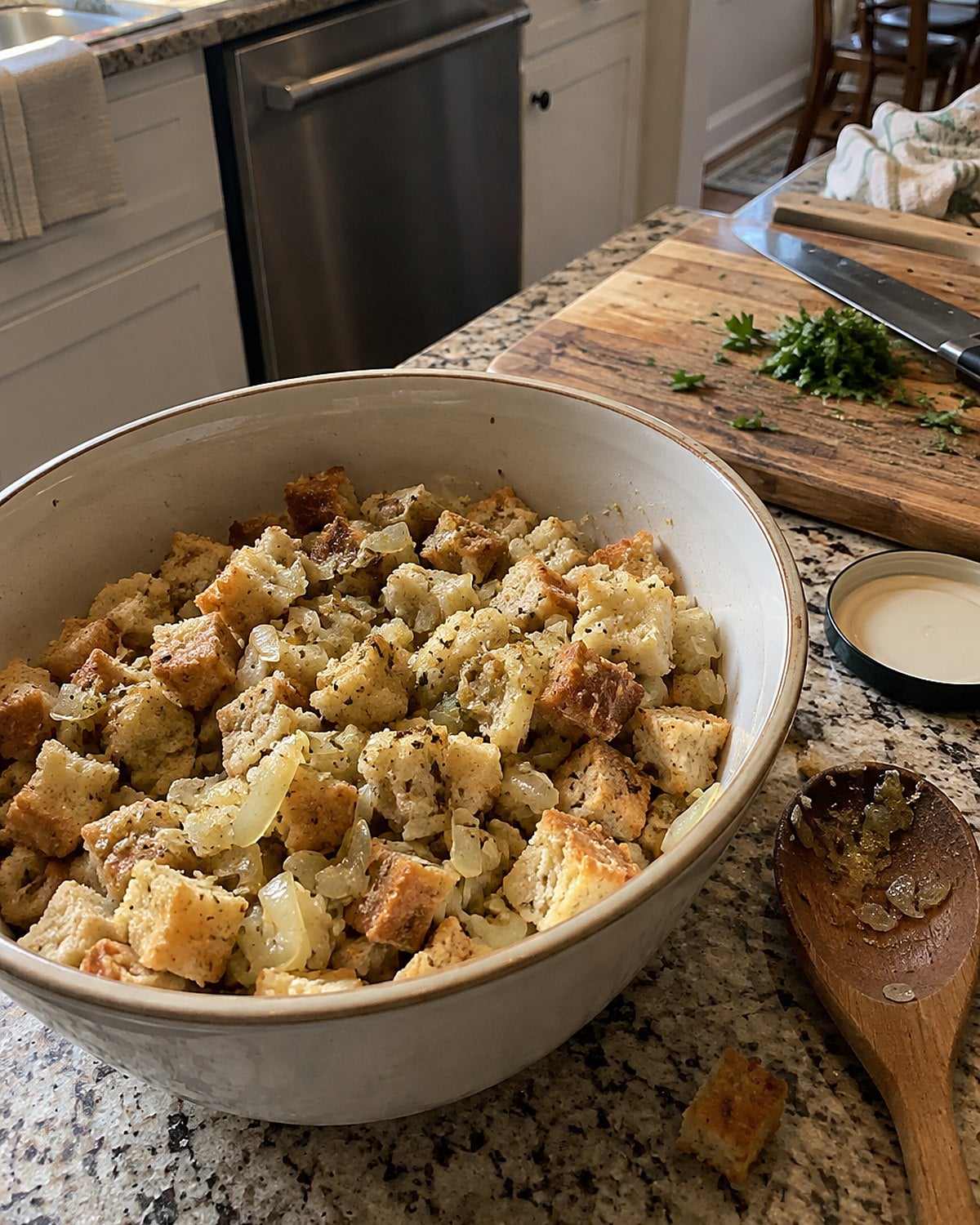
You’ve tasted the stuffing from the bowl for decades. The onion is soft, the sage smells right, and you want one last check before it goes into the oven.
If the mixture contains raw egg or has touched raw poultry, don’t taste it yet. Season the cooked onions and celery before mixing them into the bread. Use broth you’ve tasted on its own. Those two checks give you a read on the flavor without taking a spoonful from the finished raw mixture.
Bread changes the seasoning, too. Dry cubes soak up broth; fresh bread packs down into a heavier dish. When the mixture looks damp all the way through, stop pouring. A puddle at the bottom of the bowl won’t become fluffy stuffing in the oven.
For a final adjustment, taste a cooked corner after the dish reaches 165°F. Then bring salt and pepper to the table. Nobody needs you to guess perfectly before baking.
#21 The casserole dish filled to its rim
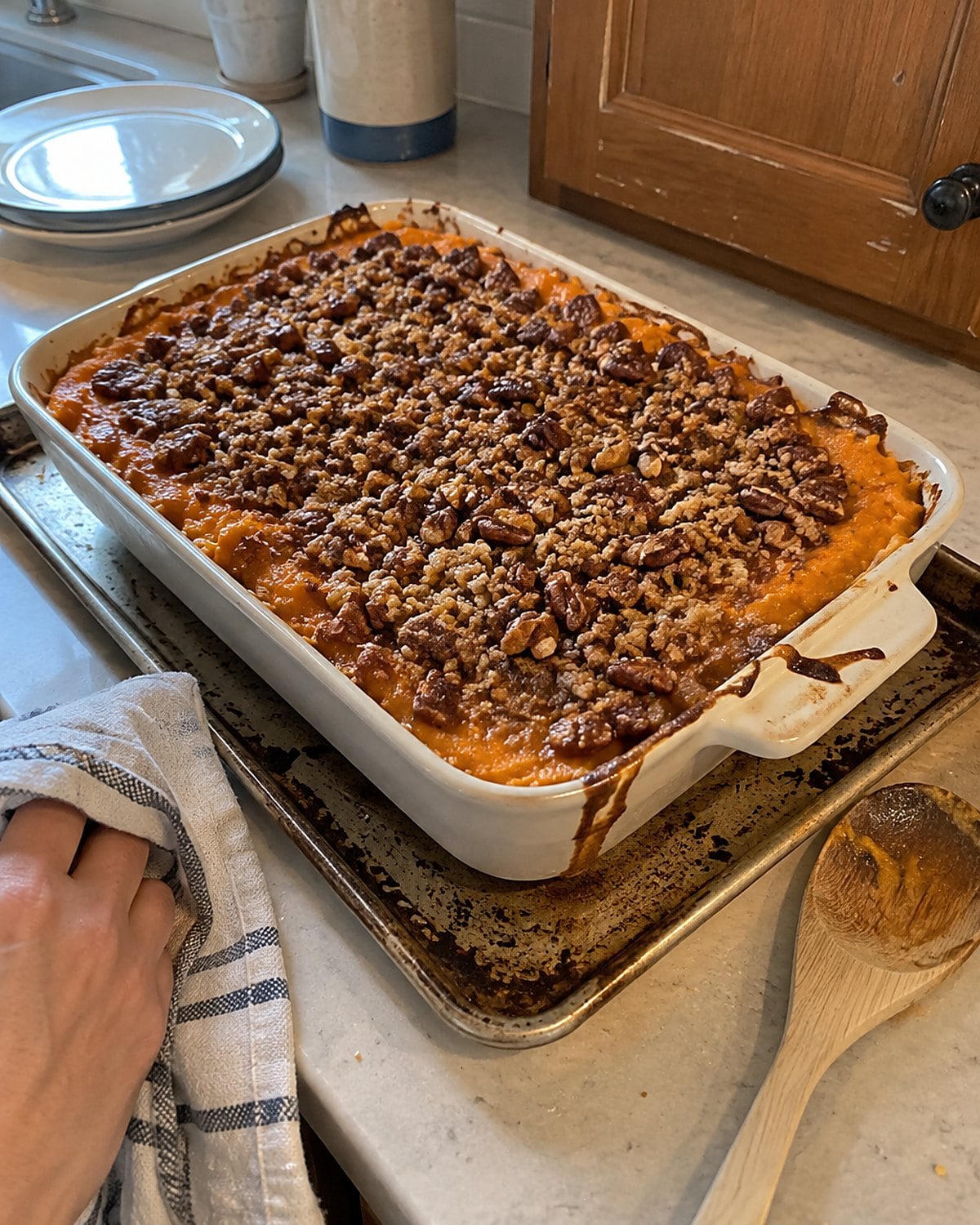
There’s a last spoonful of sweet potatoes in the bowl. You press it into the casserole dish because wasting it feels worse than washing an extra pan.
Now the topping touches the rim. As the filling heats, it bubbles onto the oven floor, right when you need that oven for something else. Leave room at the top and put the dish on a baking sheet if it looks close.
A larger dish also changes the result. A shallow layer gives you more browned surface and less soft middle; a deep one keeps more of the filling tender. Choose the dish for the texture your household likes, not just the one that fits the whole batch.
Put that last spoonful in a small oven-safe dish. It’s a fine cook’s portion while the larger pan finishes.
Try it: 20 Scrumptious Instant Pot Sweet Potato Recipes
#20 The thawing bird on the counter
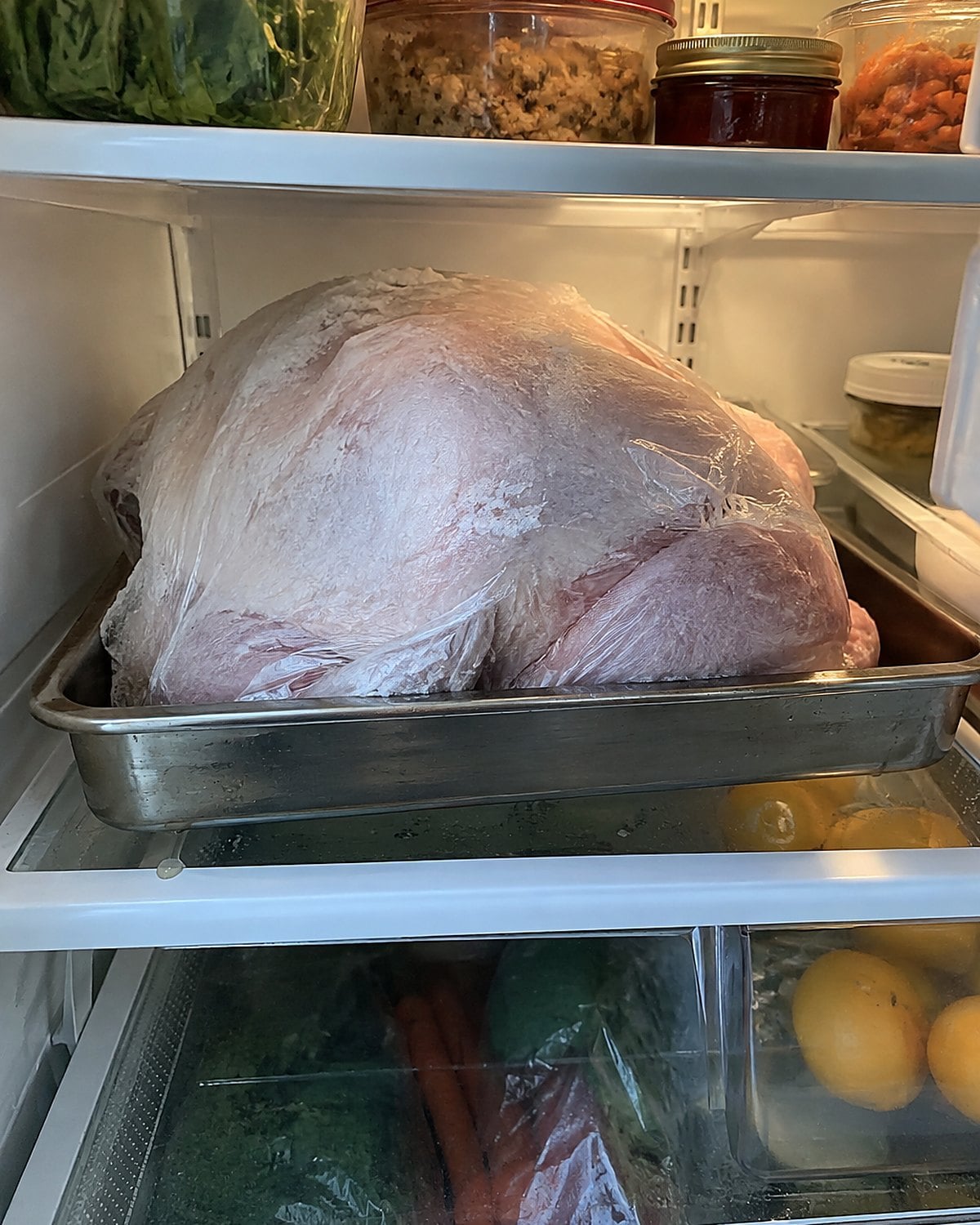
The freezer drawer opens, and there’s the turkey, still hard. You set it on the counter because the kitchen feels cool and dinner is days away.
A counter isn’t a thawing plan. The outside warms while the middle stays frozen. The USDA’s turkey thawing guidance gives a refrigerator guide of about 24 hours for every 4 to 5 pounds. That means a large bird needs several days and a tray underneath it to catch drips.
Short on time? USDA guidance also covers cold-water thawing. Keep the bird wrapped, submerge it in cold water, change that water every 30 minutes, and cook the turkey immediately after thawing.
Check the freezer before buying all the sides. You’ll know whether the turkey needs refrigerator space now, not when the celery is already chopped.
#19 The pie crust pressed in a hurry
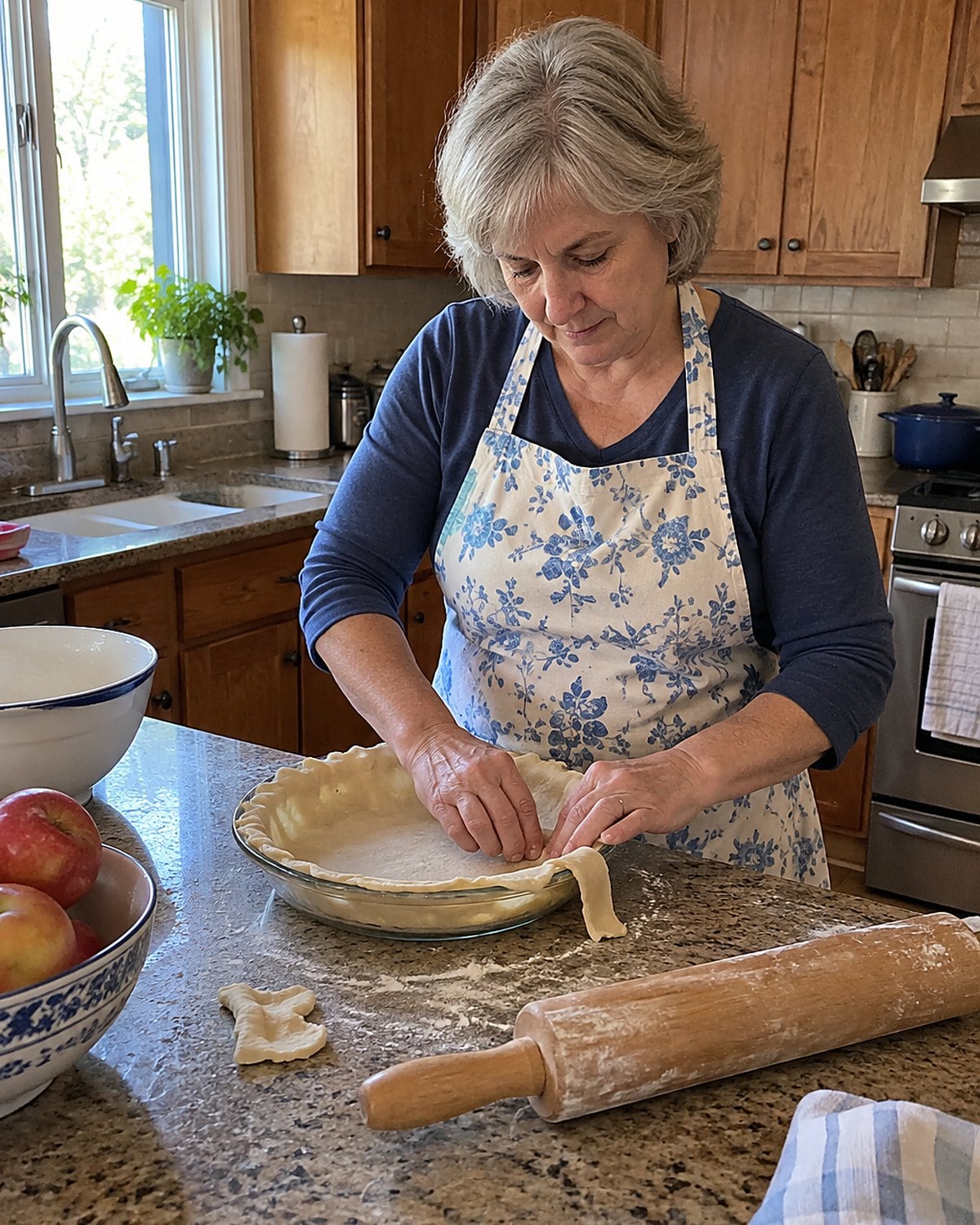
Flour dusts the counter. You roll the dough, lift it into the pie plate, and tug a short edge until it reaches the rim. It fits. Then the crust shrinks as it bakes.
Stretching dough puts tension into it. Instead, lower it into the plate and press it into the corner without pulling. If the edge falls short, patch it with another piece of dough. No guest will inspect the seam under a slice of pumpkin pie.
Before filling, give the shaped crust time in the refrigerator. Cold dough holds its shape better while the oven heats. If you’re baking the shell empty, follow the pie’s directions for weights and timing; a filled pumpkin pie takes a different route.
Run a fingertip around the inside corner. If you feel a gap between dough and plate, press it down before the filling goes in.
#18 The mashed potatoes beaten until gluey
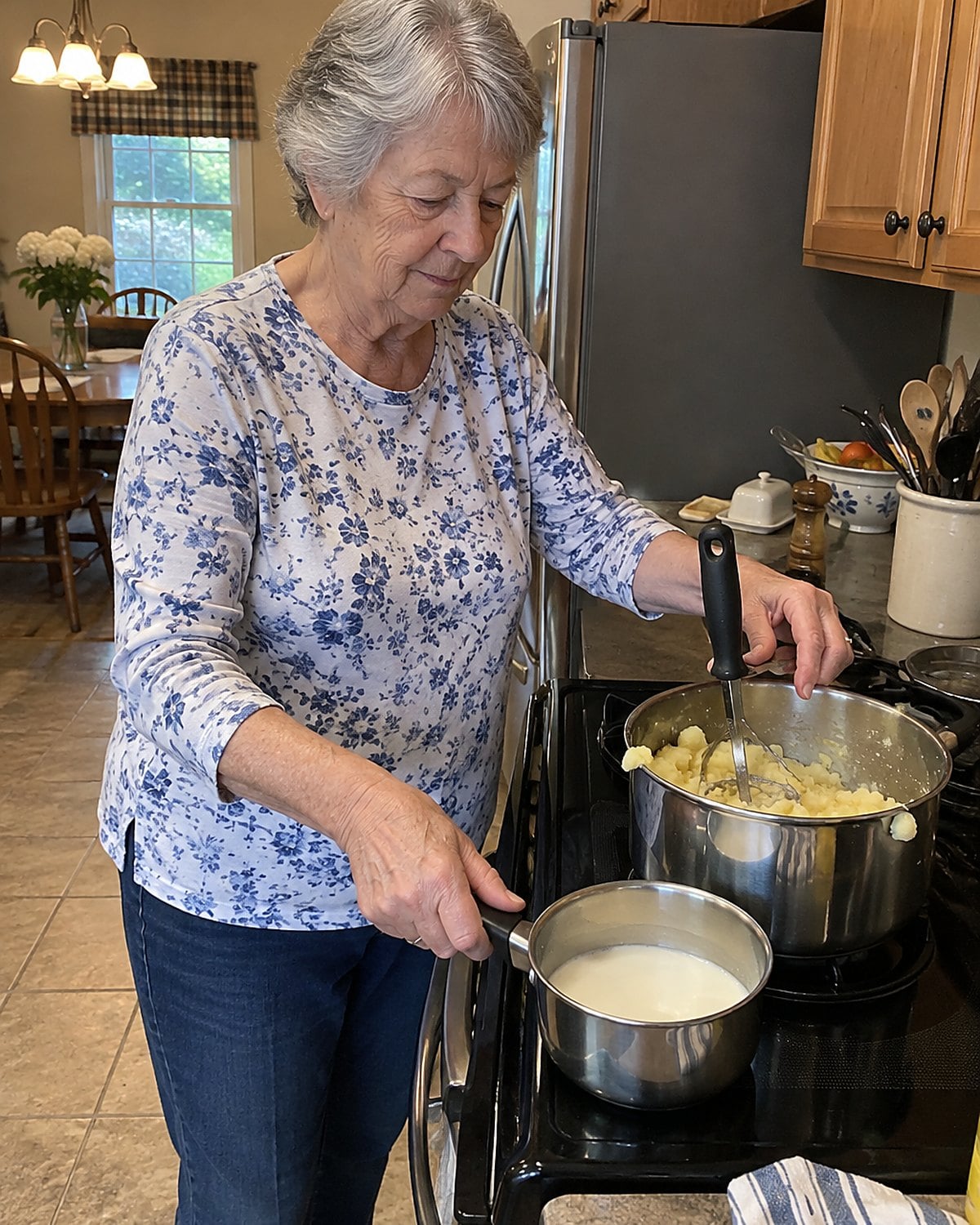
The potatoes are cooked and everyone wants them smooth. You reach for the mixer, give it another minute, then another. Soon the beaters pull up long, sticky strands.
Potatoes release starch when you work them hard. A hand masher gives you more control than a mixer, especially if you like a few soft lumps. Drain the cooked potatoes well and put them back in the warm pot briefly, stirring as the remaining water steams away.
Warm the milk before adding it. Cold milk cools the potatoes while you’re still trying to finish dinner. Add butter, then enough warm milk to reach the texture you want. Taste after the butter goes in; salt reads differently once the potatoes are rich.
If they’re already gluey, stop beating. Put them in a buttered baking dish, rough up the top, and brown that surface. Call them baked mashed potatoes. You’ve rescued supper without pretending the mixer did you a favor.
Try it: Sour Cream Mashed Potatoes (Instant Pot Step-By-Step Recipe)
#17 The cranberry sauce cooked without tasting
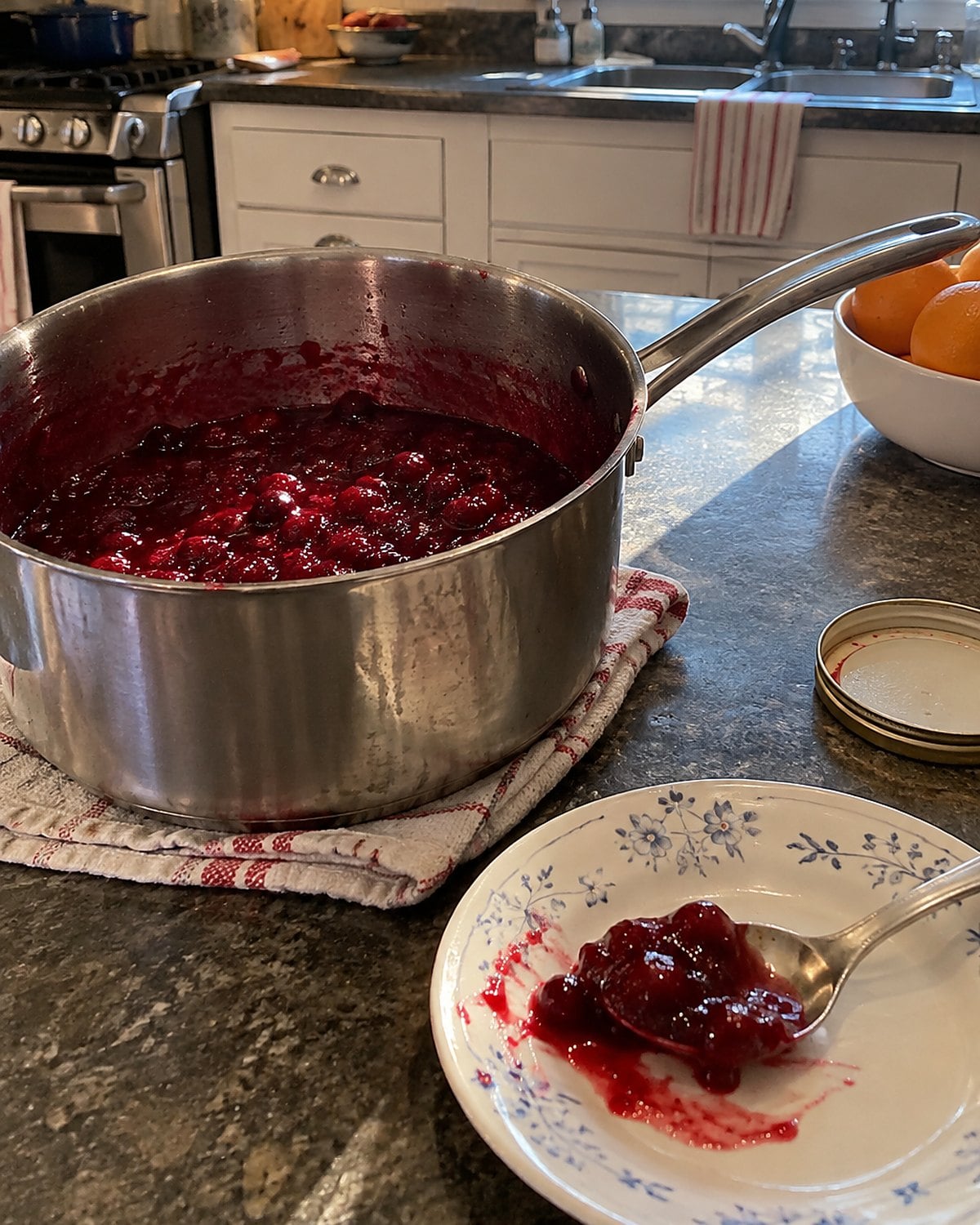
A bag of cranberries goes into the pot with sugar because the church cookbook says so. The berries split, the sauce thickens, and you put it away without tasting. Later, one guest puckers and another asks for more.
Cranberries bring plenty of acid. Sugar balances it, but sweetness is easier to add than take away. Start with less sugar than your usual amount, cook until the berries burst, then taste after a spoonful cools. Hot sauce hides some of its sharpness.
For a brighter finish, add orange zest after cooking. For a plainer sauce, leave it out. Neither choice needs a new recipe.
Let the sauce cool before judging its thickness. It sets as it cools. If it’s too stiff for a spoon, stir in a small splash of orange juice or water. You’ll hear the difference at the table: someone asks to pass it again.
#16 The rolls waiting on a crowded sheet
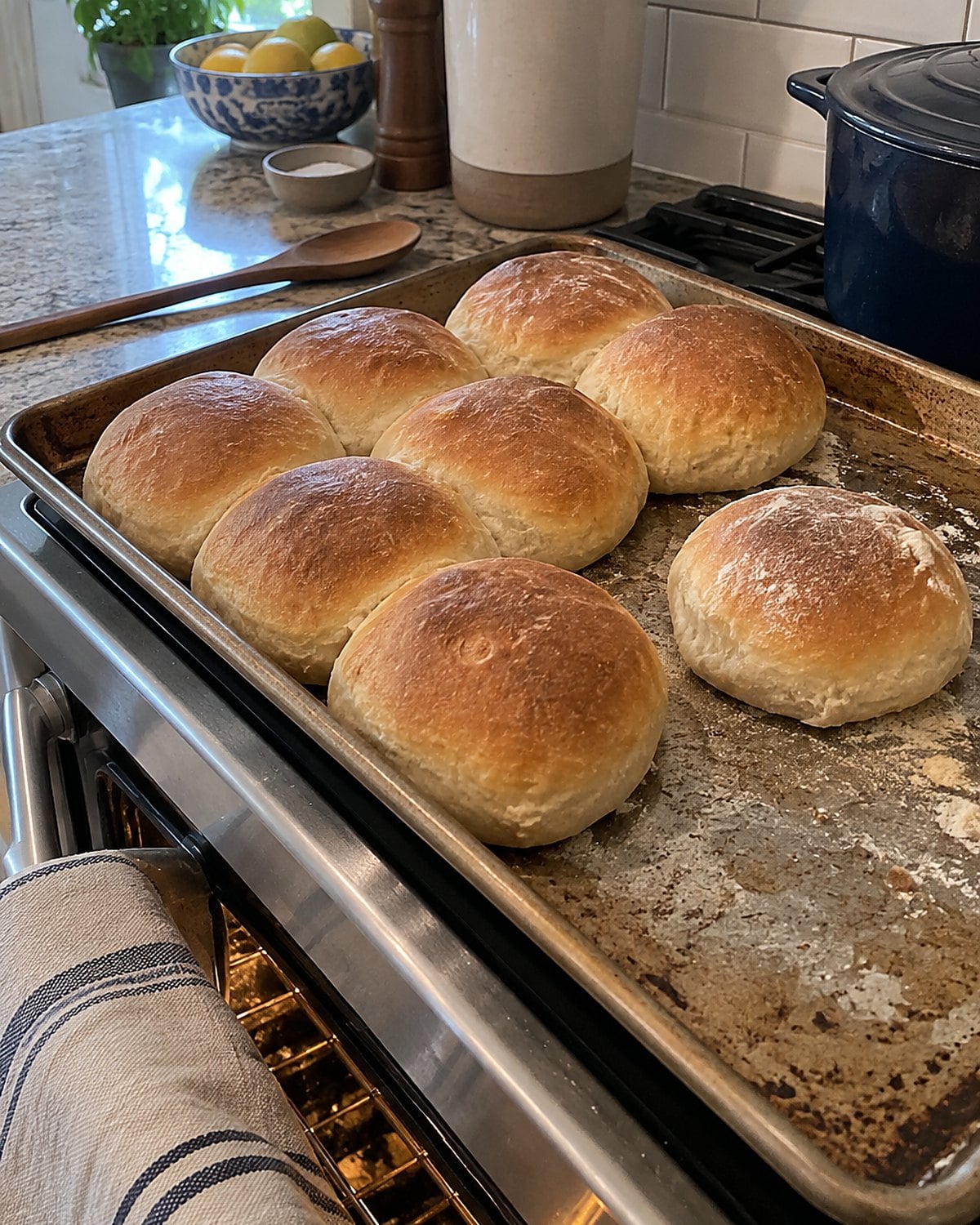
The rolls have risen, and the baking sheet looks full. You squeeze the last few into the gaps so they’ll all be ready together.
Crowding changes what you get. Rolls touching on every side stay pale and soft where they meet. If you want separate browned edges, leave space between them or use two sheets. If the family likes pull-apart rolls, put them close on purpose.
Look at the tops as they bake. Edges near the back of the oven might color first, while the rolls in the middle stay pale. Turn the sheet if the browning looks uneven. Don’t pull them out just because the outside row is done.
Brush with butter after baking for a soft top. Butter before baking gives a different finish and can darken sooner. Neither is wrong, but doing both out of habit leaves you with a greasier roll than you meant to make.
#15 The gravy whisked around a flour lump
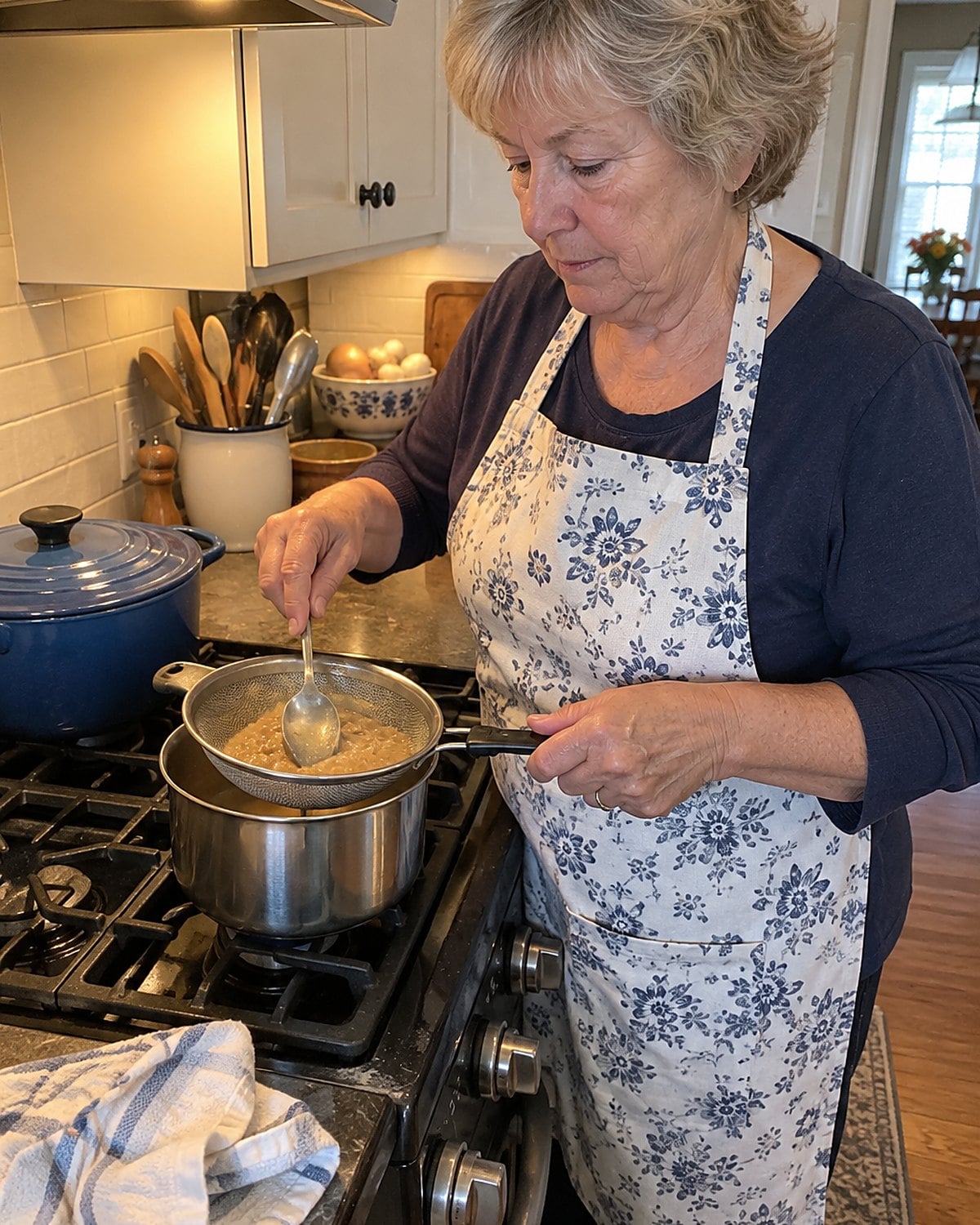
You’ve got hot drippings, a whisk, and somebody asking if dinner is ready. Flour goes straight into the pan. A pale lump forms, then breaks into smaller pale lumps.
Set the whisk down for a moment. Spoon off excess fat, then make a smooth paste with flour and some of that fat in a separate pan. Cook it while stirring until the raw flour smell fades. Add the warm drippings a little at a time, whisking after each pour.
If the gravy is already lumpy, pour it through a fine-mesh strainer into a clean pot. Press the liquid through with a spoon. Taste before adding salt, especially if the drippings came from a seasoned bird.
Keep the finished gravy warm while you carve. It’s easier than making the whole table wait for one stubborn lump.
Try it: Best Instant Pot Gravy (Quick & Easy, No Drippings!)
#14 The child's plate served from habit
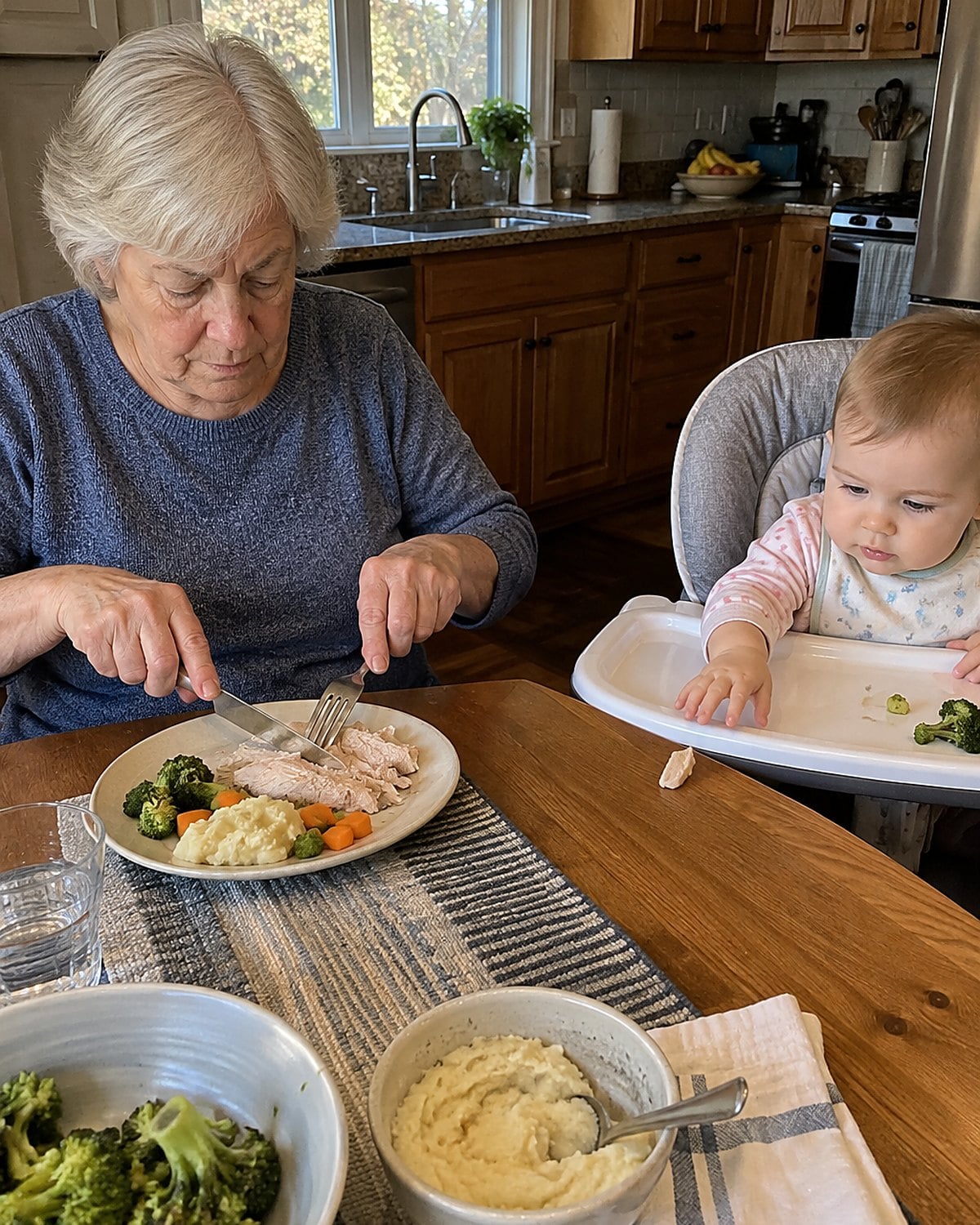
A grandchild is in the high chair, pulling at the tray while plates make their way around the table. Someone gives the child a little of everything. You know that look when the entire meal comes back untouched.
Ask the parent what the child eats and how it needs to be cut. That’s a useful kitchen question, not a challenge to your menu. Put aside a small portion before sauces or crunchy toppings go on. A plain piece of turkey or a spoonful of potato gives the parent room to choose.
The same courtesy works for adults whose plates have changed. Set dishes on the table with serving spoons instead of filling everyone’s plate for them. You’ll waste less food, and nobody has to explain why the old favorite stayed behind.
Keep the conversation on the meal you made. “Would you like some turkey?” is plenty. No one needs a running account of what they used to eat.
#13 The cutting board buried under bowls
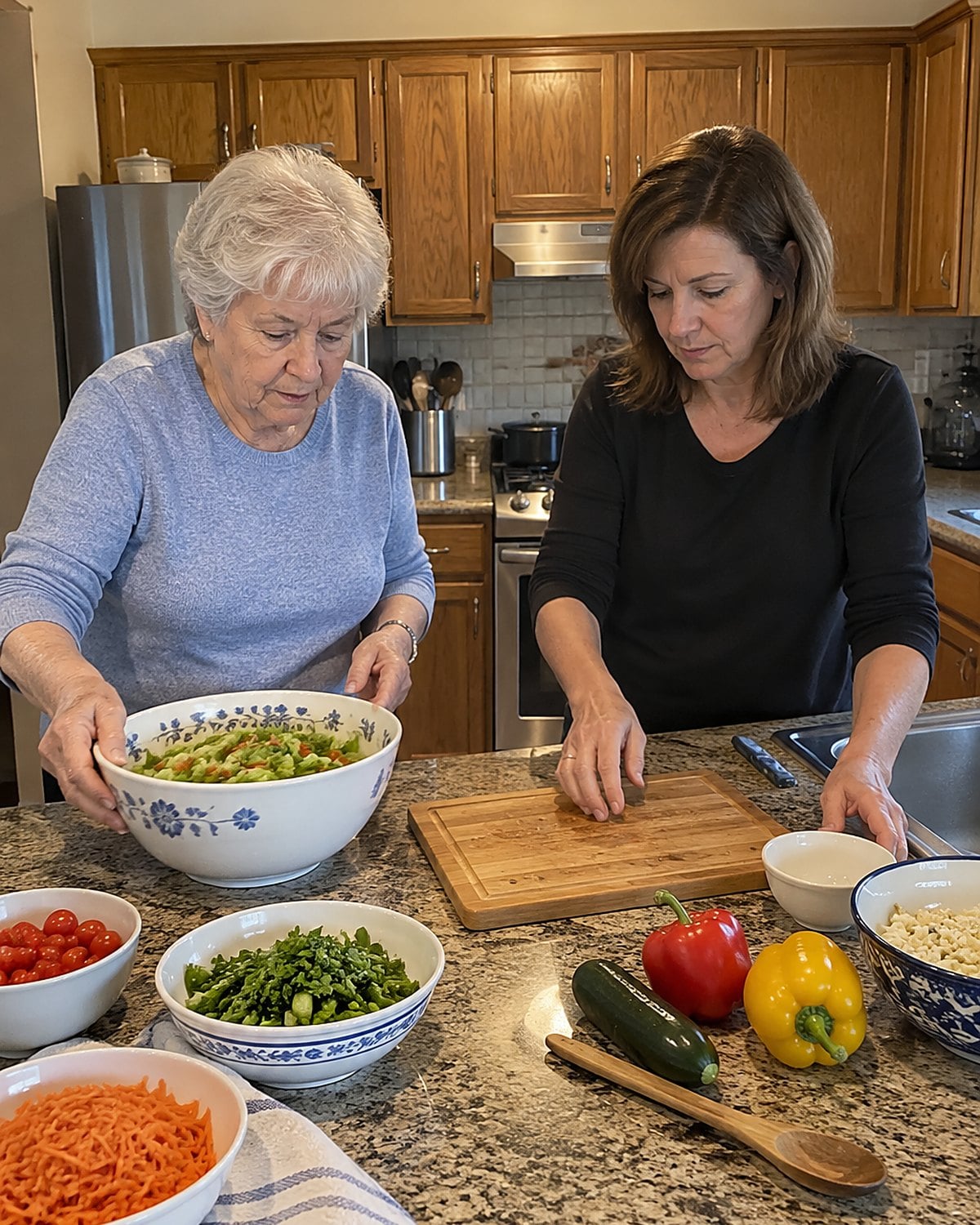
The counter looks ready: onions in one bowl, herbs in another, bread cubes in a third. Then you need to carve, and the good cutting board is underneath the lot.
Clear one landing place before the turkey goes in the oven. It needs room for a hot pan, a board, and your hands. Move cooled prep bowls to the refrigerator or wash them as their contents go into a dish.
Give dirty tools a place, too. A sheet pan near the sink catches spoons and measuring cups without letting them spread across the counter. You don’t have to clean the whole kitchen before dinner. You need a place to set down the next hot thing.
When someone asks how to help, point to a specific bowl. “Please wash this and clear that corner” works better than “I’m fine.”
#12 The oversized turkey at the market
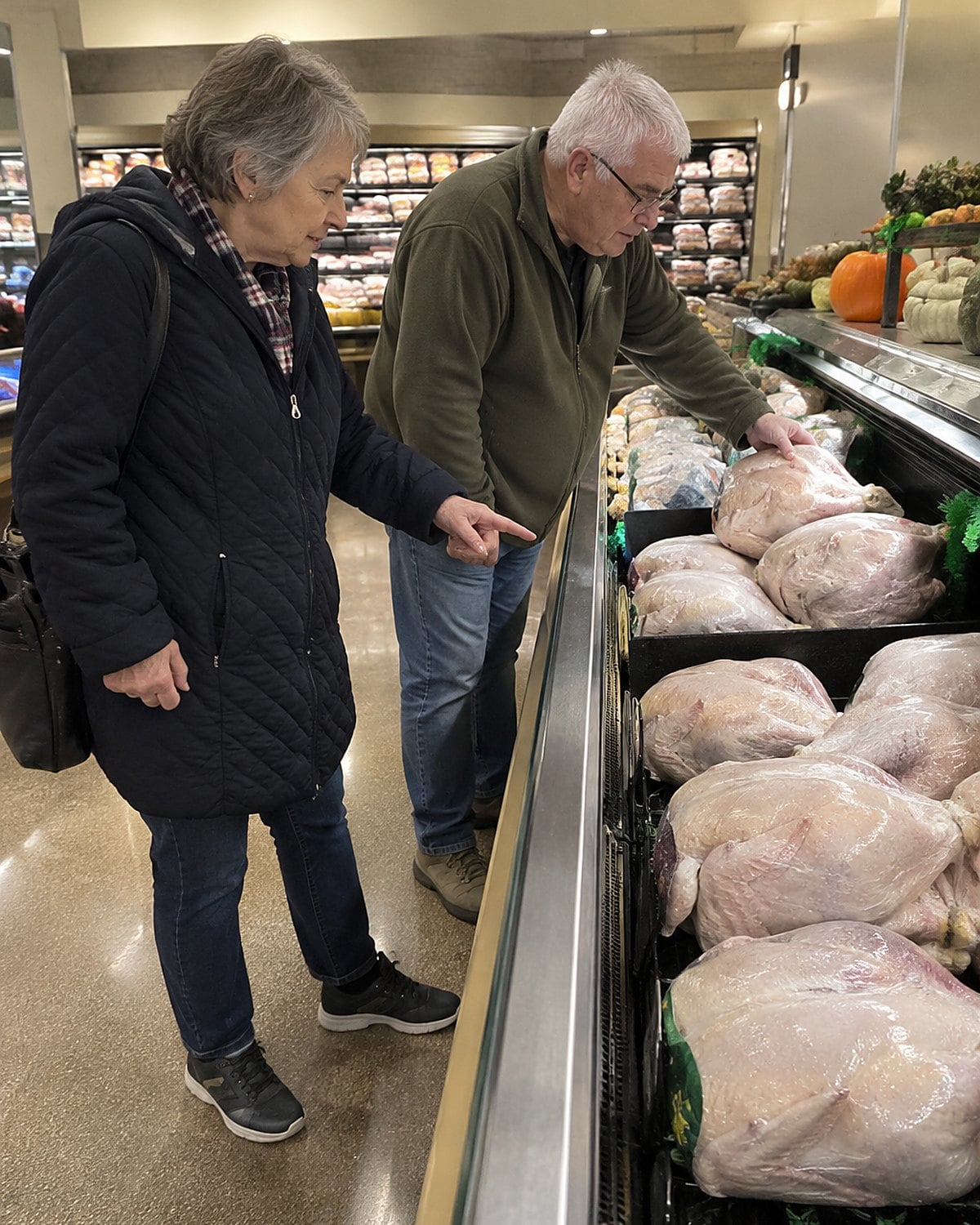
The butcher points to a bird that would have suited your old Thanksgiving table. You picture leftovers, then remember that the freezer is already full and fewer people are coming this year.
Buy for the table you have. A smaller turkey takes less refrigerator room and leaves space for the sides your guests actually request. If dark meat disappears first, ask for extra thighs or drumsticks rather than buying a much larger bird for its legs.
Check whether the turkey is labeled self-basting, enhanced, or pre-brined. Those birds contain added seasoning or solution. A heavy hand with salt afterward gives you a result you didn’t intend.
Say what you want at the counter: “I’m feeding a smaller table, and I’d like enough left for sandwiches.” The butcher can show you the birds in stock. You still get the pleasure of turkey tomorrow without spending the next week rearranging the freezer.
#11 The cornbread crumbled while still warm
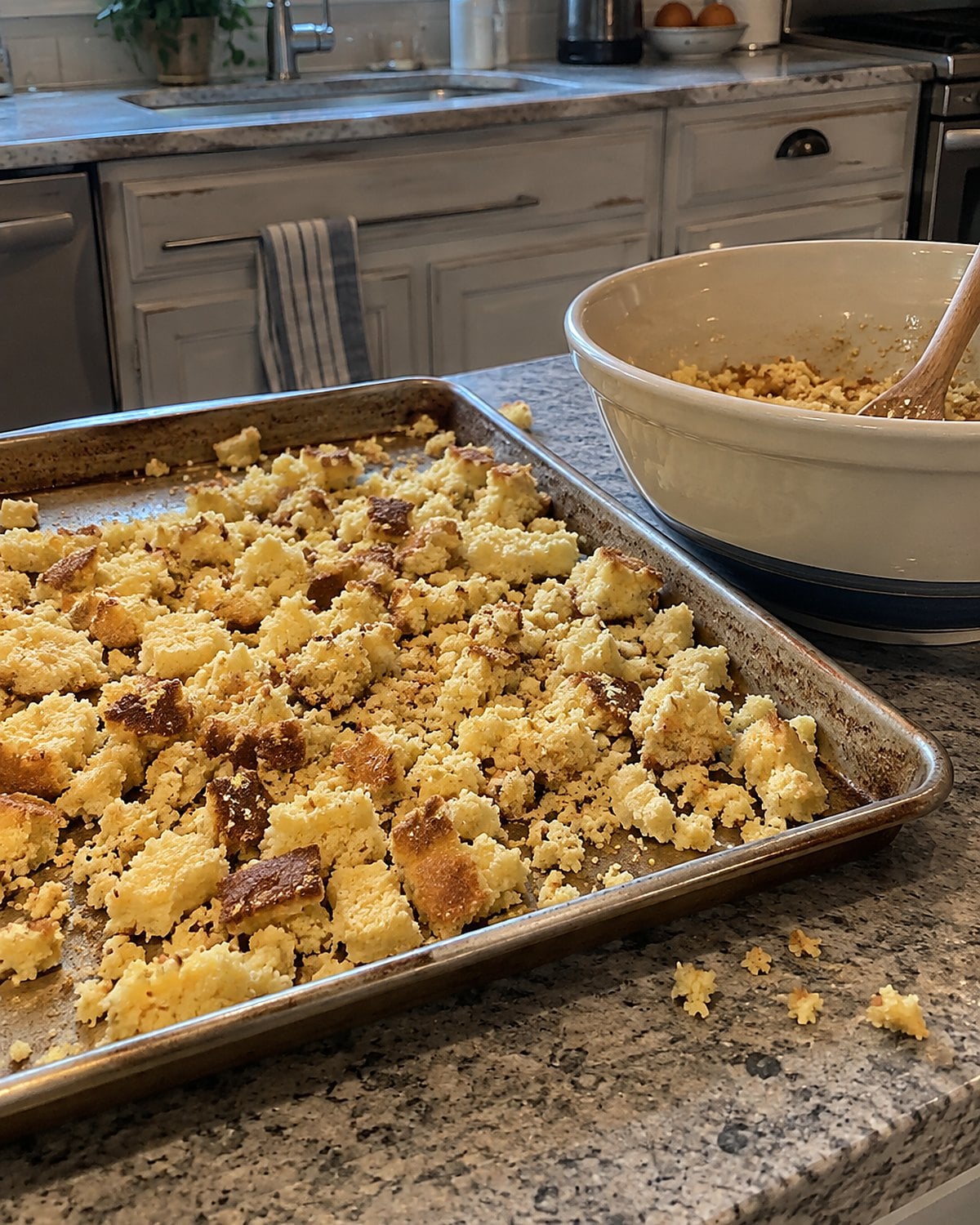
Fresh cornbread smells too good to leave alone. You crumble it straight from the pan into the dressing bowl, add broth, and wonder why it turns dense.
Warm, moist cornbread breaks into fine crumbs. Give it time to cool completely, then crumble it into pieces with some texture. If you baked it ahead, spread the pieces out so they dry rather than trapping steam in a covered bowl.
Pour broth in stages. Stir, wait for the dry pieces to absorb it, then decide if the bowl needs more. You’re looking for moist bread, not a batter.
Before it goes into the baking dish, lift a handful and let it fall. Distinct pieces should remain. That little check tells you more than the amount of broth left in the carton.
#10 The stockpot started after the bird is carved
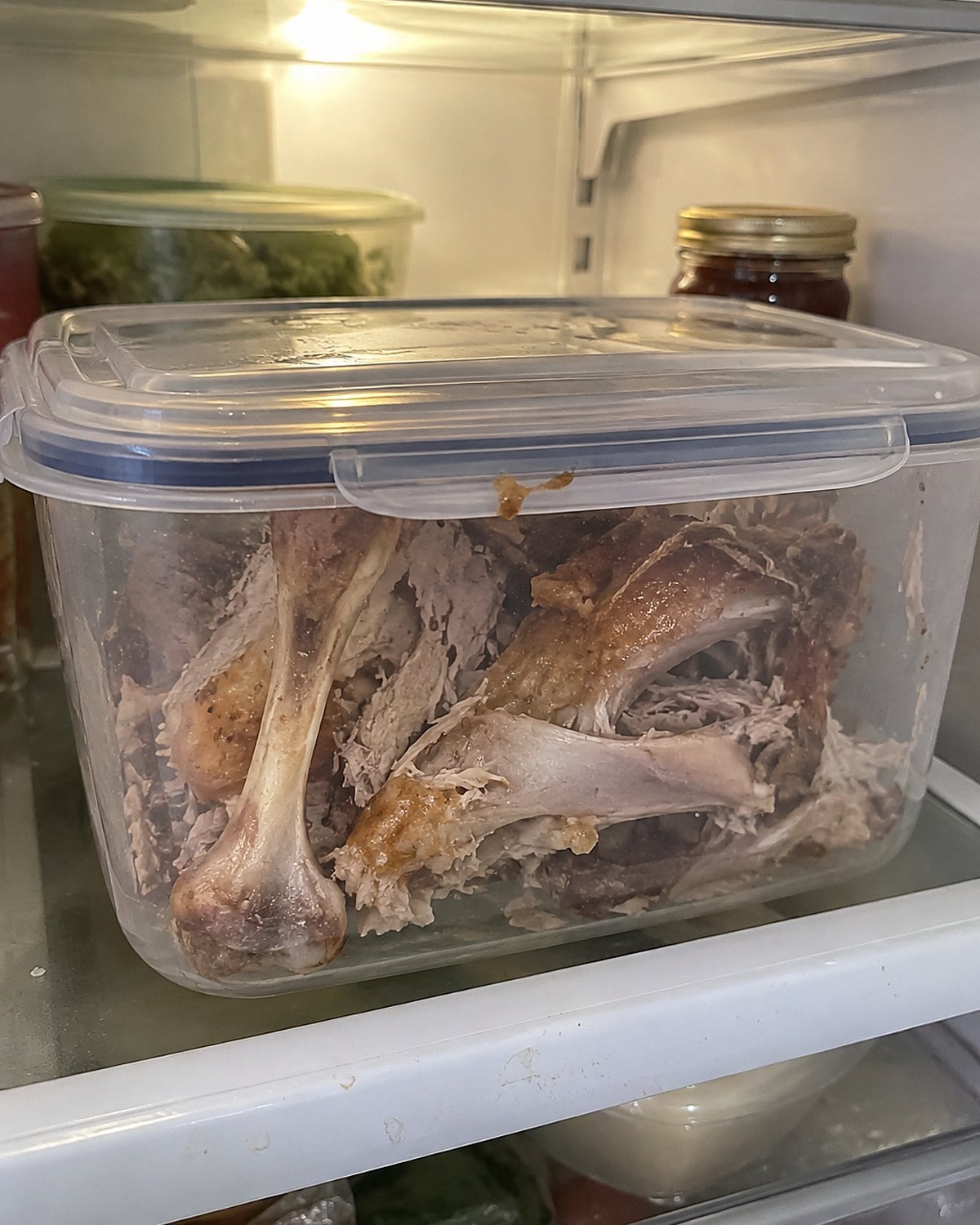
The turkey bones sit on a platter beside the sink. You think about stock, but the kitchen is full of dishes and everyone wants pie. Don’t turn a finished dinner into another long shift at the stove.
If you want stock, pull off the usable meat and refrigerate it promptly. Put the bones into a covered container for the refrigerator, or freeze them for another day. The USDA’s leftover guidance calls for refrigerating perishables within 2 hours. A stockpot left out while you visit doesn’t get an exception.
When you do make stock, cover the bones with water and bring it to a simmer. A hard boil clouds the liquid and leaves less time for flavor to develop before water cooks away. Strain the finished stock and chill it promptly in shallow containers.
You’ve earned pie. The bones will wait in the cold while you eat it.
Try it: Instant Pot Stocks & Broths (Meat, Fish, Mushroom, Veggie)
#9 The stuffing packed tight in the bird
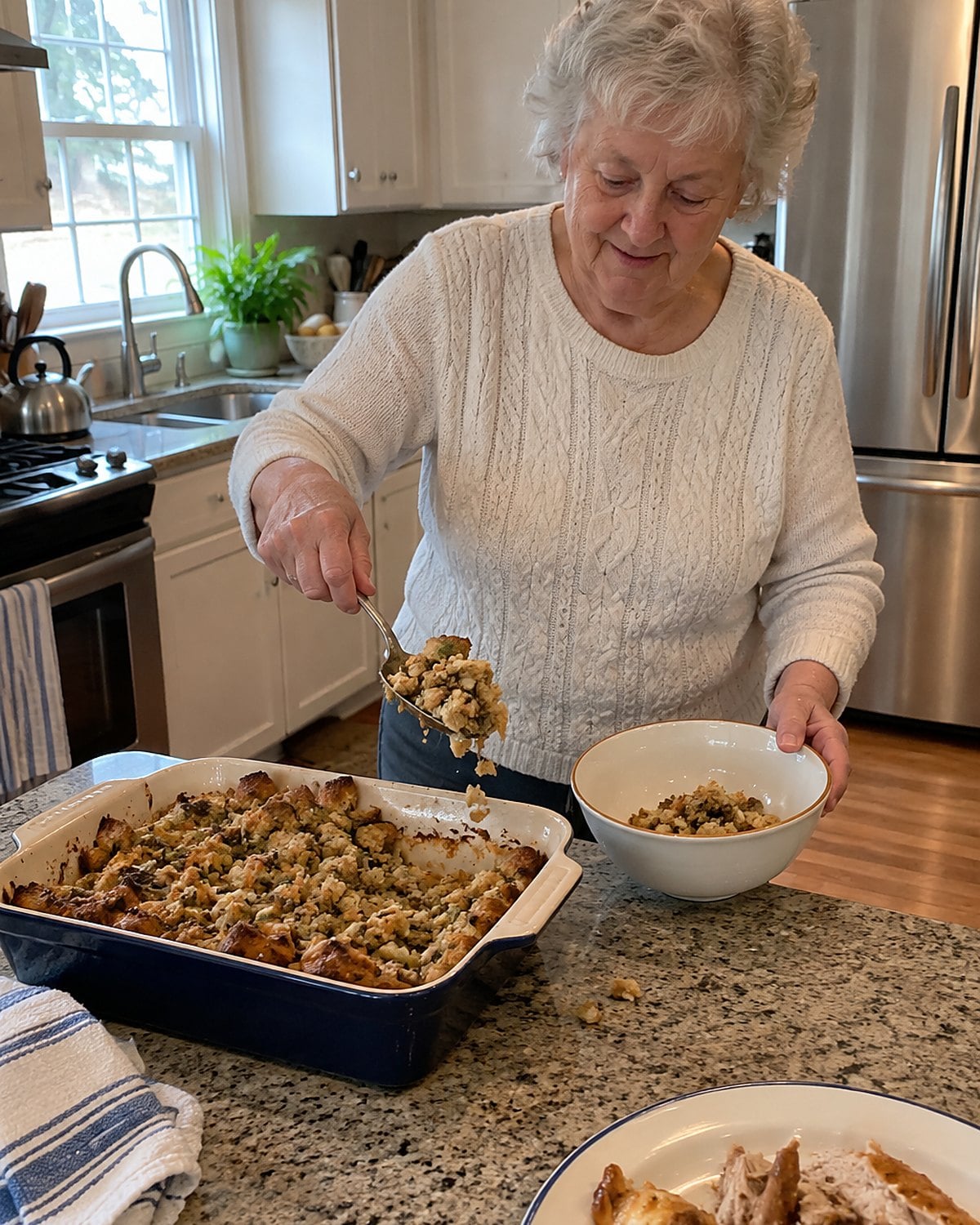
You push another handful of stuffing into the cavity. It’s how the bird looked in the old photos, and the pan beside it is already crowded.
Tightly packed stuffing heats slowly in the center. Leave it loose if you cook it inside the turkey, then check its center with a thermometer. It must reach 165°F, the same target as the bird. If the turkey is done first, the stuffing still needs cooking.
A separate baking dish gives you a browned top and lets you check the stuffing without holding up the turkey. Add turkey drippings to the dish after they’re fully cooked if you miss that roast-bird flavor.
There’s no need to defend the choice to anyone who remembers stuffing coming out of the bird. Put a crisp spoonful on their plate and let it make its case.
#8 The serving dishes warming too early
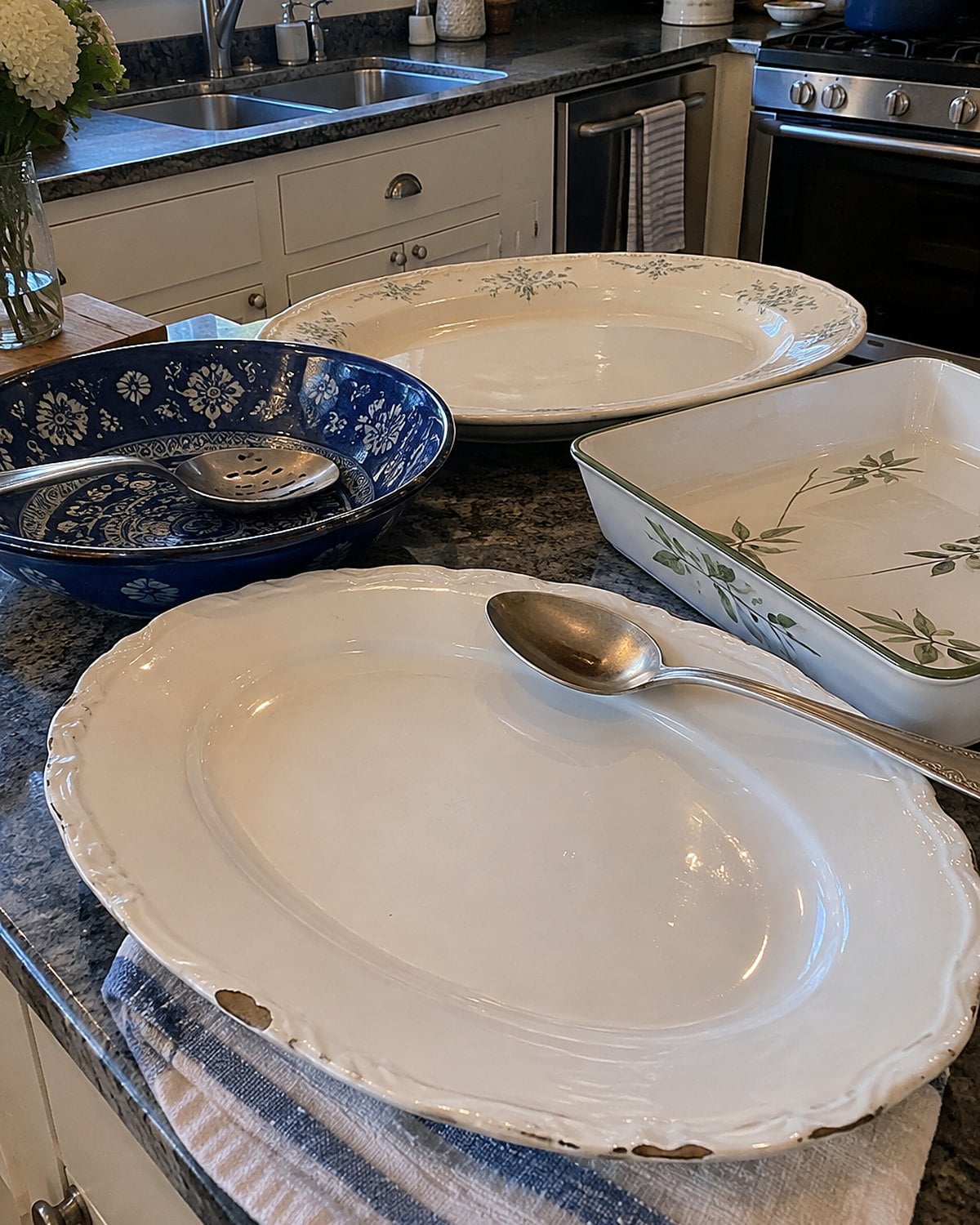
The table is set, the platters are out, and you’ve warmed the serving dishes because cold china cools dinner. Then the turkey needs more time. The potatoes wait. The platters cool again.
Warm a platter close to the moment food goes into it, using a method suited to the dish. Keep the food at the stove or in the oven until serving time. A warm platter helps, but it cannot make cooled food hot again.
If family members are bringing sides, ask what arrives ready to serve and what needs reheating. “Tell me what your dish needs when you get here” is kinder than finding a cold casserole at the door.
Put serving spoons beside their dishes now. That small step prevents the last-minute hunt through a drawer while the gravy cools. Your good platter deserves hot food, not an hour of waiting on the counter.
#7 The green beans boiled for tradition
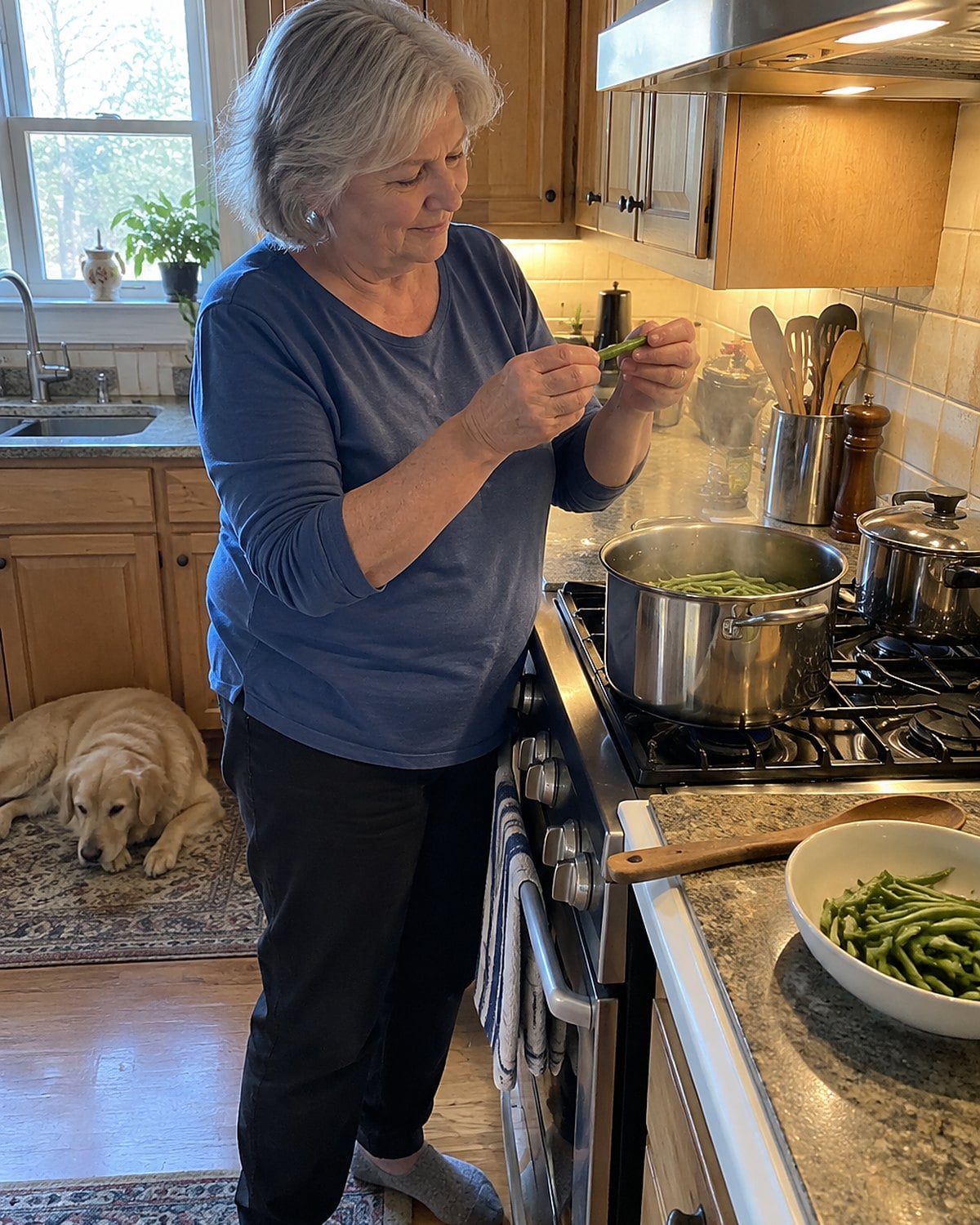
The beans go into the pot early because that’s when you’ve always made them. By dinner, their color has faded and the bite is gone.
Fish one out and taste it. A bean should bend before it breaks, with no raw, squeaky center. Once the texture suits you, drain the pot. To stop them cooking while you finish the other dishes, cool the beans in cold water and drain them well.
Bring them back to the stove close to serving. Spread them in a wide pan so they heat through without sitting in water. Then add butter or cooked onions. Salt and fat cling better to hot, drained beans than to soggy ones.
Keep the old pot if you like it. Change the moment the beans come out. That’s the part you’ll notice on the plate.
Try it: Instant Pot Green Beans With Butter & Pepper
#6 The refrigerator shelves filled with serving bowls
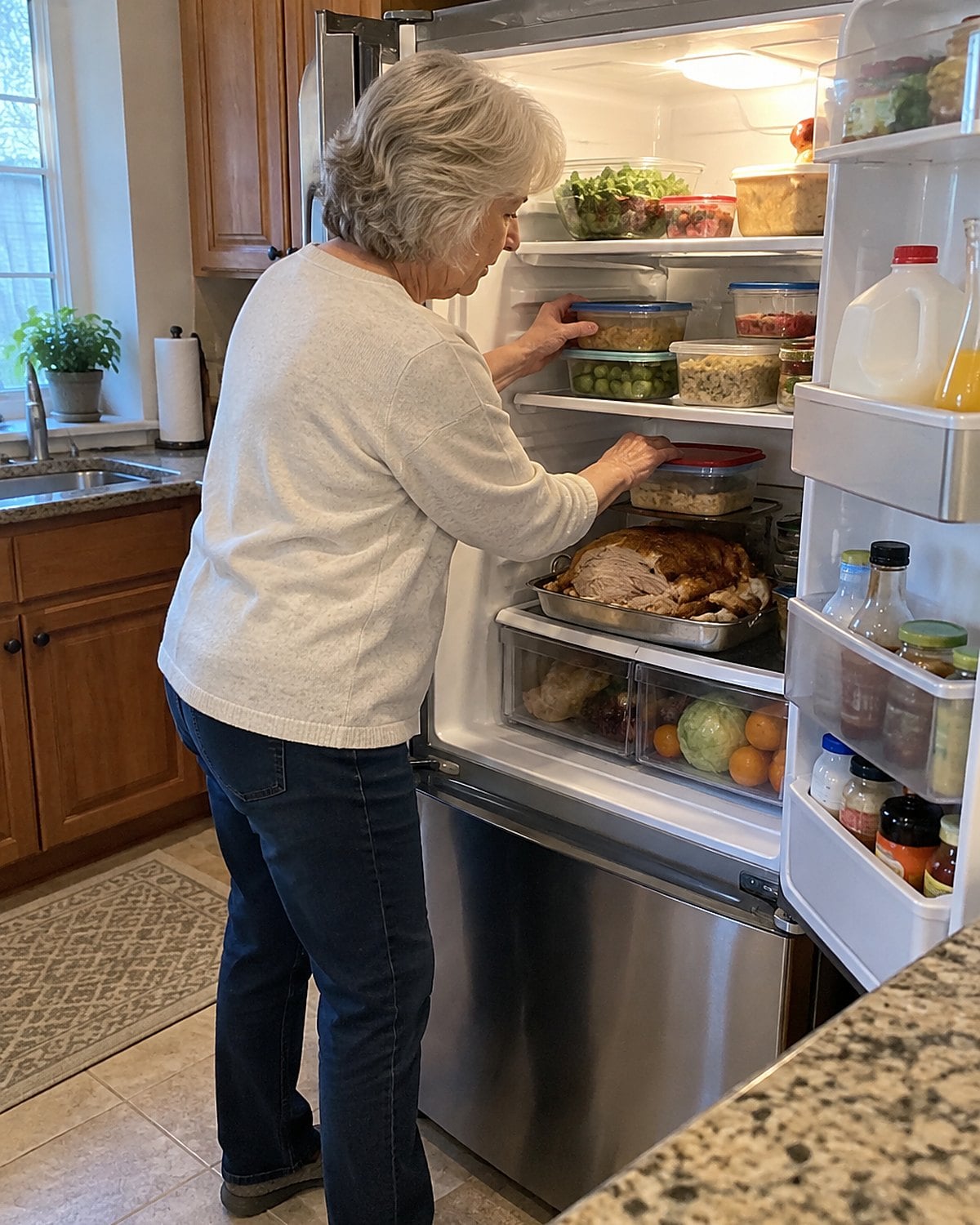
The cranberry sauce is in its best bowl. The cut vegetables have their own bowls. The turkey needs a shelf, but every shelf already holds something round and wide.
Before shopping, clear a refrigerator shelf and check the temperature. The FDA says the fridge belongs at 40°F or below. Leave space for cold air to move around the food, and keep raw turkey in a tray below foods ready to eat.
Use covered storage containers for prep instead of serving bowls. Straight sides stack; broad rims steal space. Move the food into its pretty bowl when you’re ready to serve it.
If the fridge is full, don’t treat a porch as extra cold storage. Outdoor temperature shifts, and food sitting outside lacks the steady temperature you need. A cleared shelf is less picturesque than a porch table, but you’ll be glad for it when leftovers need room.
#5 The leftovers reheated all at once
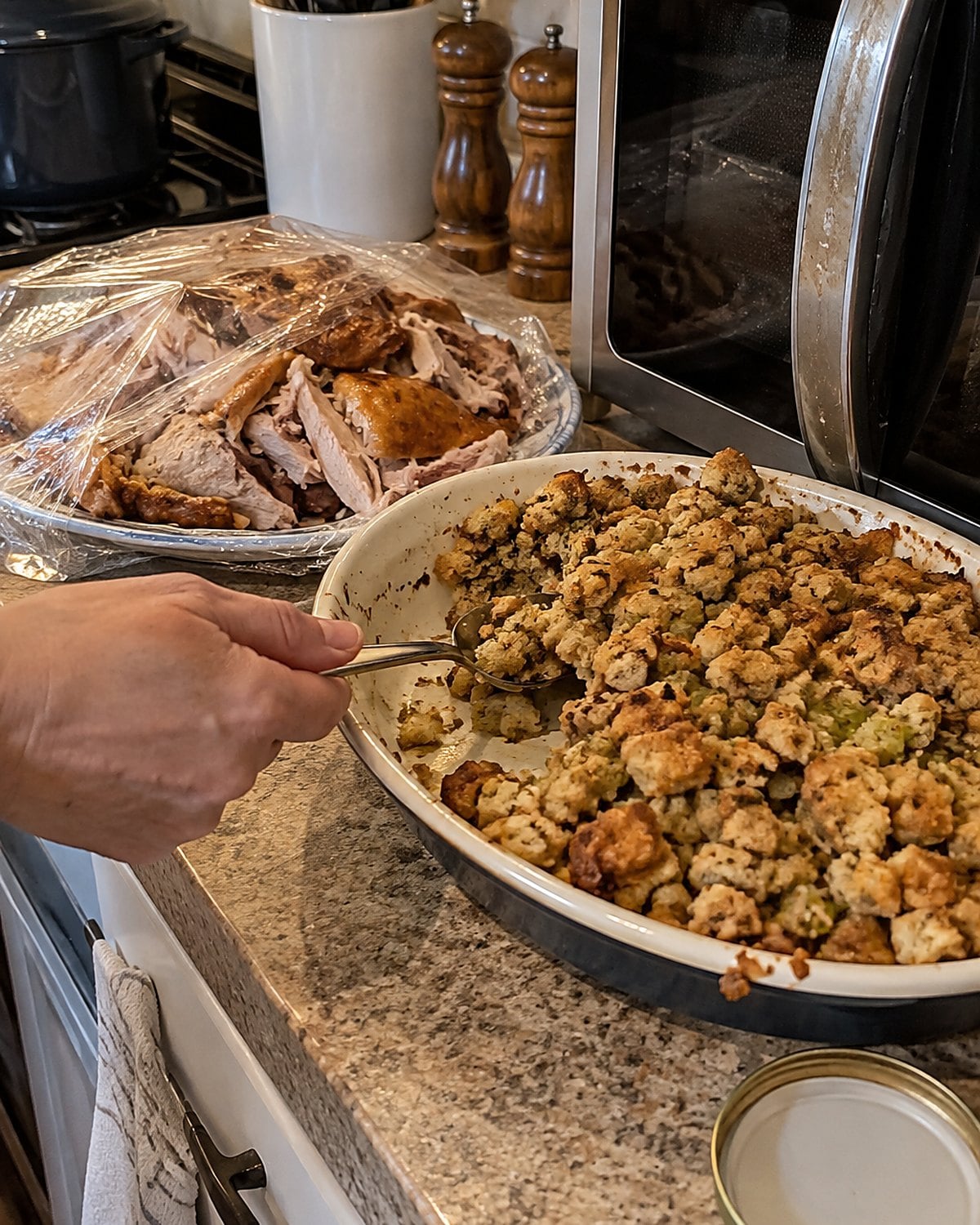
The next day, you slide a crowded plate into the microwave: turkey, potatoes, stuffing, gravy. The gravy bubbles while the middle of the stuffing stays cool.
Reheat in smaller portions and give dense food a stir or a turn. A little gravy or broth helps sliced turkey stay moist, but it doesn’t tell you whether the center is hot enough. The USDA says to reheat leftovers to 165°F.
Separate foods when their shapes fight each other. Stuffing in a shallow dish heats more evenly than a tall mound. Put gravy in a small pot where you can stir it, and warm turkey under cover.
You don’t need to make the whole Thanksgiving plate again to enjoy lunch. Heat the portion you want, check the center, and leave the rest cold for later.
#4 The pumpkin pie sliced before cooling
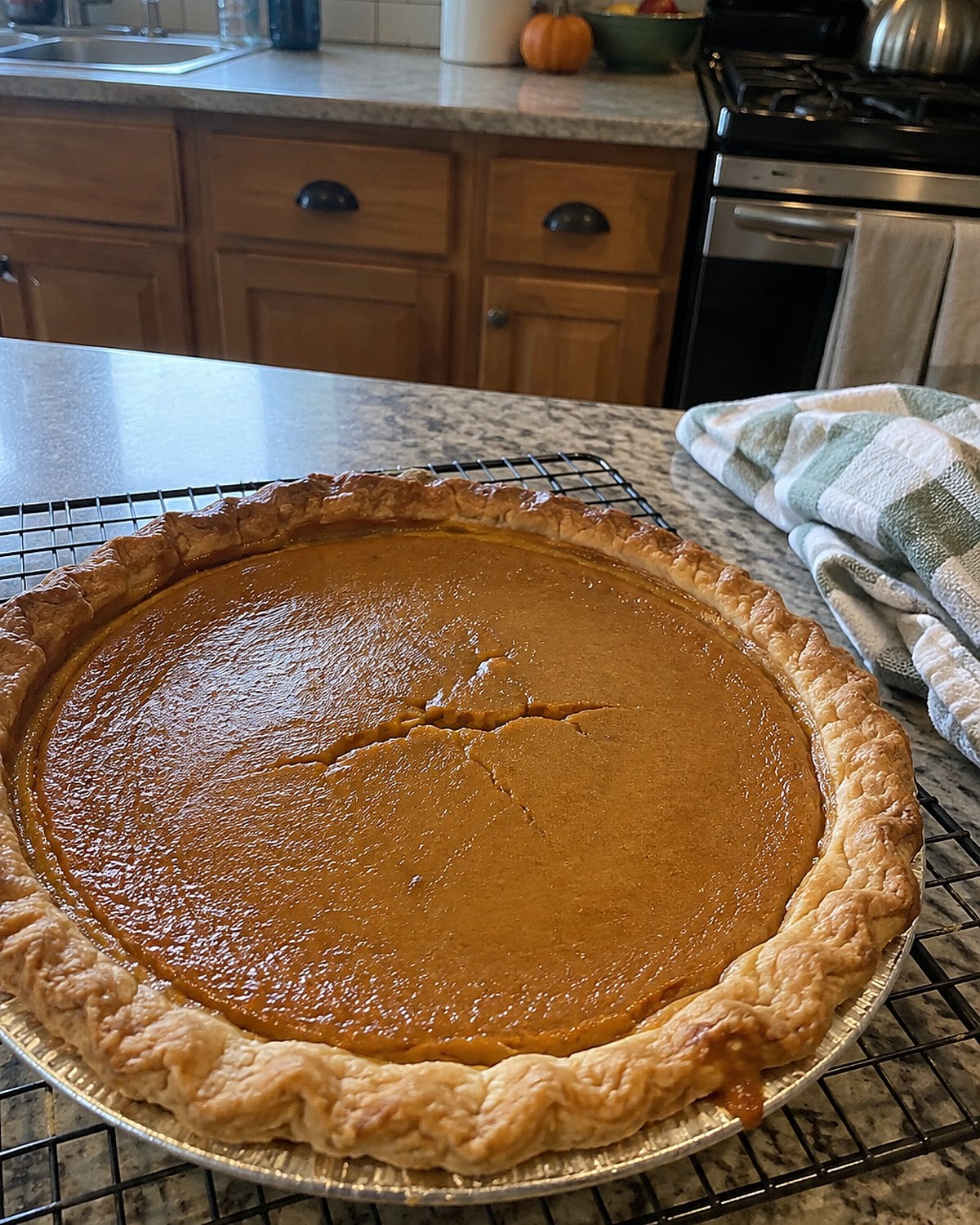
A knife goes into the pumpkin pie while the pan is still warm. The slice slumps, the filling clings to the blade, and you tell everyone it tastes better than it looks.
It probably does. Pumpkin filling needs time to set as it cools. Look for a slight wobble in the center when the pie leaves the oven, rather than waiting for the whole surface to turn rigid. A pie baked until it looks firm from edge to edge can crack as it cools.
Let the pie cool on a rack so air reaches the bottom of the plate. Then refrigerate it. Pumpkin pie contains eggs and dairy; it doesn’t belong on the counter overnight. The FDA’s food storage guidance is a better place to settle storage questions than the handwritten note tucked into a recipe box.
Slice with a clean knife, wiping it between cuts. You’ll get the neat edge you wanted without baking the filling until it’s dry.
#3 The probe left untested until Thursday
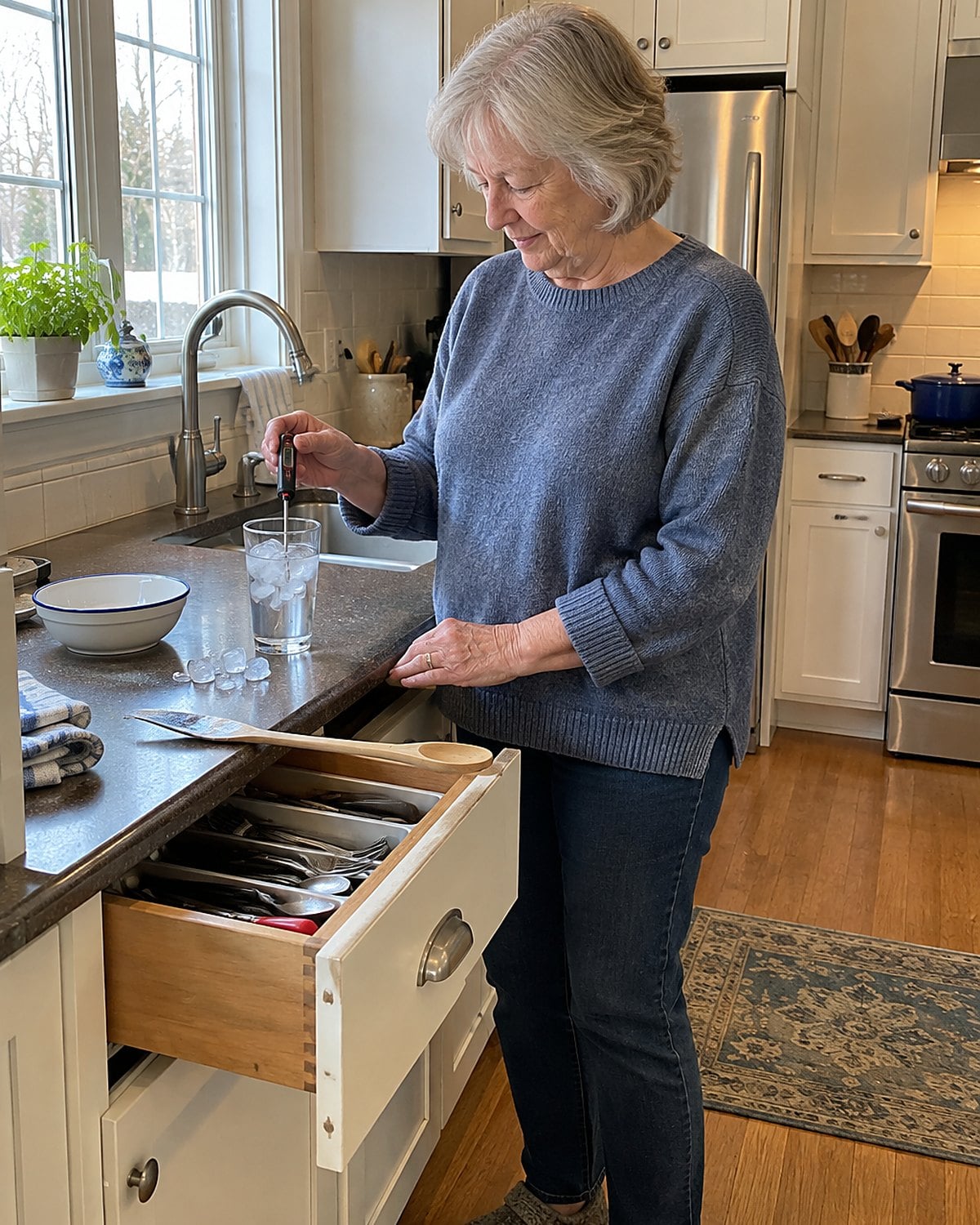
The turkey is in the oven when you open the drawer and find a thermometer with a dim display. Its battery has spent the year beside the twist ties. Now you’re looking for a spare while the roasting pan waits.
Check the probe before Thanksgiving morning. An ice-water test gives you a known mark: pack a glass with ice, add water, stir, and place the probe tip in the mixture. Keep it clear of the glass. After the reading settles, it should show about 32°F.
If the display reads far from that mark, follow the thermometer’s instructions for calibration or replace its battery. Some models have an adjustment; others don’t. You want to discover that while the grocery store is still open.
Wash the probe after testing it. Then put it beside the roasting pan, not back in the drawer. When it’s time to check the turkey, you’ll know the tool works before you trust what it says.
#2 The leftover turkey waiting on the platter
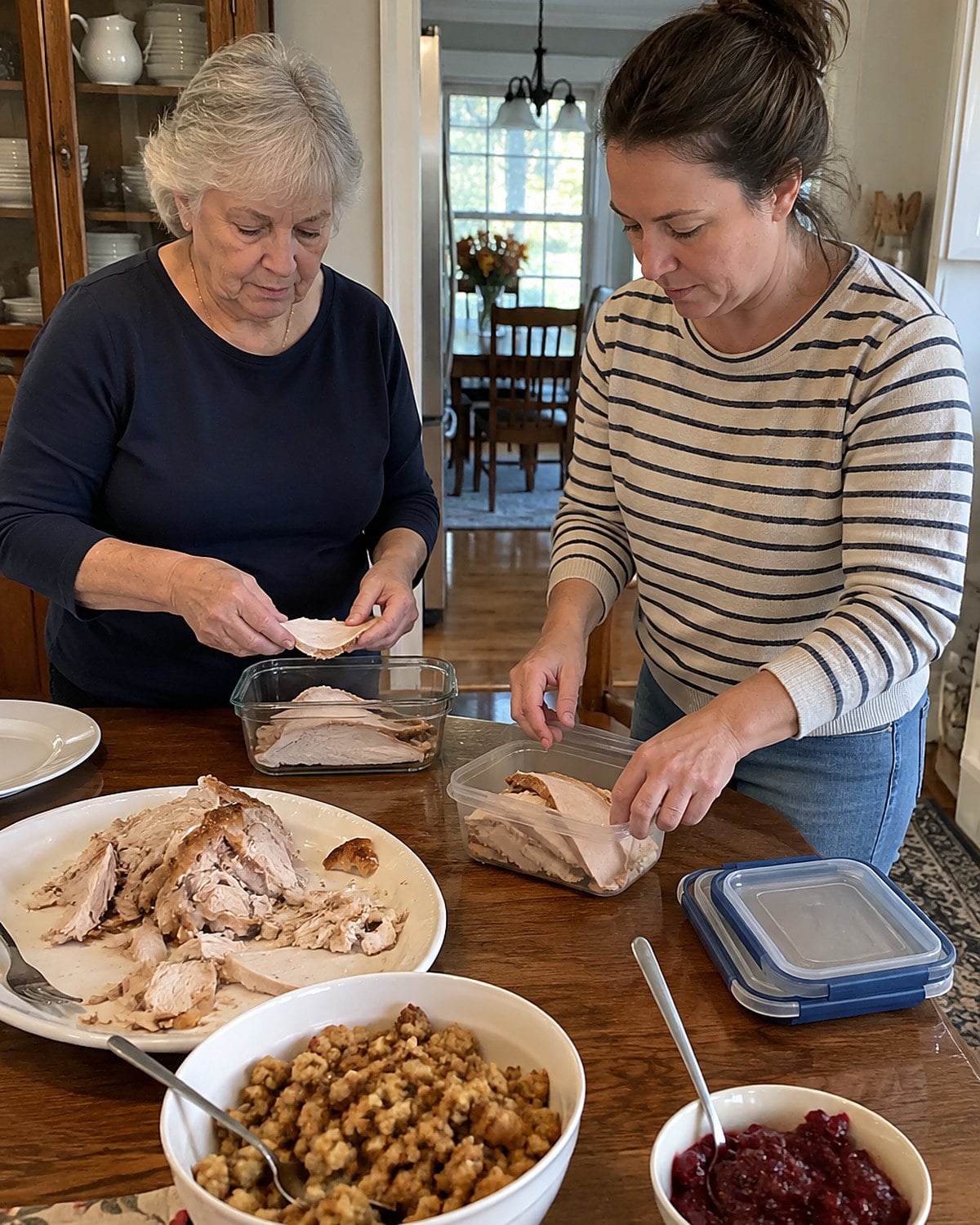
The meal ends, chairs scrape back, and the turkey is still on its platter. You plan to put it away after coffee. Then pie arrives.
Make the first cleanup job a cold-storage job. The USDA says to refrigerate perishable food within 2 hours. Slice the remaining meat from the bones and pack it in shallow, covered containers so it chills faster. Put stuffing and gravy away in their own containers.
The USDA’s cold storage chart gives cooked turkey 3 to 4 days in a refrigerator at 40°F or below. Freeze portions you won’t eat in that window. Labeling a container with its contents and date saves you from a freezer guessing game later.
Ask someone else to clear plates while you handle the food. You’ve made dinner; you don’t have to do every part of cleanup. Once the turkey is cold, coffee and pie can take as long as they please.
Try it: Instant Pot Leftover Turkey Recipes
#1 The oven schedule kept in your head
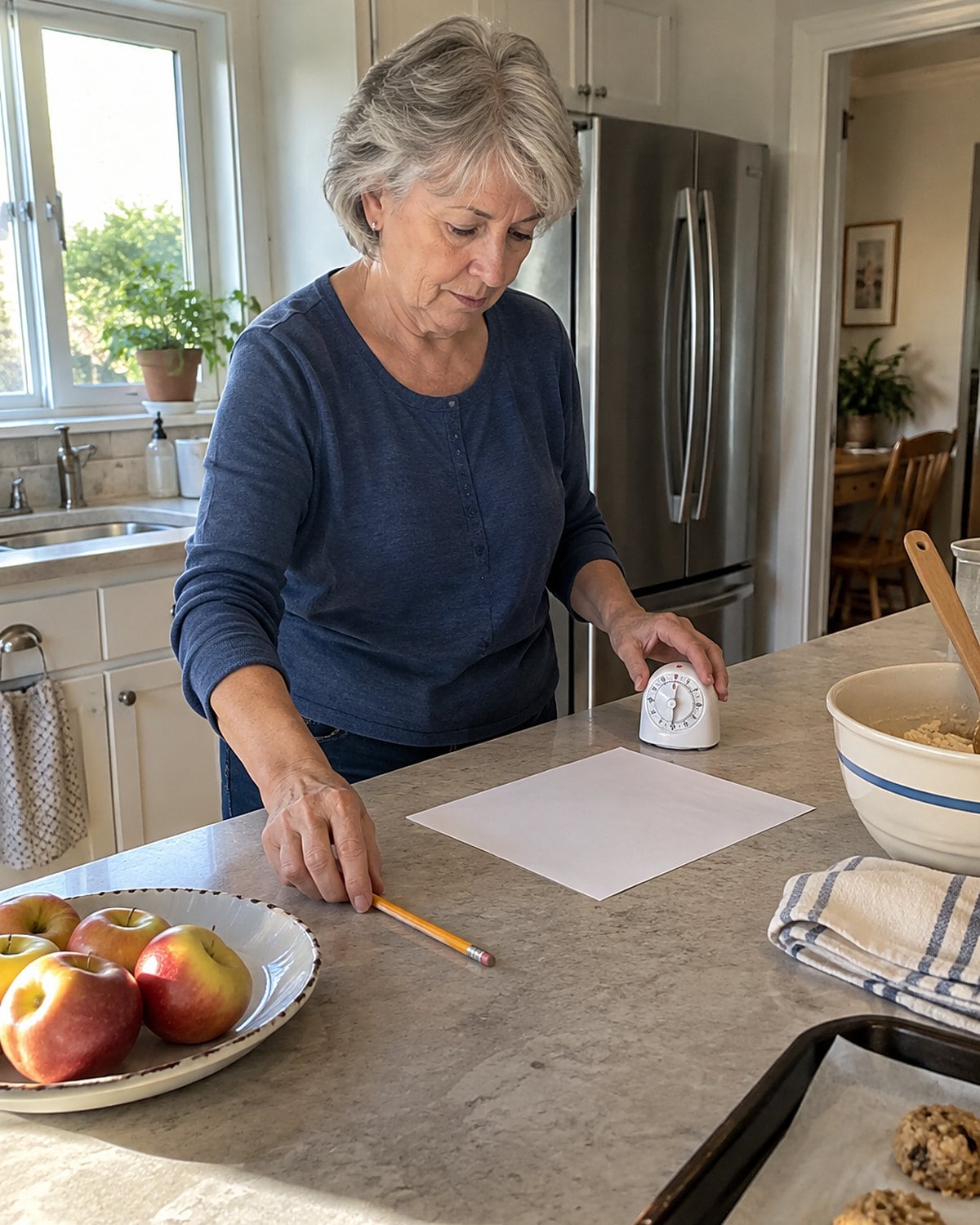
A guest asks when to bring in a side. You reach for the answer, but the turkey is running late and the gravy still needs your hands. Everything you know about cooking is in your head. Nobody else can see the order.
Write it down before the first burner goes on. The back of an envelope works. Start with the time you hope to eat, then list each job that needs your attention near dinner. Include the turkey’s estimated finish and rest, but leave its finish time open to the thermometer.
Beside each job, write who can do it. Someone else can set out serving spoons, clear a landing place, or move a finished dish to the table. Give each person a task instead of asking for help while holding a hot pan.
Now the envelope has a second purpose: it lets you change course. If the turkey needs longer, cross out a time and tell the room what moves next.
Keep the paper away from the burners. When your daughter asks what to do, she can read the next job while you finish the gravy.
The bottom line
The old habits share one problem: they ask you to keep solving dinner while dinner is already happening. An open oven, a crowded counter, and a bird carved too soon all take something you need later.
The well-prepared version of you has cleared a refrigerator shelf, found the thermometer, and put the dinner jobs on paper. You still get to cook the Thanksgiving meal your household recognizes.
Which job in your kitchen always lands at the wrong time?

Leave a Reply