

The roast turkey sat on the stove while the last pie plates went into the sink. Nobody had room in the fridge. By morning, someone had picked at the skin, and everybody lived.
That memory is real. So is the part it leaves out: a meal without illness doesn't tell you whether the next bird will be safe. Some of your mother's rules were sound. Others belonged to a kitchen without a thermometer, or to an era when wasting food felt worse than taking a chance. You don't have to throw out the whole cookbook. Just mark the pages that need changing.
#23 The turkey on the stove overnight
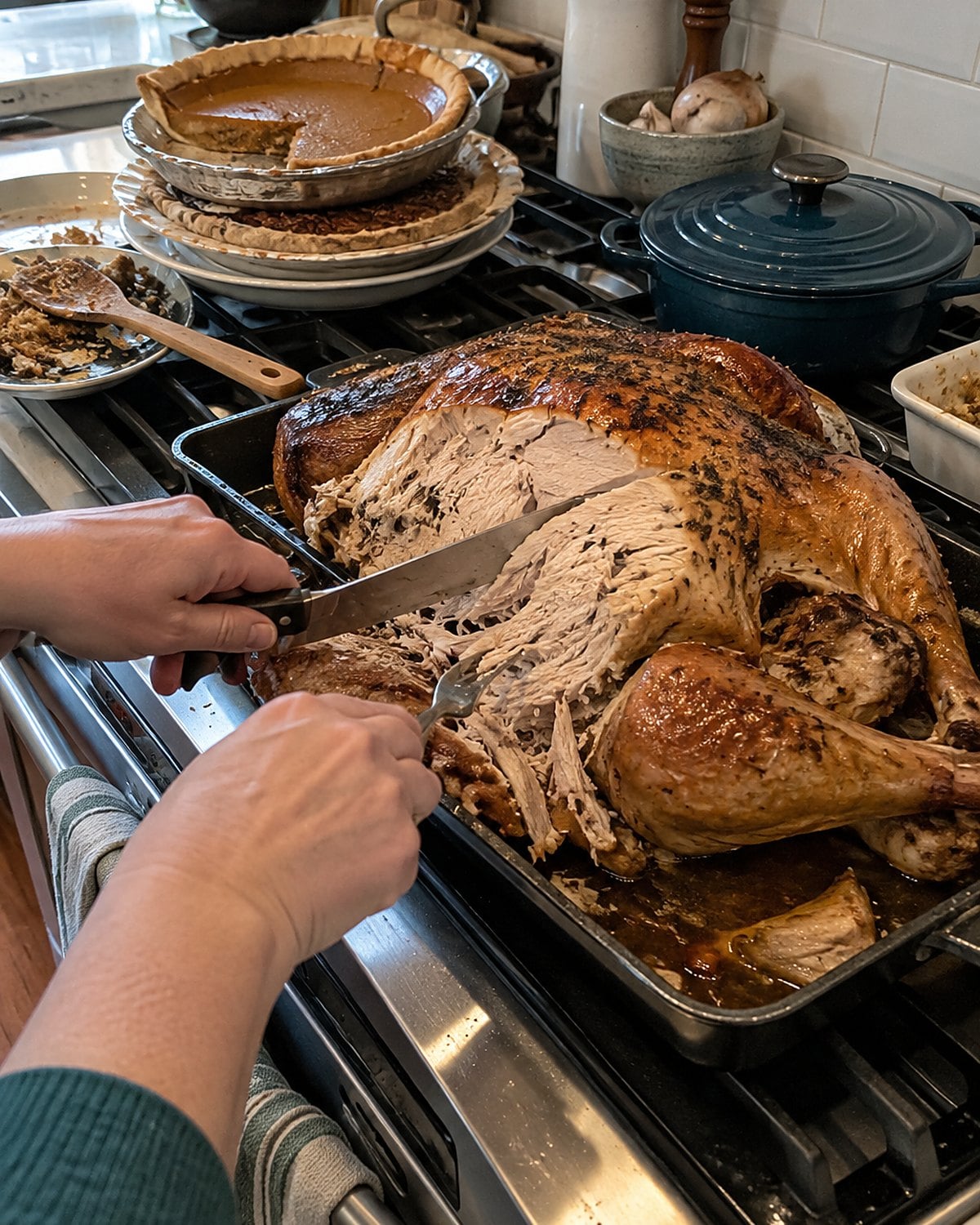
You know the scene. The guests leave, the good platter is still out, and the turkey looks too warm for the fridge. By bedtime, moving it feels like a job for morning.
Morning is too late. The USDA's Food Safety Basics says perishable food belongs in the refrigerator within 2 hours. When the air is above 90°F, that window shrinks to 1 hour. A whole cooked bird is perishable food, however nicely it was roasted.
Don't wait for the carcass to reach room temperature. Cut off the meat you plan to keep, put it in shallow containers, and refrigerate it within that window. Smaller portions lose heat faster than a crowded roasting pan. Leave enough room around the containers for cold air to move.
The old story about everybody surviving still belongs at the table. It just doesn't belong in charge of the leftovers. If the turkey stayed out overnight, throw it away. No amount of gravy fixes the hours it spent on the stove.
#22 The glass of milk beside breakfast
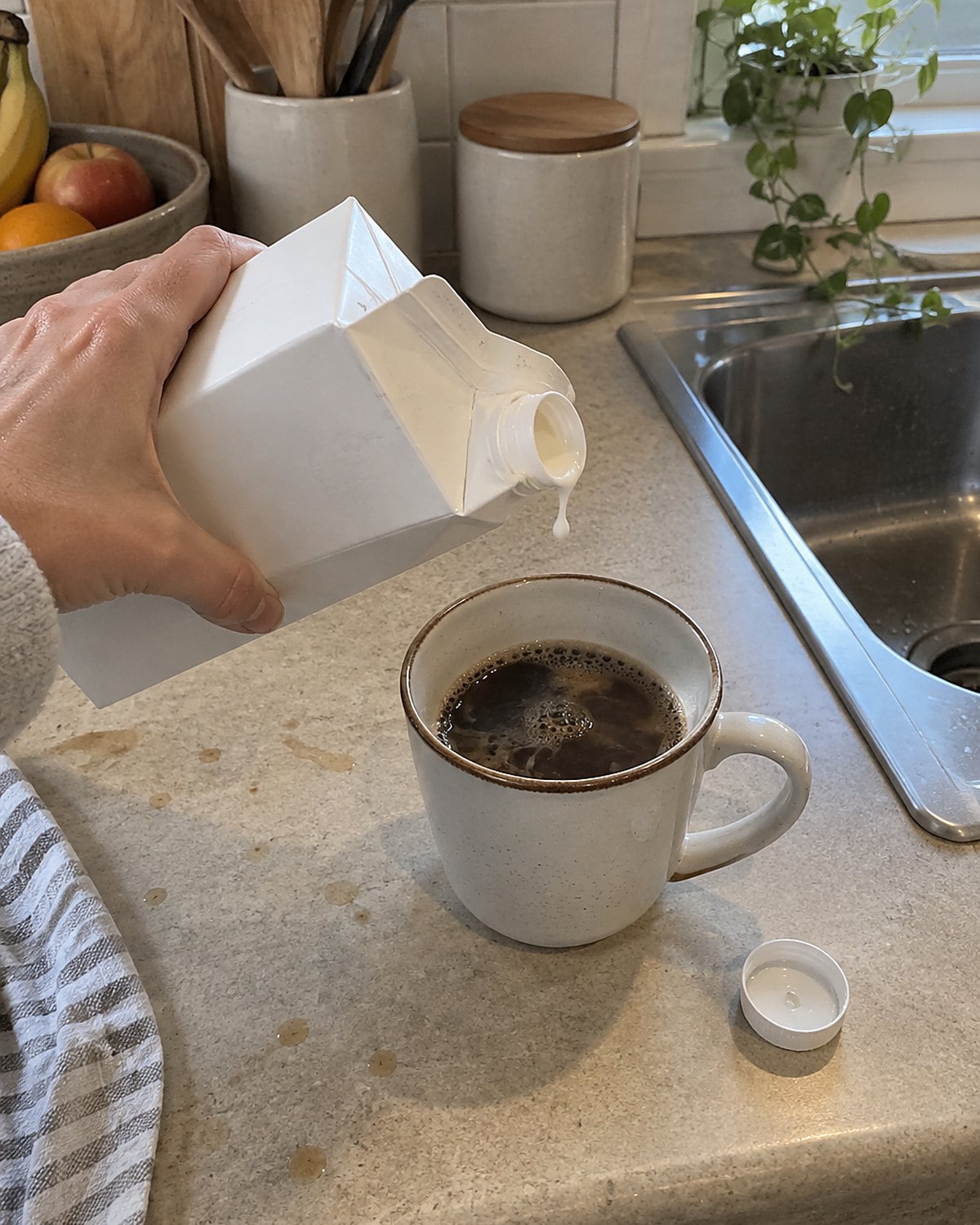
A sniff of milk tells you plenty about whether you want it in your coffee. It doesn't give every perishable food a clean bill of health.
Harmful bacteria don't have to announce themselves with a sour smell, a strange color, or a fuzzy patch. That's why tasting the last spoonful to see if it's still good is a poor test for questionable leftovers. If food spent too long on the counter, the answer comes from the clock, not your nose.
Keep the sniff test for quality. It still tells you when milk smells off. For safety, check where the carton or container has been, whether the refrigerator stayed cold, and how long the food sat out. One tiny taste won't settle any of those questions.
#21 The roast chicken with a red joint
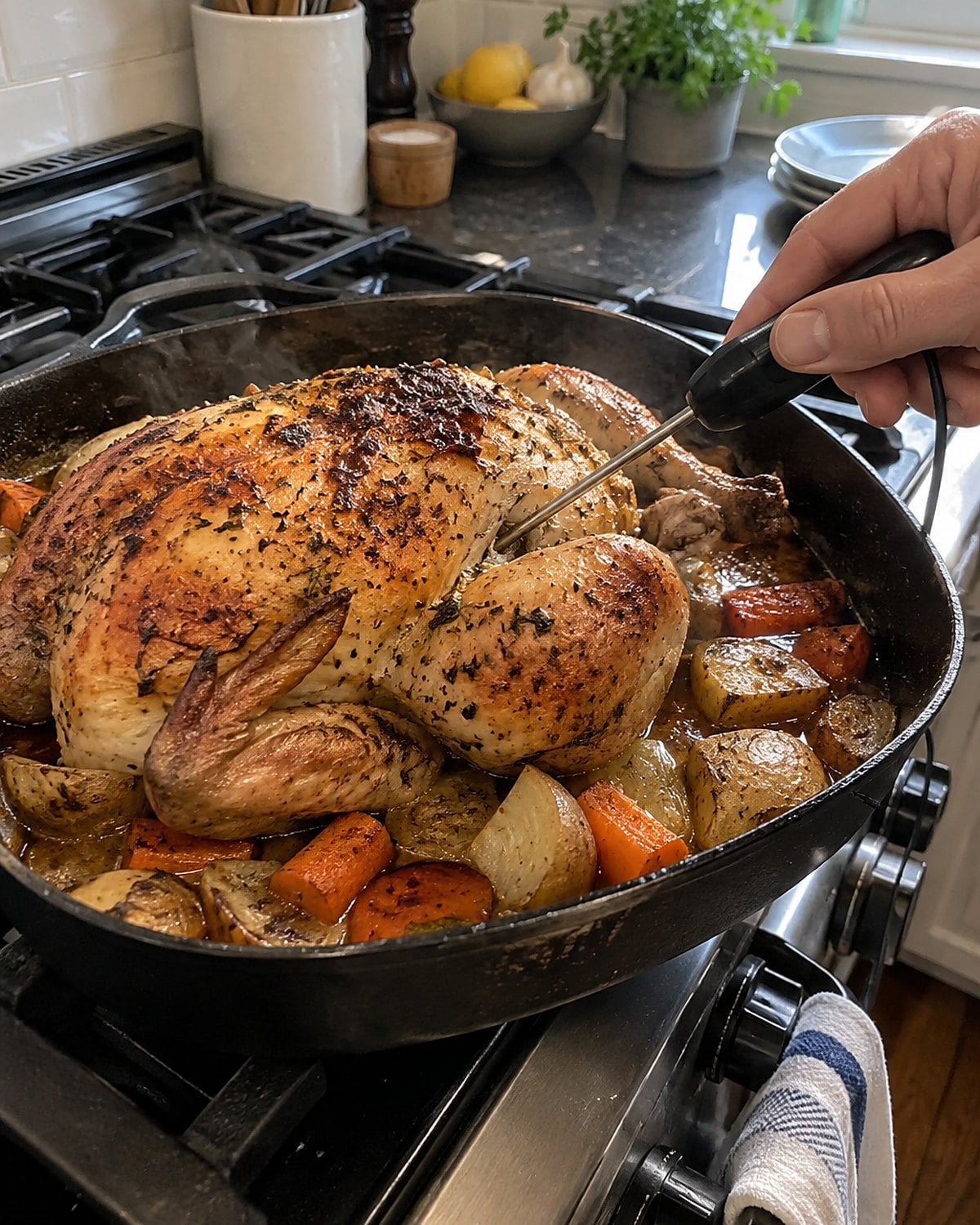
That pink patch beside the chicken bone has started arguments at plenty of dinner tables. One person points to clear juices. Another says the meat looks done. Neither gives you the number you need.
Chicken and other poultry need to reach 165°F. Push a food thermometer into the thickest part without touching bone. Check another spot if the bird is large or unevenly shaped. The bone and the meat next to it heat differently, which is why a single glance at the joint settles so little.
A cooked chicken sometimes keeps a pink cast near the bone. Juices don't make a dependable substitute for temperature, either. Once the thickest meat reads 165°F, you're done guessing. If it reads lower, put the bird back in the oven, even when the skin looks beautiful.
Your mother judged chicken with the tools she had. You have a faster answer in the utensil drawer, right beside the can opener.
Try it: Instant Pot Roast Chicken & Potatoes (Duo Crisp Or Oven Finish)
#20 The beef roast cut too soon
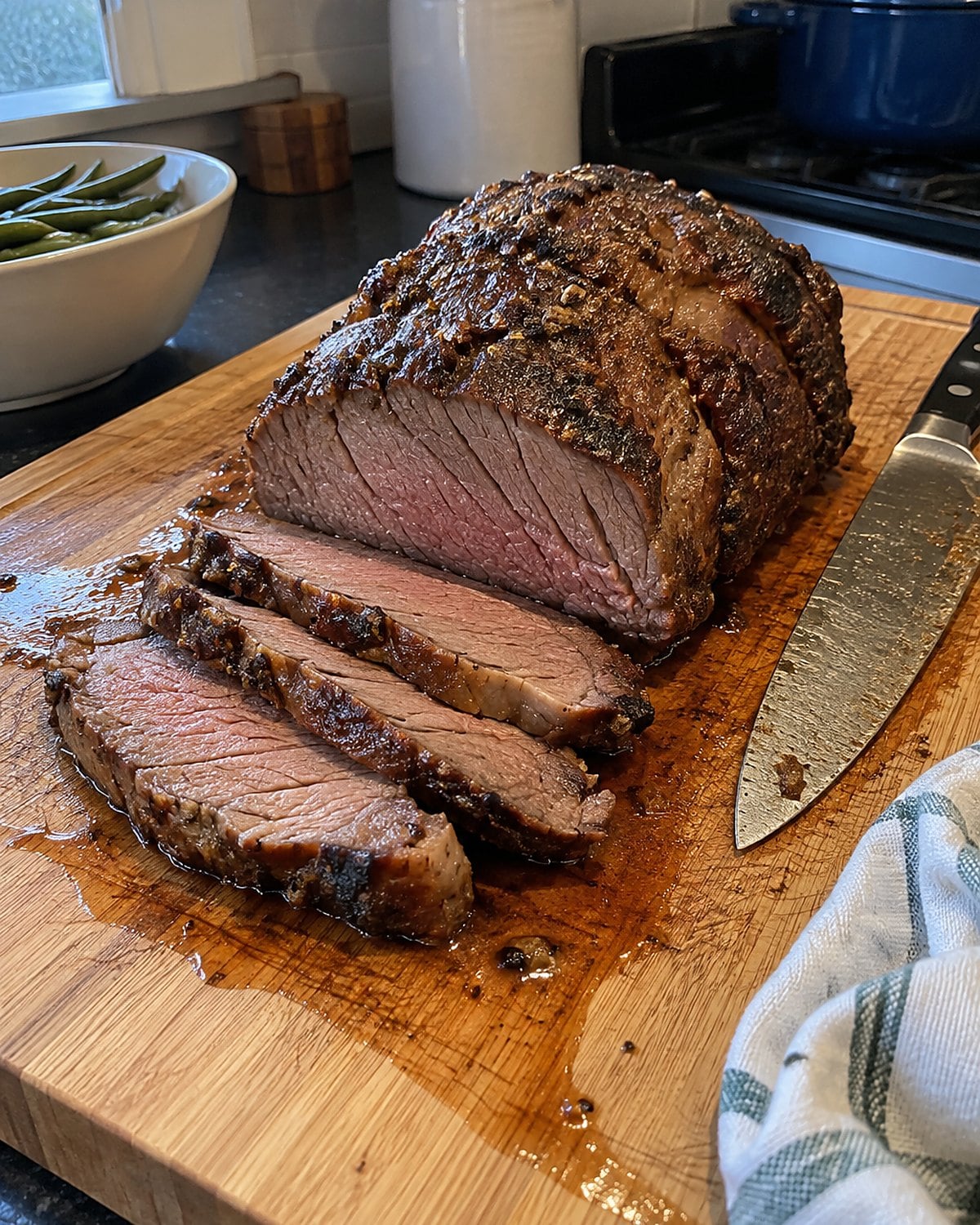
Does a pink center mean dinner needs another hour? Not for a whole beef roast. Color alone won't answer the safety question, and cooking every roast until it's gray gives up a good meal for a poor test.
For whole cuts of beef, the USDA minimum is 145°F, followed by a 3-minute rest. The same minimum and rest apply to whole cuts of pork. Put the thermometer in the thickest part, away from bone and heavy fat, then leave the roast alone for the rest.
That pause counts. Use it to warm the plates or finish the green beans. Then carve.
Keep the cut straight in your mind: a beef roast is a whole cut. Ground beef follows a different rule, even when someone at the table insists the pink middle looks fine.
Try it: Instant Pot Roast Beef & Gravy
#19 The hamburger pressed flat on the grill

Pressing a burger with the spatula makes a satisfying hiss. It also sends juices into the fire. More important, neither the hiss nor the color inside tells you that ground beef is cooked safely.
Grinding moves bacteria from the surface through the meat. That's why ground beef needs 160°F, rather than the 145°F minimum used for whole beef cuts. Slide the thermometer into the side of a thin burger so the tip reaches the center. For a thick one, go straight into the thickest part.
A brown center isn't proof. A pink one isn't a thermometer reading. Cook by temperature, then set down the spatula.
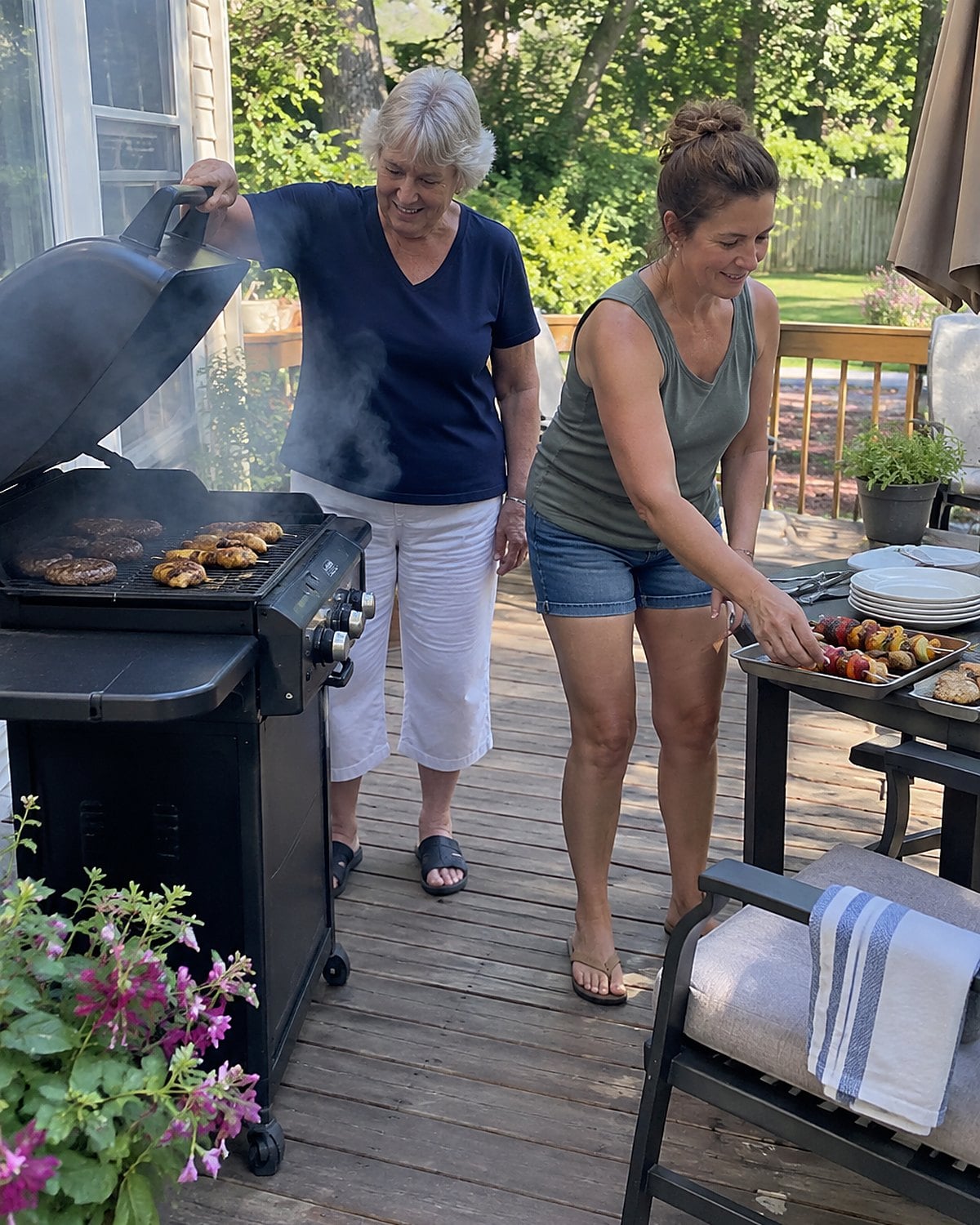
This matters when grandchildren are waiting beside the grill and everyone wants the first batch now. You don't need to deliver a speech over the charcoal. Say, “Give me a second to check the middle.” Dinner stays dinner, and the person tending the grill gets an answer she trusts.
Try it: 15 Best Instant Pot Hamburger Recipes
#18 The frozen steak at the back
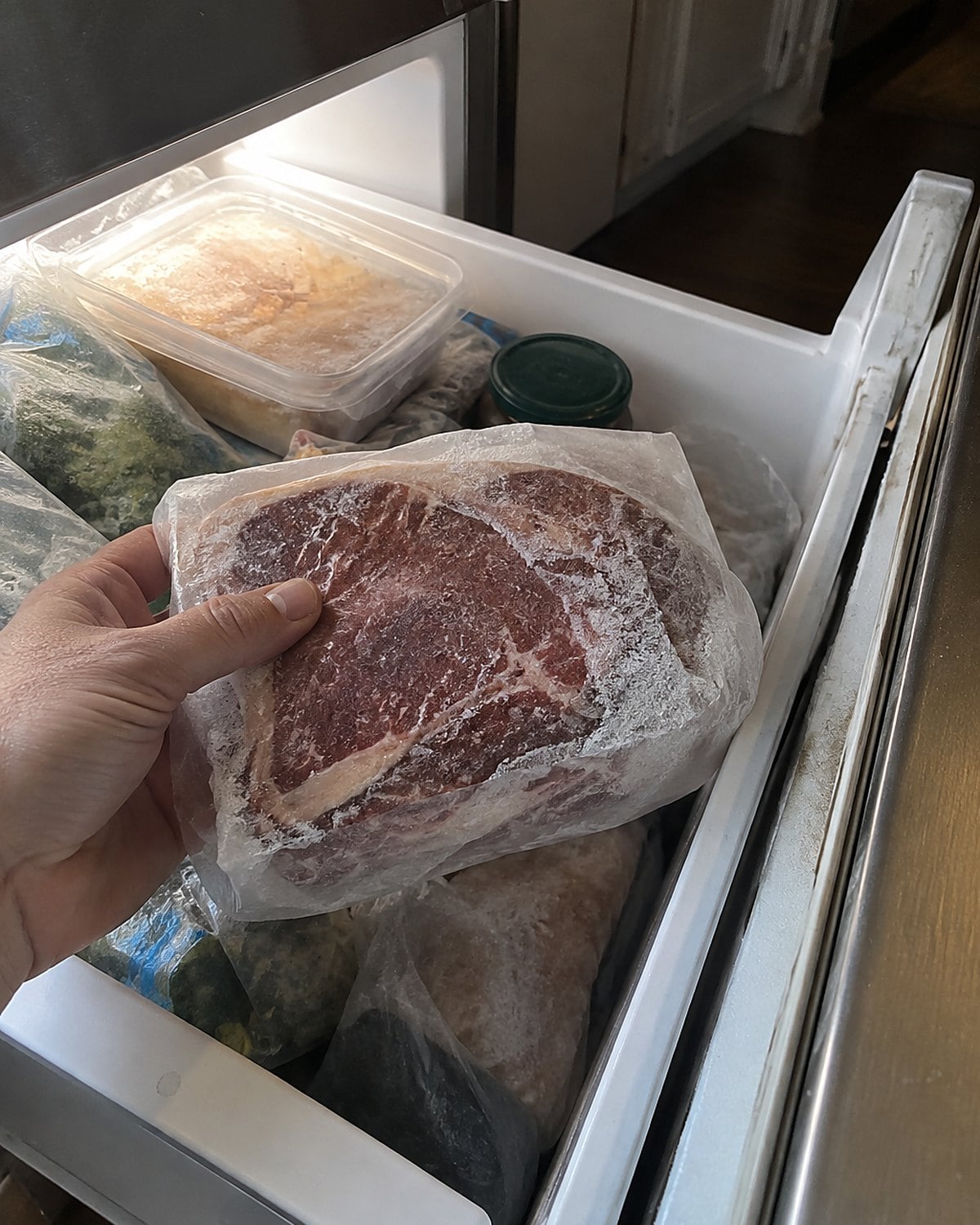
The steak has ice crystals around the wrapper and a date written in faded marker. Do you have to throw it out?
If it stayed continuously frozen at 0°F, the freezer kept it safe. The USDA's cold storage chart treats freezer storage times as quality limits, not a countdown to unsafe meat. After a long stay, that steak still faces a different problem: dry edges, stale flavor, and freezer burn.
Look at the wrapping before dinner depends on it. Trim badly freezer-burned spots after thawing, or choose another cut if too much is damaged. For the next package, press out extra air, wrap it tightly, and write the date where you can see it from the open freezer drawer.
#17 The casserole with a cold center
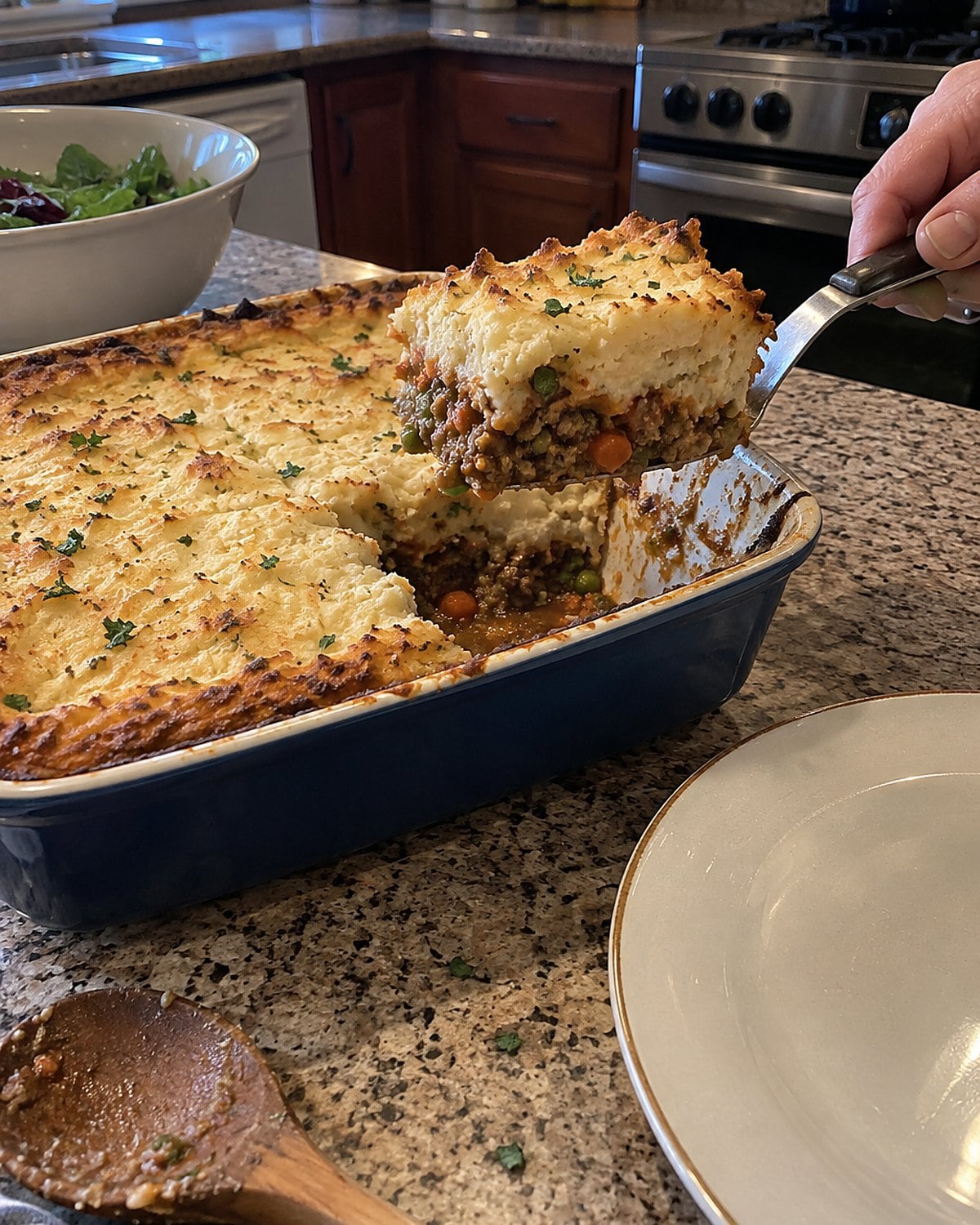
The edges bubble. The cheese browns. Someone carries the casserole to the table, then the first serving comes out cool in the middle.
That hot rim is a liar. For a leftover casserole, aim for 165°F in the center. Put the thermometer tip into the deepest part, away from the hot sides of the dish. If the center falls short, cover the top so it doesn't burn and keep heating.
Microwaves add another wrinkle: they leave hot and cold spots. Stir a dish when you can, turn it if the microwave doesn't, and give it a short rest before checking the center.
At the counter, the serving spoon cuts through the browned top. The steam rises from the edge, but the middle still looks firm and cool. That's the spot to check before you call everyone back to the table.
The FDA's guidance on safe handling of food is worth keeping in mind here. Steam rising from one corner tells you about that corner. The thermometer tells you about supper.
#16 The refrigerator dial set to cold
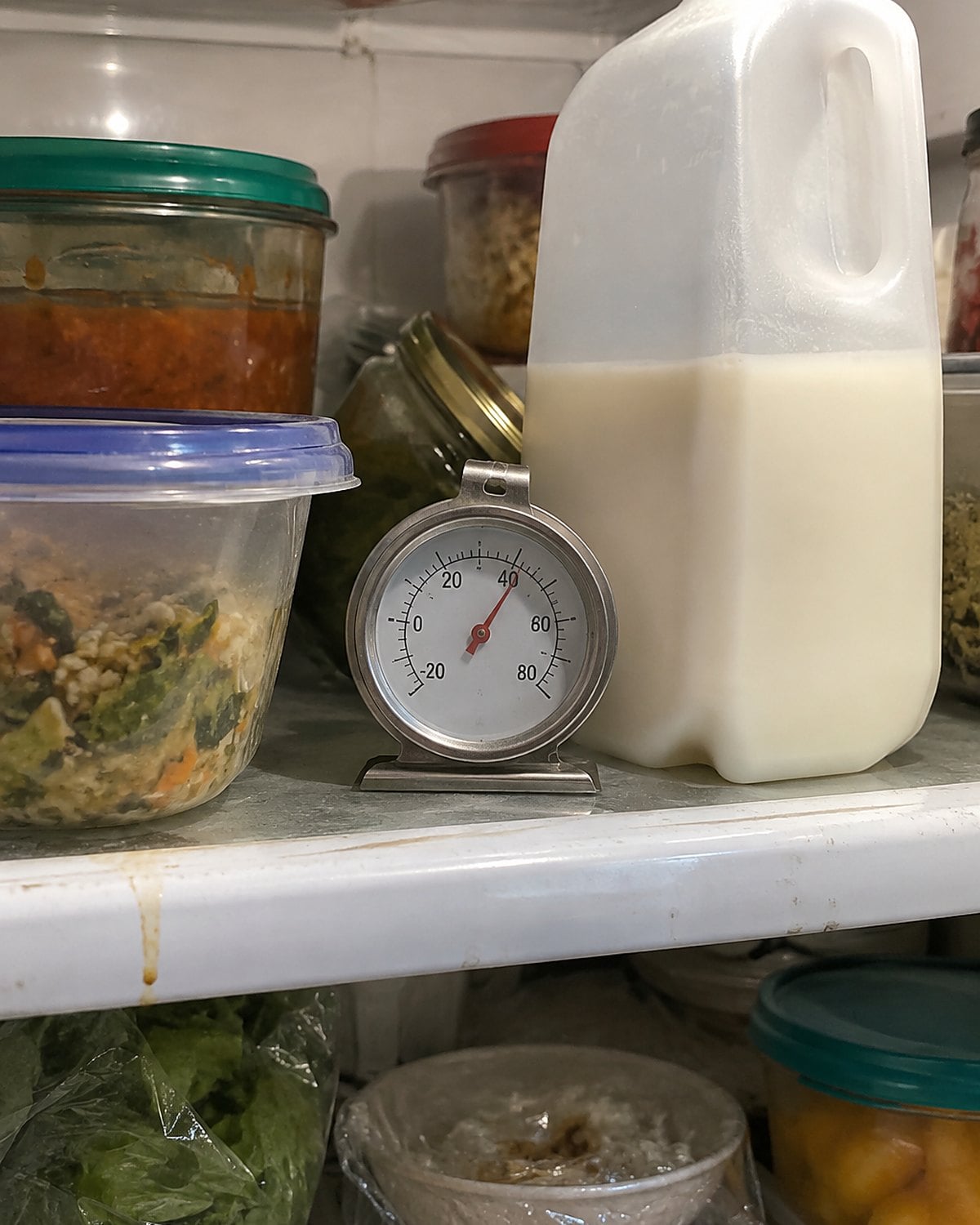
The little dial says “cold,” or perhaps it runs from one number to another. Neither label tells you the temperature beside the milk.
Keep the refrigerator at 40°F or below. Put an inexpensive appliance thermometer on a middle shelf and read it after the door has been shut for a while. If it reads warmer, adjust the dial and check again later. A packed fridge also needs space for air to move.
That thermometer earns its spot when the power flickers or the door fails to close all the way. Instead of arguing over whether the food feels chilly, you have a number.
The freezer gets its own target: 0°F. Two small thermometers answer questions that the refrigerator dial never could.
#15 The raw chicken under the faucet
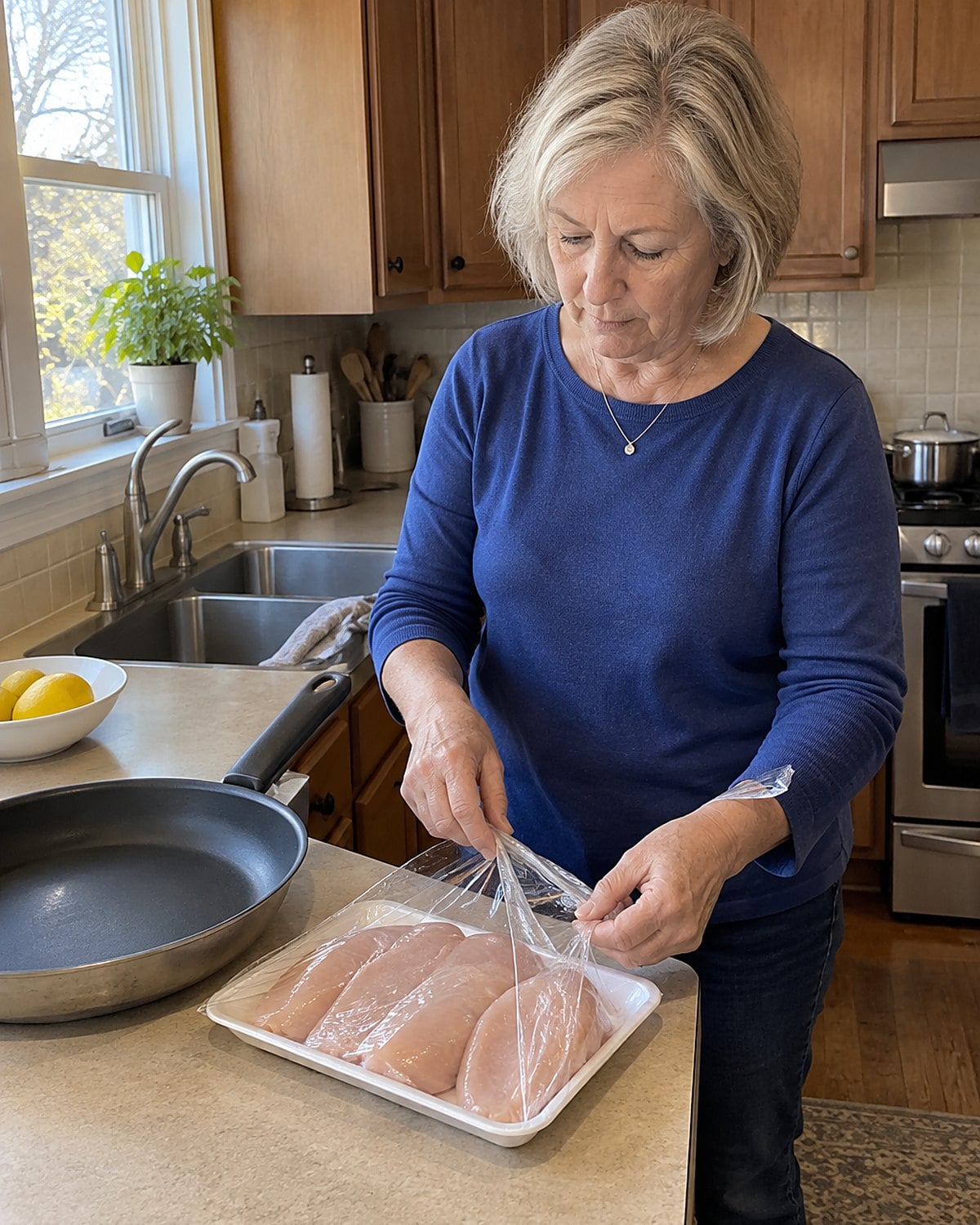
There was a reason your mother rinsed chicken. She had handled it, seen liquid in the package, and wanted to start with something clean. The trouble is where that water goes.
A stream hitting raw poultry sends droplets toward the sink rim, faucet, dish towel, and nearby food. Rinsing doesn't kill the germs on the bird. Cooking it to 165°F does. The CDC's chicken and food safety advice says to skip the wash.
Open the package near the pan or cutting board. If excess liquid bothers you, blot the chicken with a paper towel and throw the towel away.
Then wash your hands with soap and water, and clean surfaces that touched the raw poultry. Look at the faucet handle, too. Did you touch it after opening the package?
The sink still needs attention, just not a chicken bath. That change feels odd when you grew up watching a bird get rinsed before Sunday dinner. It also leaves fewer places to scrub afterward.
#14 The wooden spoon in the dishwasher
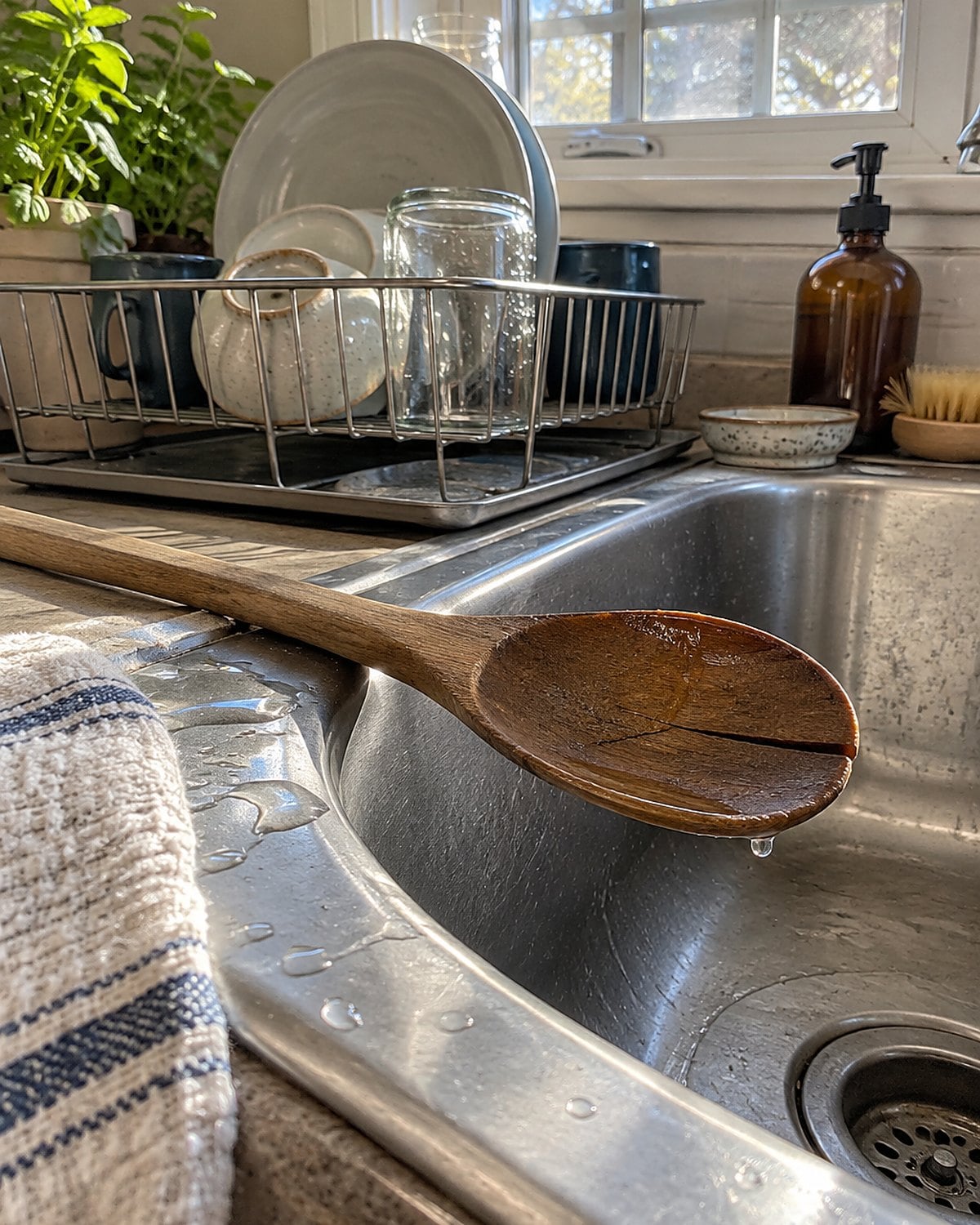
A wooden spoon isn't unsafe because it's wood. The question is whether you clean it after raw meat touches it and whether the surface has split enough to trap food.
Wash wooden utensils with hot, soapy water, rinse them, and let them dry completely. Skip a long soak. Check the bowl of the spoon and the joint where the handle meets it. If you find deep cracks packed with old food, retire that spoon from cooking.
A dishwasher is hard on wood: heat and a long wet cycle encourage warping and cracks. A quick wash by hand treats the spoon better and lets you see its condition.
Keep the one with the smooth, worn handle if it's sound. Forty years of stirring doesn't make it dirty. Skipping the wash after raw meat does.
#13 The cutting board after raw meat
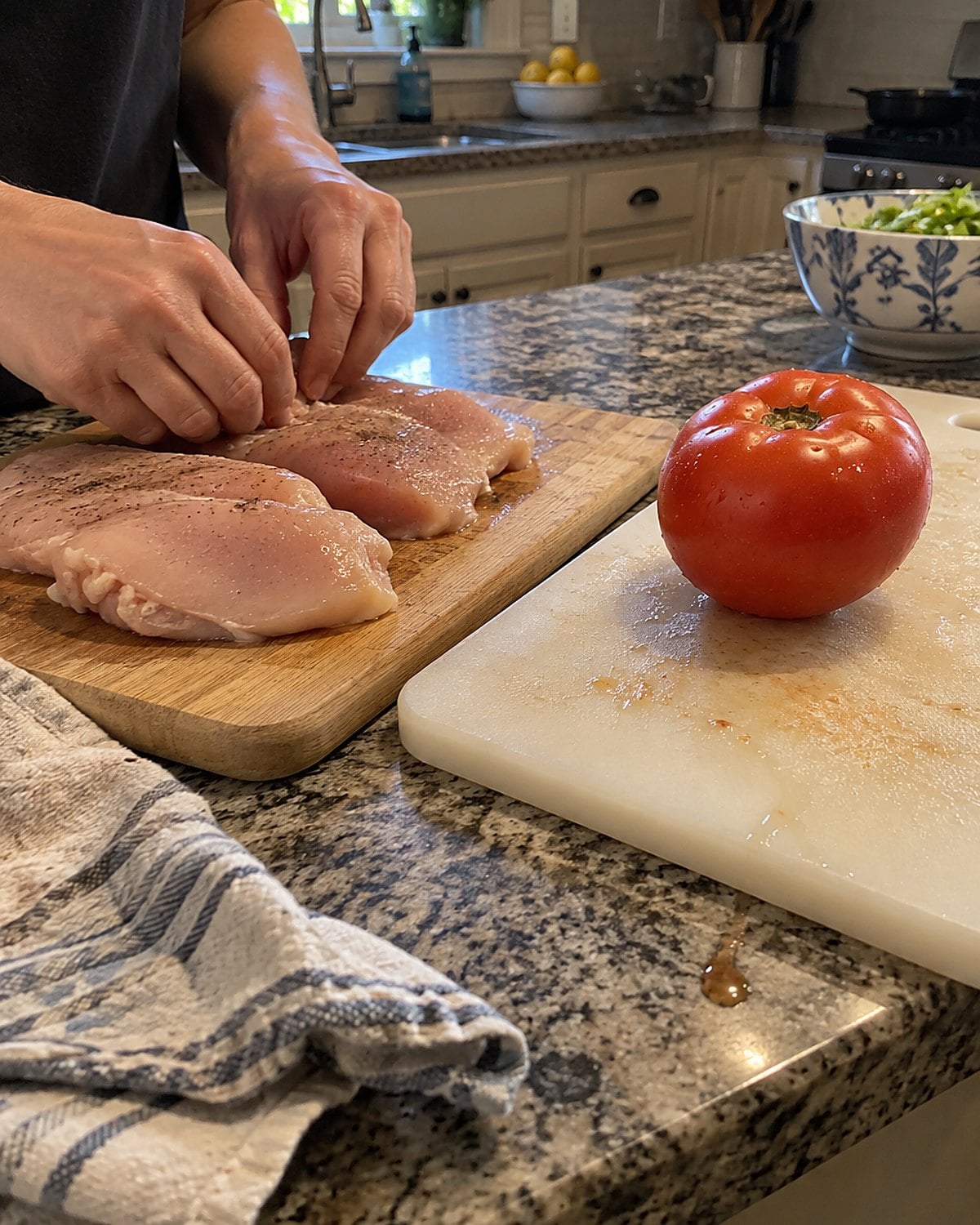
The tomato won't get the heat that cooks the chicken.
Yet there it sits on the same board that held the raw bird. Maybe the knife got wiped on a dish towel. Maybe the board looks clean. Neither tells you what touched the tomato.
Use a separate clean board for foods eaten raw, or wash the board and knife with hot, soapy water between jobs. Wiping with a damp towel doesn't do the same work. Set the salad board on the far side of the counter before you open the chicken package.
Plastic and wood both need cleaning. Look for deep grooves where food stays lodged after washing. When a board won't come clean, replace it. This isn't a vote on which material your mother preferred.
If the tomato is already sliced on the unwashed board, don't put it in the salad. Start over with a clean one. It's an annoying pause when the onions are browning, but it gives the salad a fresh start.
#12 The dented can from the pantry
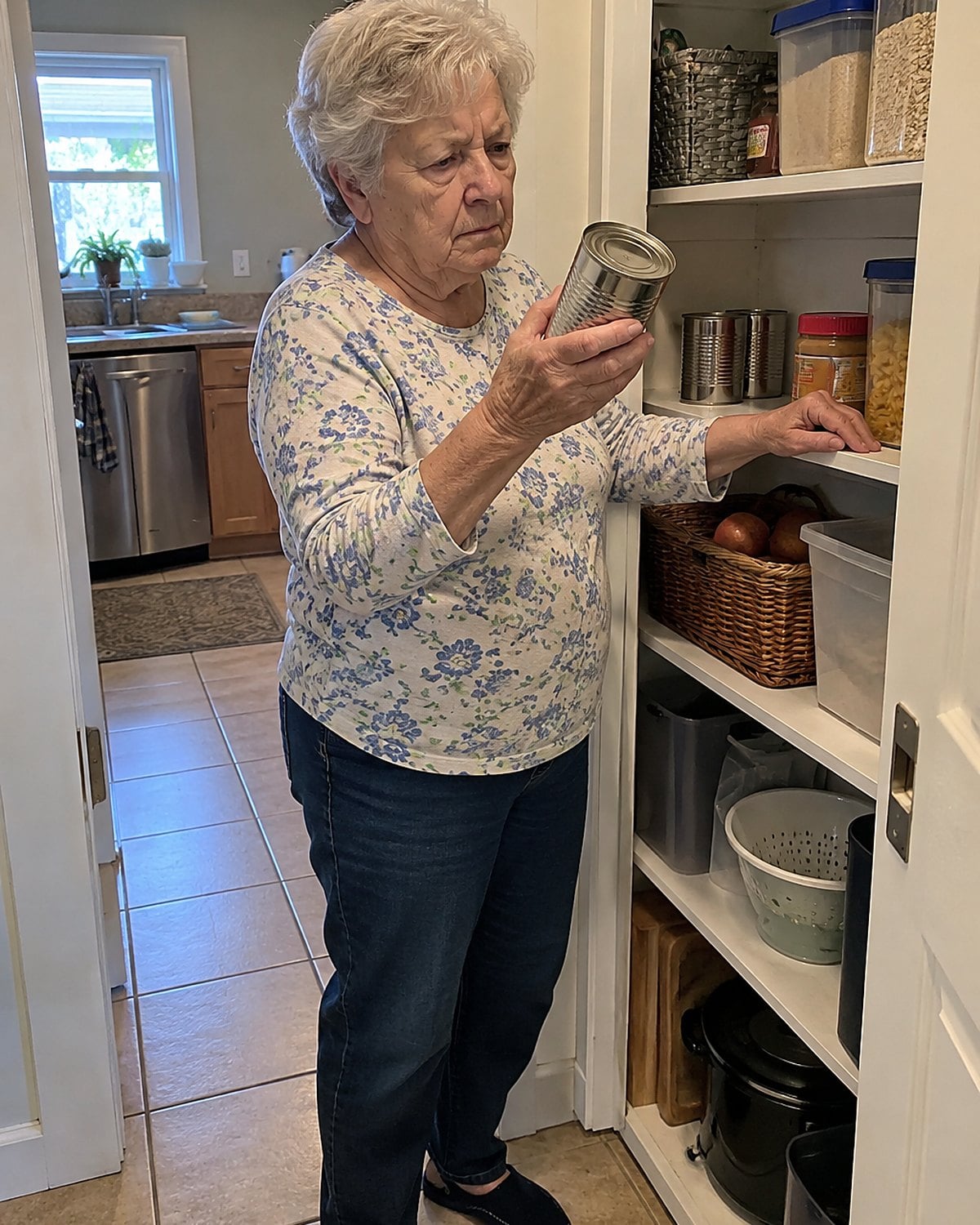
A small, smooth dent in a can isn't the same as a swollen top or a dent across a seam. Your mother knew cans kept food for a long time. She also knew to leave the suspicious ones alone.
Check the seams along the top, bottom, and side. Throw out a can that's bulging, leaking, badly rusted, or sharply dented at a seam. Don't taste its contents to settle the question. The USDA's guidance on shelf-stable food gives that pantry check a firmer footing than a sniff after opening.
A sound can with a minor dent elsewhere is a different sight. If you're uncertain about a damaged can, leave it at the store. At home, put it in the trash rather than asking a pot of soup to hide your doubts.
#11 The potato salad at the picnic
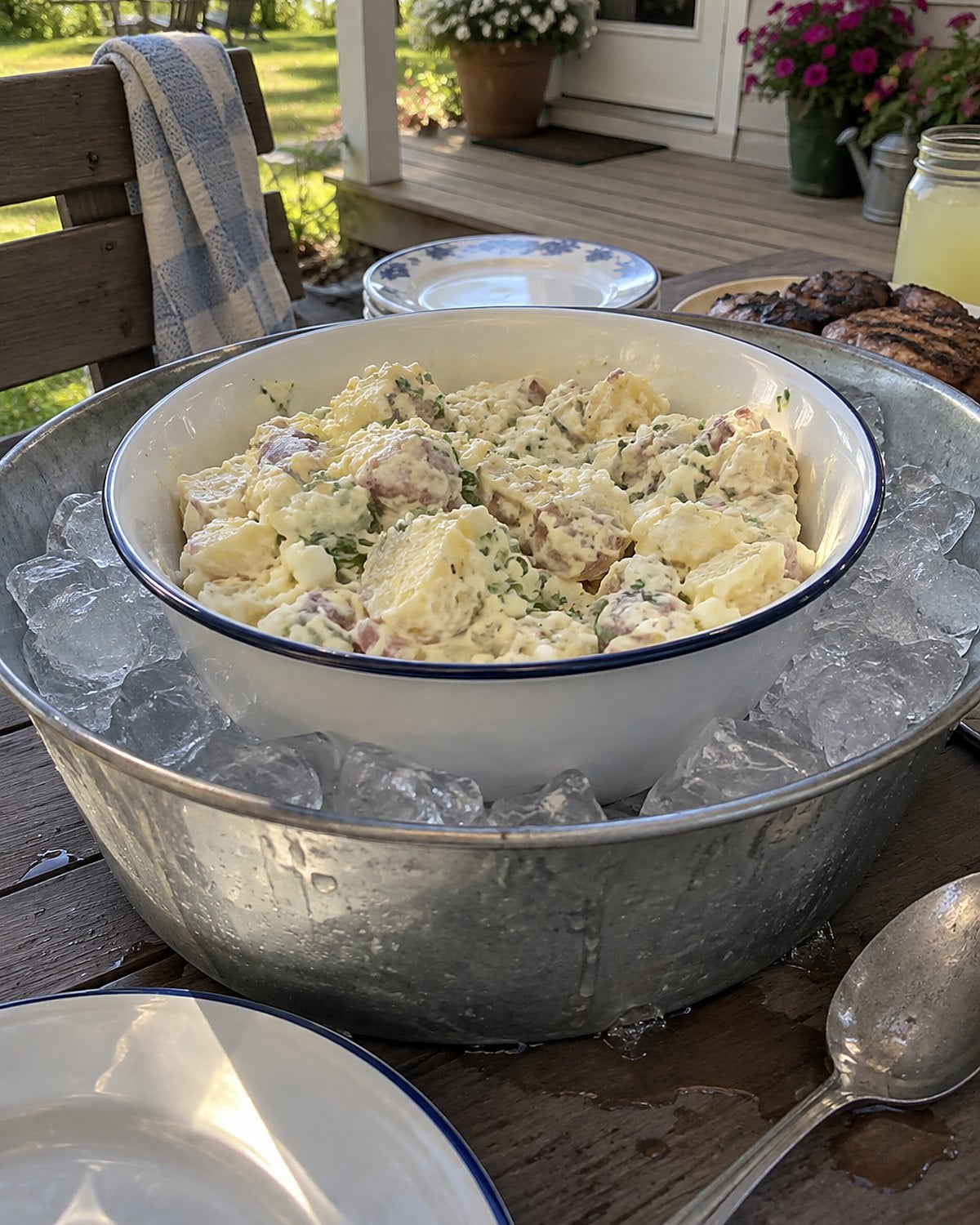
Potato salad gets blamed on the mayonnaise every summer. Store-bought mayonnaise is acidic, but that doesn't give the finished salad a pass. Cooked potatoes, eggs, chopped vegetables, and hands have all joined the bowl.
At a picnic, the trouble isn't limited to that bowl. Keep the salad cold in a cooler until serving, then nest the bowl in ice. Bring out a small portion and keep the rest cold for the next round. The same plan works when somebody insists the entire batch should look pretty on the table.
Watch what happens during the meal. The bowl goes from shade to sun. Someone sets it on the picnic table while chairs get folded. A lid doesn't undo that time in the heat.
Ask the person carrying the cooler to make room before the food comes outside. Then you're not hunting for ice while the salad sits beside the grill.
Try it: Instant Pot Potato Salad With Eggs & Creamy Dressing
#10 The loaf of bread with one spot
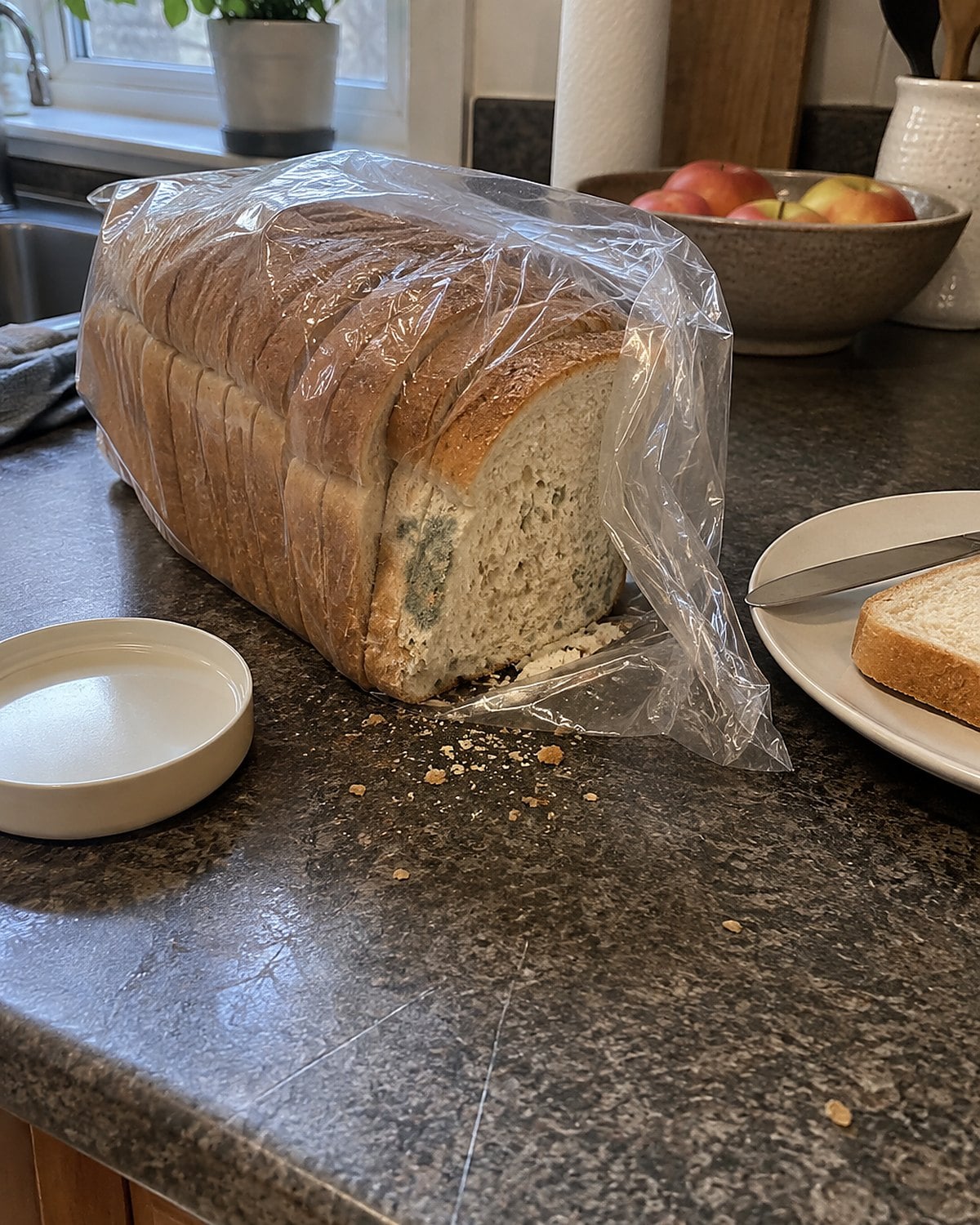
You spot mold on one corner of a loaf and hear the old advice: cut that piece away and use the rest.
Bread is soft and porous. Mold spreads beyond the spot you see, so discard the loaf. The USDA's mold guidance draws a useful line between soft foods and some firm foods; don't borrow advice meant for hard cheese and apply it to sliced bread.
Keep bread where it stays dry, use it before it turns, or freeze part of the loaf while it's fresh. If you need only a few slices at a time, separate them before freezing so breakfast doesn't require thawing the whole bag.
Nobody enjoys wasting a loaf. Cutting around the green patch only hides the part that made you stop in the first place.
#9 The jar that did not seal
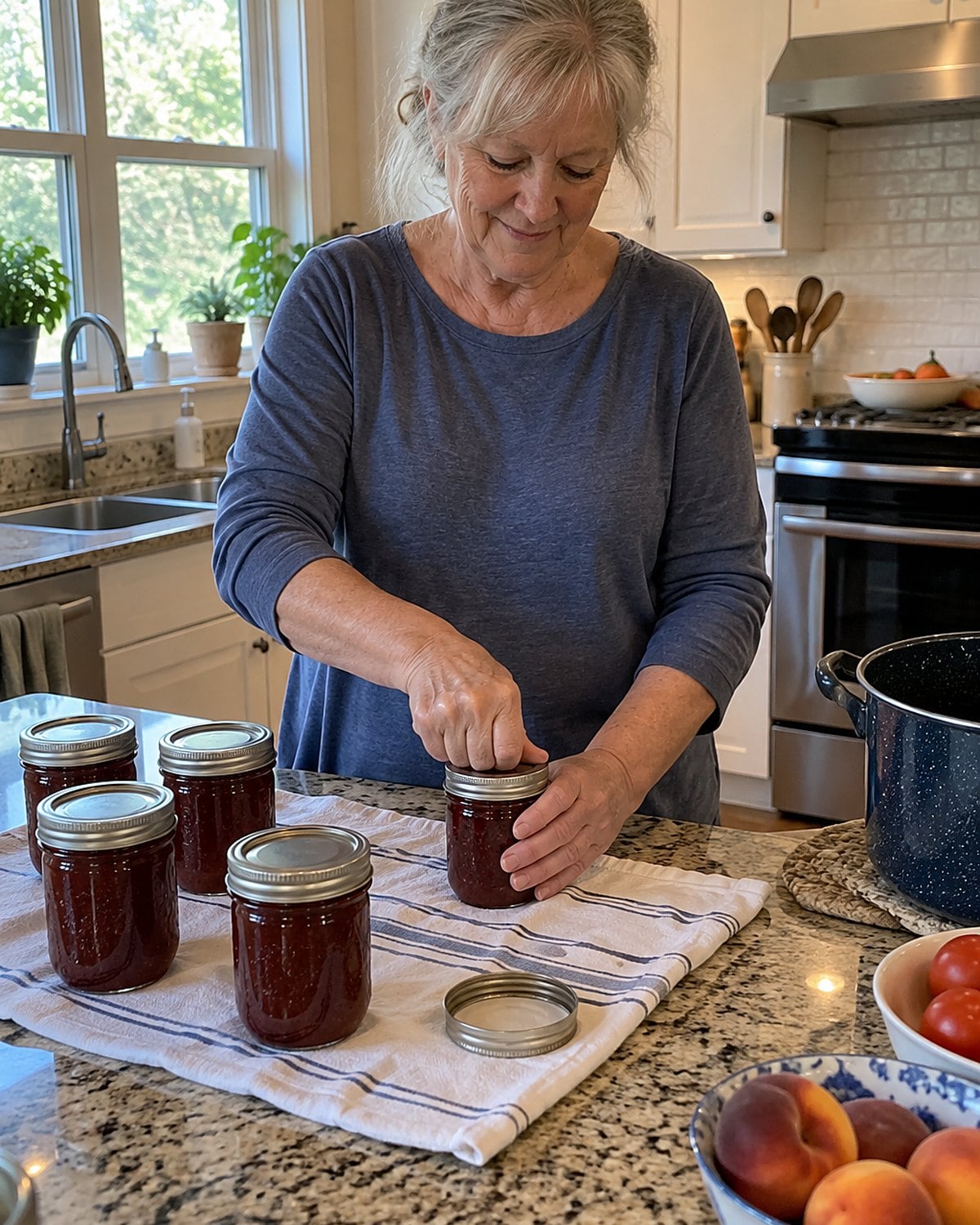
You press the center of a canning lid. It moves. The jar stays on the counter, and the question is what to do with its contents.
An unsealed jar doesn't belong on the pantry shelf. The National Center for Home Food Preservation gives directions for checking seals and handling failures. Look up the tested recipe and its failed-seal instructions before deciding what to do next. Don't tighten the ring and store the jar.
A ring holds a lid in place; it doesn't fix a failed seal. Once a sealed jar has cooled as directed, remove the ring for storage. Then a loose lid is easier to spot later.
Write a note beside the old canning instructions if they stop at “check the lids.” The next batch deserves the whole process, including what happens when a seal fails.
#8 The yogurt past its printed date
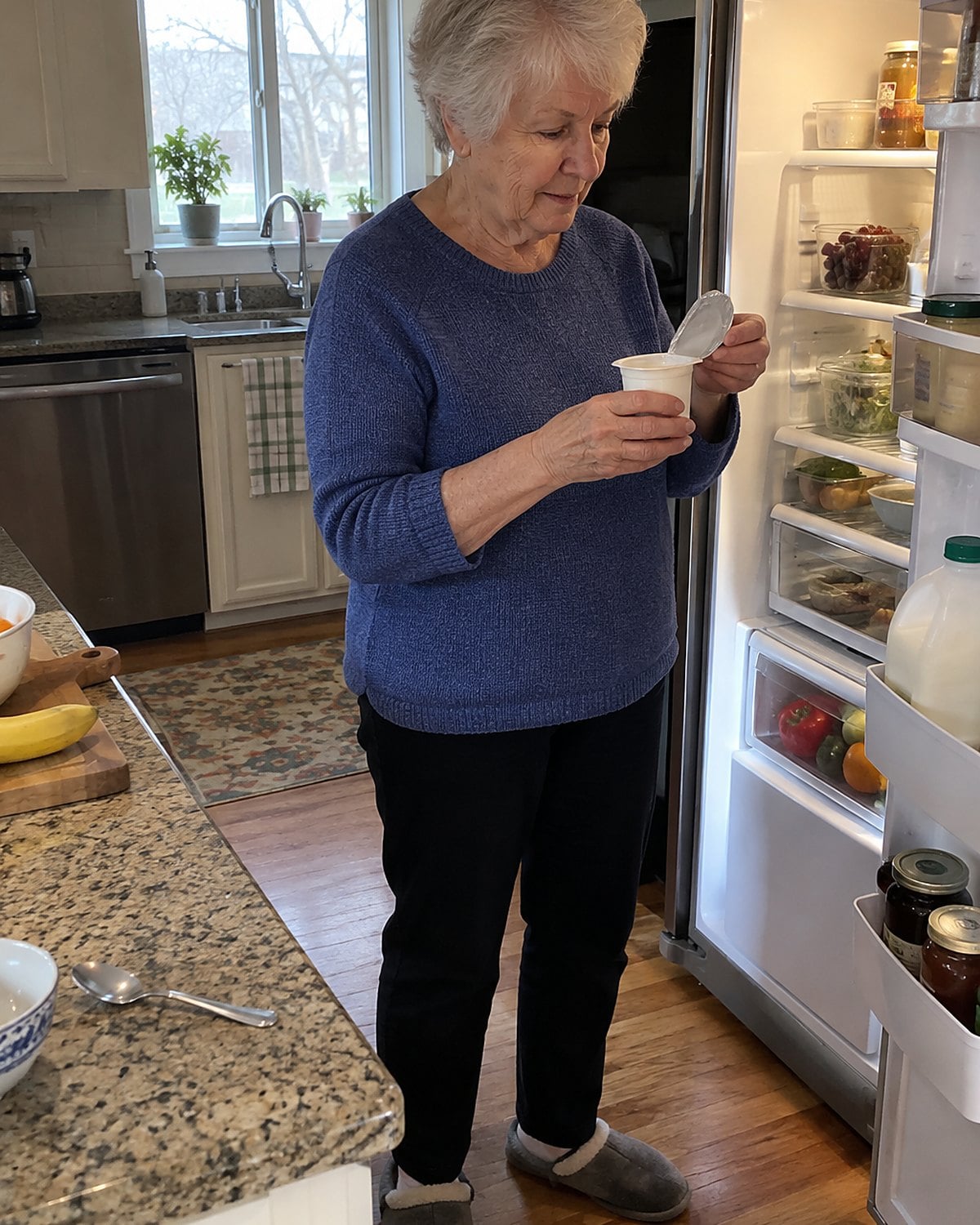
A date printed on a yogurt cup has an air of authority. It isn't a universal safety deadline. Apart from infant formula, federal rules don't require food dating as a safety cutoff.
Dates on packaged food mostly speak to quality, but they don't cancel the need for cold storage. Read the wording, check that the package is sound, and remember whether the yogurt spent time outside the refrigerator. The FDA's food date-labeling guidance explains why those dates differ.
A swollen cup, visible mold, or an off smell gives you a reason to throw it out. A date alone doesn't tell the whole story. Nor does a date make a cup safe after it sat in a warm car.
Your mother's habit of looking at the food still has a place. Give it the other facts, too.
Try it: How To Make Yogurt In Instant Pot Without Yogurt Button
#7 The stew left to cool all afternoon
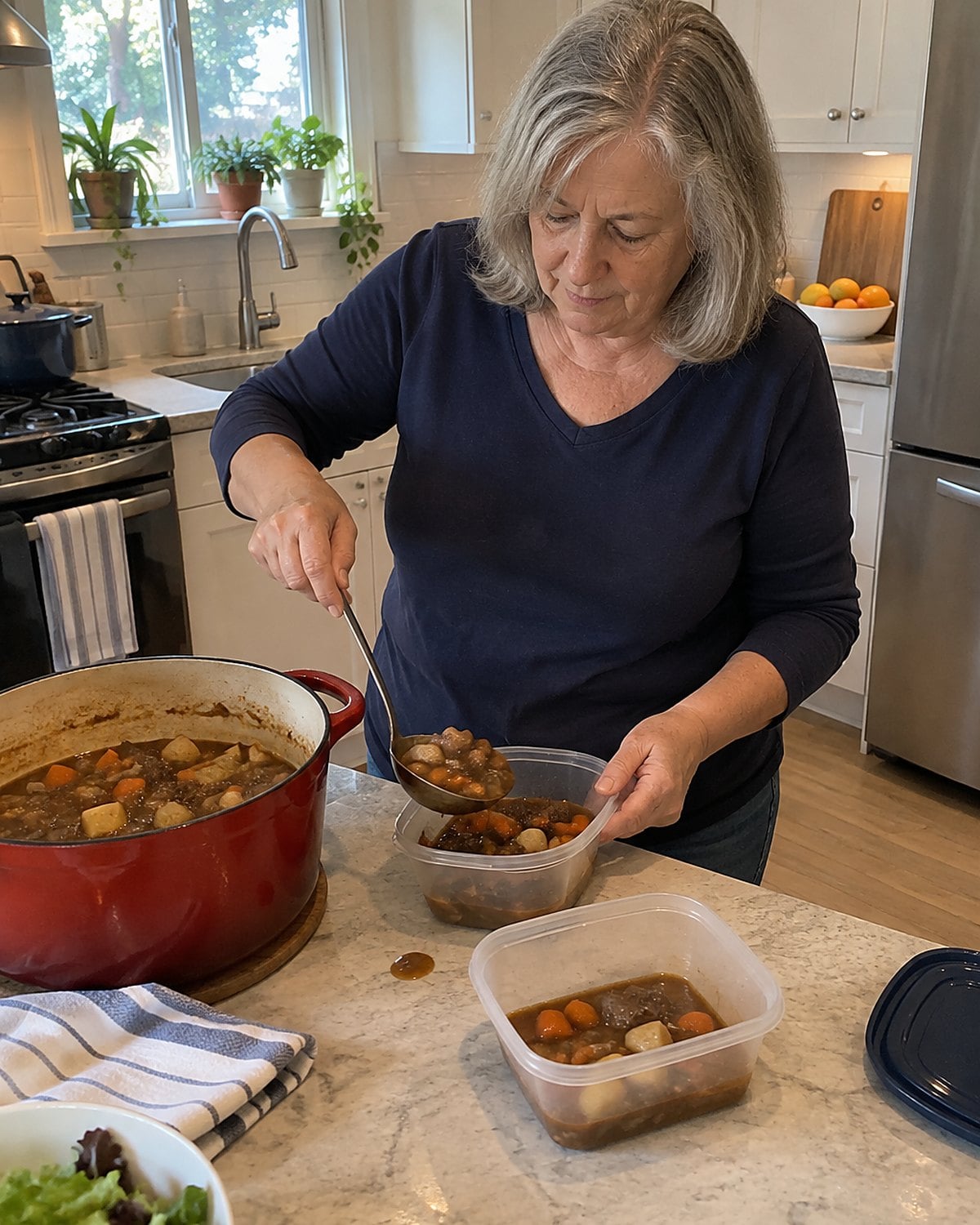
The Dutch oven is full, the burner is off, and there's no chance that heavy pot will fit neatly in the refrigerator. So it waits on the stove until it's cool. That's the step to change.
Divide hot stew into shallow containers so it cools faster. You don't have to wait until it reaches room temperature before it goes in the fridge. The USDA's leftovers guidance puts the emphasis on prompt refrigeration, not on protecting the refrigerator from every warm container.
A deep pot holds heat at its center long after the sides feel cooler. Ladle the stew out and leave space around the containers. Don't turn one crowded shelf into a wall of hot plastic.
Tonight, set out the containers before you serve. After dinner, the job becomes ladling instead of searching the cupboard while the pot sits. The heavy Dutch oven stays on the stove; the stew you want tomorrow goes into the fridge.
#6 The sponge beside the sink
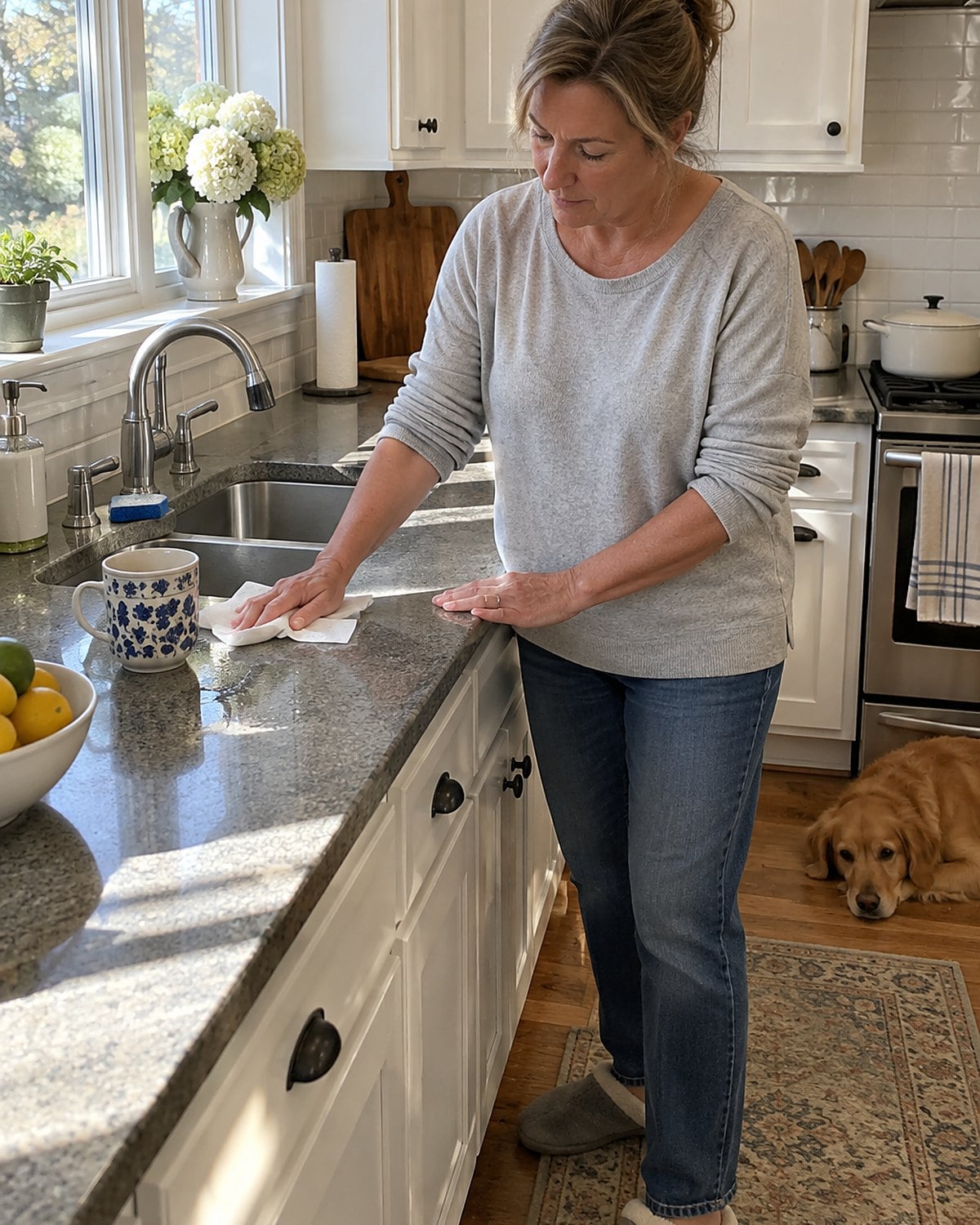
That sponge has wiped the counter, the cutting board, and the spot where raw chicken juice landed. It still looks cheerful in its little holder.
Don't carry raw-meat drips around the kitchen with it. Clean the spill with paper towels, throw them away, then wash the surface with hot, soapy water. Follow with a sanitizer suitable for food-contact surfaces when one is needed, using the label directions.
Sponges stay wet and collect food scraps. Replace a smelly or worn one, and let the one in use dry between jobs. A dishcloth works only if it gets changed and washed instead of hanging damp for days.
Your mother's separate rag for messy jobs had the right idea. The important part was keeping that mess away from the cup you're about to fill.
#5 The buffet platter after the party
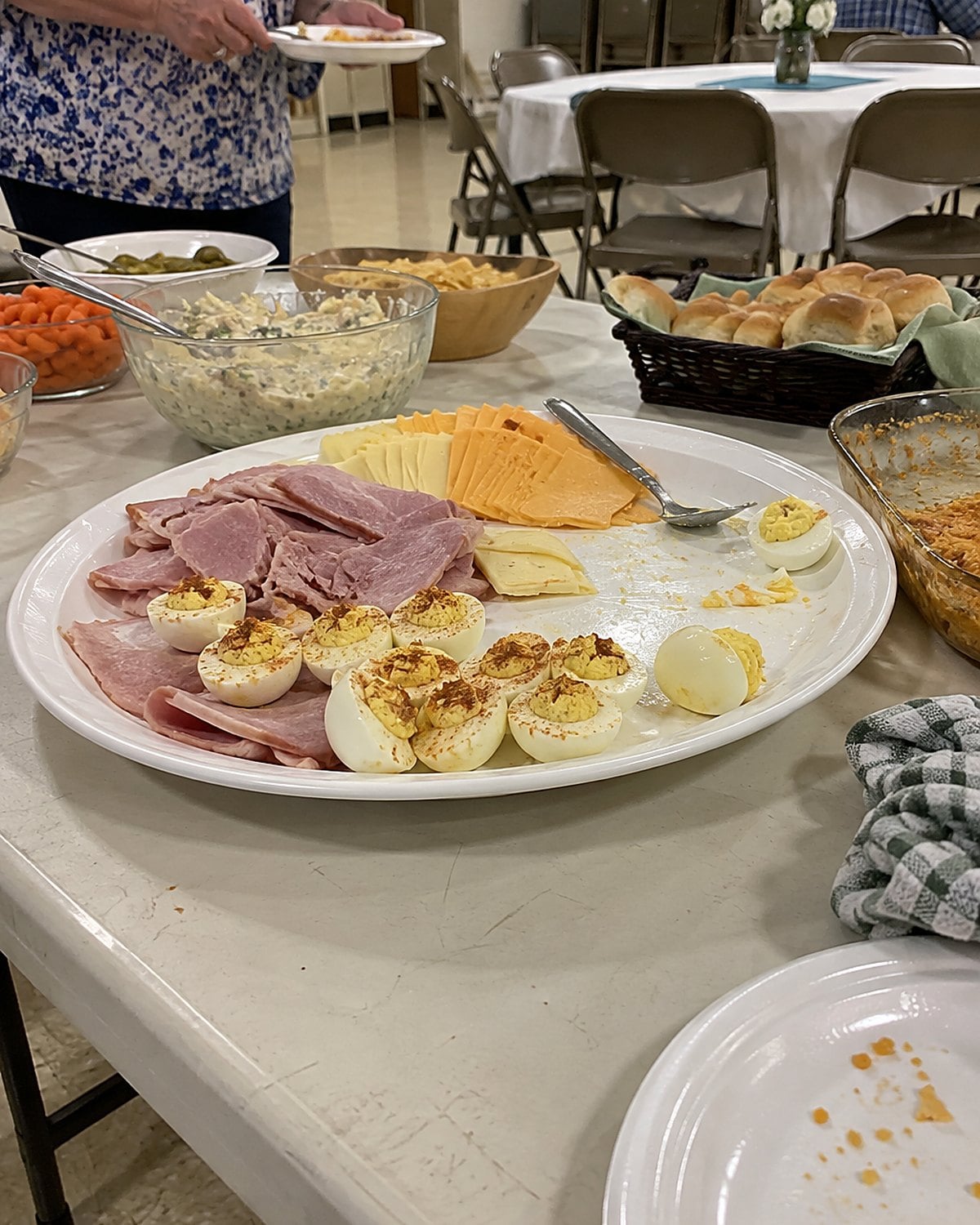
The last guest leaves with her coat half-buttoned. On the table sit ham slices, cheese, deviled eggs, and a few rolls. Throwing food away feels rude when you packed that platter yourself.
Keep track of the time instead. Perishable food left at room temperature for more than 2 hours belongs in the trash. In air above 90°F, the limit is 1 hour. Putting the platter back in the refrigerator doesn't erase its time out.
For the next gathering, make the serving platter smaller. Keep the refill cold, then bring it out when the first round is gone. A plate that's empty early is easier to deal with than a full tray you can't save.
If you didn't note when the food came out, think back to the first guest and the last one. Don't let the tidy wrap you put over the platter stand in for an answer. The rolls are one thing; the eggs and sliced ham need the clock.
#4 The thermometer in the drawer
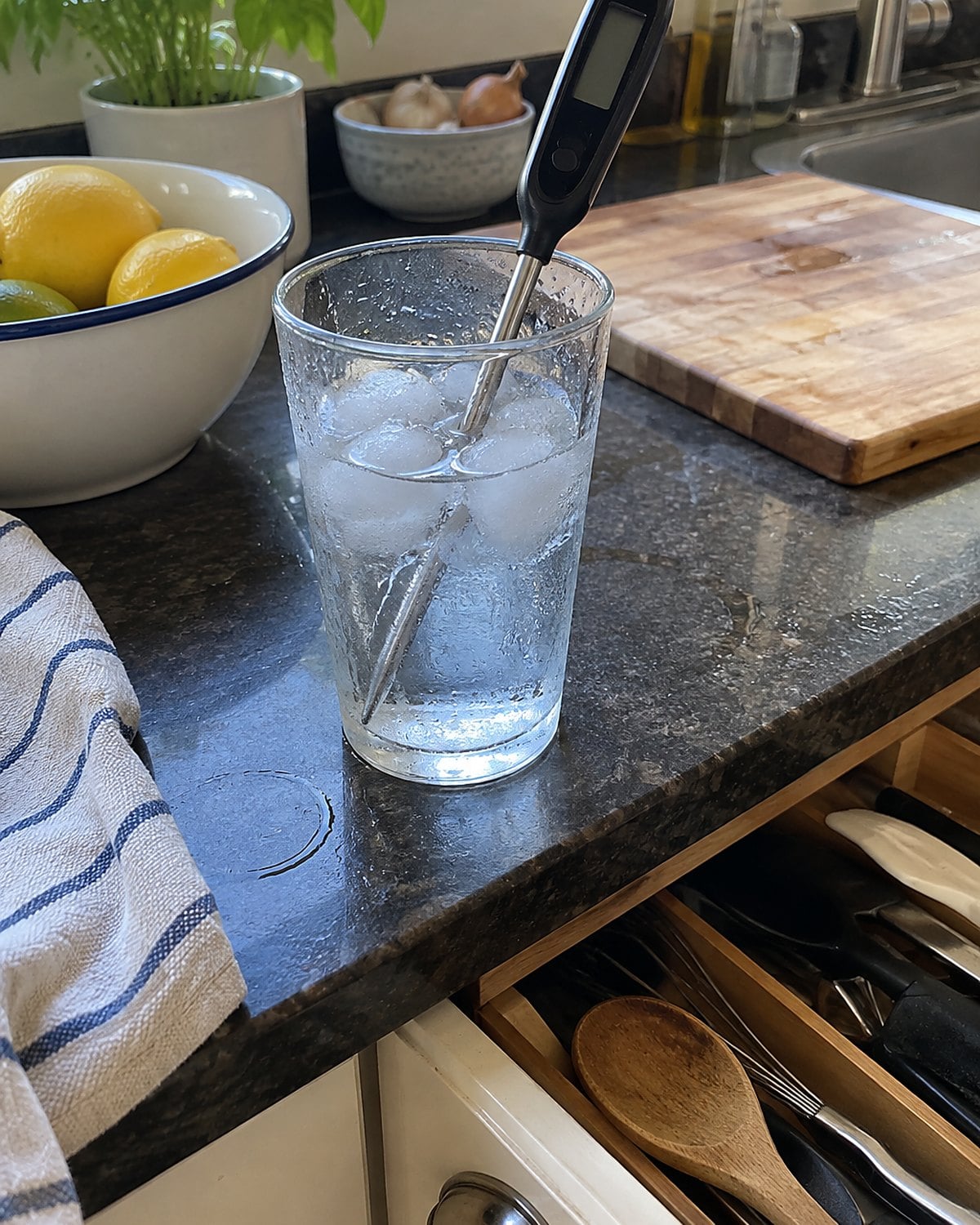
A thermometer that reads wrong gives bad advice with great confidence. Yours has been rolling around beside the twist ties and the vegetable peeler for years.
Test it in a glass packed with ice and enough water to fill the gaps. Stir, insert the tip without touching the glass, and wait for the reading to settle. It should read 32°F. Check the maker's instructions for adjusting the thermometer; replace one that stays off and won't adjust.
This test doesn't take a roast or a special occasion. Do it while the kettle heats. Then clean the probe before it goes into food, and wash it between raw and cooked checks.
When the number is trustworthy, those last few minutes at the oven stop being a debate about clear juices and browned skin. A tool is only as useful as the reading it gives you.
#3 The thawing package on the counter
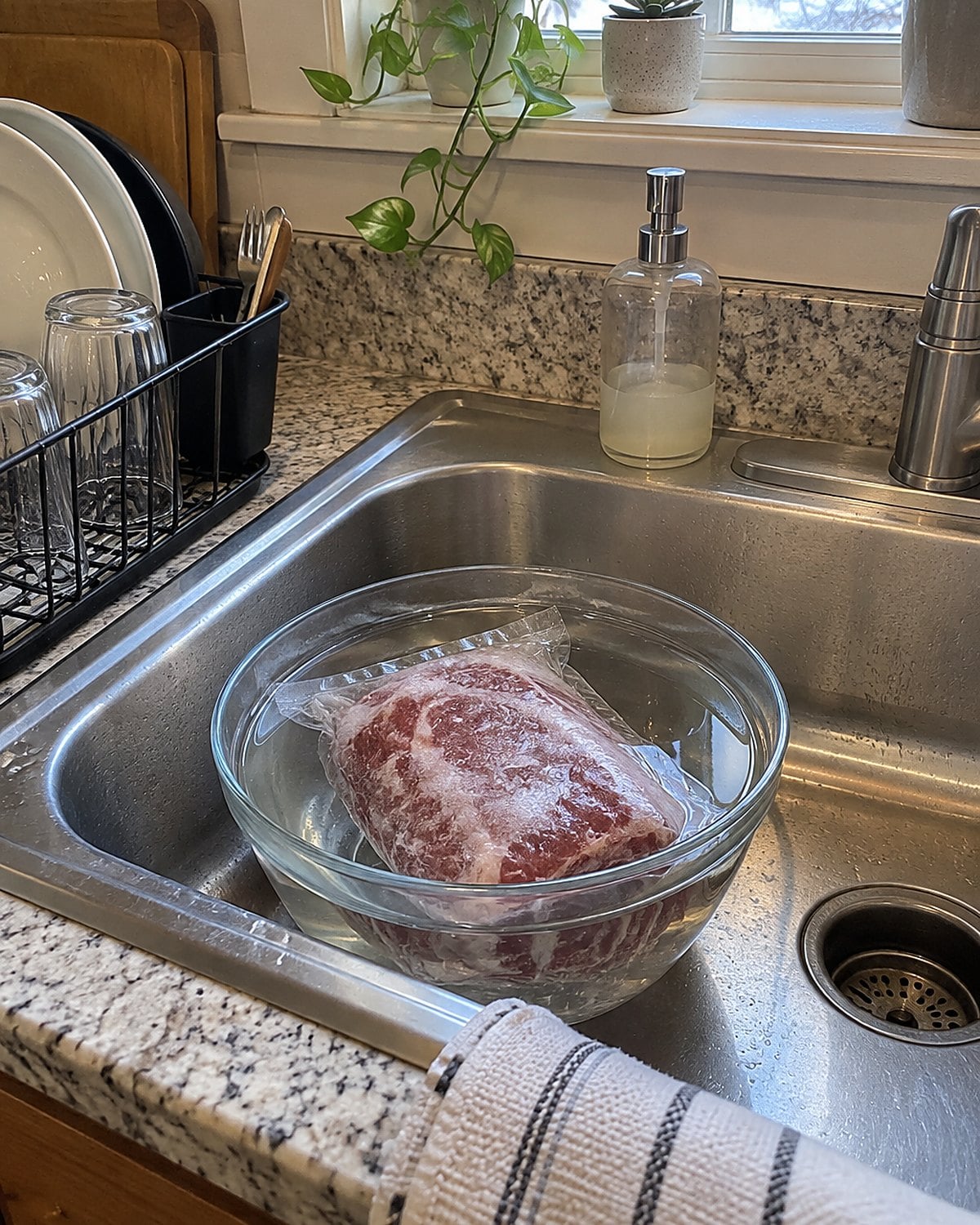
A frozen package goes on the counter after breakfast. By dinner, the center still feels icy, so surely the outside hasn't had time to cause trouble.
The outside warms first. That's the problem.
Thaw food in the refrigerator, or submerge a sealed package in cold water and change the water every 30 minutes. The microwave is another route when you'll cook the food immediately afterward. Follow the USDA's thawing guidance for the method you choose.
For a forgotten dinner, cold water beats waiting on the counter. Keep the package leakproof so raw juices stay out of the water. If the wrapping looks damaged, put the food in a leakproof bag first.
When you plan ahead, put a plate or tray under meat in the refrigerator. Set it on the bottom shelf so drips stay away from ready-to-eat food. That old countertop habit saved planning, but it left the package's warm outside to chance.
#2 The home-canned green beans
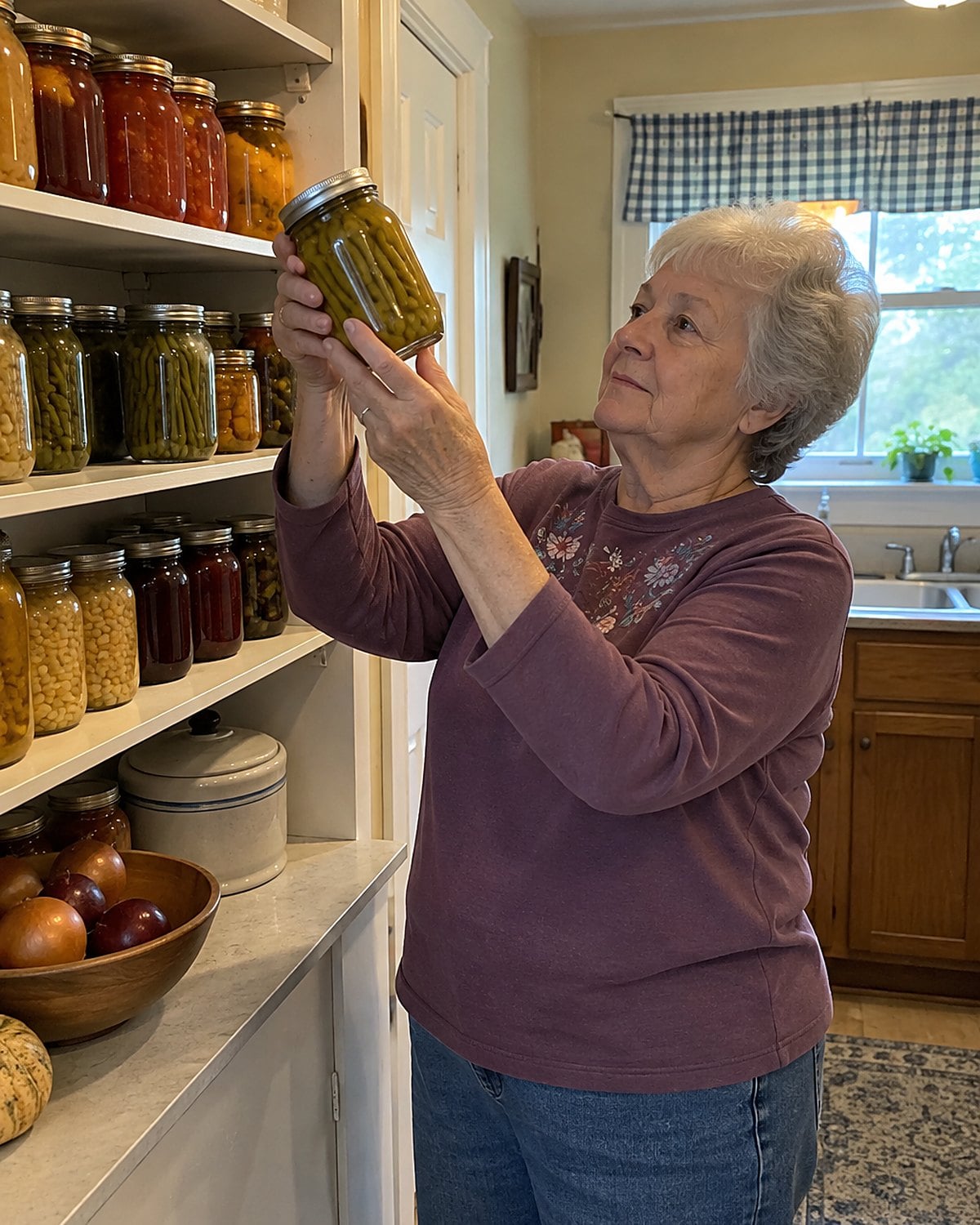
The jars lined up on the shelf look beautiful. A lid has a firm seal, the beans look green, and the recipe came from a person who fed a family for decades.
For low-acid foods such as green beans, use a tested pressure-canning recipe from the National Center for Home Food Preservation or a current university extension publication. A boiling-water bath doesn't reach the conditions required for those foods. A sealed lid tells you a vacuum formed; it doesn't prove the beans were processed safely.
Check the recipe before you pick the beans. Follow its jar size, preparation, pressure, and processing directions. If an old recipe leaves out those details, don't fill the gap from memory. Find a tested one and make a note beside the old page.
The shelf has room for family history. It shouldn't ask you to guess about botulism.
Try it: Instant Pot Green Beans With Butter & Pepper
#1 The date on the lunch container
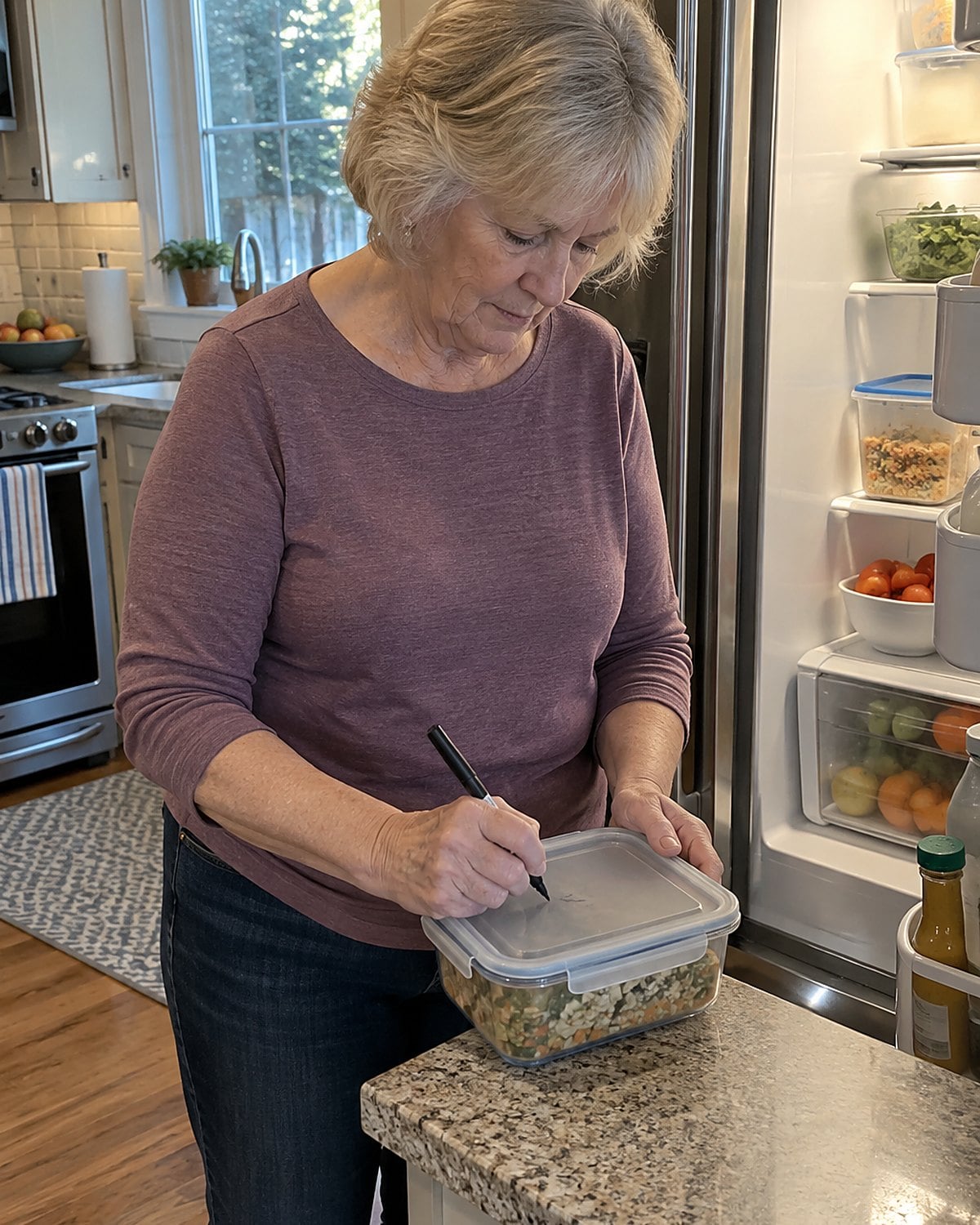
Dinner is over. The plates are stacked, the pan is still warm, and somebody asks whether there'll be enough for lunch. You pack a serving, but a container without a date soon becomes a question nobody wants to answer.
Mark the lid before you forget which night this was. Eat refrigerated leftovers within 3 to 4 days, or freeze them within that window. The USDA's leftovers guidance gives you that window. A date makes it usable on a busy Thursday.
Put the newest container behind the older ones. Then the first one you reach is the one that needs using first. You don't have to open each lid, smell every dish, and reconstruct the week's dinners from memory.
Keep a marker near the containers, even if it means stealing one from the drawer with the twist ties. Write on a piece of tape if the lid won't take ink. Lunch won't have to depend on a guess.
The bottom line
Your mother passed down good instincts along with a few risky shortcuts. Wash what touched raw meat. Be wary of a damaged can. Keep the recipe that taught you to cook, but check its canning directions before you fill a jar.
The prepared version of you has a thermometer that reads correctly, a fridge at 40°F or below, and a marker beside the containers. Those small moves settle arguments before anyone starts one.
Which rule is still running your kitchen because nobody ever had a reason to question it?


Leave a Reply