

You open the fridge for milk and hear three jars knock together in the door. One wears a paper label with the corner peeling off. Behind it sits the mustard you bought for a cookout years ago.
A date on a jar doesn't tell the whole story. Some old food loses its bite long before it becomes dangerous. Other food looks perfectly fine when it needs to go. Pull the suspect containers onto the counter, leave the food you're keeping cold, and start with what was opened first.

#26 The Mustard From That Old Cookout
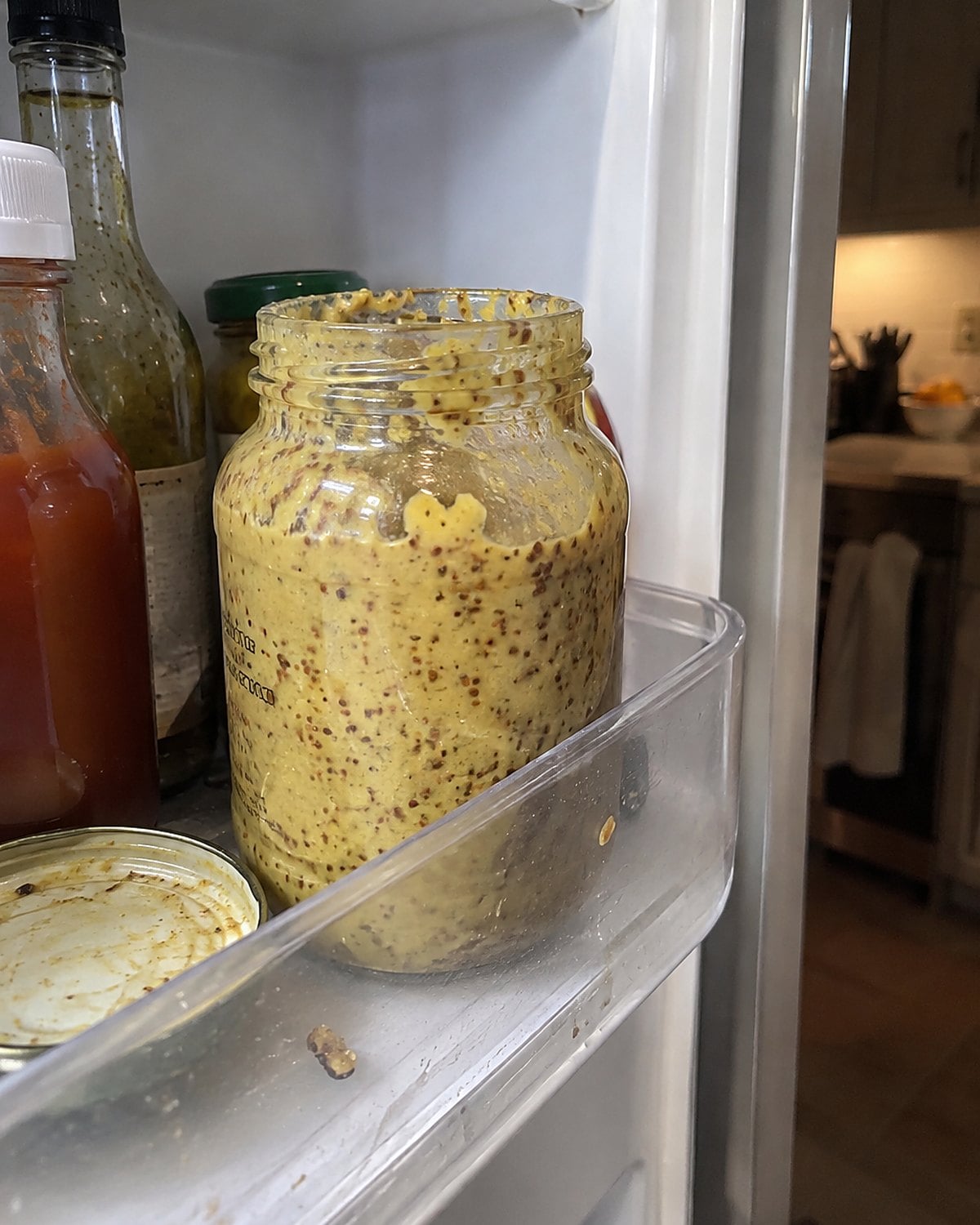
There it is, behind the salad dressing: mustard with a date from 2019. The printed date on a shelf-stable condiment usually speaks to quality, not a switch that flips from safe to unsafe. Mustard's acid helps it keep, but time dulls its bite.
Check for mold, an odd smell, or a damaged lid. Any of those means the jar goes in the trash, without a taste. If it looks normal, put a dab on a plate. Flat mustard isn't worth tonight's sandwich.
Wipe the sticky ring from the shelf. You'll see the next forgotten jar more clearly.
#25 The Pickle Jar Behind the Milk
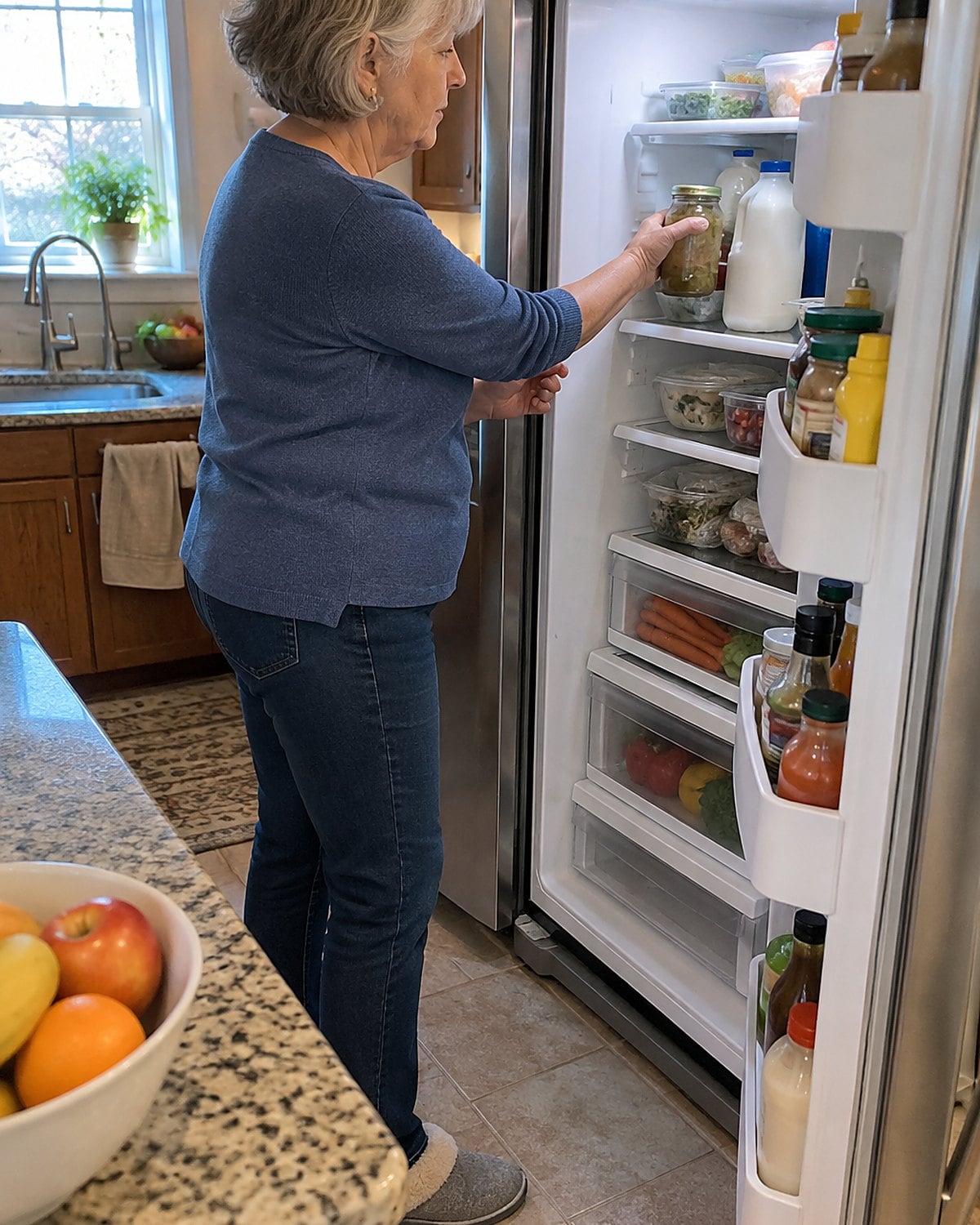
The last pickle floats alone in cloudy brine. Was the brine always cloudy? Did someone fish out a spear with their fingers? You know how fast a jar travels around the table when everyone wants one.
Check whether these are commercial pickles or homemade quick pickles. The jar's storage directions apply to the commercial kind. Your homemade batch needs the directions from the tested recipe you used. If you don't know how it was made or stored, don't guess from the lid date.
A film you don't recognize, slime, or an off smell settles it: throw the pickles out. The USDA's mold guidance also says to discard moldy pickles, not scoop past the spot.
For the next jar, use a clean fork and close the lid before dinner gets loud. Put a date on homemade quick pickles. It's easier than trying to remember which weekend the grandchildren helped slice the cucumbers.
#24 The Garlic Oil Beside the Butter
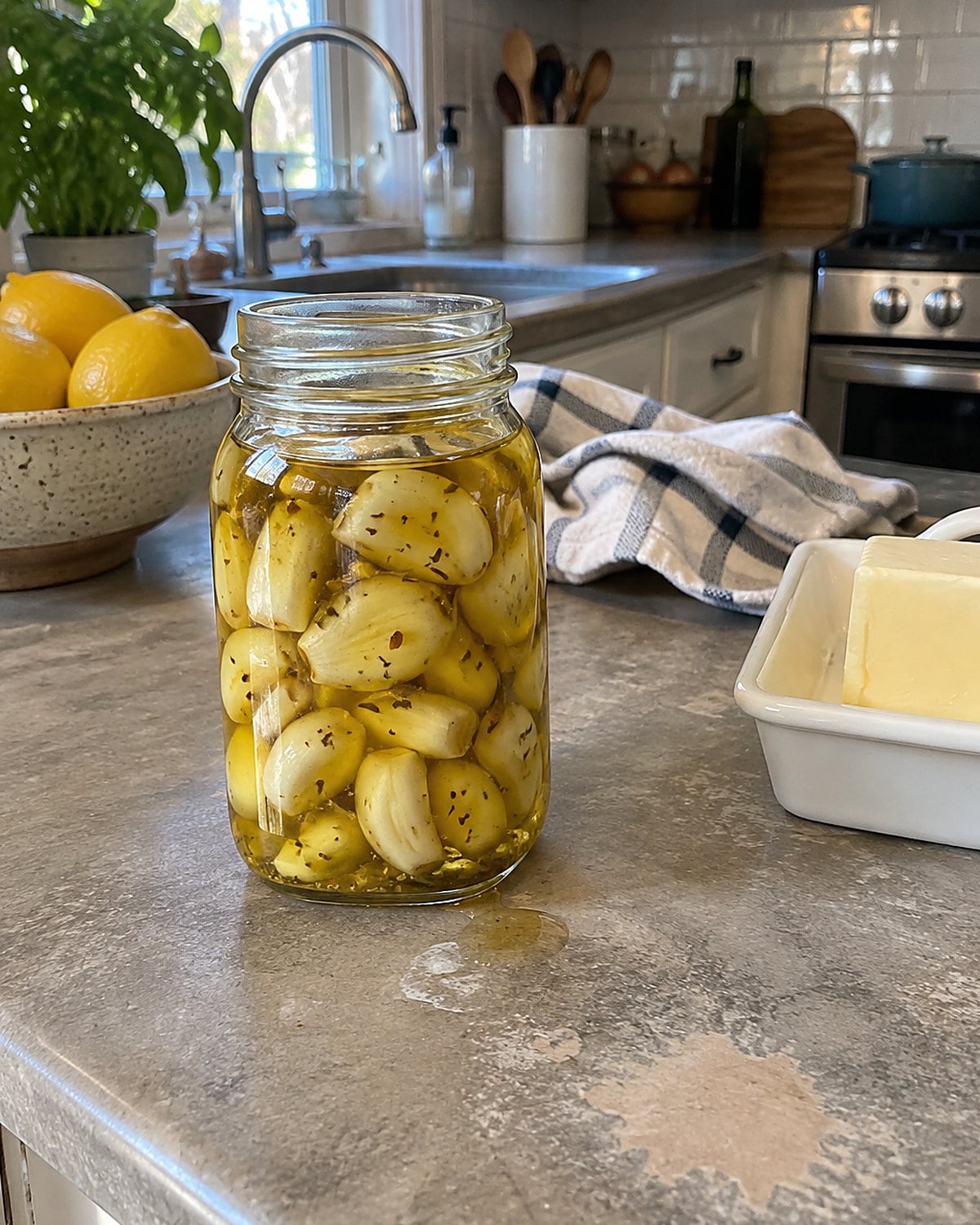
A bottle of garlic cloves in olive oil looks like a thoughtful little gift to yourself. It also needs more care than plain oil.
Garlic sitting in oil creates a low-oxygen setting where botulism becomes a concern. You won't spot that danger by sniffing the bottle. The National Center for Home Food Preservation says homemade garlic-in-oil mixtures belong in the refrigerator and should be used within 4 days or frozen. If yours has no date and you can't place when you made it, throw it away.
That includes the bottle from the neighbor's dinner if nobody told you how it was prepared. Next time, make a small batch for the meal in front of you. Mark the date on the bottle before it disappears behind the butter.
#23 The Opened Jar of Pasta Sauce
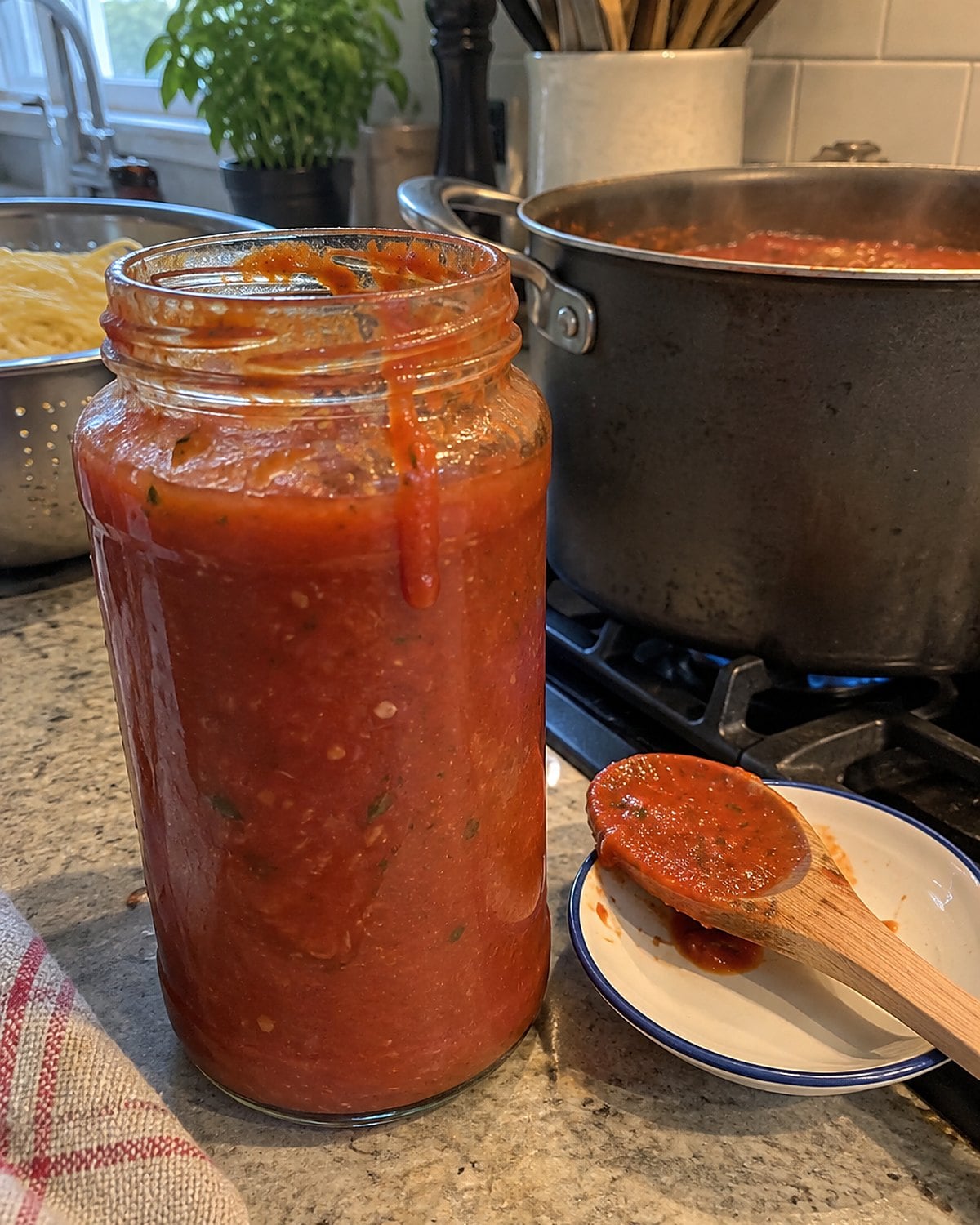
The jar has enough sauce left for one bowl of spaghetti. It has also been open since the night your grandson asked for seconds. Once you break the seal, the date printed for the unopened jar stops being a useful guide.
Check the maker's instructions for how long that sauce keeps after opening. If you didn't mark the day and can't remember it, pitch the jar. Mold around the rim settles the question without a taste.
When you open the next one, spoon the extra sauce into a clean, small container and freeze it while you still remember dinner. A piece of tape with the date beats the familiar ritual of staring into the jar and trying to reconstruct last week's menu.
Try it: Instant Pot Tomato Basil Sauce
#22 The Half-Empty Carton of Broth
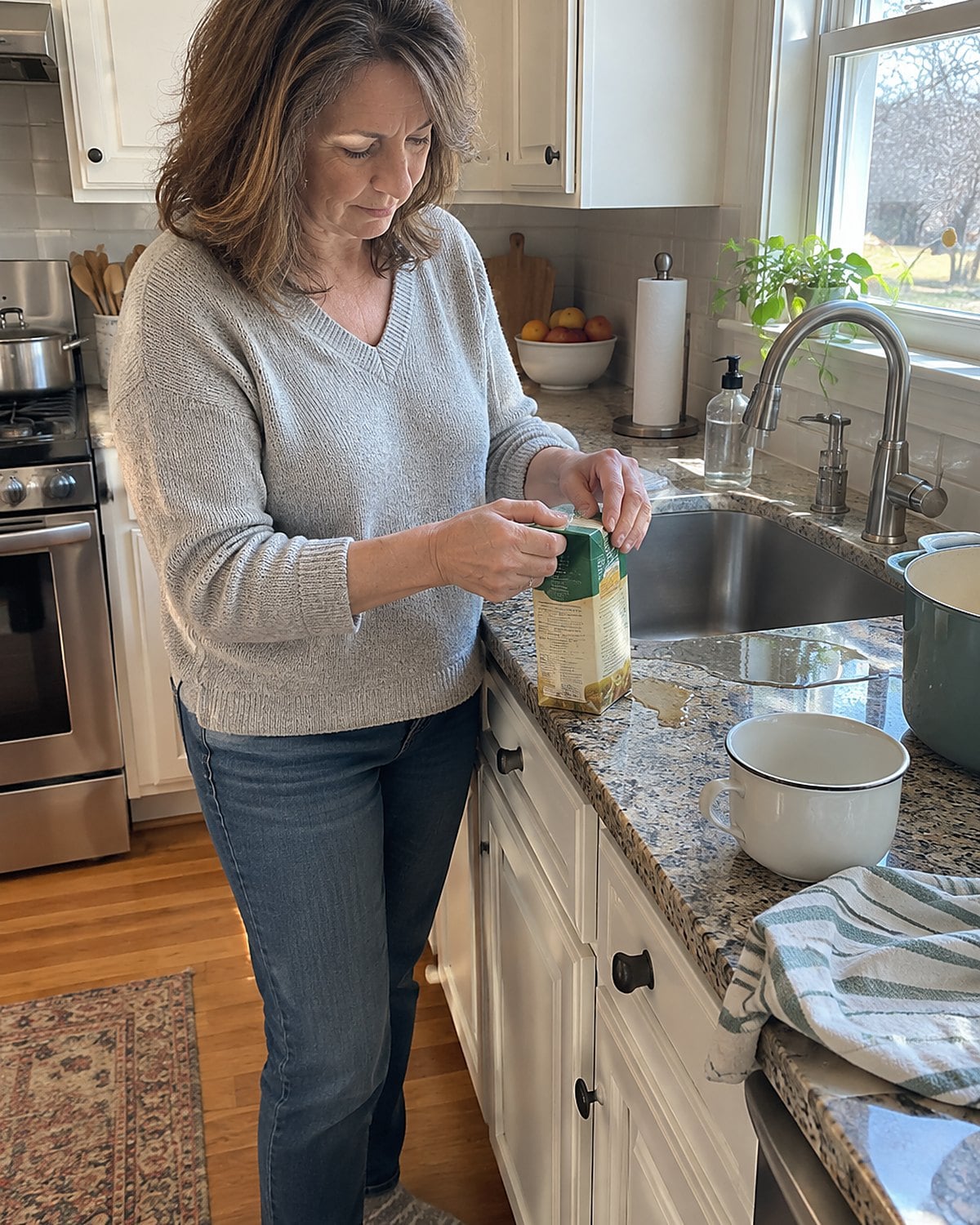
A carton of broth fits so neatly in the door that it becomes part of the scenery. You used a splash for rice, folded down the spout, and haven't needed it since.
Read the after-opening directions on that carton. The date for an unopened carton won't tell you how long this one has sat there. Lost track of the opening day? Throw it away rather than pouring a spoonful to find out.
Next time, pour leftover broth into a freezer-safe container, leaving room for it to expand. Mark what it is and when you froze it. Your next pan sauce needs broth that was put away on purpose, not a carton whose history you have to guess.
#21 The Deli Ham Wrapped in Paper
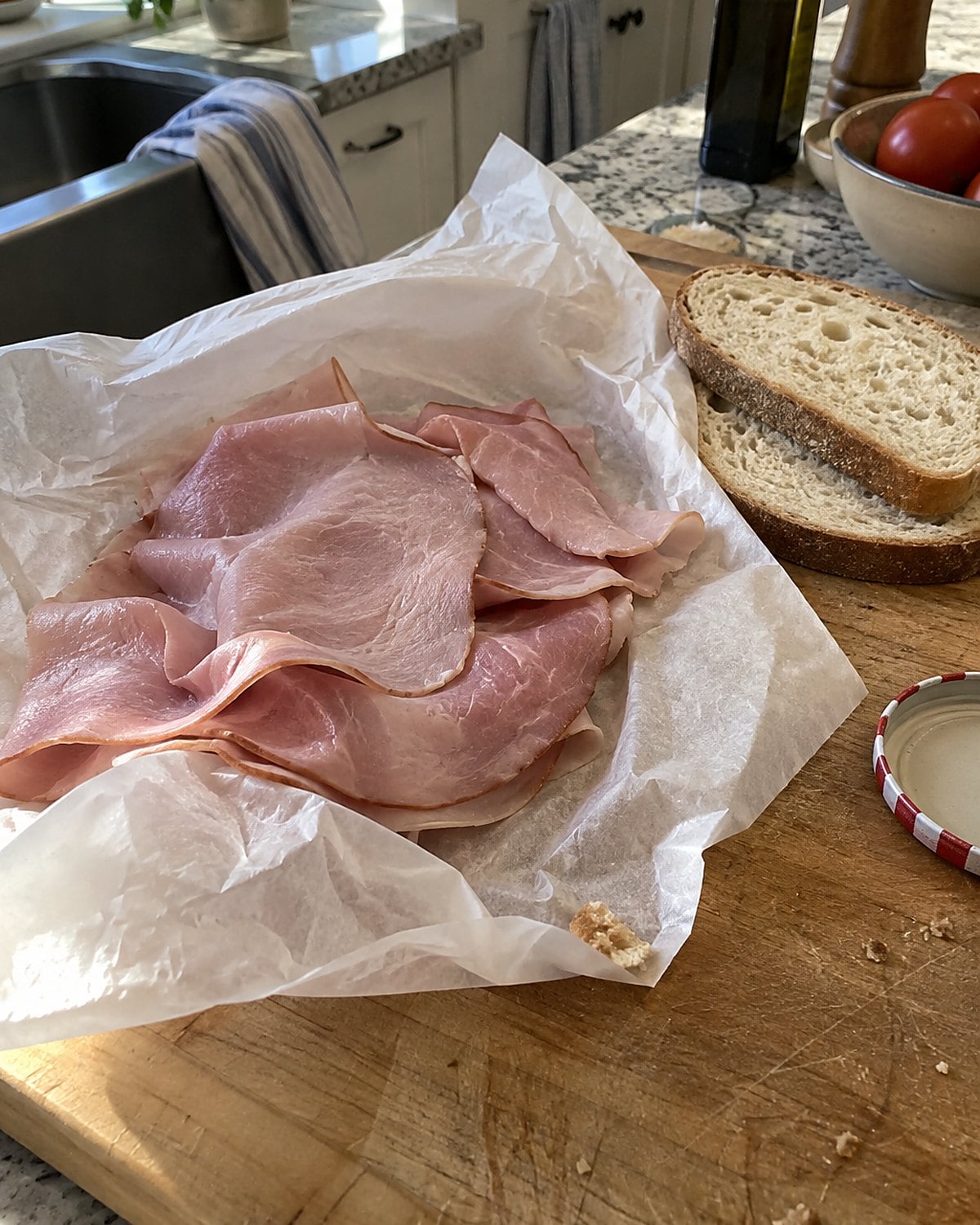
The deli paper still has the weight penciled on it. It doesn't tell you when you brought the ham home.
Give deli-sliced ham 3 to 5 days in a fridge at 40°F or colder. That's the window on the FoodSafety.gov cold storage chart. Past it, the pink color and clean smell won't save lunch. Toss the ham.
A quarter pound for a few sandwiches suits a smaller table better than a large packet you feel obliged to rescue. Put the purchase day on the wrapper when you get home. Then lunch doesn't depend on remembering which errand came before which appointment.
#20 The Sealed Lunch Meat Past Its Date
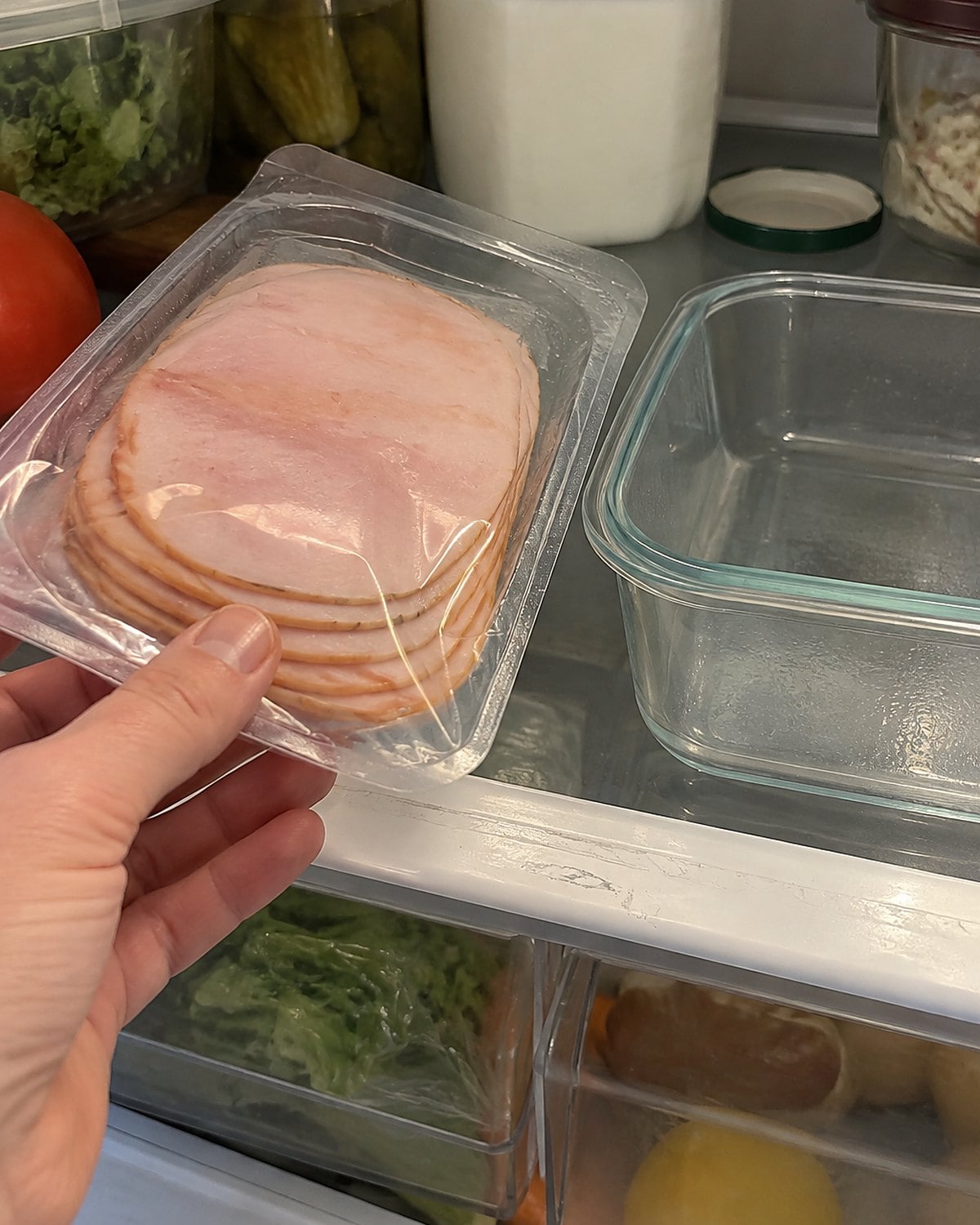
The package is still sealed, but the visit you bought it for never happened. Here's the question: what does the label say?
The FoodSafety.gov cold storage chart lists unopened packaged lunch meat at 2 weeks in the fridge, or until its use-by date. Once you open it, the window is 3 to 5 days. A sealed package past its use-by date belongs in the trash, even when its contents look ordinary.
If plans change while a package is still fresh, freeze it promptly instead of waiting for the next visit. Freezing won't repair meat that has already spent too long in the fridge.
#19 The Rotisserie Chicken From Sunday
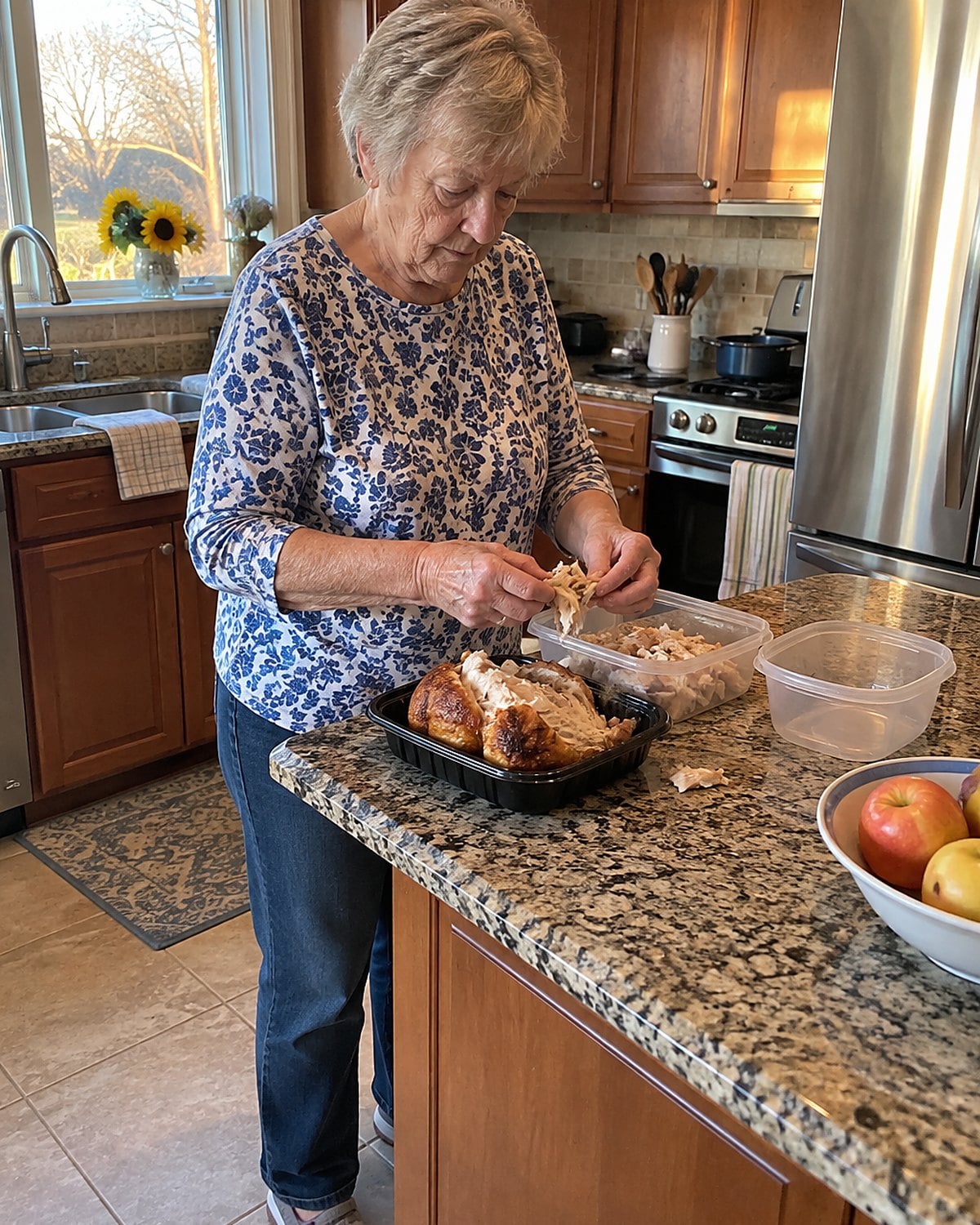
Sunday's chicken made dinner easy. Monday's cold piece was good with a little salt. By Thursday, the container is still on the middle shelf, and the chicken salad never happened.
The FoodSafety.gov chart gives cooked poultry leftovers 3 to 4 days at 40°F or colder. Count from Sunday, when you brought the chicken home. Opening the lid on Tuesday doesn't start a fresh clock. If Sunday is too far back, throw it out.
Strip and pack the meat while you're clearing dinner next time. Chill what you'll eat soon, then freeze the rest promptly in portions that fit the meals you cook now. Write the date before the bag slides behind the peas. The bones and the last scraps are easier to part with when the useful meat is already put away.
Try it: Instant Pot Chicken Salad (Classic Recipe)
#18 The Rice Beside the Takeout Menus
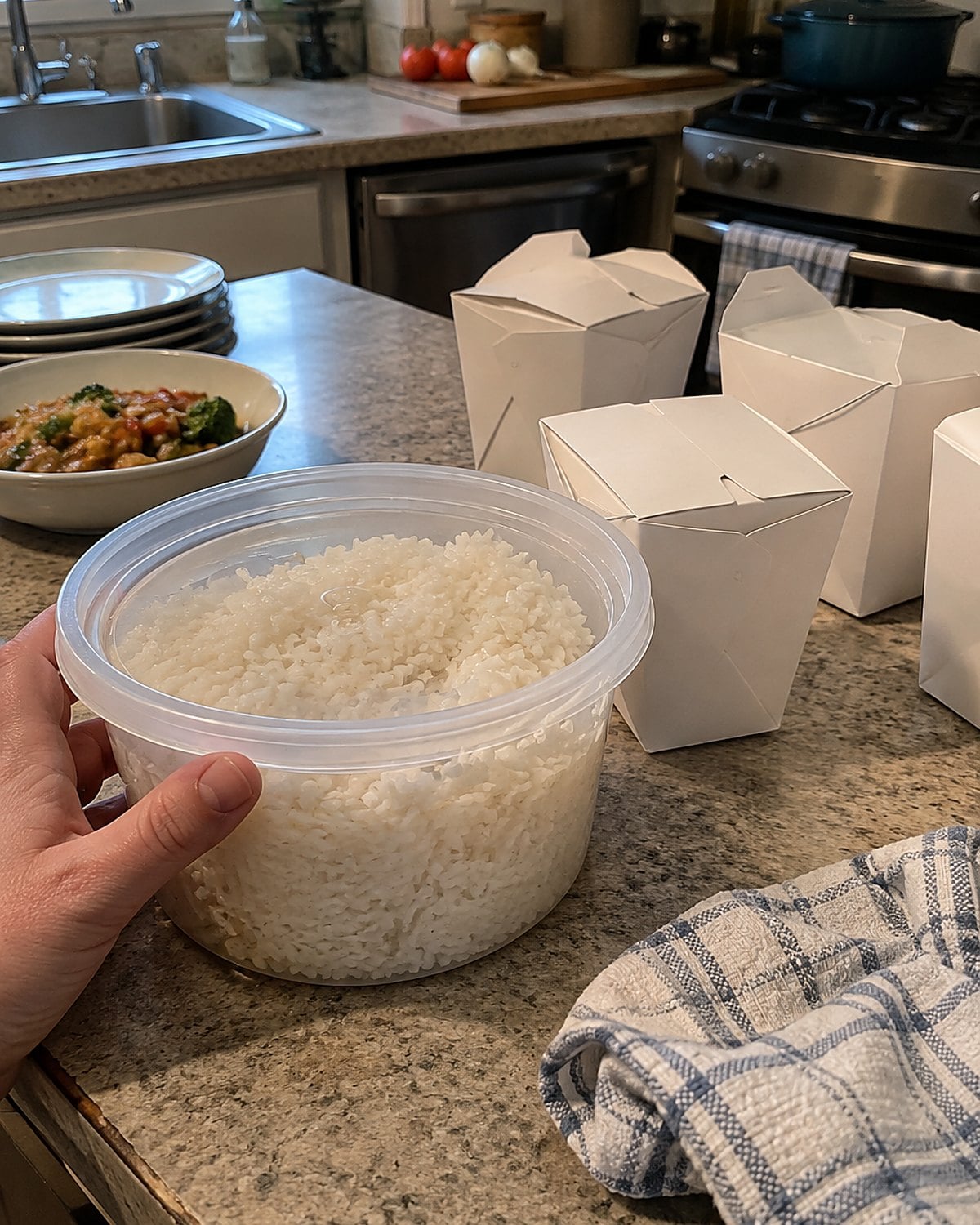
Cooked rice has a way of looking unchanged. It sits in a lidded tub, white and tidy, while its date slips out of mind.
Rice needs prompt chilling after cooking. Don't leave a pot on the stove overnight and count on reheating to make it right. The USDA's leftovers guidance gives promptly chilled cooked leftovers 3 to 4 days at 40°F or colder. If you can't place the day you cooked that rice, let it go.
For the next batch, spread the extra rice in a shallow container so it cools faster, then refrigerate it promptly. The useful test here is a date on the lid, not a sniff from the tub. Fried rice is a fine plan for tomorrow. Mystery rice isn't.
#17 The Takeout Carton Behind the Eggs
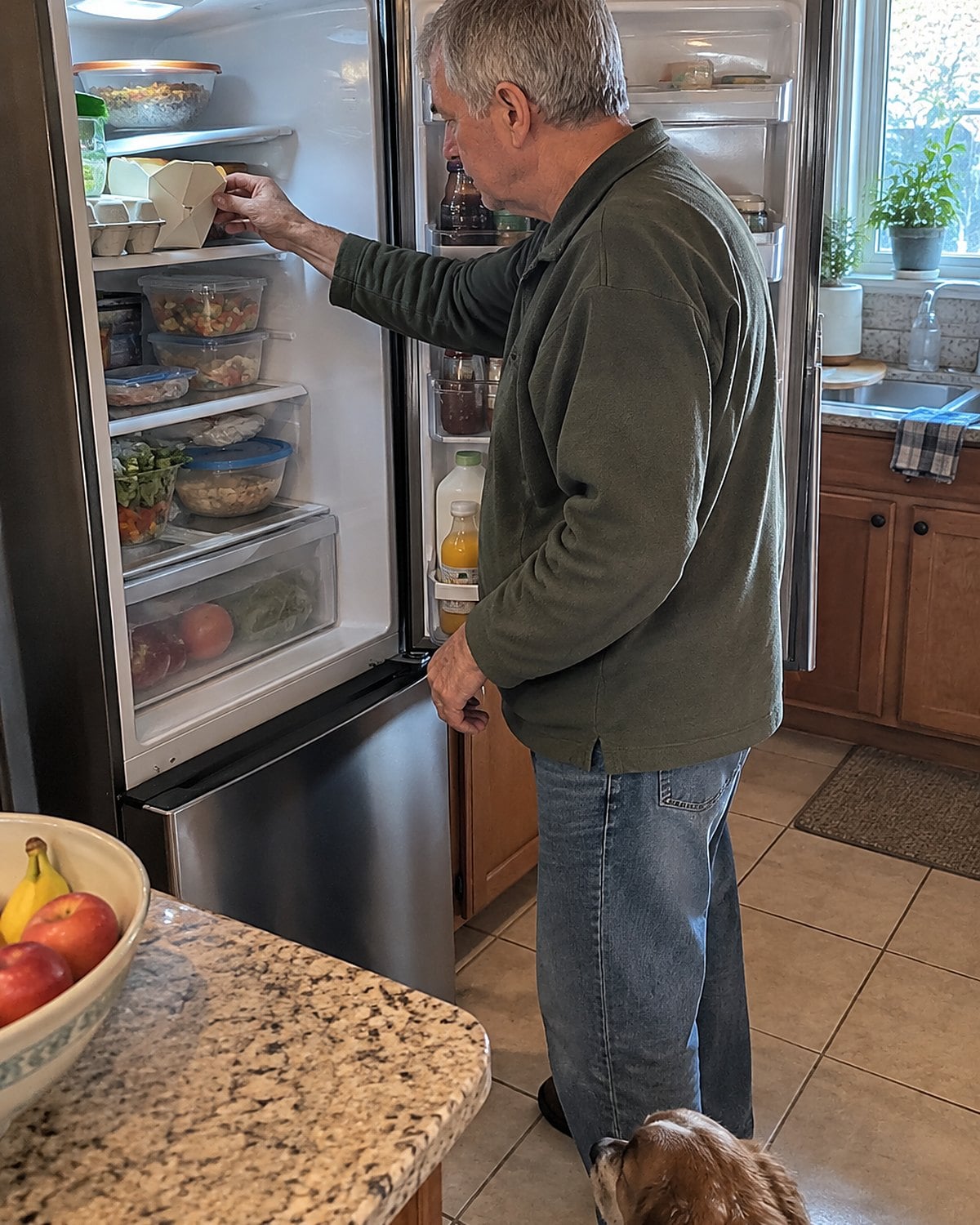
A forgotten takeout carton doesn't deserve a tasting spoon. Start with the night you brought it home. If that night won't come to mind, throw the food away.
Promptly chilled takeout falls under the USDA's 3 to 4 day leftovers window at 40°F or colder. There's a second clock, too: perishable food left out for more than 2 hours needs to go. When the temperature is above 90°F, that limit is 1 hour.
The carton from a late dinner, left on the counter until morning, doesn't become lunch because you put it in the fridge at breakfast. Next time, mark the night on the lid before you stack it away. That's all the bookkeeping this meal needs.
#16 The Gravy Saved After the Holiday
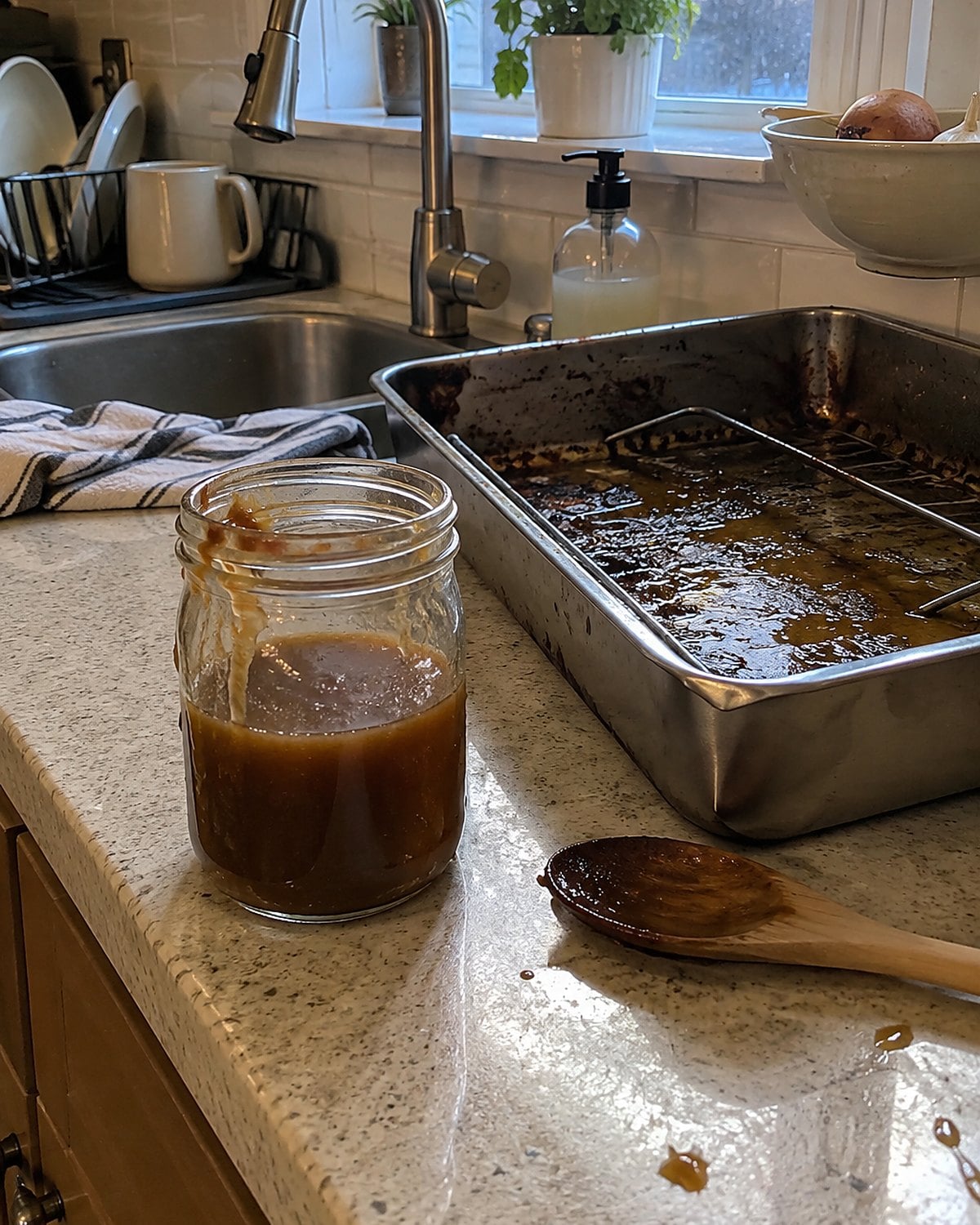
Someone stood over a roasting pan to make that gravy. Throwing out the last jar feels harder than scraping away ordinary leftovers. But last week's holiday meal has had its turn.
Give cooked gravy 3 to 4 days in the fridge at 40°F or colder, provided it was chilled promptly. A smooth surface won't tell you it has passed that window.
Before washing the roasting pan next holiday, divide extra gravy into small, shallow containers. Refrigerate what you'll use soon and freeze the rest promptly. Then a future supper starts with a portion you meant to keep.
Try it: Best Instant Pot Gravy (Quick & Easy, No Drippings!)
#15 The Cooked Beans in a Yogurt Tub
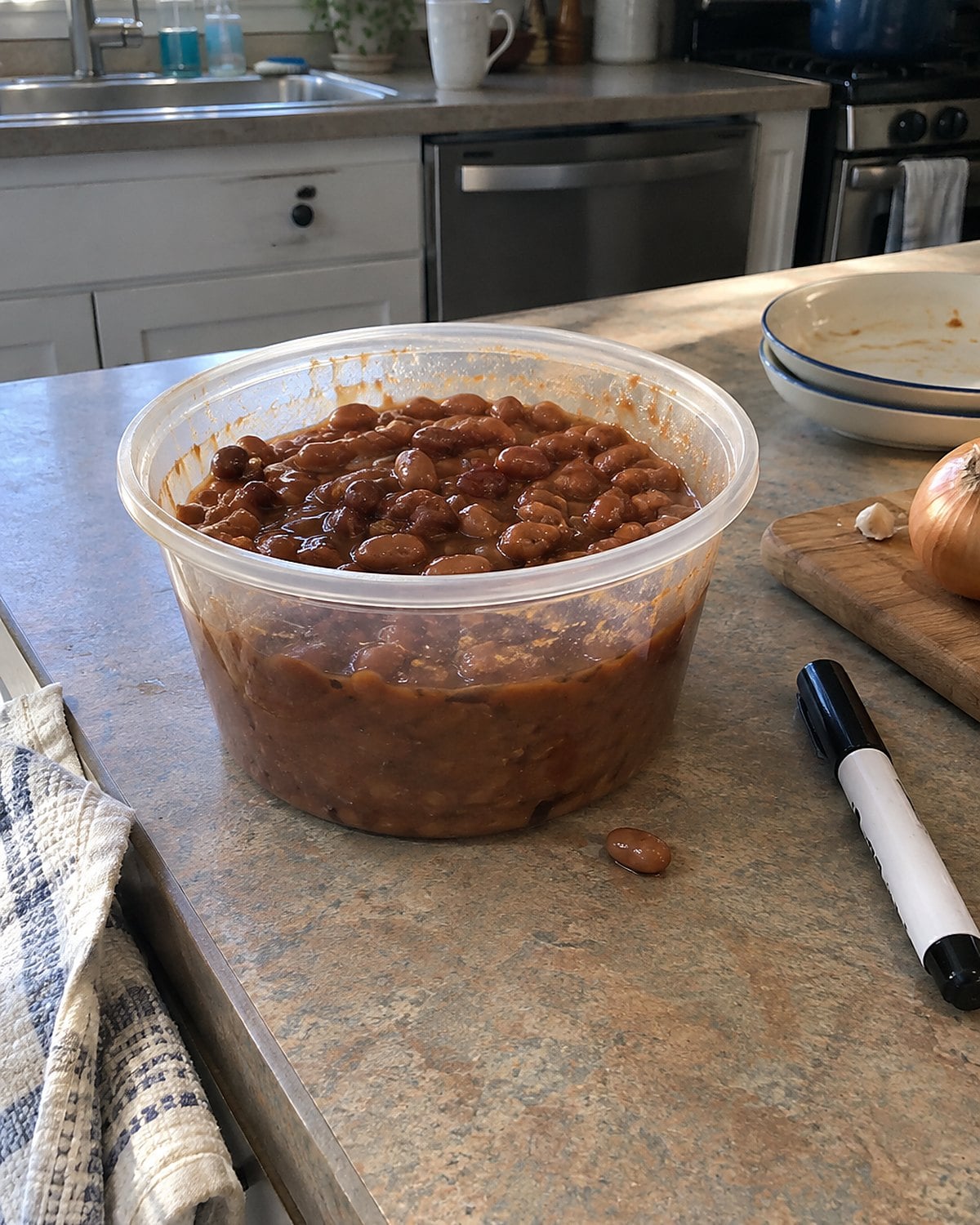
You cooked a good pot of beans and ate them twice. The last scoop went into a yogurt tub, where it now looks like every other yogurt tub. You have to lift the lid to learn what's inside.
If that tub holds cooked beans, the USDA's 3 to 4 day leftovers window applies at 40°F or colder when they were chilled promptly. If you can't remember the cooking day, keep them out of tonight's soup.
Freezing part of the pot while it's fresh solves a different problem: the reluctance to waste work you've already done. Spoon beans with some cooking liquid into a freezer-safe container. Leave room for expansion and mark the lid. You won't need to open three identical tubs to find supper.
Try it: How To Cook White Beans In Instant Pot
#14 The Soft Cheese With a Fuzzy Edge
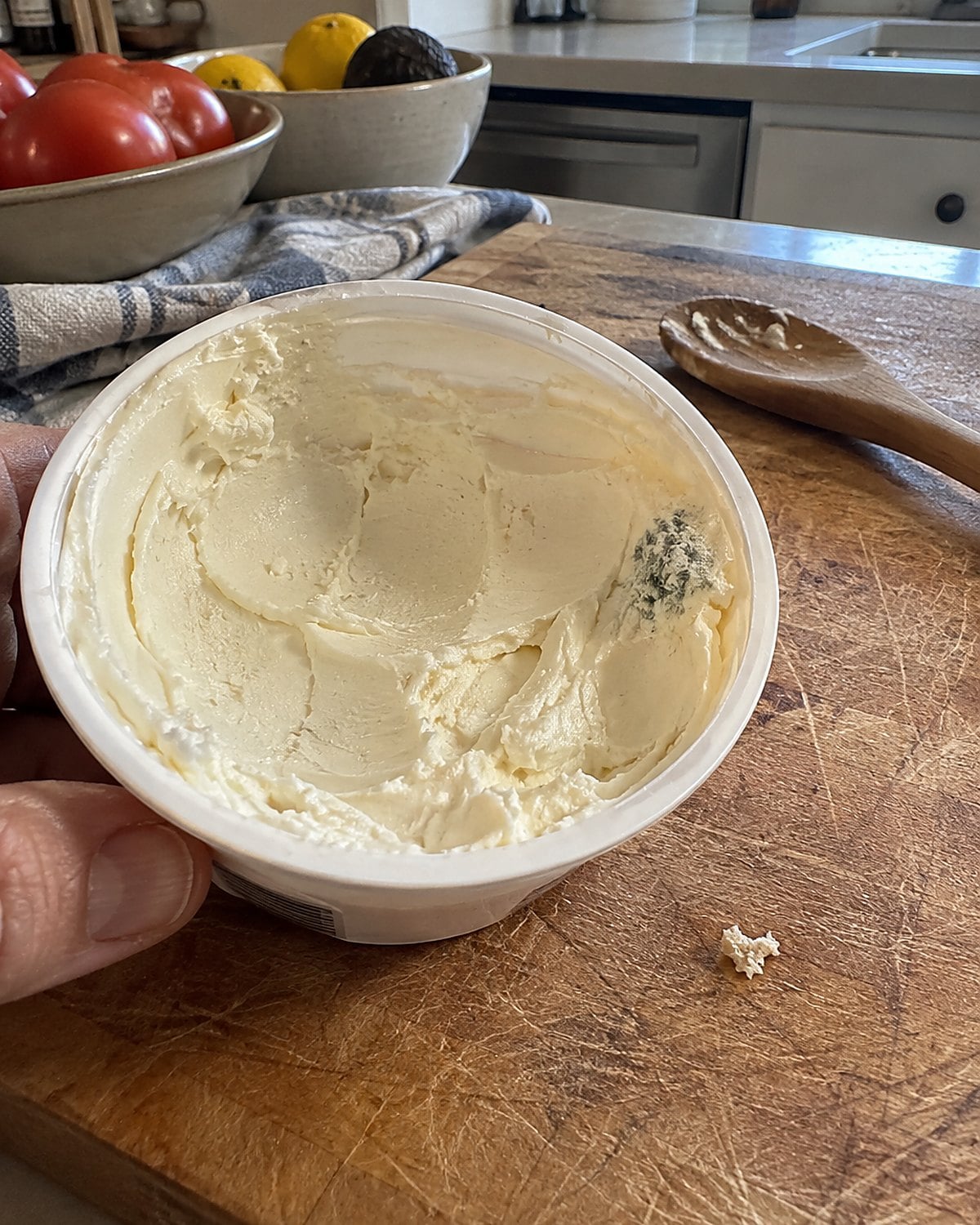
You unwrap the cheese for crackers and find a spot of mold along the fold. The temptation is to slice that corner off. With soft cheese, don't.
The USDA's mold guidance says to discard moldy cream cheese, cottage cheese, and ricotta. Mold spreads through soft food beyond the patch you see. A fresh knife and a neat cut won't fix it.
Wrap the cheese so it doesn't brush against other food, then put it in the trash. Wash the spot where the package sat. The cheddar block coming next gets a different answer, and that distinction matters more than the size of the fuzzy spot.
#13 The Cheddar Block With Surface Mold
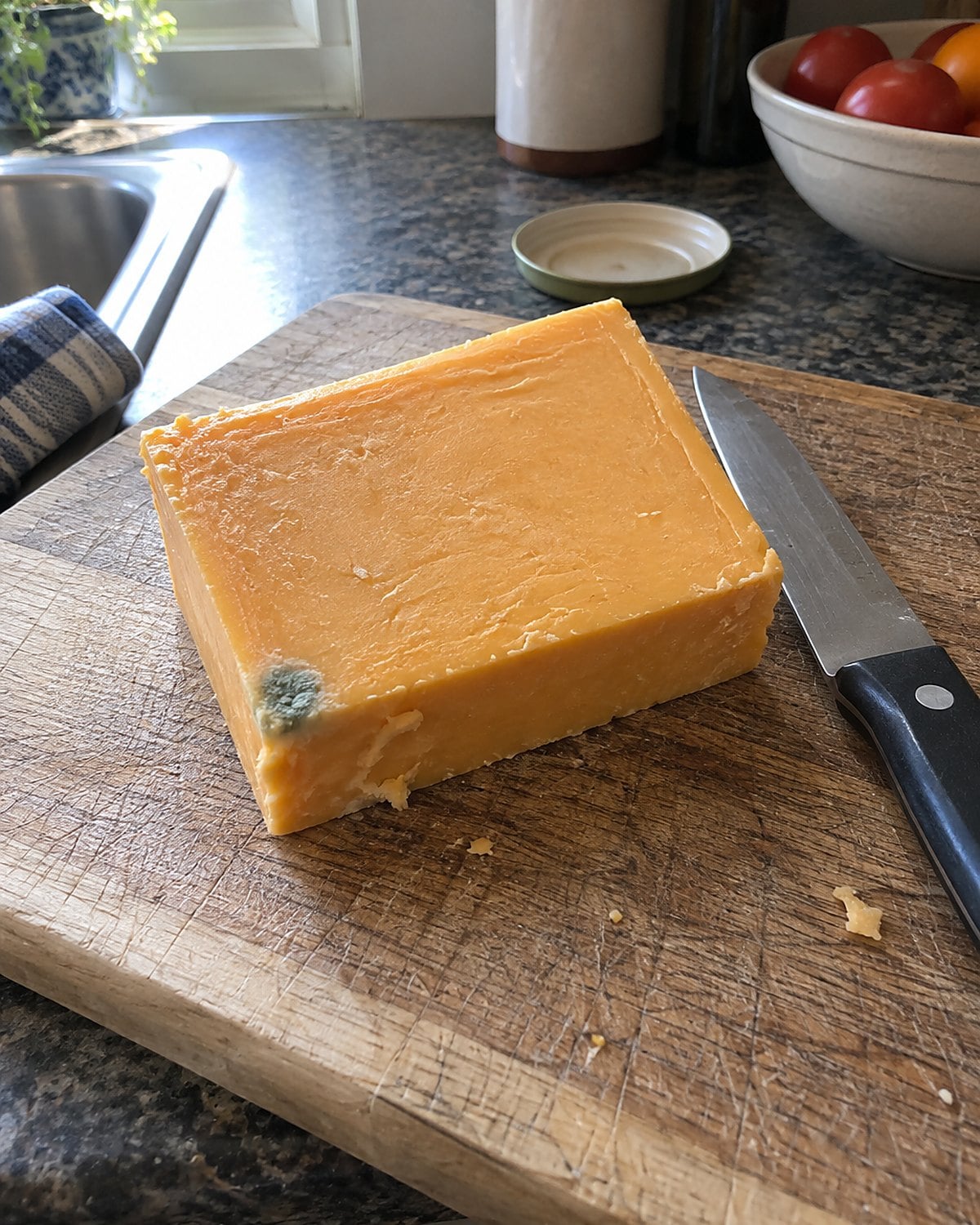
A block of cheddar gives you a different decision from that tub of ricotta. For hard cheese, the USDA says to cut away at least 1 inch around and below a mold spot. Keep the knife out of the mold itself so you don't drag it through the cheese.
That trimming rule stops at the hard-cheese block. Throw out moldy soft cheese, shredded cheese, and crumbles; there isn't a clean block to cut around. If mold runs through your cheddar or the cheese has another sign of spoilage, discard it.
Set a sound block on a clean board before cutting. Use a clean knife and fresh wrapping for what remains. When trimming leaves only a scrap, you don't have to save it to prove you hate waste.
#12 The Cut Melon From Saturday
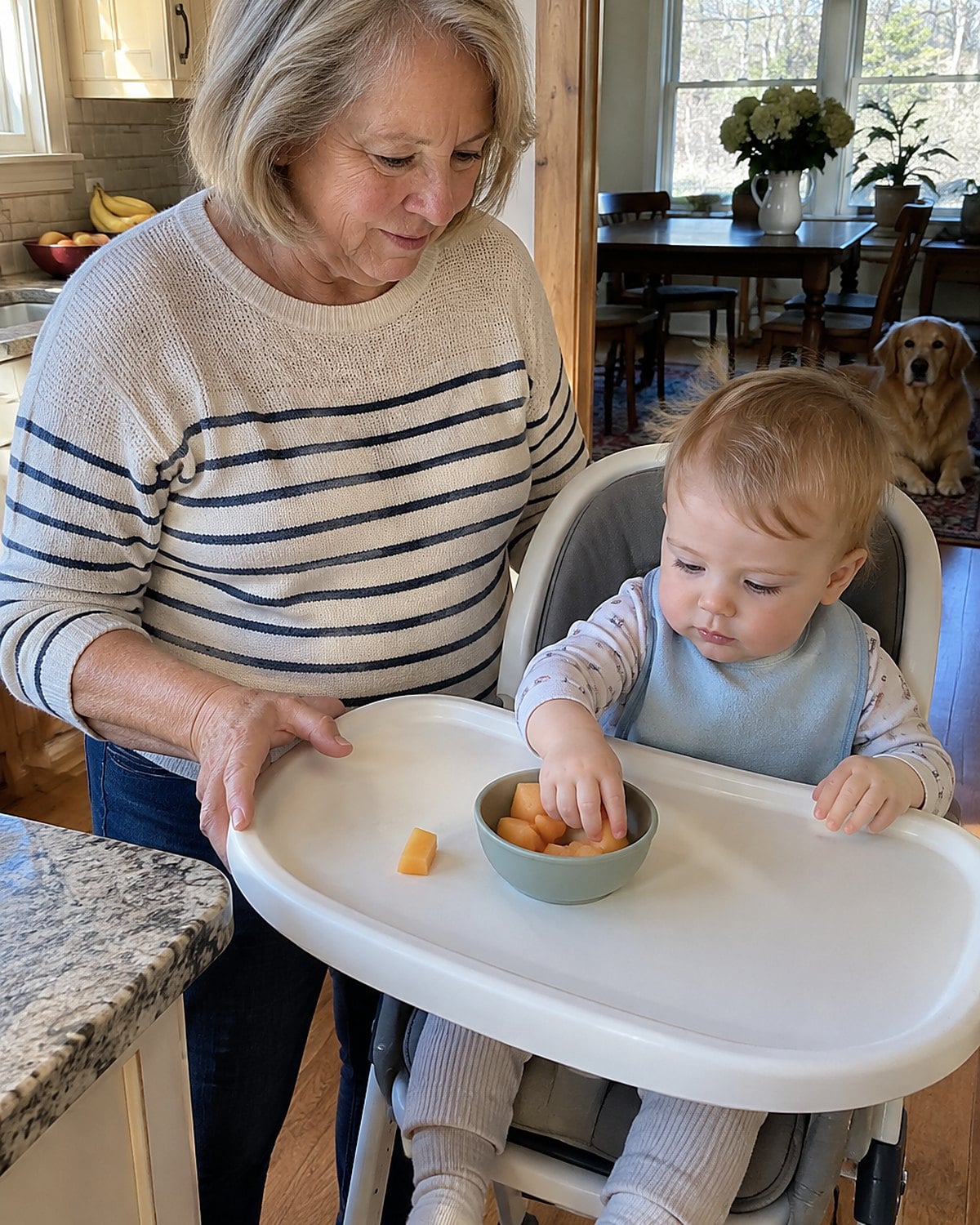
A bowl of cut melon looks ready for a grandchild's high chair. Before you set it down, remember the knife crossing the rind. Anything on the outside has a path to the flesh when you cut.
Wash the whole melon before cutting, as the FDA advises. Once cut, the melon needs refrigeration. A bowl left out through a long visit isn't rescued by putting it back afterward; follow the USDA's 2-hour rule for perishable food, or 1 hour above 90°F.
There's a number that sounds reassuring until you read where it belongs. The FDA Food Code permits a 7-day limit for date-marked cut melon held at 41°F or colder in food-service settings. That isn't a deadline to claim for an undated home bowl.
Keep your fridge at 40°F or colder. Put freshly cut pieces into a covered container and serve a small bowl at a time. If Saturday's bowl has no clear history, throw it out. The high chair deserves fruit whose story you know.
#11 The Greens Slumped in Their Bag
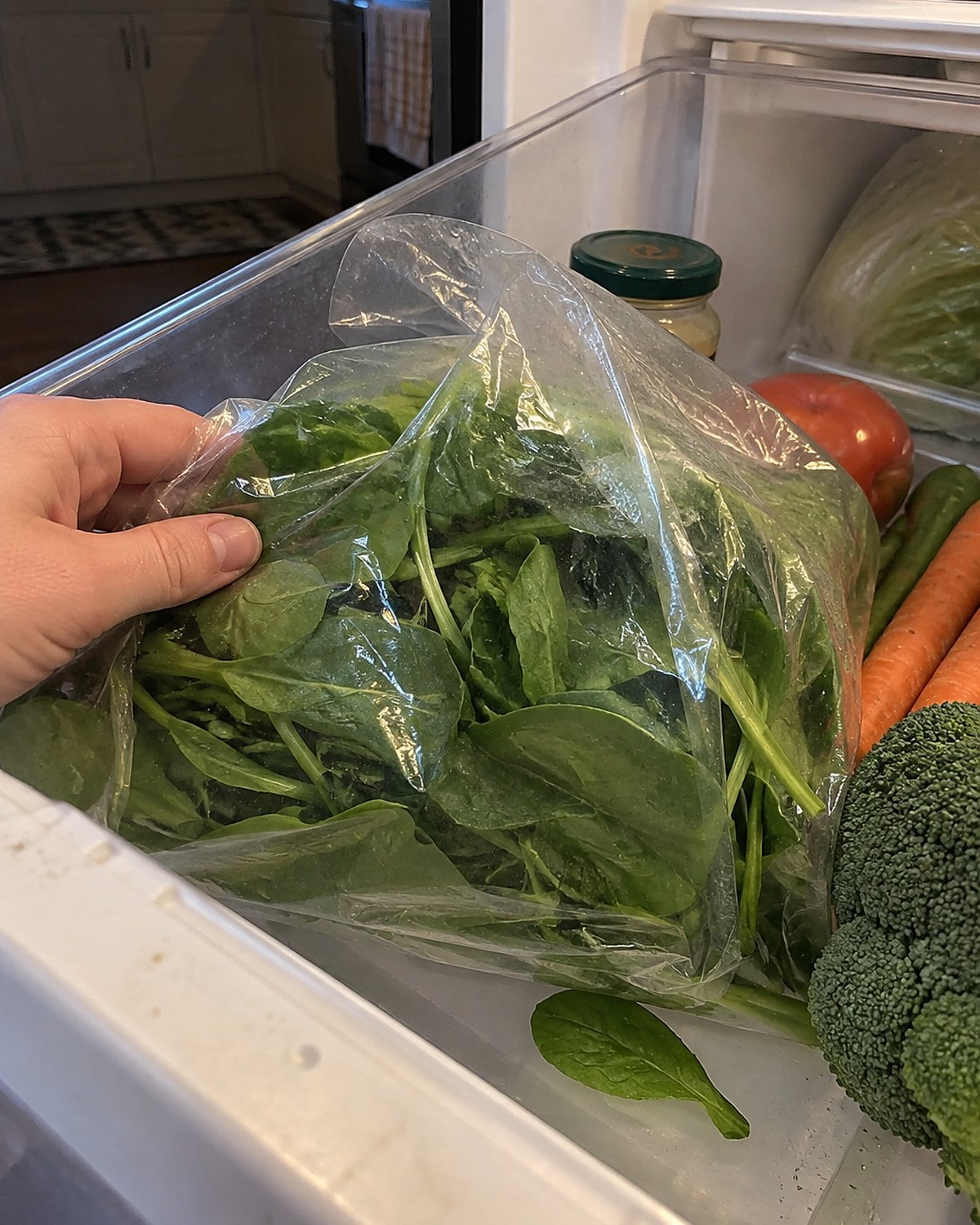
You lift the bag from the vegetable drawer and feel wet leaves press against the plastic. A few bruised greens are one thing. Slime, a sour smell, or widespread decay is another. That bag goes out.
Don't wash slimy leaves in the hope they'll turn back into salad. Water won't undo spoilage. If a different bag holds sound greens with a stray wilted leaf, sort them at the sink and use the good ones soon.
For a fresh bag, keep it cold and dry enough that water doesn't pool at the bottom. Put a clean towel in the container if washed leaves are damp, and replace it when soaked. The vegetable drawer is easy to shut on a problem; opening the bag tells you more than looking through it.
#10 The Raw Chicken on the Bottom Shelf
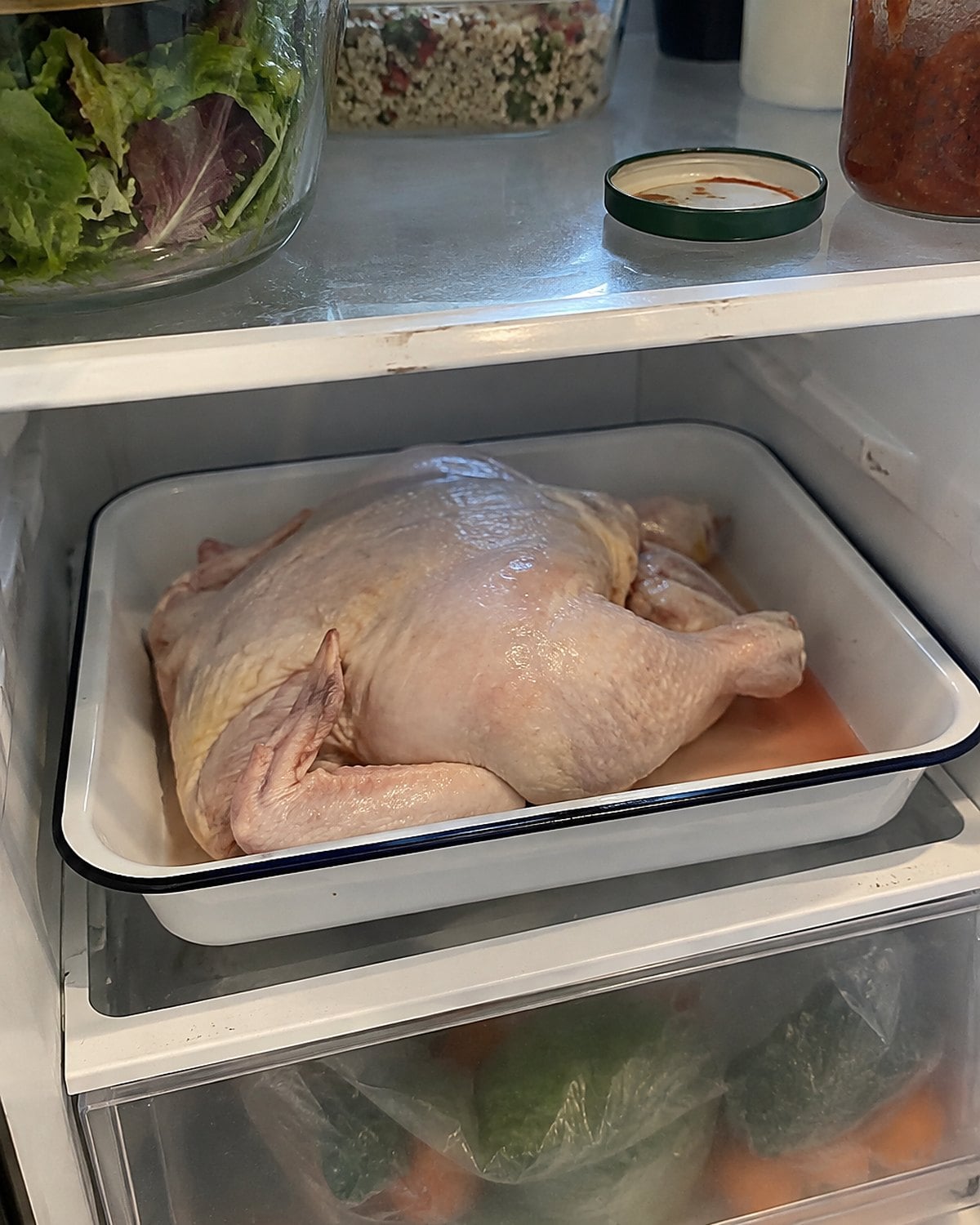
Raw chicken belongs on the bottom shelf in a tray that catches leaks. That placement protects the food around it. It doesn't buy another day.
The FoodSafety.gov cold storage chart gives raw poultry 1 to 2 days at 40°F or colder. If your package has waited since earlier in the week, throw it out. Don't rinse chicken before cooking; the CDC's chicken guidance warns that washing spreads germs around the sink.
When chicken is still within its storage window, cook it to 165°F, checking the thickest part with a food thermometer. If dinner plans change on shopping day, freeze the package promptly. Wash the tray, too, especially if the wrapping leaked.
#9 The Ground Beef Bought Three Days Ago
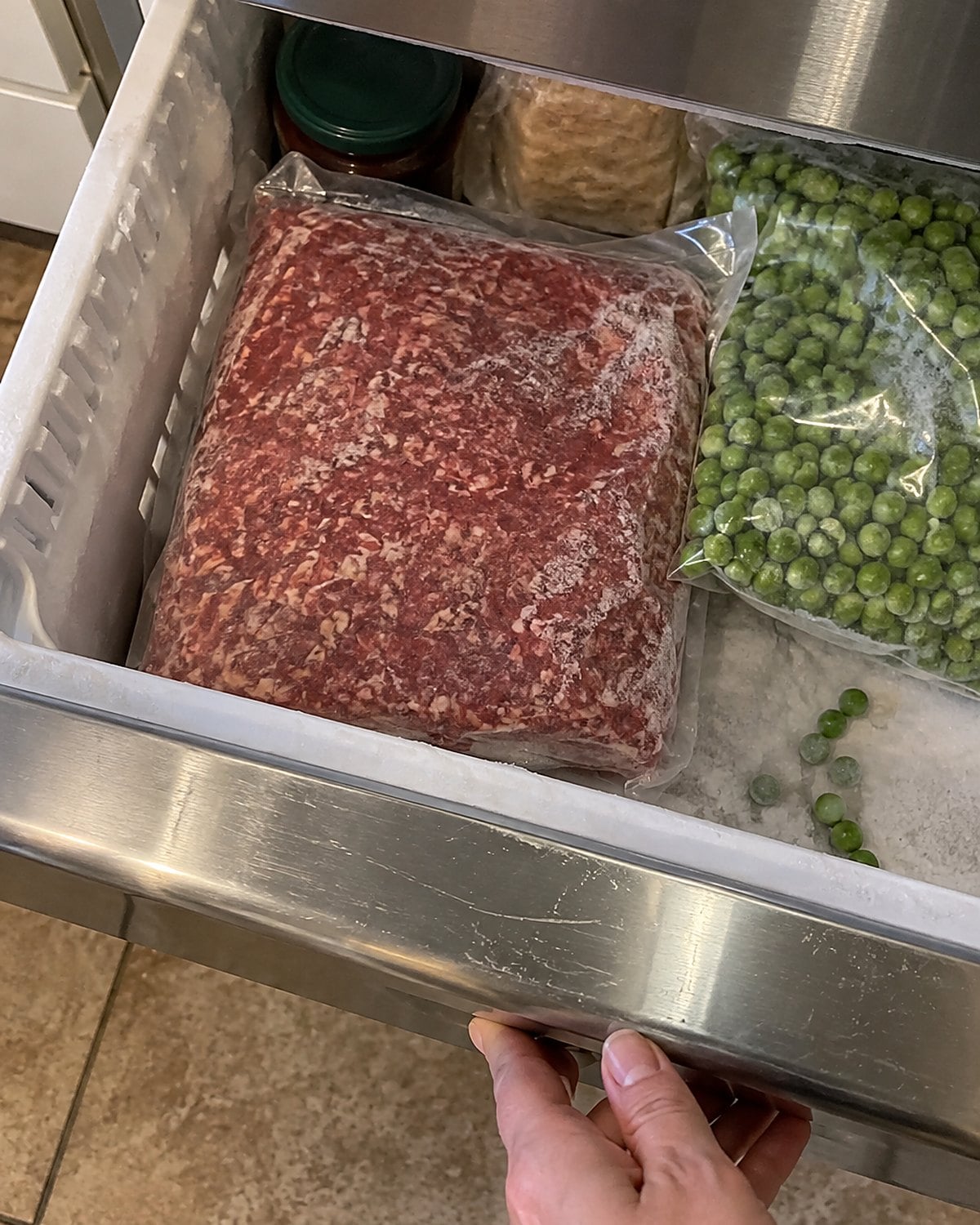
The ground beef was meant for Tuesday's meatballs. Tuesday changed, and now the package is tucked behind the butter.
Raw ground beef gets 1 to 2 days in the fridge at 40°F or colder on the FoodSafety.gov chart. On day three, throw it away. Brown patches alone don't settle freshness either way, and a sniff doesn't override the storage window.
Next time plans change, put the meat in the freezer while it's still fresh. Write the date on the package and place it where you'll see it. When you do cook ground beef, take it to 160°F. The thermometer answers the cooking question; the calendar answers the storage question.
Try it: Instant Pot Spaghetti And Meatballs
#8 The Fish Packet Under the Lettuce
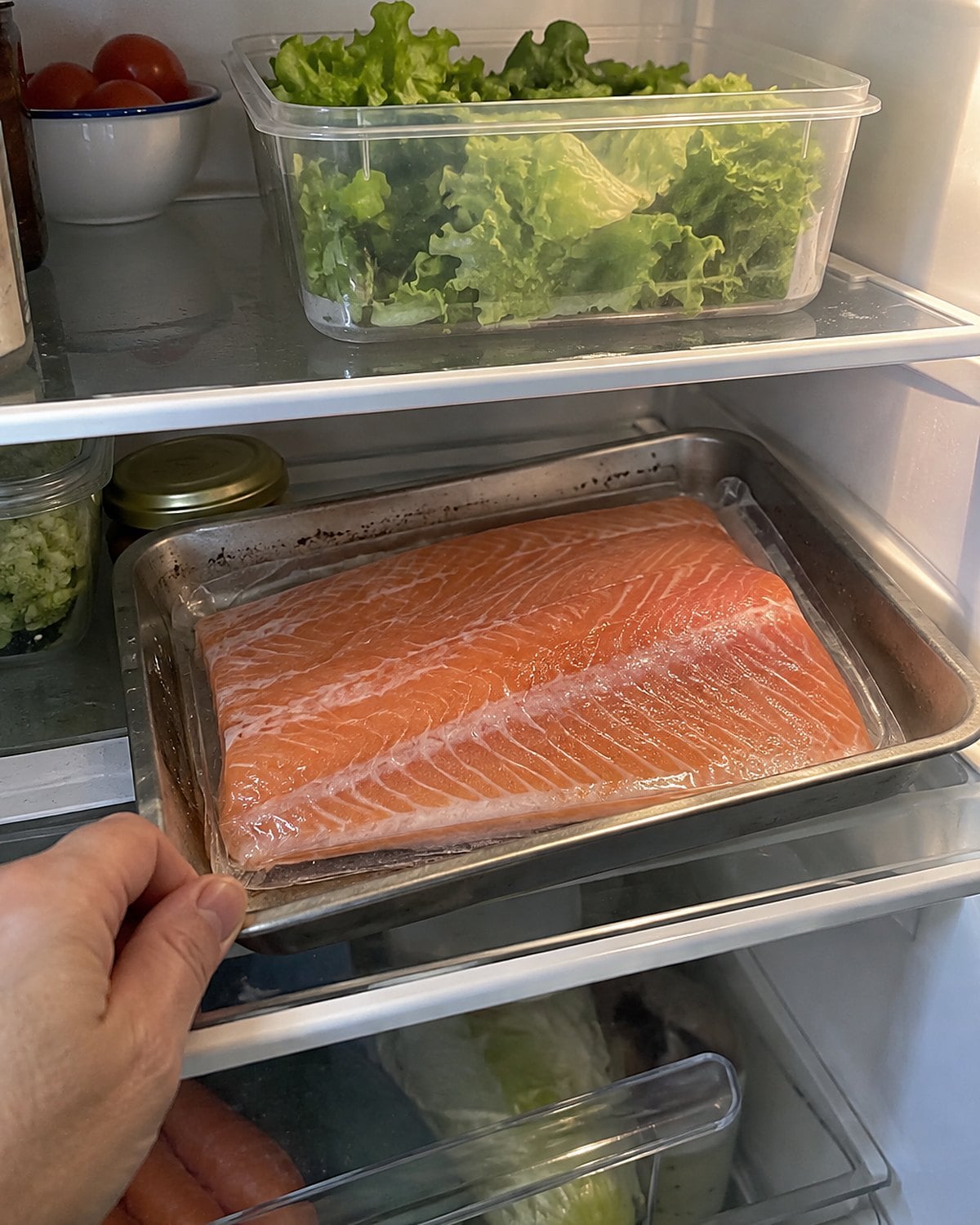
Fish wrapped by the counter gets lost easily under a large box of greens. By the time you remember it, you want its smell to give you a simple answer.
Don't make smell do that work. The FoodSafety.gov chart gives raw fish 1 to 2 days in the refrigerator at 40°F or colder. If the packet has waited longer, discard it. A strong off smell confirms trouble, but the absence of one doesn't extend the deadline.
Buy fish for a meal you have time to cook, or freeze it promptly. Keep the packet on a tray below ready-to-eat food while it thaws in the fridge. Then wash the tray and any surface touched by liquid from the wrapping. Dinner should start with a pan, not a negotiation over a forgotten packet.
#7 The Thawed Meat Without a Date
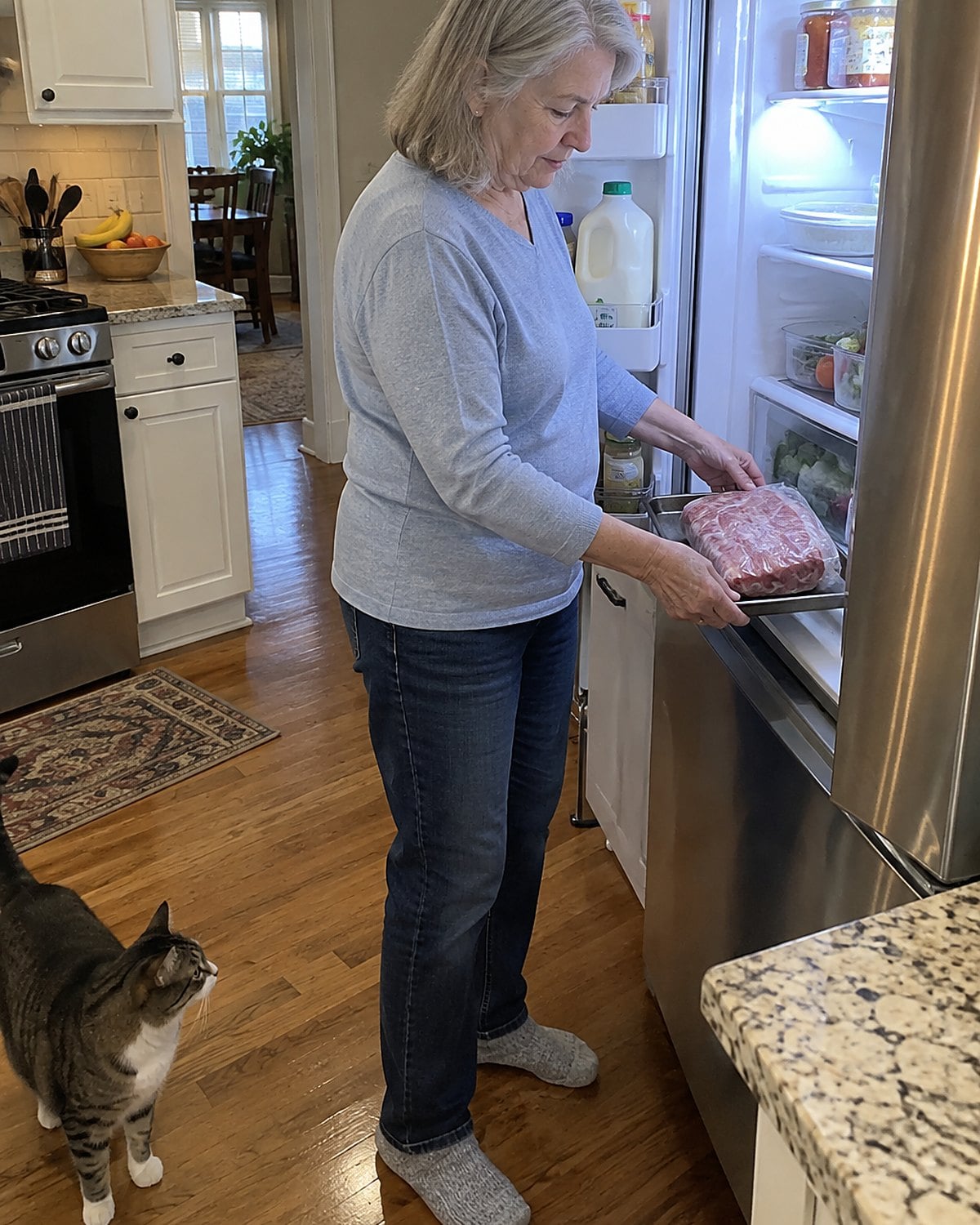
The freezer did its job. Then somebody moved a package to the fridge to thaw, and the date vanished with the wrapper.
Thawing in the refrigerator keeps meat cold, but each package still needs an identity. USDA guidance gives ground meat and poultry 1 to 2 days after refrigerator thawing before cooking. Larger cuts of red meat get 3 to 5 days. If you can't identify the meat or tell when it finished thawing, throw it out.
Keep the wrapper or copy its details onto tape before thawing. Set the package on a rimmed tray on the bottom shelf. That catches leaks, while the written date saves you from guessing after dinner plans change.
#6 The Egg Carton With One Crack
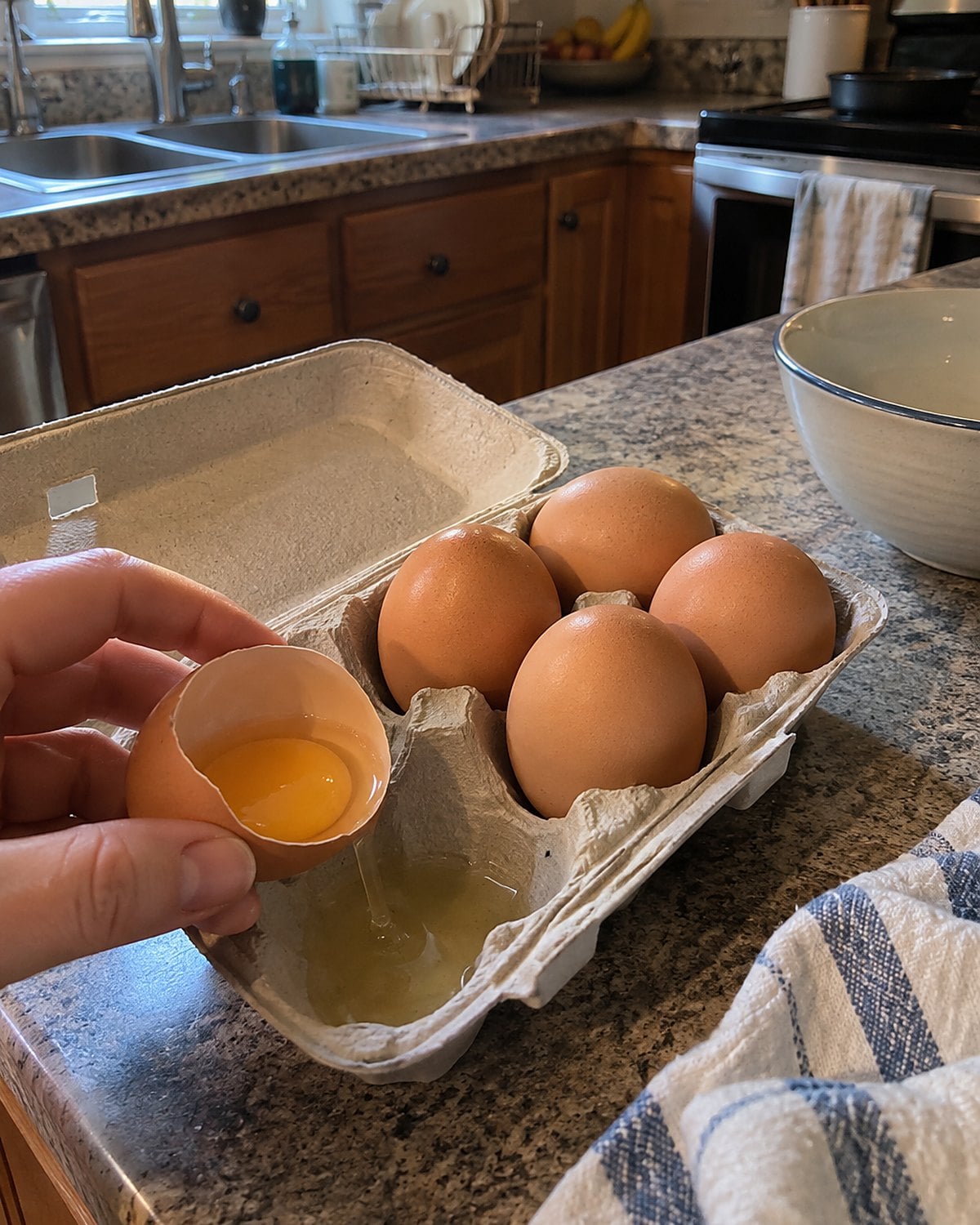
You open the carton for breakfast and find a crack you didn't see at the store. If the egg has sat there with a broken shell and you don't know when it happened, throw it away. Bacteria have a way in.
An egg you crack yourself while handling it has a known moment of damage. The USDA says to transfer it immediately to a clean covered container, refrigerate it, and use it within 2 days. Don't return it to the carton.
Check the rest before closing the lid. Keep eggs in their carton in the body of the fridge, where the temperature stays steadier than in the door. One look now beats finding a sticky carton halfway through breakfast for visiting family.
#5 The Homemade Mayonnaise for Potato Salad
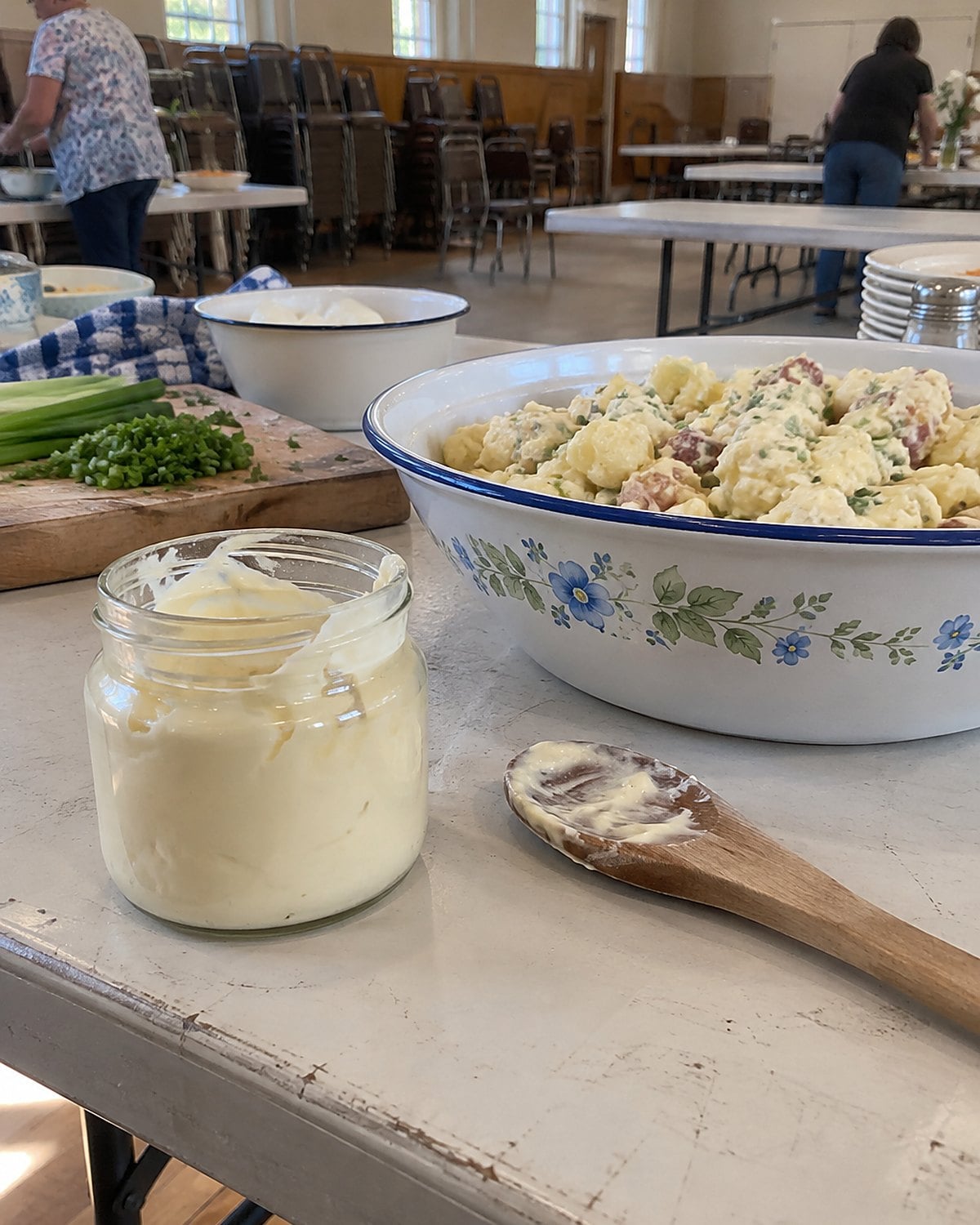
A jar of homemade mayonnaise brings up the question that matters: what went into it? Raw eggs and pasteurized eggs call for different care, and homemade batches don't carry a manufacturer's tested after-opening date.
The FDA's egg safety guidance recommends pasteurized eggs for dishes served with raw or undercooked eggs. If that old jar has raw egg in it and you can't recall when you made it, throw it out. Don't taste it to settle the question.
For the next batch, start with pasteurized eggs, use clean utensils, refrigerate it promptly, and make only what the meal needs. If you're bringing potato salad to a gathering, carry it cold. That leaves the mayonnaise question settled before the church hall table fills up.
Try it: Instant Pot Potato Salad With Eggs & Creamy Dressing
#4 The Unlabeled Tub of Casserole
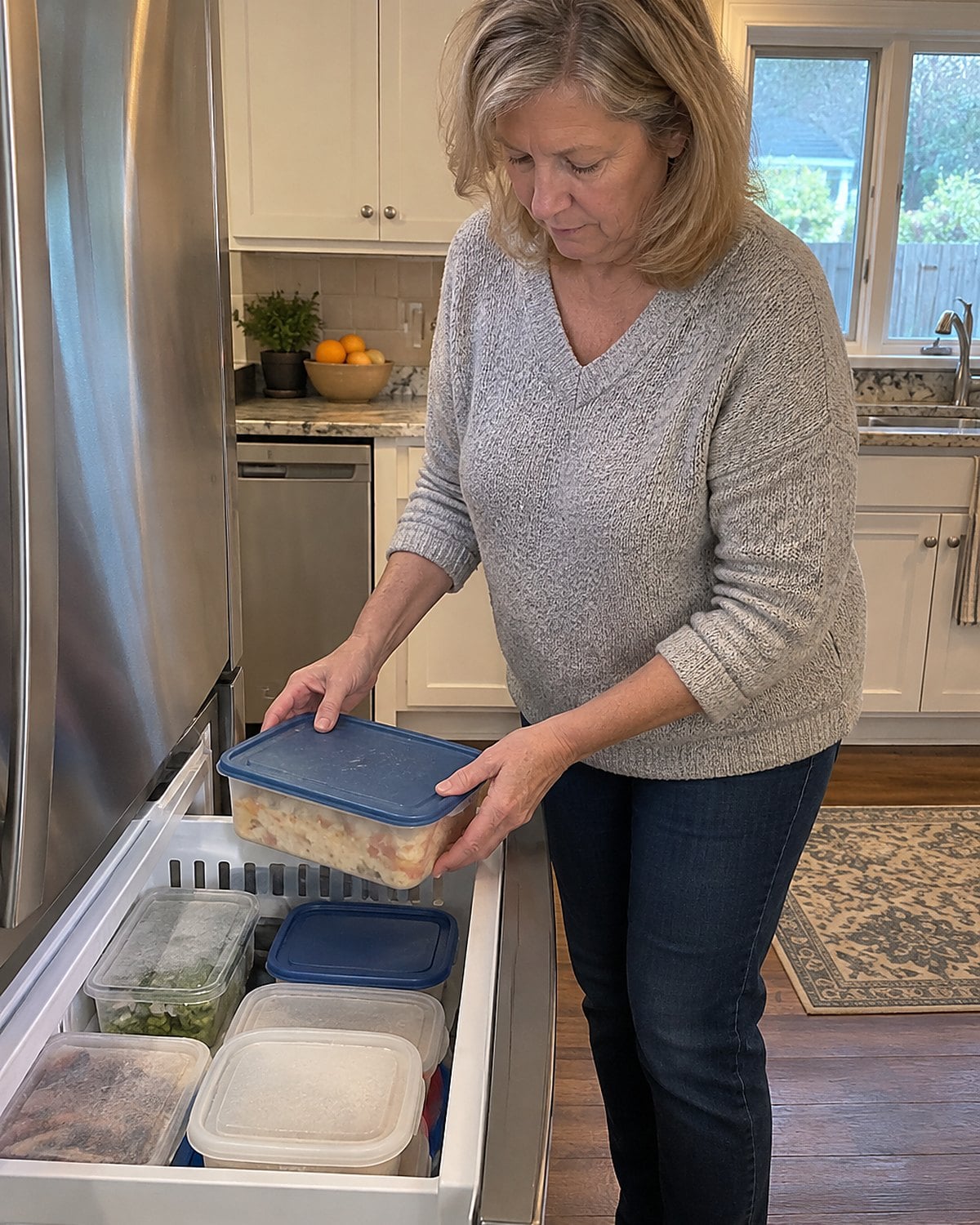
The lid is blue. The contents are beige. You think it's the chicken casserole from last month, until you remember the tuna bake from the week before.
A freezer label needs the dish name as well as a date. Food held continuously at 0°F stays safe from bacterial growth, according to the FoodSafety.gov freezer storage chart, though quality drops over time. Freezing doesn't undo unsafe handling before the food went in.
If you know that tub sat in the fridge beyond the leftovers window before freezing, discard it. If you cannot identify it or establish how it was handled, don't serve it to find out.
Mark the next casserole before the lid goes on. Add the portion size if you're cooking for one or two now. A freezer full of recognizable dinners is worth more than a row of blue lids.
#3 The Opened Jar of Baby Food
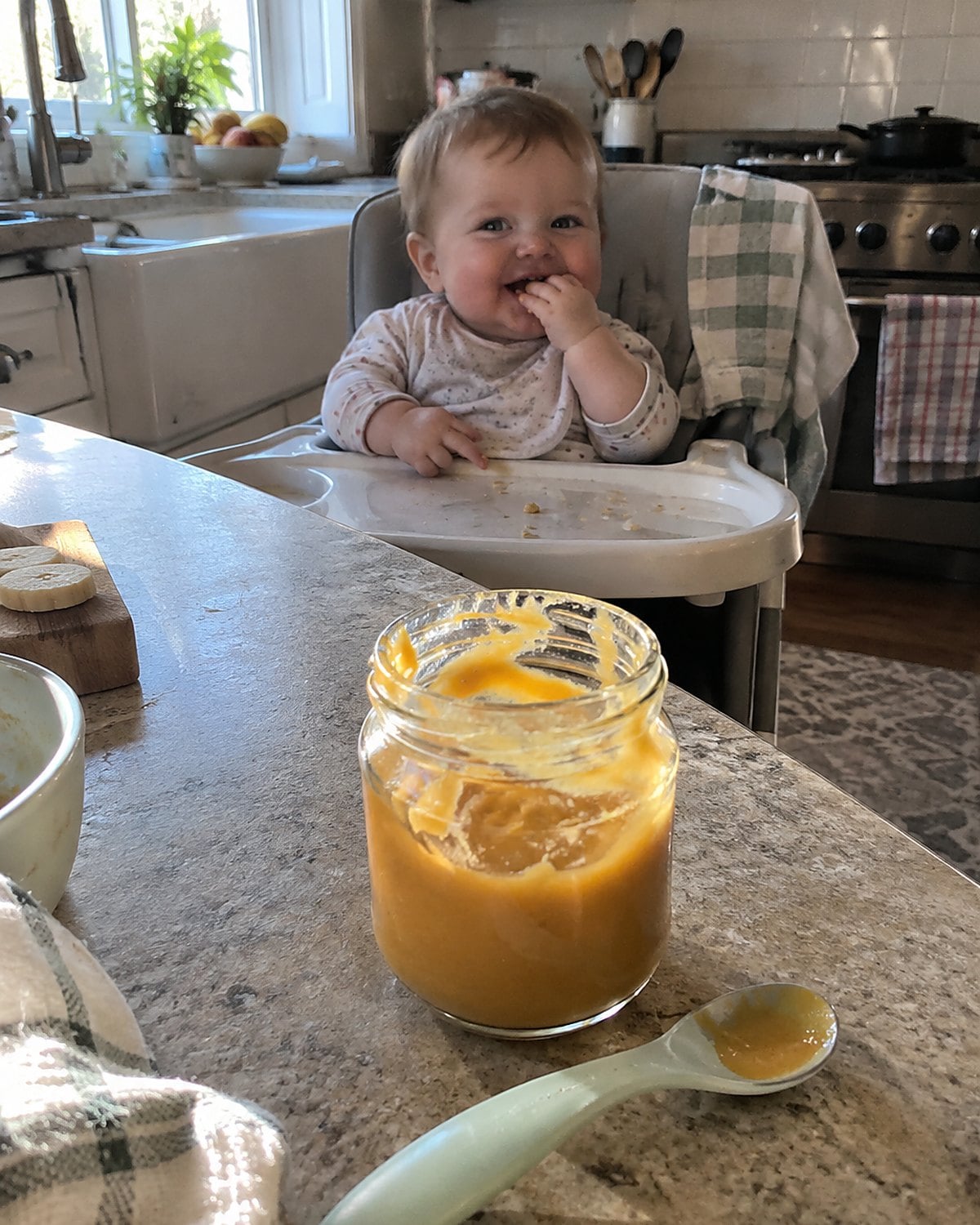
A grandchild visits, eats a few spoonfuls, and leaves a jar in your fridge. Before you save it, think about where the spoon went.
The FDA's baby food handling advice says not to feed directly from the jar if you'll save the rest. Saliva on the spoon gets into the remaining food. Spoon a serving into a separate bowl instead, then refrigerate the untouched jar and follow its label for the after-opening limit.
If someone already fed from that jar, discard what remains. It's a small amount of food, and there's no reason to make a baby's next meal a guess. Wipe the high chair tray, put the clean jars back in the fridge, and ask what should go home with the parent.
#2 The Milk After the Lights Went Out
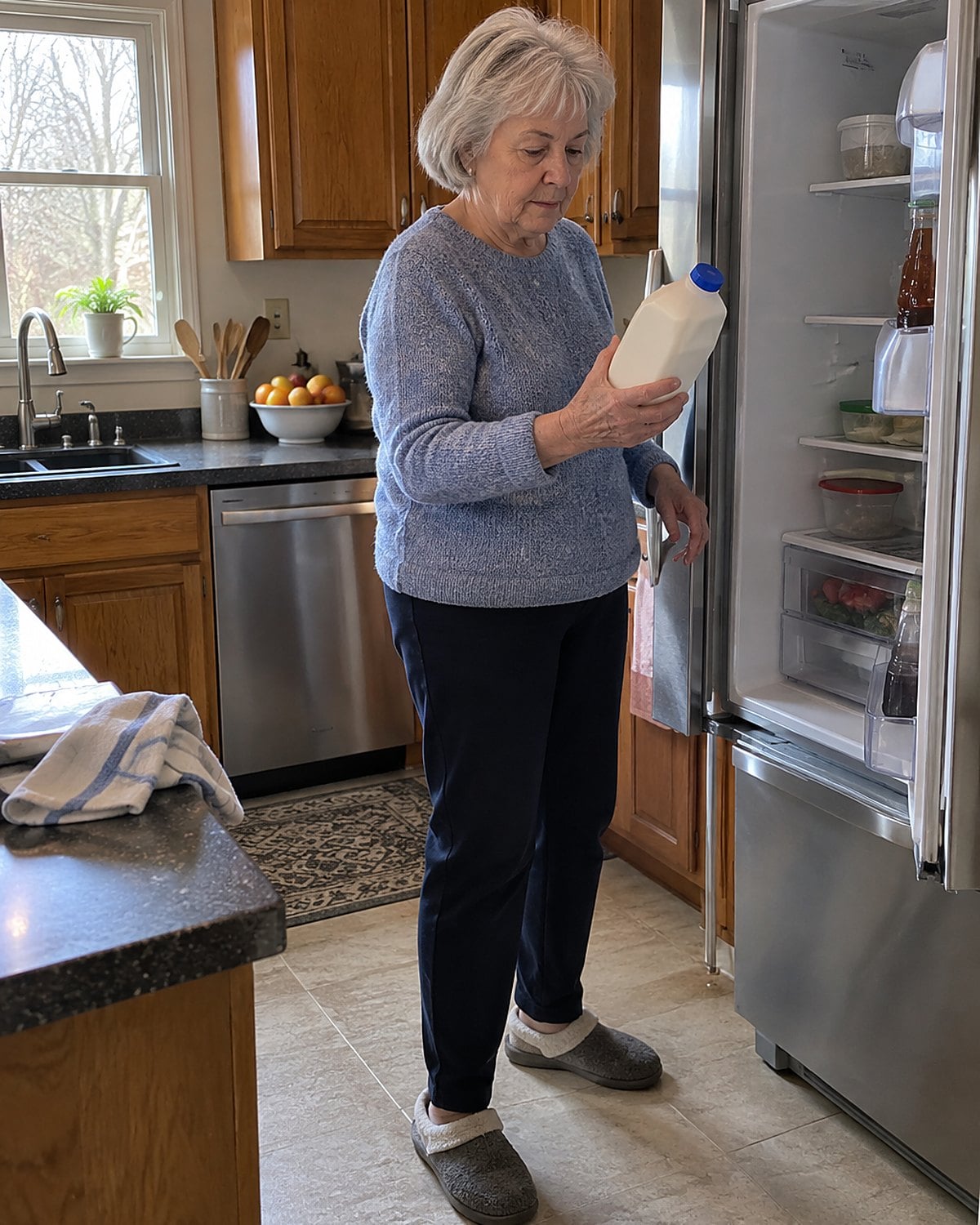
The power came back before breakfast. The fridge light works again, so the milk looks normal beside the eggs. Pause before you pour it.
The USDA's power-outage guidance says an unopened refrigerator keeps food cold for about 4 hours during an outage. Check your appliance thermometer and the time without power. Discard perishable food, including milk, that has been above 40°F for 2 hours or more. Never taste it to decide.
Without a thermometer or a reliable temperature history, don't gamble on perishable food. Write down when an outage begins and keep the door shut. The milk behind it is a real item to judge, not proof that a working fridge light kept anything cold.
#1 The Leftovers in a Warm Fridge
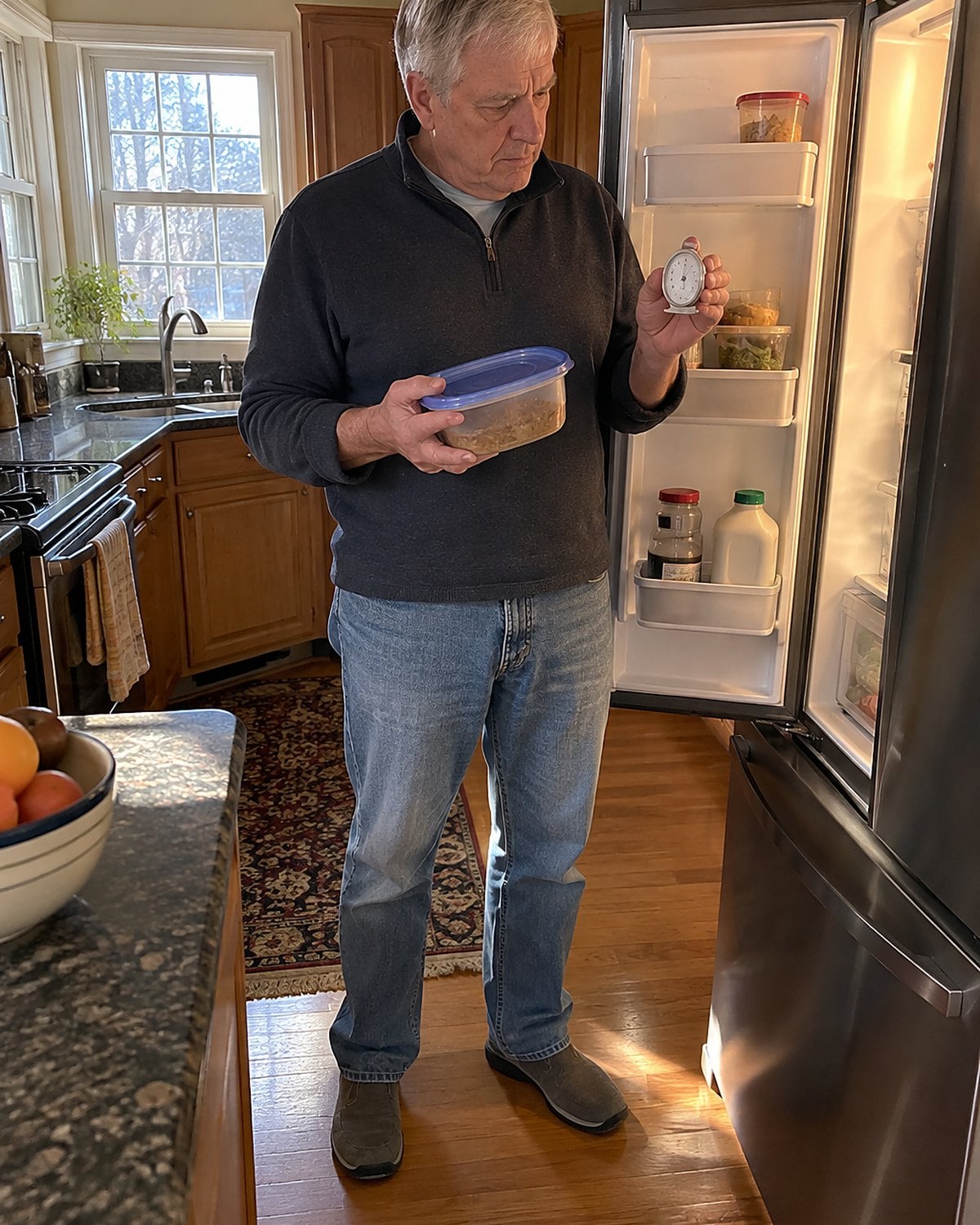
The container is dated. You chilled the food promptly. Yet the thermometer on the shelf reads above 40°F. That leftover dinner now has a question the label cannot answer: how long was it too warm?
The FDA's refrigerator thermometer guidance says to keep the fridge at 40°F or below. A numbered dial won't tell you its actual temperature. Put an appliance thermometer inside, away from the door, and read it after the door has stayed closed for a while.
If the reading is high, adjust the control and check again. Clear blocked vents, check that the door closes fully, and clean crumbs from the gasket. If the fridge stays warm, arrange a repair.
Discard perishables whose time above 40°F you cannot establish. Turning the dial down won't reset their clock. This is the check that gives every date you write on a lid its meaning.
The bottom line
The oldest jar isn't always the first thing to throw out. Opened food, forgotten leftovers, and food kept in a warm fridge deserve the closer look.
You've marked a few dates, frozen what you won't eat soon, and made room to see the back shelf. What would you find if you moved the milk tonight?
For the dinners worth saving, read our Instant Pot Eats guide to storing and reheating leftovers.
Leave a Reply