

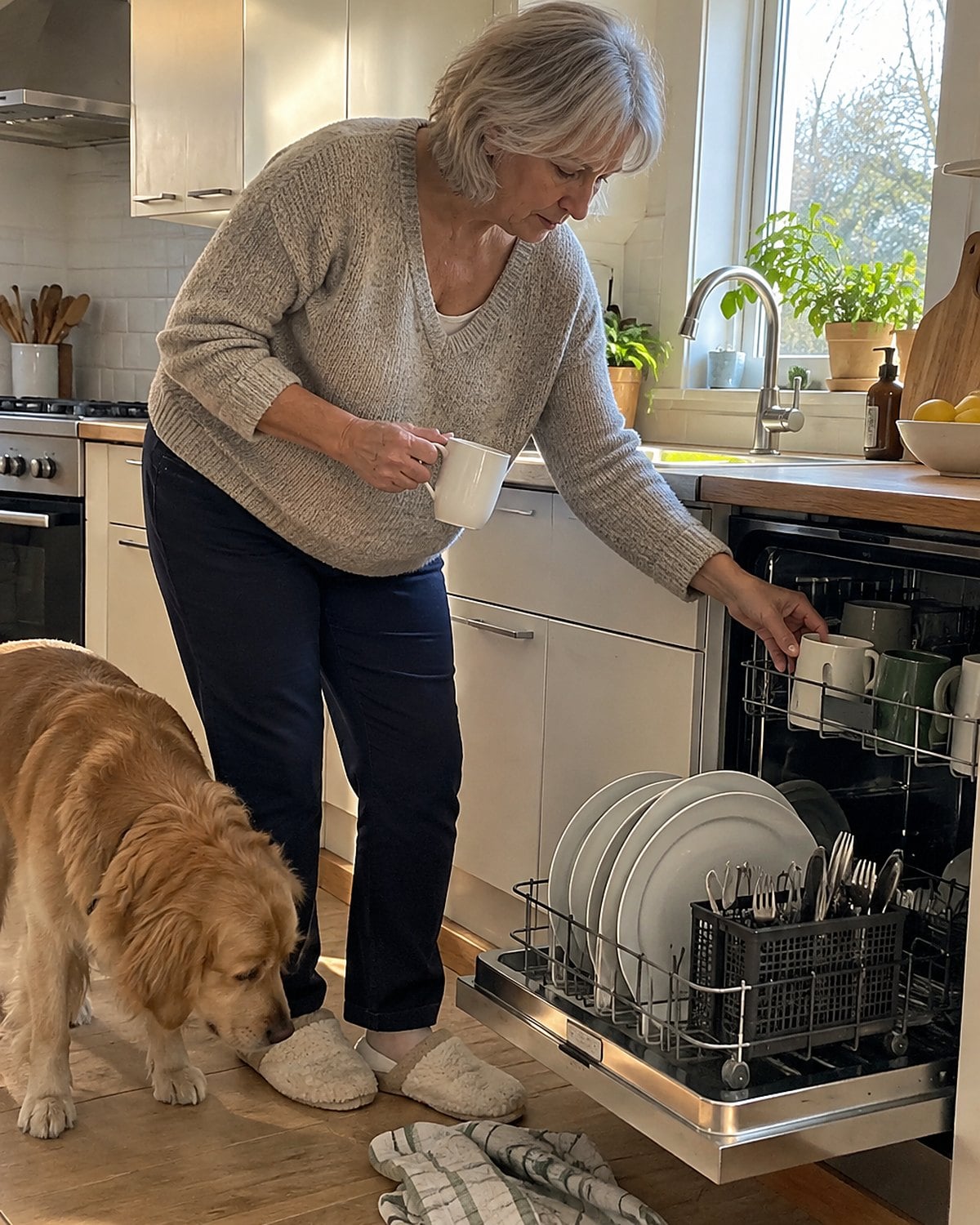
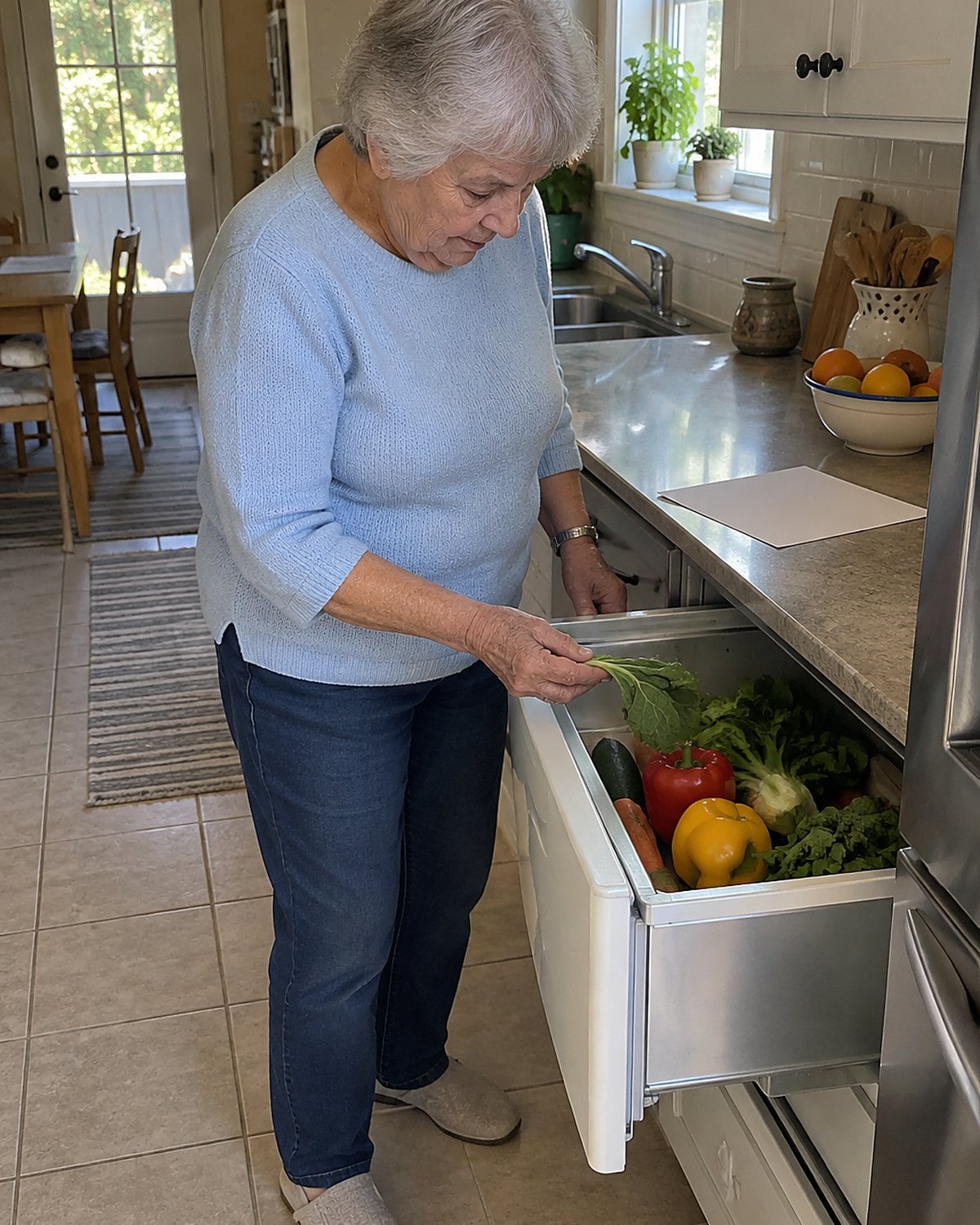
The celery still snaps when you put it in the produce drawer. By Thursday, its leaves have folded over, and the cut end feels rubbery. You needed three stalks for soup. The rest came home because celery comes in a bunch.
Dinner for two has its own arithmetic. A familiar recipe still fills the Dutch oven, while the smaller appetite across the table leaves half a baked potato untouched. You've cooked long enough to know how to use leftovers. The harder part is noticing which old habits make them in the first place.
#24 The produce deal at the market stall
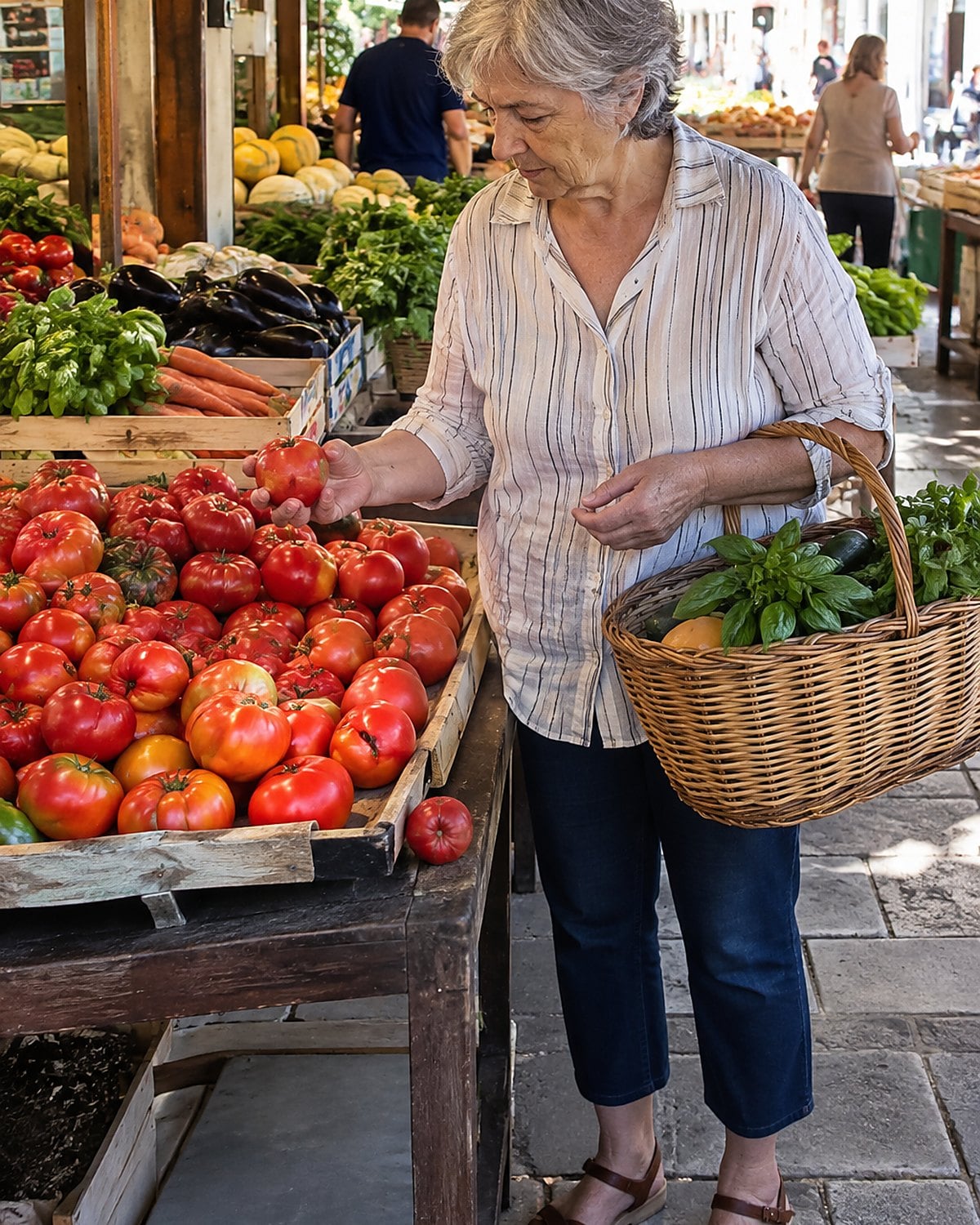
A bargain on tomatoes stops being a bargain when the last ones split on the counter. Before you reach for the larger basket, give each tomato a job. Two for sandwiches, two for sauce, one for tonight's salad. If you run out of meals before you run out of tomatoes, put the basket back.
That pause matters more when the grandchildren visit on weekends. Their appetites are real, but they aren't there on Tuesday. Shop for the people who will sit down this week, rather than the people who once filled every chair.
At a farm stand, ask to buy a smaller amount. At the supermarket, check the loose-produce bin before the bagged display. You keep the pleasure of a ripe tomato without signing up to rescue six of them on Sunday night.
Try it: Instant Pot Tomato Basil Sauce
#23 The family-size bag of salad greens
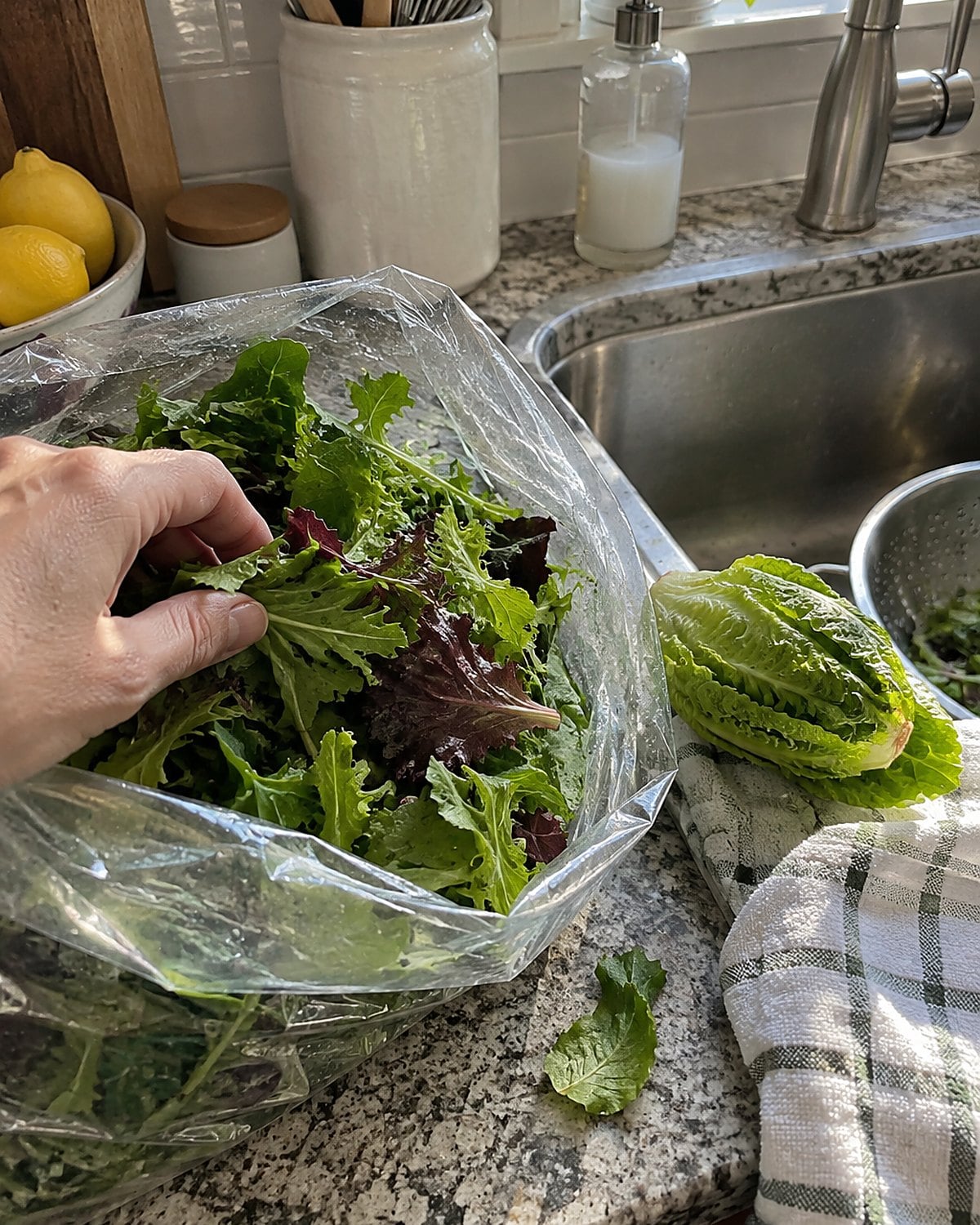
The big bag looks efficient until its leaves turn slick against the plastic. Salad greens need a plan before they need a dressing.
Turn the bag over in the store. Look through the clear part for wet leaves pressed against the seam. At home, open the bag and pull out anything damaged. Use the tender greens early; save sturdier lettuce for later in the week.
Then think beyond salad. A handful of spinach belongs in eggs, soup, or a hot skillet just before serving. That works better than promising yourself a giant salad to finish the bag.
If you want one small salad for dinner, buy one small head. Paying for less food and eating all of it beats carrying home a bag you already know is too large.
#22 The unmarked container in the freezer drawer
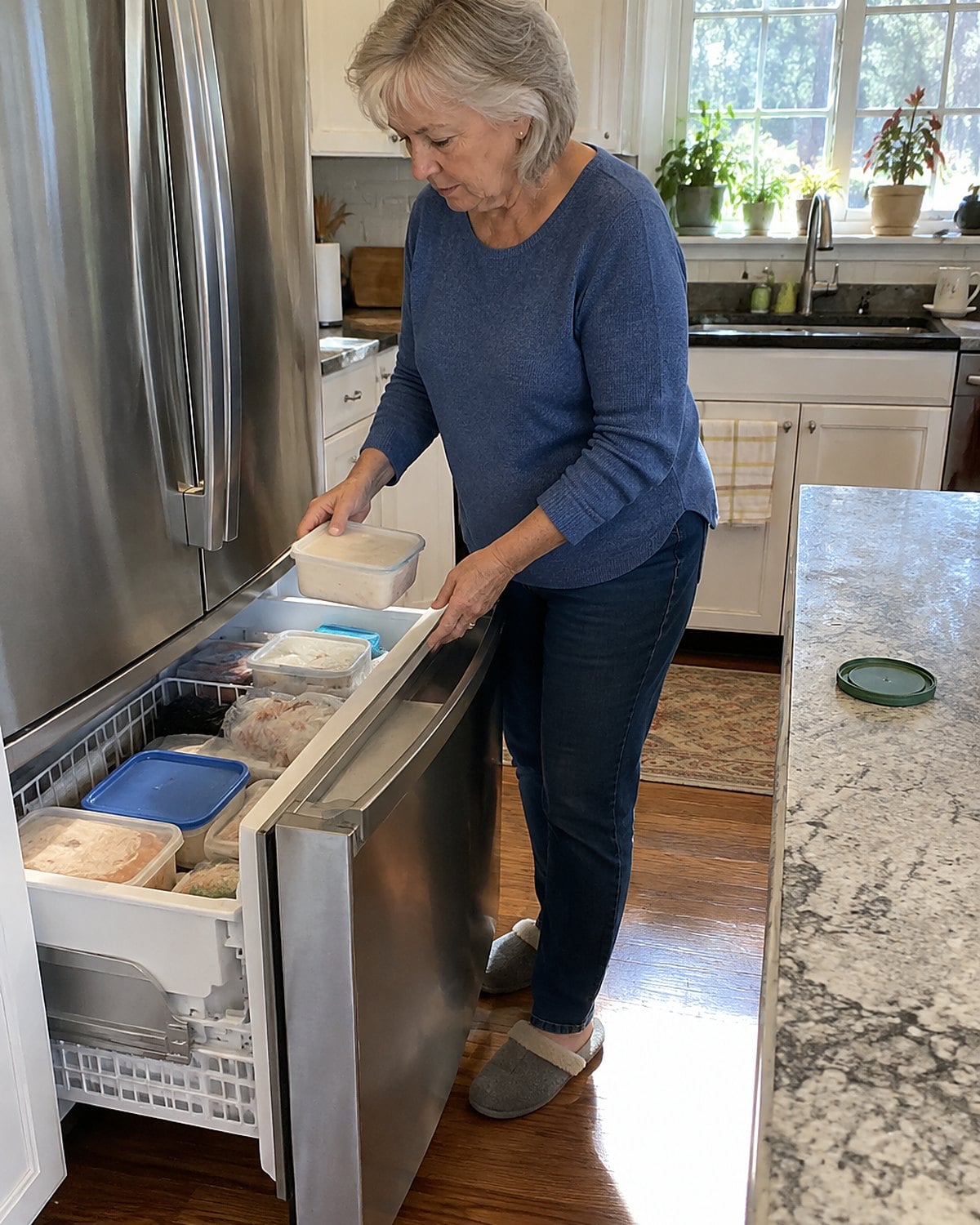
There it is behind the peas: a hard, pale block in a container you recognize but can't identify. Soup? Gravy? Mashed potatoes? You lift the lid, get no answer, and slide it back.
The label has to go on before the food freezes. Write what it is, the date, and enough detail to make it useful: “tomato sauce, no meat” tells you more than “sauce.” A strip of freezer tape and a marker earn their space in the drawer with the twist ties.
Freeze the portion you would actually thaw for a meal. A flat bag of chili takes less room than a deep tub and gives you an easier view of what's inside. If you're freezing soup, leave room for it to expand.
Tonight, pull the oldest labeled package to the front. The mystery block needs identifying before it earns another season in there.
#21 The milk carton behind the jam
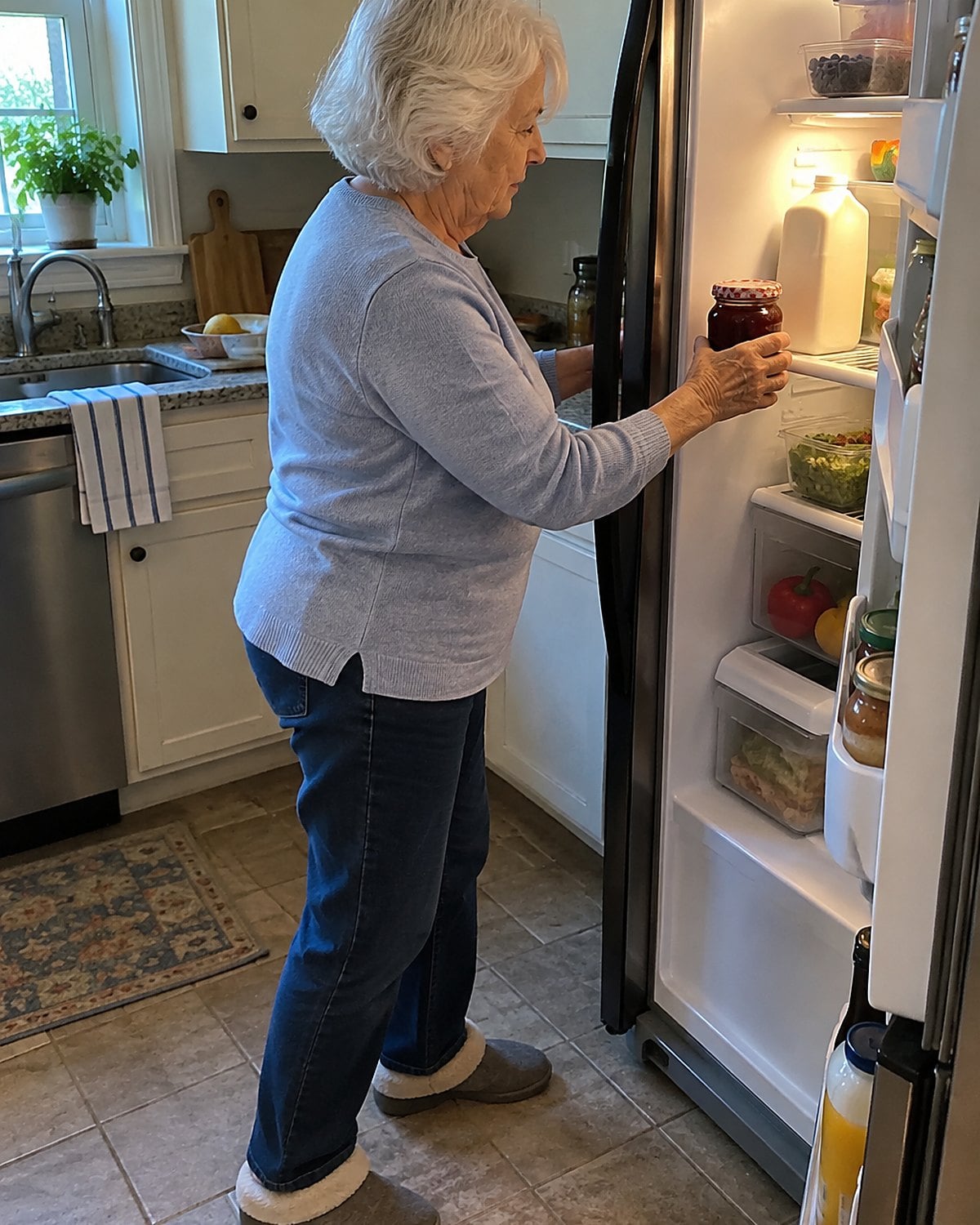
You bought fresh milk because you couldn't see the open carton. The jam and mustard had formed a wall in front of it. Now there are two cartons taking up the shelf.
Give open dairy one visible spot, away from raw meat. Put the newer carton behind the older one so you reach for the one already open. If the door is crowded, choose a shelf you see as soon as you open the fridge.
The FDA's refrigerator advice says to keep the refrigerator at 40°F or below. Put an appliance thermometer on the shelf near the milk. The dial tells you what you set; the thermometer tells you what's happening inside.
Before shopping, open the fridge. Don't trust a list written from memory at the kitchen table. If the carton is nearly empty, write milk down. If it's full, cross it off, and leave it where you'll see it tonight.
#20 The celery bunch in the produce drawer
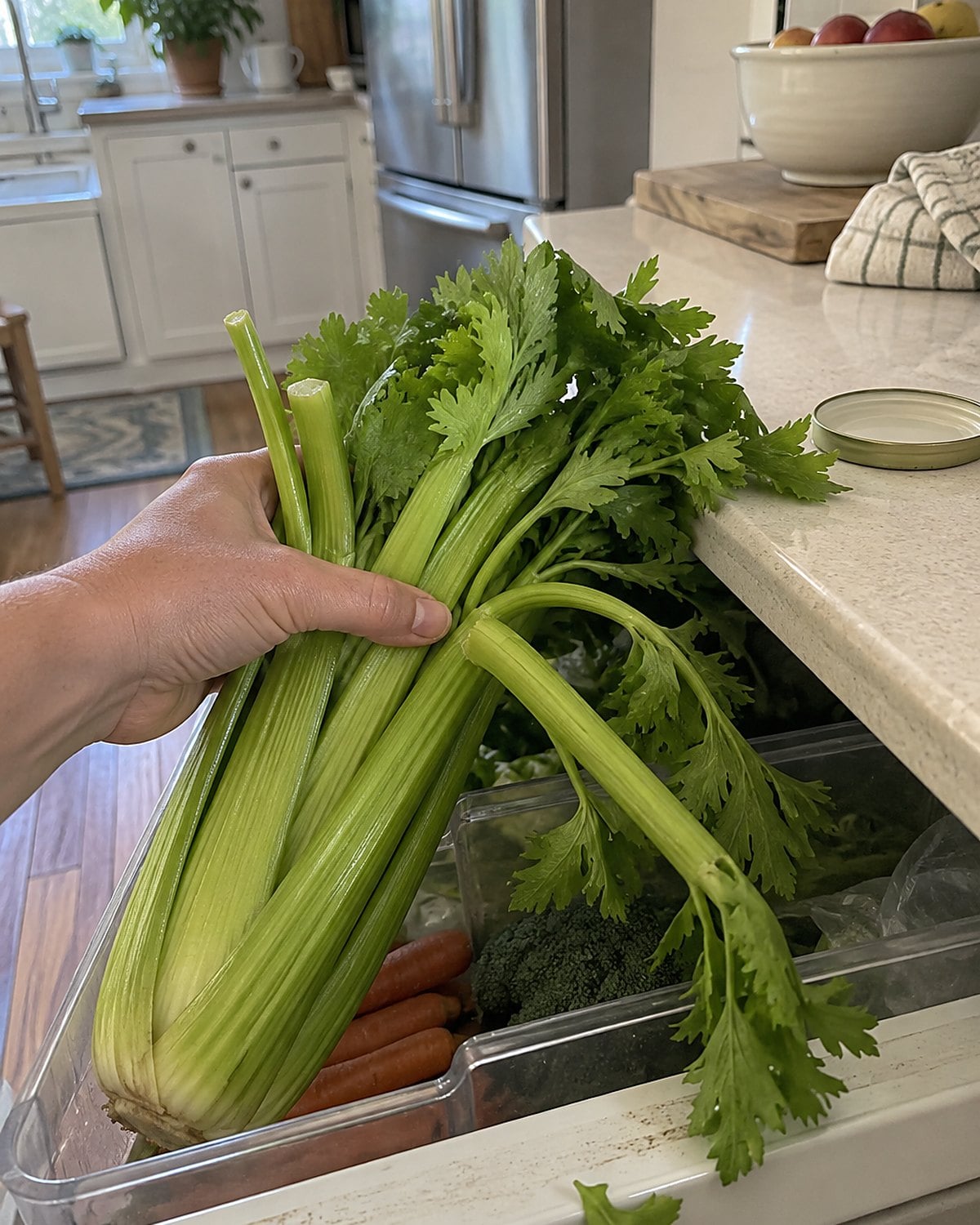
Celery has a way of making you feel as though you failed a test nobody explained. The recipe asked for three stalks. The store sold you the whole bunch. A week later, the leaves are limp and the ends bend instead of snapping.
Give the bunch two jobs when you get home. Wash the stalks you need soon, dry them well, and wrap the rest before they disappear under the lettuce. Put celery where you'll see it when you open the drawer. A bag tucked beneath carrots turns into compost without a single dramatic mistake.
The remaining stalks don't need another pot of soup. Slice them into tuna salad, dice them with onion for a skillet supper, or chop and freeze them for a cooked dish. Frozen celery loses its crunch, so don't save it for raw sticks.
Keep the leafy tops, too. They bring celery flavor to broth and chicken salad. If the stalk has gone slimy or smells wrong, throw it out. The useful habit is deciding what the rest of the bunch will become while it still snaps.
Try it: Instant Pot Risotto With Celery & Peas
#19 The parsley stems beside the cutting board
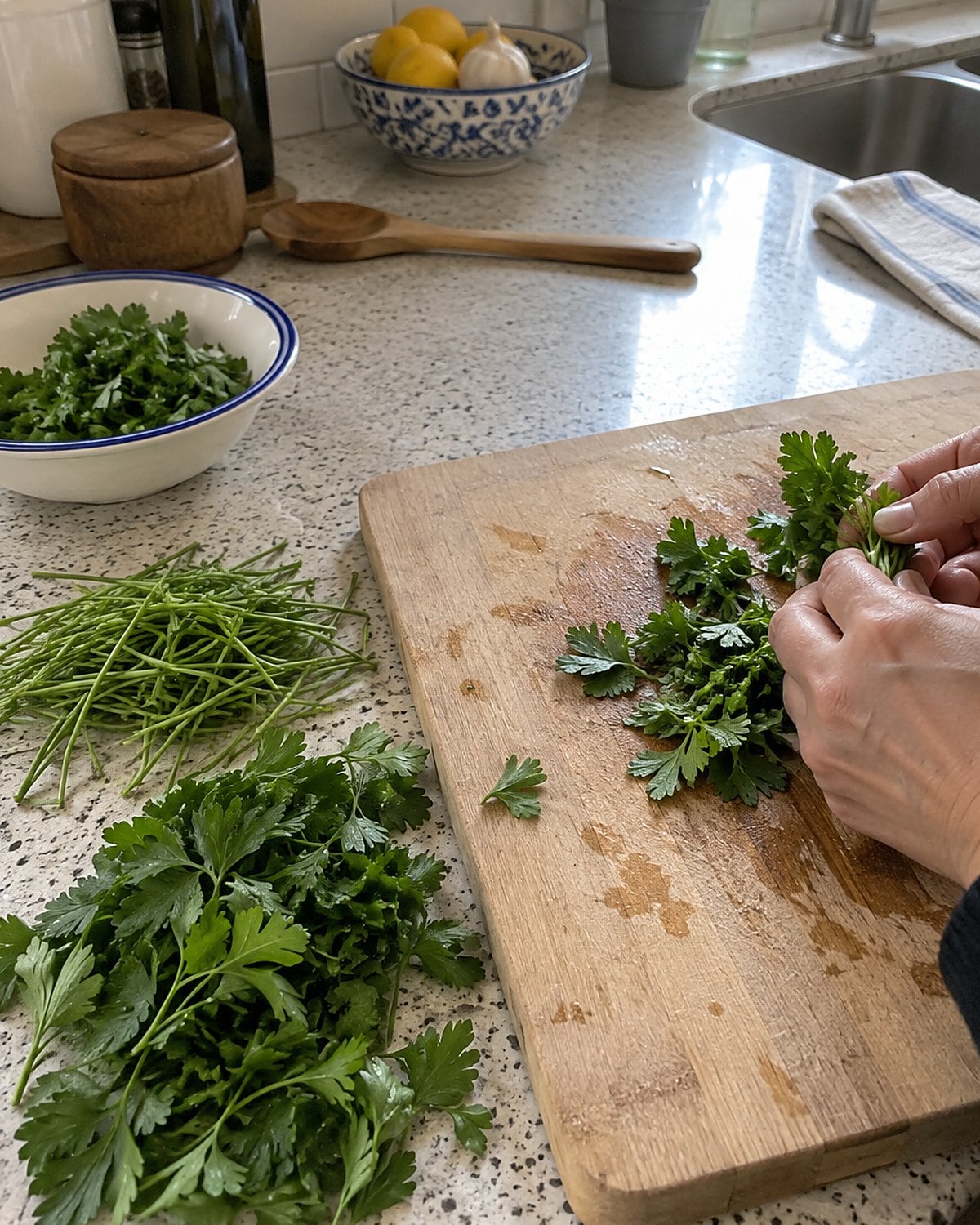
A pile of parsley stems lands in the trash because the leaves were the part the recipe named. Stop before you sweep them away.
Tender parsley stems have flavor. Chop the thin upper stems with the leaves for a sauce or soup. Save the thicker lower stems for a pot of beans or broth, where you'll remove them before serving. The same sorting works with cilantro, though its stems are tender enough to chop into salsa.
Here's the counter test: bend a stem. If it snaps and cuts cleanly, chop it. If it feels woody, keep it out of the finished dish.
None of this asks you to make stock from every scrap. It asks you to look at the little green pile before the knife pushes it into the can.
#18 The loaf left beside the toaster
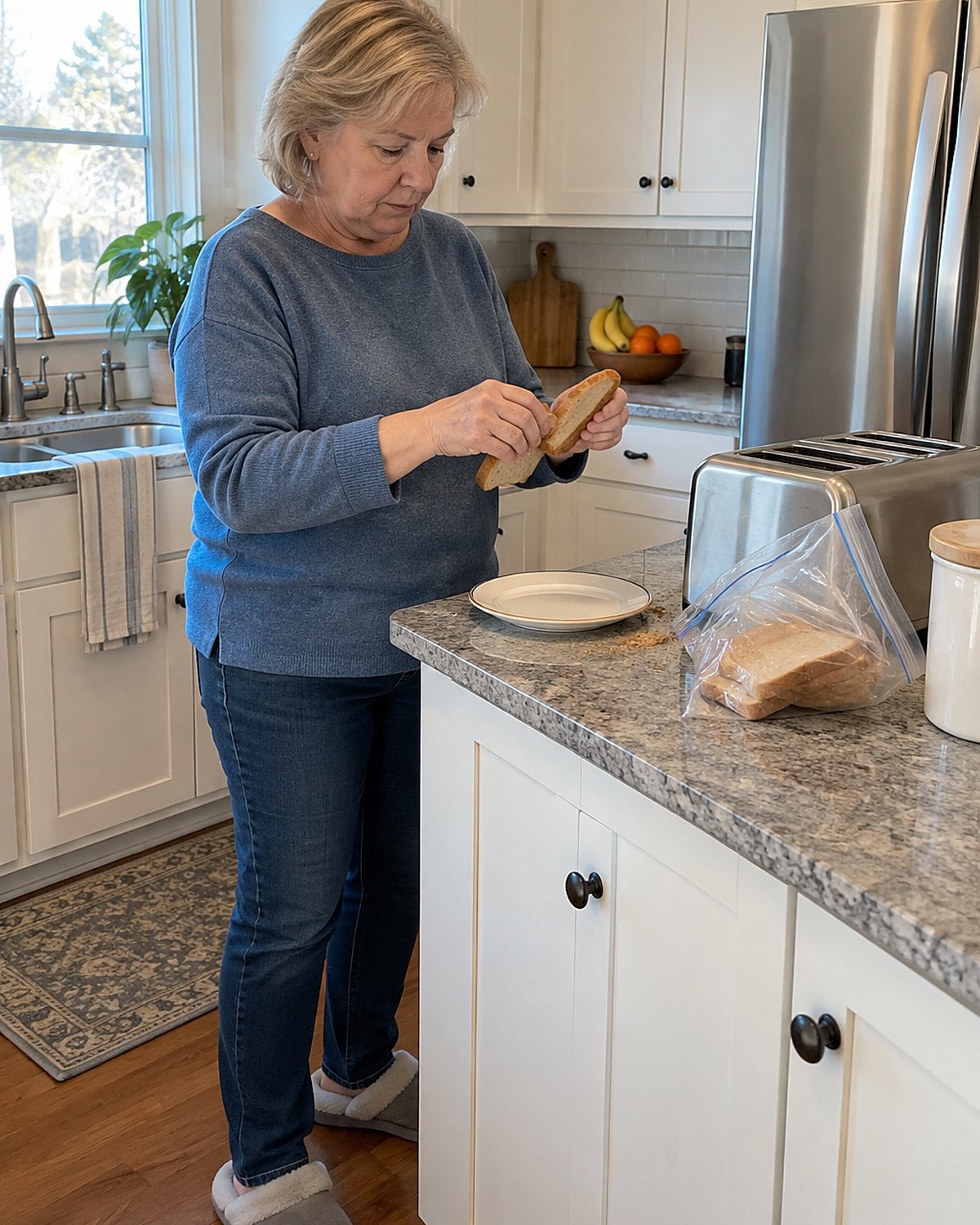
The toaster pops, and you reach into the bread bag for a slice with stiff edges. Breakfast is late enough without sorting through the rest of the loaf. If you find mold, throw out the loaf rather than trimming around the spot.
Bread loses its pleasant texture in the refrigerator. For the loaf you won't eat soon, the freezer is a better stop. Separate slices before freezing so you don't have to wrestle apart a solid stack.
Leave out the amount you'll use over the next couple of days. Freeze the rest while it still tastes fresh. A frozen slice goes straight into the toaster; thicker pieces need more time. If you like sandwiches, freeze pairs together in small bags.
That church cookbook with the broken spine probably assumes a full table at lunch. Your bread bag doesn't have to. Keeping half a loaf frozen means the last sandwich tastes like a choice, not a deadline.
Try it: Herb & Garlic Sourdough Croutons (Great For Soups & Stews)
#17 The sour cream tub for one spoonful
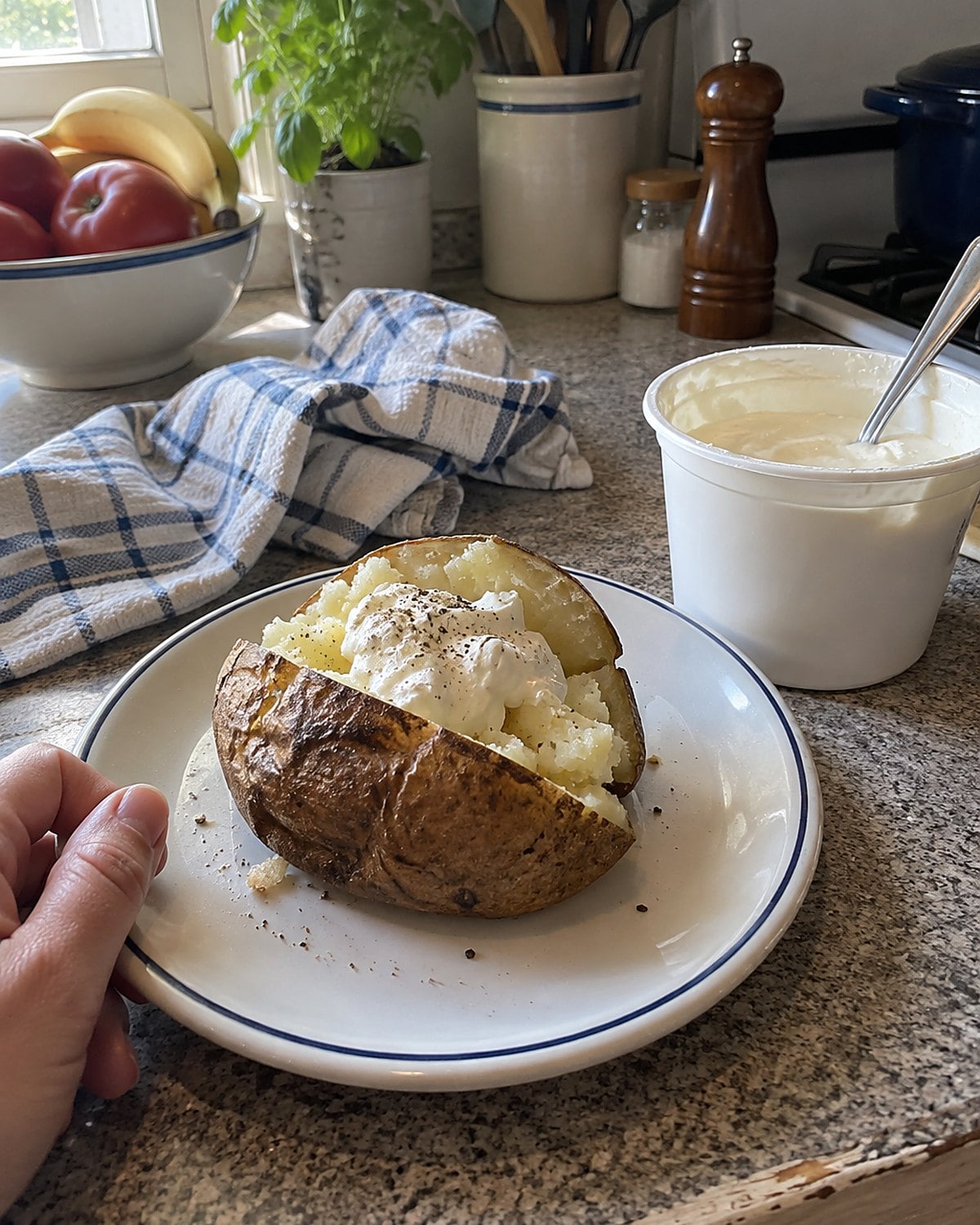
“What else uses this?” is worth asking before the sour cream goes in your cart. The recipe needs a spoonful, but the tub will still be there when you look for butter next week.
Baked potatoes, tacos, and a bowl of beans give the tub more than one appointment. If none of those meals are coming, consider plain yogurt where its flavor suits the dish. Don't swap it into a recipe that depends on sour cream's fat or thickness without thinking about the result.
Mark the date you open the tub. A printed date alone won't tell you how long it has been open. Check the USDA FoodKeeper for storage guidance, and discard food with mold or an off smell.
The smaller tub costs you less trash when the larger one has no second job.
Try it: Sour Cream Mashed Potatoes (Instant Pot Step-By-Step Recipe)
 You might also like24 Pantry Items That Last Years, So Stop Replacing Them
#16 The eggs bought for a single bake
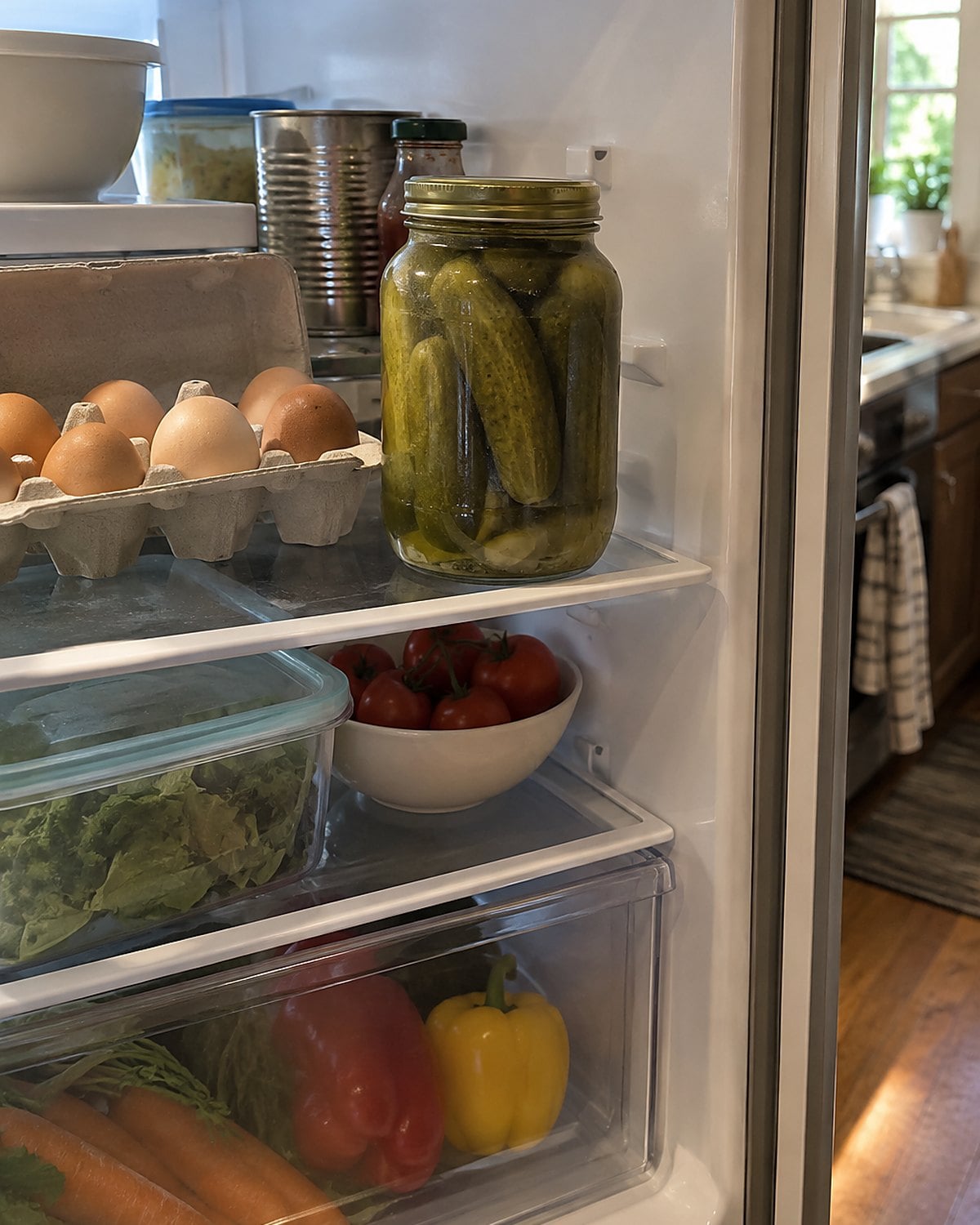
The cake needs eggs. The carton holds more than the cake does. That's fine if breakfast already includes them; less fine if the carton gets pushed behind the pickles.
Before shopping, look at the eggs you have. Then decide how the remaining ones will appear: scrambled beside toast, hard-cooked for lunch, or folded into fried rice. Keep eggs in their carton inside the refrigerator rather than in the door, where temperatures change as it opens.
If you need a doneness check, use a thermometer for egg dishes such as casseroles. The USDA's egg safety guidance gives the cooking and storage details.
One planned breakfast does more for that carton than a vague promise to bake again.
Try it: Instant Pot Egg Bites With Cheese & Jalapeños
#15 The second bag on the pantry shelf
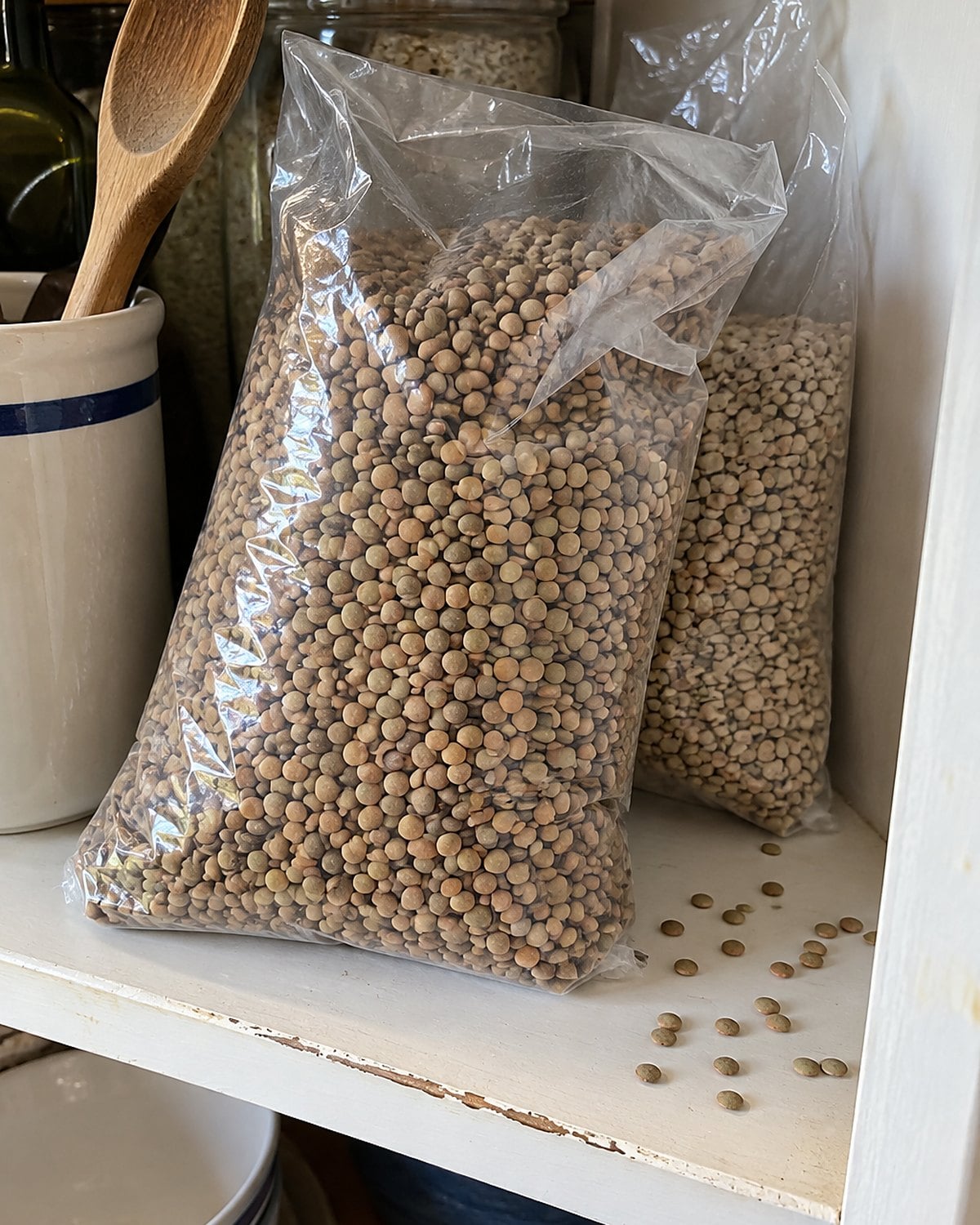
You reach past an open bag of lentils to put away a new one. Later, the older bag looks dusty enough that you hesitate to cook it. Pantry waste starts long before anything spoils.
Make the open package visible. Pour new dry goods into a clear container only if you'll keep its label or write down what's inside. Different grains and beans look remarkably alike from above. Put the older package in front, and don't combine new beans with old ones if you'll lose track of which to cook first.
A pantry check before shopping takes less work than sorting it afterward. Look at the rice, pasta, beans, and baking supplies you actually use. If there's a half bag of rice, put a rice supper on the list instead of another bag.
You don't need matching jars. A clothespin on a folded bag works. What matters is seeing the food you already paid for while there's still time to make dinner with it.
Try it: Instant Pot Lentil Stew (Veggie-Loaded , Step-By-Step)
#14 The mustard jar with a crusted lid
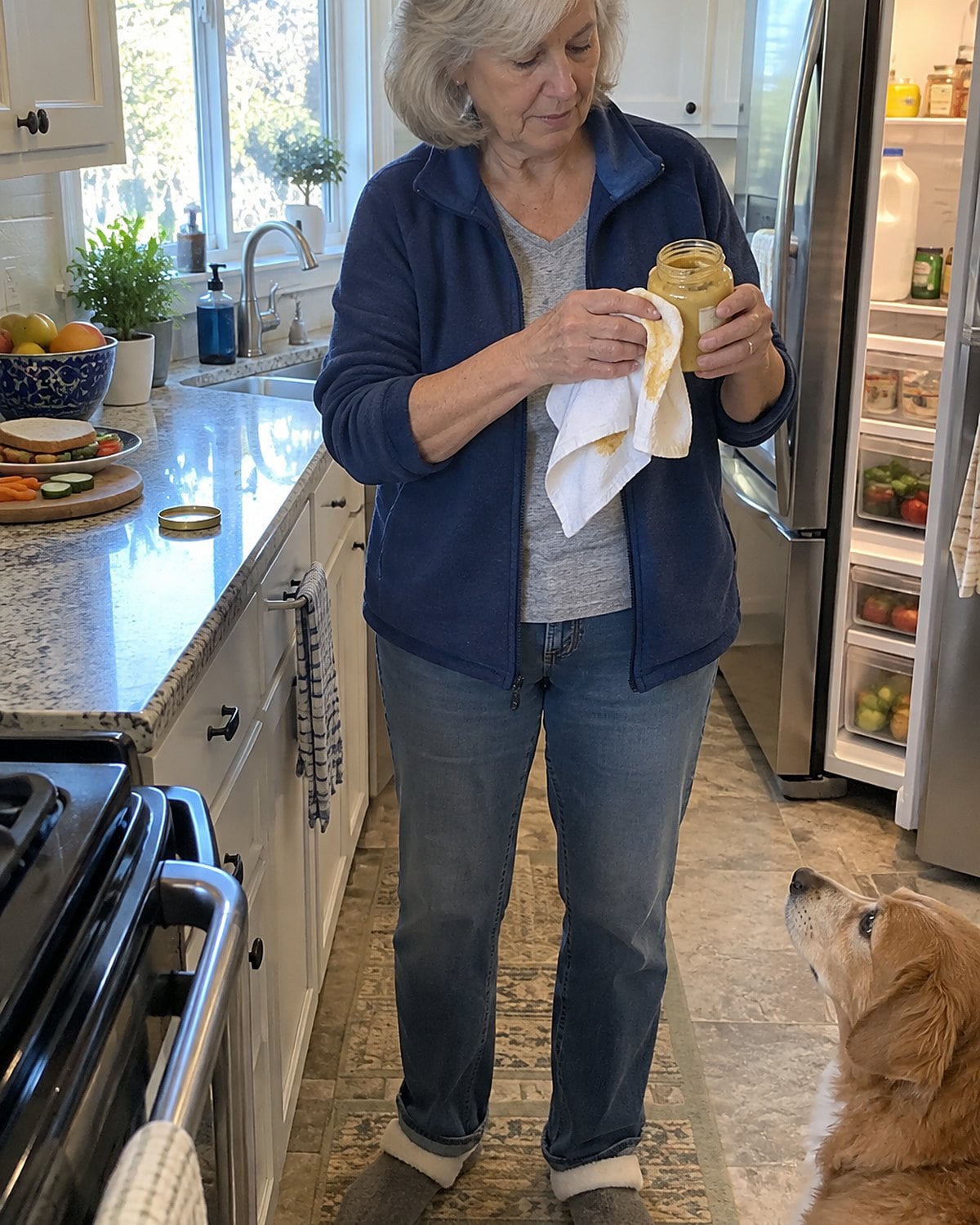
The refrigerator door holds condiments from meals you no longer make. A jar with a crusted lid doesn't become useful because you hate wasting food.
When you open a new condiment, put the date on the lid. Check the label for refrigeration directions and use the USDA FoodKeeper when you're unsure how long an opened jar belongs there. Don't taste a questionable jar to decide whether it's safe.
For the good jars, plan a meal around a flavor you already own. Mustard makes a sharp dressing for potatoes. A spoon of jam loosens into a glaze for roasted carrots. Neither requires buying another sauce.
Clear one door shelf before the next grocery trip. You'll see what's there without unpacking a museum of half-used bottles.
#13 The extra serving on each dinner plate
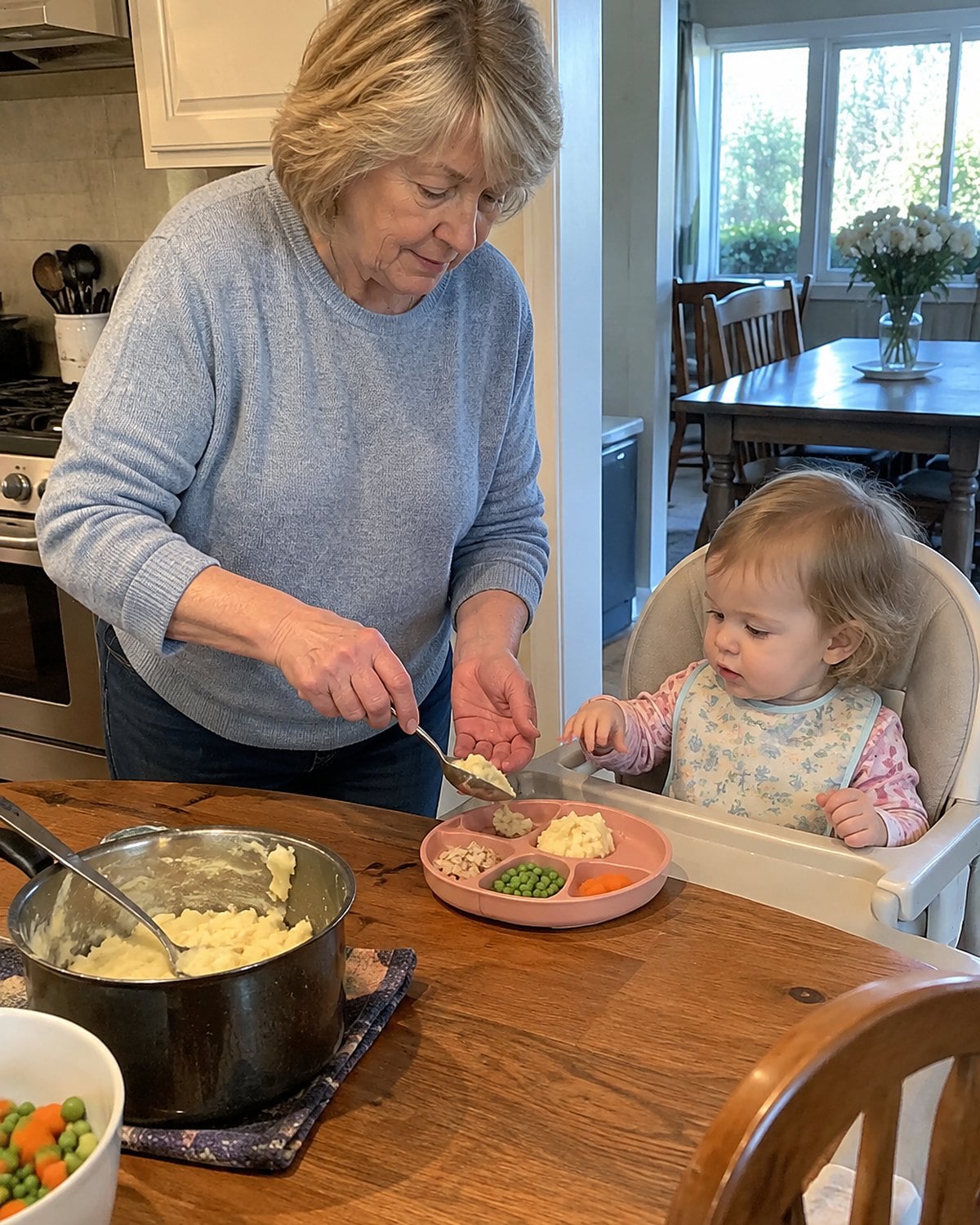
The serving spoon knows the old household better than it knows the one eating tonight. It drops a generous mound on both plates, and the second plate comes back half full.
Serve a smaller first helping and leave the rest in the pan. Anyone who wants seconds knows where they are. Food left in the serving dish is easier to pack for lunch than food that has sat through dinner on a plate.
This matters with grandchildren, too. A small first serving gives them room to ask for more. You don't have to guess how hungry a child is from the size of the chair.
When dinner ends, refrigerate perishable leftovers promptly. The USDA's leftovers guidance says to put them away within 2 hours, or within 1 hour when it's above 90°F. Tomorrow's lunch starts with what stayed in the pan.
#12 The half onion on the cutting board
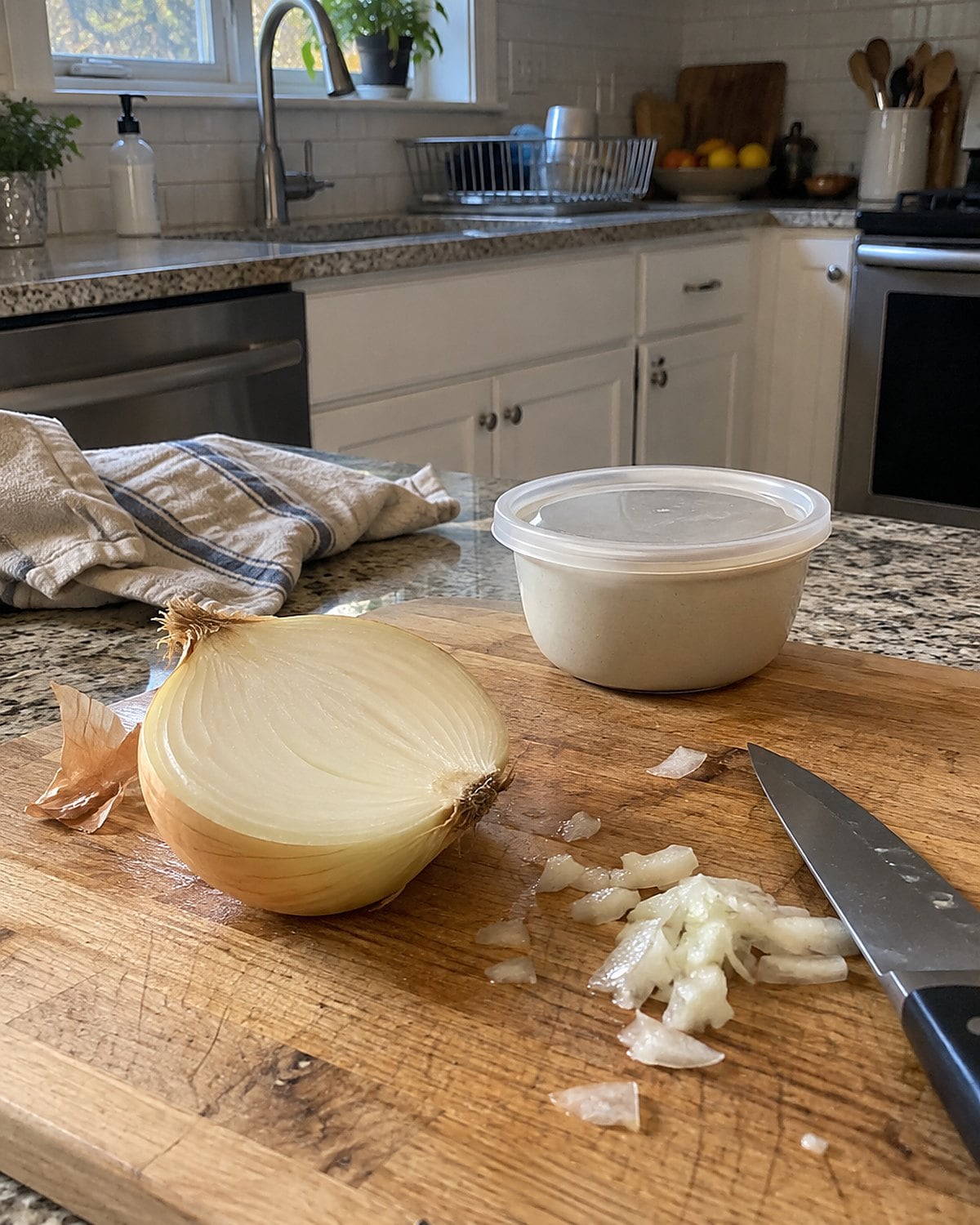
Half an onion goes into dinner. The other half waits on the board while you wash dishes, then lands in the trash because putting it away feels hardly worth it.
Set a small container beside the knife before you start chopping. Drop the unused half in as soon as you've taken what the dish needs. The next meal gets a head start: eggs, a skillet of potatoes, or soup all welcome chopped onion.
Better yet, chop the whole onion while the board is dirty. Put the extra in a covered container in the refrigerator and use it promptly. If you won't use it soon, freeze it for a cooked dish. Its texture changes after freezing, so skip it for a raw sandwich.
The rescue takes place before you wipe the counter.
#11 The Dutch oven filled to its old mark
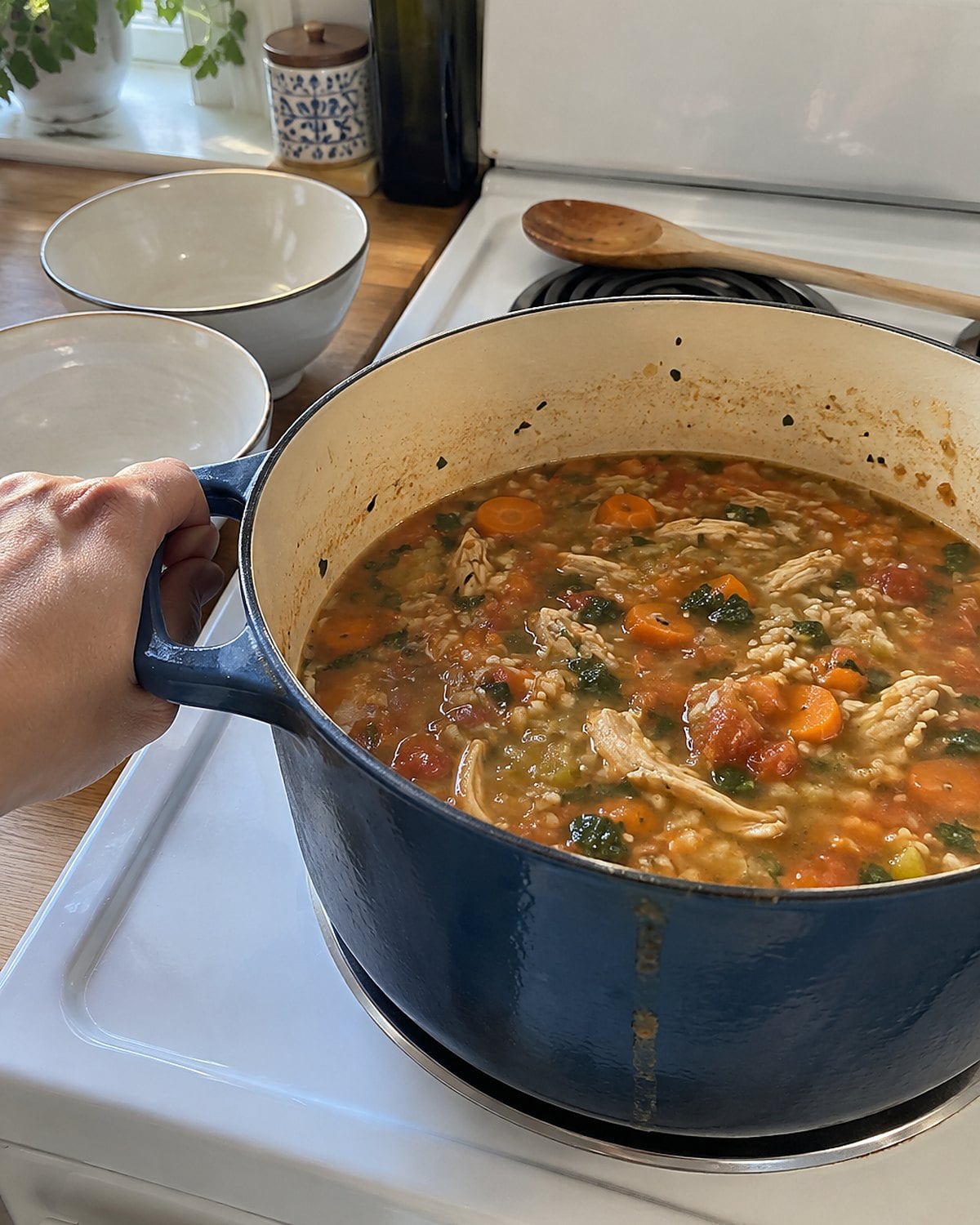
“Are we eating this again tomorrow?” Ask before the broth goes in. The soup pot has a remembered fill line, and it's easy to reach it with beans, carrots, and the rest of the celery.
Start with the bowls instead. Think about what two people want tonight and whether tomorrow's lunch sounds welcome. A smaller pot fits that answer. A wide Dutch oven makes a modest batch look bare, which tempts you to keep adding ingredients.
Taste before you enlarge the batch. A concentrated spoonful of soup needs seasoning or water, not another can of beans. Add liquid in stages, especially after starchy ingredients have cooked and thickened it.
Set out containers if you deliberately make extra. Put the planned portions away promptly while you still know what they are. The USDA's cold storage chart lists 3 to 4 days in the refrigerator for soups and stews. Now the pot has a next step.
#10 The full scoop of uncooked rice
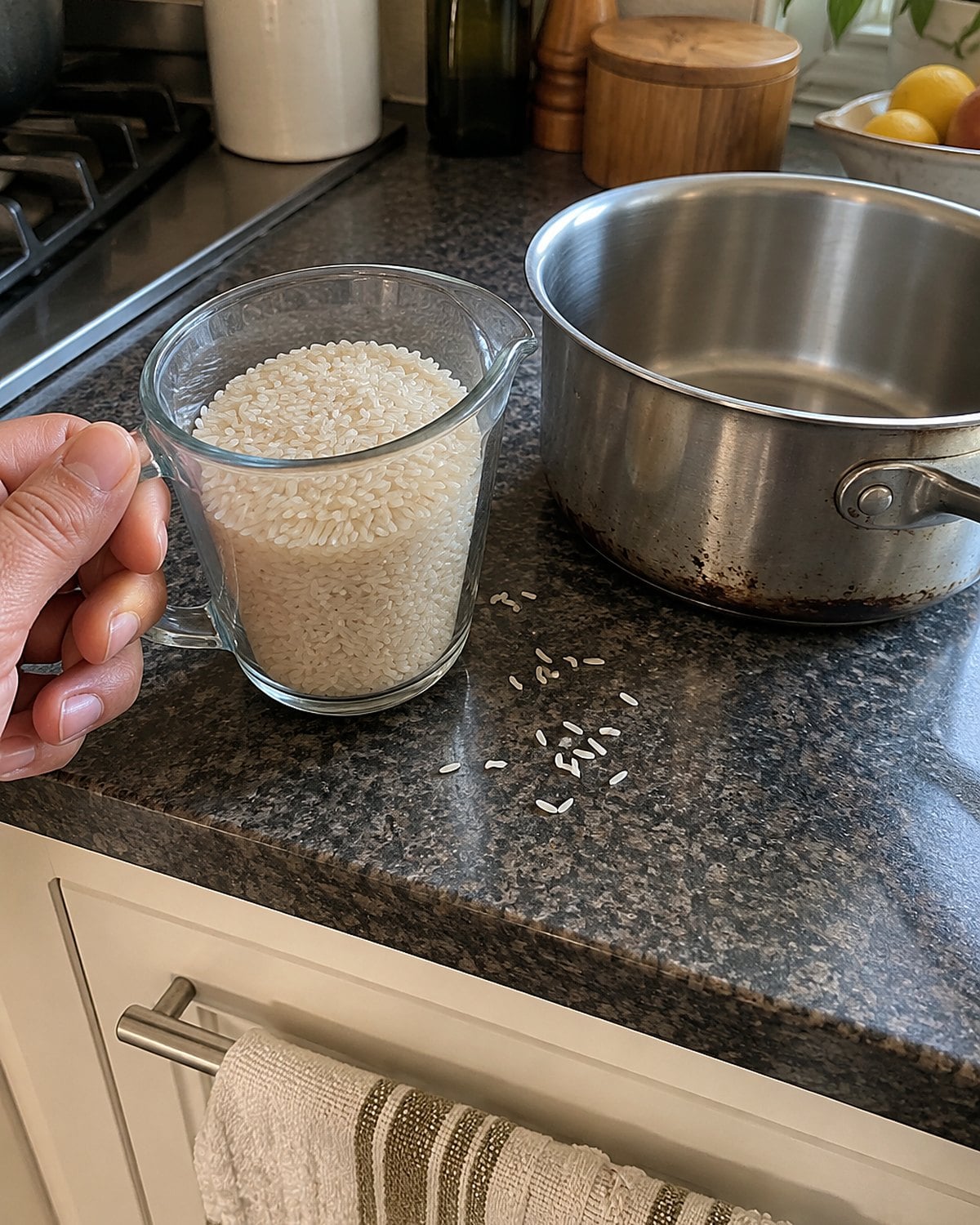
The measuring cup slides into the rice bag on habit. You pour the usual amount into the pot, though there are only two plates beside the stove.
Rice expands as it cooks, so measure the dry rice for the meal you intend to serve. For many dinners, ½ cup dry rice gives roughly 1 ½ cups cooked. Check the package for the grain you're using, and adjust to your appetites.
If you're planning fried rice, make that plan before cooking. Spread cooked rice in a shallow container, refrigerate it promptly, and keep it cold until you're ready to use it. The FDA's food storage advice is a good check when you have questions about chilling leftovers.
Otherwise, leave the extra dry rice in the bag. It will wait there without claiming a shelf in your refrigerator.
#9 The roast pan holding a whole chicken
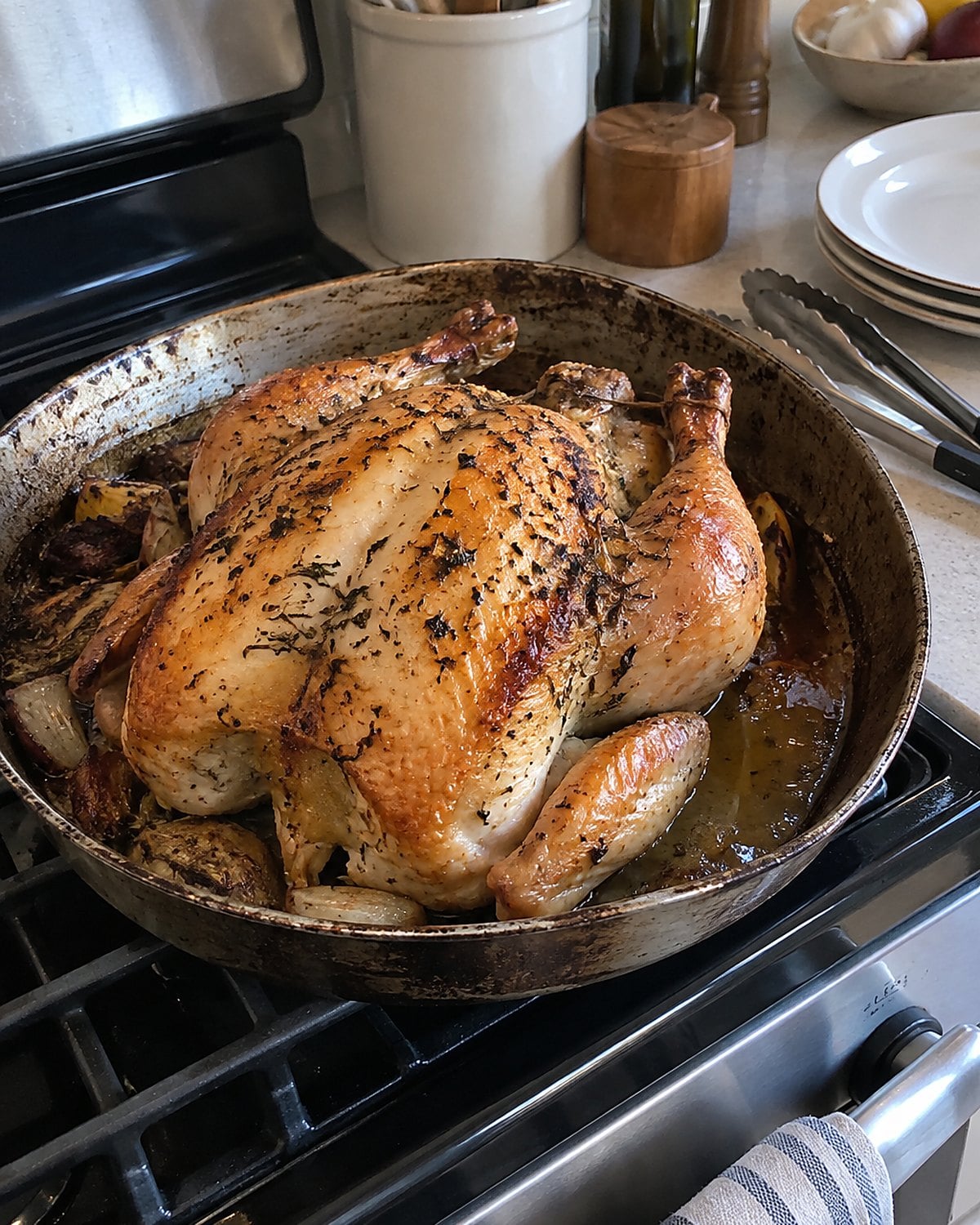
A whole chicken fills the kitchen with the smell of Sunday dinner. On Monday, though, there are still two legs and half a breast in the refrigerator. By Wednesday, nobody wants chicken again.
If you want the bird, name its later meals before it goes in the oven. Serve the roast once, pull meat for sandwiches, and use another portion in soup. Refrigerate the leftovers promptly. The USDA's cold storage chart gives cooked poultry 3 to 4 days in the refrigerator.
If that schedule sounds tiresome, buy chicken pieces instead. You get the skin and browned pan juices without committing to an entire bird. Cook poultry to 165°F, checking the thickest part with a thermometer away from the bone.
The roast pan isn't the problem. The useful question is whether you want the meals that follow it.
Try it: Instant Pot Roast Chicken & Potatoes (Duo Crisp Or Oven Finish)
 You might also like26 Things Grocery Workers Wish Shoppers Over 60 Knew
#8 The jarred pasta sauce for two bowls
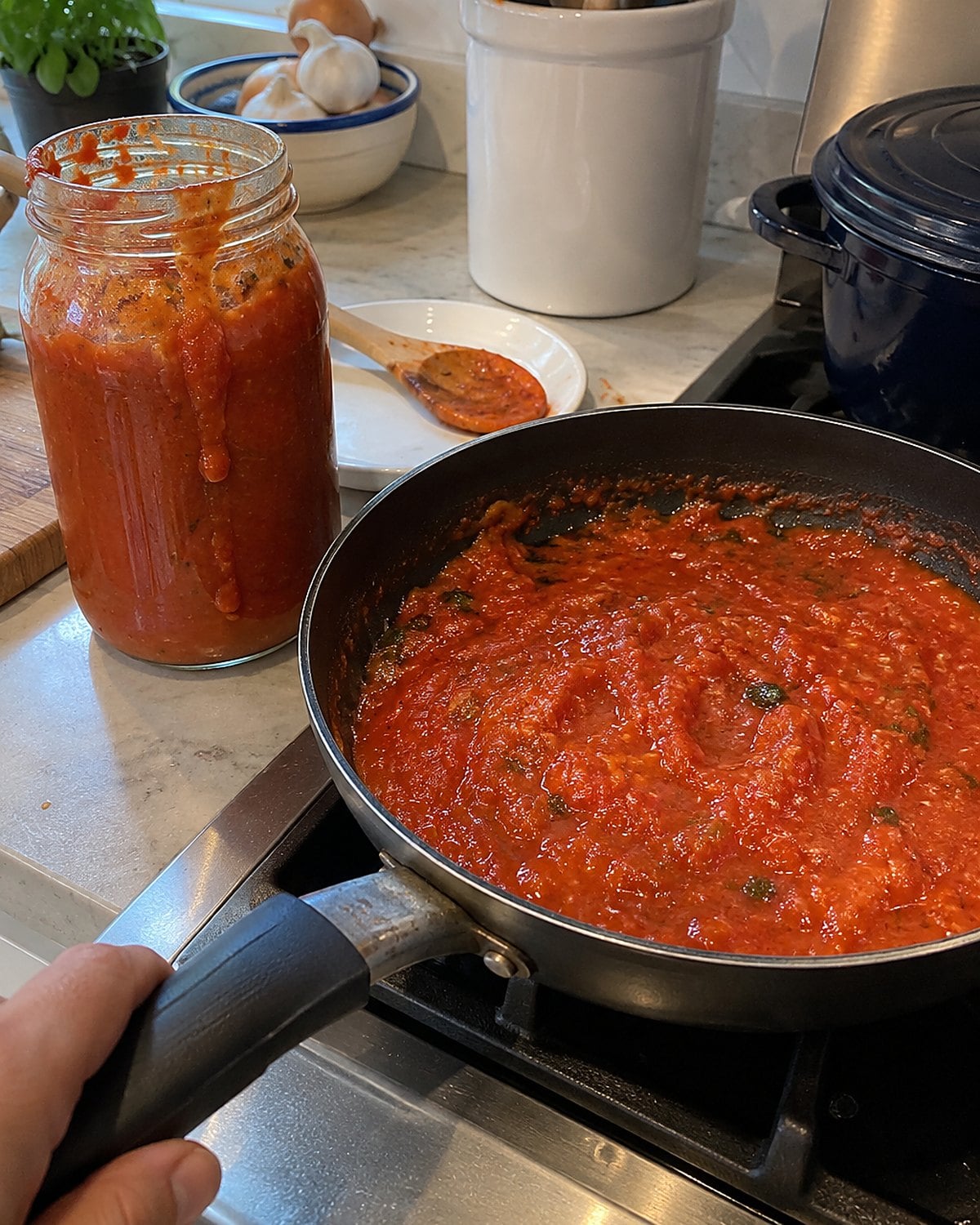
A little sauce looks lost in the big skillet. So you pour in the whole jar, add more pasta, and end up cooking dinner for people who aren't coming.
Use a smaller skillet for two bowls. Warm only the sauce you need, then put the rest in a clean, covered container. Write the date you opened the jar on it. For storage guidance, check the label and the USDA FoodKeeper rather than relying on the jar's unopened date.
Taste before adding more. Pasta water loosens a thick sauce, while a longer simmer thickens one that's too loose. Neither adjustment requires another pour from the jar.
If the pan looks right but the plate still seems spare, add something you planned to eat alongside it. The sauce doesn't have to set the size of the whole meal.
#7 The freezer bag full of vegetable scraps
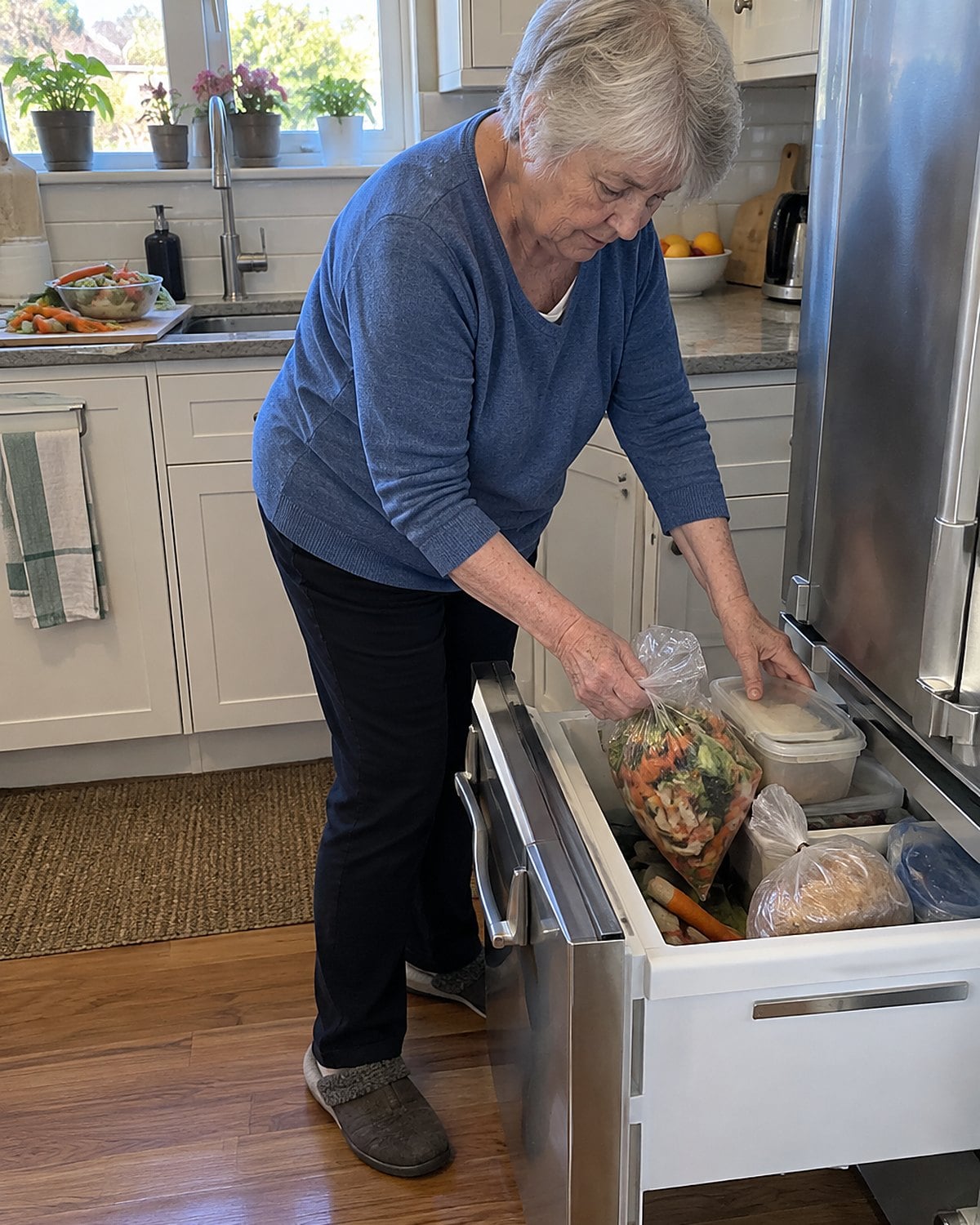
You tuck carrot peels into a freezer bag, then onion skins and parsley stems. Months later, the bag is enormous and you still haven't made broth.
Give scraps a purpose before saving them. Keep clean carrot ends, celery leaves, onion trimmings, and herb stems from ordinary cooking. Leave out anything spoiled. Skip strongly flavored scraps unless you already know you like them in broth. The cabbage core that dominated the last pot has taught you enough.
Choose a bag size that fits the pot you use. When it's full, put broth on the calendar or stop saving scraps. A freezer bag is storage, not a duty to collect every peel.
Broth also takes time and freezer space. If you won't cook it, put the trimmings in compost where that service exists. Your good habits should make dinner easier. They shouldn't give you another bulky bag to move whenever you reach for the peas.
Try it: Instant Pot Stocks & Broths (Meat, Fish, Mushroom, Veggie)
#6 The lunch container no one claimed
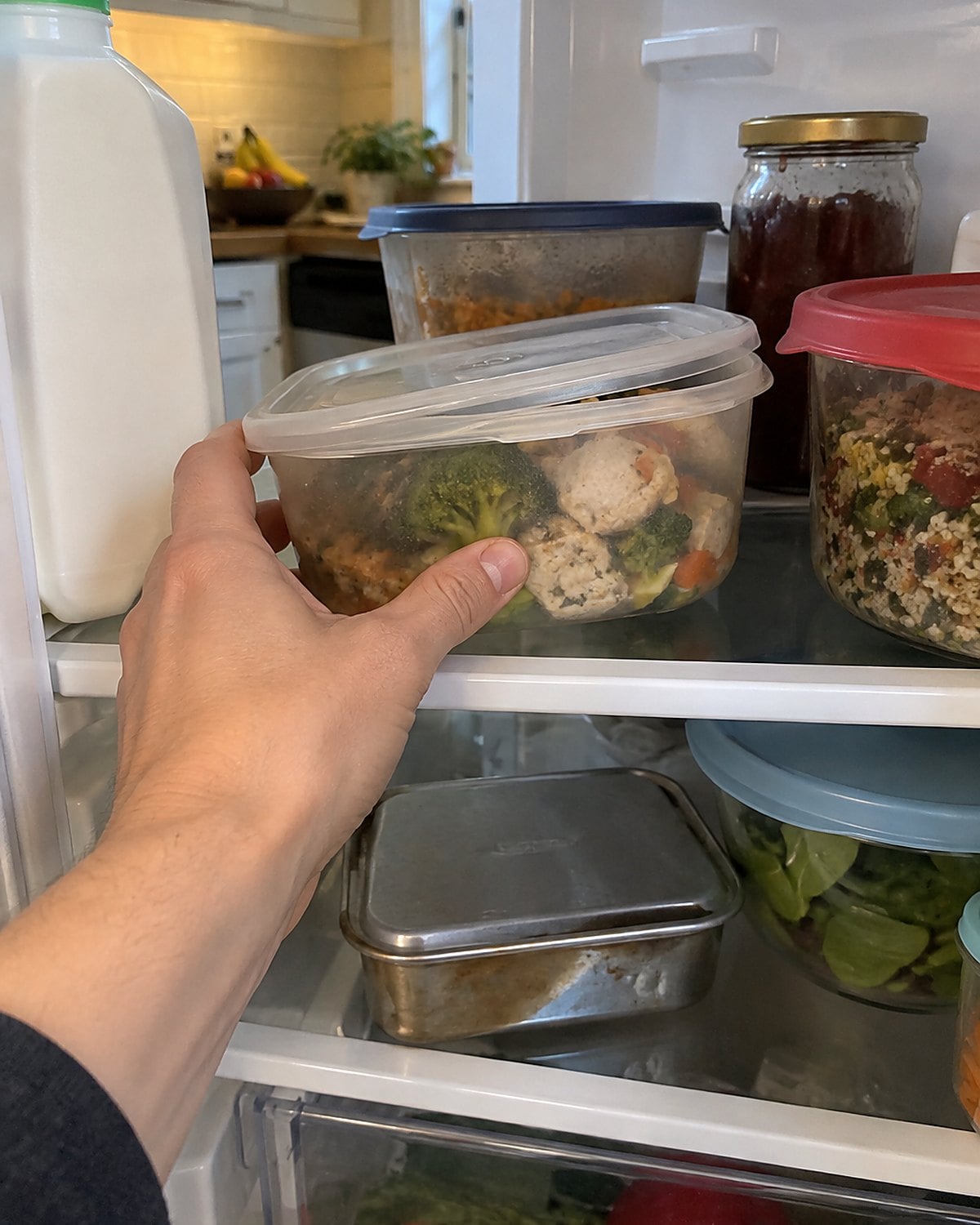
Three containers sit on the refrigerator shelf. One holds yesterday's noodles, one holds roasted vegetables, and the third needs a closer look. Nobody has said they want any of them for lunch.
Pack a lunch only for someone who will eat it. Ask before you put dinner away: “Do you want this tomorrow, or should I freeze it?” Then put the answer where the person will see it. A container hidden behind the milk isn't a lunch plan.
Write the food and date on containers that will stay longer than overnight. Keep a clear shelf for ready-to-eat leftovers, separate from raw meat. The small act of naming who gets what prevents the familiar Friday inspection of forgotten tubs.
And if the answer is “neither,” make less of that dish next time.
#5 The church hall casserole pan
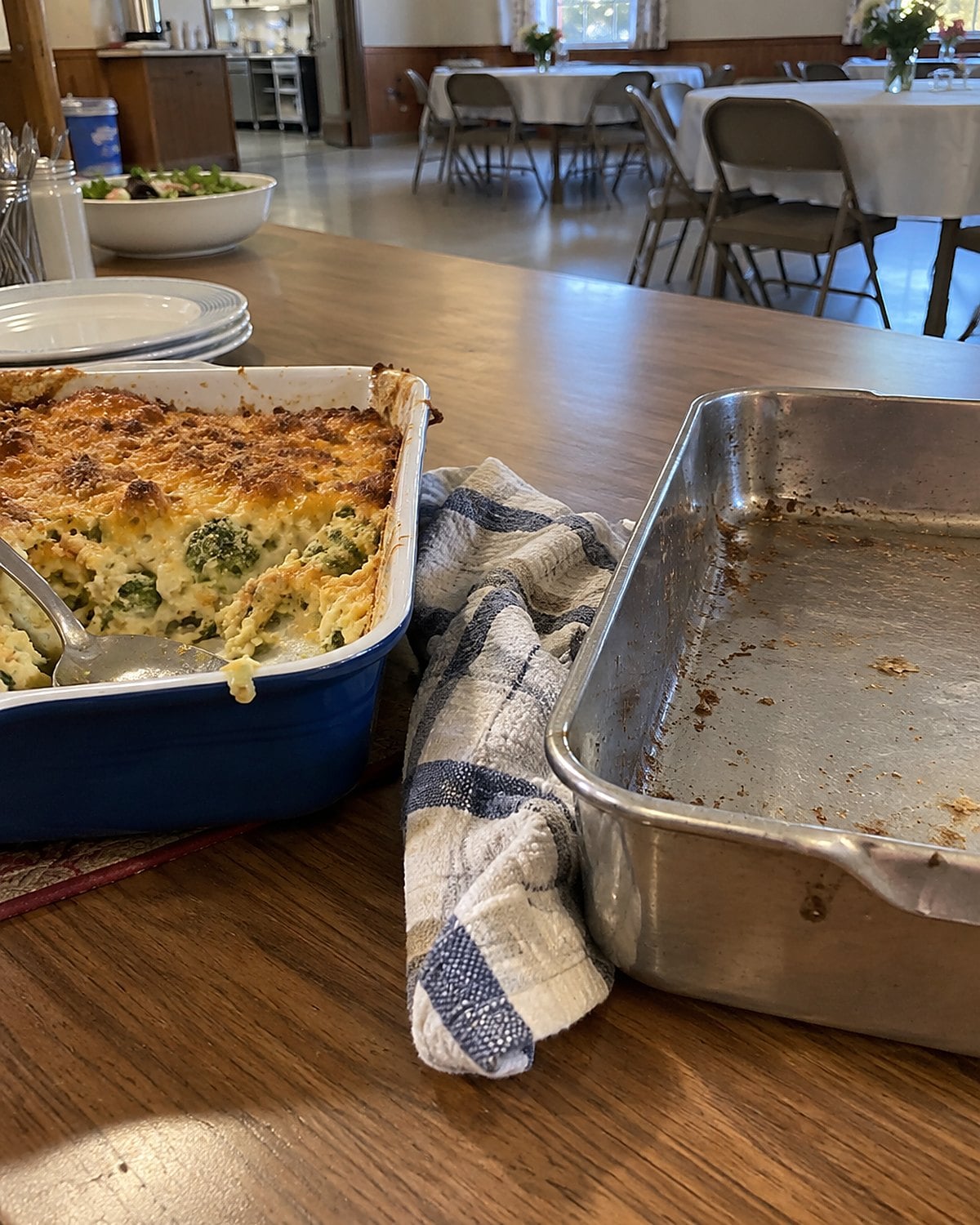
The church cookbook recipe still says to fill a large baking dish. It once earned its keep at potlucks and family dinners. For a Tuesday with two people, the full pan sets up a week of identical lunches.
Keep the recipe. Change the vessel. Use a smaller baking dish and scale the ingredients with care, especially the liquid and seasonings. A shallow layer in a huge pan dries at the edges before the middle feels finished.
A smaller, deeper dish needs a fresh check for doneness rather than blind faith in the old baking time. Taste the filling before it goes in, if its ingredients are ready to eat, and adjust the seasoning there.
For a casserole containing meat or eggs, check the center with a thermometer. The USDA's safe minimum internal temperature chart gives the temperature for the ingredients you've used. A browned top tells you little about the center.
Save the full recipe for the church hall table. On Tuesday, put the familiar flavor into a dish that fits the people coming to dinner.
#4 The week with dinner out on Thursday

The groceries look reasonable for seven dinners. Then Thursday is dinner with a friend, Friday brings takeout, and Saturday's grandchildren request something other than the fish you bought. The fish has nowhere to go.
Put the calendar beside the shopping list. Mark which nights you'll cook, which nights you'll be out, and which meals need to feed visitors. Plan the foods that spoil sooner for the nights that are least likely to change. Save pantry meals for the uncertain evenings.
Leave one dinner unassigned. Eggs, pasta, or beans give you a way to eat without bringing home another fragile ingredient. That open space also gives leftovers a landing place.
When a plan changes, revise the food plan that day. Freeze an ingredient while it's still good, or move its meal earlier. You don't owe a bag of spinach the dinner you imagined on Monday. You do owe yourself a look at the calendar before buying it.
#3 The large meat package divided too late
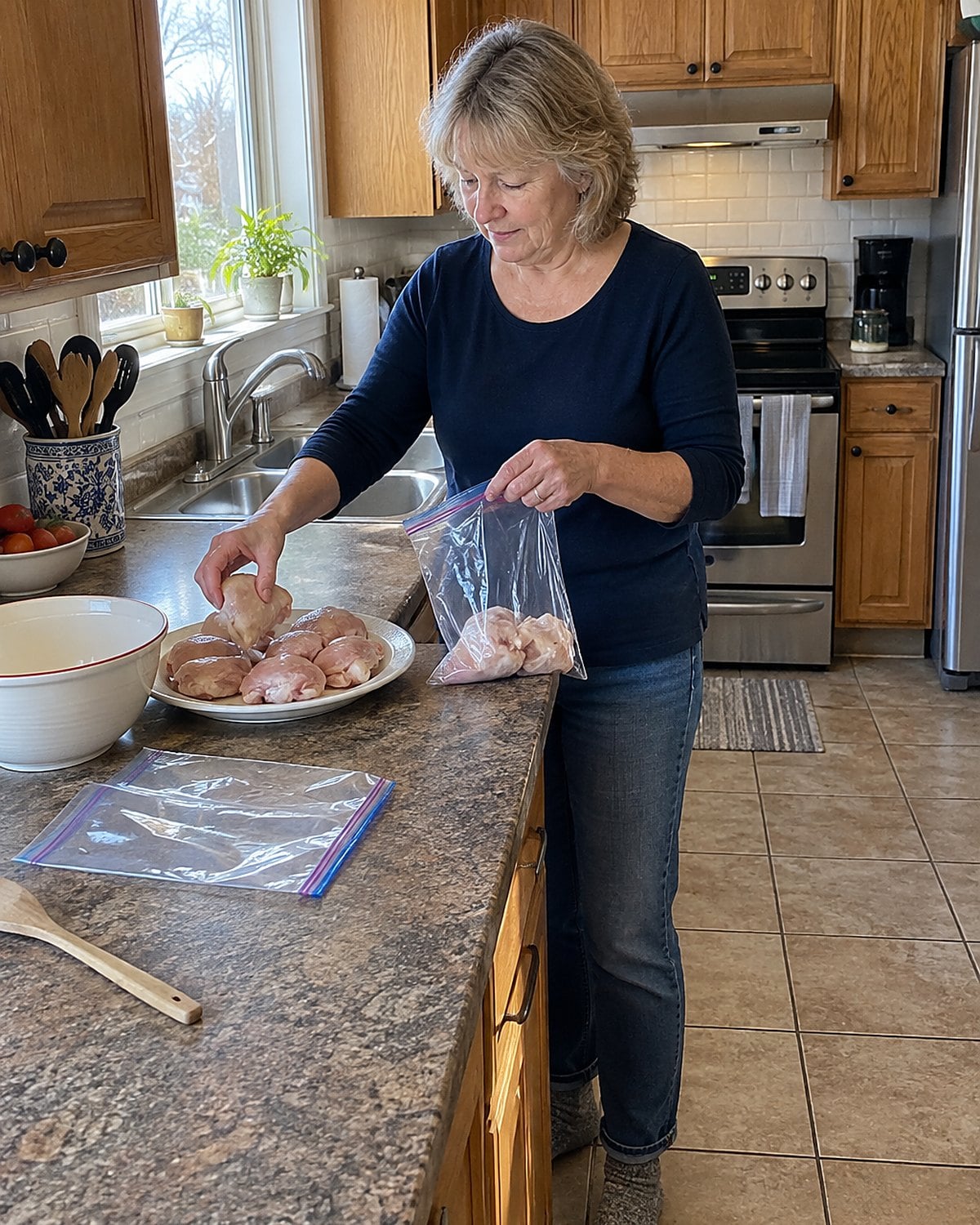
The family pack comes home, and you put it in the refrigerator to deal with later. By the time you open it, dinner plans have changed and the package has become one large problem.
Divide it when you get home. Put the amount for one supper in each freezer bag, press out excess air, and label the contents and date. Freeze what you're not using promptly. Keep raw meat below ready-to-eat food in the refrigerator, and wash the board, knife, and your hands after handling it.
You don't need to guess portions at the meat counter. At home, lay the pieces out and ask what two people will eat at one meal. That is the package size that matters.
A little work beside the sink saves you from thawing far more than dinner needs.
#2 The two-person portion note inside the cabinet
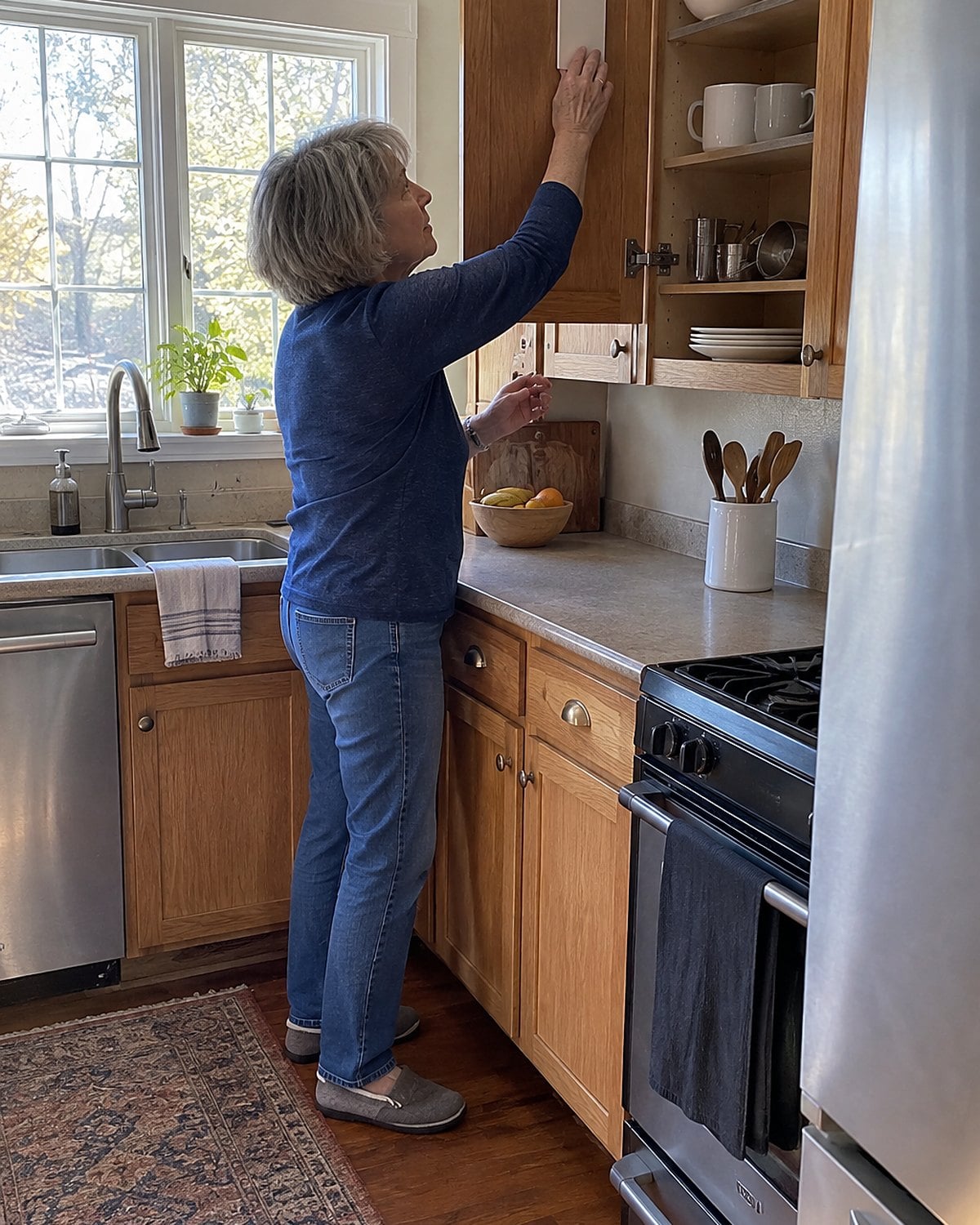
Your hand still knows how much pasta fed the family. The rice scoop remembers school nights. Even the casserole dish seems to ask for the amount you've always made.
Give those habits a new reference. On a card inside the cabinet, write what two people actually finished at recent meals. Record the dry pasta you cooked, the rice you measured, the number of chicken pieces you served, and whether anyone wanted seconds. Don't copy a serving chart. Use the evidence from your own table.
For the next few dinners, measure before cooking and make a quick note afterward. If there were leftovers, write whether someone ate them. “Enough for dinner and Thursday lunch” is useful. “Too much” gives you little to work with.
Keep the card near the pot or measuring cups, not buried in a notebook. When guests come, adjust for them. On an ordinary Tuesday, let the note stop your hand before it fills the pot to its old mark. That's how a household changes size without asking you to forget how to cook.
#1 The shopping list written before the fridge check
A list made from memory repeats last week's guesses. It says carrots because you cook with carrots, yogurt because you buy yogurt, and parsley because the bunch looked tired on Sunday.
Open the fridge before you write. Move the container in front, lift the produce drawer, and check the door shelf. Then look in the pantry and freezer. Write down what needs using alongside what you need to buy: “use cabbage” belongs on the same paper as “buy onions.”
Build a meal from that note before shopping. Cabbage and onions already point toward a skillet supper; you only need to decide what goes with them. The EPA's food-waste guidance also puts checking what you have ahead of buying more. You can do that part tonight, before anything goes on a list.
If you keep the list on your phone, make the check while you're standing in the kitchen. A perfect list written in the parking lot arrives too late.
Keep reading
 27 Things People Over 60 Still Do With Leftovers That Food-Safety Experts Beg Them to Stop
See all 27 →
More you’ll remember
 26 Things in Your Fridge Right Now That Should Have Been Thrown Out
 25 Fridge Habits That Waste Money Every Week Without Anyone Noticing
 27 Things a Woman Learns When Her Husband Starts Cooking in Retirement
The bottom line
The trash can fills when food comes home without a job, gets cooked by habit, and waits behind something else until its turn has passed.
You've already got the skills to change that. Check the fridge before shopping, give the celery its next meal, and keep a two-person portion note where you'll use it.
What has been sitting in your produce drawer since the last grocery trip? If it's the celery, start with what you'll cook next, not what you meant to cook last week.
Leave a Reply