

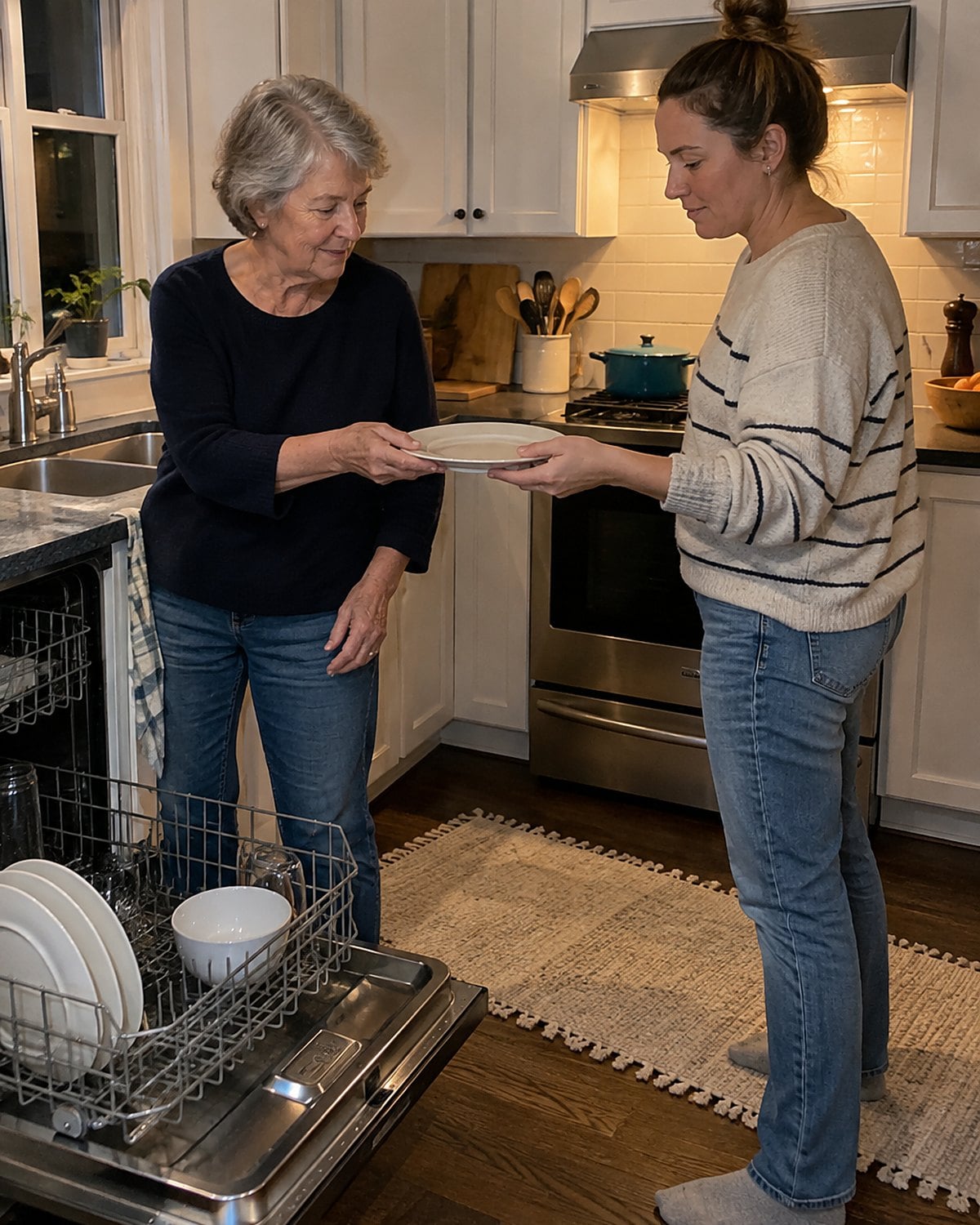
The dishwasher is half unloaded when your daughter asks how Nana made her chicken and dumplings. A plate stays in your hand. You remember the heavy pot and the flour on Nana’s sleeve, but the dumplings themselves are harder to picture. Were they rolled thin or dropped from a spoon?
Nobody thought to ask while she was standing right there.
There’s a dish like that in nearly every kitchen. You still make yours without looking at a page. The trouble starts when someone else stands at the stove and asks what “until it looks right” means.
#23 Sunday chicken and dumplings
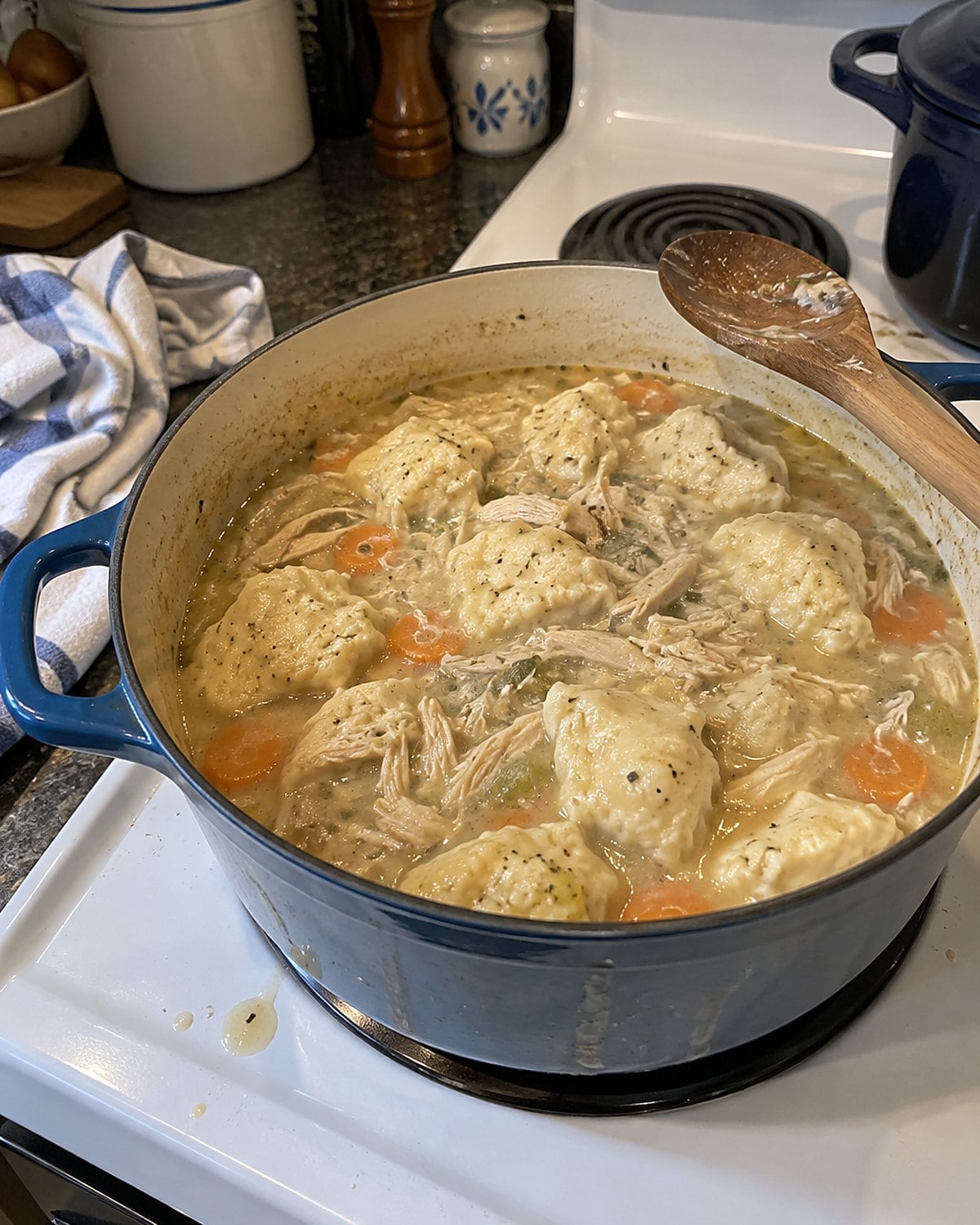
Start with the dumplings, because that’s where two families can use the same name for different suppers. Did yours roll the dough thin and cut it into strips? Or did she drop spoonfuls onto the bubbling broth and put on the lid? Write the answer beside the title before you forget that anyone would need to ask.
Then record what happens underneath. Was the chicken cooked whole, or did she use leftover pieces? Did she skim the broth?
A pot made with already cooked chicken needs a different order from one that starts with raw pieces. If you start with raw chicken, check the thickest part with a thermometer. The USDA Food Safety and Inspection Service gives 165°F as the safe temperature for poultry.
You don’t need to settle every measurement tonight. Write down the order and the look of the finished broth. If you remember Nana lifting the lid to show you swollen, tender dumplings, put that on the page. It tells the next cook which supper you mean.
#22 The skillet cornbread with dark edges
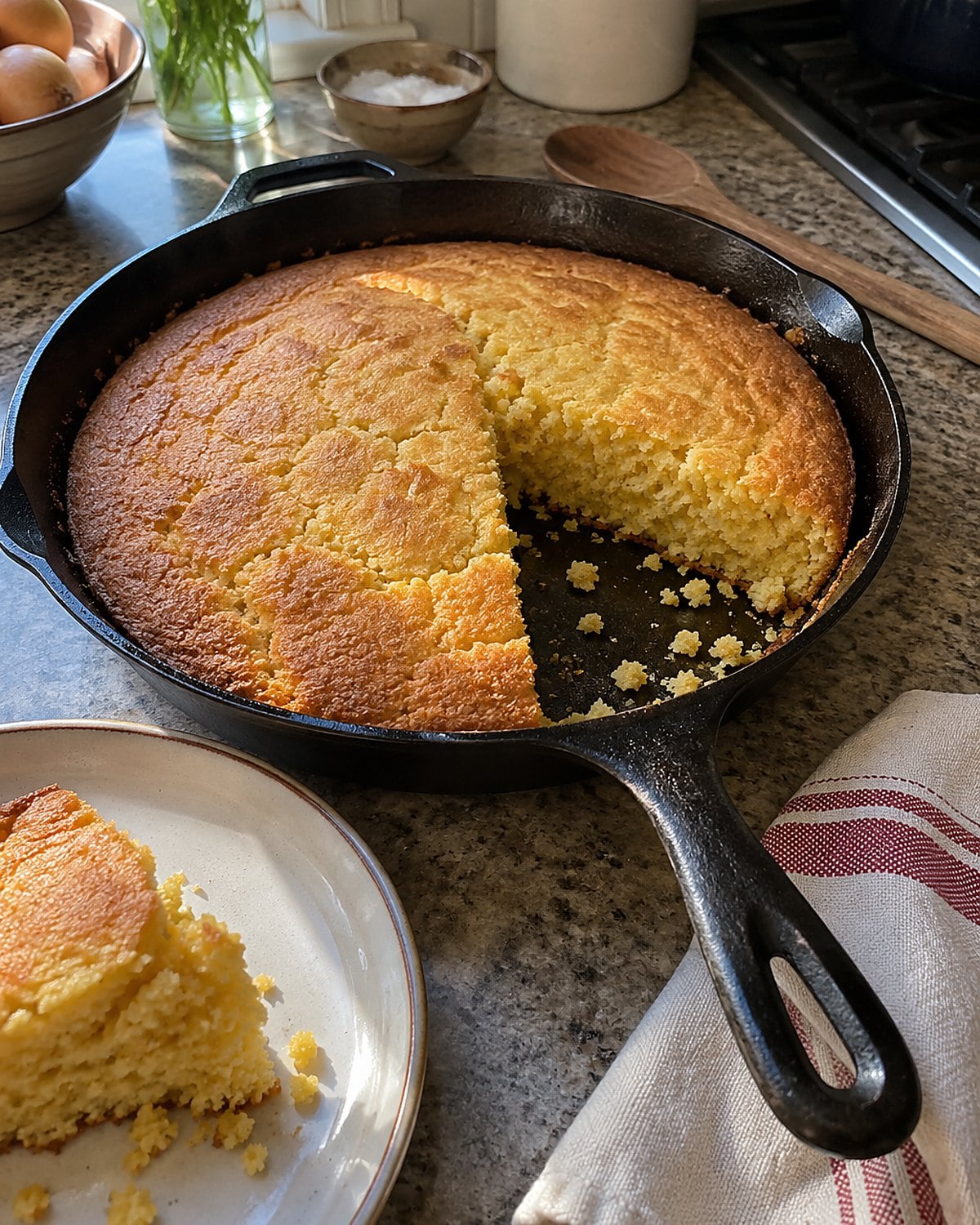
That dark ring around your cornbread came from a hot pan, not a special mix. Grease a cast-iron skillet and let it heat in the oven while you stir the batter. When the batter hits the pan, it should sizzle at the edges. That sound belongs in the instructions.
Write down which pan you use. A wider skillet spreads the same batter thinner, so someone following your baking time in a smaller pan will get a different loaf.
Add the texture you expect in the middle: tender enough to break by hand, firm enough to hold a spoonful of beans.
Did your household sweeten cornbread? This is worth saying plainly. “A little sugar” means different things to people who grew up with a sugar bowl on the table. If you have a measurement, record it. If you never added any, write “no sugar.”
And note how you turn it out. A skillet left sitting on a cooling cornbread traps steam underneath. That detail explains why the crisp bottom your family remembers disappears when somebody else makes it.
#21 The green beans cooked with ham
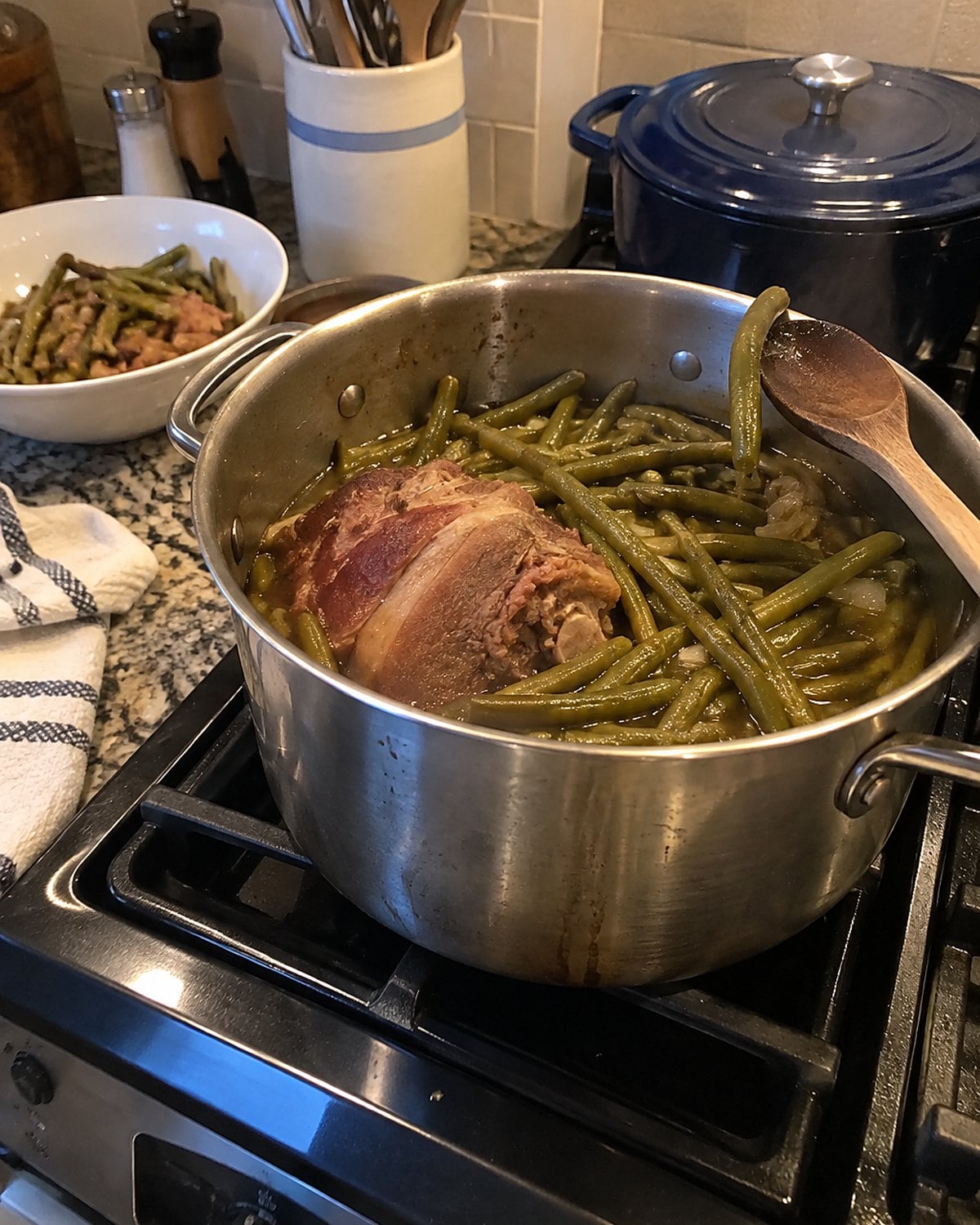
The lid lifts, and a bean hangs over the spoon. That’s the moment to show someone what “done” means at your table. Some families want a bright green bean with a little snap. Others want one that bends and has taken up the ham broth.
Write down whether you begin with a ham hock, a meaty bone, or diced leftover ham. The first two need time in the pot before the beans go in. Leftover ham has already given up much of its flavor, so taste the liquid as it cooks.
Salt comes last in the notes. The ham brings its own, and a cook who salts the water by habit won’t know that. Show a grandchild the bend you’re looking for. That’s easier to remember than a timer.
#20 The meatloaf with its familiar crust
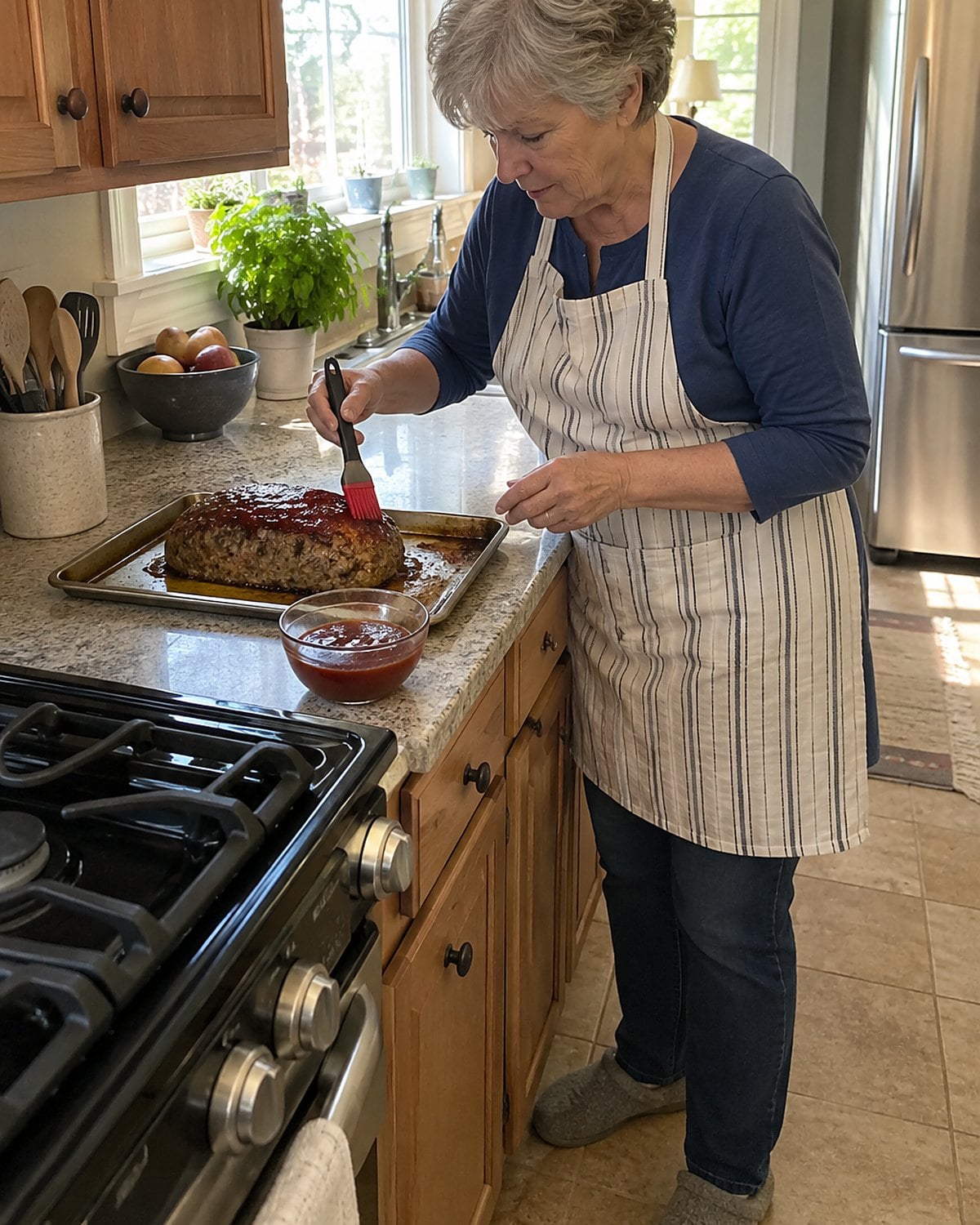
A meatloaf recipe needs the pan as much as the ingredients. Was yours baked in a loaf pan, with soft sides and juices around it? Or shaped by hand on a baking sheet, so the glaze baked against the edges? Those are different results from the same bowl of meat.
Write down what you mix first. Soak the breadcrumbs in milk before adding the beef if that’s your method. It spreads the moisture through the loaf instead of leaving dry patches. Note how finely you chop the onion. A large chunk stays firm after the meat around it has cooked.
Now settle the glaze. Ketchup alone tastes different from ketchup mixed with mustard or brown sugar. Put the amounts on paper while the bottle is still on the counter, including whether you brush it on before baking or near the end.
Don’t trust the old instruction to bake until the juices run clear. For ground meat, the USDA Food Safety and Inspection Service says the center needs to reach 160°F. Put a thermometer into the middle, away from the pan.
Then record the texture your family expects: a slice that holds together, with a top sticky enough to pull at the knife.
#19 The pot roast gravy
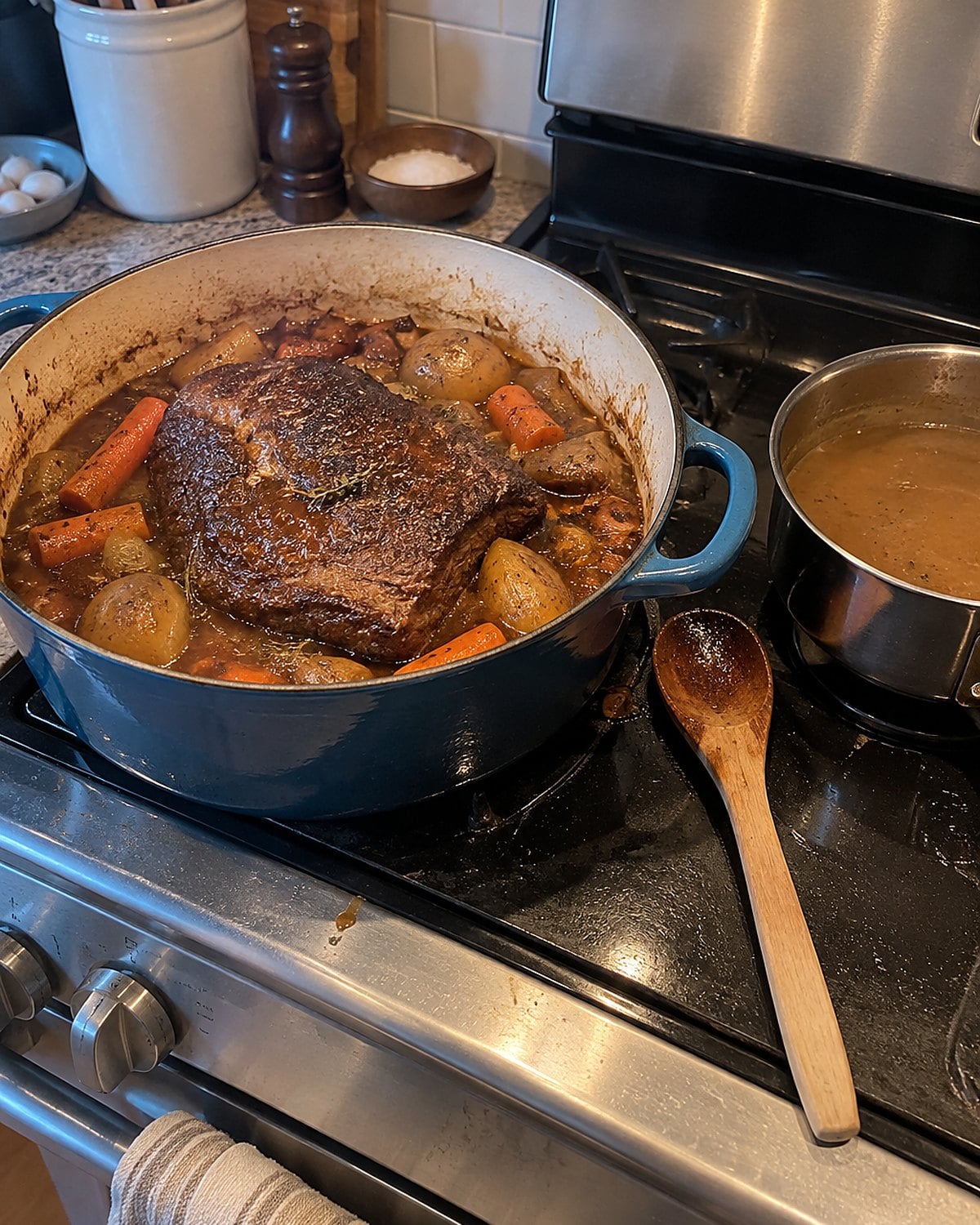
The roast gets all the attention until someone tries to make the gravy. Then come the questions you answered years ago without thinking. Do you brown the meat first? Does the onion go underneath it? Do you thicken the liquid in the pot or pour it into a saucepan?
Write the answers in that order. Browning puts dark bits on the bottom of the pot. When you add liquid, scrape those bits loose; they carry the flavor you’ll miss if the roast goes straight into broth.
Name the cut, too. Chuck roast has connective tissue that softens during a long, moist cook. A lean cut won’t behave the same way.
If your gravy starts with flour stirred into fat, say so before you describe adding broth. Otherwise the next cook faces lumps and wonders what went wrong.
Try it: Instant Pot Roast Beef & Gravy
#18 The biscuit dough under your hands
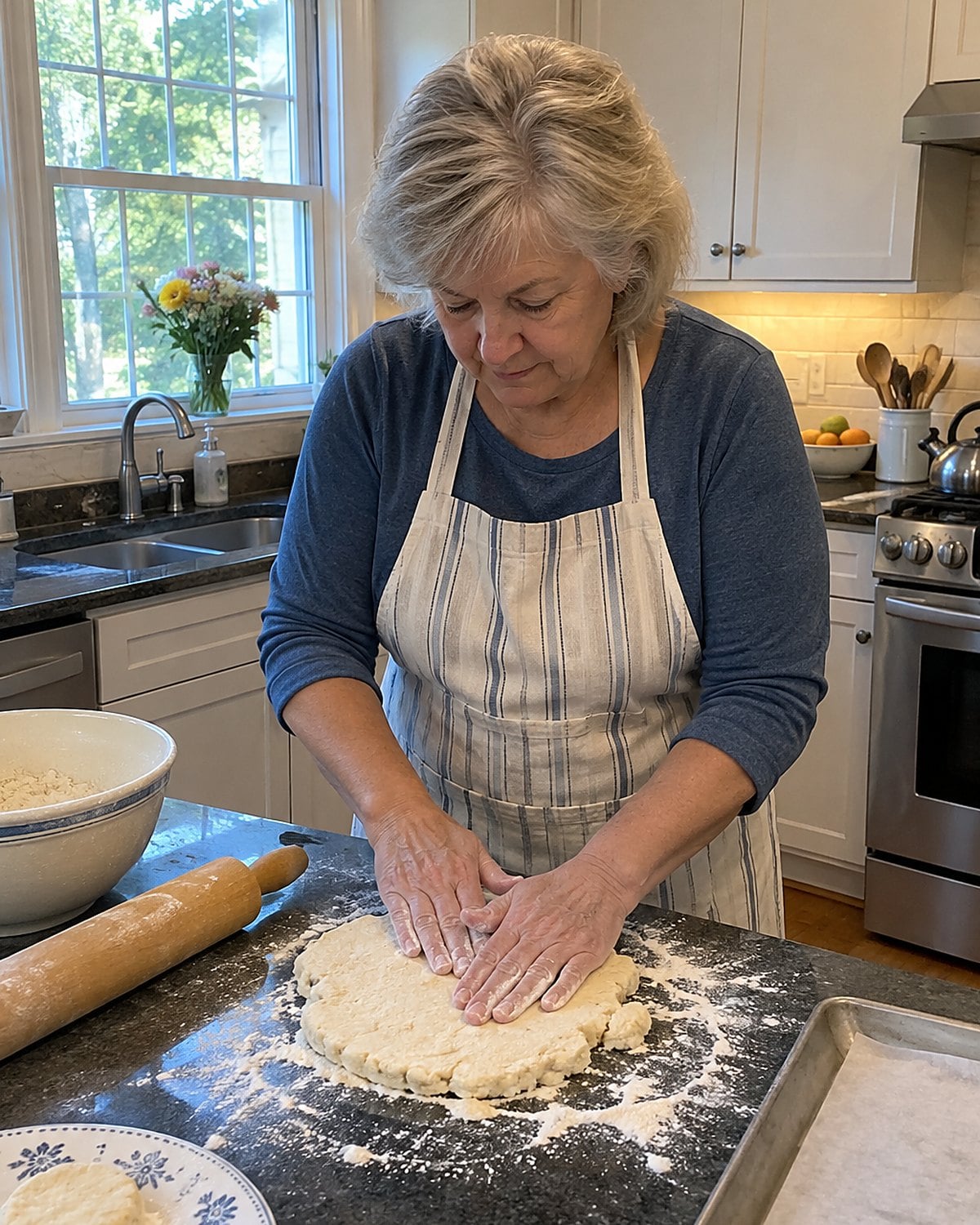
Your hands know when biscuit dough has had enough mixing. The person reading your card won’t. Give them something to feel: the dough should hold together when pressed, with rough patches still visible. A smooth, springy ball has been worked past the point you wanted.
Record the fat before the flour disappears into it. Butter leaves different bits in the dough than shortening does, and buttermilk brings a tang plain milk doesn’t. If you keep a favorite cutter in the drawer, measure its width. A different cutter changes how tall the biscuits look and how long they take to bake.
Watch yourself next time you make them. Do you pat the dough flat or roll it? Do you press the cutter straight down? Twisting it seals the edges and works against the rise. Make a note while flour is still on your fingers.
The best instruction on the page might be the least formal one: “Stop mixing while it still looks untidy.” That gives a new cook permission to leave the dough alone.
#17 The church supper potato salad
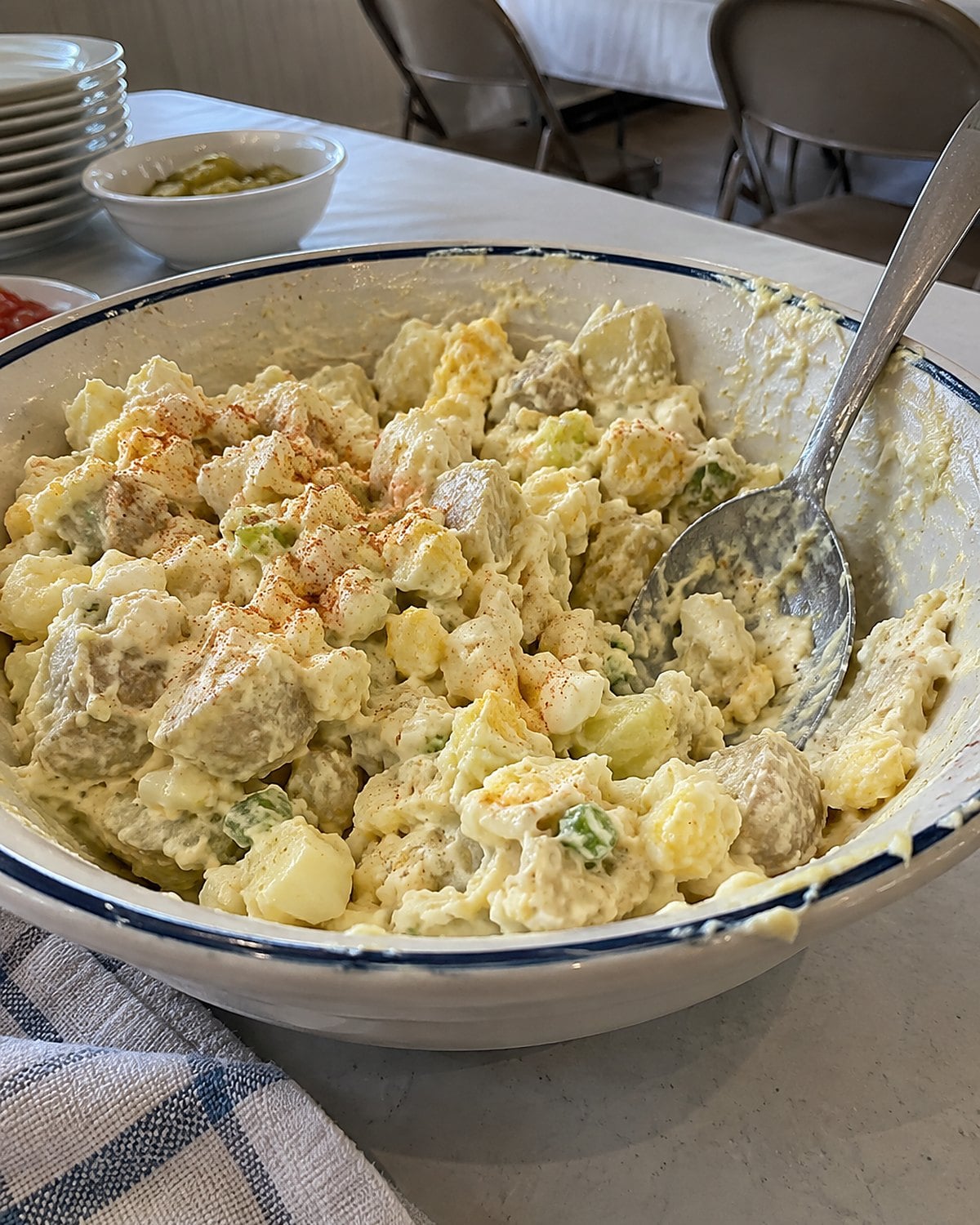
At the church hall table, you know which potato salad is yours before you lift the serving spoon. The potatoes hold their shape, or they don’t. There’s egg on top, or a dusting of paprika. Someone always asks which pickle you used.
Tell them.
Dill relish and sweet relish change the whole bowl. So does dressing the potatoes while they’re warm rather than after they’ve gone cold. Write down whether you peel them before cooking and whether you cut them before or after. Those small choices decide how much dressing clings.
For the serving note, keep it plain: set the bowl over ice when it sits out, and return leftovers promptly to a fridge at 40°F or below. The USDA’s cold storage chart is the place to check before writing a keeping time onto an old card.
What matters first is capturing the salad people came looking for.
Try it: Instant Pot Potato Salad With Eggs & Creamy Dressing
 You might also like23 Mistakes Grandparents Make When Feeding Toddlers, According to Pediatric Guidance
#16 The pie crust patched with water
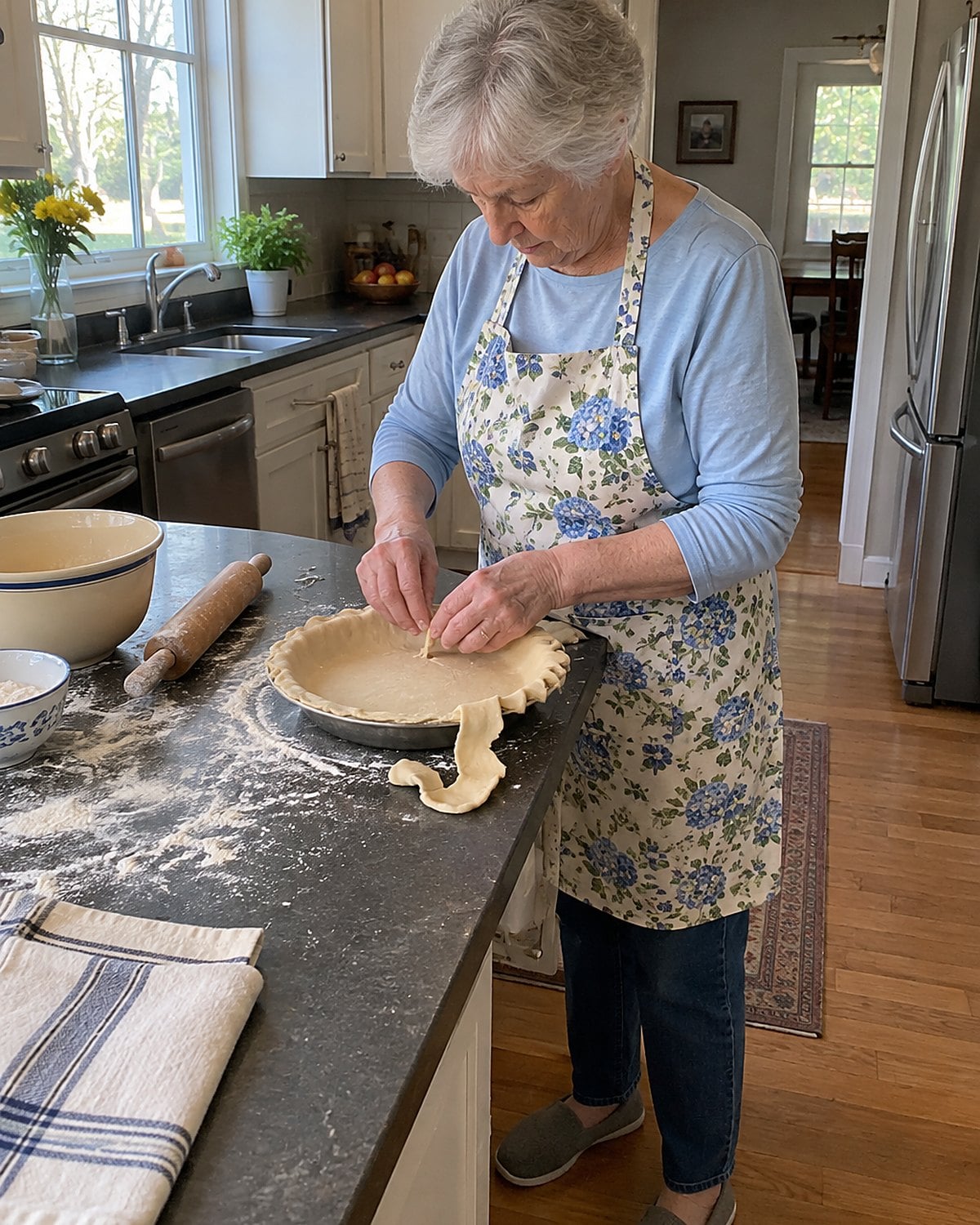
“Add water until it comes together” is where your pie crust stops being a recipe and becomes a guess. Show the next cook the test. Squeeze a bit of dough in your hand. If it holds when you open your fingers, stop adding water, even if the bowl still looks crumbly.
Write down the fat you actually use. Lard, shortening, and butter leave different textures and flavors. If you switched from one to another years ago, cross out the old name. A stained card with the wrong ingredient is harder to follow than a fresh sheet of paper.
Then describe the repair work. Do you patch a tear with a scrap of dough and a dab of water? Do you fold the edge under before crimping? Those are the moves a practiced hand makes while a beginner worries they’ve ruined the pie.
Ask someone to stand beside you the next time you roll it. Say, “This is thin enough,” and let them look at the dough on the counter. Write down what you saw. A patch in the crust is easier to repeat than an instruction to make it perfect.
#15 The tomato sauce stained wooden spoon
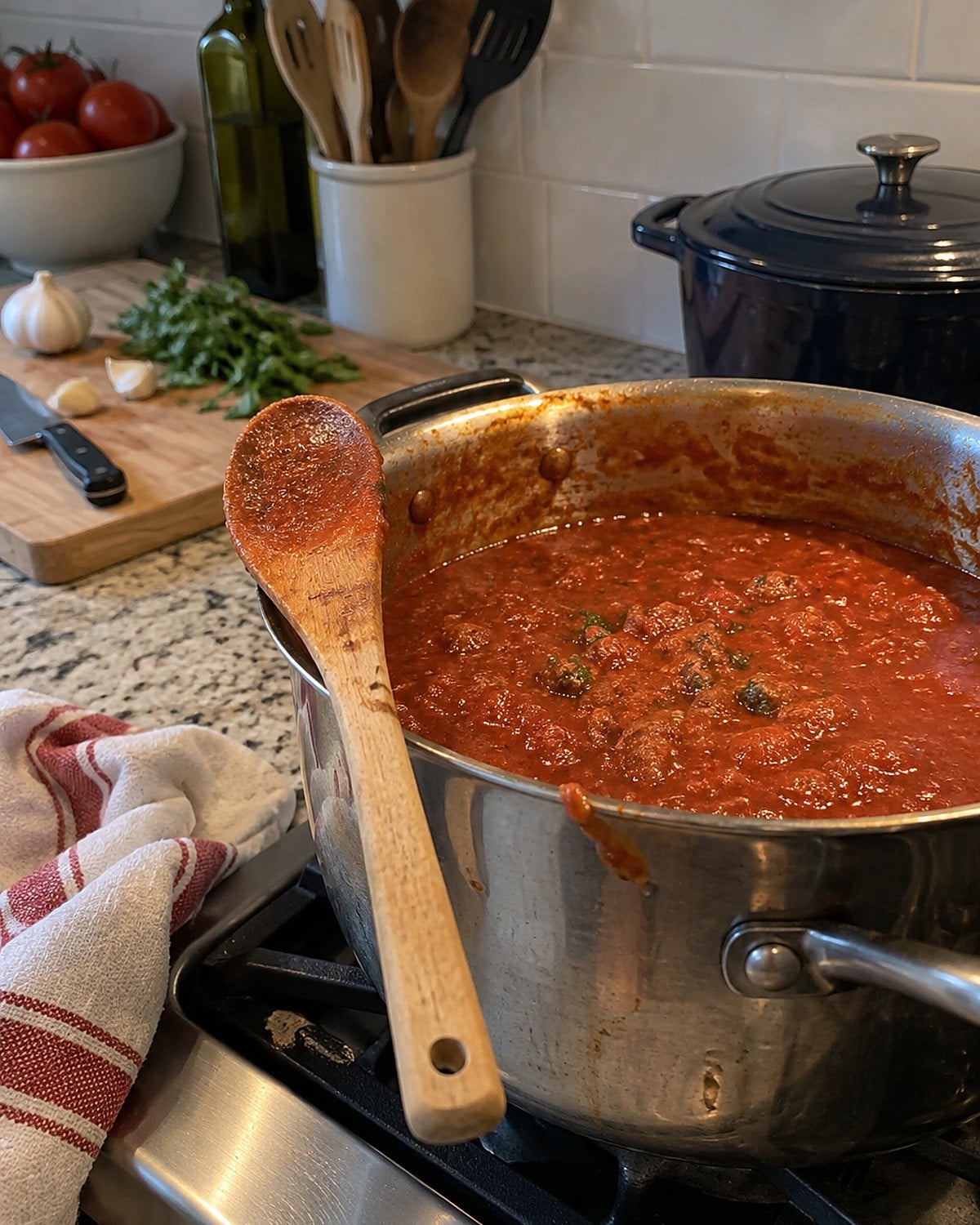
The spoon with the red handle stain has probably stirred more sauce than the recipe card admits. Start the notes with what goes into the pot first. Garlic dropped into a very hot, empty pan burns before the tomatoes arrive. Onion given time in oil turns sweet and soft.
Does your sauce start with canned whole tomatoes, crushed tomatoes, or fresh ones from the garden? Put the type on the page. Each releases liquid differently, so a copied simmer time won’t tell the whole story.
Record your finishing test instead. Drag the wooden spoon across the bottom of the pan. Does the sauce flow back at once, or leave a brief trail? Taste for the point where sharp tomato no longer dominates.
Tell the next cook when you add basil if you use it. A leaf stirred in near the end tastes different from one cooked all afternoon.
Try it: Instant Pot Tomato Basil Sauce
#14 The holiday stuffing baked outside the bird
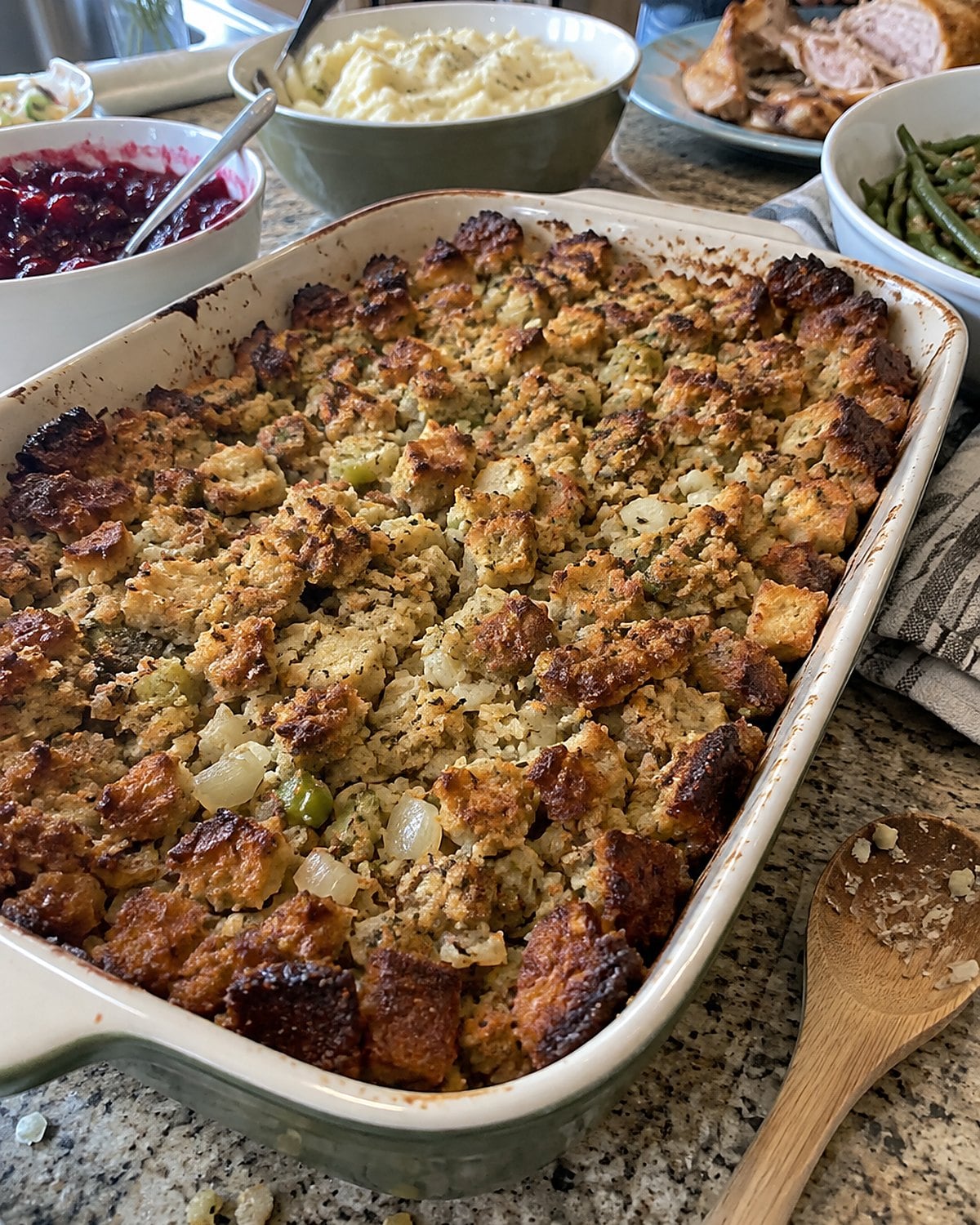
Holiday stuffing has a family accent. Yours could begin with cornbread, sandwich bread, or cubes from a bakery loaf. Write that down before listing the sage. Bread decides how much liquid the bowl takes up, and “one bag” won’t help if the bag changes.
The step people miss happens before the broth. Cook the onion and celery until the onion loses its raw bite. Stir the herbs into that warm mixture, then fold it through the bread. You’ll smell whether the sage is present before everything gets wet.
Next, describe the texture just before baking. Pick up a handful. Does it hold loosely when squeezed, or fall apart? Write down the dish size and whether you cover it. A shallow dish gives you more crisp top; a deep one keeps more of the middle soft.
If the stuffing contains sausage, cook it before mixing. Bake the finished dish until the center reaches 165°F, the temperature the USDA Food Safety and Inspection Service gives for stuffing.
Your family’s debate over crisp corners will survive. Guessing whether the middle is cooked through shouldn’t be part of it.
#13 The pickled beets in the glass jar
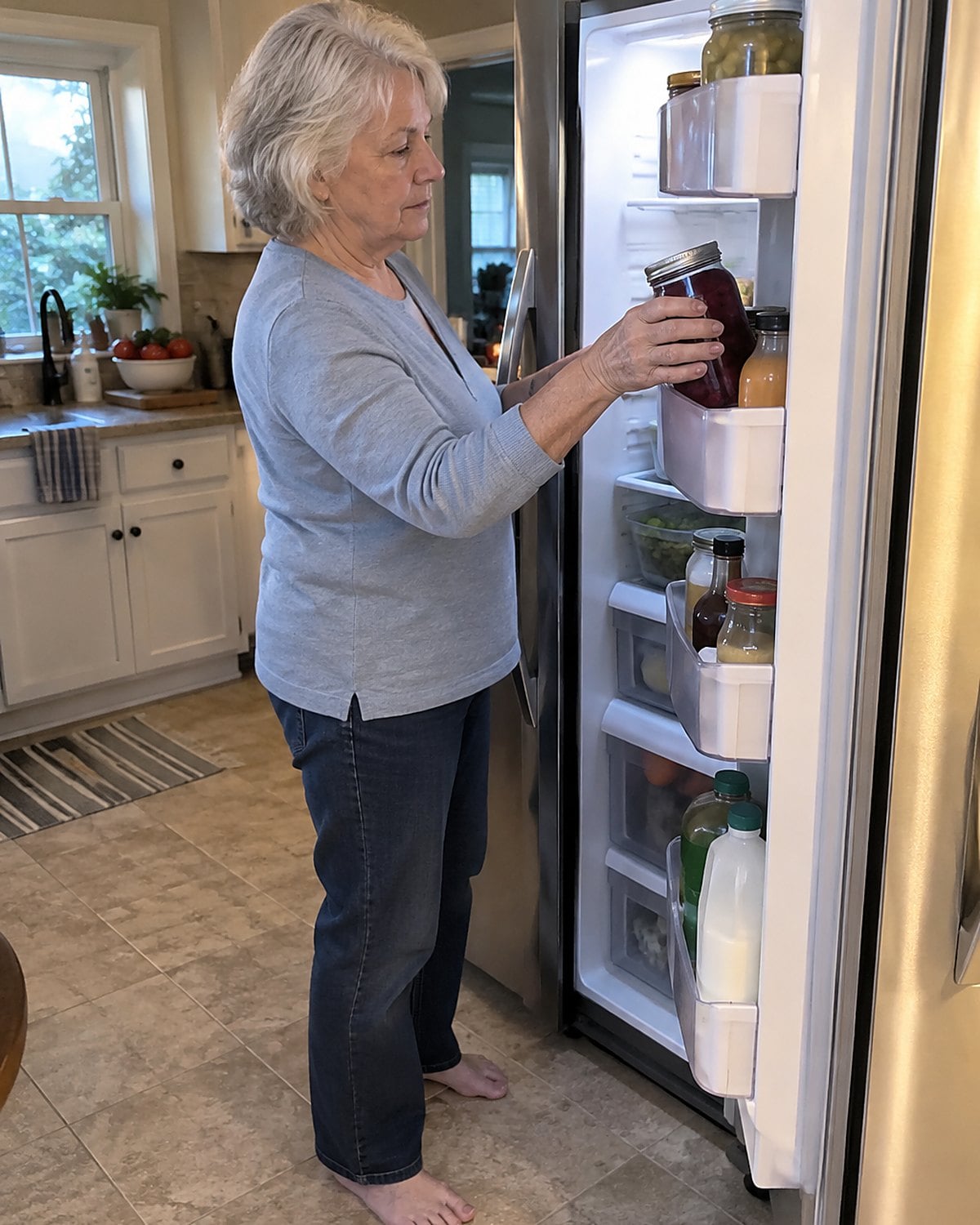
Did someone in your family keep a jar of bright beets in the fridge door? Write down whether they were meant for the next dinner or for a pantry shelf. Those are different projects, even when the jars look alike.
For a refrigerator version, note the vinegar you use, the sweetness, and whether the liquid goes over sliced warm beets or cooled ones. Taste a slice after it has sat in the dressing, not straight from the cutting board. That tells you what ends up beside the roast.
Don’t copy an old shelf-stable canning method from a handwritten card. For pantry storage, choose a tested recipe from the National Center for Home Food Preservation or your county extension office.
Keep that printed method with the family card. You’ll preserve the taste without asking a remembered shortcut to carry the safety instructions.
#12 The birthday cake with boiled frosting
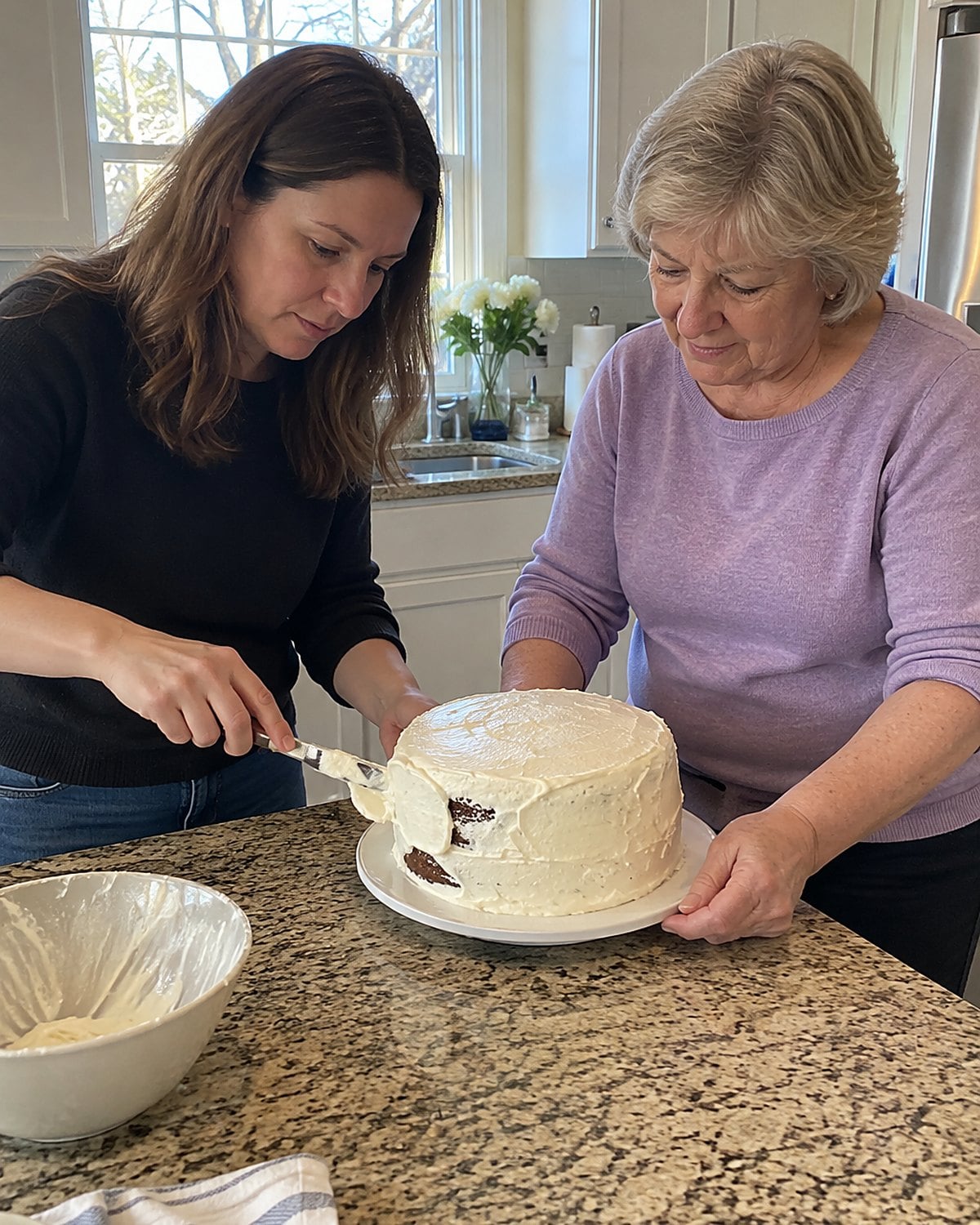
Someone says, “Make the birthday cake,” as if the frosting has only one name. You remember it by its shine, the way it spread under the back of a spoon, and the moment it stopped moving. Those details deserve a place beside the cake layers.
Write down which frosting you mean. A cooked flour-and-milk frosting is different from a syrup poured into beaten egg whites. If your family calls either one “boiled frosting,” name the ingredients and the order. That keeps a familiar name from sending the next cook toward a different bowl.
This is also a good time to ask what people remember. Was there coconut pressed into the sides? Did the cake sit on a plate under a cover until the candles came out?
Their answers won’t replace measurements, but they will catch a detail you stopped noticing.
Then make it together. Let someone hold the spoon when the frosting reaches the stage you want. Say what it feels like as it drags across the surface. A shared turn at the bowl leaves more behind than “beat until ready.”
#11 The colander of washed rice
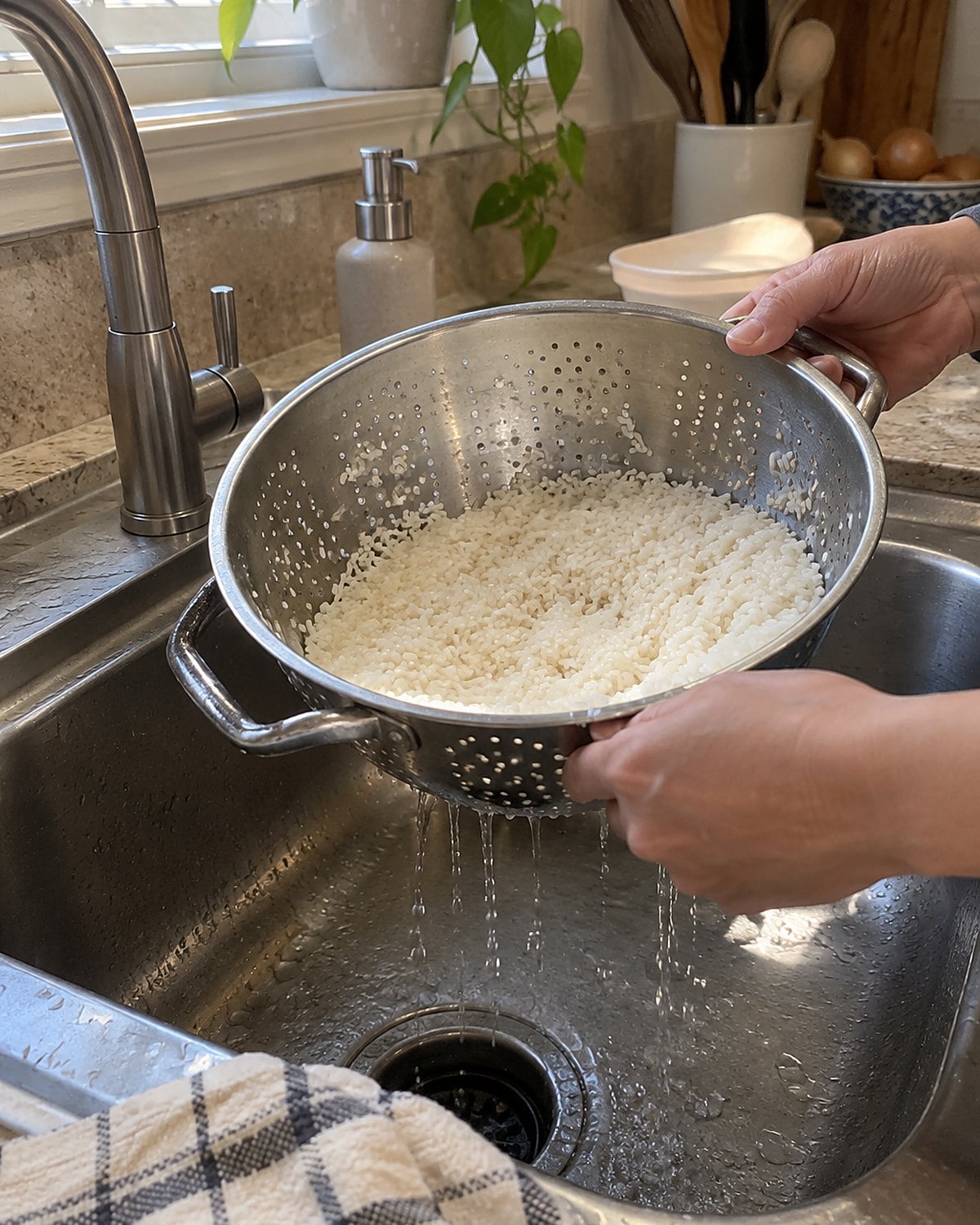
That colander tells a story the word “rice” won’t. If you rinse yours, write down when you stop. Hold a little of the draining water against a white bowl and look at it. The water starts cloudy with loose surface starch, then runs clearer.
Name the rice on the card. Long-grain white rice, short-grain rice, and brown rice don’t cook into the same texture. So does your pot matter: a tight-fitting lid keeps steam where you need it. If you lift it during cooking, note that habit rather than pretending you never peek.
The final instruction is about resting. Turn off the heat and leave the lid on for 10 minutes before fluffing. Steam finishes moving through the grains while the pot sits.
Write down whether your family wants separate grains or rice that clings together. Without that line, two cooks can follow the same steps and disagree about whether supper worked.
Try it: How To Cook Rice In Instant Pot
#10 The cabbage rolls tucked into the pot
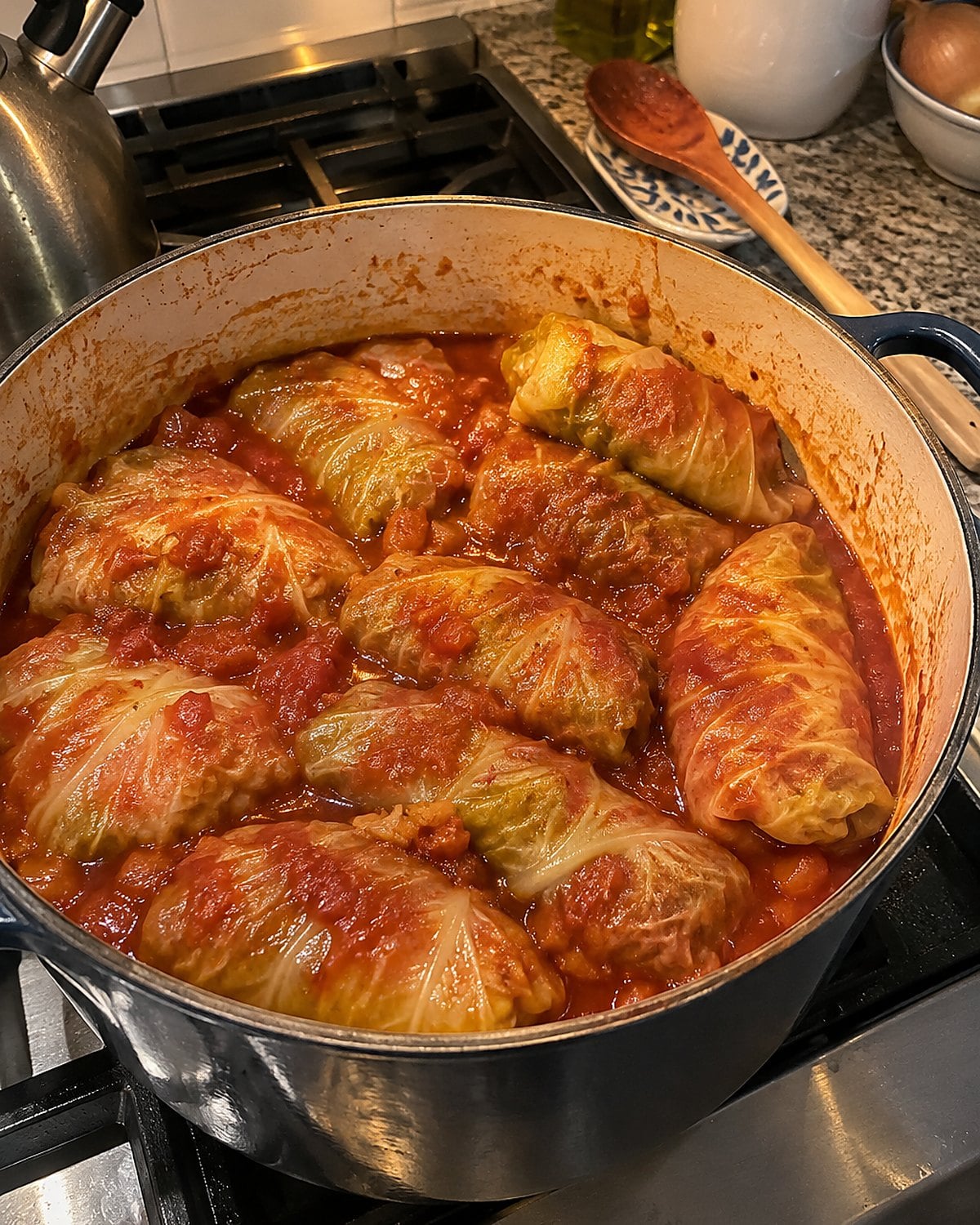
The first cabbage leaf tears. You know what to do: overlap it around the filling, set it seam-side down, and move on. Nobody learns that from “roll tightly” on a card.
Start your notes with the cabbage. Do you soften the whole head or remove leaves as they loosen? Do you trim the thick rib so a leaf folds without snapping? Those choices matter before the meat and rice ever come out. If you use cooked rice, say so. Raw rice changes the liquid the filling needs.
Now look at the pot. Describe what sits underneath the rolls so they don’t stick, and whether sauce reaches over the top or sits below the upper layer. Write down the kind of tomato you use and whether your family likes a sweet-sour sauce. “Tomato sauce” alone won’t settle that.
When you serve them, cut one open. The cabbage should yield to a fork without dissolving. If the filling contains ground meat, check its center with a thermometer against the USDA’s 160°F guidance.
The torn leaf stays in the story; the temperature belongs in the instructions.
#9 The pancake batter with yesterday’s change
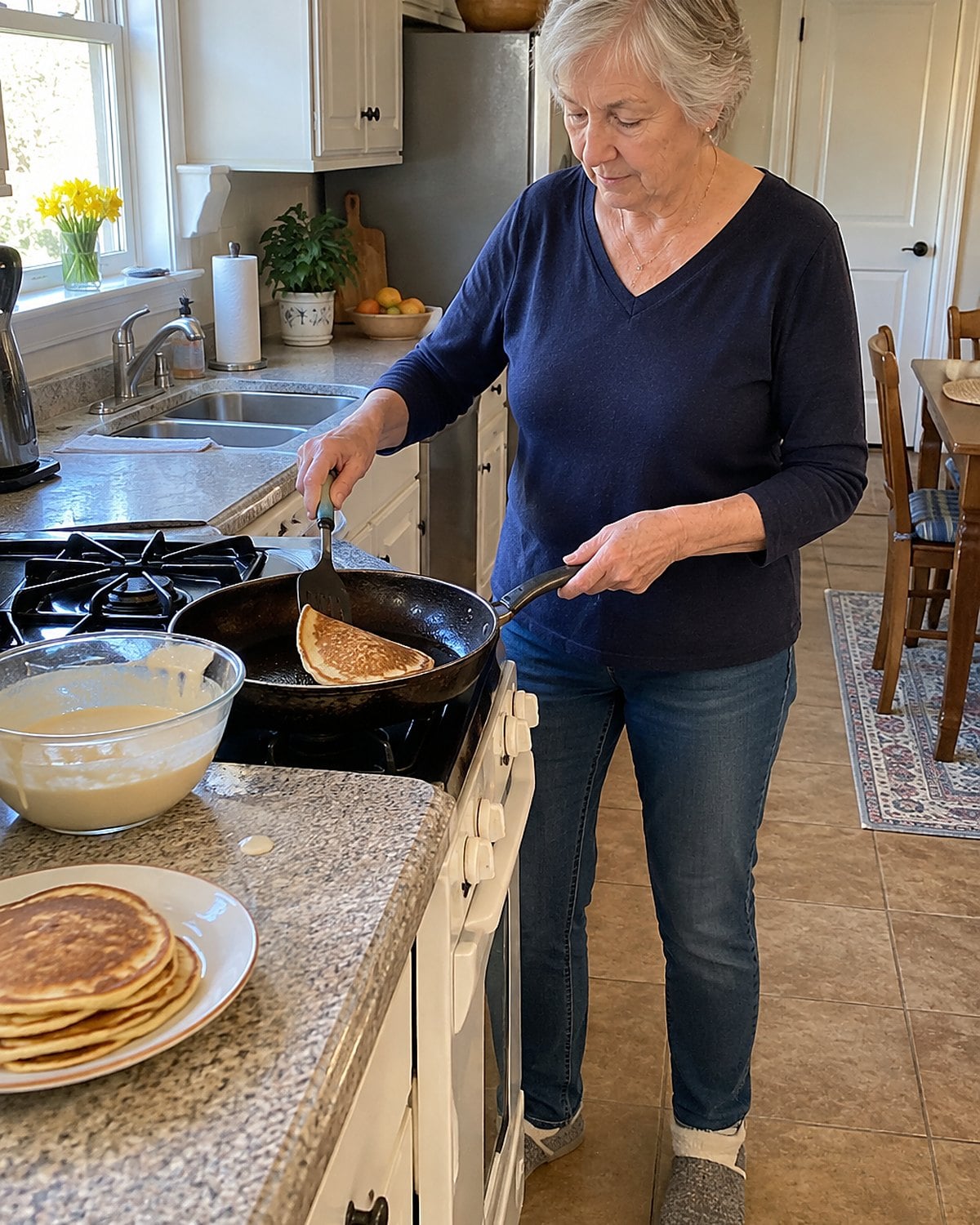
Pancakes are where a family recipe drifts without anyone announcing it. You use less sugar now. You started adding buttermilk after the kids left home. The old card still says plain milk, and the grandchildren think the pancakes they know came from that card.
Fix the card. Date the change if you remember when it happened. Then write down how thick the batter looks when it drops from the spoon.
Let the batter rest 5 to 10 minutes before the first pancake. The flour takes up liquid while the bowl sits; an immediate first pancake and a later one won’t spread alike.
Describe the pan cue, too. A drop of batter should set at the edge without scorching underneath. Flip when bubbles open across the surface and the edges look less wet. That’s more helpful than the instruction to cook over “medium heat” on a stove the next cook doesn’t own.
 You might also like27 Old-Fashioned Desserts That Deserve a Comeback
#8 The freezer bag of garden tomatoes
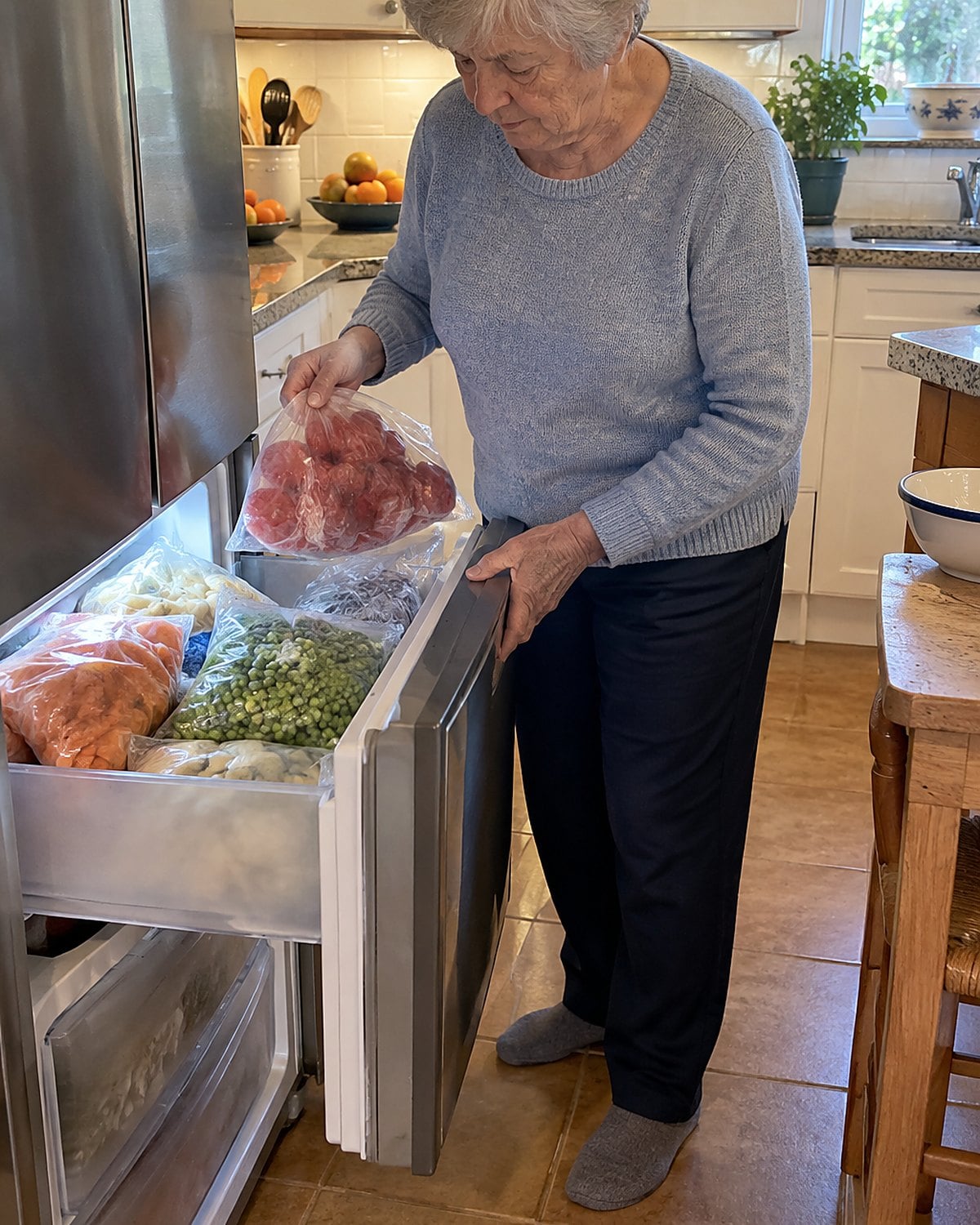
Open the freezer drawer and there they are: tomatoes sealed in a bag with last summer’s date. You froze them for soup or sauce, not for neat slices on a sandwich. That purpose belongs on the bag and in the recipe.
Record how they went in. Were they peeled first, chopped, or frozen whole? A whole frozen tomato slips its skin as it thaws, and it releases plenty of liquid.
If your soup begins with fresh tomatoes cooked down in a pan, a bag of frozen ones will need attention to that extra juice.
Write a note on the dish you actually make with them. Is it tomato soup finished with cream, or a pot of sauce that gets garlic after the onion softens? The bag itself isn’t the recipe. It’s the ingredient your family will find when the garden is gone.
For freezer dates and storage guidance, turn to the USDA’s FoodKeeper. Give your future cook the date on each bag, then tell them what the tomatoes were saved to become.
#7 The turkey skin on the roasting rack
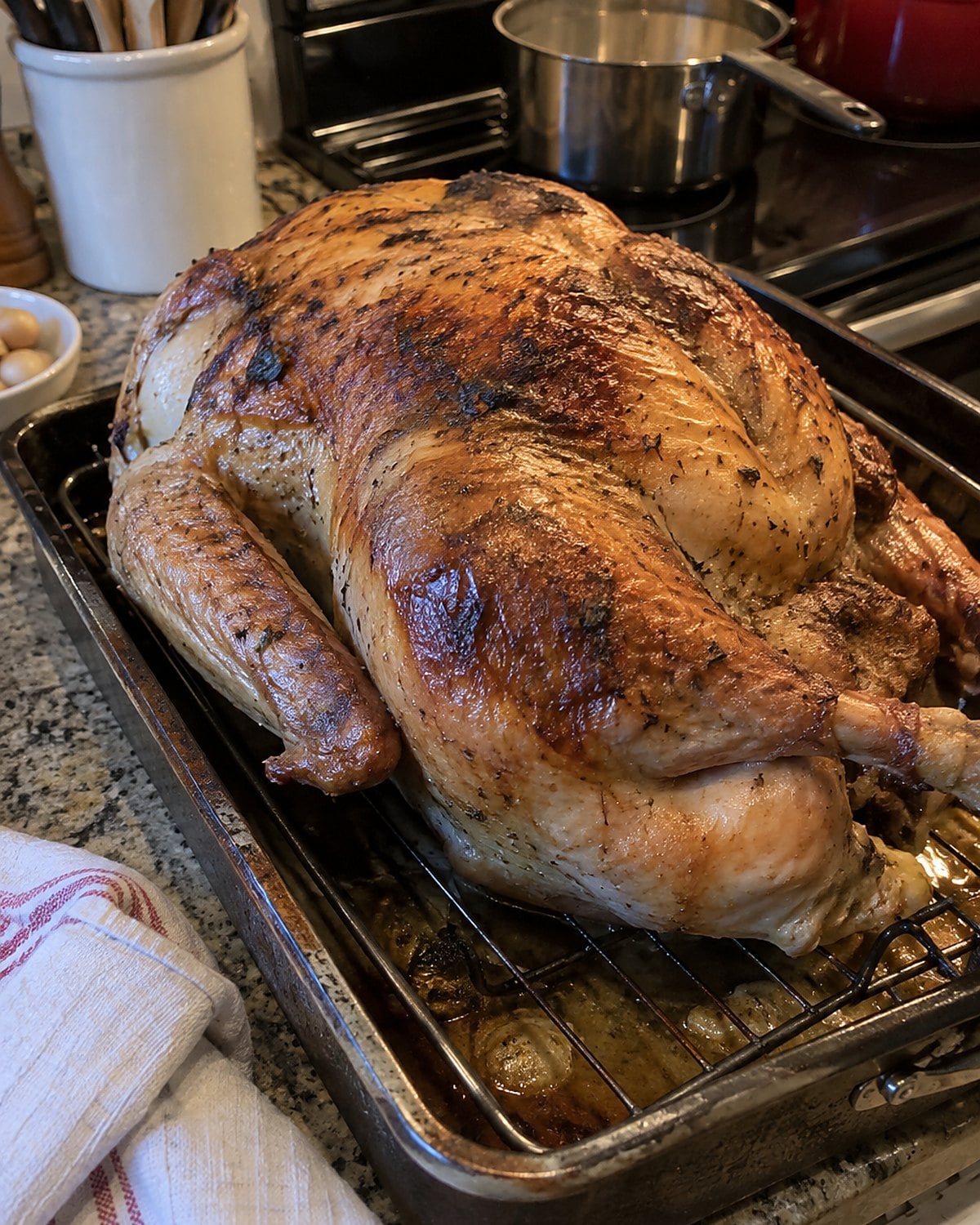
The turkey comes out browned, and someone reaches for the carving knife. Stop them long enough to answer a question the old card skips: was the bird on a rack, or sitting directly in the pan?
Write down where you put it and what you did to the skin before roasting. A pat with a towel removes surface moisture. Wet skin steams before it browns. If you brush it with butter, note when; if you don’t, say that too. These are the details someone remembers as “the way you did it.”
The color of the skin won’t tell the next cook when the turkey is safe to eat. Put a thermometer in the thickest part of the breast and the innermost part of the thigh, away from bone. The USDA Food Safety and Inspection Service says poultry needs to reach 165°F.
Then describe the part nobody writes down: how long you leave the bird alone before carving and which platter catches the juices. Your family sees the slices, not the pause that helped you make them.
#6 The baked macaroni with browned corners
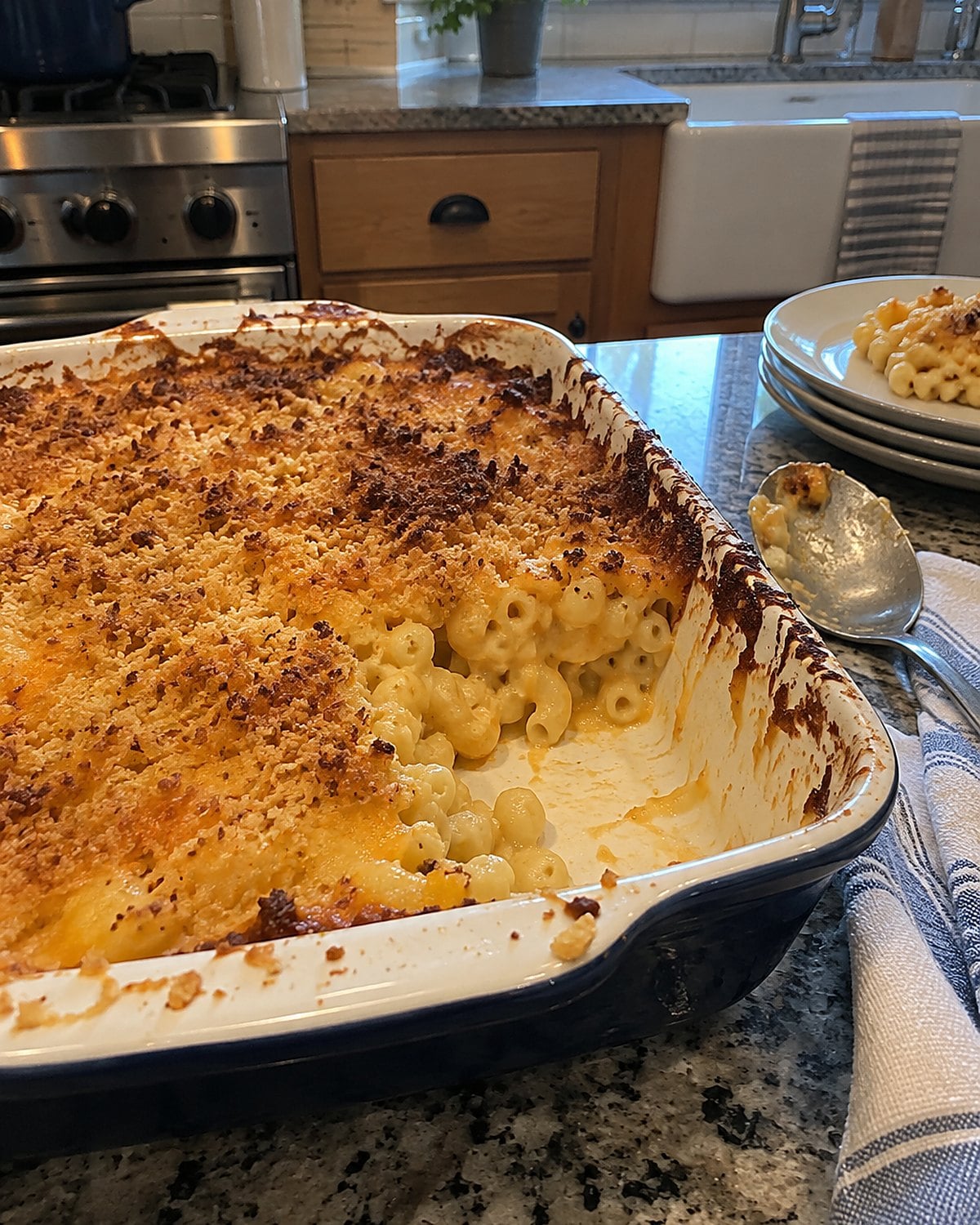
What do people reach for first: the creamy middle or the browned corner? The answer tells you more about your baked macaroni than a photograph does.
Write down how you make the sauce before it meets the pasta. If you cook flour in butter, add milk gradually and stir until the sauce coats the spoon.
Cheese goes in after the sauce has thickened and the heat is lower; hard boiling works against a smooth finish. Name the cheeses you use, since a sharp cheddar gives a different bite from a mild one.
Then describe the pasta when it leaves the water. If it’s already very soft, it keeps taking up sauce in the oven and comes out heavier than you intended. A firm bite before baking gives the finished dish room to settle.
Finally, record the dish. A shallow baking dish gives more browned surface than a deep casserole. Note whether you add crumbs and what they’re mixed with. Tonight, watch who asks for a corner. Tell them which pan made it, while that pan is still on the counter.
Try it: Italian Mac And Cheese (Instant Pot Recipe)
#5 The peach cobbler on the cooling rack
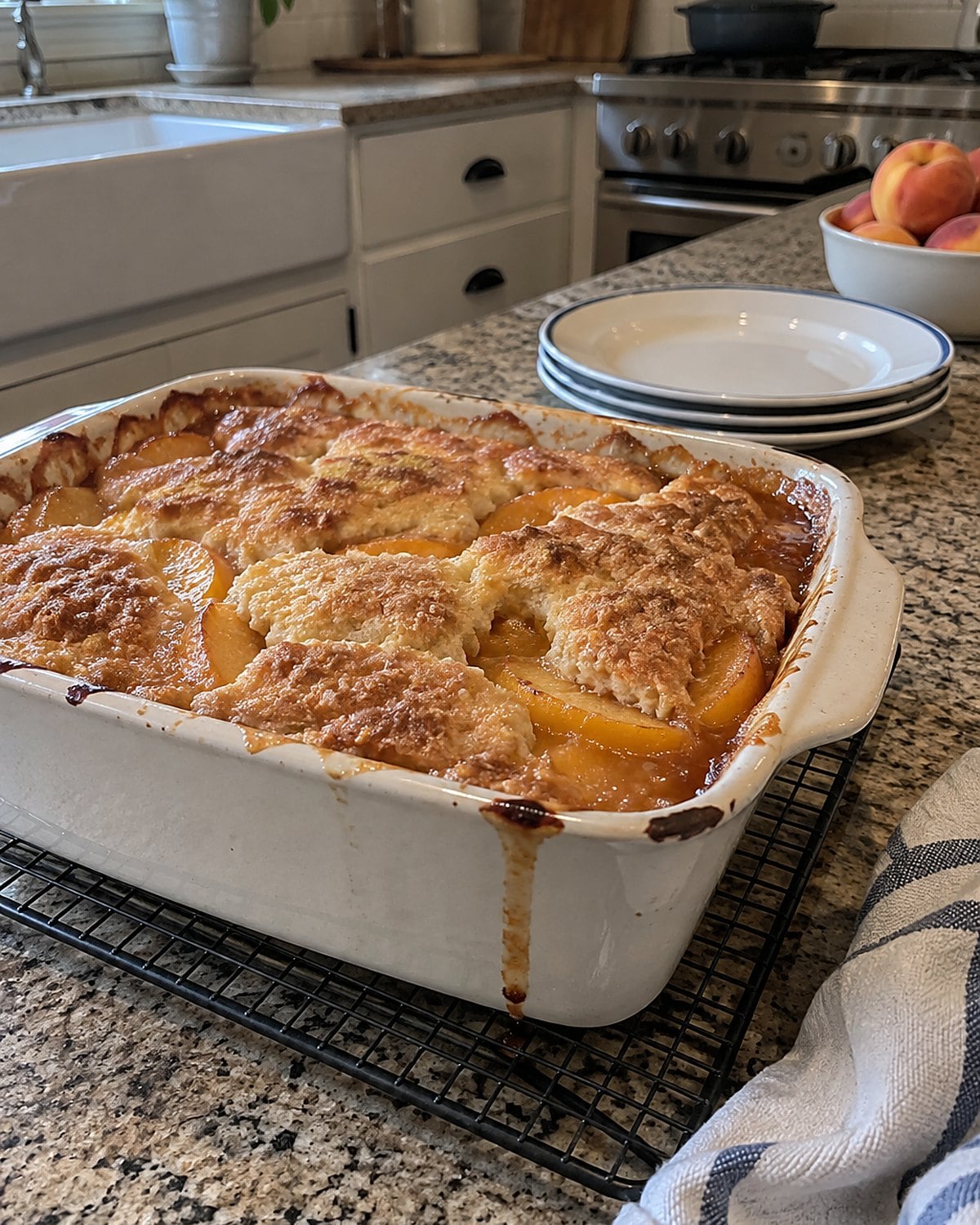
A cobbler recipe needs to say where the fruit and dough begin. Some families spoon batter over peaches. Others put batter into a hot dish and pour fruit over it without stirring. Swap those steps and you lose the look everyone expects.
Use the fruit you really use when you write the card. Fresh peaches give off juice as they bake; canned peaches arrive with liquid already in the can. Say whether you drain them. “Peaches” is too small a word for that choice.
Check the center before calling it done. Push a spoon through the topping near the middle. You want baked dough, not wet batter hidden below a brown surface.
Let the cobbler stand long enough for the fruit juices to stop running across the plate. Then ask whether yours was served warm with ice cream or eaten cold from the dish the next morning.
#4 The soup started with a saved bone
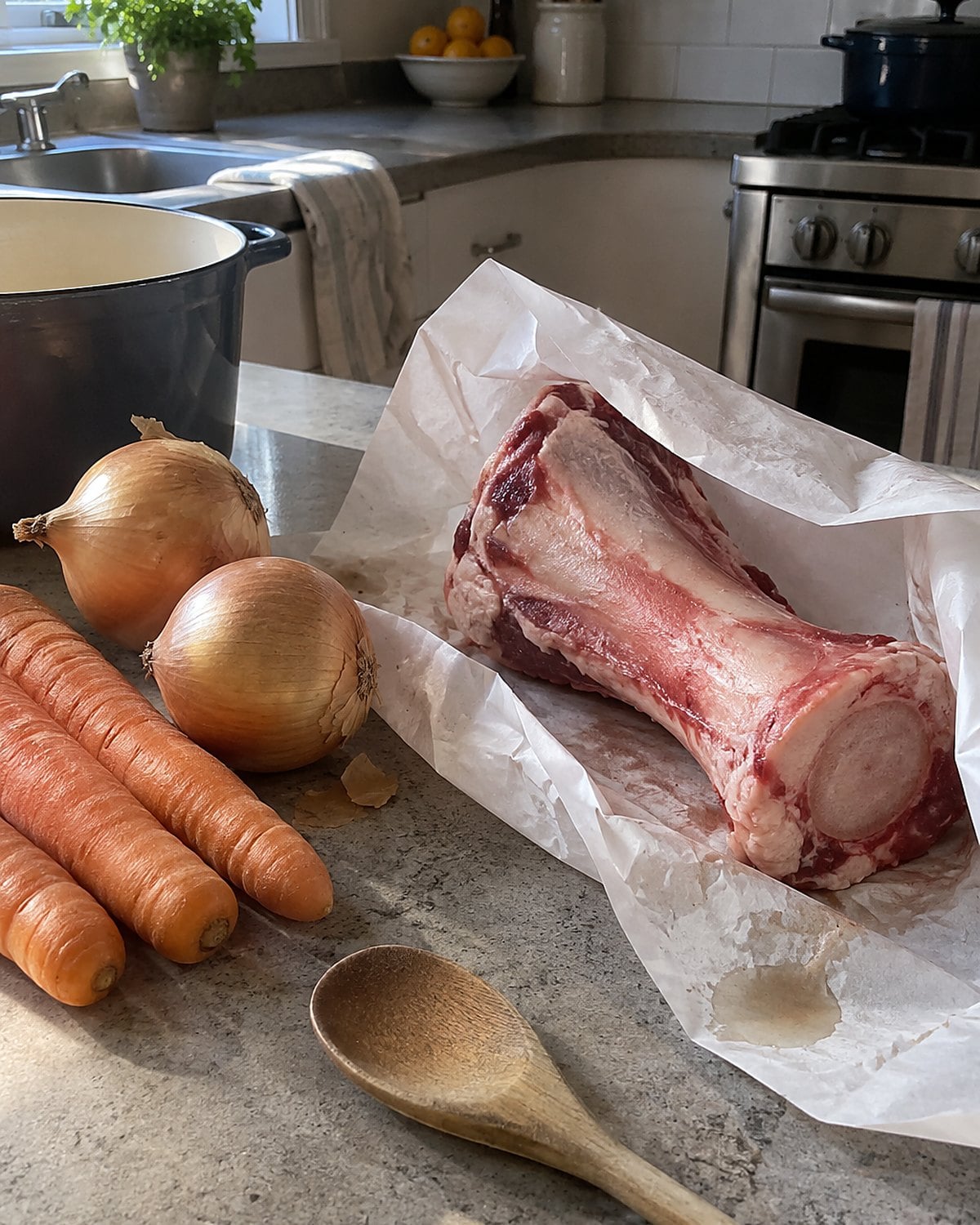
There’s a bone wrapped in the freezer because you know it has one more meal in it. The next cook needs to know which meal. A ham bone points toward beans or split peas; a chicken carcass leads somewhere else. Label it for the pot you intended.
When you write that soup down, begin before the lid goes on. Do you cook onion and carrots in fat first? Do dried beans get their own start?
Does the leftover meat go in early to flavor the broth, or near the end so it stays in pieces? Those choices shape the bowl.
Leave space for the finish. A spoonful of vinegar or lemon at the end brightens a soup that tastes flat, while more salt won’t do the same job. Taste a spoonful, add a small splash, and taste again before writing down the amount you used.
For leftovers, the USDA’s leftovers guidance says to refrigerate cooked food promptly and use refrigerated leftovers within 3 to 4 days. Divide a big pot into shallow containers so it cools in the fridge. Put the date on the lid beside the soup’s name.
Try it: Instant Pot Chicken Bone Broth In 3 Hours
#3 The dinner rolls shaped beside you
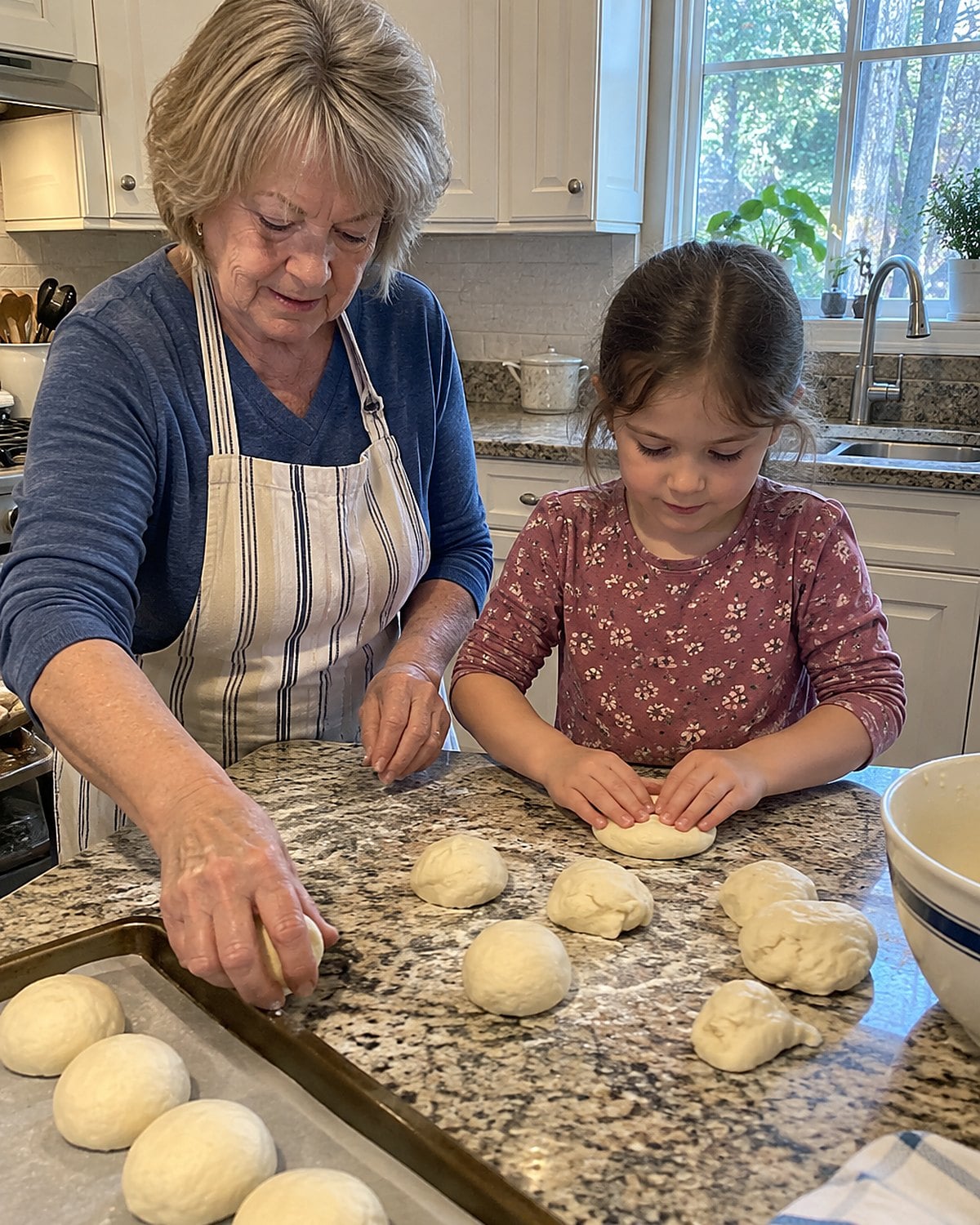
How did you make every dinner roll look like yours? You didn’t weigh them on a scale. You pinched dough from the bowl, tucked the rough edges underneath, and rolled each piece against the counter until the top pulled smooth.
That motion is hard to recover from a line that says “shape rolls.” Have someone watch your hands. Tell them whether you flour the counter or leave it bare, and show where the seam lands in the pan.
Then write down what the dough looks like before baking. Does it rise until the rolls touch? Do you brush the tops with butter before they go in or after they come out?
Those details hold the memory of the basket passed around the table. Better still, let a grandchild shape a crooked roll. Next time, they’ll know what your hands were trying to do.
#2 The stained card in the drawer
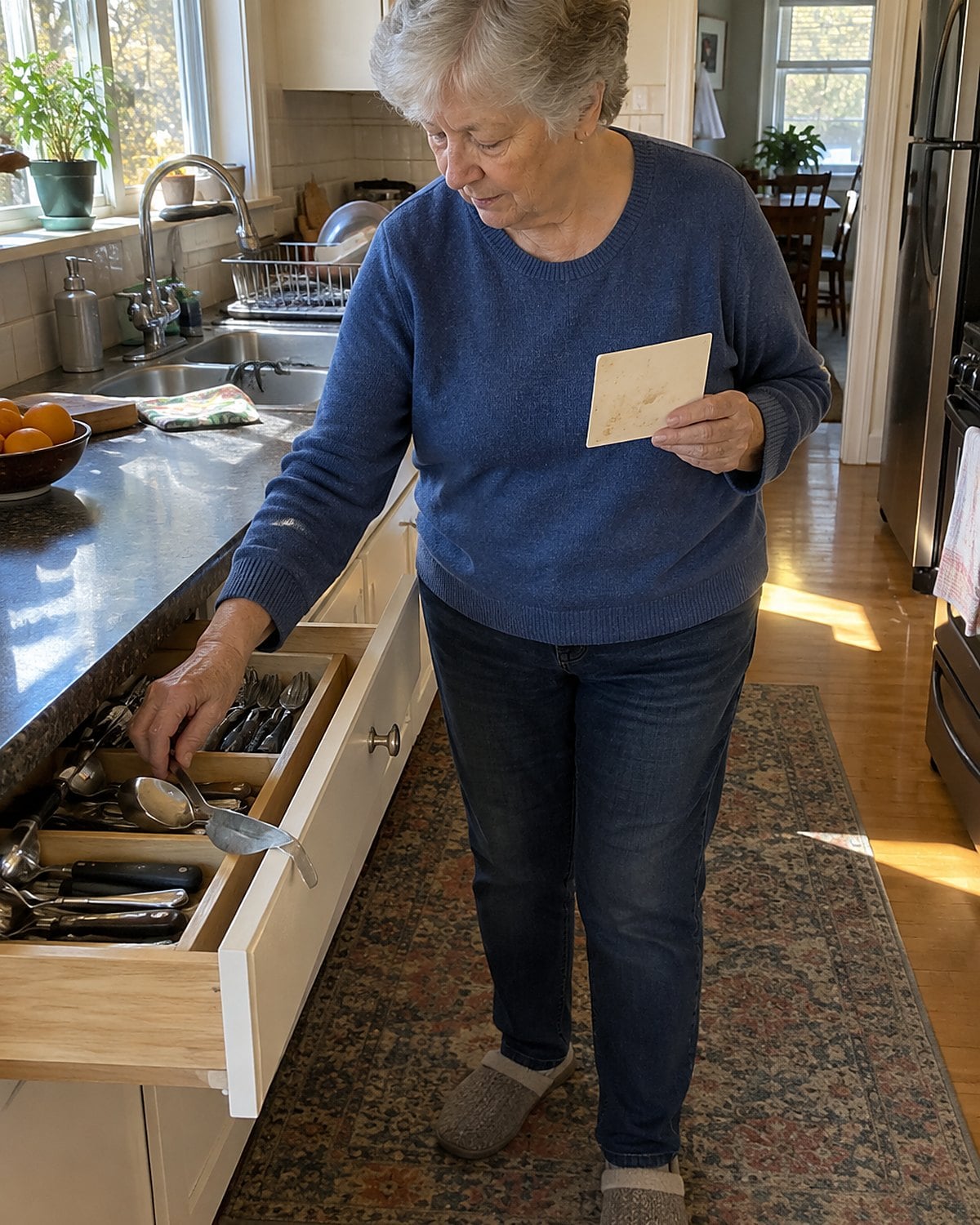
The card says “until done” beside a grease mark. Its back has a different hand’s note about the oven, added years after the first cook wrote it. Before you copy the card into a clean notebook, keep both marks in view.
Make the dish from that card while someone else reads it aloud. Stop each time their question makes you explain a step that isn’t there. Where did the onions go? How thick was the batter? Which pan did you reach for without checking the cupboard?
Put the answers beside the original words. Date a change if you know when you made it, but don’t erase the earlier version. The old instruction tells your family how the dish arrived in your kitchen. Your note tells them how it leaves it.
If the card’s directions have become hard to read, take a clear photo of both sides before handling it again. Then copy what’s written, even the parts you no longer follow. There’s room on the new page for your version.
#1 The recipe you make without measuring
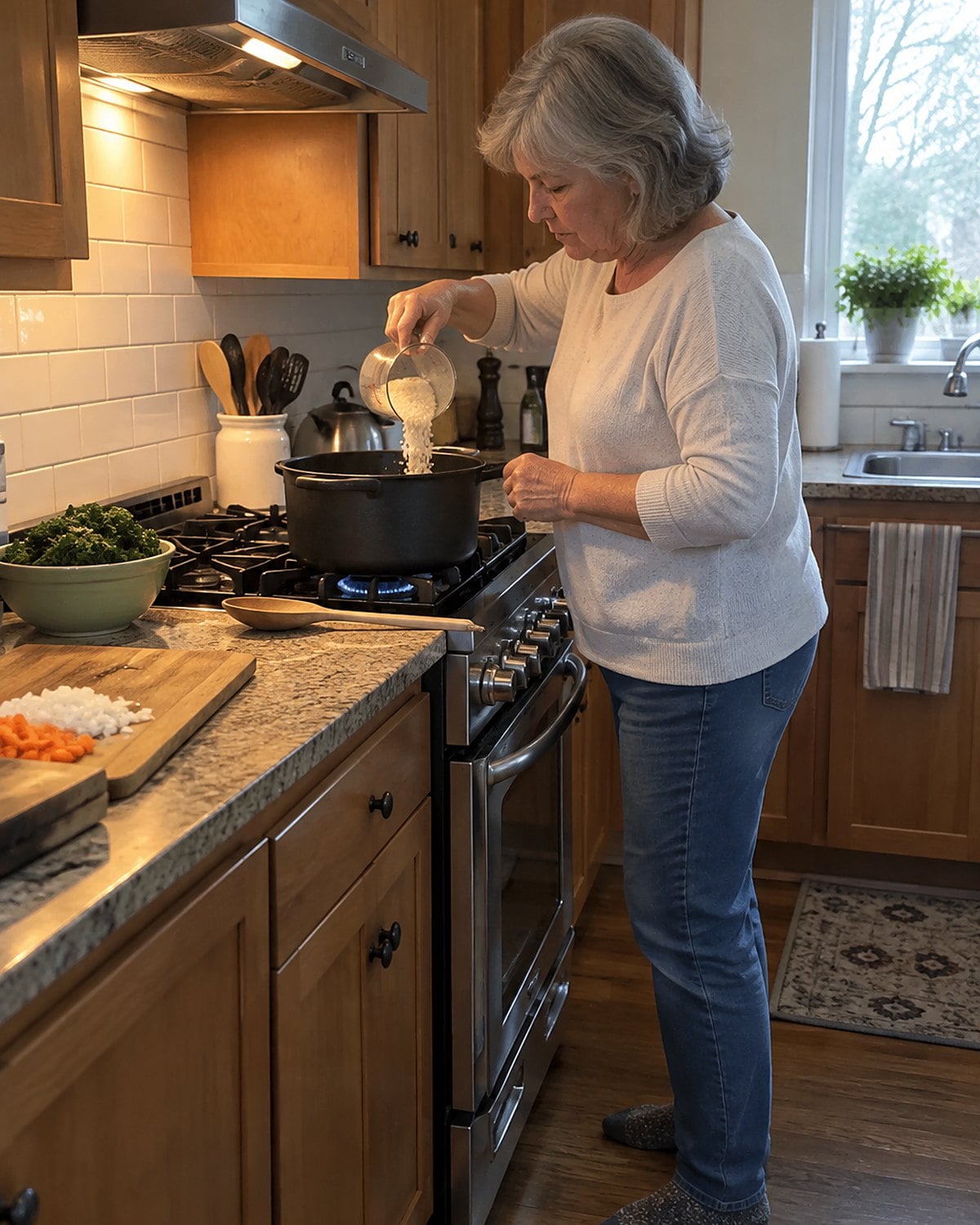
This is the one to write down first. It isn’t necessarily the holiday dish or the meal someone requests aloud. It’s the thing you start making while talking on the phone, reaching into familiar jars without looking. That’s the recipe nobody knows to ask you for yet.
Pick one the next time you cook. Put an empty cup beside the stove. Before each ingredient goes in, measure what your hand was about to add, then put it in the pot.
If measuring changes your rhythm, write down both things: the amount and what you were looking for. “Enough milk to loosen the potatoes so they fall from the spoon” tells someone what to do with a different-sized potato.
Ask another person to read your notes while you’re still in the kitchen. Give them the spoon for the final taste. If they ask when the onions go in, the answer belongs on the page. If they ask what “browned” looks like, show them the pan before you wash it.
You’ll find a step you never called a step. Perhaps you warm the bowl. Perhaps you save a little cooking water. Write it down tonight, before your hand does it again and your mind lets it disappear.
Keep reading
 24 Dishes That Died With the Woman Who Made Them
See all 24 →
More you’ll remember
 27 Dishes Your Mother Made From Nothing That You've Never Managed to Copy
 27 Foods Grandmothers Make That Mothers Won't Allow
 27 Dishes From Church Suppers That Nobody Makes Anymore
The bottom line
The missing piece is rarely the name of the dish. It’s the hot skillet, the thickness on the spoon, or the ingredient you started adding after the old card was written.
The well-prepared version of you has made one familiar dish, measured what went into it, and handed the notes to someone who asked a question.
What do you make so automatically that nobody in your kitchen knows there’s a recipe to lose?
Leave a Reply