

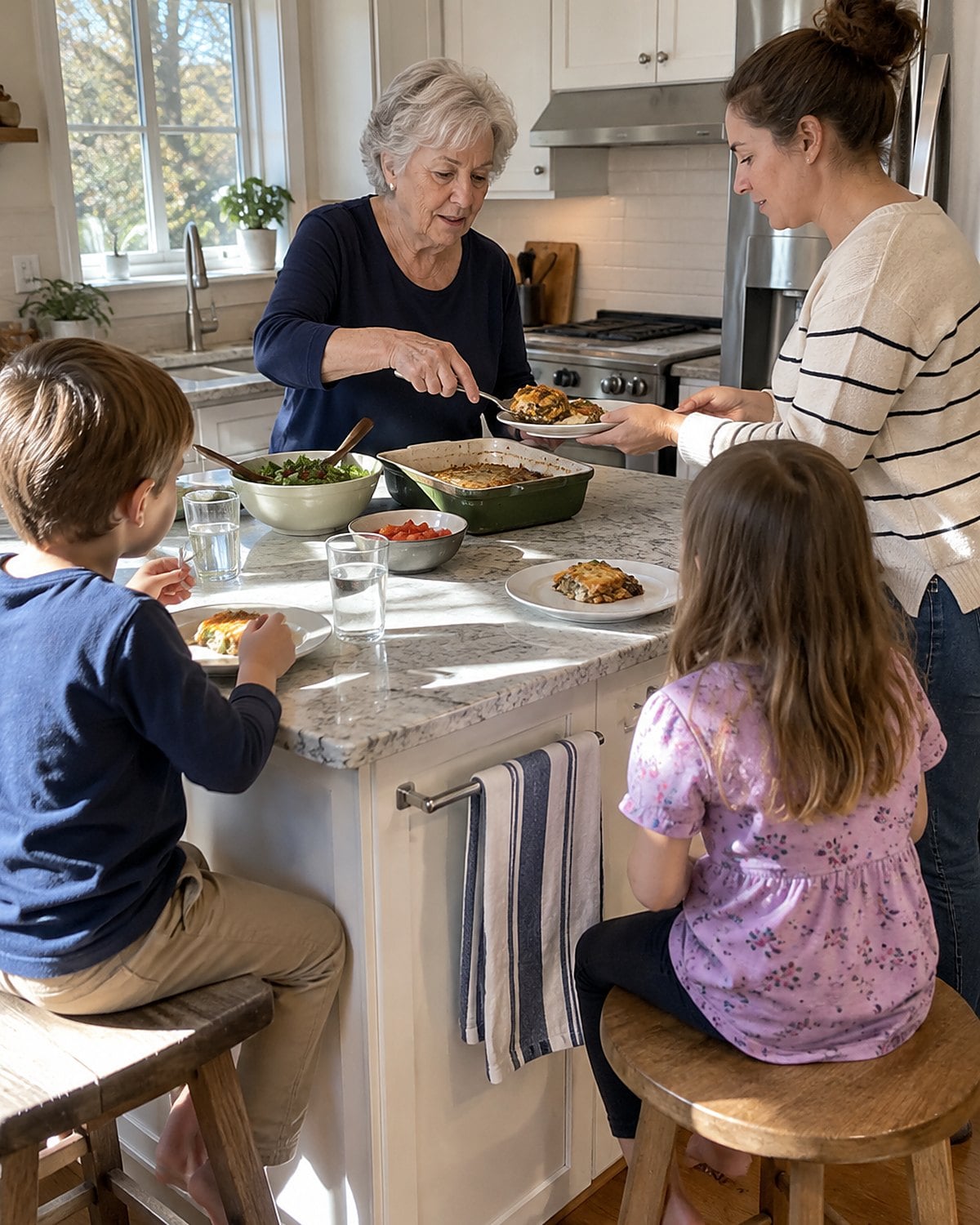
The serving spoon taps the edge of the pot, and your grown child says the chicken was always dry. There’s a pause while everyone reaches for the potatoes. You remember weeknight dinners eaten between work and homework. Your child remembers the chicken.
Both memories fit at the table. You don’t have to defend every supper you ever made. You also don’t have to stand there while someone turns a meal you cooked into a verdict on forty years. Start with what was said. Then decide whether the person wants better chicken or an audience.
#24 The chicken breast at Sunday lunch

Chicken breasts get dry fast, especially when the thick end and thin end share a skillet. If your child says so while you’re passing the platter, you can answer the food question without accepting a review of your whole kitchen.
“Fair. Let’s check the thickest piece next time.”
A thermometer settles the question better than an argument about how the meat looks. The USDA Food Safety and Inspection Service gives 165°F as the safe internal temperature for poultry. Put the tip in the thickest part, away from bone. Read the number.
A thin piece reaching that mark first belongs on the plate first. If today’s chicken is dry, pass the gravy. If the complaint arrives with “You always ruined it,” answer that part separately: “We can talk about today’s chicken. I’m not putting forty years of dinners on trial.”
Try it: Instant Pot Chicken Breasts & Gravy
#23 The salt shaker beside the stove
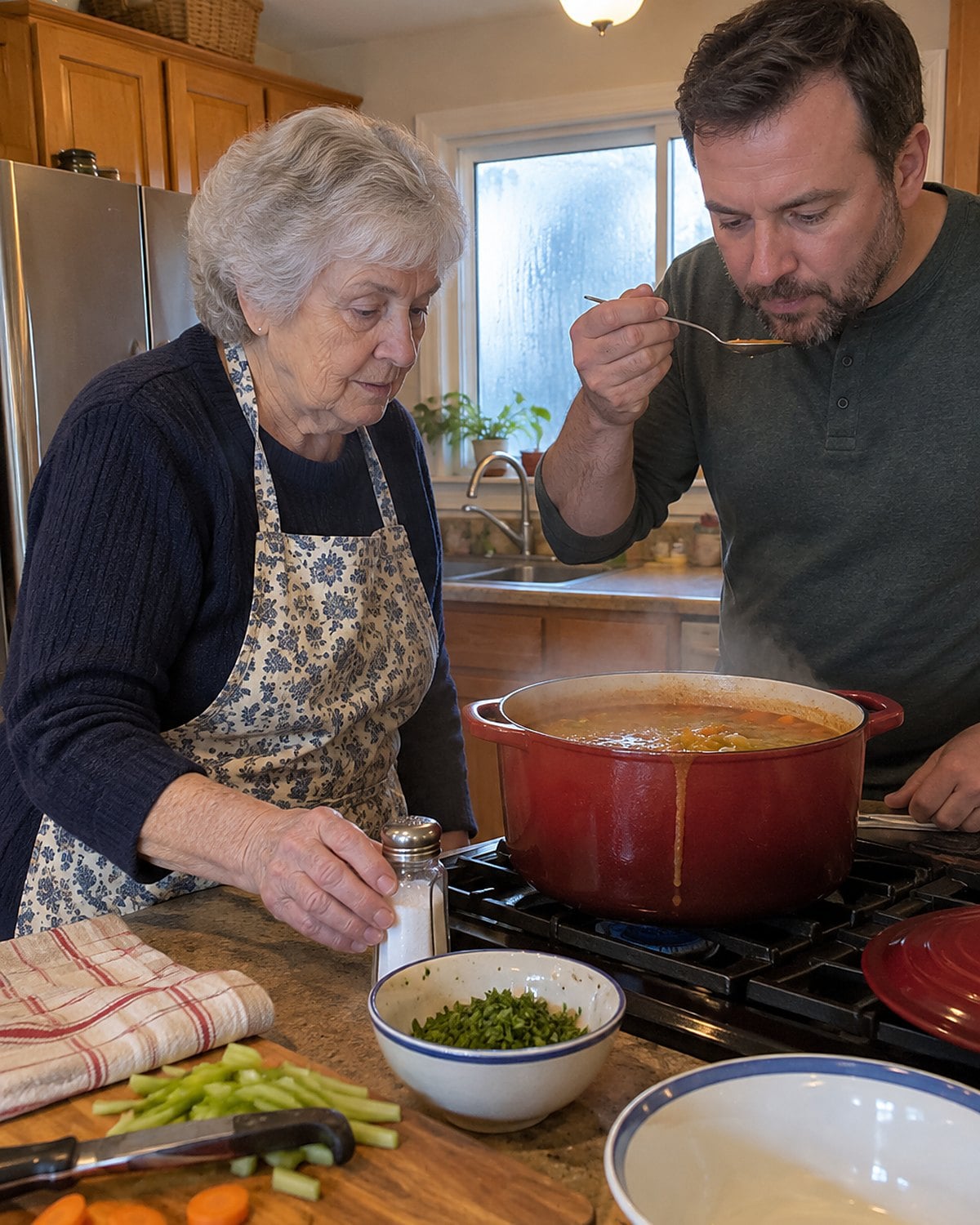
“I’d like to taste it before we change the whole pot.”
That line buys everyone a moment. Salt added at the stove has time to spread through soup or beans. Salt added at the table stays where it lands, so each person controls a bite. When someone reaches for the shaker before tasting, you’re allowed to keep cooking the way that works for the pot.
Ask what’s missing after the first spoonful. Sometimes the dish needs salt. Sometimes it needs a squeeze of lemon or a spoon of its cooking liquid stirred back in. Those are different fixes.
You don’t need to announce who has the better palate. Set the shaker down and let the food answer. “Taste yours, then season yours” is a perfectly civil house rule.
#22 The sandwich crusts on the cutting board
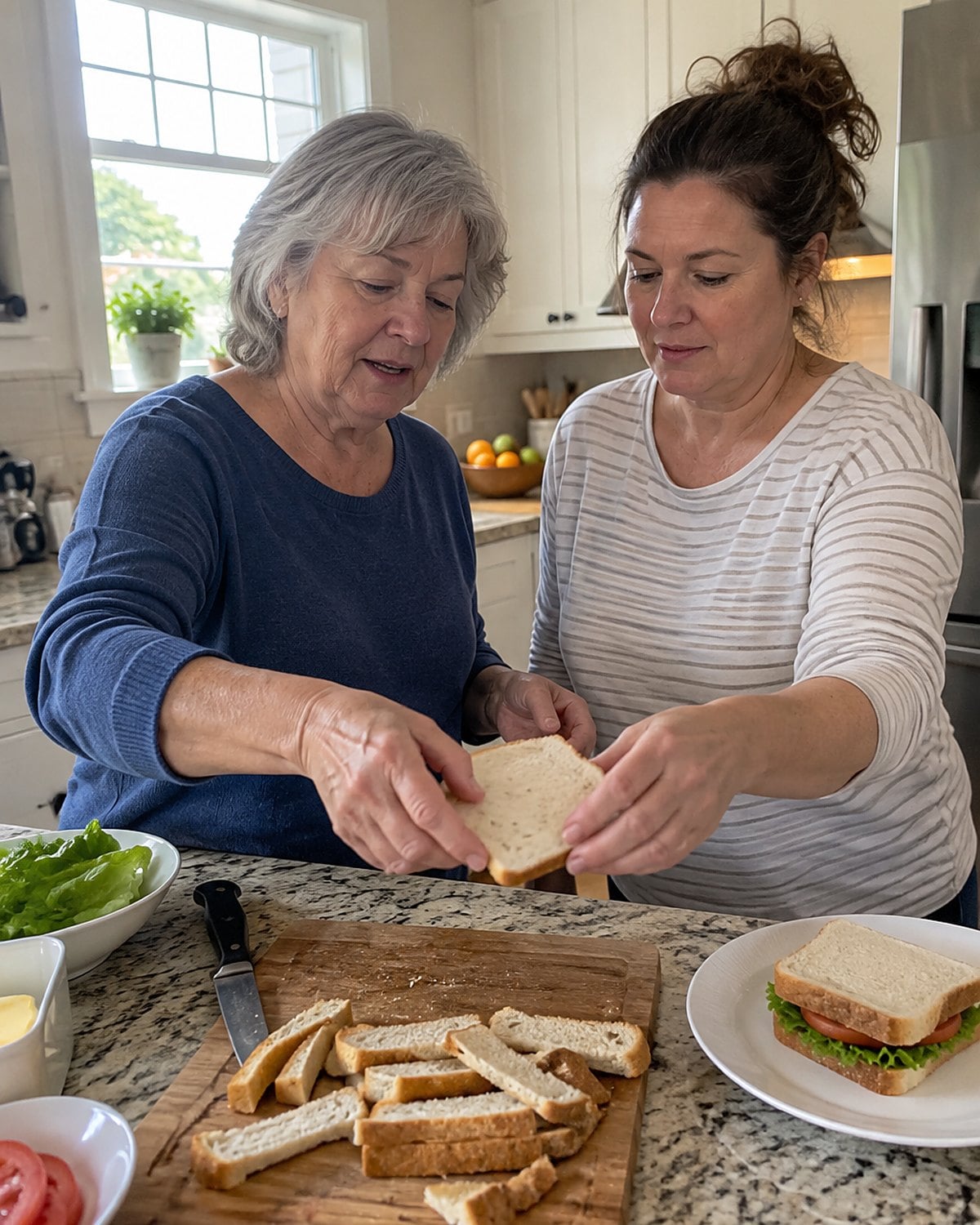
Does your child object to the sandwich you made, or to the sandwiches they remember? Ask.
“Are you asking me to cut yours off today, or telling me I was wrong then?”
It’s a small distinction with a lot of room inside it. A request for today takes seconds to handle. A verdict on years of packed lunches has no clear finish line, and it won’t improve the sandwich in front of you.
Perhaps you cut crusts because that was how the lunch fit in the box. Perhaps you didn’t because the bread was good and the morning was crowded. You needn’t build a defense around either choice.
Keep the knife on the board. If they want a different sandwich, let them make one. If they want to talk about an old hurt, give that conversation its own time, away from the bread and the people waiting to eat.
#21 The cast-iron skillet on the burner
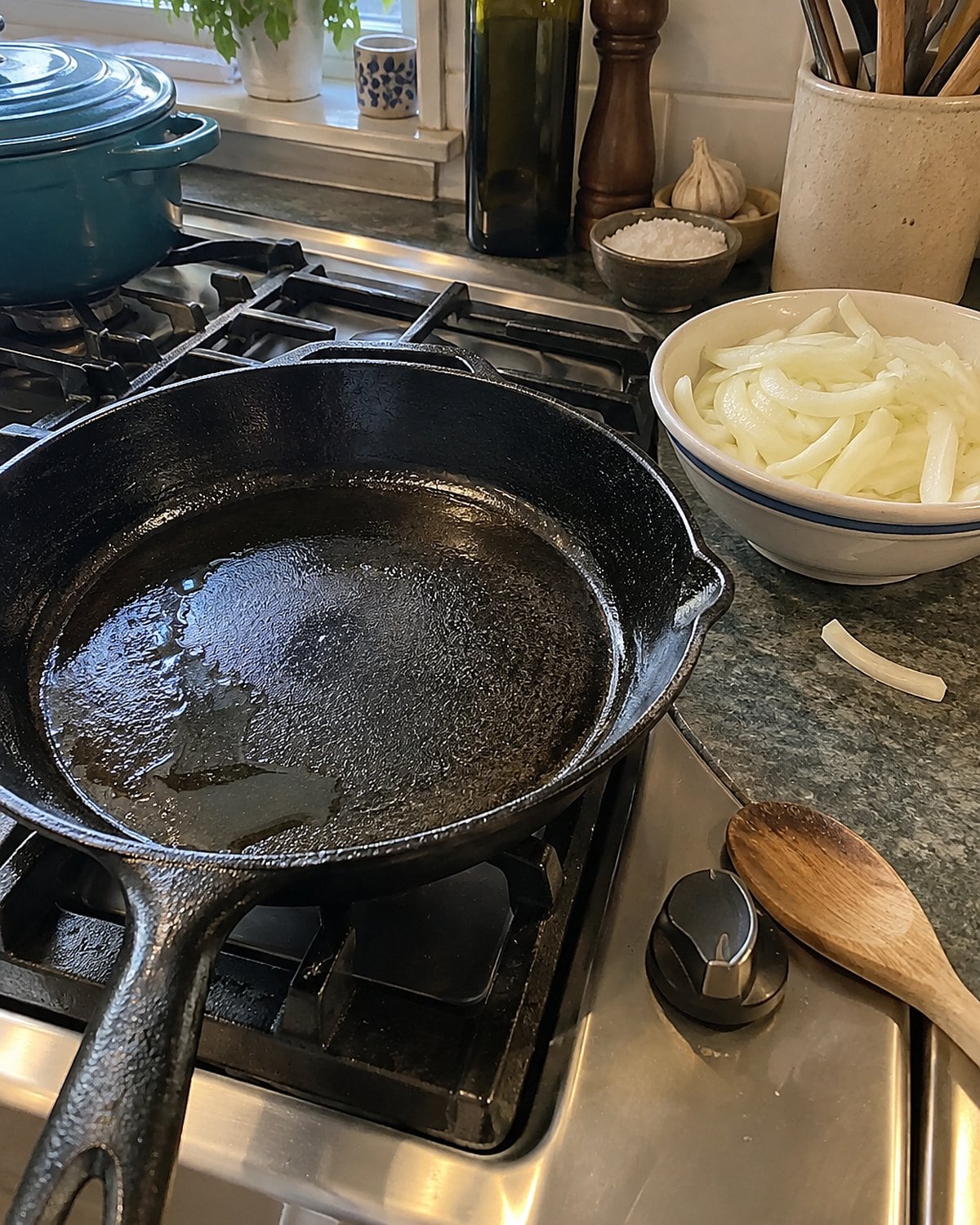
A cast-iron skillet takes time to heat through. Test the middle of the cooking surface: a drop of water skitters across a hot pan instead of sitting in a puddle. Wipe out the water before adding fat.
If your adult child says you’ve been using the pan wrong, hand them a useful job. “Watch the heat with me. Tell me when you’d put the onions in.”
Now there’s something to compare. Onions dropped into a cool, crowded pan release water and steam. In a heated pan with room between them, they start to sizzle. Neither result settles who was a good parent. It tells you what’s happening at the stove.
Keep your hand on the burner knob. Advice is welcome; command of the pan belongs to the person cooking dinner.
#20 The pot roast in the Dutch oven
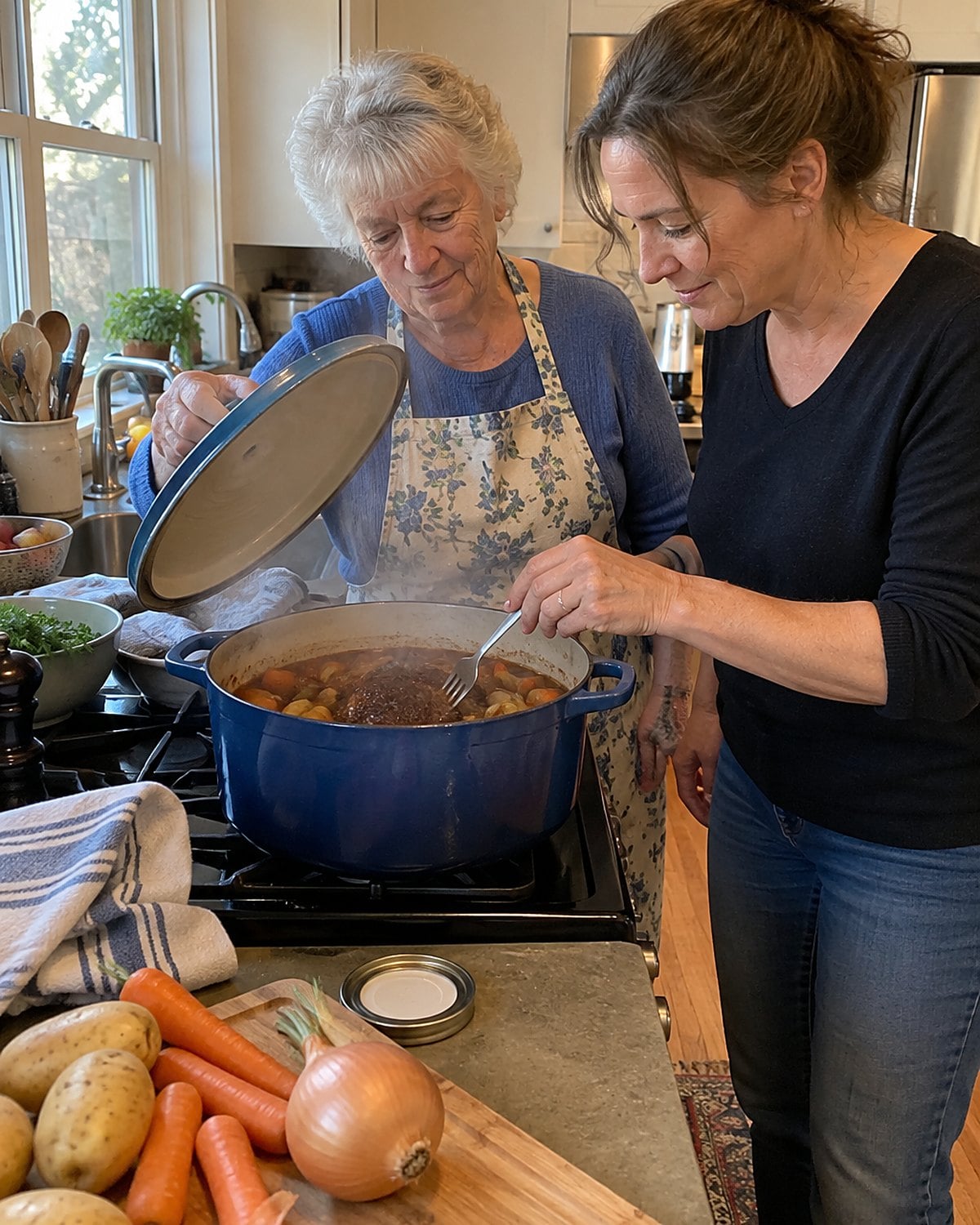
The lid used to rattle while homework spread across the counter. You lifted it when the carrots smelled done, not when a timer told you to. If your child now says pot roast was tough, you remember the dinners that disappeared anyway. They remember the bites they chewed longest.
You can say, “I believe you remember it that way. I remember making dinner after work.”
Then look at the meat in front of you. Chuck has connective tissue that needs moist heat and time. When a fork meets resistance, more time under the lid serves it better than turning up the heat. If the carrots are done first, lift them out so they keep their shape.
That’s a useful lesson for tonight, without pretending that every roast from the past was tender. Your child’s memory doesn’t erase the work. Your work doesn’t erase their memory. Pass the carrots while the roast finishes.
Try it: Instant Pot Beef Pot Roast With Potatoes & Carrots
#19 The green beans in the colander
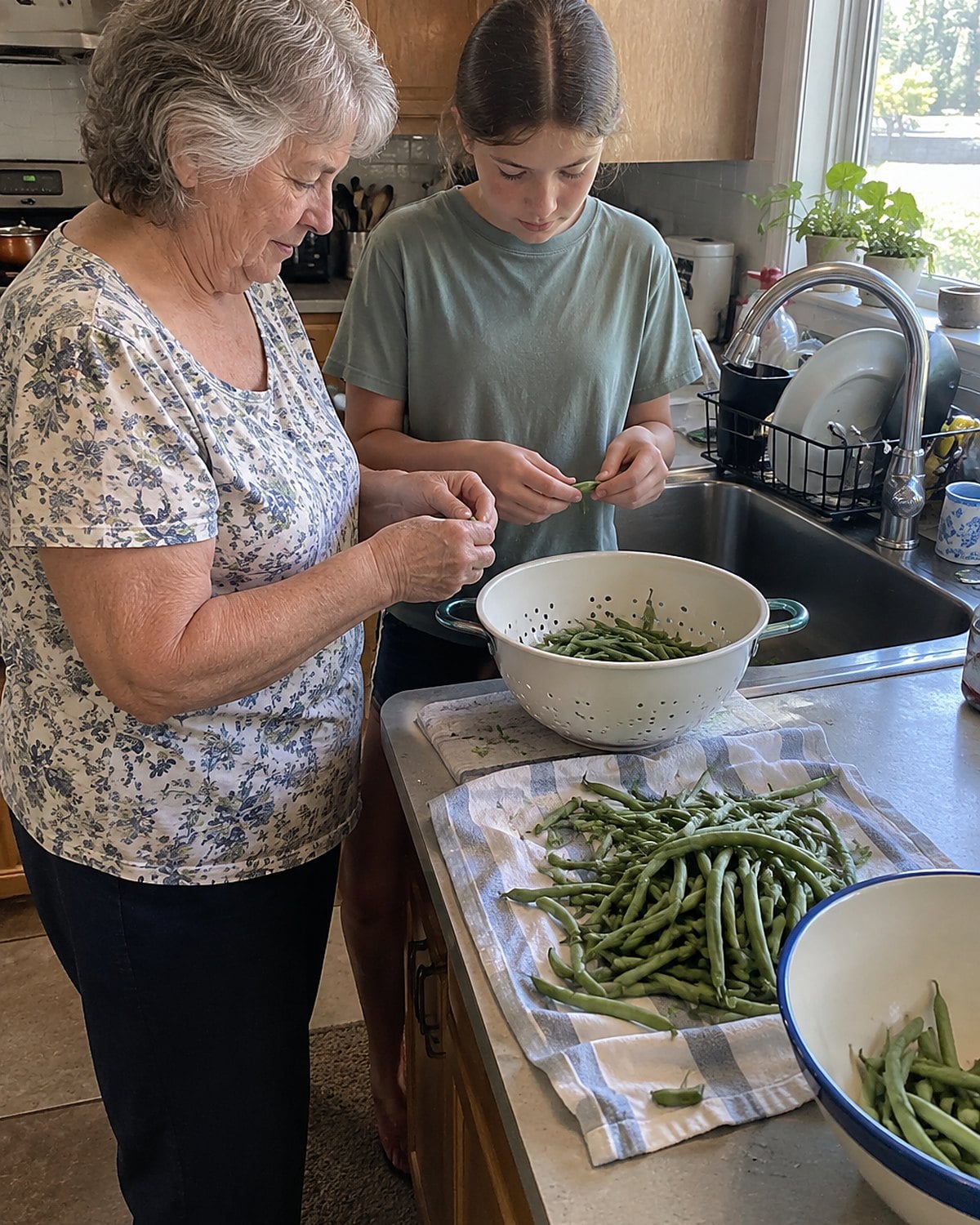
At the sink, a grown child snaps a green bean and says yours were always mushy. There’s an easy answer and a harder one.
The easy answer: “Help me check these before they go in.” Bend a raw bean. Later, taste one from the pot. Pull one out after 2 to 3 minutes in boiling water if you’re aiming for a crisp bite. Keep tasting until the beans reach the softness you want.
That test beats arguing over what “done” meant at Sunday supper. A bean with some bite and a bean cooked until soft belong to different meals. Ask which texture they want with this one. You still get a say in what you’re serving.
The harder answer concerns the word “always.” If the comment comes with a laugh at your expense, name it. “I’m happy to cook these firmer. I don’t want the old dinners mocked while I do it.”
That leaves room for the beans to change. It leaves room for you to stay at the sink without having to laugh along.
Try it: Instant Pot Green Beans With Butter & Pepper
#18 The canned tomatoes in the pantry
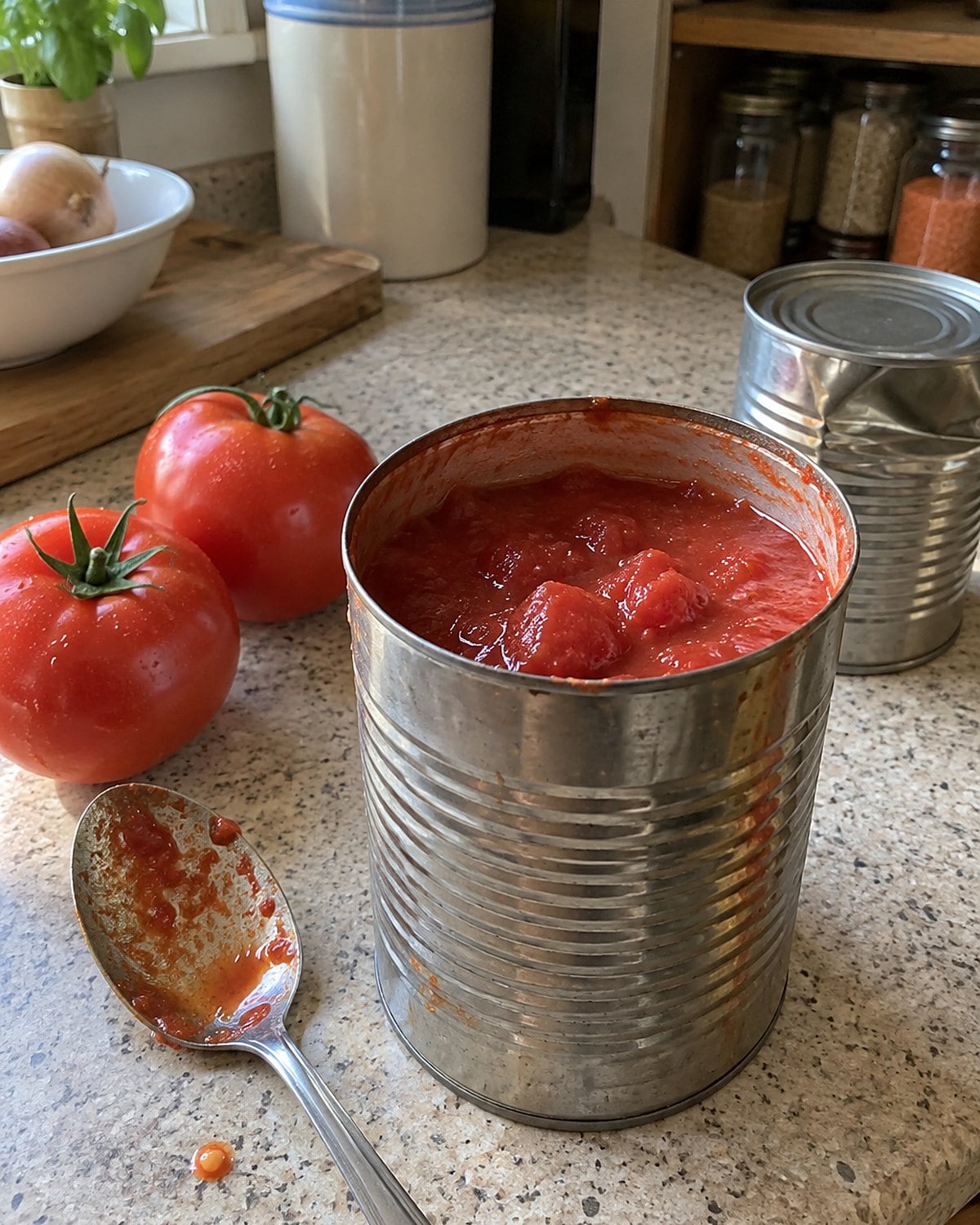
A child who grew up with your tomato sauce arrives with a bag of fresh tomatoes and a lesson about canned food. Before you defend the pantry shelf, ask them to taste the tomato they brought. A pale tomato with little scent won’t turn into a rich sauce through good intentions.
Canned tomatoes are picked and packed for the job they do in a pot. Fresh ones bring their own pleasures, especially when they’re ripe enough to smell at the stem. The sauce needs the better tomato for this batch, not the one with the better reputation.
Try saying, “Let’s taste both, then decide.” Put a spoonful of each beside the stove. If the fresh tomato wins, chop it. If the can wins, open it.
That invitation doesn’t make your pantry a subject for debate. It shows how you’ve been making choices all these years: with what was available, what the meal needed, and what tasted right after a long day.
Try it: Instant Pot Tomato Basil Sauce
#17 The measuring cup in the flour bin
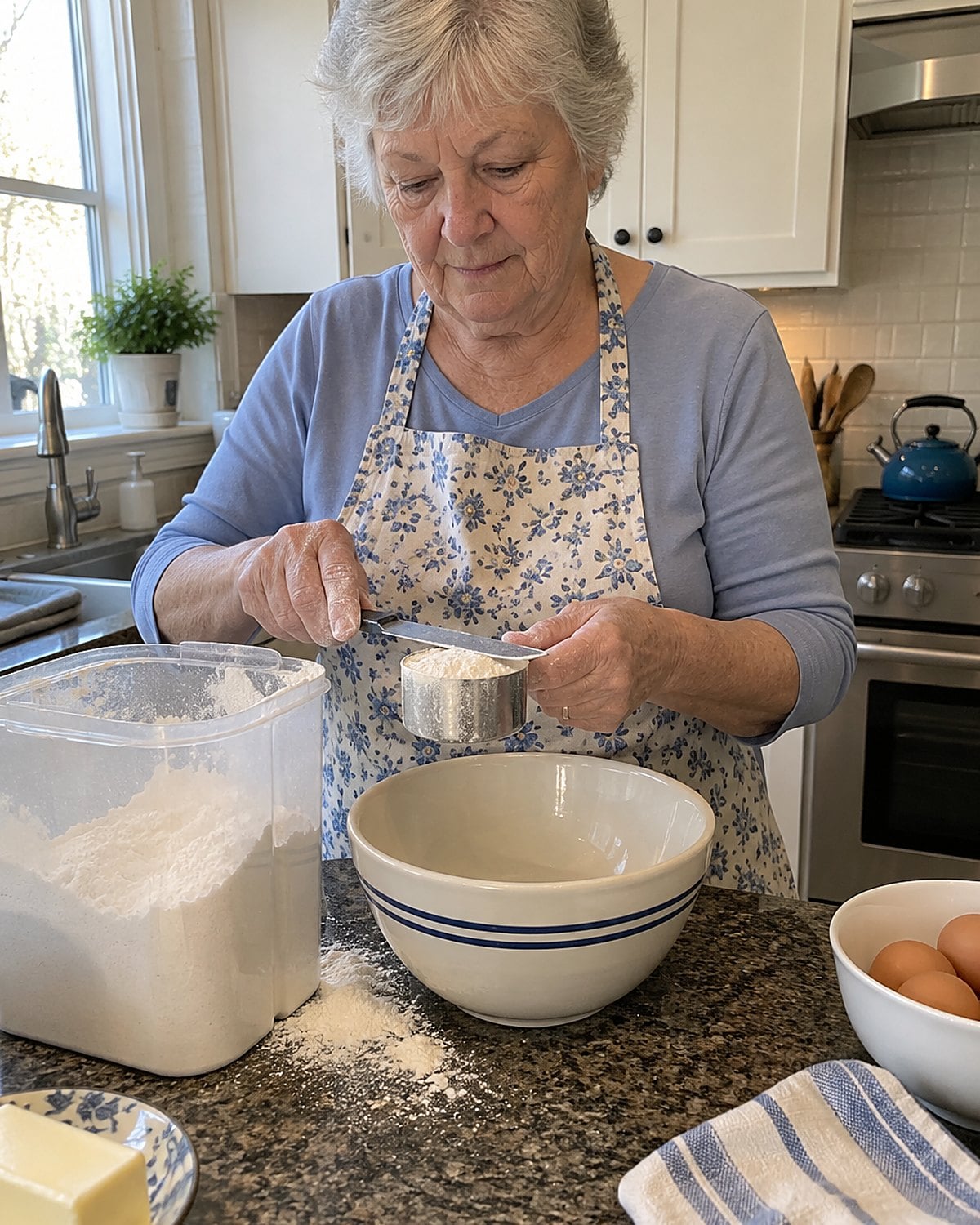
“You never measured anything,” your child says, watching you scoop flour. Maybe you didn’t when you made biscuits by feel. Flour gives you clues a cup won’t: how it clumps, how the dough pulls from your fingers, how a biscuit feels when you turn it over.
Still, a measuring cup has a job. Scooping straight into flour packs it down; spooning flour into the cup and leveling the top gives you a lighter cupful. If you’re following a written recipe together, agree on the method before mixing.
“Show me the result you’re after,” you can say. Then make the dough and feel it.
Your hands learned something over forty years. A written measure helps someone else repeat it. There’s room for both on the counter, provided nobody uses the cup as proof that you never knew what you were doing.
 You might also like24 Dishes That Died With the Woman Who Made Them
#16 The birthday cake with uneven frosting
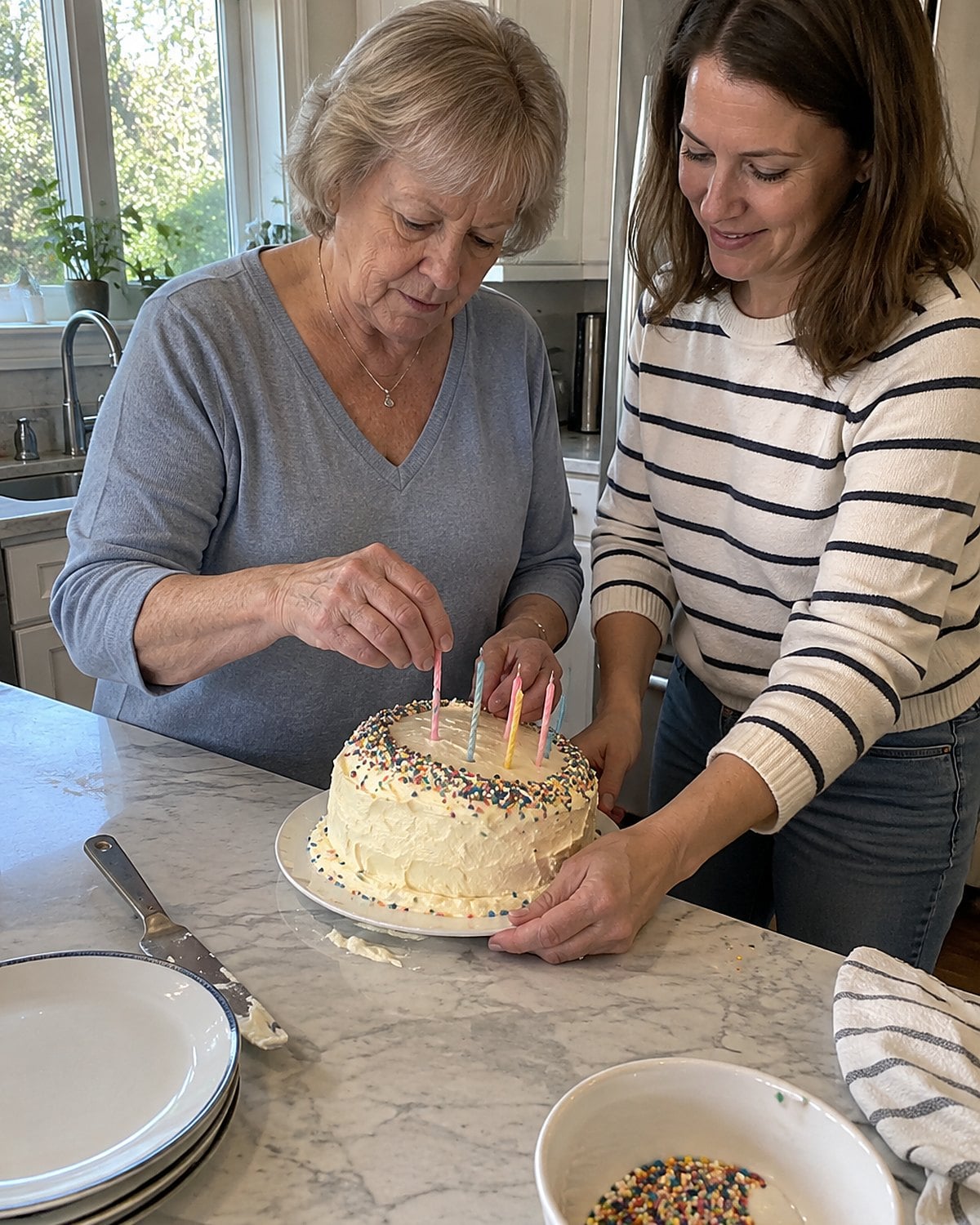
The birthday cake leans a little. Your child spots it before the grandchildren spot the candles.
If they say, “You never could frost a cake,” you don’t have to turn the moment into a lesson on buttercream. “The candles will stand. Pass me the matches.”
Later, if they meant to help, hand over the offset spatula and ask them to smooth one side. For the next cake, wait until it’s completely cool before frosting. A warm cake loosens the icing, and every pass of the spatula pulls up more crumbs. If time is tight, set the cooled layers in the refrigerator for 30 minutes before you start.
A thin first coat catches the loose crumbs. Let that coat set, then spread the finishing layer without digging back into the cake. There’s a technique to share without giving anyone license to grade the birthday.
But this birthday is happening now. The person who baked the cake gets to decide whether a sloping edge needs fixing. If a grandchild wants the slice with the thick frosting, you already know which side to cut.
#15 The wooden spoon in the sauce
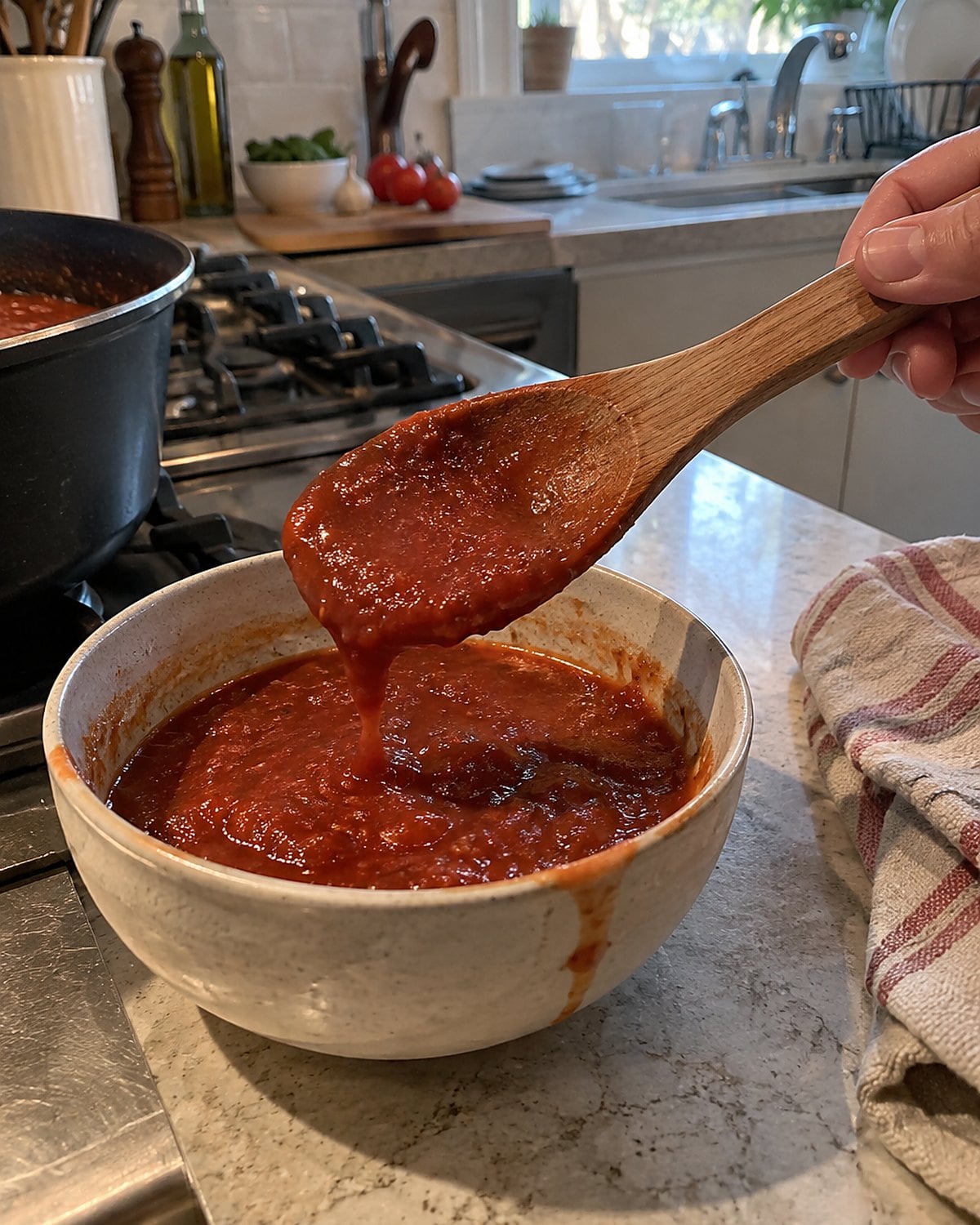
What does “too sweet” mean when your child says it about the sauce? Ask for a taste, not a speech.
Spoon a little into a bowl and let it cool enough to taste. Heat hides some details. A sauce with too much sugar stays sweet after it cools. A sauce that tastes flat needs another kind of adjustment, perhaps a pinch of salt or a little acid. Adding more sugar to canned tomatoes isn’t a family duty.
Try, “Tell me which bite tastes sweet, and we’ll look at it.” You’re inviting a specific answer. “You always made it wrong” gives you nothing to cook with.
If you like the sauce as it stands, say that too. Your child has a plate and a spoon. They’re free to leave some sauce behind. You’re free to enjoy yours.
#14 The church cookbook with the broken spine
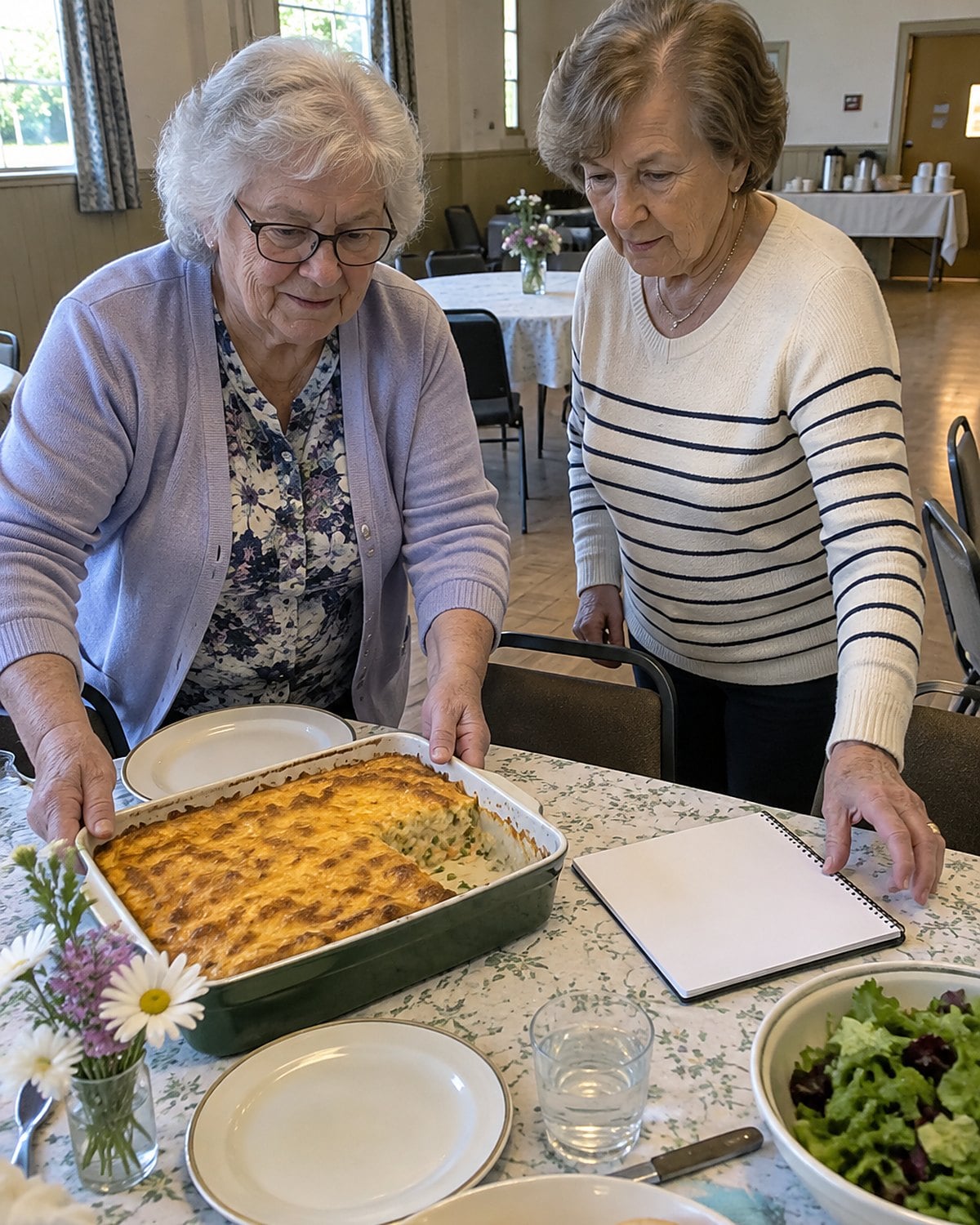
The church cookbook falls open to a casserole page. Someone’s pencil marks crowd the margin, and the cover has lost its stiffness. Your child sees canned soup in the ingredients and asks why you cooked that way.
“Because it got dinner into the oven on a Tuesday,” is a complete answer.
If they want to change the casserole now, ask which part they want different. Less salt? More vegetables? A crisp top? Those questions lead somewhere. For a crisper top, uncover the dish near the end and watch it brown. For a less watery filling, let cooked vegetables drain before they go into the baking dish.
Don’t let an ingredient list become a measure of how much care went into a meal. The pencil marks show somebody made that casserole again and again, adjusting it at a real kitchen counter. Hand your child the book if they want to cook the next version. Keep your place marked for the version you know.
#13 The hard-boiled egg on the counter
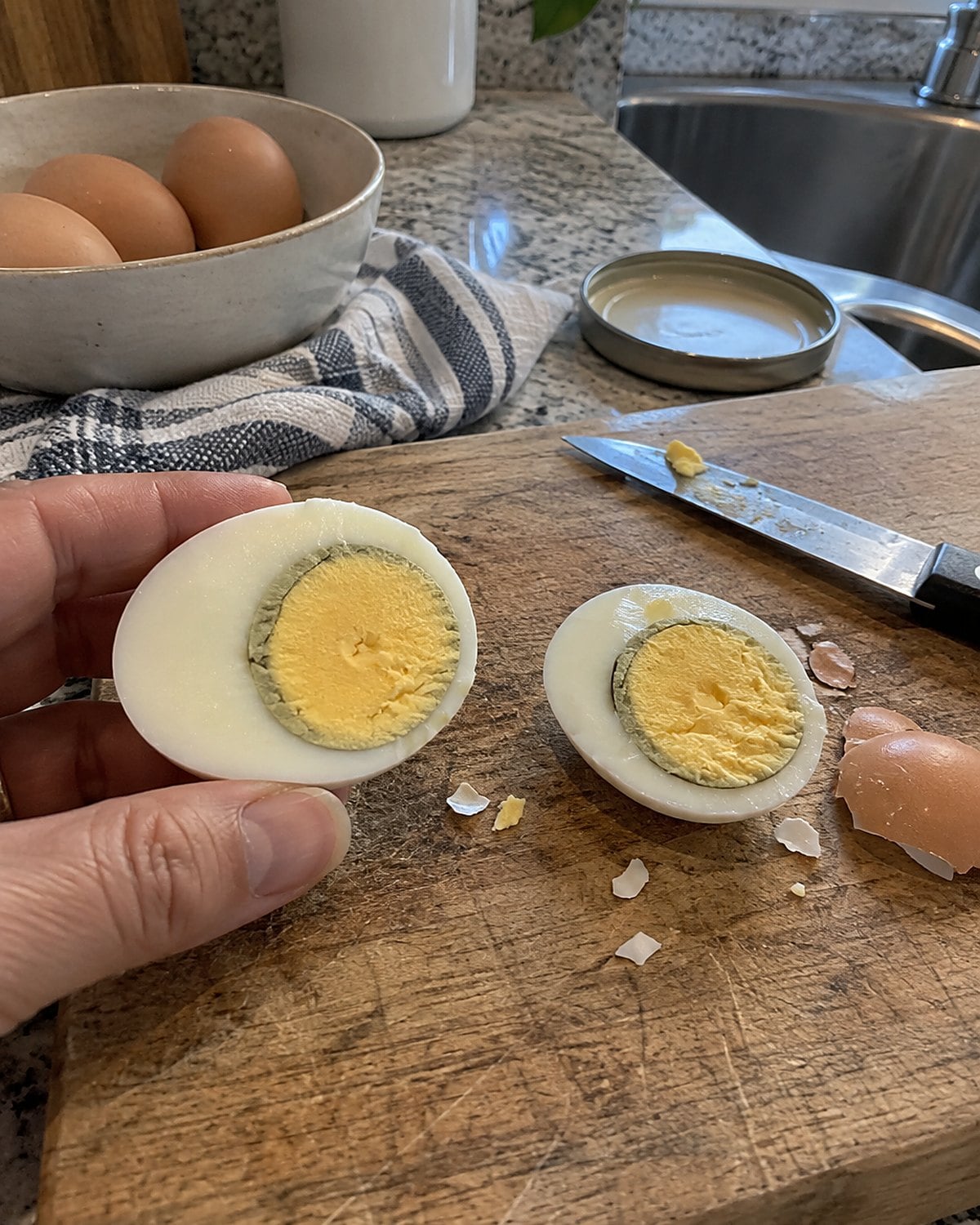
A hard-boiled egg wears its mistakes on the inside. The green ring around the yolk comes from heat reacting with sulfur in the white and iron in the yolk. It isn’t evidence that you never learned to cook.
If your child cuts one open and comments, you can say, “That one cooked longer than I wanted. Take another, or make the next batch.”
For the next batch, put the cooked eggs into cold water promptly to stop the cooking. Cut one open when it has cooled and see what you think of the yolk. That gives you a better answer than an argument about every egg boiled before school.
The ring is a cooking result, not a reason to throw away an otherwise sound egg. Storage is a separate question. For that, use the FDA’s egg safety guidance, rather than an old rule recalled from the pantry door.
Try it: Instant Pot Boiled Eggs (Soft-Boiled, Jammy & Hard-Boiled)
#12 The cutting board after raw chicken
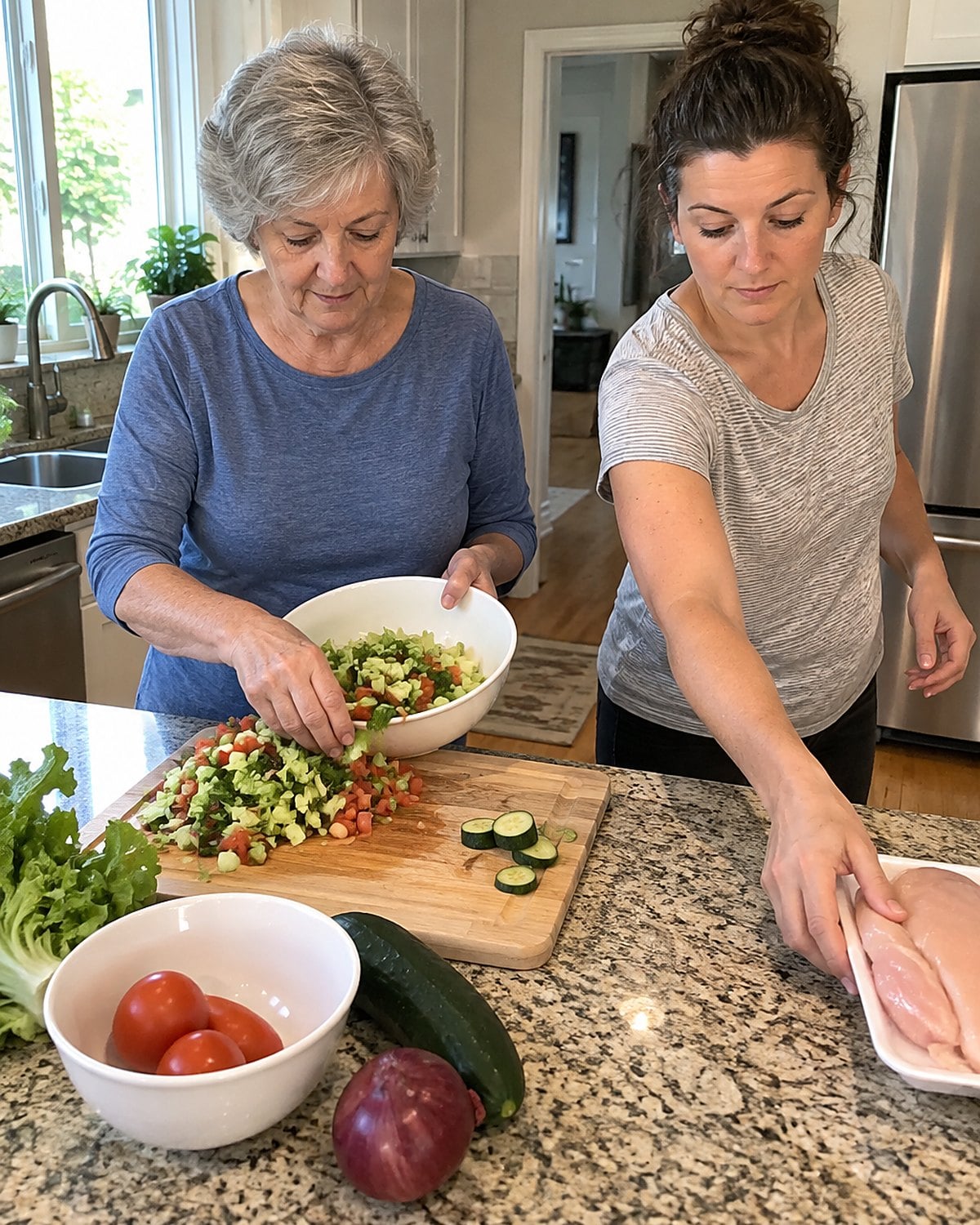
There’s a moment when criticism deserves your full attention: a child notices raw chicken juices near the salad vegetables. Stop and look. A sharp tone doesn’t make the risk disappear.
“Thank you for catching that. Let’s clear the board.”
Discard salad vegetables that touched the raw juices. Wash the board, knife, sink area, and your hands with soap and water before preparing more. The CDC’s food safety guidance is clear about keeping raw poultry apart from food served without cooking. This interruption changes dinner for a good reason.
Then deal with the manner of the comment if you need to. “Please tell me right away when you see that. You don’t need to call me careless.” Those sentences belong together: a correction accepted, an insult refused.
You’ve cooked for decades. Experience is valuable precisely because you know when to pause, clean up, and start with a fresh board.
#11 The lemon wedge beside the fish
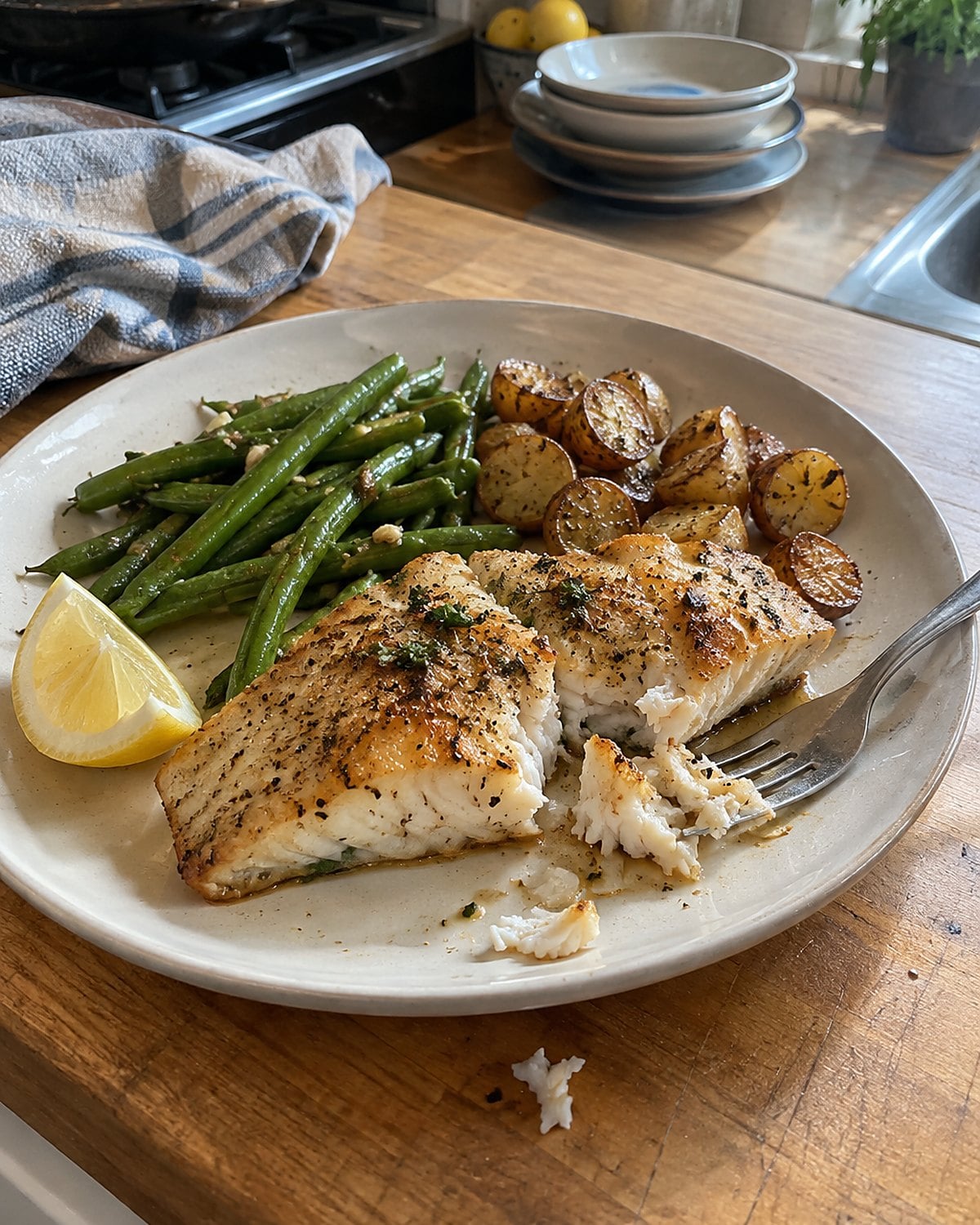
Your child takes a bite of fish and reaches for lemon. It lands like a complaint if they say you’ve always made fish bland. Let the next bite settle the question.
“Try a little lemon on yours. I’d like to know what changes.”
Acid sharpens flavors already on the plate. It doesn’t replace salt or fix fish that has cooked past tenderness. If lemon wakes up the dish, set wedges beside the platter next time. If the fish is dry, note how it flakes: pieces that separate readily are a better signal than waiting for a hard crust.
You aren’t surrendering the meal by putting lemon on the table. You’re giving each diner a way to finish a serving. That’s been part of cooking for other people all along.
#10 The meatloaf pan from weeknights
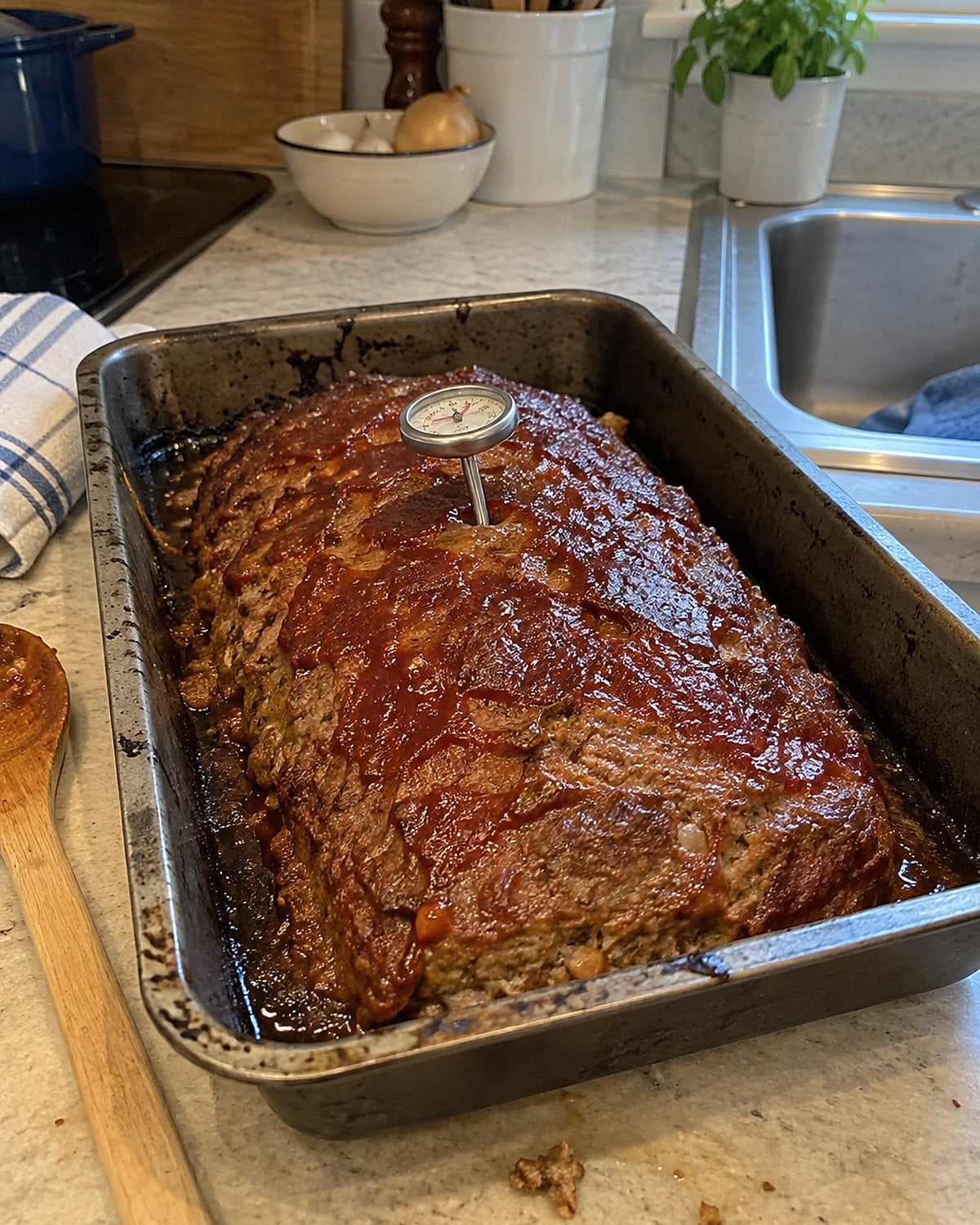
The meatloaf pan comes out of the cupboard, and your child says the slices used to crumble. You recall stretching ground meat for supper and getting it onto plates before anyone had to leave again.
Tonight, you can change the texture without arguing about the past. Mix the binder through before shaping, and stop handling the meat once it holds together. A tightly packed loaf turns dense. Resting the cooked loaf before slicing helps the juices settle, so the knife lifts cleaner pieces.
Use a thermometer rather than the color in the middle. The USDA’s safe temperature chart gives 160°F for ground meat.
Then say what you mean: “I’m glad you told me what you like. I don’t want supper described as something you survived.” They get a better slice. You get to eat yours without defending every meatloaf that came before it.
Try it: Instant Pot Meatloaf With Barbecue Bacon
#9 The spice jar with the faded lid
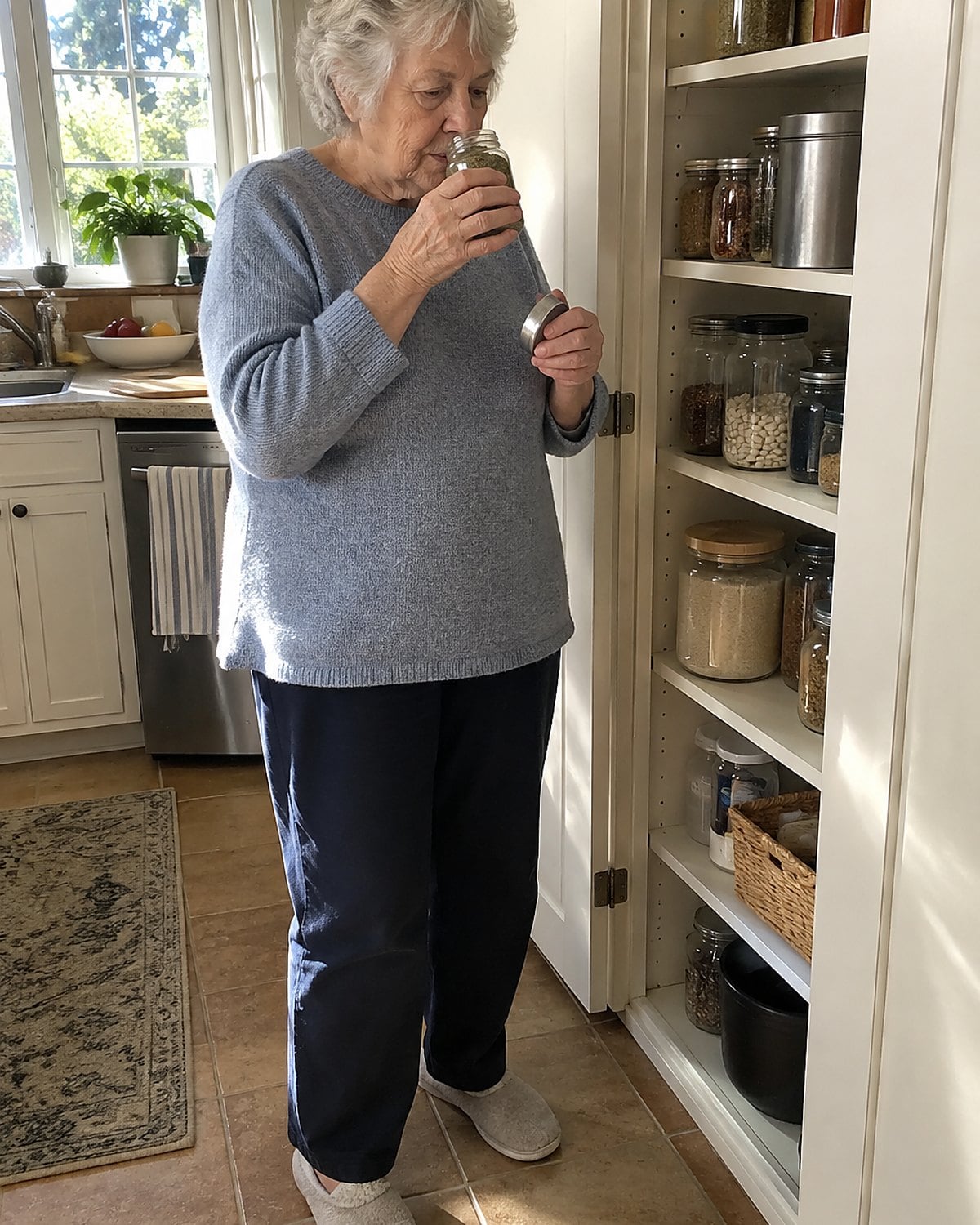
A spice jar has lost its smell. Your child shakes it, sniffs, and announces that your food never had flavor.
Take the useful part. Rub a little of the spice between your fingers and smell it. If it barely registers, replace it when you shop. Write the purchase month and year on the lid so the next check takes seconds.
Leave the sweeping verdict on the counter. “You found an old jar. That’s helpful. The rest wasn’t.”
Old spices lose aroma; they don’t reveal the history of every meal you cooked. Your child found something concrete to fix. Give that discovery its proper size, then ask them to pass the fresher jar from the cupboard.
 You might also like27 Things Home Cooks Over 60 Do Without Thinking That Chefs Would Never Do
#8 The rice pot with the scorched bottom
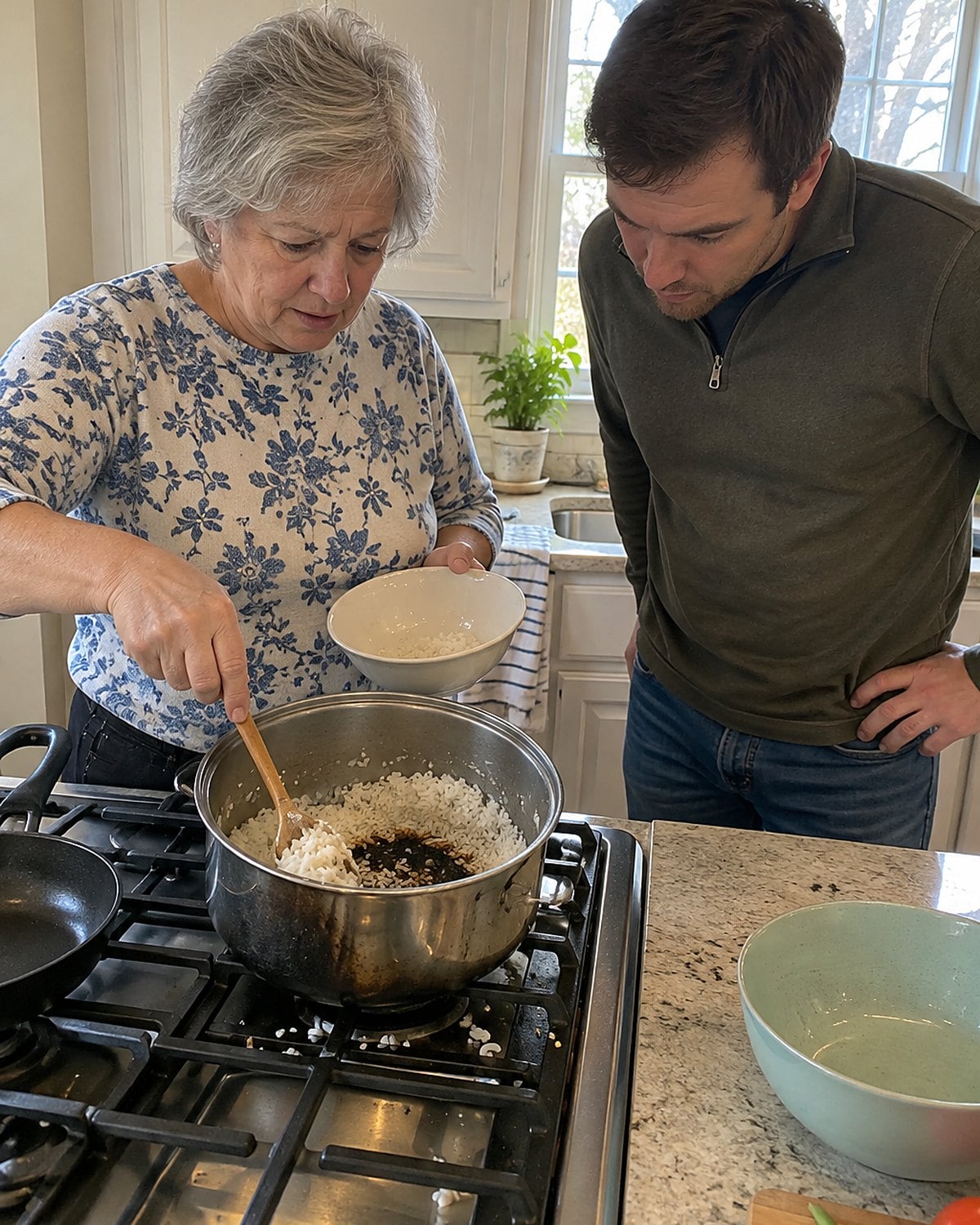
The rice smells toasted before anyone lifts the lid. Your child says you always burned it. You remember the evenings when the phone rang during dinner, and the pot waited while somebody needed you.
For this batch, turn off the heat. Don’t scrape the dark layer into the good rice. Lift the rice from the top into a clean bowl and taste it. If it tastes scorched throughout, make something else to go with dinner. If the top tastes good, leave the bottom behind.
A heavy pot and lower heat help next time. So does letting the rice rest off the burner before fluffing it. None of those steps requires a confession about the past.
You can say, “I caught this pot late. Please help me move the good rice.” That gives your child a job in the kitchen you share tonight. If they keep talking about every rice pot from childhood, put the spoon down until they’re ready to talk about this one.
Try it: How To Cook Rice In Instant Pot
#7 The potato masher in the drawer
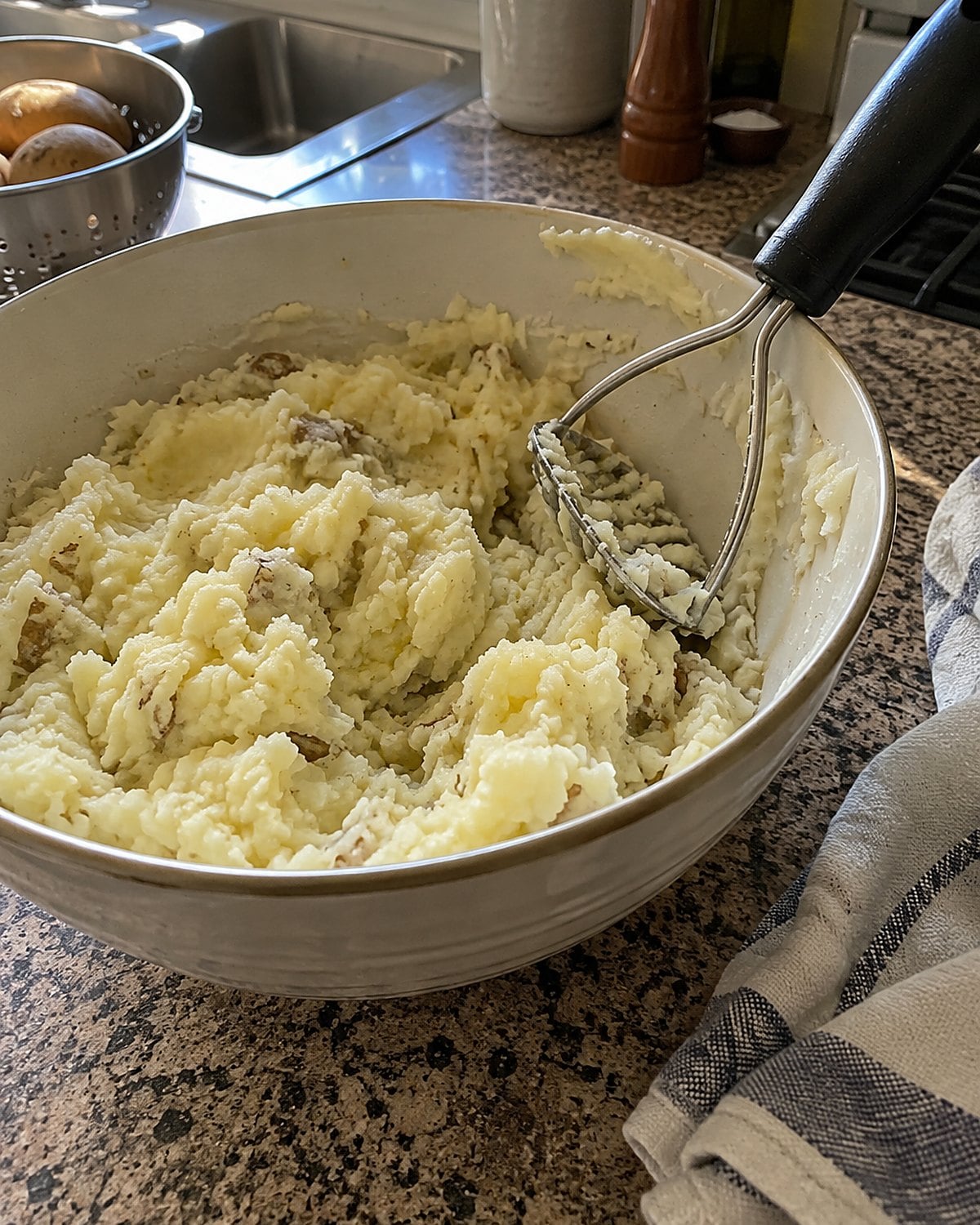
“Why did you always leave lumps?” your child asks as you take out the potato masher.
Because a masher leaves some potato behind with each press. That’s what the tool does. For smoother potatoes, cook the pieces until a knife tip slips through without resistance, drain them well, and mash while they’re hot. Cold potatoes fight the masher.
Ask, “Do you want these smooth today?” If the answer is yes, they can take a turn with the tool. If you prefer a few lumps, leave some in the bowl you serve yourself.
Taste before adding more butter or salt. Texture and seasoning are separate questions, even when somebody rolls them into one complaint.
Try it: Sour Cream Mashed Potatoes (Instant Pot Step-By-Step Recipe)
#6 The grocery cart with the store chicken
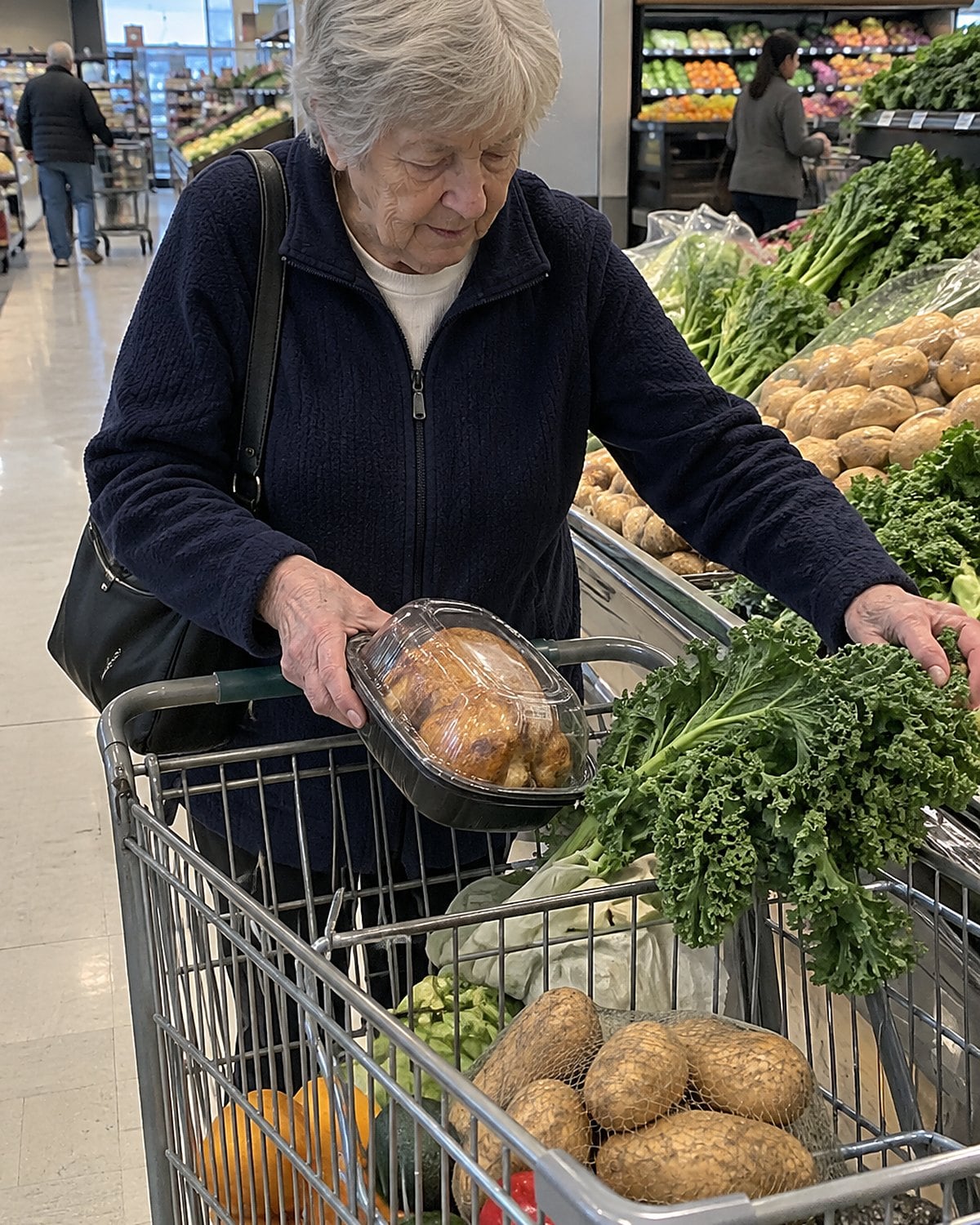
Your child points to a cooked chicken in the grocery cart and says you should always have made dinner from scratch. That phrase sounds neat until someone has to define it. The potatoes you scrubbed and roasted still count. So does the salad you washed and dressed.
Ask a practical question: “Are you cooking tonight, or are you telling me what to buy?”
If they’re cooking, let them choose the raw chicken and take charge of the meal. If you’re cooking, keep the bird that fits the evening. Read its label and follow the handling directions; put it away promptly when you get home.
Buying help for part of dinner never made you less capable. It meant you had other things to do besides prepare every bite from its first ingredient. Your cart is allowed to reflect your life as it is now, not an imaginary Tuesday with endless time.
#5 The holiday rolls under the towel
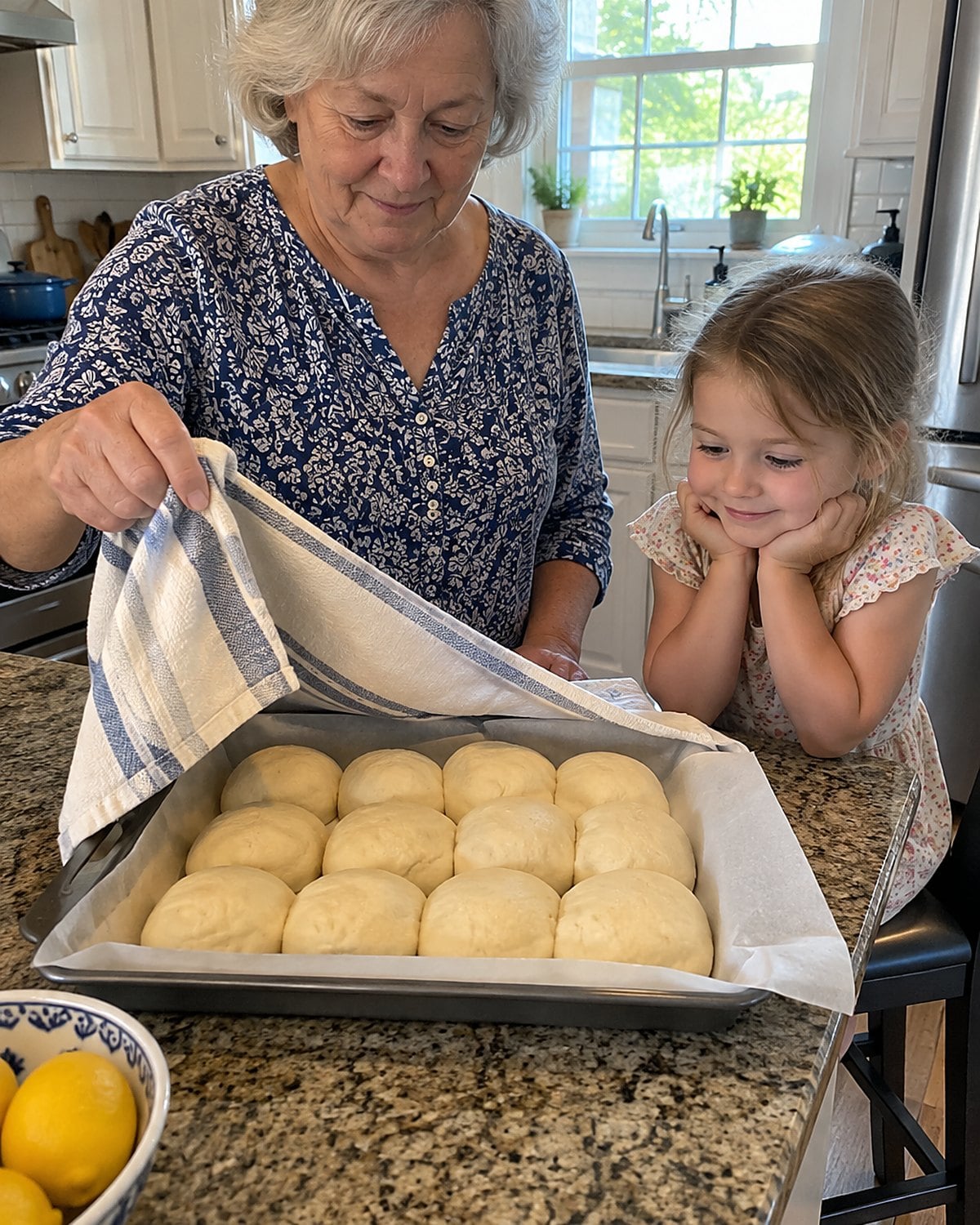
A grandchild lifts the towel, and the rolls have barely risen. Your adult child looks over your shoulder and reminds everyone about the flat rolls from years ago. The memory gets a laugh. You’re still standing there with dough to serve.
“Those were flat. Please don’t make today’s rolls a family performance.”
Then check the dough. Press it with a fingertip. If the dent springs back at once, give the rolls more time. If it fills slowly, they’re closer to the oven.
A cold kitchen slows yeast. Move the tray away from the draft at the door and let the dough do its work. Check again rather than letting an old story set the baking time.
You can tell the grandchild what you’re watching for. That turns the moment toward the food instead of toward a story told at your expense. When the towel goes back over the tray, ask your child to set out the butter. There’s work enough for everyone before dinner.
#4 The refrigerator door left open
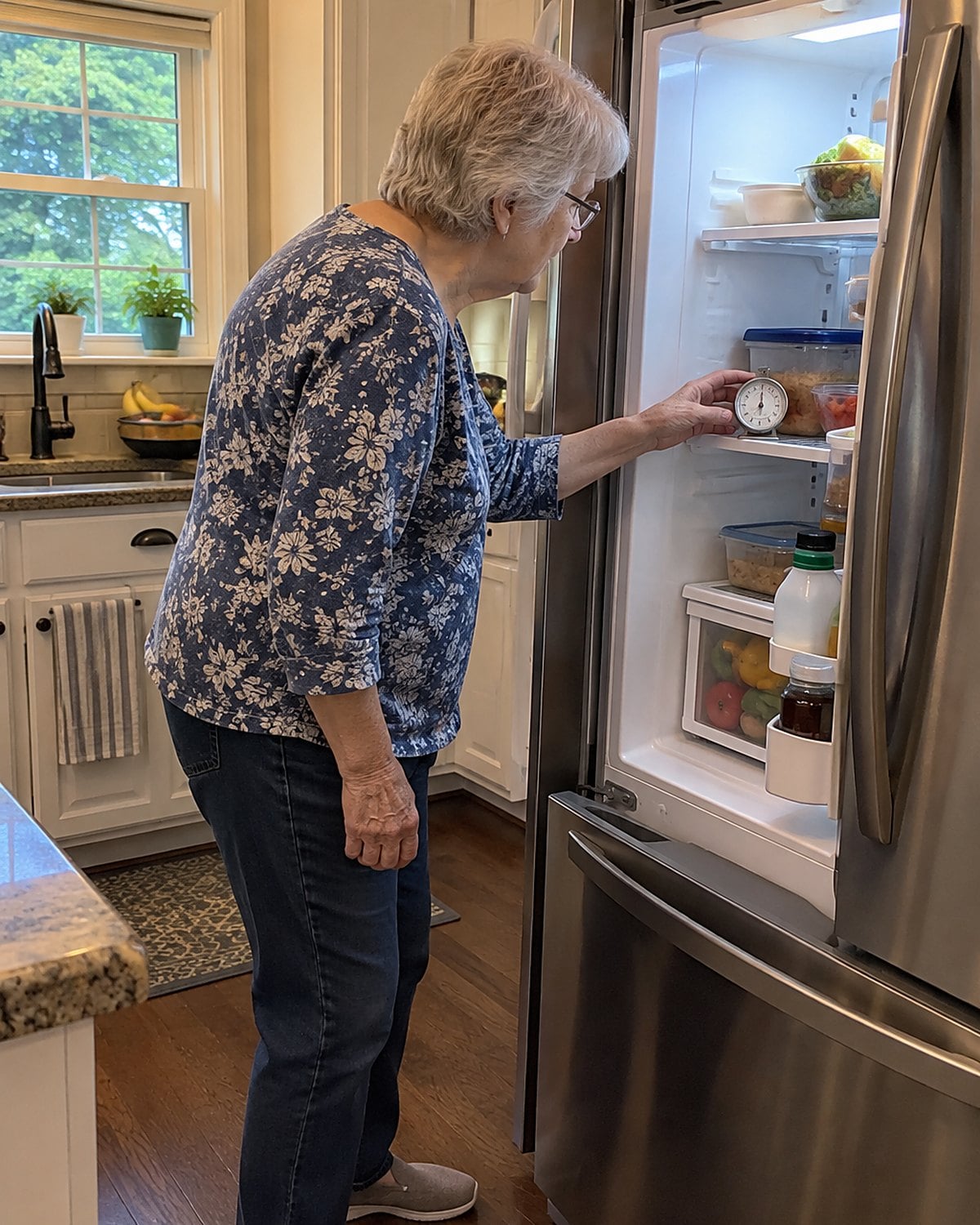
A child checks your fridge and questions the food inside. You’re allowed to dislike the inspection. You’re also allowed to check the temperature.
Keep the refrigerator at 40°F or below, the FDA’s refrigerator guideline. Put an appliance thermometer inside, close the door, and read it later. The dial setting tells you what you asked the fridge to do; the thermometer tells you what happened.
For a container with no date, don’t guess at how long it has been there. The USDA’s cold storage chart is the place to check a particular food and time. When you can’t establish when it went in, throw it out.
Say, “If you’re worried, ask me. Don’t search my fridge without asking.” A food question gets an answer. Your kitchen still has a door.
#3 The freezer bag marked Tuesday
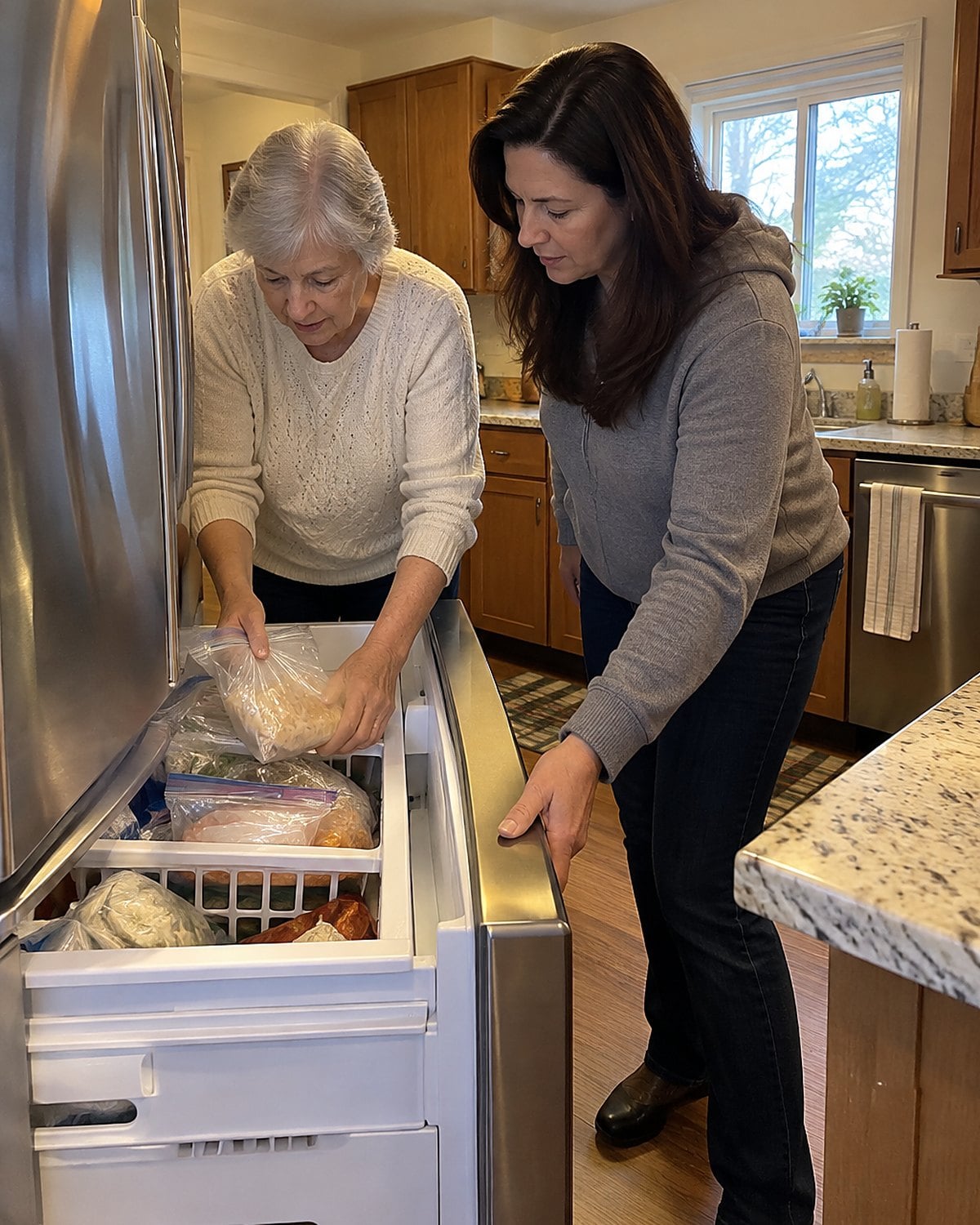
The freezer drawer holds a bag marked “Tuesday.” Your child wants to know which Tuesday, then remembers the lunches you sent home in reused containers.
They have a point about the label. Give the next bag a food name and a full date. Press out excess air, seal it, and place it where you’ll see it when planning supper. For freezer storage guidance by food, look at the USDA’s cold storage chart before treating an old bag as tonight’s meal.
Then answer the larger complaint. “I sent food because I had it and thought you’d use it. Please tell me if you don’t want leftovers.”
That changes the future. They can decline a container at the door. You can stop saving a portion for someone who won’t eat it. No one needs to turn a poorly marked freezer bag into a ruling on every meal you packed.
#2 The grandchild at the kitchen island
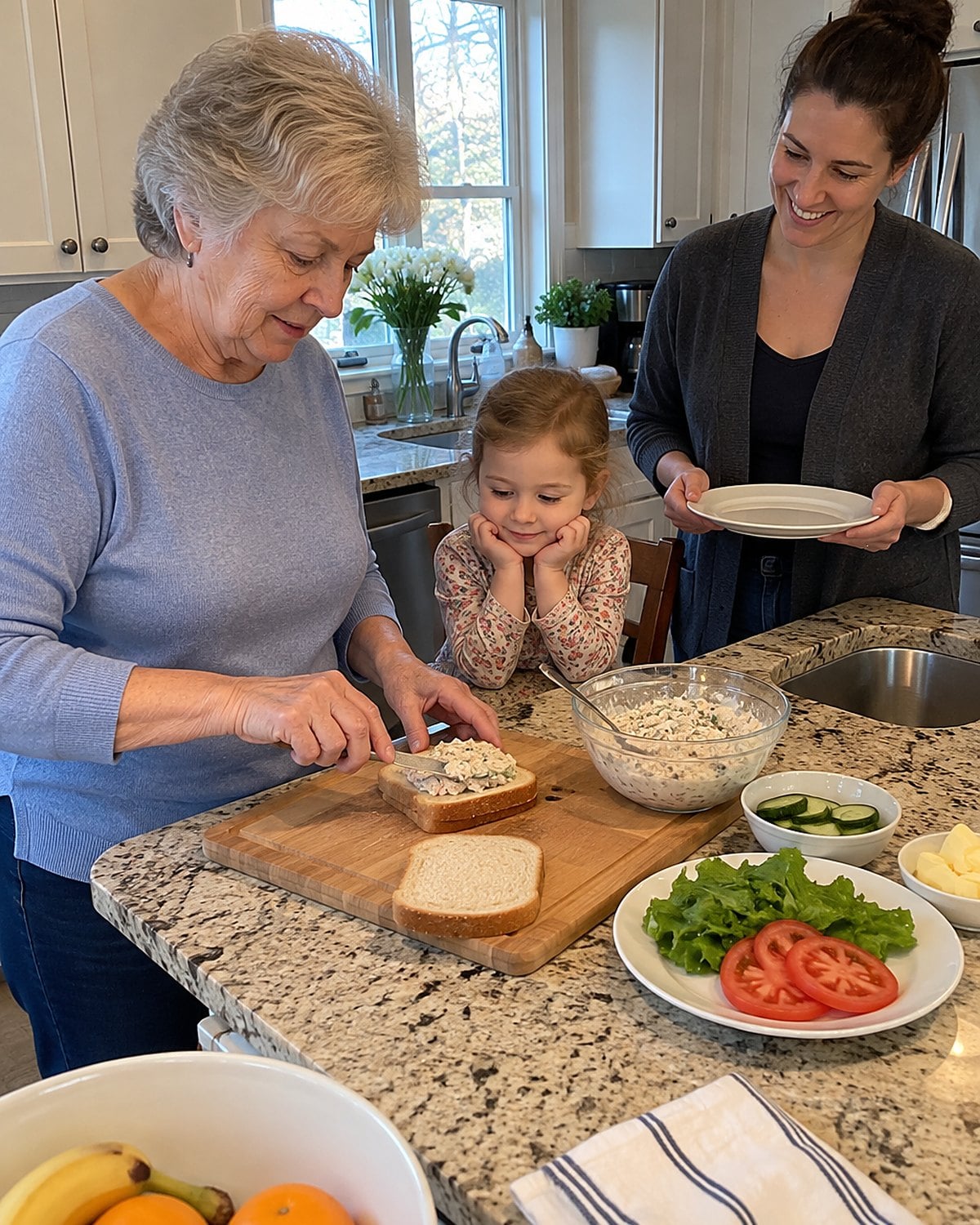
A grandchild sits on a stool, watching you spread peanut butter while their parent tells you how you always fed the family badly. The child hears the tone, even if they don’t follow the history.
Keep your reply short. “Tell me today’s food rules, and I’ll follow them. We’ll talk about the old dinners later.”
Stop making the sandwich until the parent tells you about allergies and what food they’ve brought for their child. Don’t guess from what the child ate on a previous visit. The FDA’s food allergy information is worth reading together if the family needs to sort out a new allergy rule.
The rest of the discussion belongs away from the stool. Your grandchild needs an adult to prepare lunch with the right information. You and your child need room to talk without making the next generation an audience for a kitchen argument.
#1 The serving spoon set on the counter
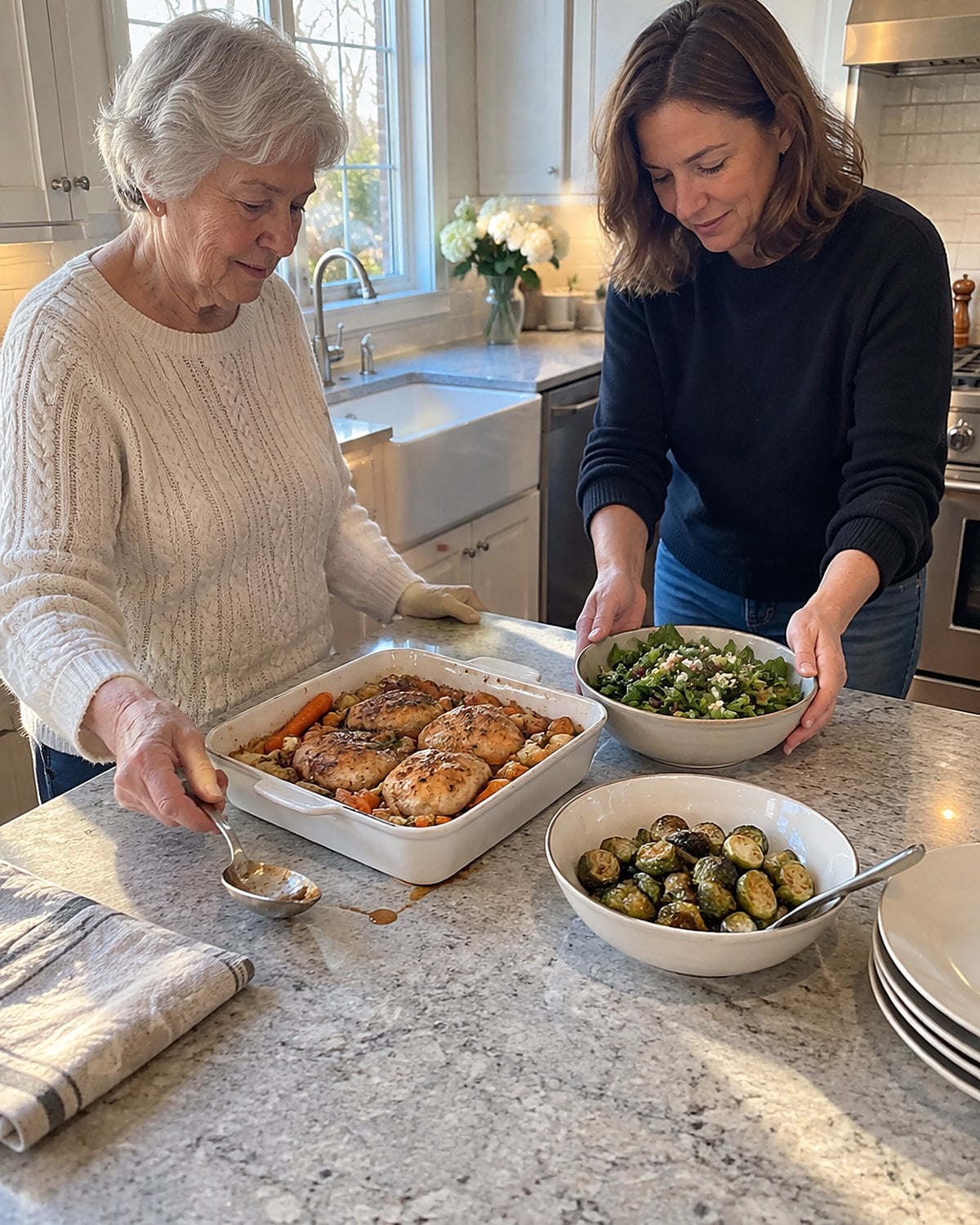
Your grown child says the dinner is wrong. You feel your hand tighten around the serving spoon. Before you explain the recipe or list the meals you made while raising a family, set the spoon down.
“Tell me what you want me to hear.”
Wait. Don’t fill the pause by defending yourself. They might name a food they dreaded, an evening when nobody listened, or a complaint about tonight’s plate. You need to hear which words they choose. The spoon stays on the counter while they speak.
If they describe an old hurt, ask what they remember and listen without correcting the small details. “I didn’t know you carried that” leaves room for more. If they wanted different food tonight, they can say so directly. You don’t have to solve either problem before everyone eats.
And if they use the pause for another jab, you have an answer: “I’m willing to hear you. I won’t stay for insults.” Leave the spoon where it is. The next move belongs to them.
Keep reading
 24 Things Your Daughter-in-Law Thinks About Your Cooking and Won't Say
See all 24 →
More you’ll remember
 27 Foods Grandmothers Make That Mothers Won't Allow
 23 Mistakes Grandparents Make When Feeding Toddlers, According to Pediatric Guidance
 23 Food Safety Rules Your Mother Taught You That Are Wrong, and the Ones That Still Hold
The bottom line
A specific request gives you something to do. A broad verdict about forty years of dinners asks you to defend a life at the stove, one serving spoon in your hand. You don’t owe that performance.
The well-prepared version of you has checked the food, made the fix worth making, and saved the bigger talk for a time when dinner isn’t getting cold. She knows where the thermometer is and when to put down the spoon.
Which comment in your kitchen needs a practical answer tonight, and which one deserves its own conversation?
Leave a Reply