

The step stool scrapes across the kitchen floor. Someone wants to stir, someone wants to taste, and the pan you meant to use is already heating. You’ve cooked dinner here for years without thinking about where the handles point. Add a child, and that old rhythm changes.
The good part is the child wants to be where you are. The hard part is that dinner doesn’t pause while you explain a hot burner. Start with a job that belongs to those small hands, then make room beside your own.
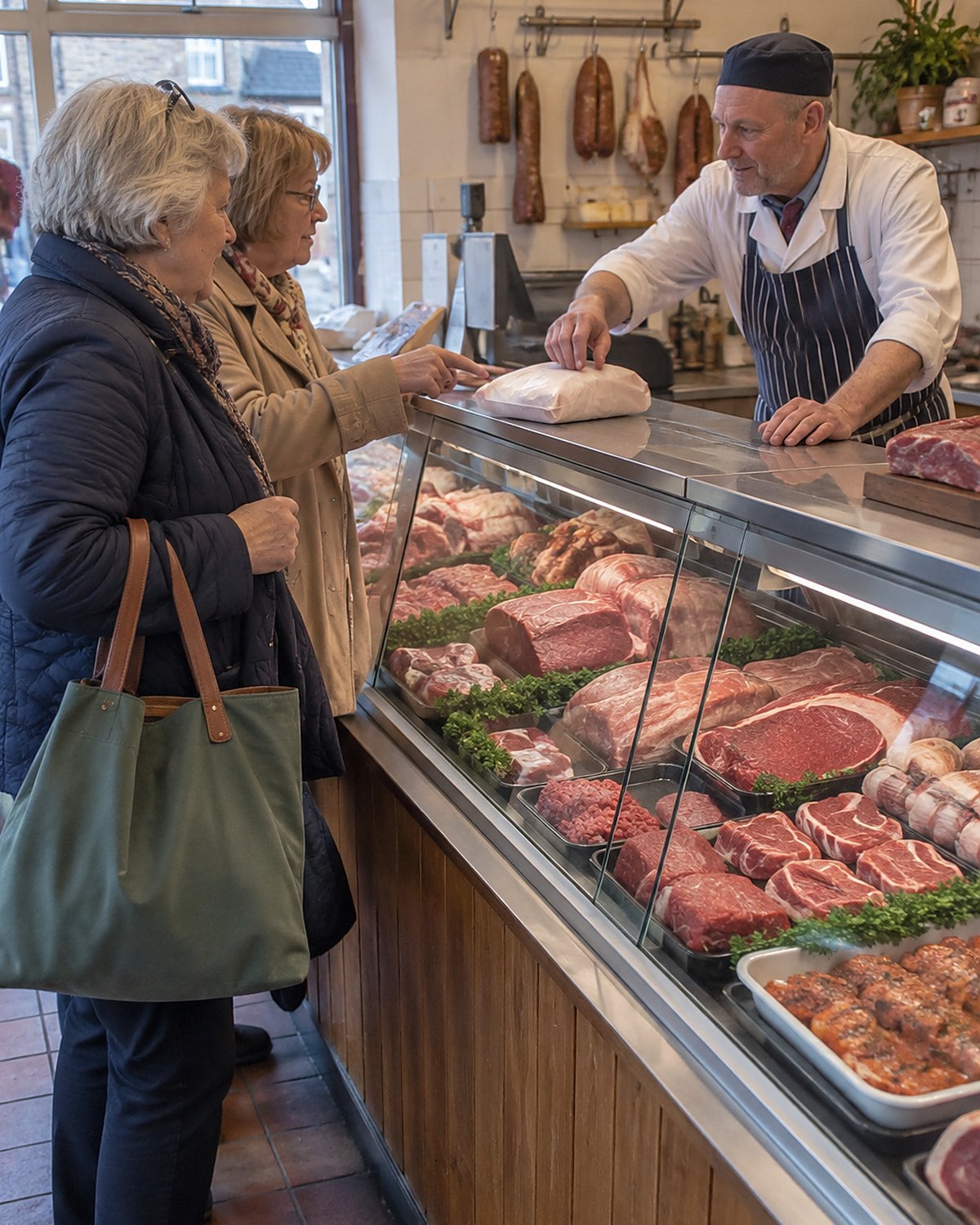
#23 The stool beside the cold counter
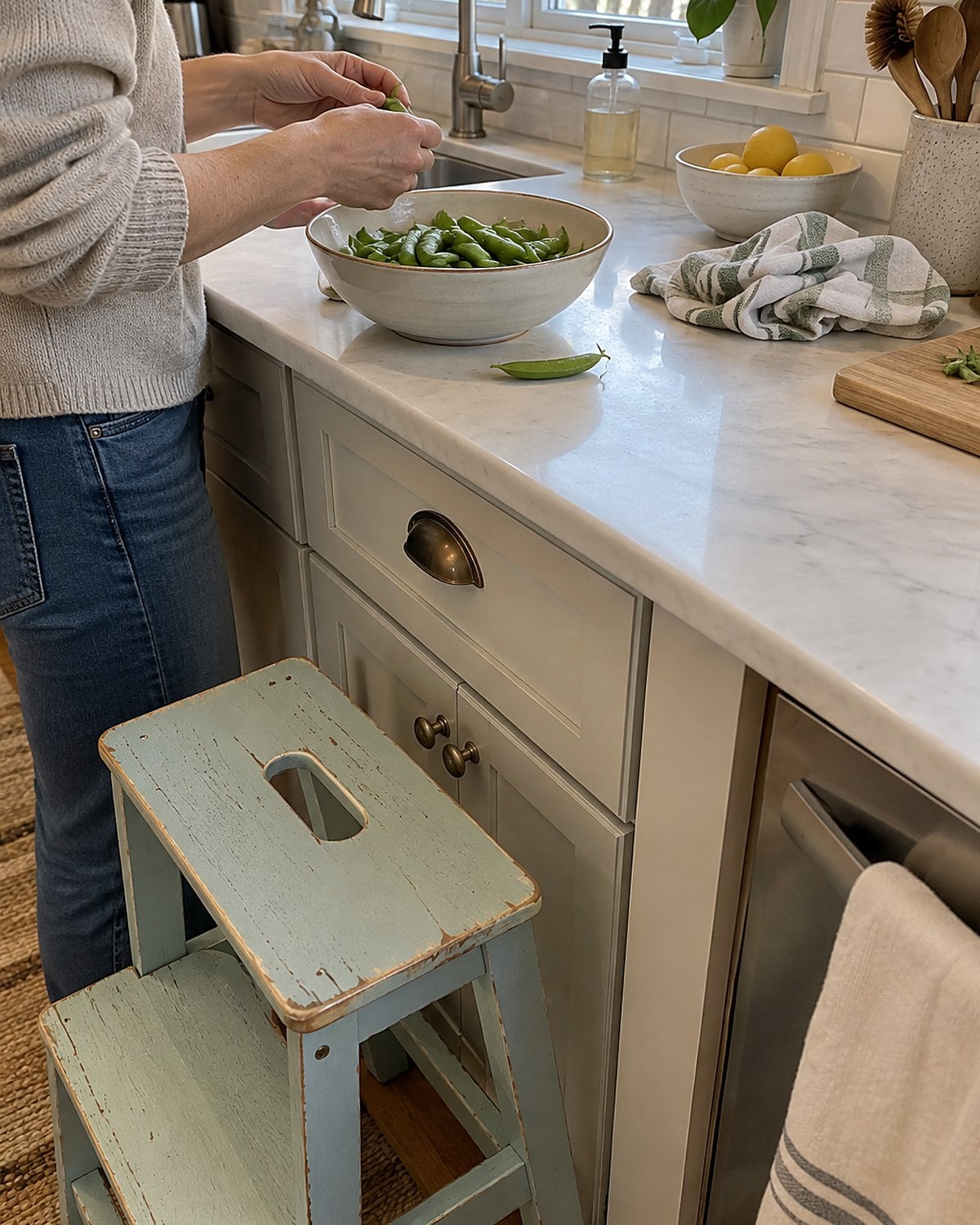
A child pulls the step stool toward the stove because that’s where the interesting work happens. Give it a parking place instead: against a clear stretch of counter, beyond the reach of burners, cords, and hot pans.
Push down on the top step before anyone climbs. If it rocks, find firmer footing. Shoes or bare feet grip better than socks on a slick step. Keep one child on the stool at a time, and have them climb down before you move it.
Now put something worth doing at that spot. A bowl of snap peas needs trimming. A head of lettuce needs tearing. Those jobs aren’t pretend work; they put part of dinner in the child’s hands without bringing those hands near the heat.
When it’s time to use the stove, leave the stool where it is. You bring the food over to show them when the pan is cool.
#22 The pan handle facing the wall

Before a burner goes on, turn the pan handle away from the front edge. Do it with the empty pan. Once the handle heats up, that small move becomes a harder one.
Check the neighboring burner too. A handle pointed sideways over a lit burner gets hot even when its own pan sits elsewhere. Keep towels and loose sleeves clear of the flame.
You’ve reached across your stove thousands of times. A child sees a handle as an invitation to pull. Give them a different job while the pan is working: “Watch the bubbles from your spot and tell me when they get big.” They still get to notice what changes, and your hands stay free to move the pan.
#21 The closed freezer drawer

The freezer drawer has a way of catching a child’s eye. There are cold packages to pull out and frost to touch. Give the visit a purpose: have your grandchild find frozen peas for dinner while you stand beside the open drawer.
Before you start, move raw meat packages out of the search area. Then point to the bag you want. A child who can read gets to find the word; a younger one looks for the peas through the bag. Shut the drawer as soon as you have them so dinner stays on track.
Frozen peas make a good first lesson in heat without asking the child to handle it. Let them pour the still-frozen peas into a bowl at the counter. You take the bowl to the stove when the rest of dinner is ready.
There’s a small bit of kitchen knowledge in that handoff: peas need very little time in hot water. Check them after 2 to 3 minutes, rather than leaving them boiling while you set the table. Let the child look at the color before and after. They’ve helped cook, even though you held the pot.
Try it: How To Cook Frozen Peas In An Instant Pot
#20 The eggs cracked into a small bowl
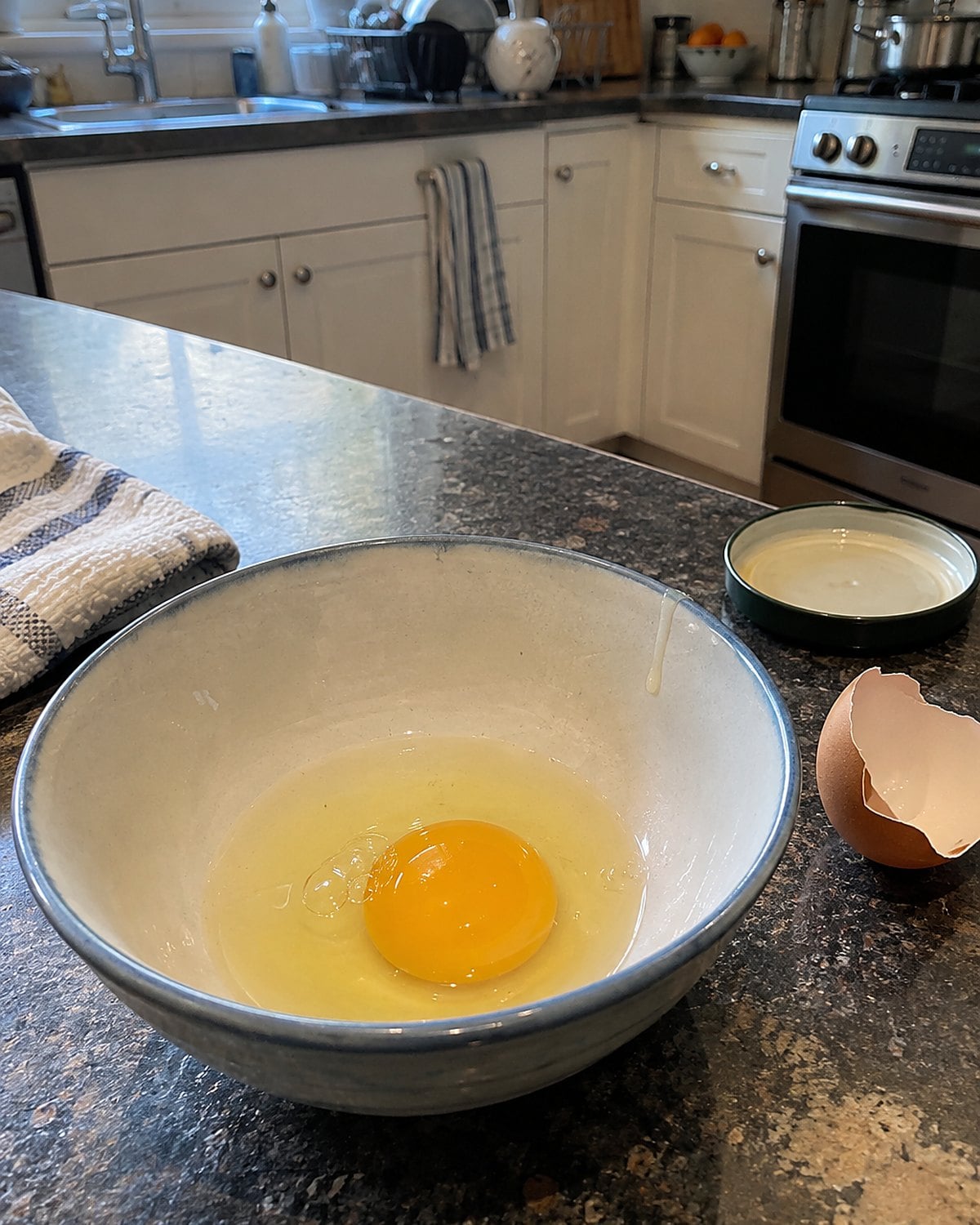
An eggshell lands in the batter. It happens in your kitchen too, and it’s easier to fish out before the egg joins everything else.
Set a small bowl under the child’s hands. Have them tap the egg on the flat counter, then open it over the bowl. A flat crack gives the shell fewer sharp edges to drive into the egg than a hard knock on a bowl rim.
Point out the shell fragment if one falls in. Lift it with a clean utensil, then wash your hands after handling the raw egg. You decide when the egg is ready to pour into the main bowl.
Keep the tasting spoon out of the batter at this stage. The child gets the pleasure of cracking; you keep raw batter off curious fingers. Later, there will be something baked to taste.
#19 The knife laid flat on the board
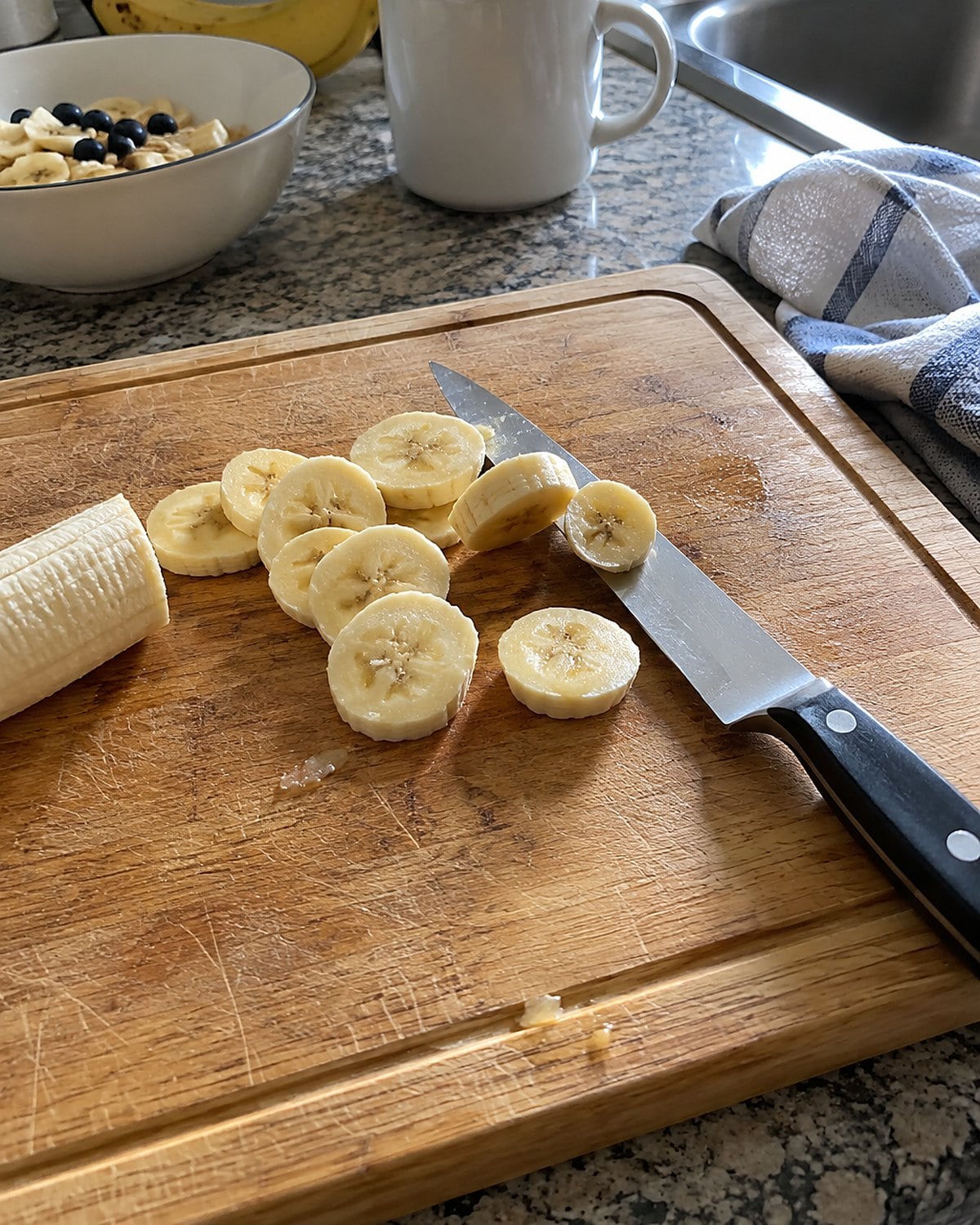
A knife lying flat on a cutting board stays where both of you can see it. A knife dropped into a sink of suds disappears until someone reaches into the water.
If your grandchild is ready to cut, begin with a soft food, such as a peeled banana, and a table knife. Put a damp cloth under the board so it doesn’t skate across the counter. Show one cut, then move your hand away and watch theirs.
For older children using a sharper knife, teach the waiting position first. Blade flat on the board. Hand off the handle. That’s where the knife rests when anyone needs to talk, turn around, or answer the door. It gives you a clear moment to step in without grabbing at a moving blade.
Keep the good knife for your own work until the child shows steady attention. There’s no prize for making the task harder. A neat row of banana slices still gives them something to arrange on breakfast.
#18 The oven light during baking
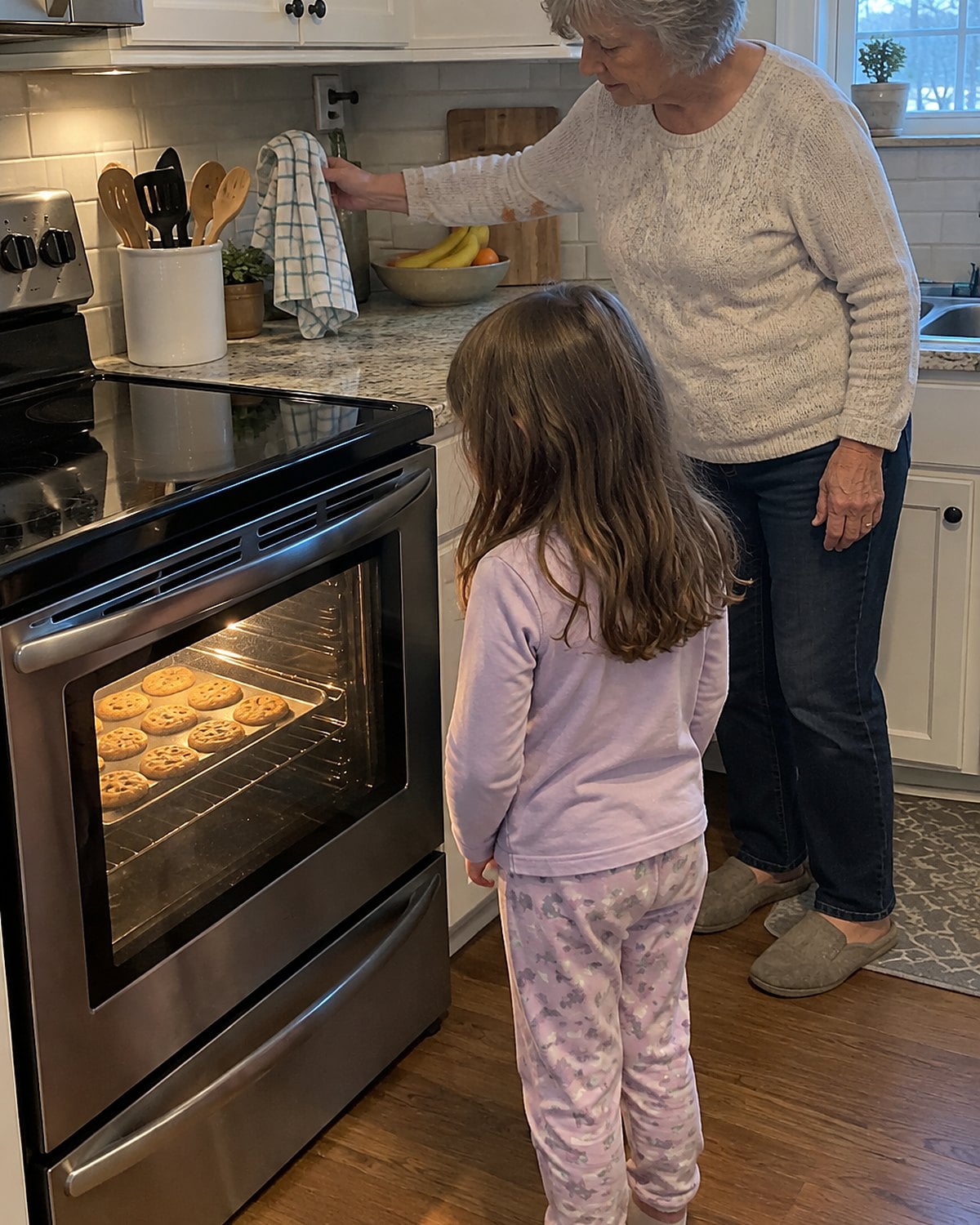
How do you let a child see cookies bake without opening the oven door again and again? Turn on the oven light and make the window their viewing spot.
Stand back together when you open the door. You handle the hot tray and say where it’s going before you move it. Set it on a heat-safe spot that’s already clear, not on the edge of a crowded counter.
The light gives them something real to watch. Cookie dough spreads, the tops lose their wet shine, and the edges start to color. Ask what changed since they last looked. Their answer tells you what they noticed.
When the tray comes out, keep the waiting rule plain: hot cookies stay on the tray until you move them. Watching the change is their job; touching the tray is yours.
#17 The soap by the kitchen sink
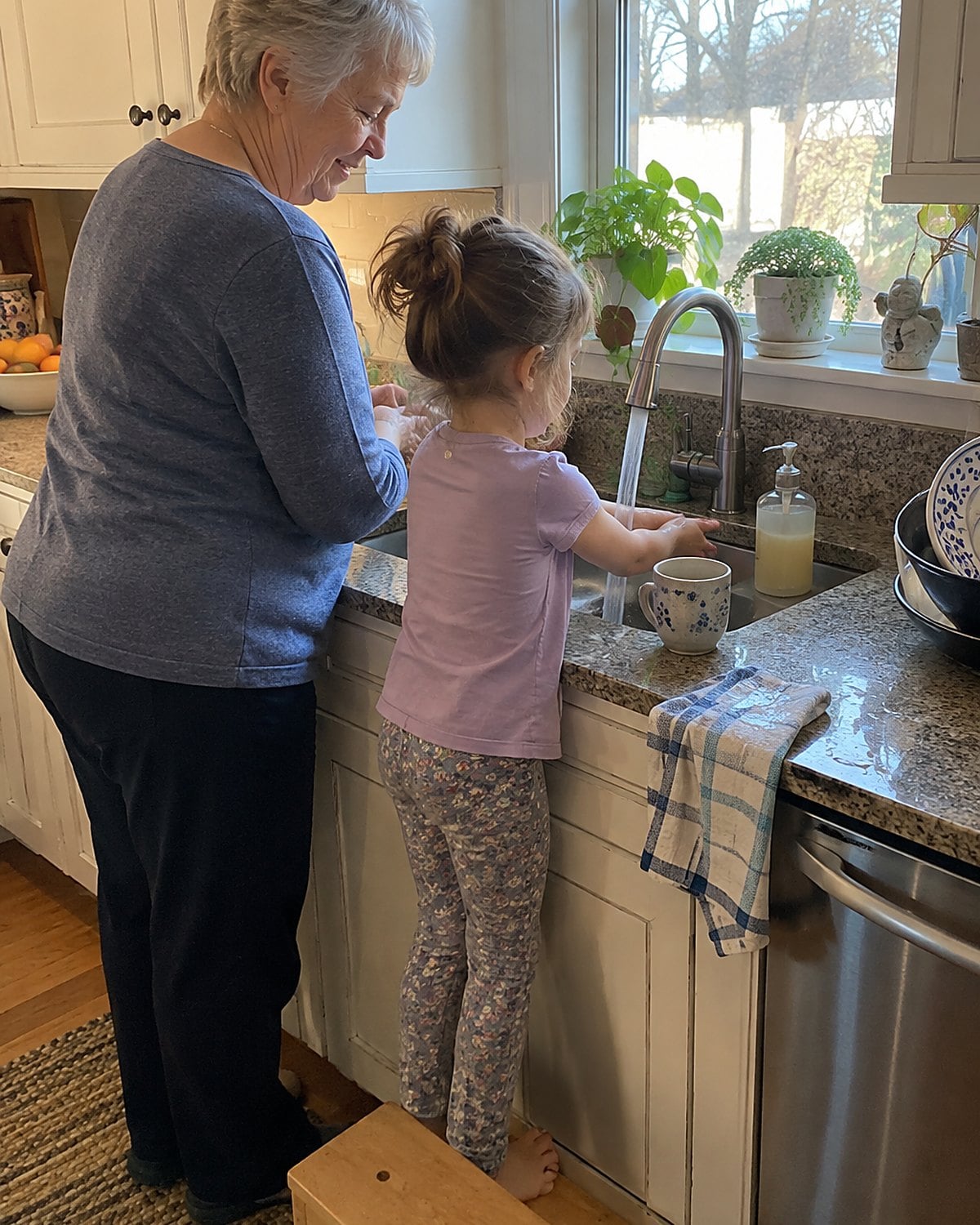
The sink is where a busy cooking session goes off course. A child rinses an apple, handles the family dog, then reaches for a piece of cheese. Put the soap where they can reach it and make washing part of the next job, rather than a scolding after the fact.
The CDC’s handwashing guidance calls for washing with soap and running water for at least 20 seconds. Let the child work up a lather while you name what’s next: drying lettuce, mixing a sauce, or setting out plates.
Raw meat changes the plan. Keep the child’s hands away from it, and use a separate board for produce. The USDA’s advice on preventing cross-contamination calls for keeping raw meat and ready-to-eat food apart. Wash hands and work surfaces after raw meat prep, before the ready-to-eat food comes back to the counter.
A towel used to wipe raw-meat drips doesn’t belong near clean hands. Reach for a fresh one. The child learns the order by watching what you do at the sink.
#16 The towel beside the mixing bowl

A mixing bowl that travels across the counter invites a child to chase it with both hands. Fold a damp kitchen towel beneath it before the first stir. Press the bowl lightly. If it slides, refold the towel or move to a drier stretch of counter.
Then give the child a spoon that fits the bowl. An oversized wooden spoon pulls a small bowl toward the edge. A short spatula gives them better control over thick batter.
You hold the bowl for the first few turns. After that, let go and watch what happens. If the bowl stays put, the child owns the stirring. If it starts to creep, stop and reset the towel together.
This is the sort of fix your hands remember long after the child has forgotten the instructions. It also means fewer frantic grabs at a bowl headed for the floor.
#15 The measuring cup of flour
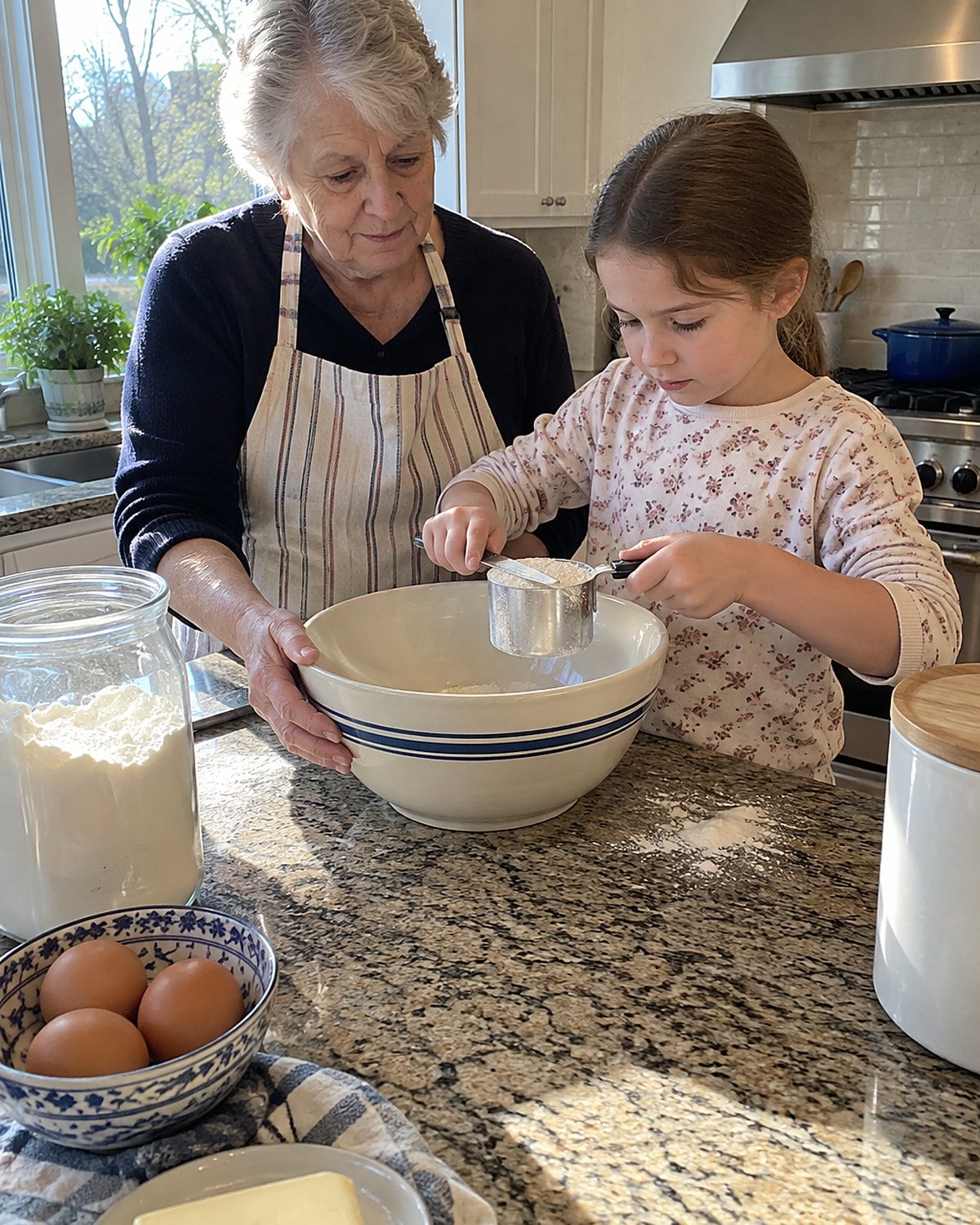
A child scoops flour with tremendous confidence. By the time the cup reaches the bowl, there’s flour on the counter and a hill above the rim. Keep the part they enjoy, but give the measuring a clear finish.
Let them fill a dry measuring cup with a spoon, then sweep a straight edge across the top. Hold a wide bowl beneath the cup to catch the extra flour. They get to see a level measure, and you don’t have to scrape the counter between every step.
For flour, the method matters. Packing it into the cup adds more than the recipe expects, and a cake or muffin turns heavy. Spoon it in rather than digging the cup deep into the bag.
If the recipe calls for flour by weight, use the scale. The child pours until the display reaches the amount on the recipe, and you stop them before the last big dump. Either method gives them a visible target. That works better than saying “careful” while the cup hangs over the batter.
#14 The mashed potatoes under the fork
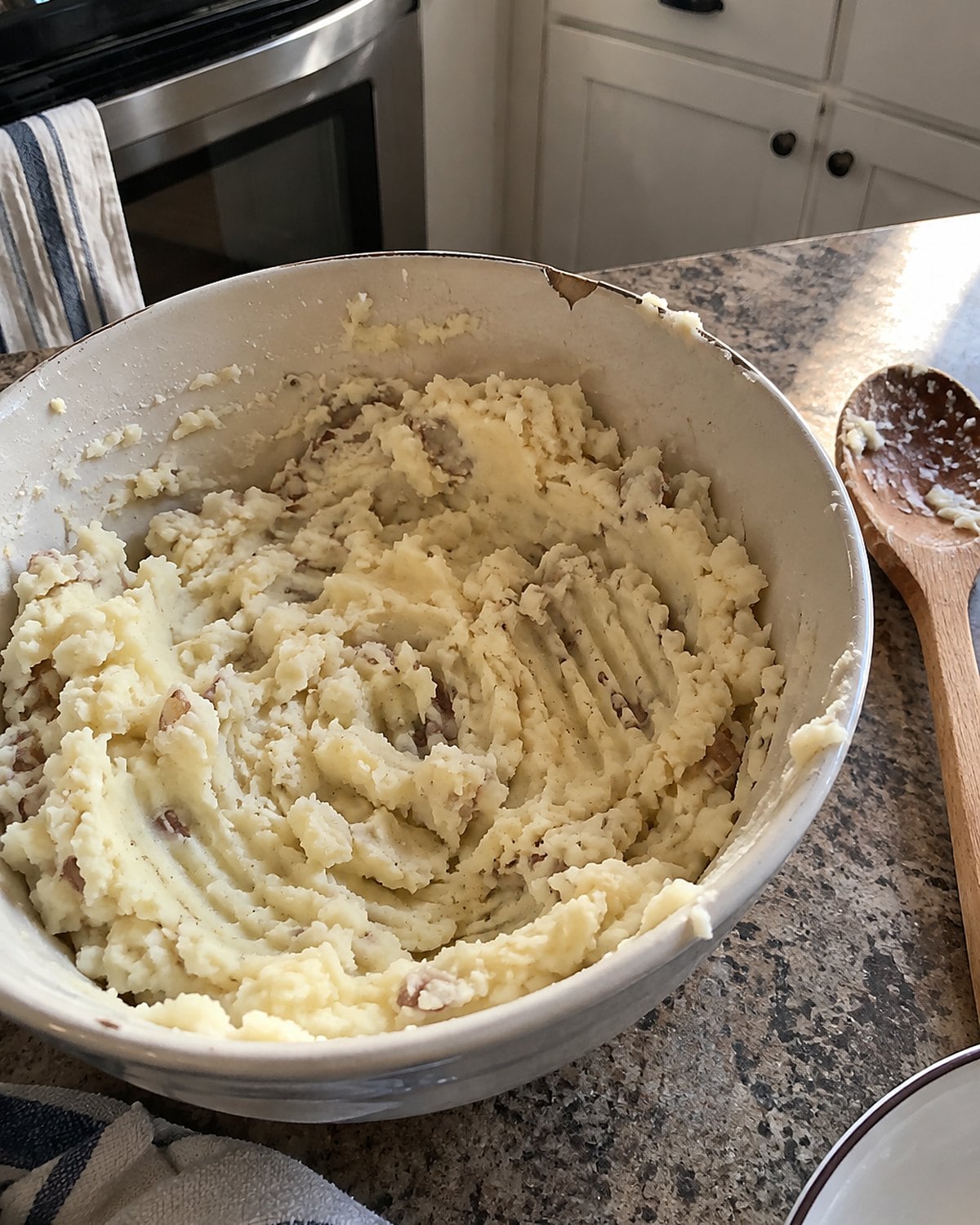
Mashed potatoes give a child a satisfying job after the hot work is done. You cook and drain the potatoes. Move them to a stable bowl, then let the steam ease before inviting small hands to mash with a fork.
Start with a few pieces, not the whole pot. A full bowl takes real strength and sends potatoes up the sides. Watch the first press. Does the bowl stay put? If so, let the child turn it and hunt for lumps.
Add the butter and milk yourself, so the mixture stays loose enough to mash without splashing. Taste before adding more salt. The useful question is, “Do they taste like potatoes yet?” It asks the child to notice flavor, rather than guess an amount. Leave a few lumps if that’s what their fork gives you. Dinner won’t suffer.
Try it: Sour Cream Mashed Potatoes (Instant Pot Step-By-Step Recipe)
#13 The chicken thermometer in your hand
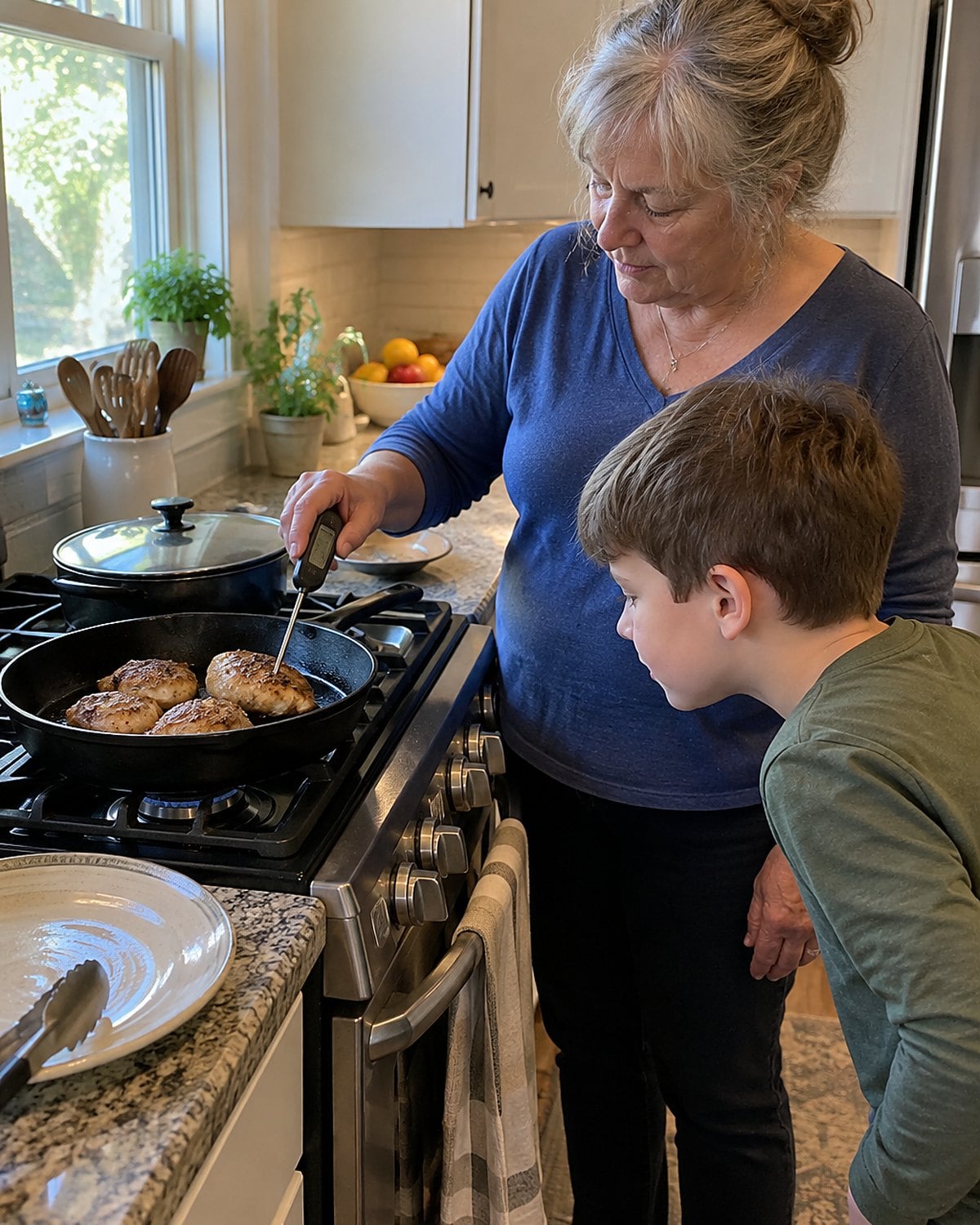
A browned piece of chicken looks done long before its center tells you anything reliable. Keep the thermometer in your hand and give your grandchild the reading job.
Slide the tip into the thickest part without touching bone. Poultry needs to reach 165°F, as the USDA’s safe temperature chart states. Turn the display toward the child once the reading settles. If it’s short, the chicken goes back to cook.
That number gives a child a useful answer to “Is it ready?” Color alone doesn’t. They also learn that checking dinner isn’t a sign you’ve done something wrong; it’s part of cooking.
Set the used thermometer where it won’t touch clean food, and wash the probe before putting it away. Then you slice the chicken. Your grandchild can carry the finished plate, after you’ve cleared a path to the table.
#12 The grape quarters on the board
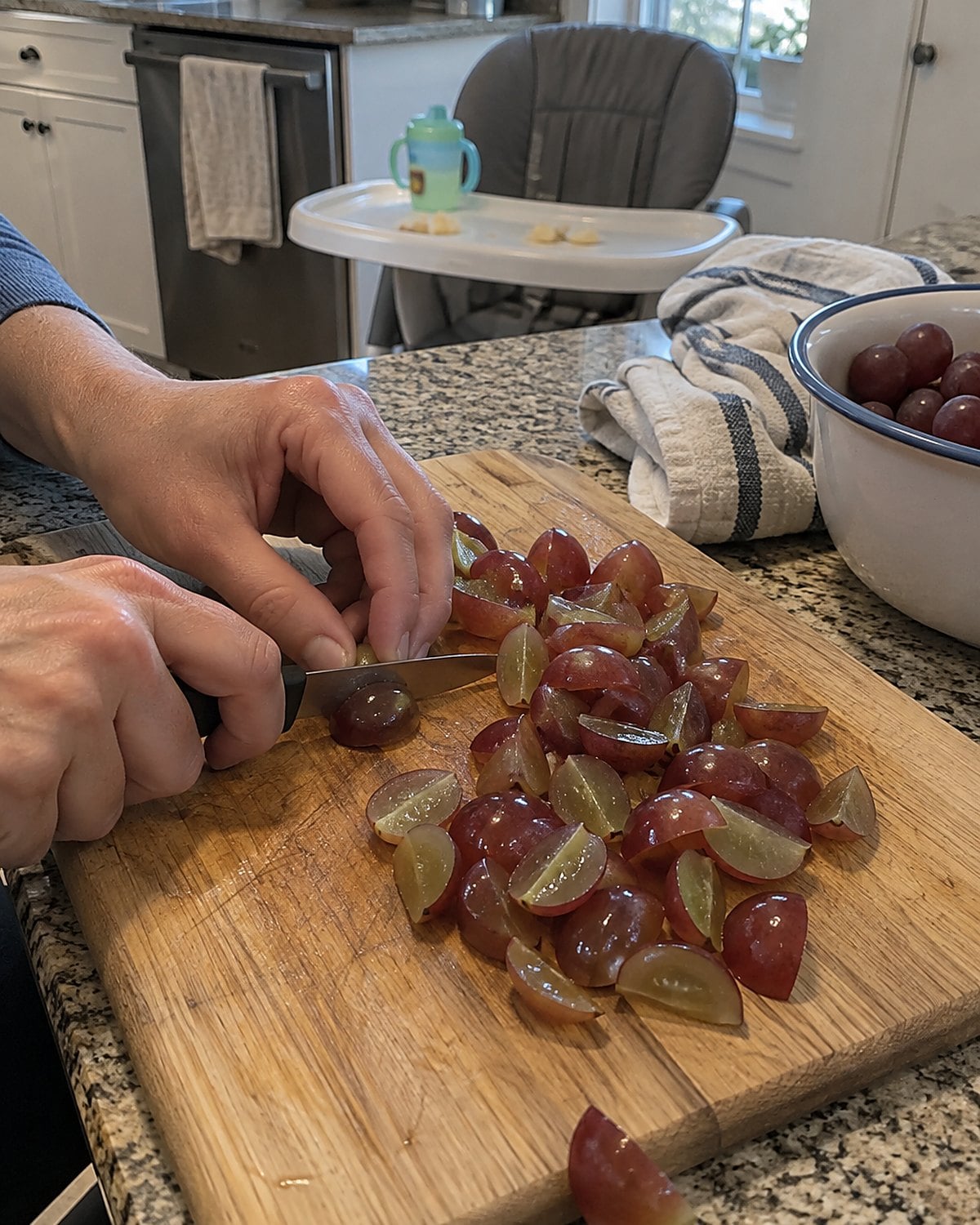
A whole grape looks like the easiest snack to hand over while dinner runs late. For a young child, its round shape is the problem. Cut grapes lengthwise into quarters before serving them to a toddler.
Keep the cutting job yours. A grape rolls under a knife, and the pace of dinner makes that little task feel more urgent than it is. Set the cut pieces on a plate away from the board, then let the child carry the plate to the high chair.
The CDC’s choking-prevention guidance names whole grapes as a choking hazard for young children. Ask a parent about a child’s eating stage before you choose the snack; don’t treat a fourth birthday as an automatic all-clear.
For the older grandchild beside you, the lesson is different: small food needs a steady board and a patient knife hand. For the toddler, the lesson is lunch without a rush.
#11 The note from the child’s parent
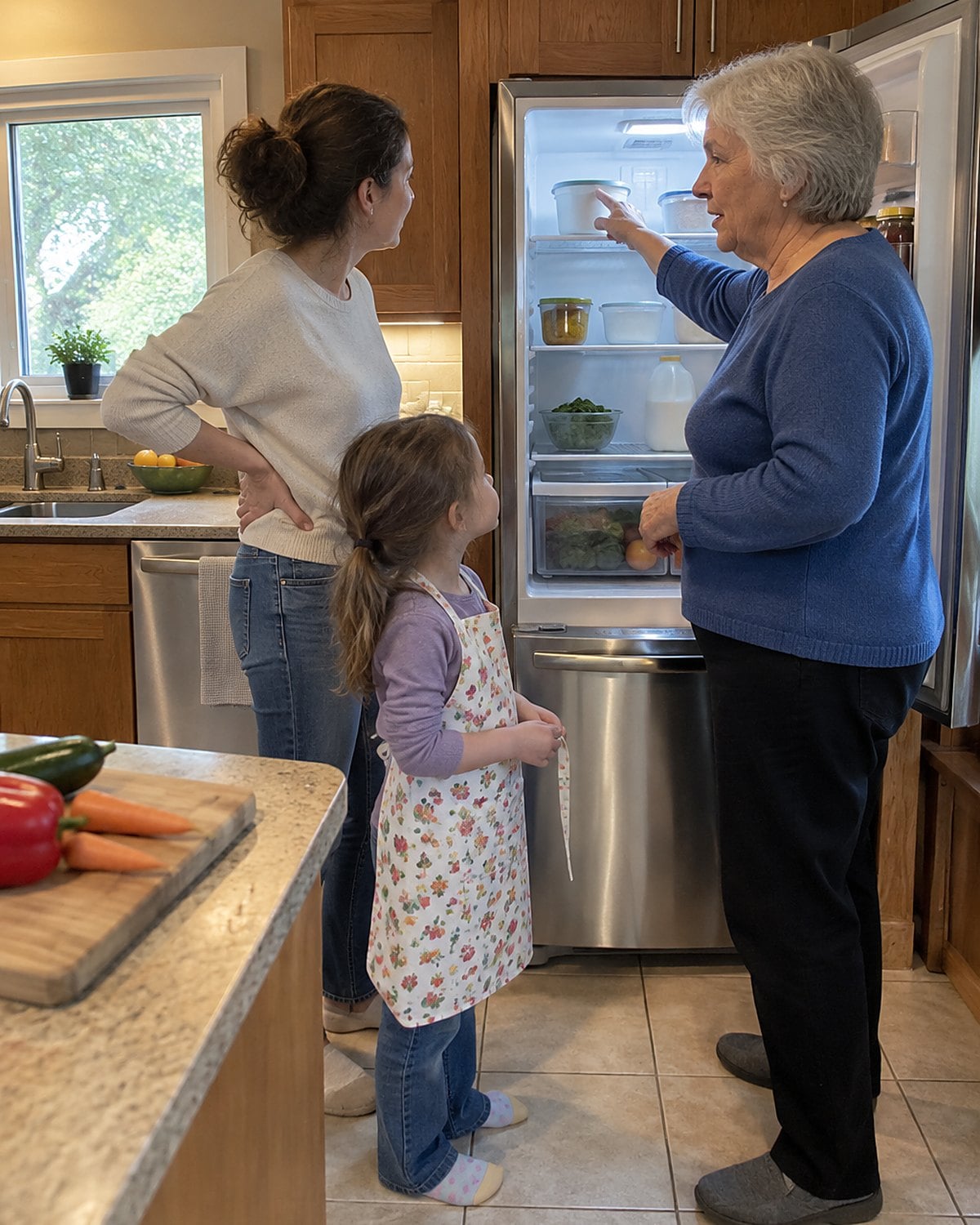
Before the apron goes on, ask a plain question: “Any foods we need to avoid today?” Don’t rely on what the child ate at your house last month. Allergies, feeding needs, and family rules belong in the conversation before you open the cupboard.
Keep the answer where you’ll see it. A note on the fridge door works better than a message buried in your phone while your hands are wet. Ask about ingredients in the dish, not only the dish’s name. Butter, broth, and packaged toppings deserve a look at their labels.
If a child has a food allergy, follow the parent’s plan for avoiding the food and responding to a reaction. Check packaged ingredients each time; labels change, and the FDA’s food-allergen guidance explains what labels must tell you. The parent tells you what applies in this kitchen today.
This exchange needn’t cast a shadow over cooking. Once you know the boundaries, you can say, “We’re making the version you get to eat.” Then hand over the ingredients you’ve checked to mix.
#10 The pancake pan on the back burner

Pancake batter begs to be poured. The pan, unfortunately, sits at exactly the height a child wants to reach.
Keep the hot pan on the back burner when your stove and pan allow it. Give the child a small pitcher of batter to fill at the counter; you take it to the stove and pour. They choose the size by telling you when to stop.
Watch the surface before flipping. Bubbles rise and break, and the edges begin to look set. Describe what you see, then turn the pancake yourself. The child gets the sight and smell without standing over the heat.
Bring a finished pancake to a plate at the counter. Let them add fruit there. If they want another turn pouring, refill the pitcher away from the burner.
#9 The raw dough waiting for the oven
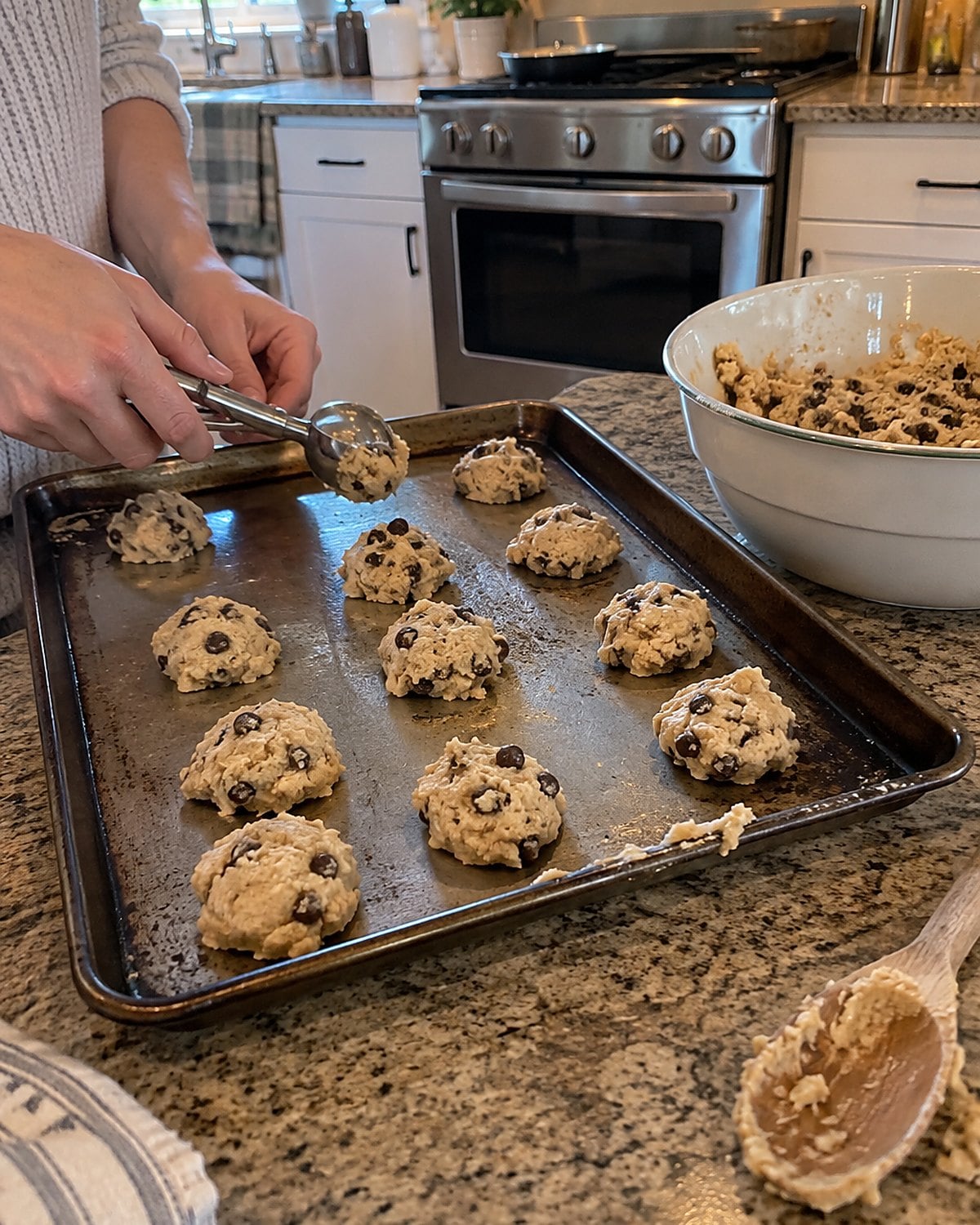
The spoonful of cookie dough has a pull of its own. You tasted it as a child; the grandchild at your elbow wants to do the same. Keep raw dough off the tasting menu.
Raw flour and raw eggs both matter here. The FDA’s flour safety guidance warns against eating uncooked flour, even in dough without eggs. Washing flour doesn’t fix it. Bake the cookies according to the recipe rather than promising that one oven temperature makes every dough safe.
Give the child a clean spoon to scrape finished frosting from a separate bowl, or put a few fully baked cookies aside to taste when they’ve cooled. Don’t use the spoon that stirred raw dough.
This is easier to hold firm if you say it before mixing starts: “We taste these after they bake.” Then the child knows what they’re waiting for. They still get to press the dough into shapes and watch what the oven does to each one.
#8 The green bean that snaps
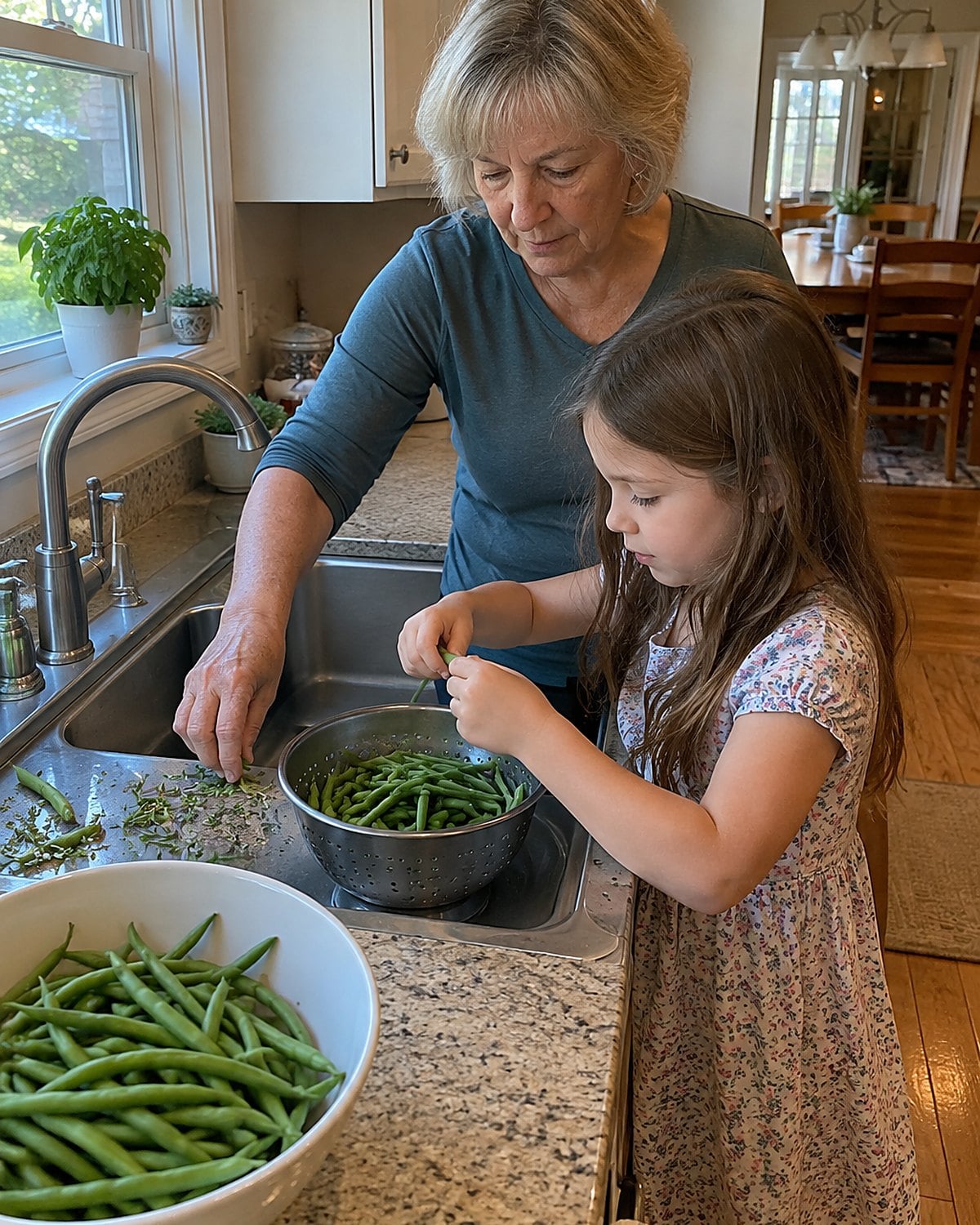
A pile of green beans at the counter is a job you can share without splitting it into adult work and child work. Show your grandchild the stem end and ask them to snap it off over a bowl.
Start with a bean yourself. Bend it until it breaks, then let the child try. Fresh beans give a crisp snap. Limp ones bend farther before breaking; they’re still worth checking as you trim, but set aside any that feel slimy or smell off.
Put the trimmed beans in a colander and wash them under running water. You handle the pot later. While the beans cook, the child has a useful question to ask: “Do they still snap?” Taste one after it cools. That bite tells you more about dinner than the timer alone.
Try it: Instant Pot Green Beans With Butter & Pepper
#7 The pizza toppings in separate bowls
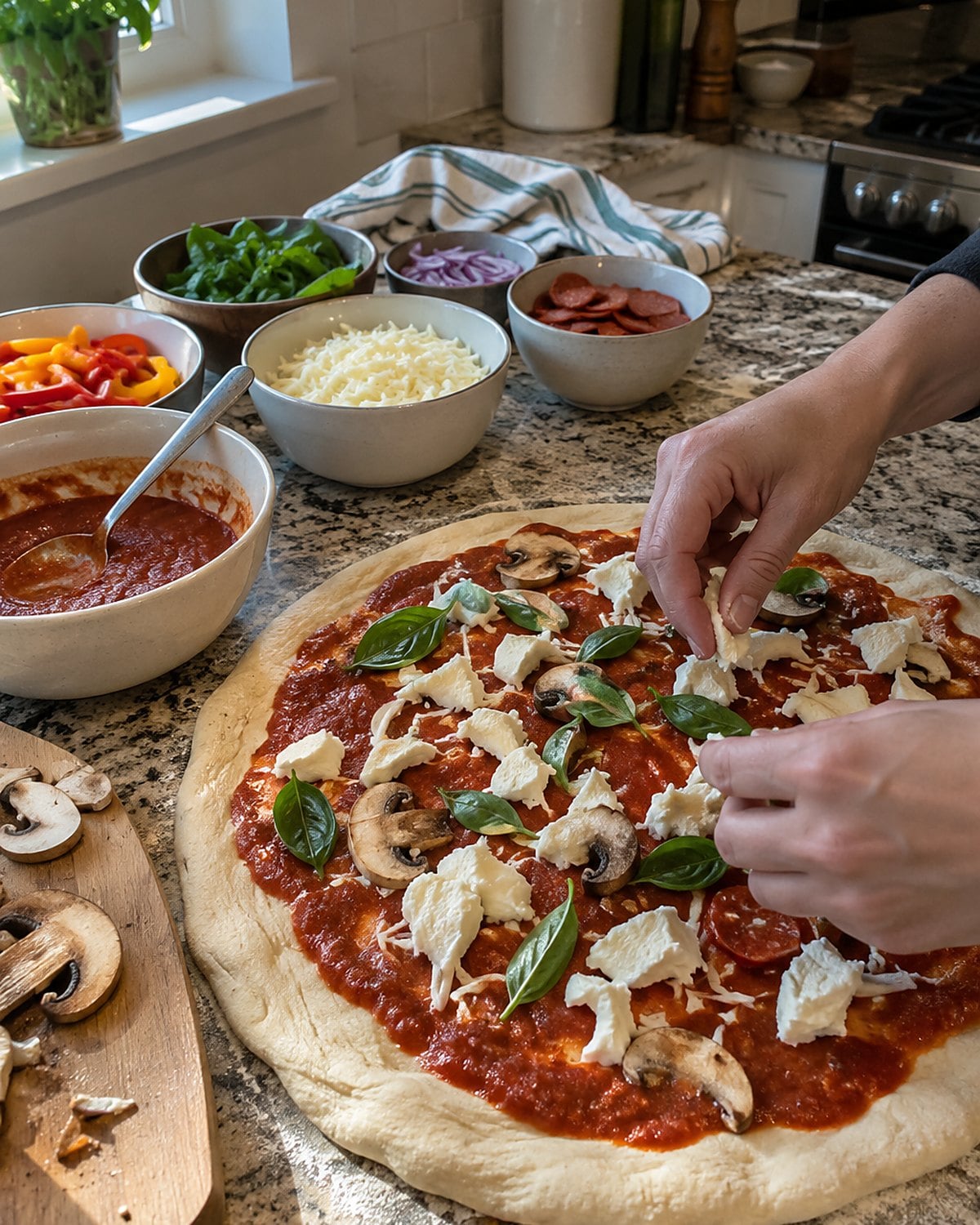
Pizza night gets tense when every hand reaches across the same tray. Put the toppings in separate bowls at the cold counter, and let each child build a small section before the pizza goes near the oven.
There’s a real cooking reason to keep the layers modest. A mound of wet toppings releases liquid as it heats, leaving the middle of the crust soggy. Show the child a spoonful of sauce spread thin enough to see bits of dough through it. They choose the vegetables and cheese, then leave space between the pieces.
Keep raw meat off the assembly counter. Use fully cooked meat toppings, and wash produce before it goes into the bowls. You move the prepared pizza onto the hot tray or into the oven; no child has to reach past the door.
When it’s baked and cooled enough to handle, point out the section they made. Ask which topping browned first. Next time, they’ll have an opinion about how much sauce to spread.
#6 The timer beside the dish towel
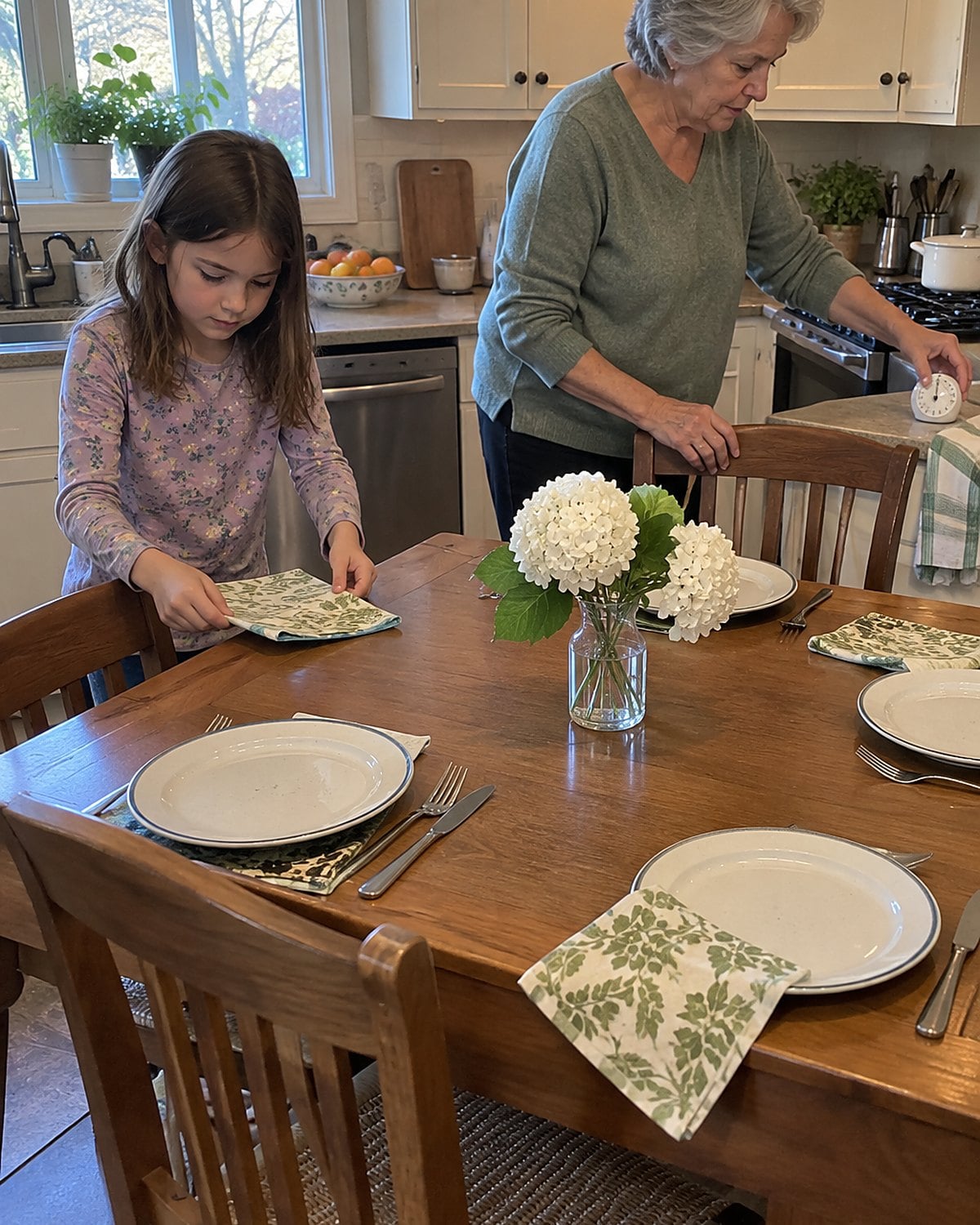
“Soon” means something different when you’re small and hungry. Set a kitchen timer where your grandchild can see or hear it, but don’t turn it into a promise that food is done the instant it rings.
Try it for a waiting job: cooling muffins, letting bread dough rest, or checking vegetables in the oven. Say what happens at the sound. “When it rings, I’ll check the muffins.” That sentence leaves room for another few minutes if the centers are still wet.
Give the child a job during the wait. They can put napkins at the table or choose a plate for the first muffin. A timer tells them when to come back; the job gives them something to do until then.
#5 The muffin tray before dinner
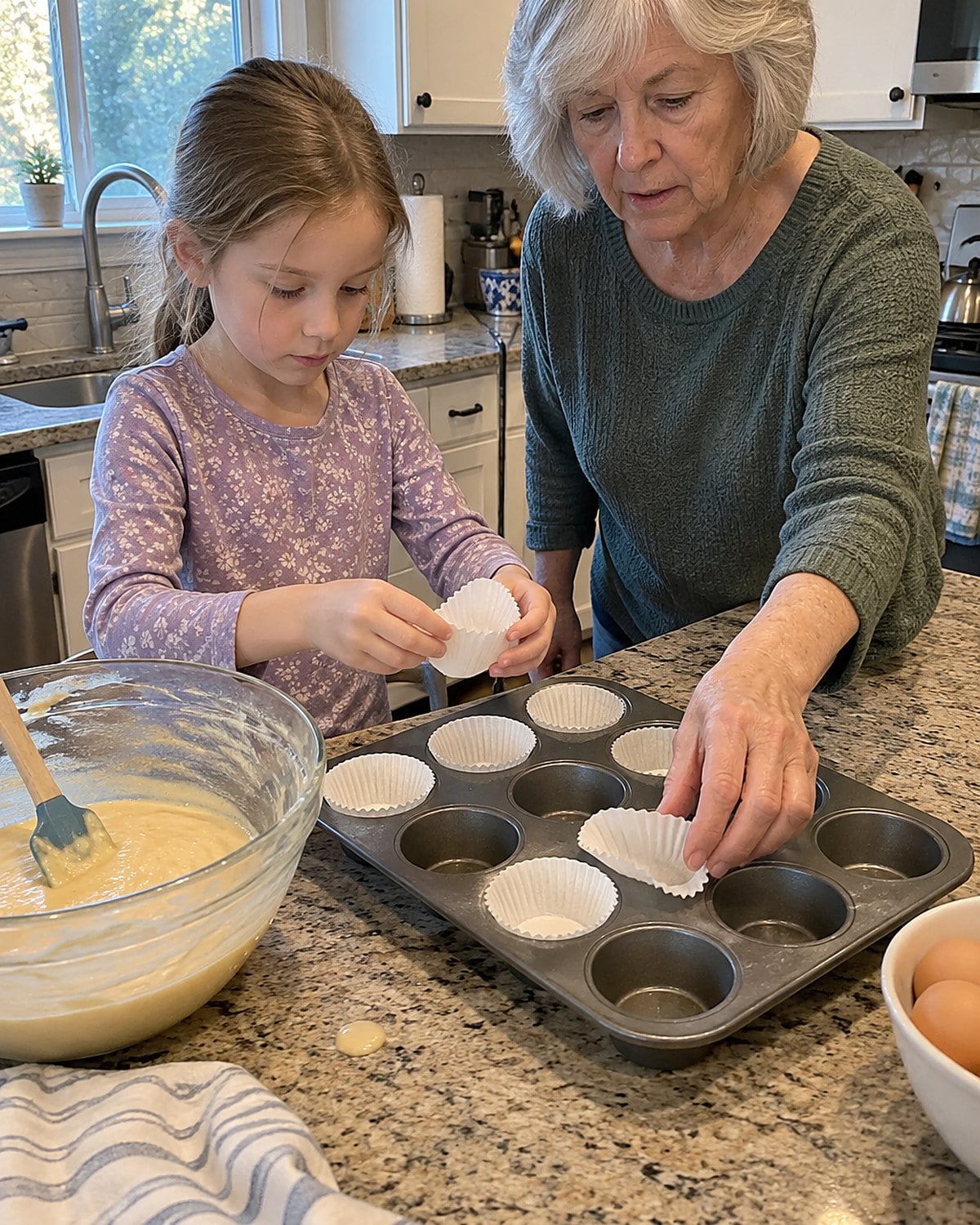
A grandchild arrives ready to bake just as dinner needs your attention. Choose a task with a natural stopping place. Muffin batter can go into the tin at the counter while you keep the stove work in your hands.
Set out the paper liners first. A child can place one in each cup, then spoon batter into the lined tin while you steady it. Leave room at the top for the muffins to rise. Wipe drips from the rim before the tray goes into the oven.
Here’s the pause that saves the evening: if dinner calls you away, stop before mixing the batter. The dry ingredients will wait while you finish the stove work; a child holding a dripping spoon won’t.
You load and unload the oven. Once the muffins cool, let your grandchild lift one from the tin and look at the bottom. A browned edge and a set center show what the heat did. Dessert has a story attached to it, and dinner still got made.
Try it: Air Fryer Veggie Muffins With Zucchini
#4 The church cookbook at the counter
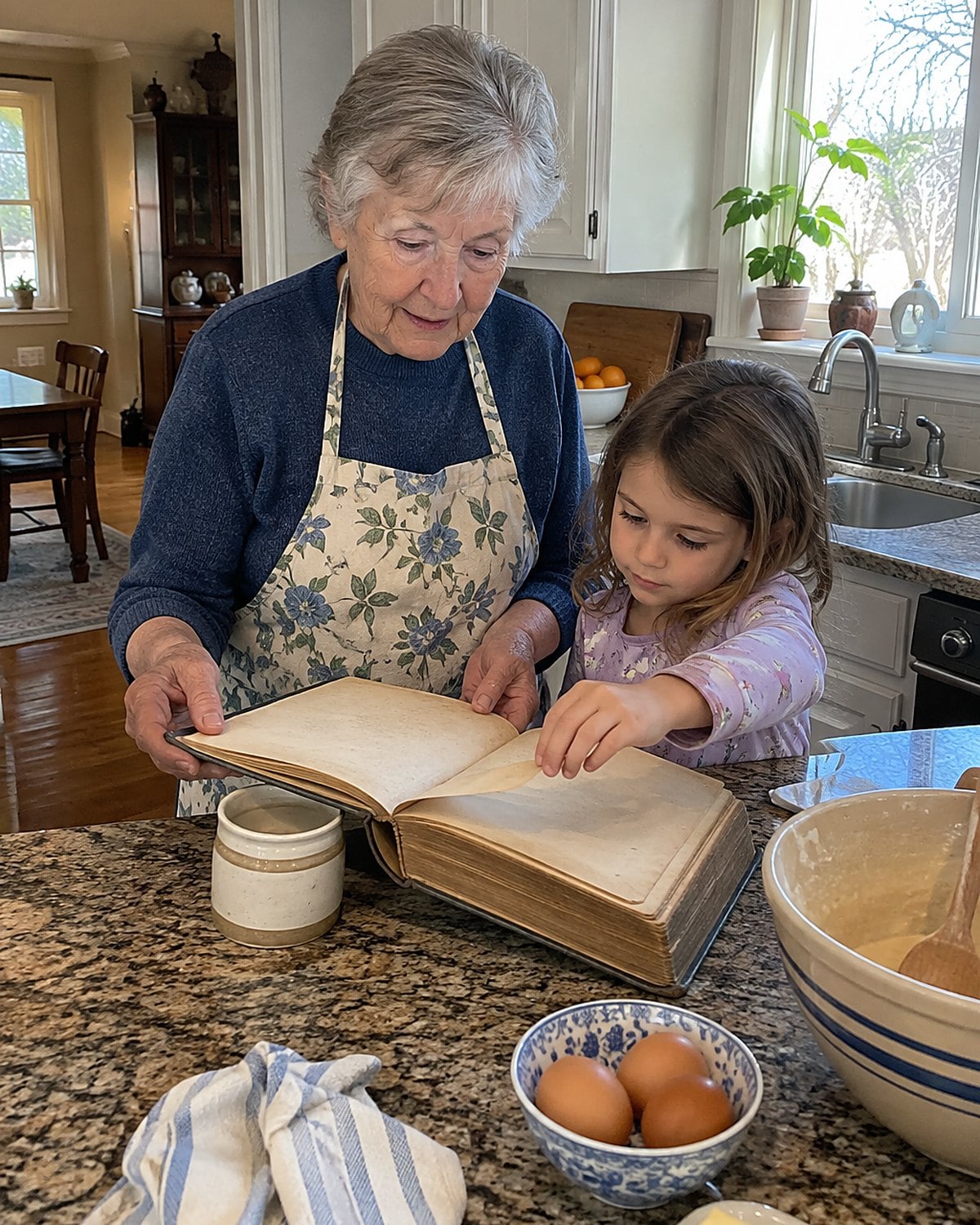
The church cookbook with the broken spine has directions you know by heart. A child beside you doesn’t need you to pretend the recipe is new. They need to hear why you do one part your way.
Choose a page with a simple job, then show them the penciled change in the margin. Maybe you stir the cinnamon into the dry ingredients so it spreads through the batter. Maybe you grease the pan before mixing because the batter shouldn’t wait while you hunt for butter.
Let the child turn the pages with clean hands and pick the serving dish. Tell the story attached to the recipe if there is one, without making them stand through the whole history before they get to stir.
Later, write down the change you made today. A cookbook earns its wear from being used, and a child remembers the part they were allowed to do.
#3 The plugged-in blender on the counter
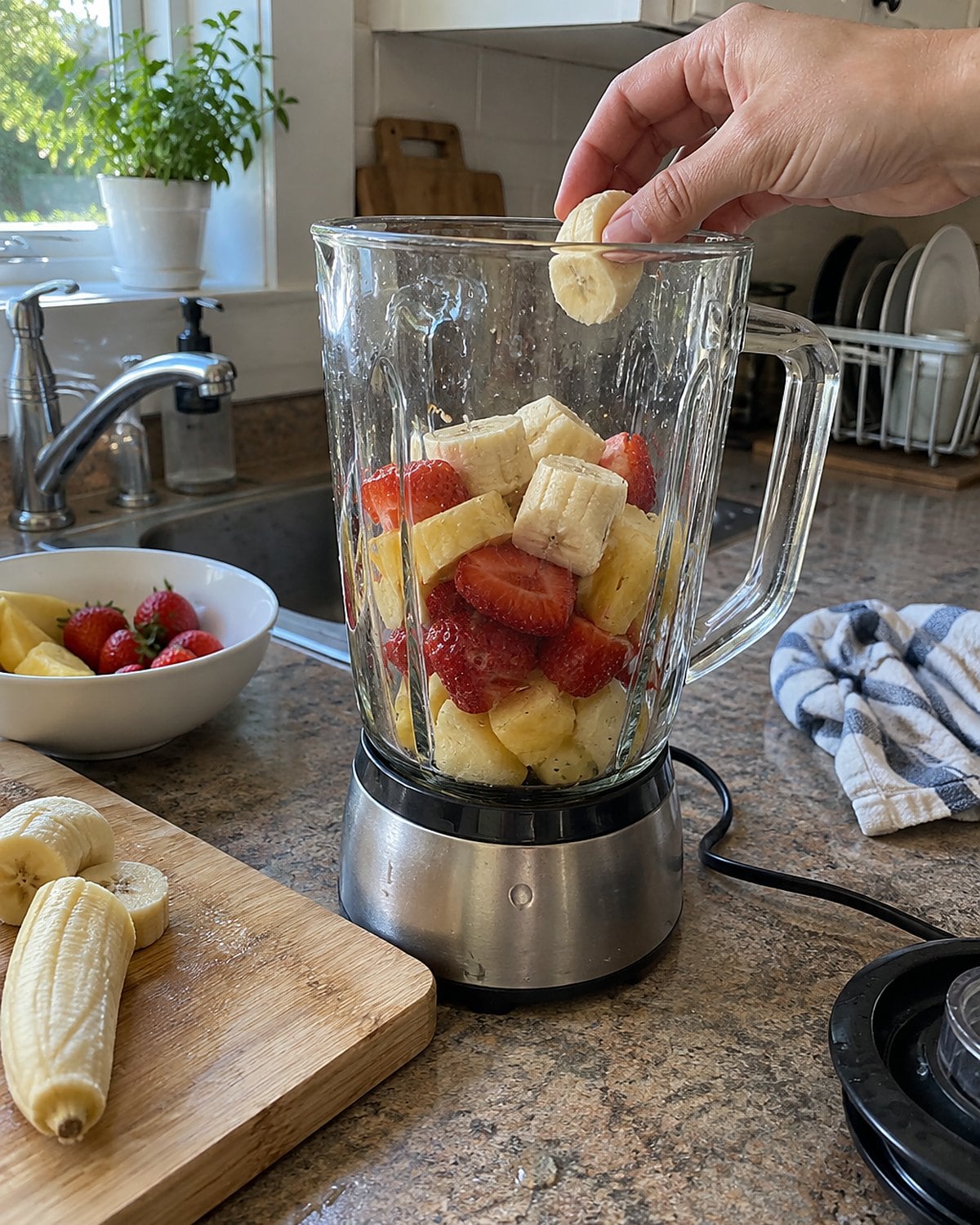
A blender button looks like the entire job. The blade at the bottom of the jar is the part a child doesn’t see.
Keep the blender unplugged while you add ingredients and check the lid. The child can pour in fruit or milk at the counter. Then you fit the lid, move small hands back, plug it in, and run it yourself. Unplug it again before the lid comes off or anyone reaches toward the jar.
For an immersion blender, keep that rule even tighter. You hold the tool. The blade stays below the surface of the food while it runs, and power stays off before you lift it out. No one reaches into the pot to rescue a stuck piece.
The child still has a good assignment: taste the finished mixture with a clean spoon and tell you if it needs more fruit. They got the flavor decision. You kept the moving blade where it belongs.
#2 The first bite at the counter
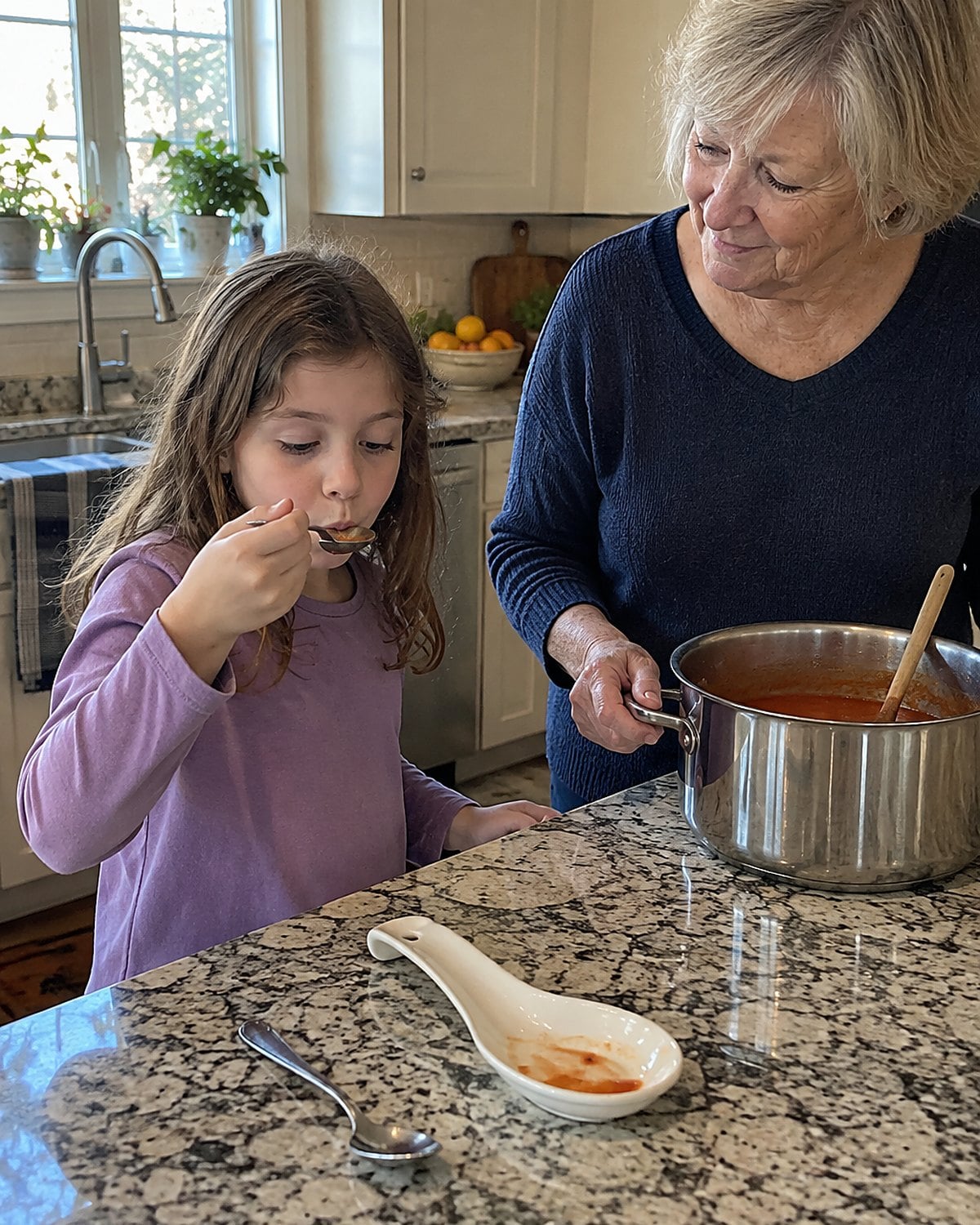
By the time dinner is ready, the cook has tasted it and the helper wants proof their work mattered. Give your grandchild the first bite of the part they made, once it’s cool enough to eat.
Ask a question they can answer: “Is this too salty, or does it need salt?” Let them taste before you change anything. If they don’t like it, ask what they notice. Sour? Crunchy? Too much pepper? You don’t have to agree with every verdict to take it seriously.
Keep a clean tasting spoon for each person and each taste. That tiny habit lets everyone weigh in without dipping used spoons back into the pot. When the food needs another check, put out another spoon instead of asking someone to remember which one is clean.
Then put the food on the table. They have something specific to tell whoever sits down: which bean snapped, which topping browned, or why the muffins needed another check.
#1 The empty counter before the apron
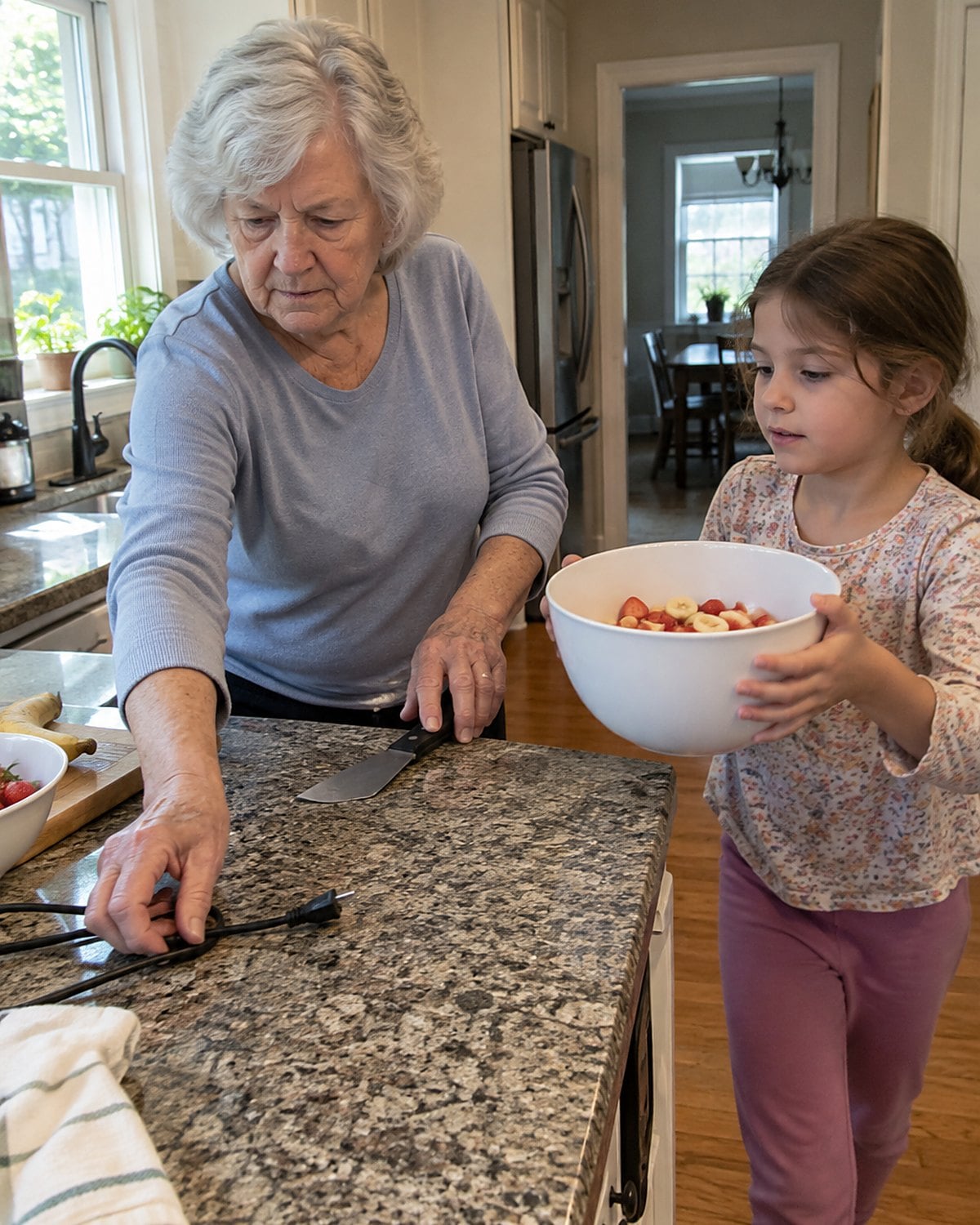
You know the moment. A child has both hands in a bowl, the phone rings, and the oven timer starts calling too. The safest change happens before anyone puts on an apron: clear a work spot and decide which hands own each part of dinner.
Move the knife, hot pan, raw meat, and trailing appliance cord out of that spot. Bring over only the ingredients and tools for the child’s current job. Then name the handoff: “You tear the lettuce here. I’ll take it to the sink when you’re done.”
This is worth doing even when you’ve cooked the dish for decades. Familiar meals make it easy to move on habit, reaching for a hot lid while a child follows your elbow. A clear counter gives both of you a place to stop before the next step.
When plans change, stop there again. Take away the finished bowl. Set down the next job. Say who carries it and where it goes. Your grandchild gets to do real work from start to finish, without having to guess what’s safe to touch.
The memory has room for the good parts: flour on a sleeve, the bean that snapped, and the question they asked while you cooked beside them.
The bottom line
Keep one clear place for your grandchild’s hands and one clear job at a time. You handle heat, sharp blades, and raw meat; they get work that changes dinner.
The well-prepared version of you has already moved the stool, set out the bowl, and thought about the handoff. Which spot in your kitchen would make the best place for that first job?
Leave a Reply