

The onions hit the pan and begin to hiss. You step away for the pepper, turn back, and there he is with the wooden spoon. Stirring.
You’ve told him why you leave the onions alone. He’s told you why he doesn’t. Neither of you needs another lecture about onions. After forty years, the argument has a familiar shape: one person sees dinner taking too long, the other sees the pan losing its chance to brown.
Somewhere between those views is an answer you can test before the next spoon goes in.
#27 The spoon in the onions
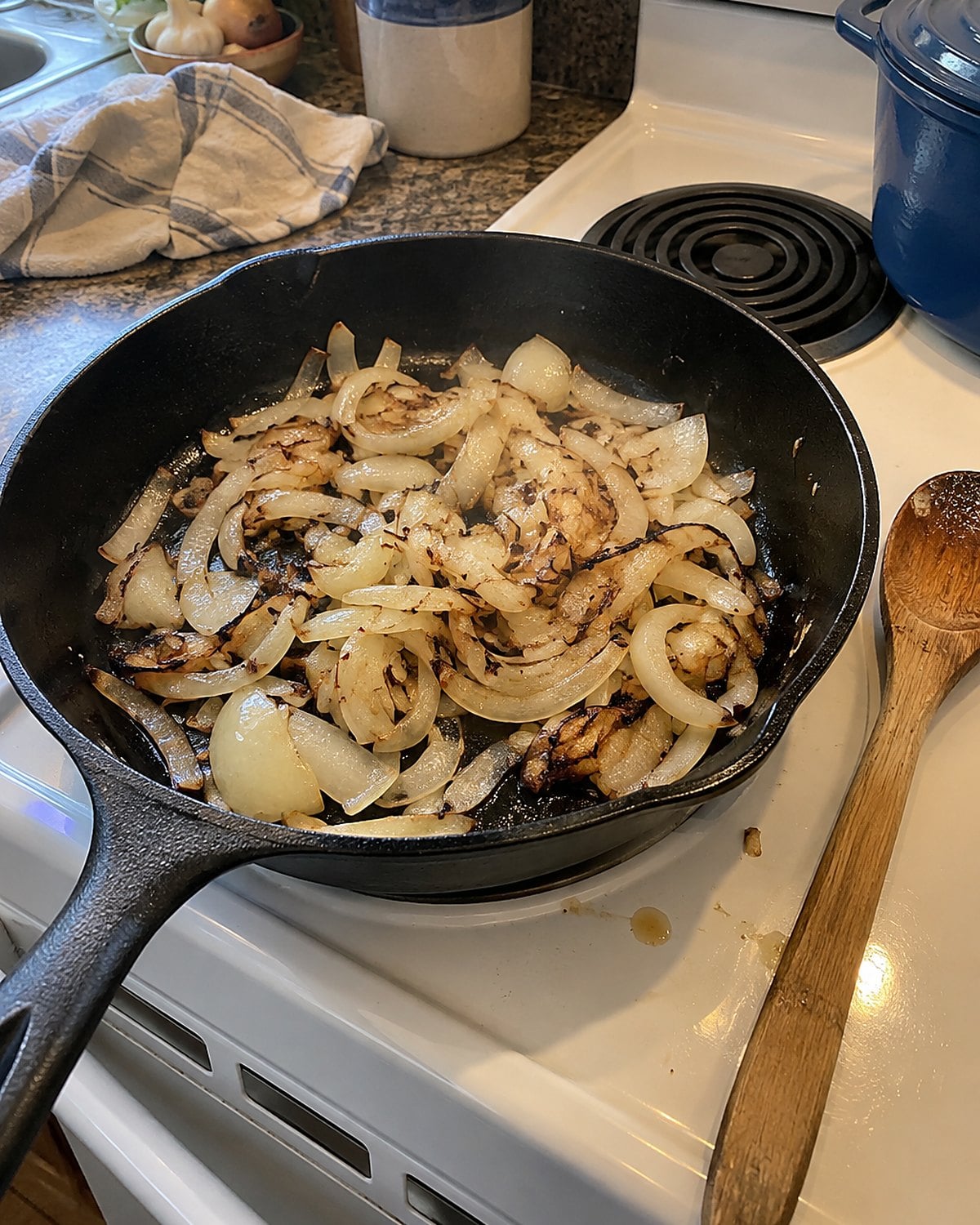
When onions go into a hot pan, their surfaces need contact with the metal to brown. Constant stirring keeps turning that contact into a brief introduction. Leave them for a few minutes, then lift a piece and look underneath. Pale means give the pan more time. Deep brown means stir and scrape.
There’s room for his way, too. If dinner calls for onions softened without much color, stirring helps them cook evenly. Say which result you’re after before the spoon starts moving. “I want brown edges on these” gives him something to look for, instead of another order to remember.
If the pan smells sharp or you see black patches, stir now and lower the heat. Dinner wins over principle.
#26 The dishwasher loaded after dinner
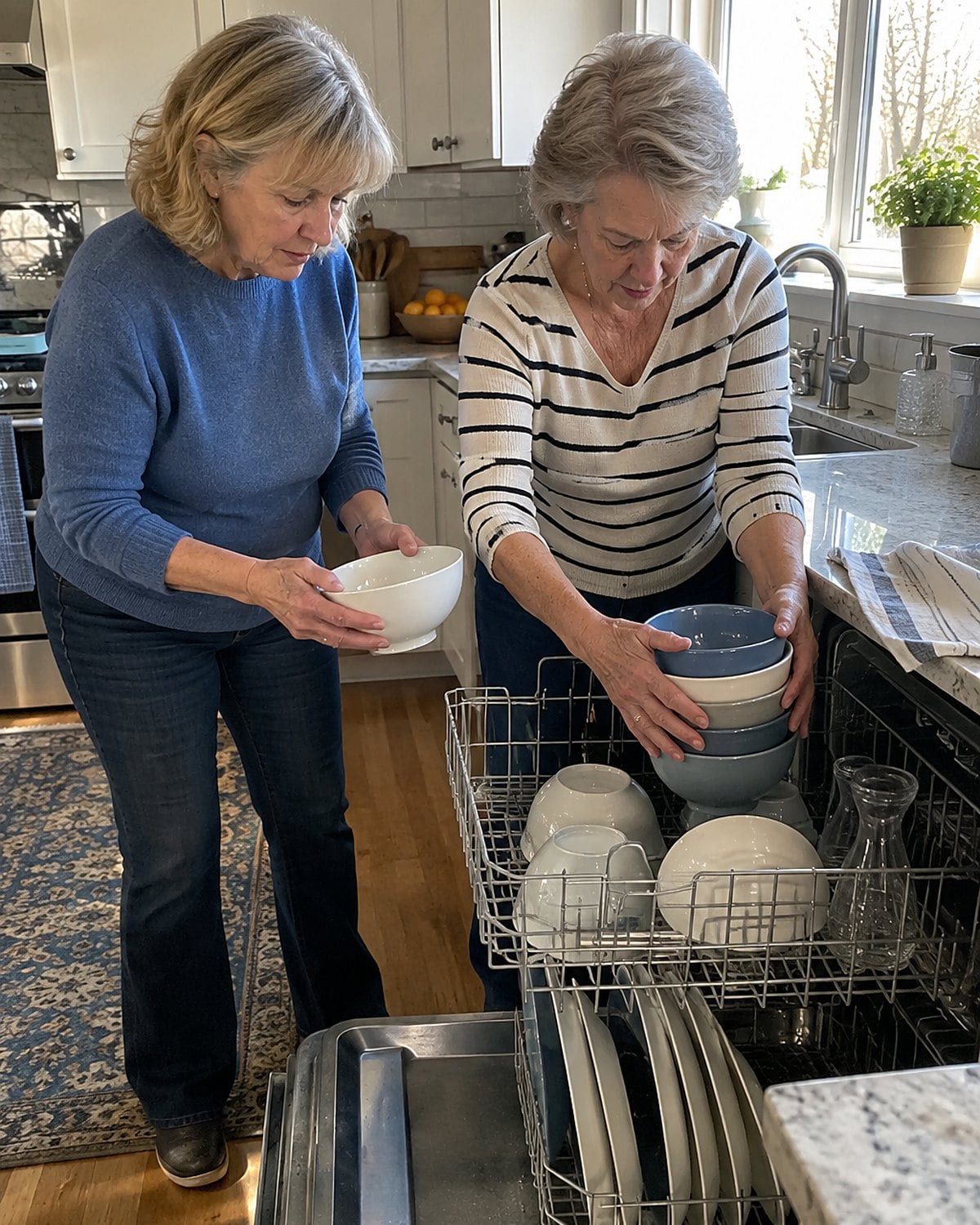
You’ve opened the dishwasher and found bowls nested so tightly they’re holding yesterday’s rinse water. He’s opened it and found your wooden spoon taking the space he wanted for three mugs. Both of you have evidence.
The useful question is where the spray has to go. A bowl facing another bowl shields both interiors. A tall baking sheet across the front blocks water from reaching dishes behind it. Stand pieces apart, with the dirty faces aimed toward the spray.
Then run the load and check what comes out clean. That beats rearranging it in silence after he’s gone to bed.
One boundary deserves its own sentence: wooden utensils and knives with wooden handles stay out of the machine if you want those handles to last. Heat and repeated wetting are hard on wood. Leave a small spot beside the sink for hand-wash pieces, so the dishwasher argument doesn’t become a scavenger hunt.
#25 The steak moved across the skillet
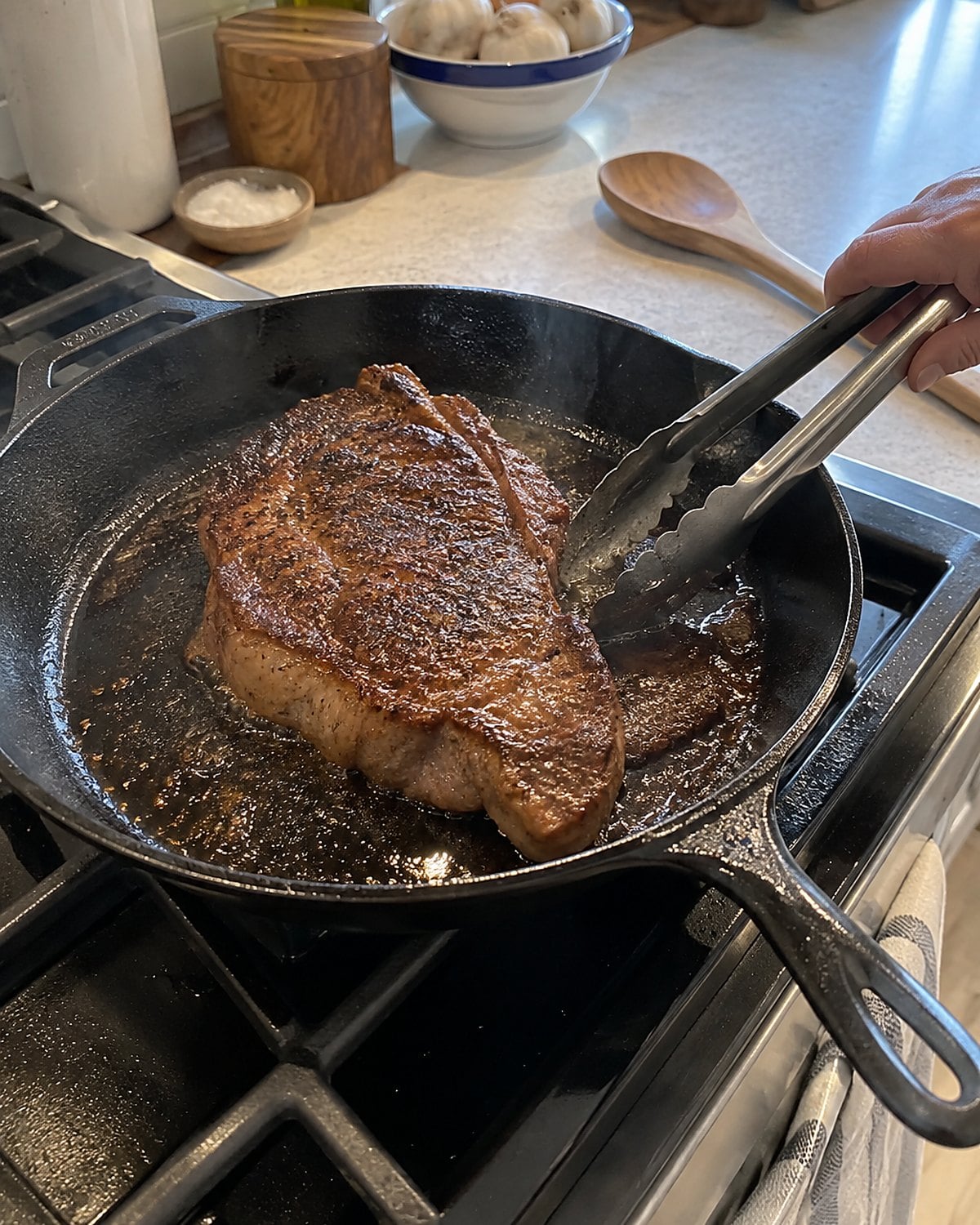
He sees a steak sitting still and reaches for the tongs. You see the crust forming.
At first, meat grips a hot skillet. As its surface browns, it releases more readily. Tugging at it every few seconds tears at that surface. Wait, slide a thin spatula under an edge, and see whether it lifts without a fight. If it clings, give it another moment.
That test tells you when to turn it, not when it’s safe to eat. For whole cuts of beef and pork, the USDA gives 145°F followed by a 3-minute rest. Check the thickest part with a thermometer. A browned outside doesn’t tell you the center’s temperature, no matter how many steaks either of you has cooked.
#24 The oven door opened for a peek
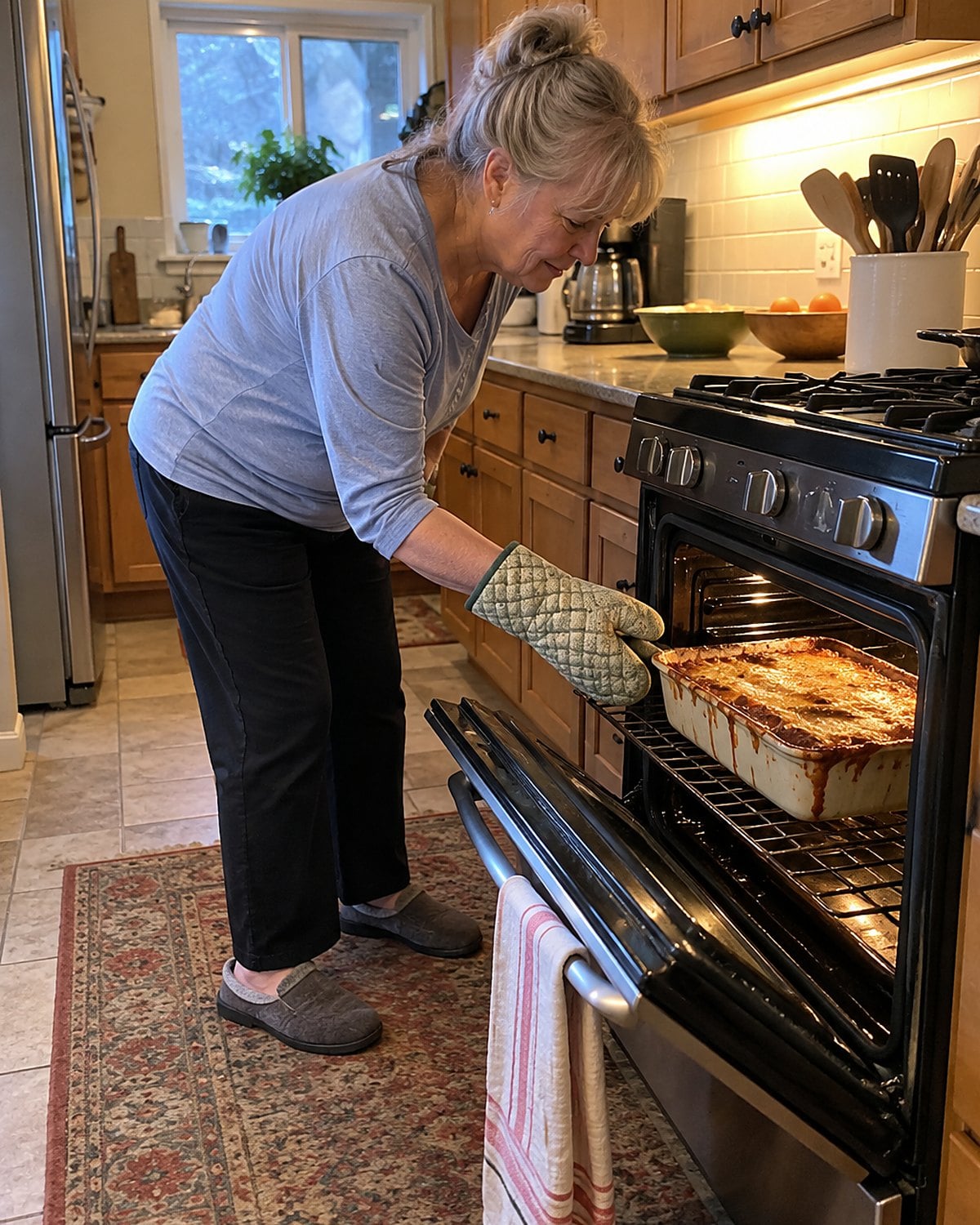
There’s a narrow line between checking dinner and visiting it. Open the oven, peer at the casserole, shut the door. Two minutes later, someone else opens it to check the same casserole.
Heat escapes each time, and the oven has to climb back to its set temperature. Agree on the first check before the dish goes in. If the recipe says 30 minutes, start looking near the end, not when the top first smells good. Use the window and oven light if you have them.
Once the door is open, get an answer. Does the middle bubble? Has the top colored? For baked pasta, slip a knife tip into the center and feel whether it comes out hot. If there’s meat in the dish, use a thermometer and follow the temperature for that meat.
One deliberate check gives you more than five anxious glimpses.
#23 The salt shaken over the soup
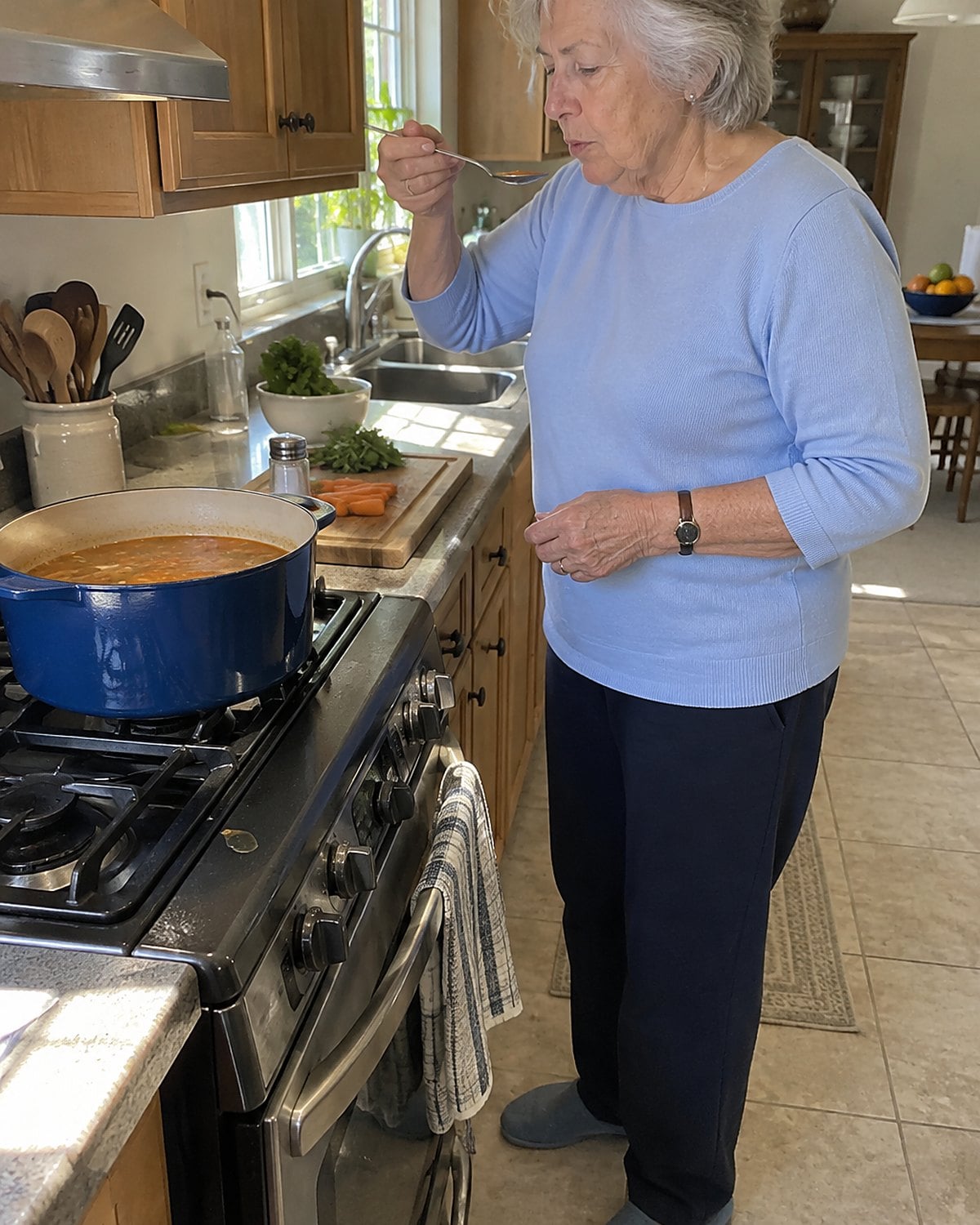
One of you tastes the broth. The other salts the whole pot without tasting it. Now both are holding spoons and defending dinner.
Hot soup tastes different after it cools enough for a careful sip. Take that sip first. If it needs salt, add a little, stir well, and taste again. Salt added to one corner of a pot hasn’t reached the other corner yet.
There’s another question worth asking: does the soup need salt, or does it need brightness? A squeeze of lemon or a little vinegar sharpens a flat bowl without putting more salt into the pot. Test that in your own serving first. The rest of dinner shouldn’t have to join an experiment neither of you agreed to.
#22 The pasta pot with a lid
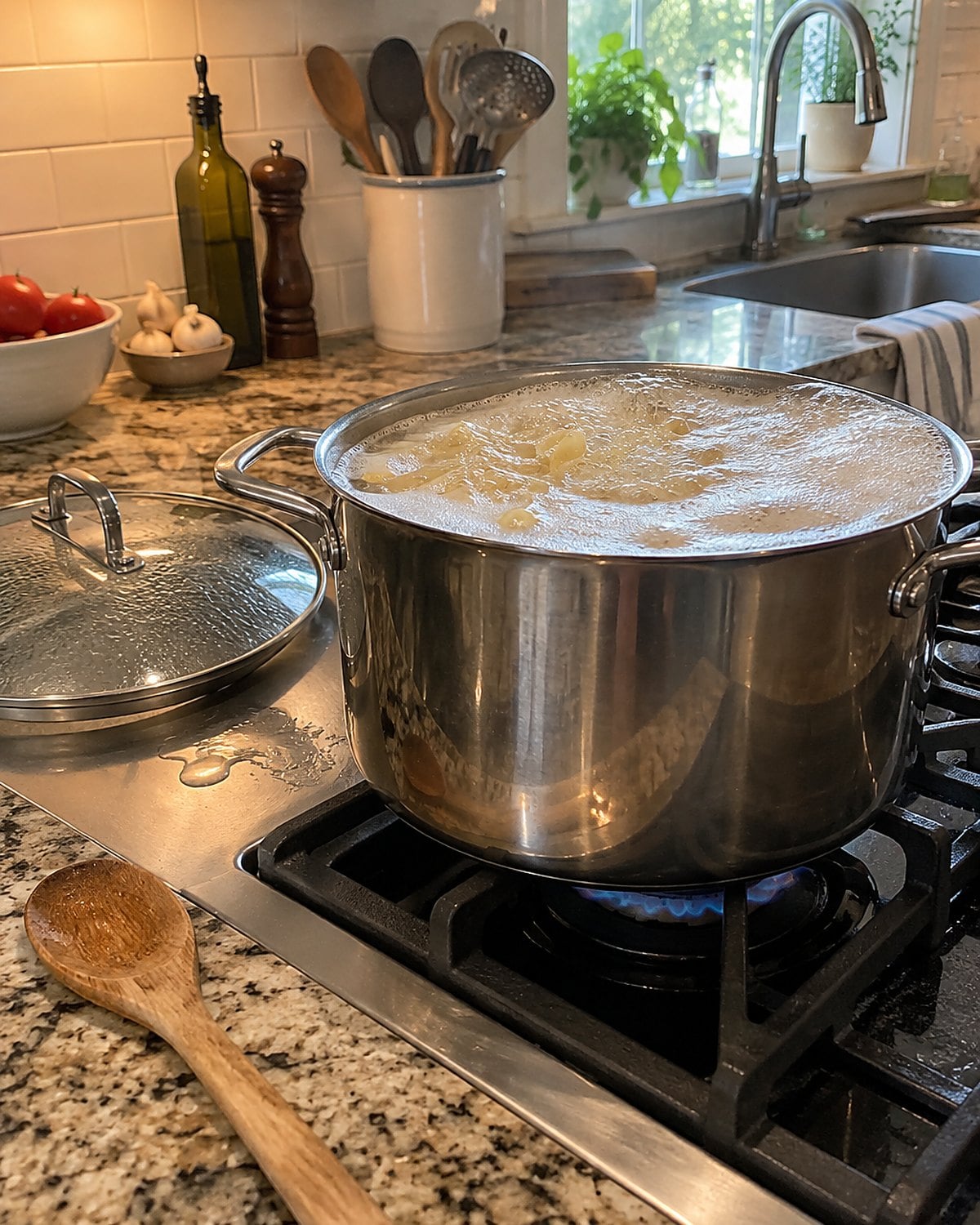
He puts the lid back on once the pasta goes in because the water stopped boiling. You take it off because you remember the starchy foam climbing the sides. You’re both watching the same pot at different moments.
A lid brings a fresh pot of water to a boil faster. Once the pasta goes in, stir to separate the pieces, leave the lid off, and watch the water return to a steady boil. A covered pot of pasta boils over with little warning.
The foam makes a mess, then leaves you with a burner to scrub after dinner.
Set a timer from the package directions. Start tasting before the stated time is up. Bite a piece. A firm center is different from a hard, dry core. If the pasta is going into a hot sauce, take it out while it still has some bite.
You’ll finish cooking it in the pan, which is a much better place for the final argument about dinner.
#21 The milk beside the fridge door
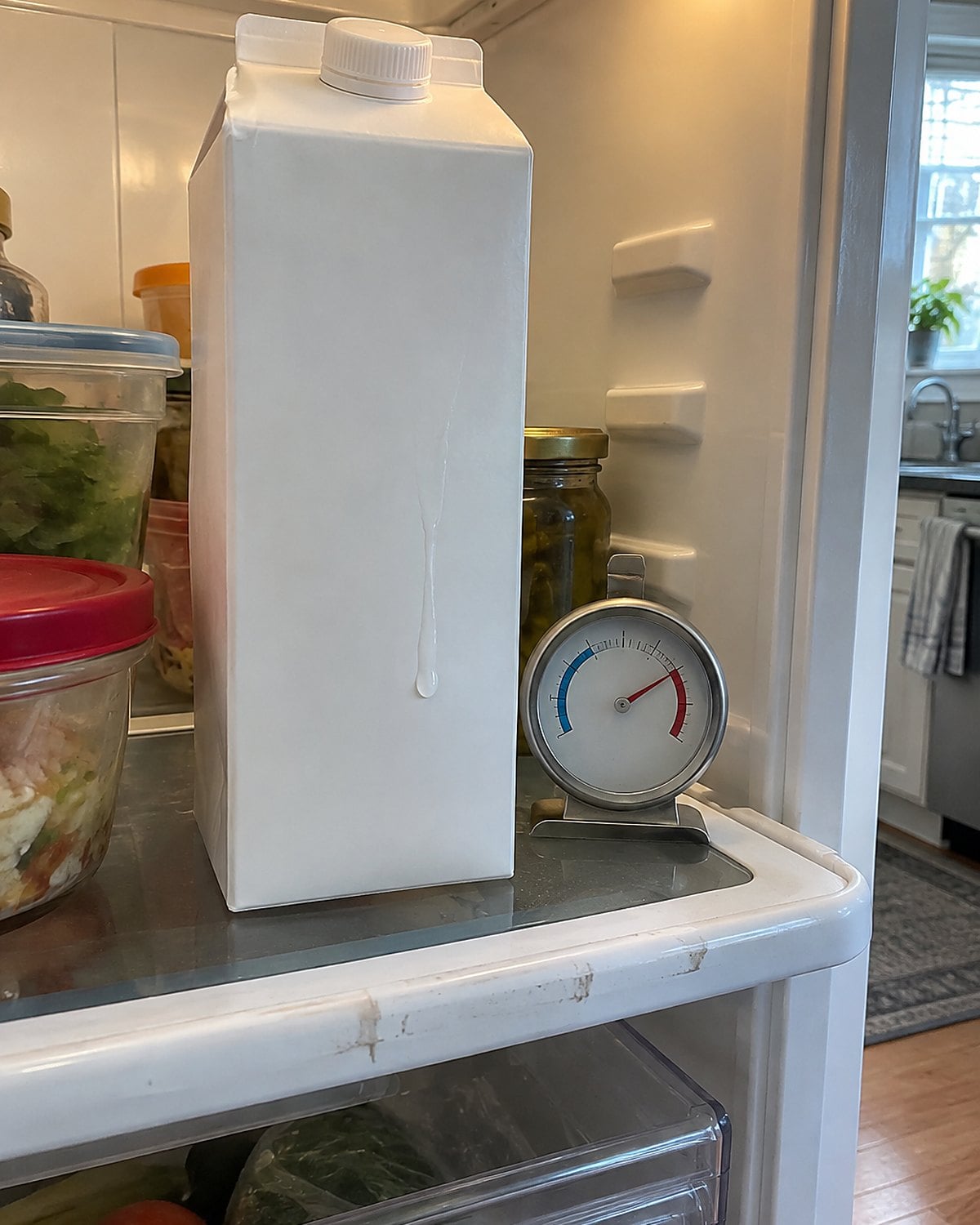
He puts the milk on a door shelf because it fits. You move it to an inside shelf because that’s where you’ve kept it for years. This one has a measurable answer.
The door warms more each time the fridge opens. Keep milk on an interior shelf and check the refrigerator with an appliance thermometer. The FDA says to keep the fridge at 40°F or below. The dial’s number tells you the setting, not the temperature beside the milk.
If cartons keep appearing in the door, clear a place inside that’s tall enough for one. A shelf that fits the carton settles more than another reminder delivered while somebody’s holding breakfast cereal.
#20 The wet sponge left in the sink
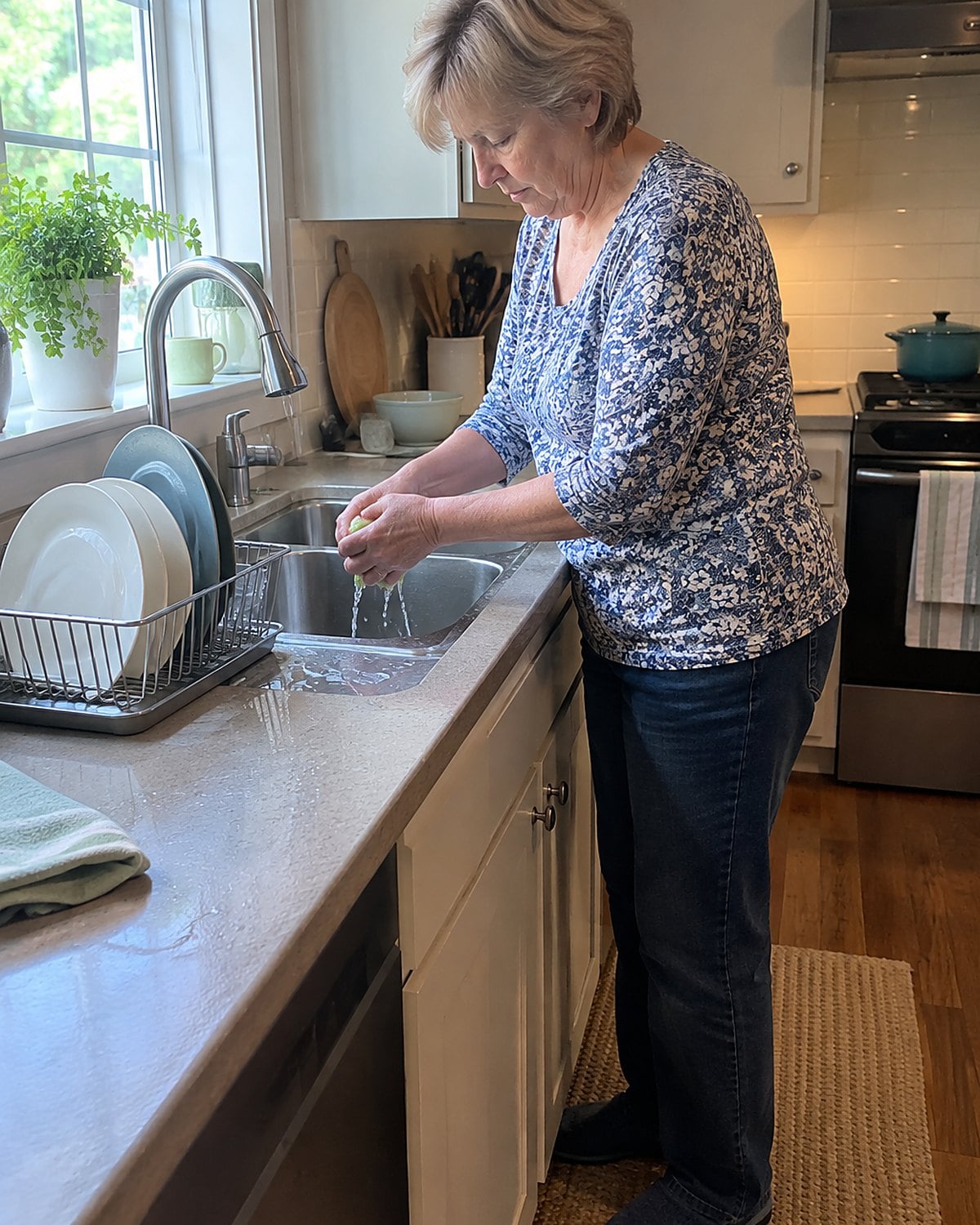
There it sits, heavy with dishwater, under the colander. You pick it up by one corner. He says it’s fine because it’s full of soap.
A sponge left wet in the bottom of the sink stays wet. Wring it out after the dishes and put it somewhere air reaches it. That takes less effort than arguing over who left it there. If it smells bad, replace it; soap on yesterday’s sponge doesn’t make the smell disappear.
Give the sponge a job boundary, too. Don’t use the same one for raw meat spills and the rim of a drinking glass. Use paper towels for the spill, then clean and sanitize the counter as the USDA advises.
A cloth kept for ordinary dishwashing is easier to track than a sponge asked to handle everything. If the sponge stays damp or smells bad again, replace it rather than putting another cleaning job on it. The sink looks clear when you’ve finished. That’s the payoff you both get tonight.
#19 The open bag of brown sugar
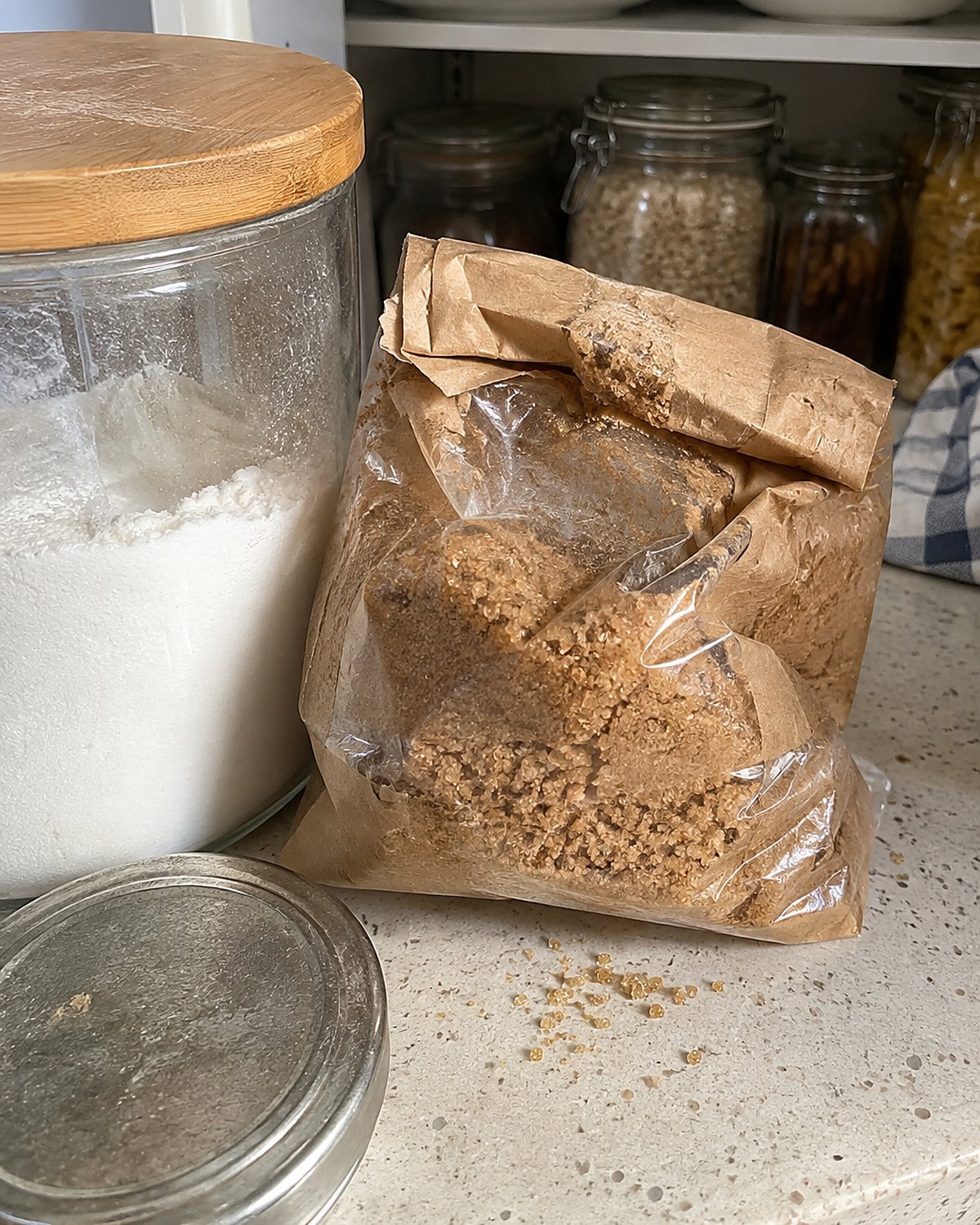
He folds the top twice and calls it closed. You reach for the sugar next week and find a brick.
Brown sugar hardens as it loses moisture. A tight container helps keep it workable; a folded paper bag does little against dry kitchen air. Move it into a container with a lid that closes all the way, and keep the measuring cup out of it if that cup is damp.
Already hard? Put a piece in a microwave-safe bowl, cover it with a damp paper towel, and microwave in 10-second bursts. Check between bursts so it doesn’t turn hot and sticky. Use what you softened rather than packing the whole bag away wet.
You don’t need to win the folding argument. You need sugar that fits into a measuring cup.
#18 The good knife in the sink
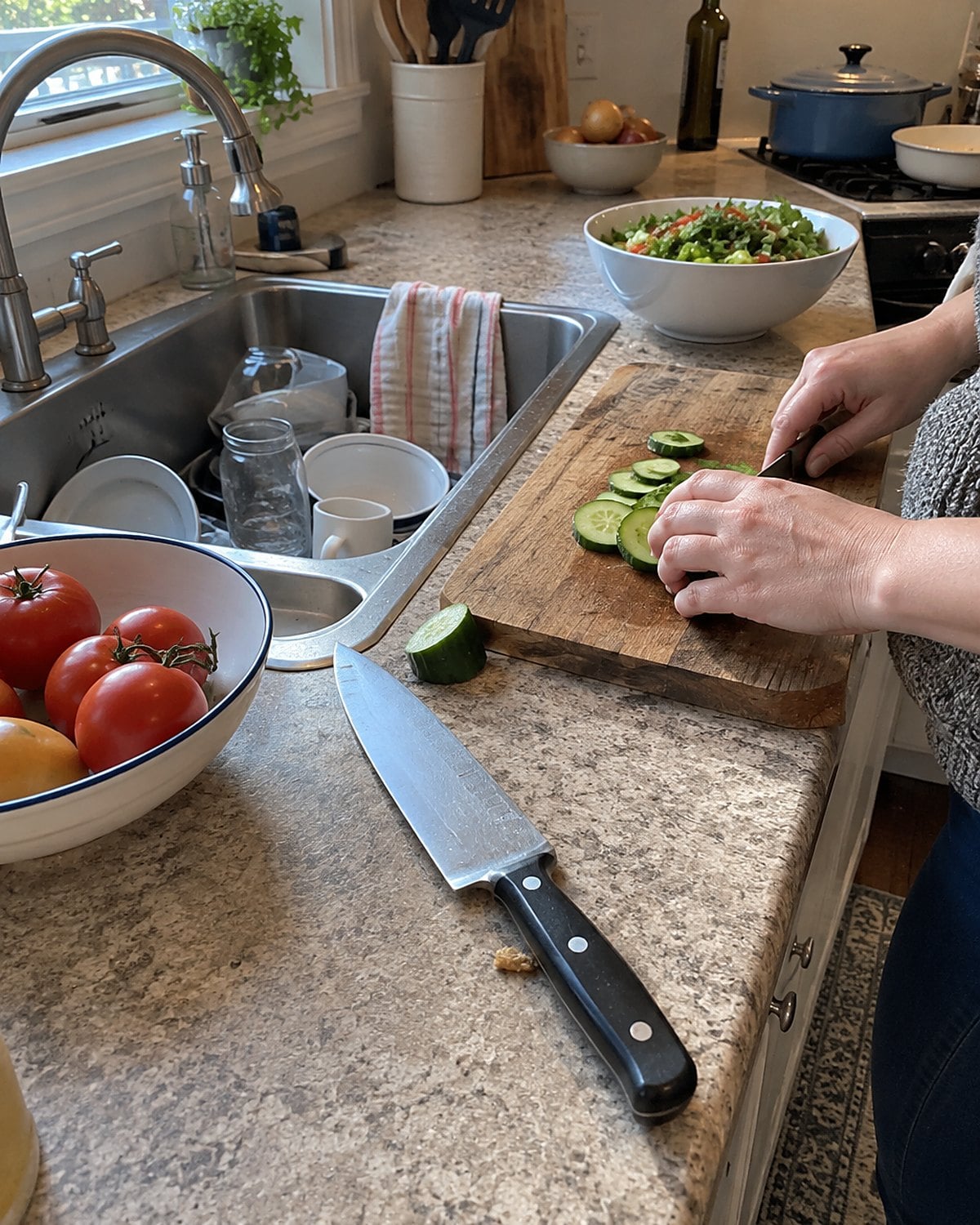
“I didn’t see it” is a terrible thing to hear when your hand has just found a blade under cloudy dishwater.
Give the good knife one place to land: flat on the counter beside the sink, blade turned away from the edge. Wash it separately and put it away. Don’t leave it soaking, and don’t hand it across the kitchen by the blade. This is a boundary worth saying plainly, even when neither of you likes kitchen rules.
The habit also helps the knife. A loose blade knocks against other utensils in the sink; a wooden handle fares poorly under a long soak. If you’re the one who uses it last, you’re the one who washes and dries it. No detective work after dinner, no hand searching under the dishes.
“Knife beside the sink, please” is a complete sentence.
#17 The chicken rinsed under the tap
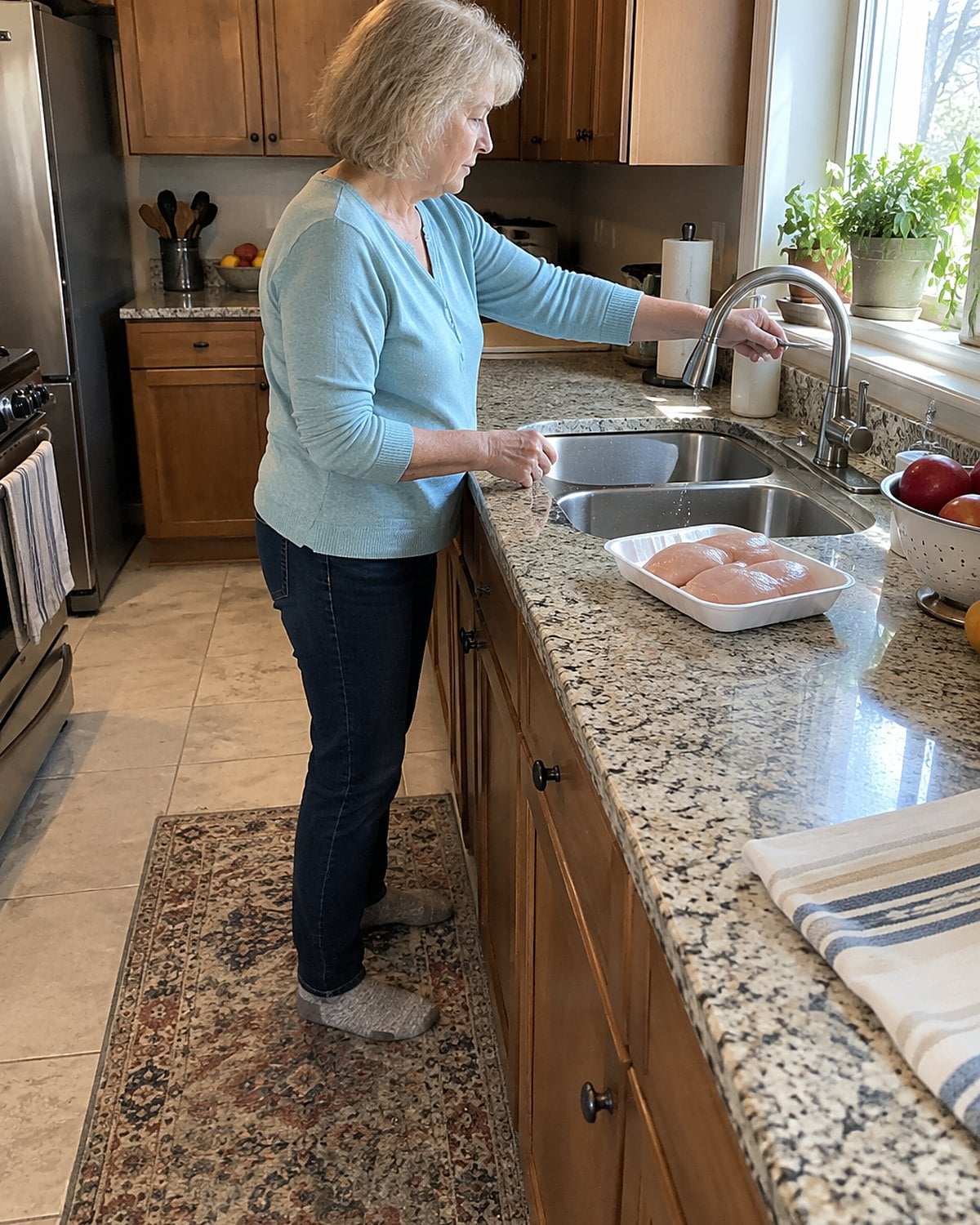
You’ve done it one way for decades; he learned another. Then raw chicken goes under the faucet and water splashes toward the clean glasses.
The CDC says not to wash raw chicken. Rinsing spreads germs around the sink and nearby counter. Look at the faucet handle, the edge of the dish rack and the counter where vegetables are waiting. The splash doesn’t stay in the basin.
Cooking, not rinsing, is what makes the chicken safe. Put it straight into the pan or roasting dish, then wash your hands with soap and water. Clean and sanitize surfaces its juices touched, following the CDC’s guidance on washing raw chicken.
For doneness, put a thermometer into the thickest part, away from bone. Poultry needs to reach 165°F. That’s a better answer than clear-looking juices, and it leaves the sink free for the glasses.
#16 The grandchild's untouched green beans
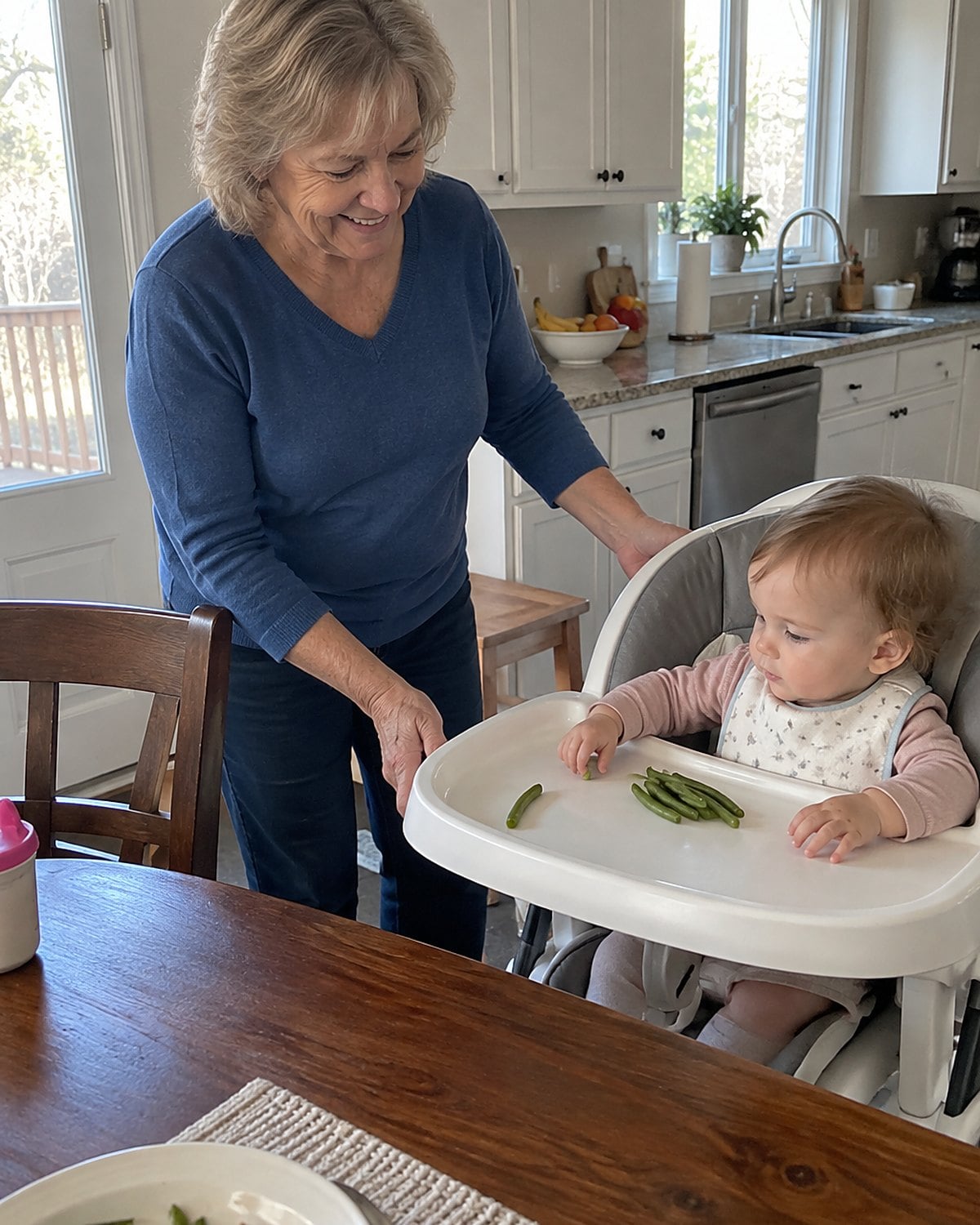
A grandchild visits, pokes a green bean, and asks for bread. Before anyone answers, one of you offers to make something else. The other wants dinner to stand as served. The child is listening to both plans.
Take the pressure off the platter. Put a small serving on the plate and leave the rest within reach. A child who wants more has a clear way to ask; a child who doesn’t has something familiar alongside it. If bread is already part of dinner, it isn’t a reward for refusing vegetables.
For the adults, check the beans themselves. A good green bean bends before it breaks, with a little resistance when you bite it. If yours squeak and fight the fork, give them more time in the pan. If they collapse, serve them as they are.
No speech about how you ate them growing up will change tonight’s texture.
Try it: Instant Pot Green Beans With Butter & Pepper
#15 The measuring cup for flour
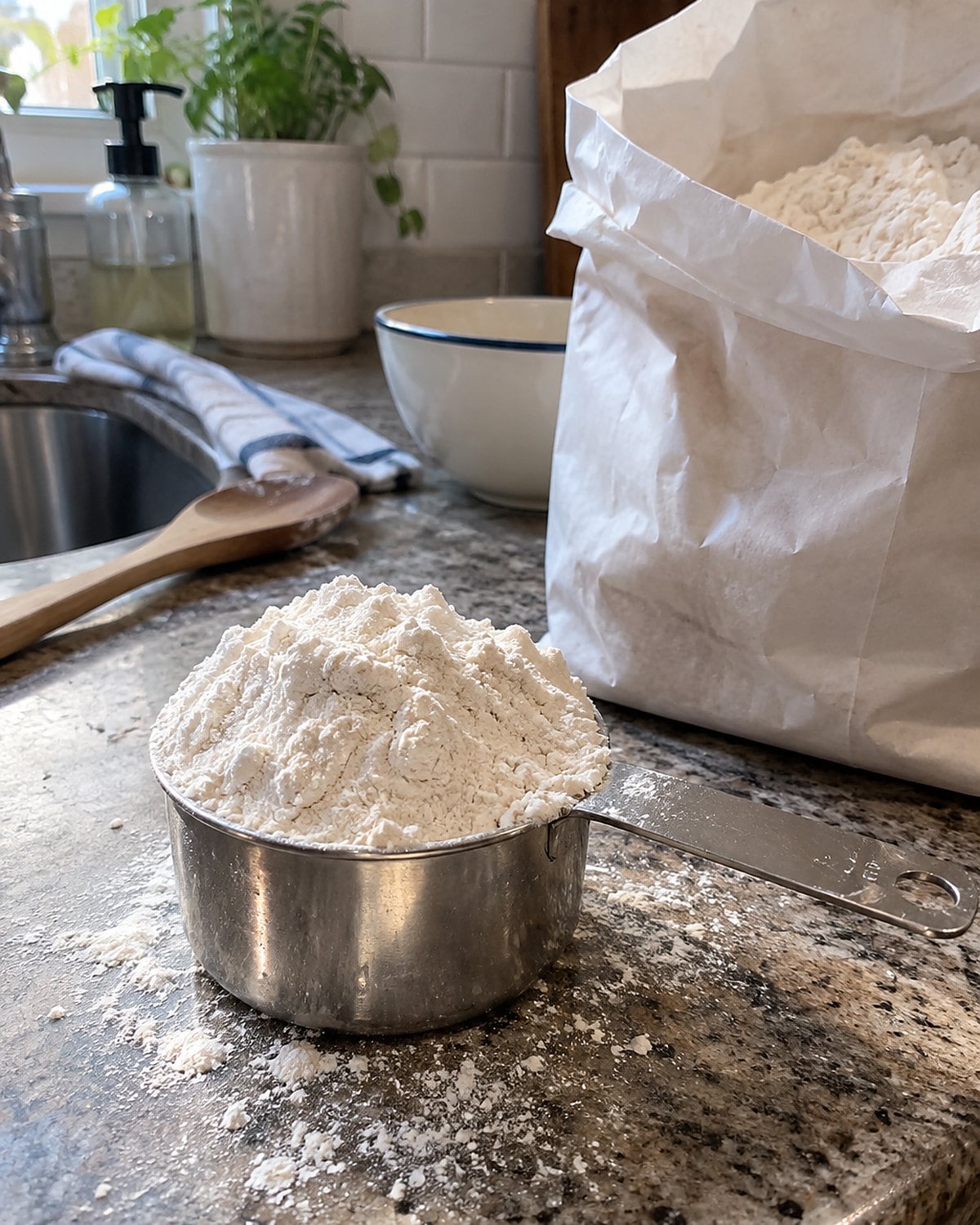
He scoops flour straight from the bag. You spoon it into the cup. The cake comes out heavy, and now the cup is on trial.
Scooping packs flour down. Spoon it into a dry measuring cup, let it mound, then sweep the top level with a straight edge. For comparison, King Arthur Baking lists 120 grams for a cup of all-purpose flour measured its way. Check the weight listed by your flour brand or recipe before changing a batter.
If the recipe gives weights and you have a scale, weigh it instead. A scale takes the argument away from how firmly either of you held the cup.
Don’t press flour down unless the recipe tells you to. That extra flour absorbs liquid the recipe needed for the batter. Next time the cake feels thick before it goes into the pan, check how the flour was measured before blaming the oven.
#14 The lid lifted off the rice
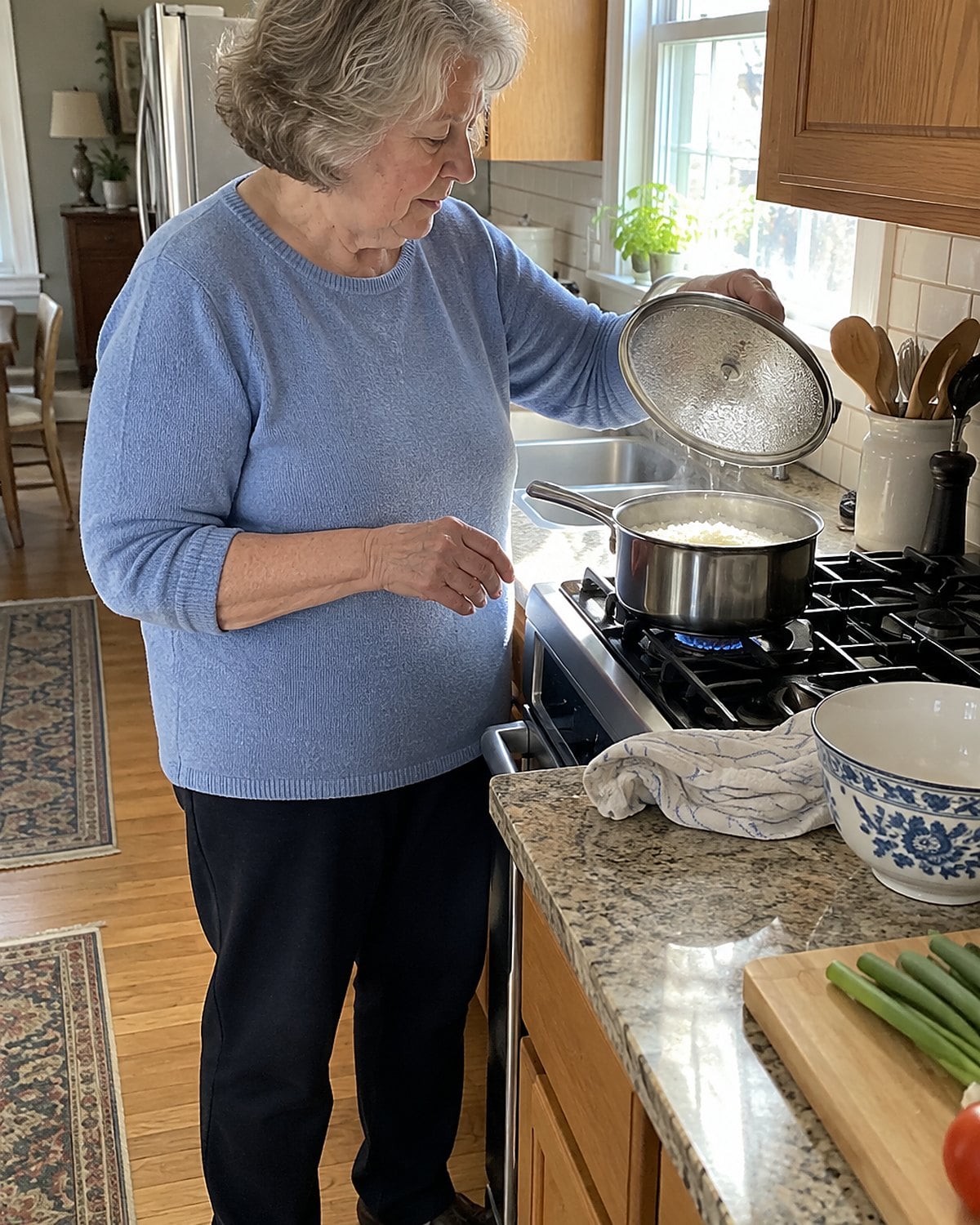
The rice has barely begun to steam when he lifts the lid to see how it’s doing. You put it back. Then you both wonder why the bottom is firm and the top is damp.
Rice needs its measured water and a steady stretch of trapped steam. Follow the package directions for the rice you bought; brown and white rice don’t use the same time. Once the pot reaches a simmer, lower the heat, cover it, and leave it alone until the stated cooking time is up.
Turn off the heat and give it a short rest with the lid on. Then fluff with a fork and taste a grain.
Hard in the middle? Add a splash of water, cover, and cook a little longer over low heat. Wet and soft? Take the lid off briefly so excess steam escapes. Ask the person who lifts the lid to handle the tasting, too. Curiosity gets a job.
Try it: How To Cook Rice In Instant Pot
#13 The frozen peas added too early
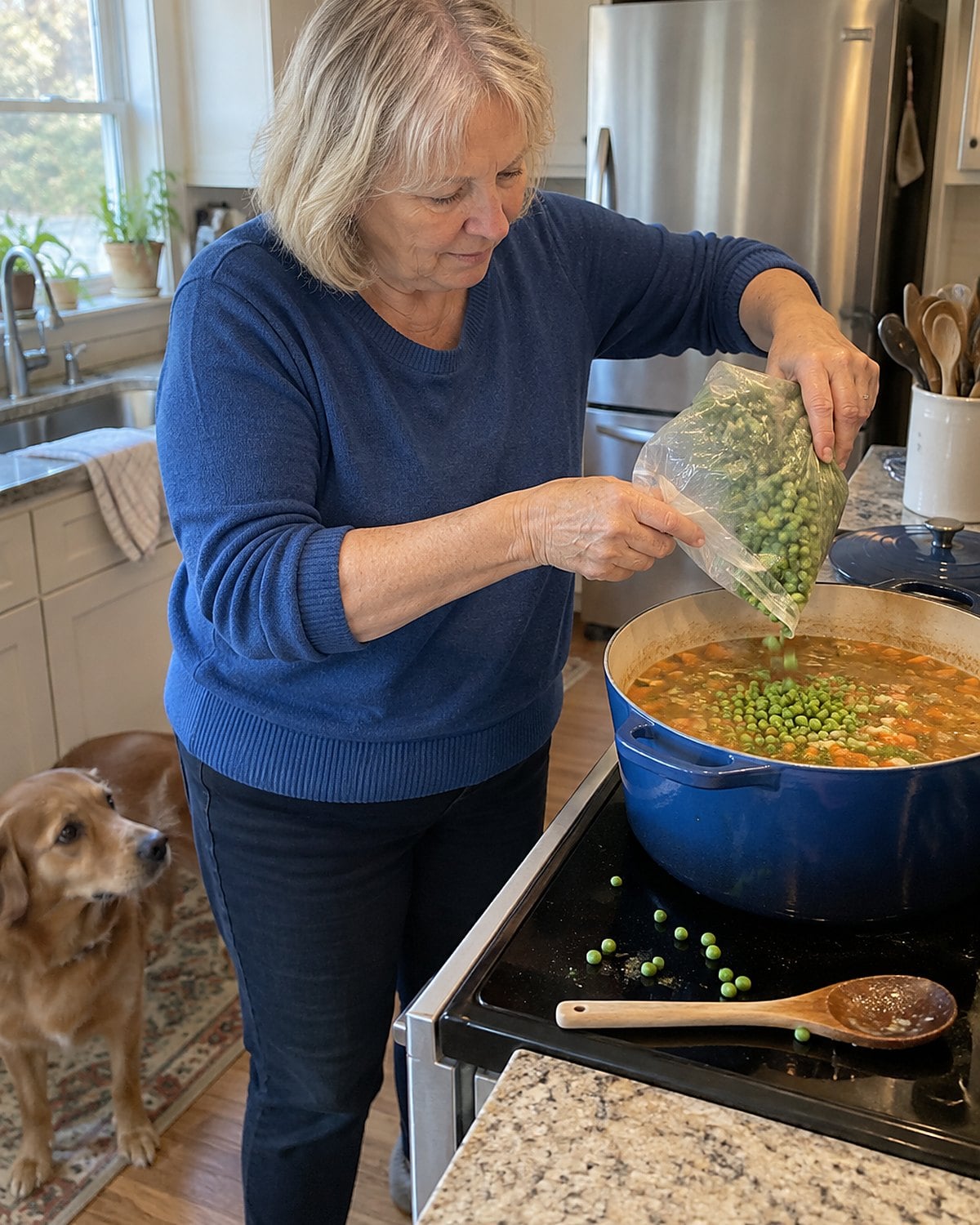
You’ve nearly finished dinner. He offers to help and tips the peas into a pot that still has a long way to go.
Frozen peas are blanched before freezing. They need heating, not a long simmer. Stir them into a hot soup near the end and taste one when the pot returns to a simmer. In a skillet, cook until they’re hot through and bright, then stop.
If they spend the whole cooking time in the pot, their color dulls and their texture turns soft. Keep the bag in the freezer until you need it. “Save the peas for me” sounds small, but it gives a willing helper a precise time to help.
Try it: How To Cook Frozen Peas In An Instant Pot
#12 The roasting pan crowded with potatoes
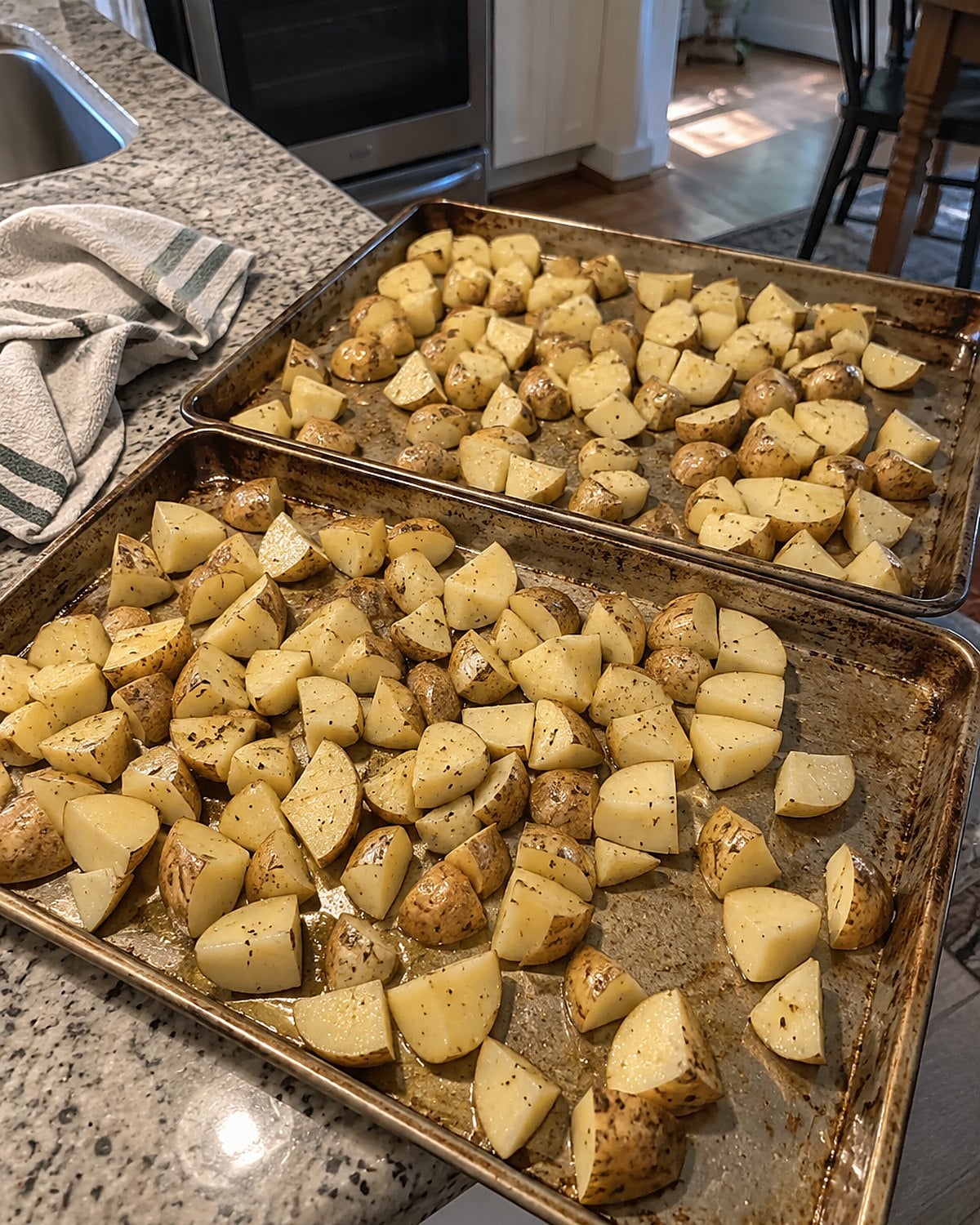
The oven is on, the potatoes are cut, and he adds one more handful to the pan. Now the pieces touch on every side. You were hoping for crisp edges.
Potatoes release moisture as they cook. When they’re packed together, that moisture has less room to escape and the pieces steam against each other. Spread them out with space between them. If there isn’t room, use a second pan or save the extra potatoes for another meal.
Don’t forget the pan itself. Put the cut sides down against the hot metal, then wait until they release before turning. A piece that resists your spatula needs more time. Check underneath one rather than moving them all by the clock.
If both pans are in the oven, swap their positions partway through so each gets a turn near the hotter spots. You’ll still need to look for browned edges. But you won’t have to stand over a heap of pale potatoes debating whose handful caused them.
Try it: Instant Pot Air Fryer Rosemary Potatoes
#11 The freezer bag without a date
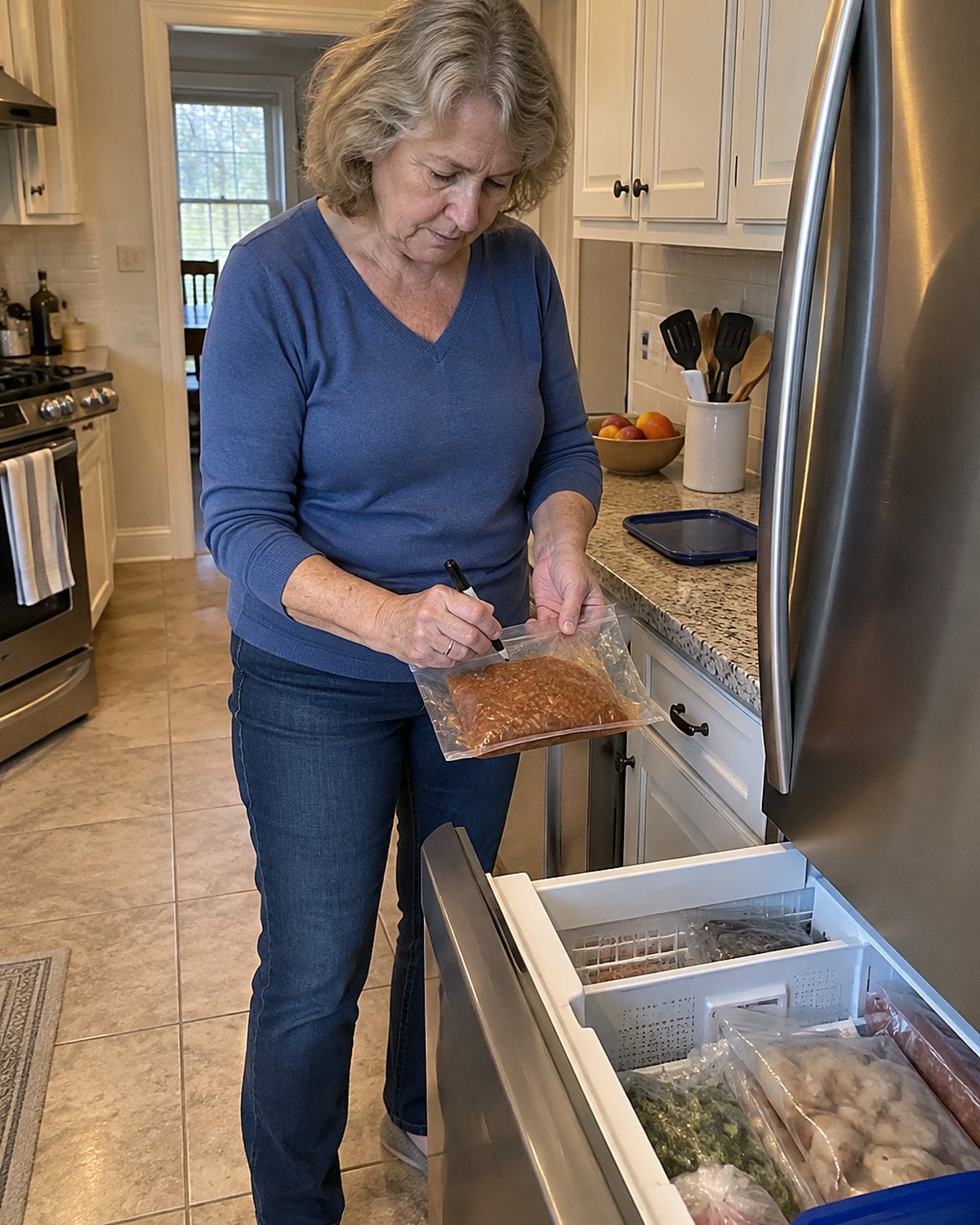
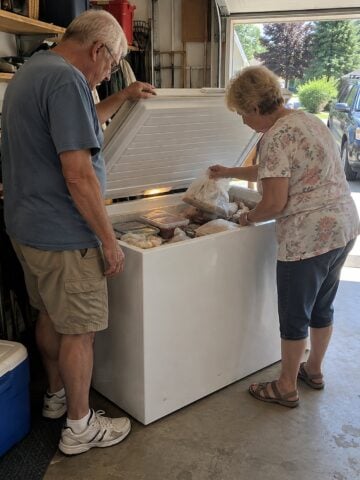
He knows what’s in that bag. At least he did when he put it in the freezer. Three weeks later, you’re holding it up to the light and guessing between chili and tomato sauce.
Keep a marker near the freezer. Write the name and date on the bag before it goes in; it’s harder once the surface is cold or damp. Press out excess air, flatten the bag, and freeze it on a tray if it contains soup or sauce.
Flat bags stack and thaw more evenly than a frozen lump in a deep container. For cooked soup, the USDA’s freezer chart lists 2 to 3 months for best quality. Write the name and date so you know when to use it.
Freezing doesn’t erase a food’s history. If you don’t know when it was cooked or whether it was cooled and stored properly, a mystery label won’t fix that. The small writing job is easiest on the night you already know the answer.
#10 The bacon grease saved in a jar
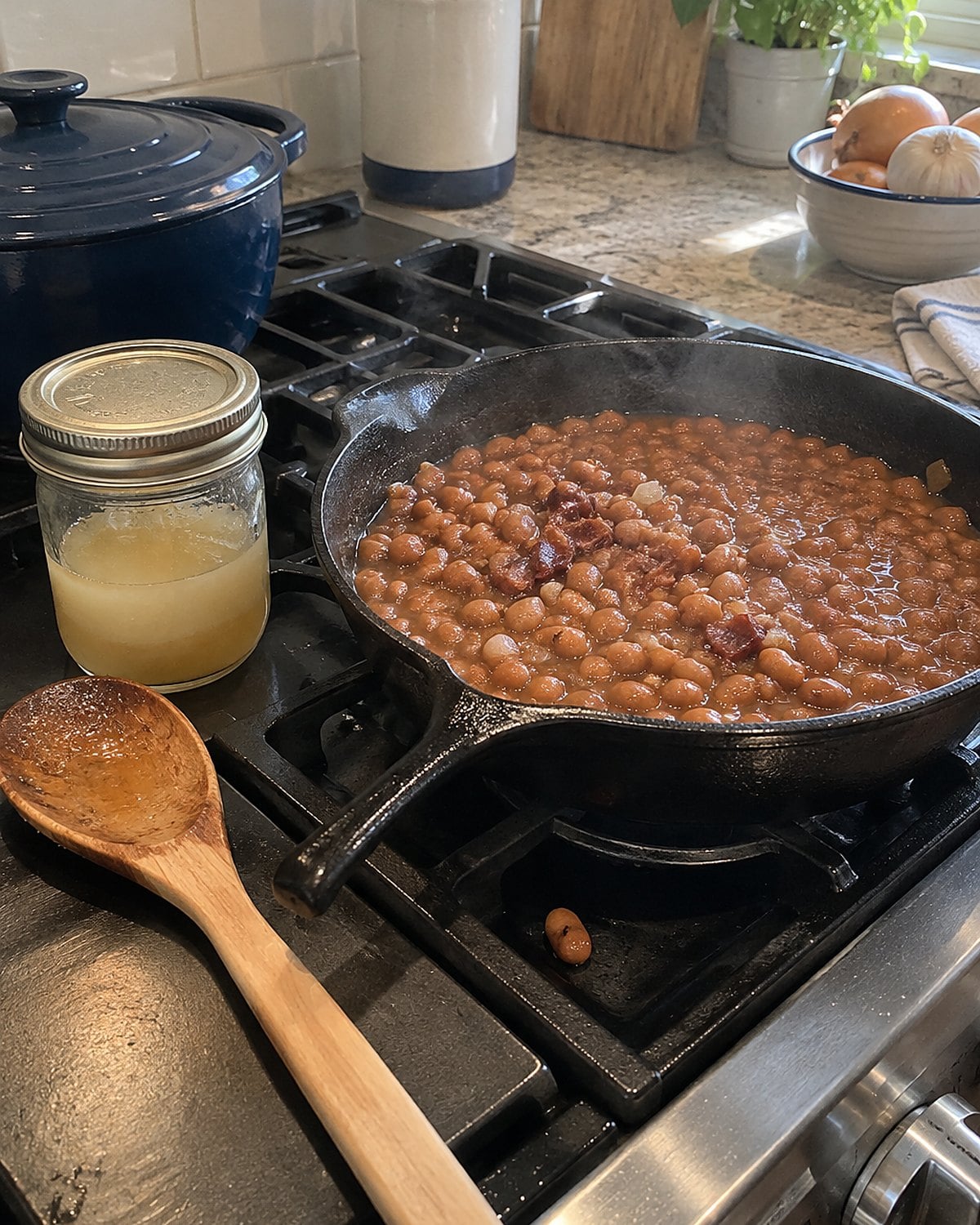
One of you pours the bacon grease into a jar. The other throws it away, then needs a little for the skillet beans. This is how an empty jar becomes evidence.
First, settle where it goes. Don’t pour grease down the drain, where it cools and clings to the pipes. Let it cool enough to handle, then put it in a container. If you’re saving it for cooking, strain out the bacon bits and refrigerate it in a covered jar.
Label it so nobody mistakes it for leftover sauce. Use clean utensils when you take some out. If the grease smells rancid, discard it. That sharp, stale smell doesn’t improve in a hot pan.
You don’t have to save every spoonful. Decide how much space you’re willing to give the jar and empty it when it’s full. The point is to know whether there’s grease ready for those beans, not to keep a record of every breakfast.
#9 The garlic added before the onions
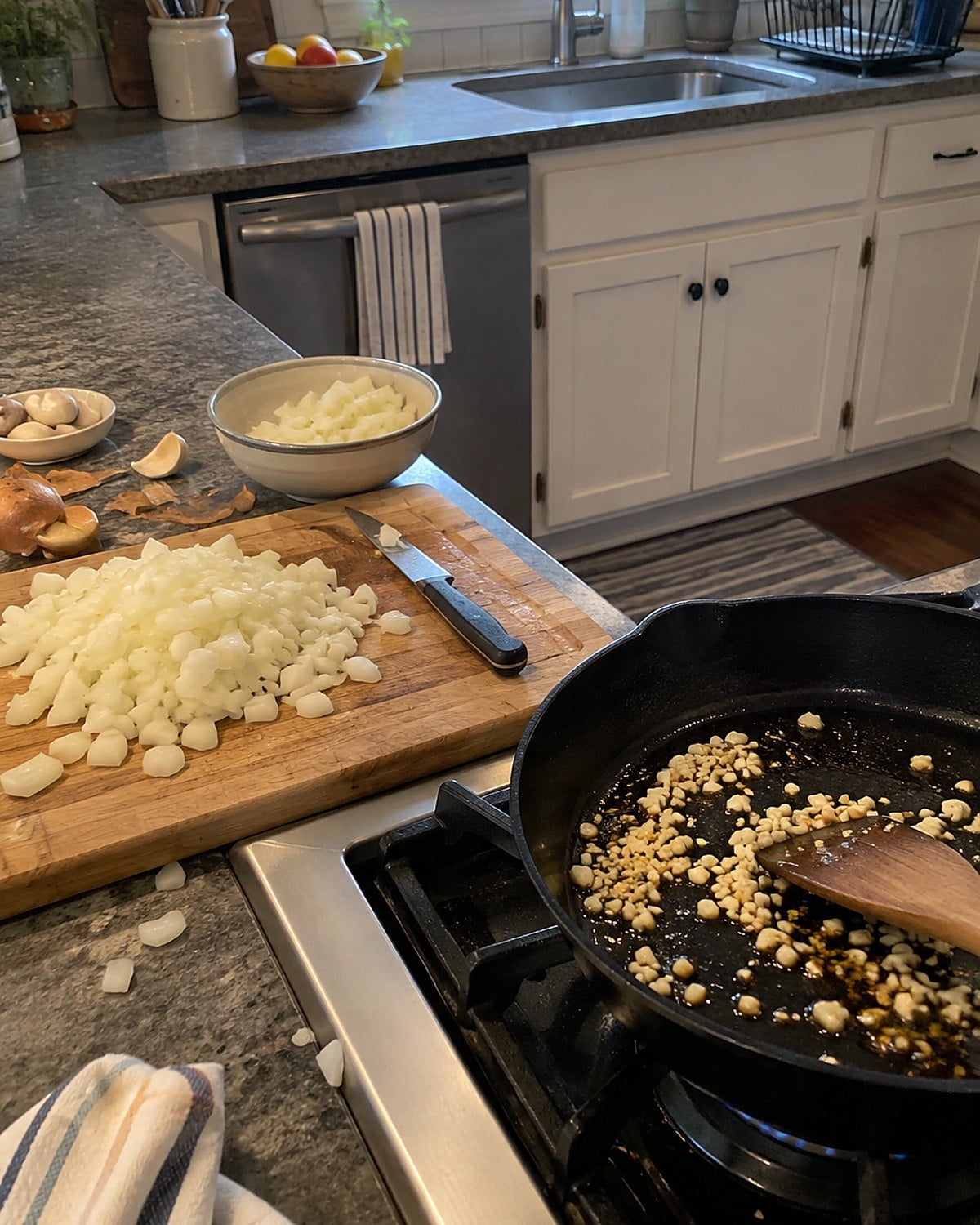
Chopped garlic darkens while the onions are still sitting on the cutting board. By the time he slides them into the skillet, bitter flecks are scattered through the oil.
Garlic is small and cooks fast. Onions need longer to soften or brown. Start with the onions and watch their edges rather than following a fixed minute count. Add the garlic near the end of their cooking time, then stir for about 30 seconds, just until you smell it.
The next ingredient matters. Tomato, broth, or vegetables lower the pan’s heat and give the garlic somewhere to go. Ask him to have that ingredient ready before the garlic hits the oil.
If the garlic has turned dark brown, taste a bit before you carry on. Bitter garlic won’t become sweet because the rest of dinner cooks longer. It’s quicker to start the pan again than to spend supper explaining that taste.
#8 The last two eggs at breakfast
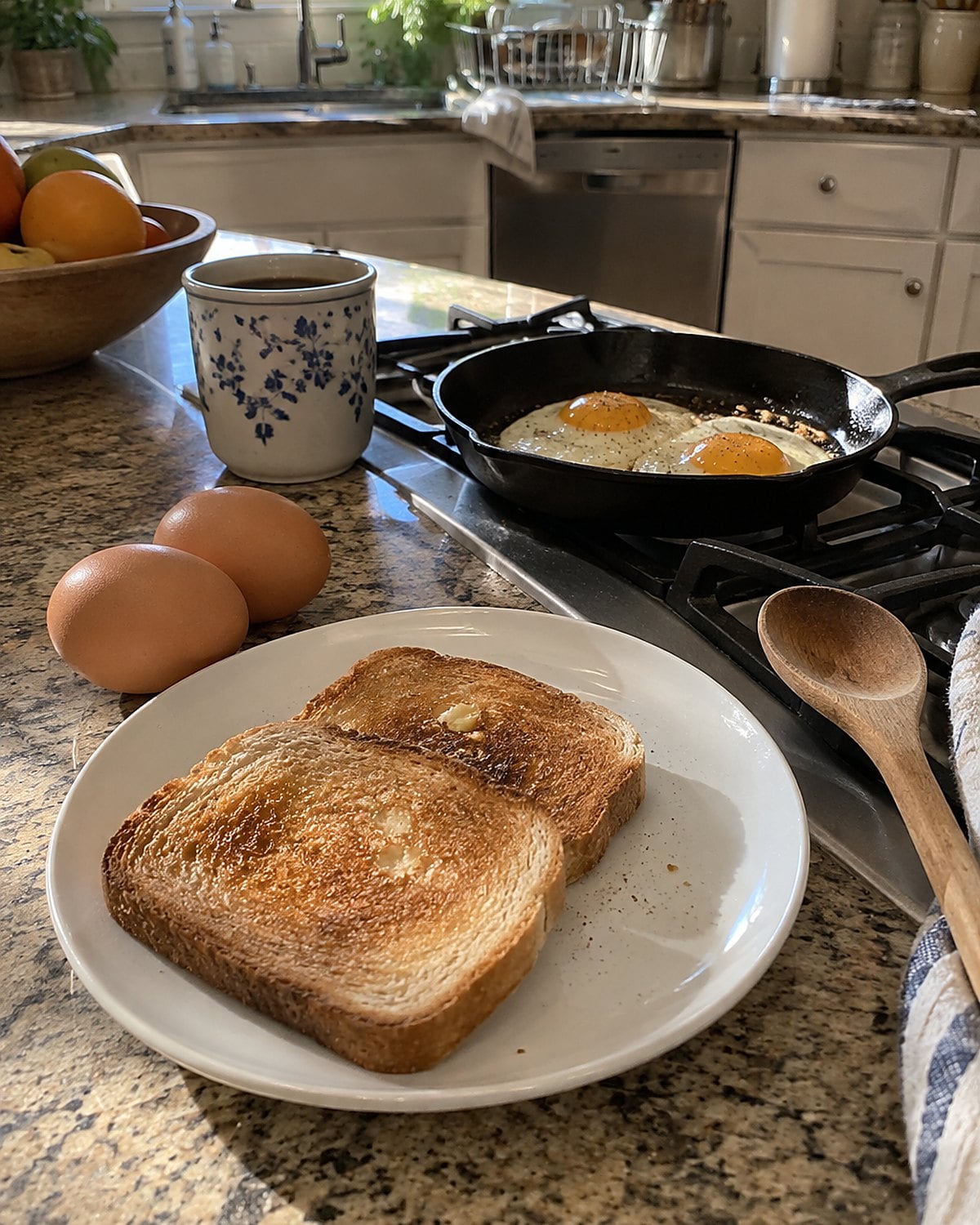
There are two eggs left and two people waiting for breakfast. He wants them scrambled together. You want yours fried. The dispute sounds silly until the skillet is hot and somebody reaches for the whisk.
Cook the eggs the way each person wants them. A small skillet handles a fried egg; the scramble goes in after, or in another pan if time matters more than washing up. If you share a pan, wipe out browned butter before the second batch.
Old browned bits change the taste and appearance of eggs that cook quickly.
For scrambled eggs, pull them off the heat while they still look a little glossy, then stir. The hot pan keeps cooking them. For a fried egg with a set white, look at the white beside the yolk; translucent white needs more heat.
Both tests beat a debate about the “right” breakfast. The person at the stove gets to name the order. The other person gets to set out the toast.
#7 The church cookbook's missing pan size
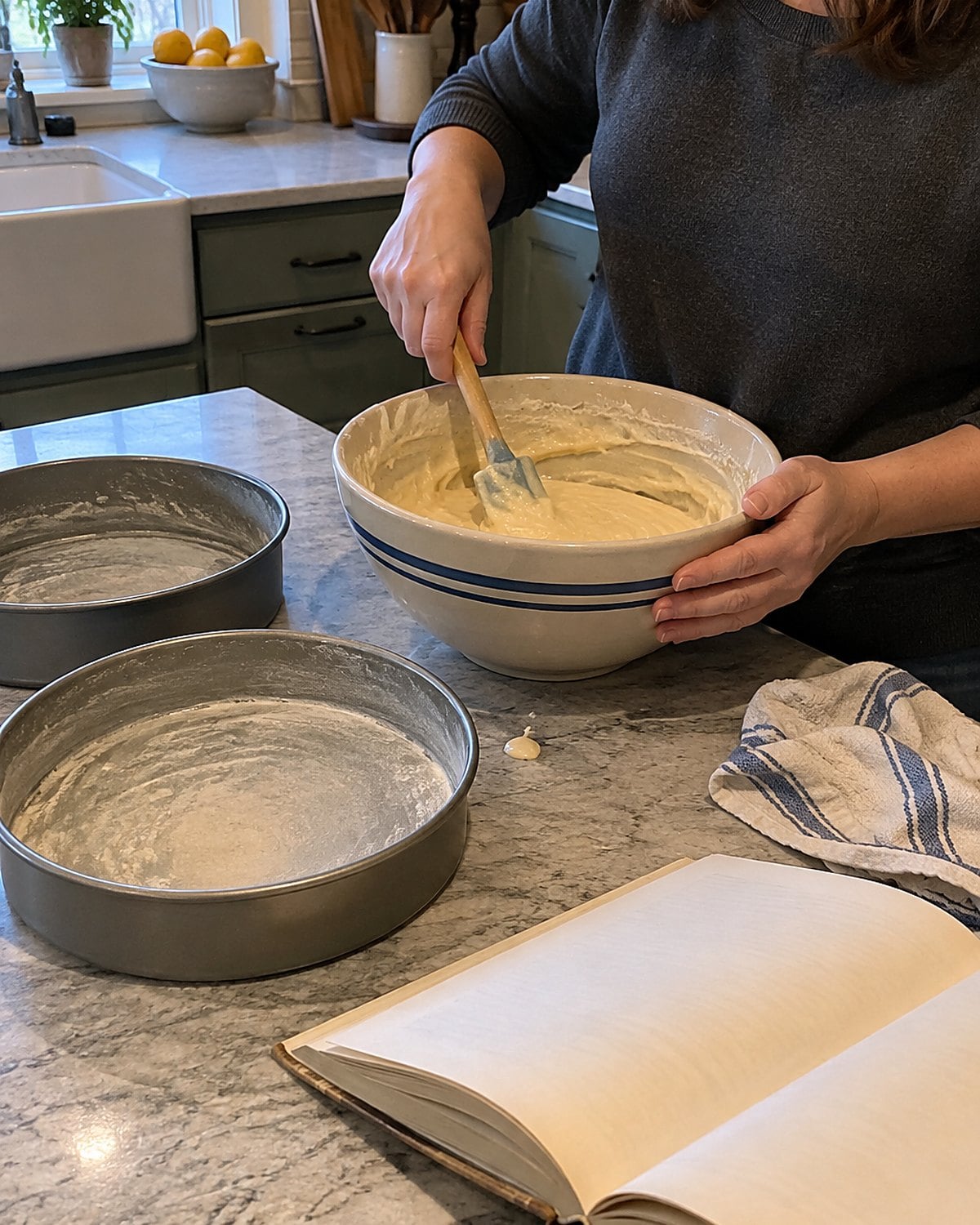
A page in the church cookbook says to bake until done. It names the cake, lists the ingredients, and leaves out the pan size. You’ve made it before, but he remembers a different pan.
Look at the batter before either of you greases anything. In a deeper pan, the center takes longer to cook than it does in a shallow pan. Fill the pan no more than about two-thirds full, leaving room for the cake to rise.
Put any extra batter in a second, smaller pan rather than filling the first to its rim.
Then use the cake, not a remembered minute, to judge doneness. The center should spring back when lightly pressed, and a tester pushed into the middle should come out without wet batter. Write the pan size in the margin when it works. Future-you will appreciate the note more than either of you appreciates being right.
#6 The dish towel beside raw meat
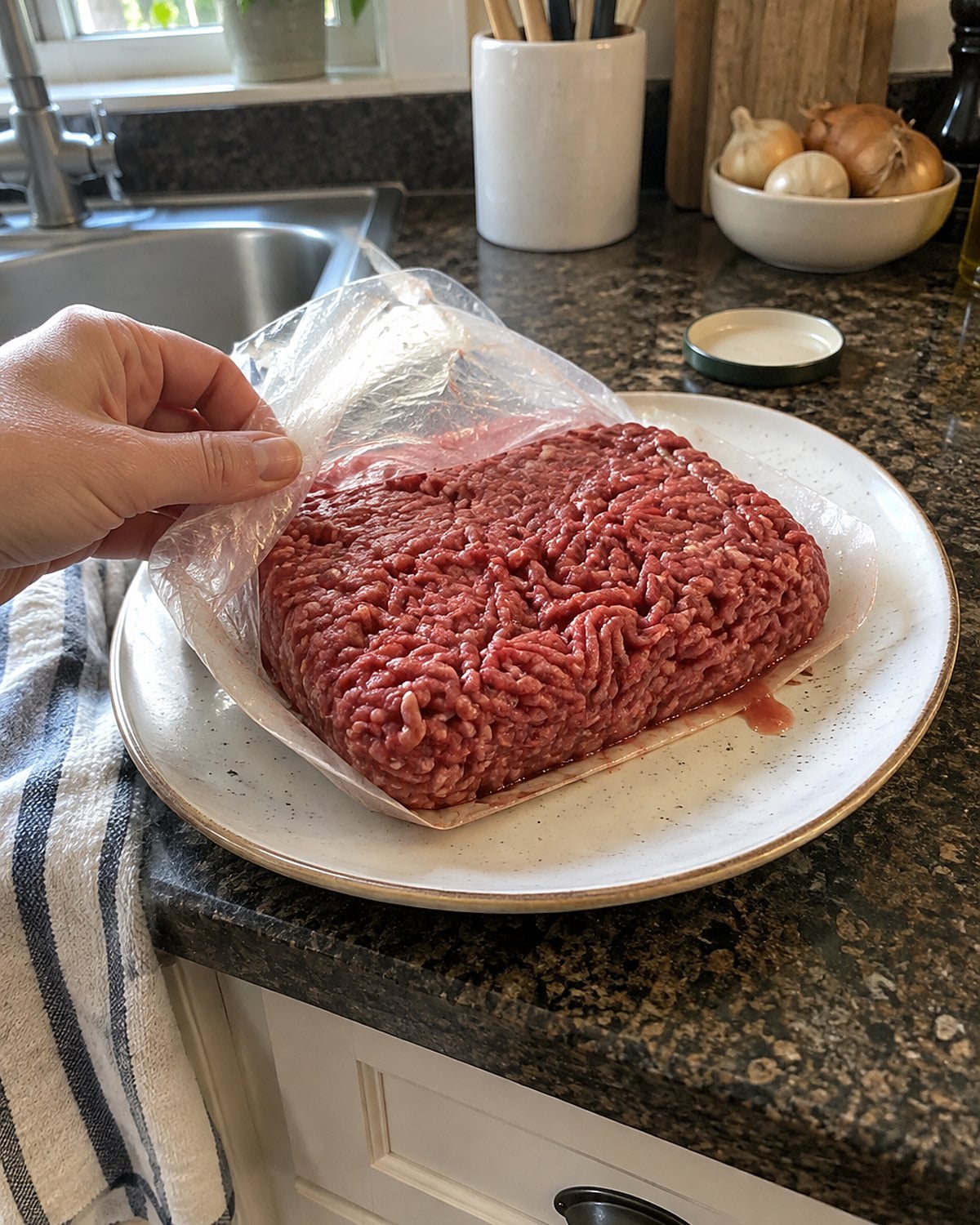
He reaches for the dish towel after handling raw ground beef. You stop him before he dries his hands. Both of you are tired, and the towels all look alike.
Make the next move obvious. Put the towel away before opening the meat package. Keep paper towels near the work area for drips, and wash hands with soap and water after handling raw meat. The CDC advises washing for at least 20 seconds.
Clean the counter, faucet handle, and any tool touched with meat-covered hands. A towel used on clean, washed hands stays available for dishes. A towel that touched raw meat or its juices goes into the laundry. Don’t leave it hanging there for the next person to grab.
For ground meat itself, use a thermometer. The USDA’s safe temperature is 160°F for ground beef and pork. Color alone won’t answer the question. You’ve now settled the towel, the counter, and dinner with separate checks, which is better than one long argument at the sink.
#5 The grocery bags left on the counter
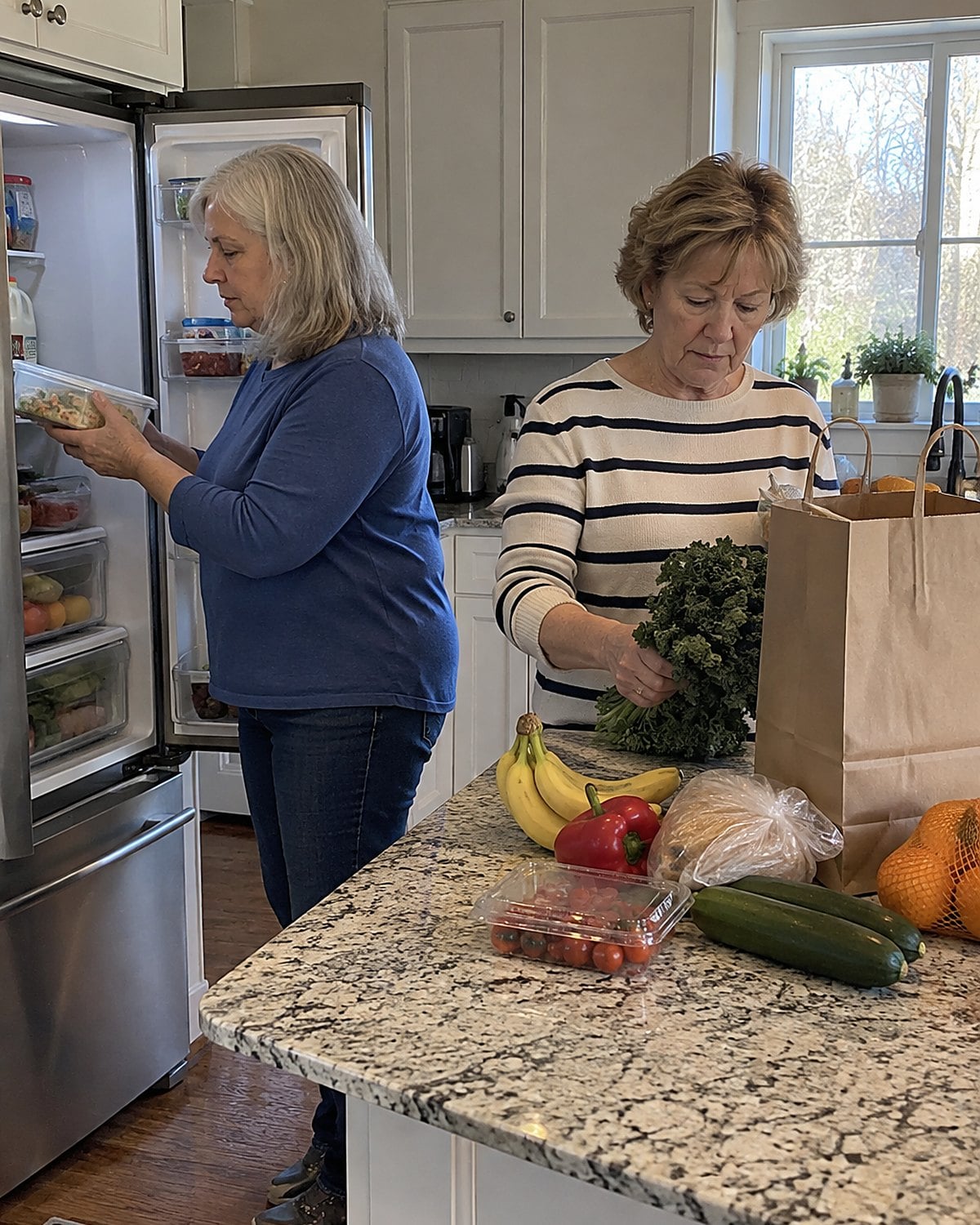
You come home with groceries and start putting away the frozen food. He starts talking about what to cook and leaves the chicken on the counter beside the keys.
Put cold food away before planning dinner. The USDA’s rule for perishables is no more than 2 hours at room temperature, or 1 hour when the air is above 90°F. Those limits aren’t a target. They’re the point at which a distracted conversation becomes a food-safety decision.
Give each person a task at the door: one handles refrigerated and frozen items, the other handles pantry food and bags. Then you can talk over the open pantry instead of an open package of chicken. Dinner ideas will wait.
#4 The cast-iron pan washed with soap
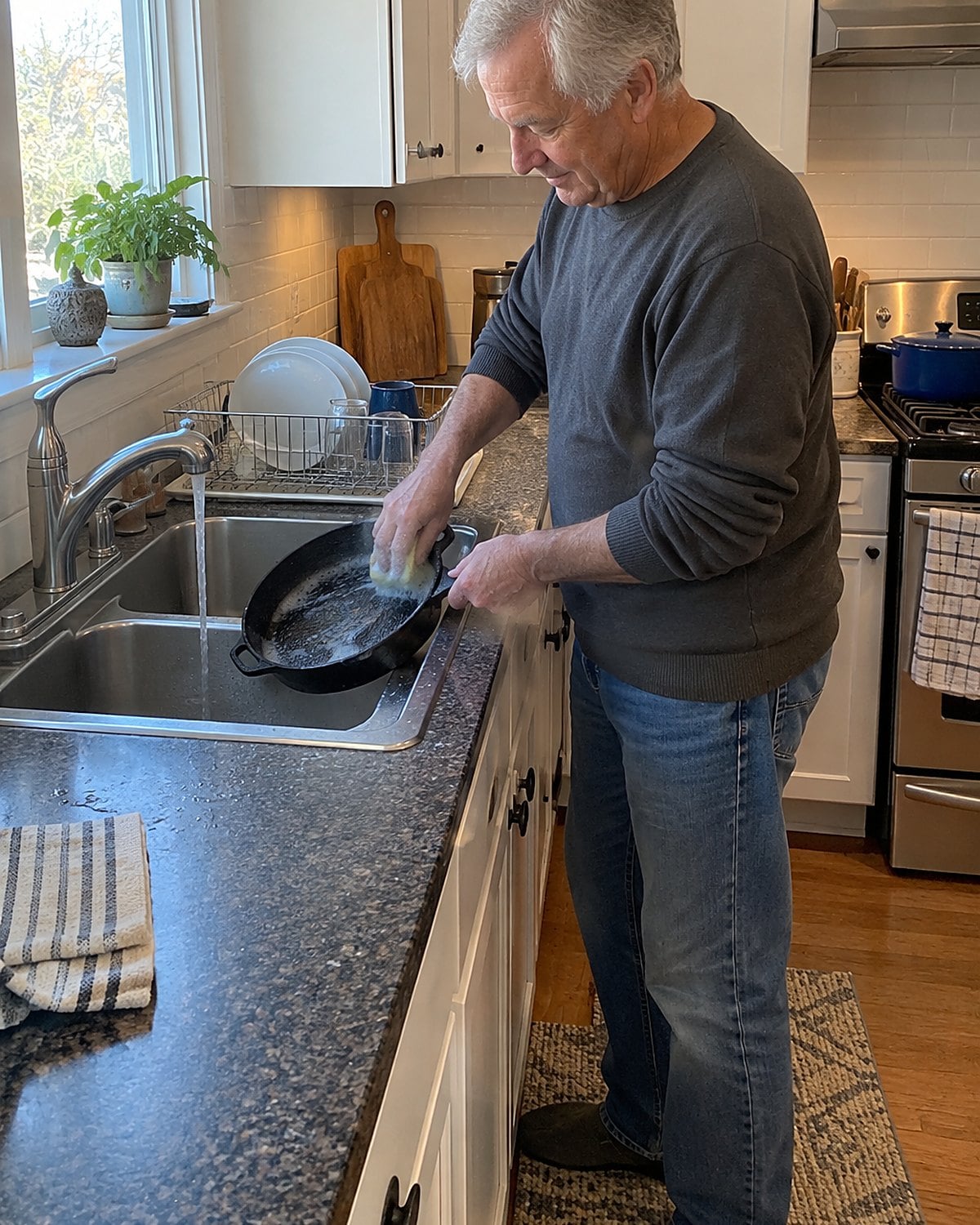
He reaches for dish soap. You remember being told soap ruins cast iron, and suddenly the pan has a family history.
Ordinary dish soap won’t strip a sound layer of seasoning from cast iron. The trouble is leaving the pan wet or scraping away its seasoning with harsh treatment. Wash it after cooking, dry it thoroughly, and warm it briefly on the stove if water clings near the handle.
Wipe on a thin film of oil, then wipe again so the surface doesn’t feel greasy. Lodge Cast Iron’s care instructions also allow a small amount of soap; that old no-soap rule needs a rest.
If food sticks, add hot water and work at it with a brush or scraper. You don’t need to preserve a crust of last night’s dinner to protect the pan. You do need to keep it dry.
Have a look at the surface together. Smooth and dark is useful; sticky patches mean too much oil was left behind. Once the test is the pan itself, neither of you has to argue with something your parents said about soap.
#3 The dinner plates warmed too early
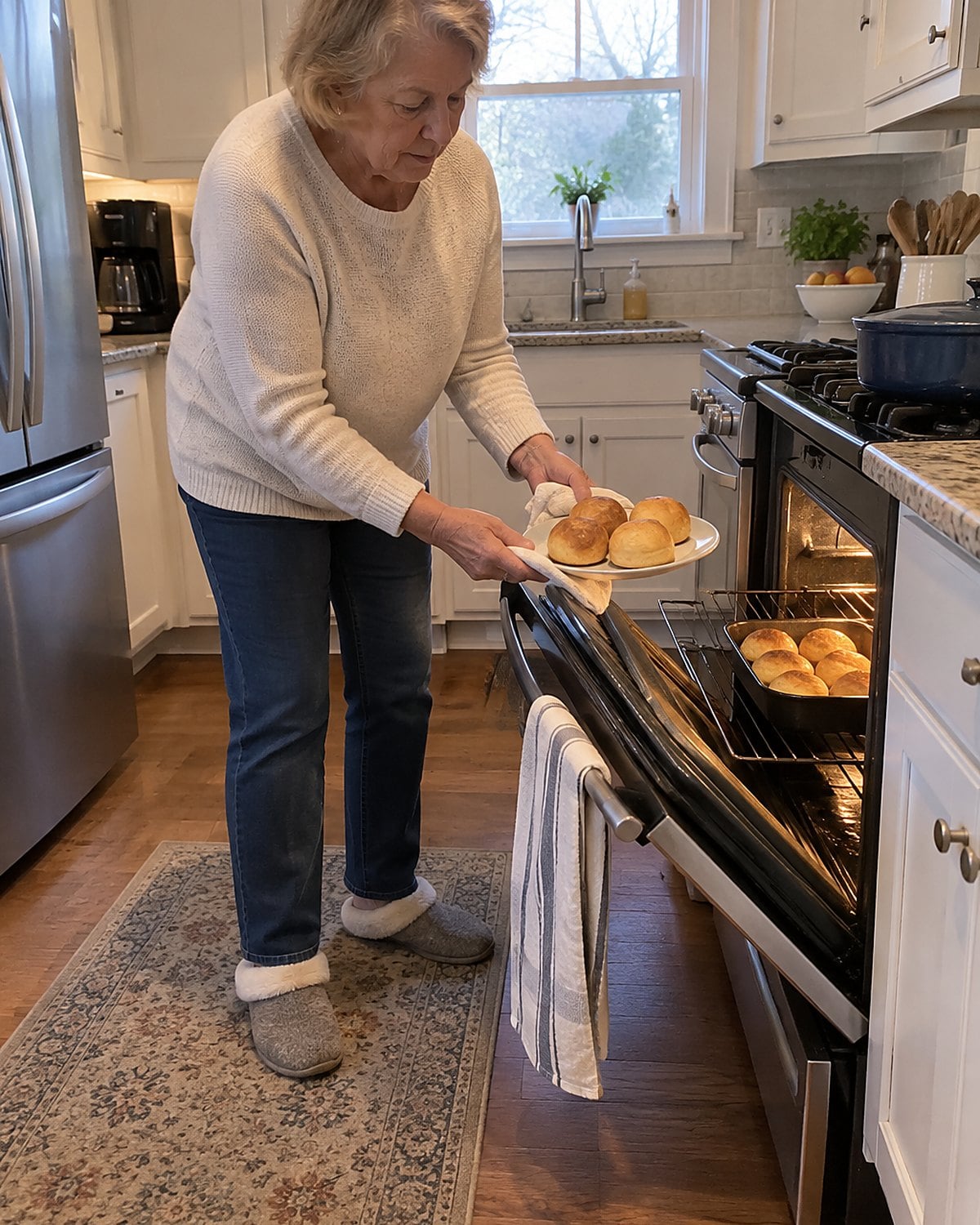
He puts plates in a low oven while the roast still has a way to go. You find them there when you need oven space for the rolls.
Warm plates help hot food stay warm at the table, but they needn’t occupy the oven through the whole meal. Put oven-safe plates in near serving time, or warm them with hot water and dry them before plating. Check that they’re comfortable to handle, especially if grandchildren are coming to the table.
Before anyone warms a plate, ask what still needs the oven. A roast resting on the counter gives you a window for rolls. Plates can wait until the rolls are out. That small order of events beats juggling hot dishes while somebody asks where the butter went.
#2 The hand reaching for the stove dial
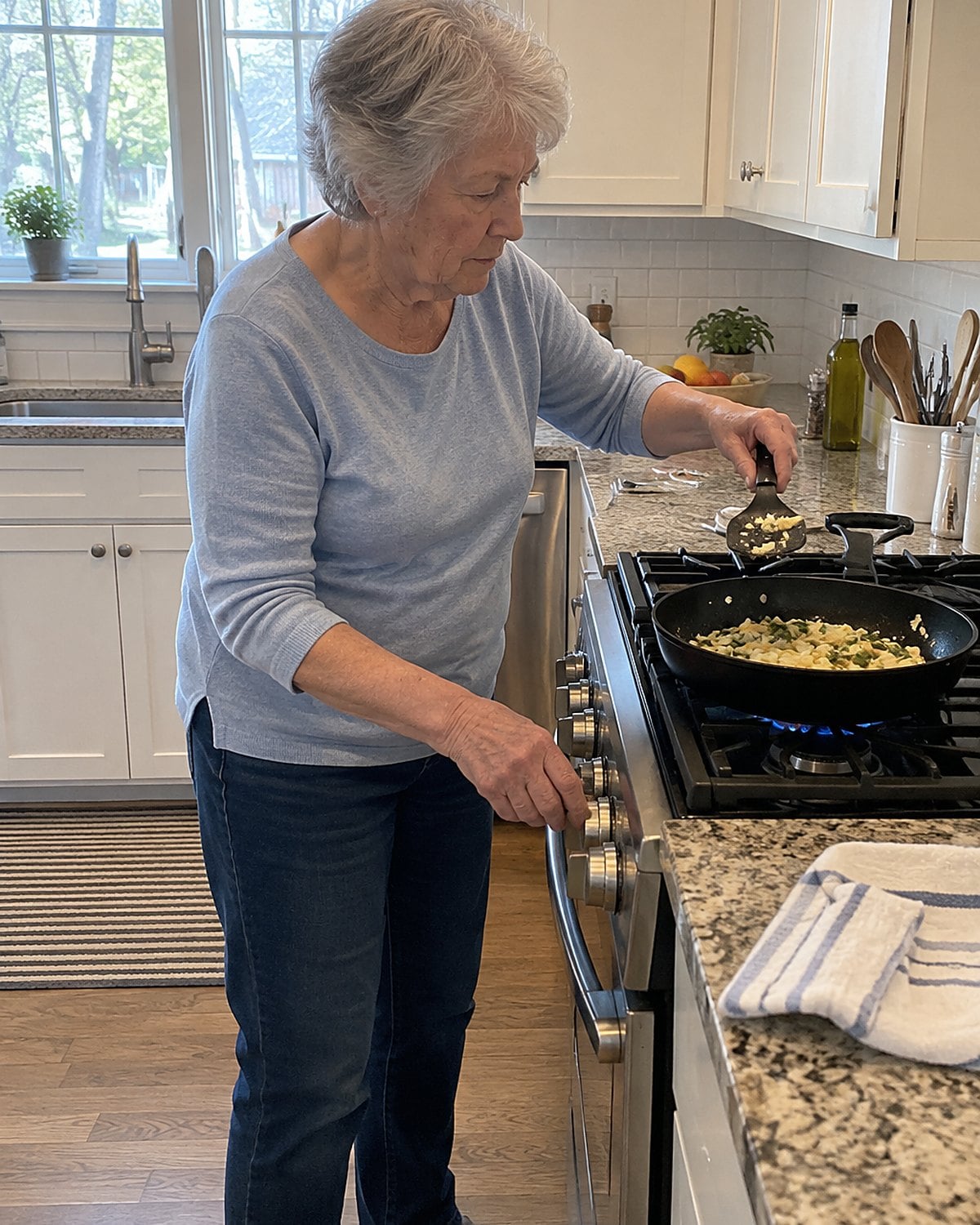
Here comes the hand again, just as you’ve got the heat where you want it. He turns down the burner because the pan looks too hot. You were about to add the vegetables.
Set a rule you can both follow: the person cooking controls the heat. The other person asks before touching the dial. Ask for a separate job instead: “Please wash the greens while I finish this.” That gives a willing helper something useful to own.
Make room for a real exception. If something is burning and the cook is out of the room, move the pan off the heat and say what happened. Don’t turn the burner down, keep stirring, and hope nobody notices.
The arrangement works in both directions. When he cooks, leave his dial alone, too. Later, you can talk about whether the skillet needed less heat. At the stove, a question beats a hand reaching past yours.
#1 The leftovers covered while still hot
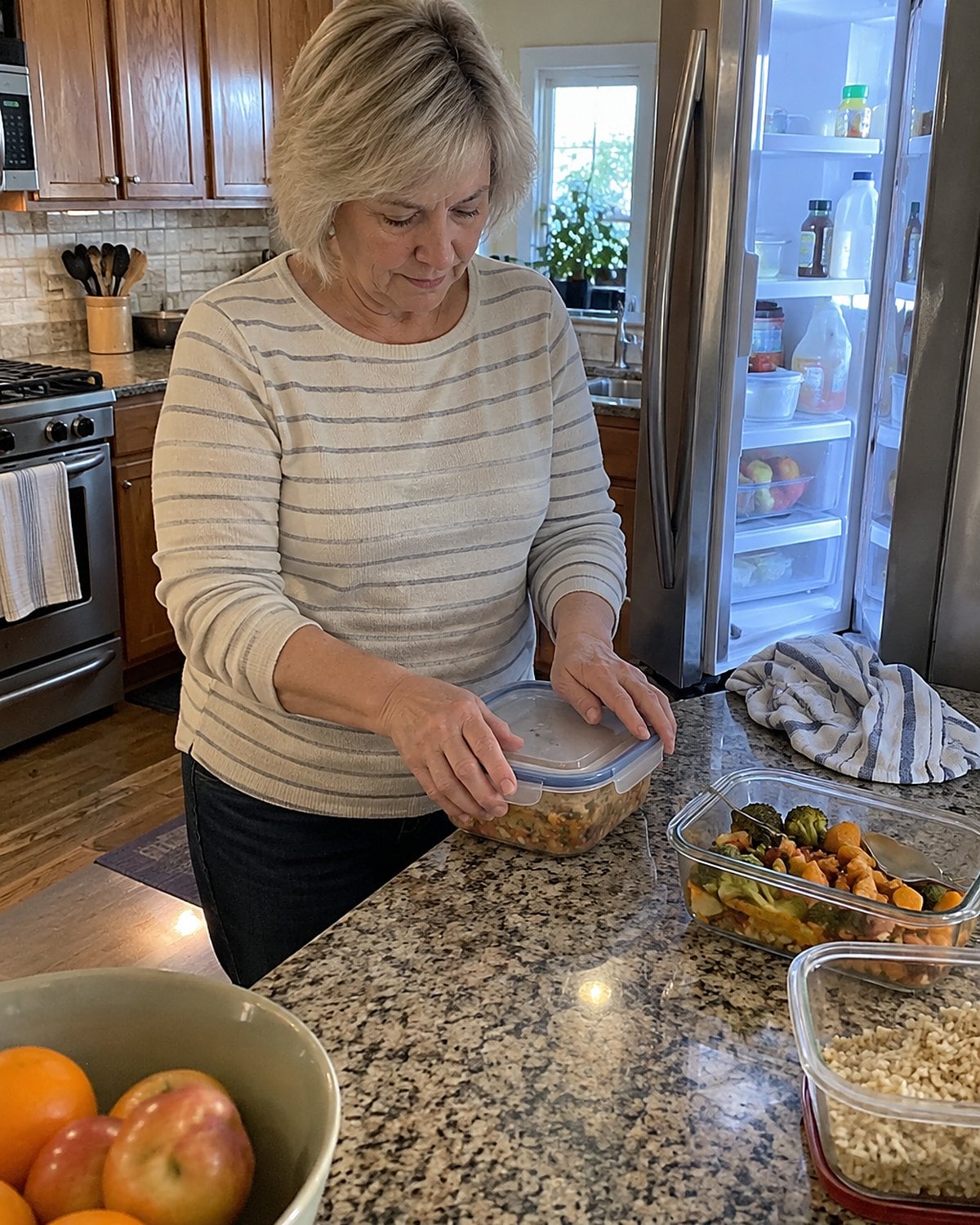
The pot is off the heat, dinner is over, and he sets a tight lid on the leftovers. You want them in the fridge. Neither of you wants a big hot pot sitting on the refrigerator shelf.
Divide the food into shallow containers so it cools faster, then refrigerate it promptly. Don’t wait for a large pot to reach room temperature on the stove. The USDA says to refrigerate perishables within 2 hours. Keep the fridge at 40°F or below, and leave space around the containers so cold air reaches them.
Label what you’ll forget. The USDA’s cold storage chart gives 3 to 4 days in the refrigerator for cooked leftovers. Freeze portions you won’t eat in that time. When you reheat leftovers, the USDA says to bring them to 165°F.
If the two of you disagree about how long a container has been there, the date on its lid settles it. If there’s no date and neither of you remembers, don’t turn tasting it into the test.
The bottom line
The spoon, the fridge shelf, the knife: each has a result you can see or test. Name the result you want before somebody reaches in. The person cooking keeps charge of the pan; the other person gets a whole job of their own.
You’ve already got the tools: a thermometer, a marker by the freezer, and a clear place for the good knife. There’s still the matter of the spoon.
What happens in your kitchen when a hand heads for the pan?
Leave a Reply