

The slow cooker lid clicks against the counter while someone looks for a spoon. A small hand reaches for the drawer that sticks halfway out. You’re thinking about dinner, where the clean dish towels went, and whether the bread needs cutting.
Your grandchild is learning the room. Which cabinet opens without a tug. Where to stand when the oven door drops. What you say when the first bite tastes too hot. Years later, the birthday cake will have competition from a spoon, a sound, and an ordinary afternoon you didn’t think to photograph.
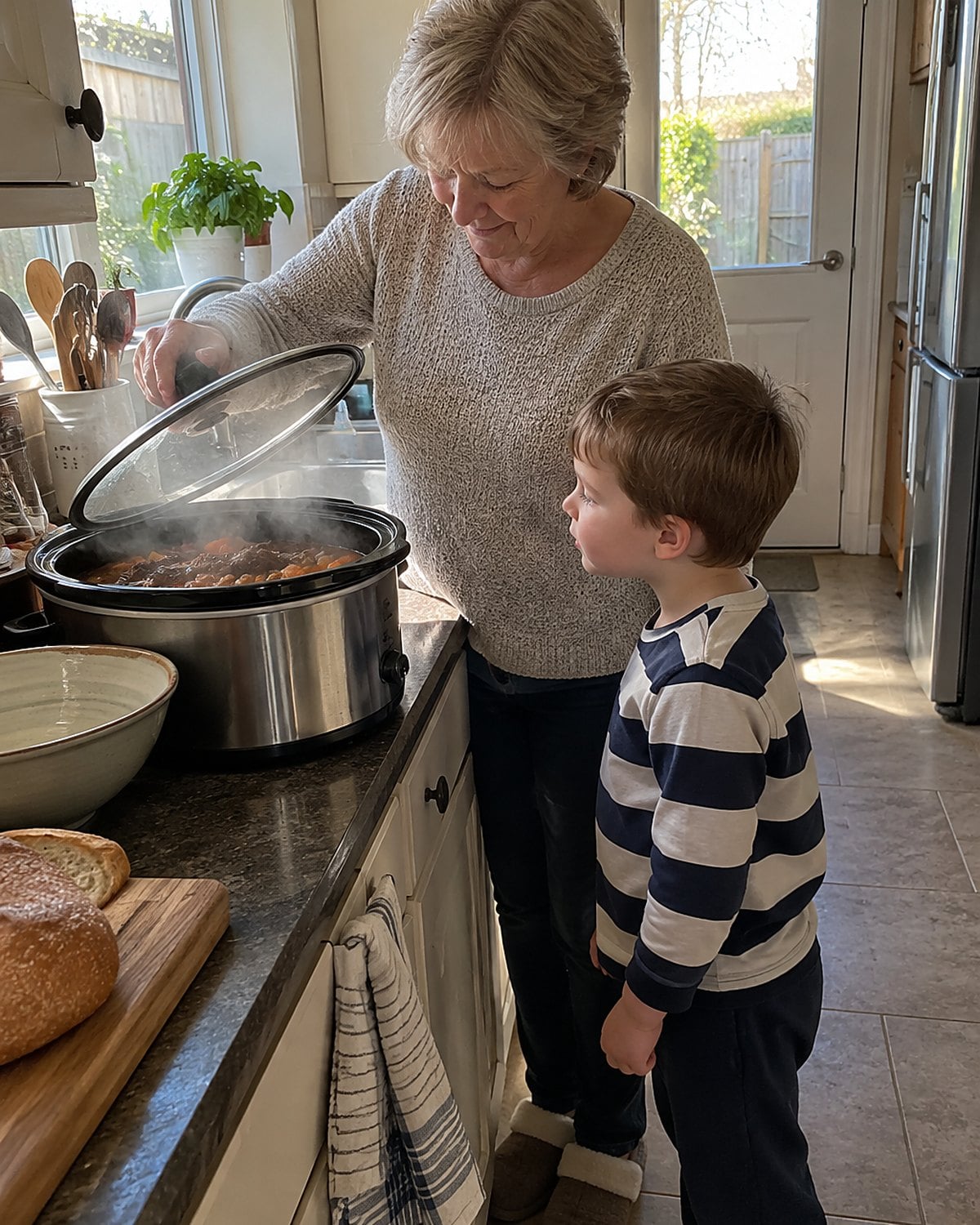
#27 The Slow Cooker Lid at Three O’Clock
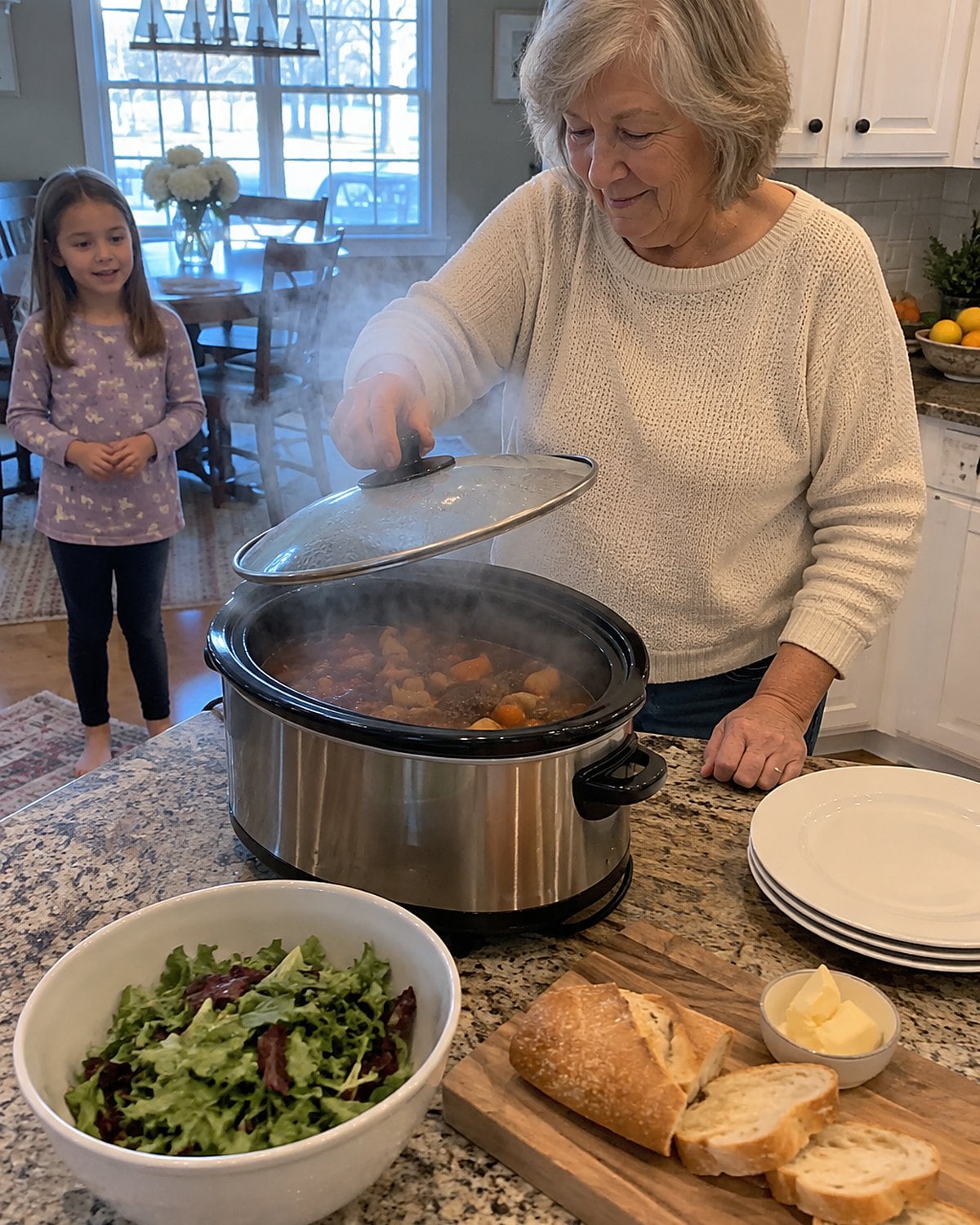
Mid-afternoon has a sound: the glass lid taps the rim when you lift it, and someone asks if dinner is ready. A slow cooker holds that promise in plain sight. It gives a visiting grandchild something to check each time they pass the counter.
You know lifting the lid lets heat escape. They know the lid fogs again after you set it down. Let them watch through the glass instead, then give them a real observation: “Tell me when you see the first bubbles around the edge.” It’s a better answer than “Soon.”
When you finally open it, move the child back from the steam. Stir from the bottom so they see how the carrots and meat have changed places. That little inspection becomes part of the afternoon, even if dinner itself is eaten in a hurry. Next time they visit, watch where they go first.
#26 The Drawer Full of Twist Ties
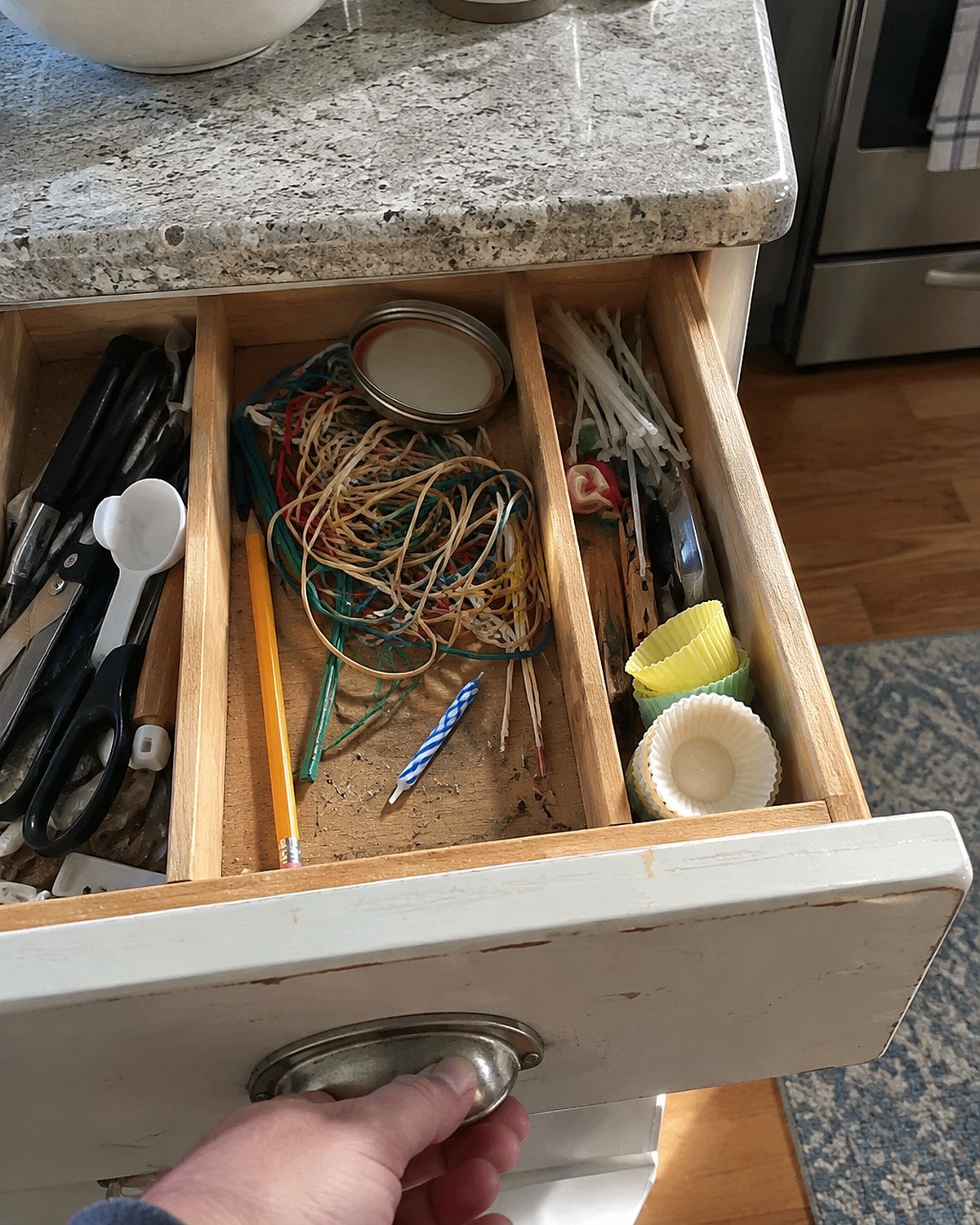
There is always one drawer that opens with a scrape. Inside: twist ties, rubber bands, a loose birthday candle, and the pencil you use to mark freezer bags. Nobody would put it on a kitchen tour. A child remembers exactly where it is.
When a grandchild asks for a twist tie, don’t hand over the whole drawer. Pull out what they need and let them close it. Small loose objects, including twist ties and rubber bands, stay out of reach of little children. Their job can be carrying the sealed bag to the counter.
Look through the drawer tonight. Keep the useful oddments in a container and move anything sharp or tiny higher up. You’ll still have the drawer with the scrape. They’ll still know it by sound.
#25 The Step Stool Beside the Pantry
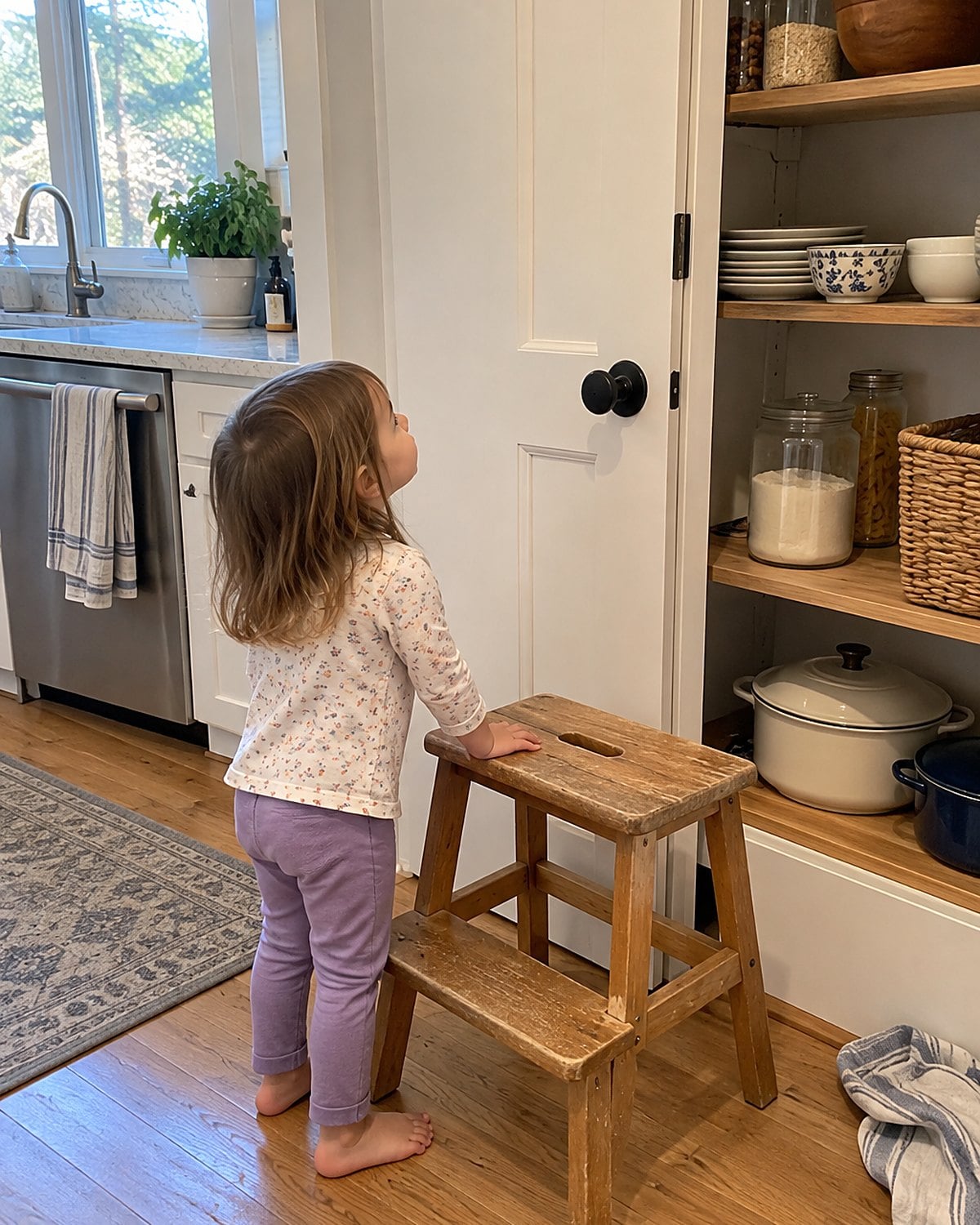
A step stool tells a child that somebody expected them to be there. Yours has a scuff where it bumps the pantry door. They pull it out before asking, already certain there’s a job at counter height.
Give the stool a place that leaves the oven, knives, and hot pans out of reach. At the sink, a child can rinse apples. At the counter, they can tear lettuce or whisk a dressing while you hold the bowl steady. The work changes as they grow; the invitation doesn’t.
Check the stool before the next visit. Does it sit flat on the floor? Does it slide when pressed from the side? A wobbly stool turns an easy task into a fall. Once it’s set, name the job before they climb: “You wash; I cut.”
That sentence does two things. It gives them a part of dinner that matters, and it marks the boundary around your knife. Later, they’ll describe the apples they washed as theirs. Let them.
#24 The Church Cookbook With the Broken Spine
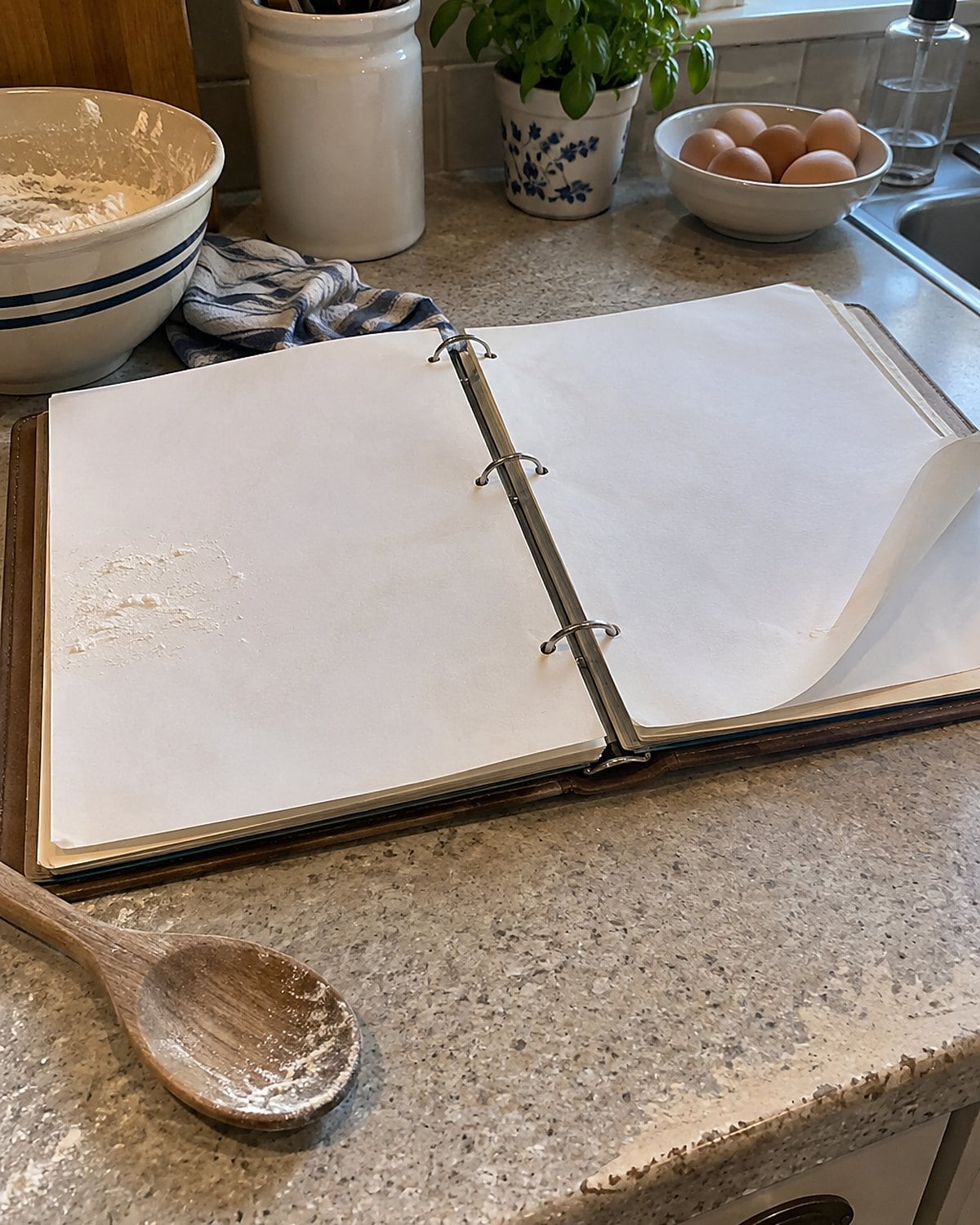
The church cookbook falls open to the same page because the spine gave up years ago. Your grandchild notices the flour on that page before they notice the recipe. They also notice that you never bother to look at some of the instructions.
Use it anyway. Point to the ingredient you’ve changed and tell them why: less liquid for the pan you own, or an extra pinch of salt after tasting. A cookbook shows the plan. Your hands show what happens when the pan asks for something different.
If the pages are loose, slip the one you use into a clear sleeve before a young helper joins you. Spills are easier to wipe from the sleeve than from old paper. Keep the stained page, though. The stain is part of the story.
#23 The Flour Dust on the Counter
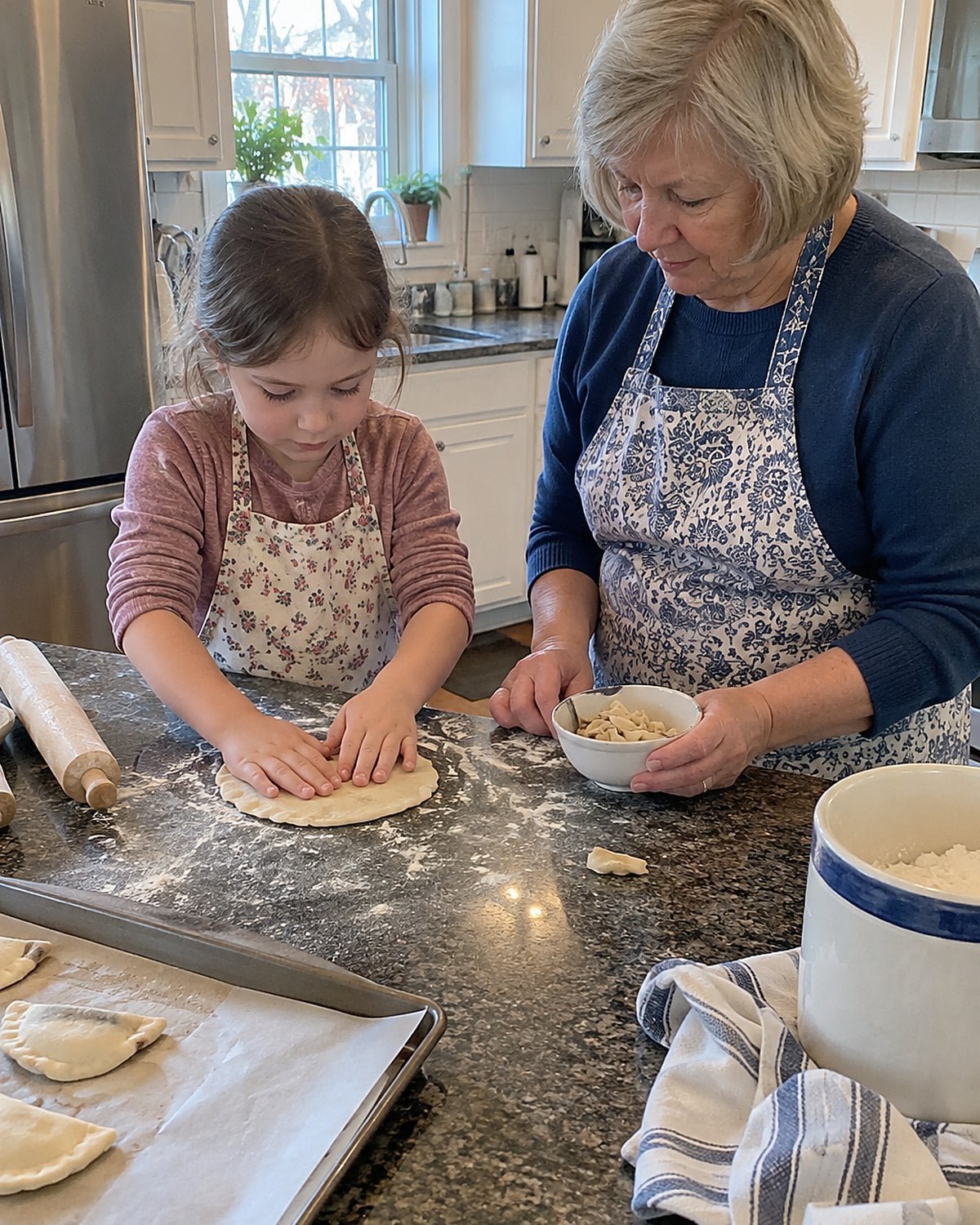
What does a child remember about rolling dough? The part where flour gets onto their hands, the counter, and, somehow, the back of a chair.
Start with a light dusting, then add more only if the dough sticks. Too much flour gets worked into the surface and leaves dough stiff. Put the bowl nearby for scraps, and give your grandchild a piece they’re free to flatten twice. Their shape doesn’t have to match yours.
Let them feel the change under their fingers. At first the dough catches. After a little flour and another turn, it moves across the counter without tearing. That test makes more sense than telling them to use “just enough.”
Before cleanup, press a handprint in the remaining dust. Then wipe it away together. The counter won’t keep the evidence, but the child knows their hands were part of supper.
#22 The Onion Smell at the Front Door
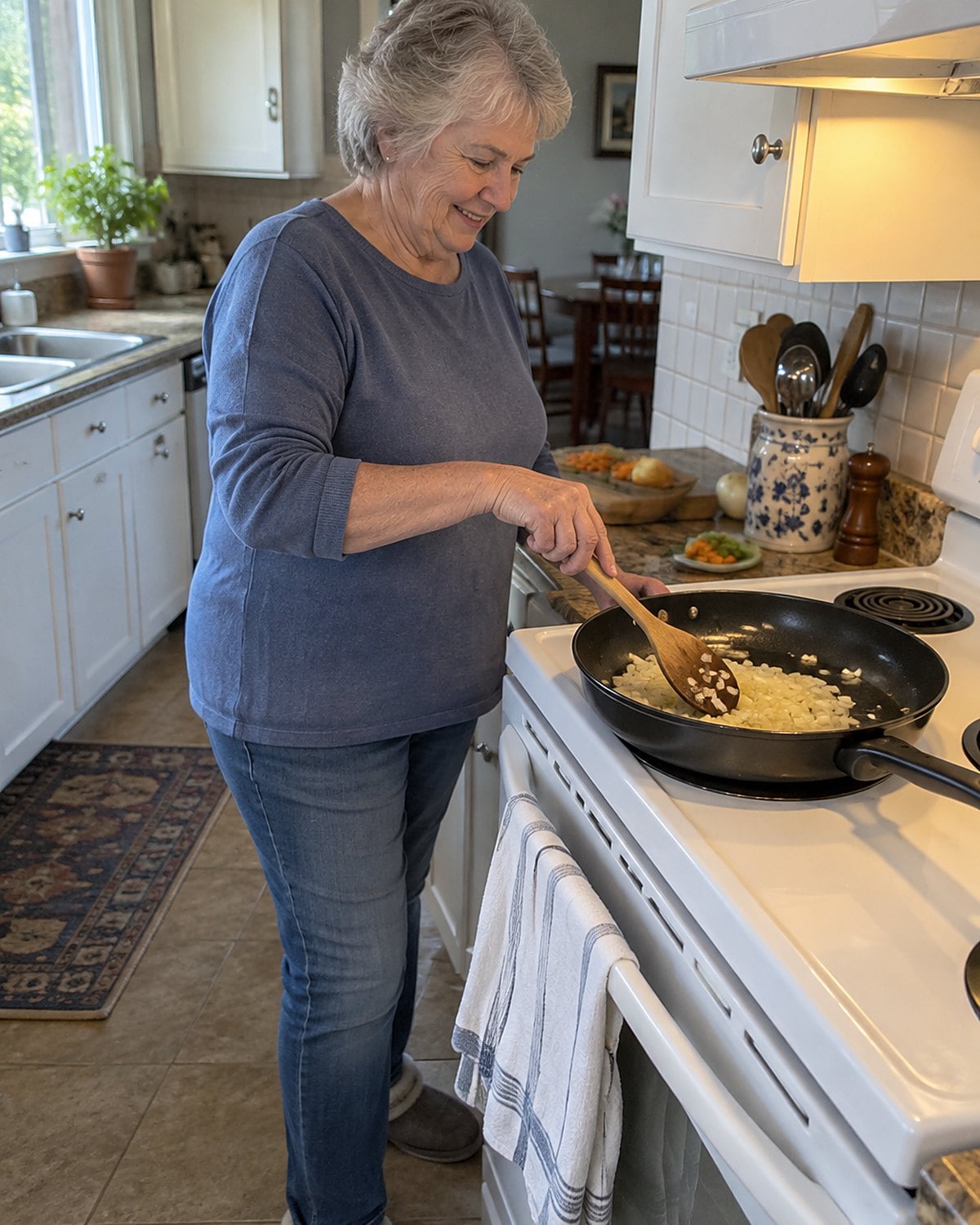
They arrive while onions are cooking. Before anyone takes off a coat, they know where to find you.
Onions change as water leaves the pan. Over moderate heat, the pieces soften, lose their sharp smell, and begin to sweeten. When the pan starts looking dry, stir and lower the heat rather than chasing color with more heat. A browned onion and a softened onion lead to different dinners.
Ask a grandchild to smell the pan from a safe distance at the start, then again when the onions turn translucent. “What changed?” gives them something to notice that no timer can settle for them.
You’ll forget which night they came in wearing muddy shoes. That smell at the door has a longer life.
#21 The Jam Jar Used for Dressing
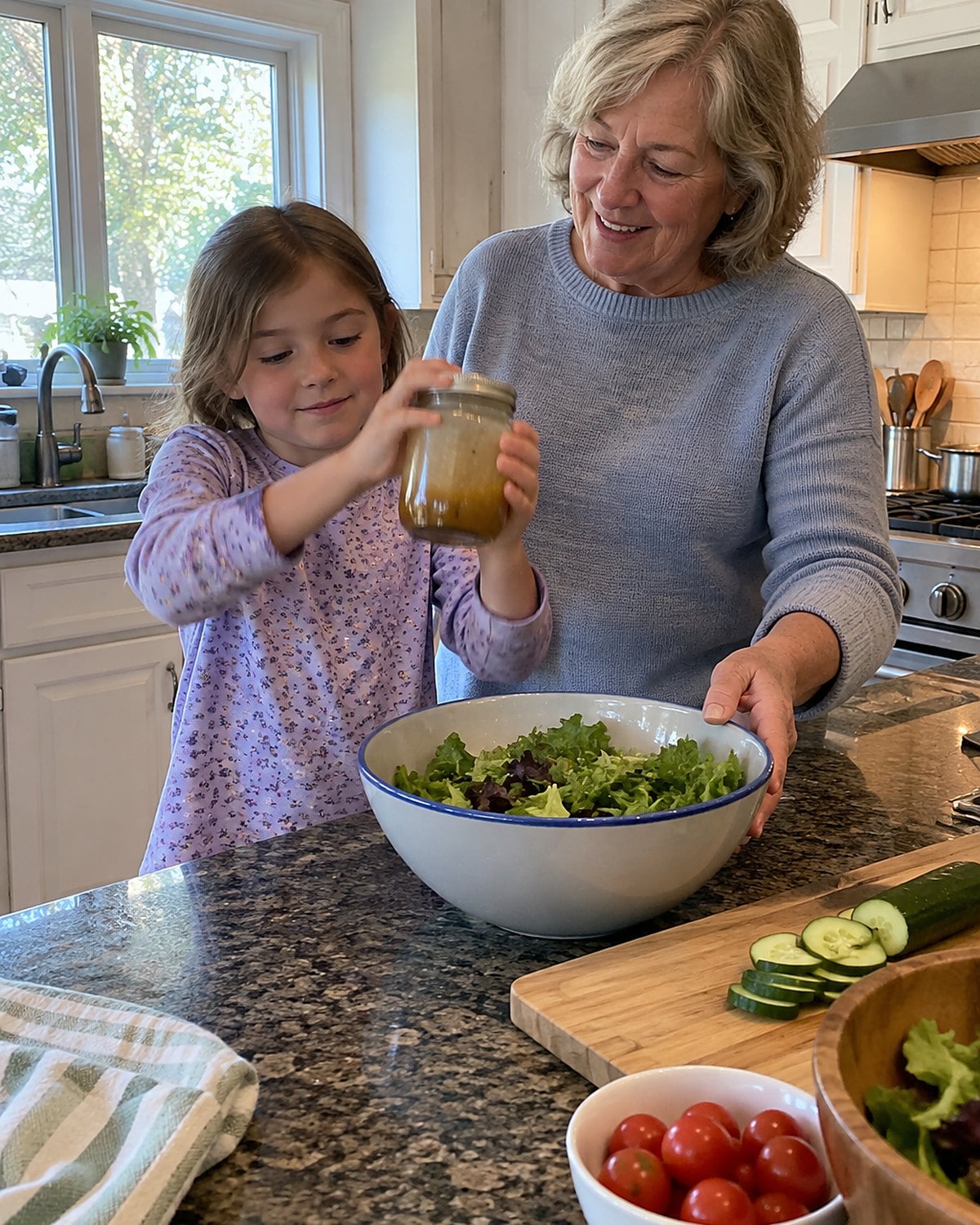
“You shake this one.”
That’s enough to make salad feel like a job worth claiming. A clean jar with a tight lid keeps dressing from splashing while a child shakes it. Set it on the counter before pouring, and let the bubbles settle. The oil rises again because oil and vinegar separate when they stand.
Show them what happens when you shake it a second time. Then taste a drop on a lettuce leaf. The leaf gives a truer answer than tasting straight from a spoon: dressing that seems sharp alone changes once it coats the greens.
Hand the child a towel to grip the jar if it’s slippery. Check the lid yourself before each shake. Those are the unglamorous steps that save your cabinets from vinegar.
Years from now, they won’t need your dressing measurements. They’ll remember the jar rattling in both hands and the moment you trusted them to pass it around.
#20 The Wooden Spoon With the Dark Handle
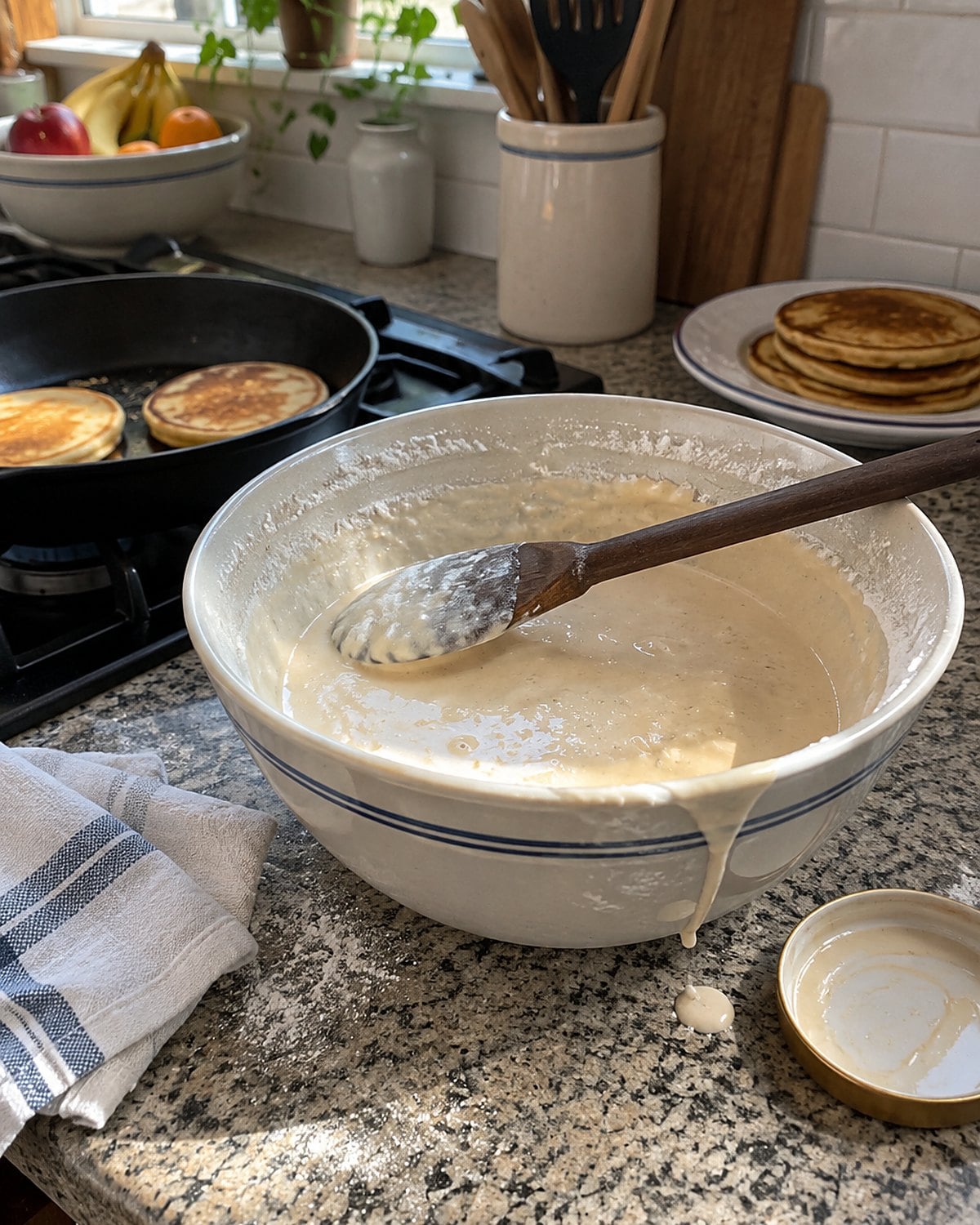
Some spoons bear the marks of years at the stove. The bowl has grown smooth; the handle is dark where your hand rests. A grandchild reaches for that one because you do.
Let them stir something cool before they stir anything hot. A bowl of pancake batter gives them resistance without a burner underneath. Scrape around the edge, then through the middle, and show them the dry flour hiding against the bowl.
For hot food, keep the spoon with you. A child can watch as you drag it along the bottom of a pot to check for sticking. That small movement explains why you stir more clearly than “because I said so.”
Wash the spoon and dry it where they can see it waiting for tomorrow. Familiar tools earn their place through use.
#19 The Cereal Box Above the Crackers
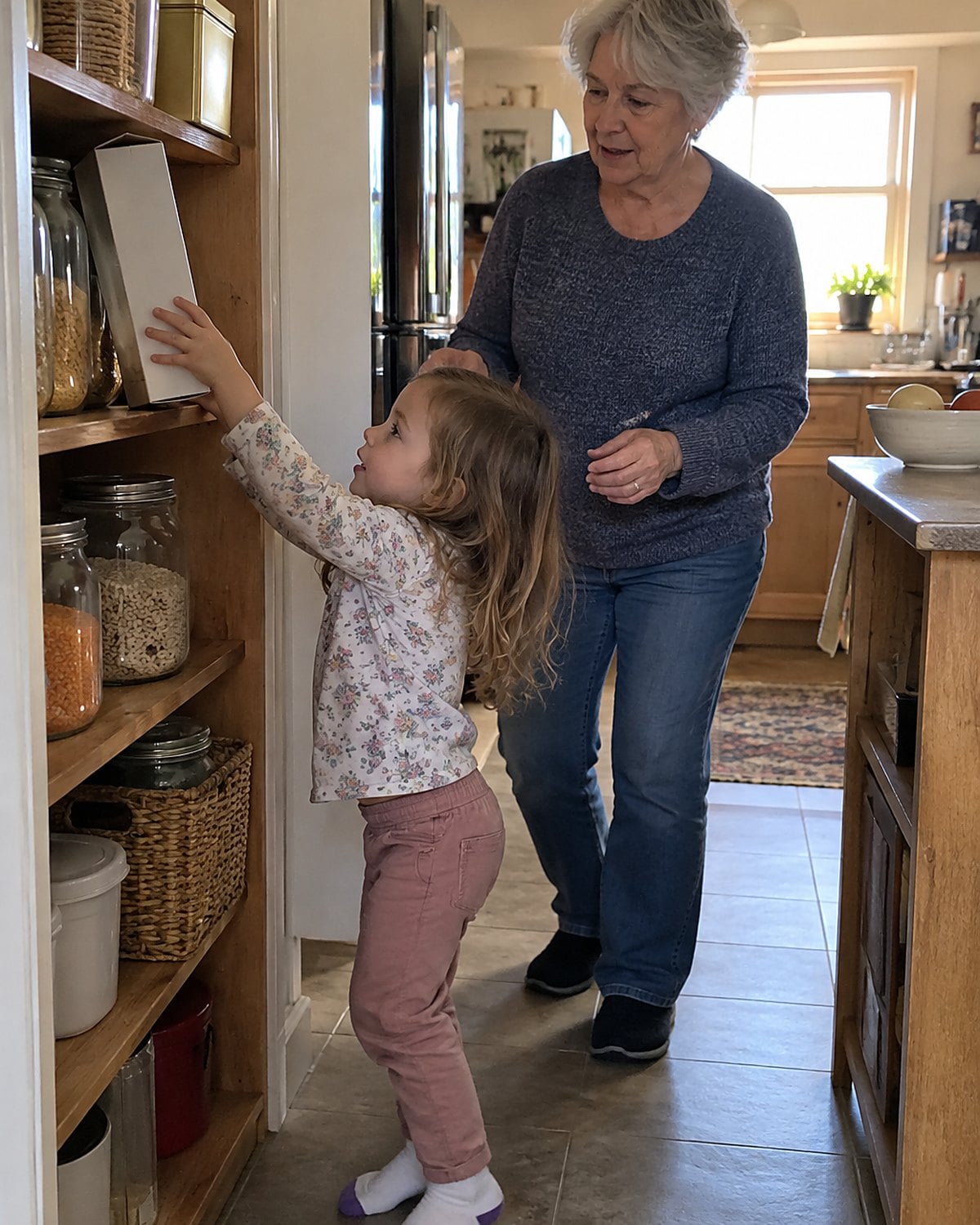
The pantry has a map in your head. You reach above the crackers without looking and come down with the cereal a grandchild likes. They remember the reach, especially if you’ve cleared a lower shelf for things they’re allowed to take.
That shelf needs a little thought. Put sturdy cups and approved snacks there, not the glass jar of dried beans or a bag of small candies within reach of a toddler. Keep cleaning products elsewhere, away from food and children.
Then show the child the rule: “This shelf is yours to ask about.” They learn where things belong without getting the run of the pantry. When the box is empty, have them put it in the recycling and watch you replace it. The map stays the same; its contents change.
You’ve built a tiny piece of independence into an ordinary cabinet. They’ll test it on the next visit.
#18 The Butter Dish Near the Toaster
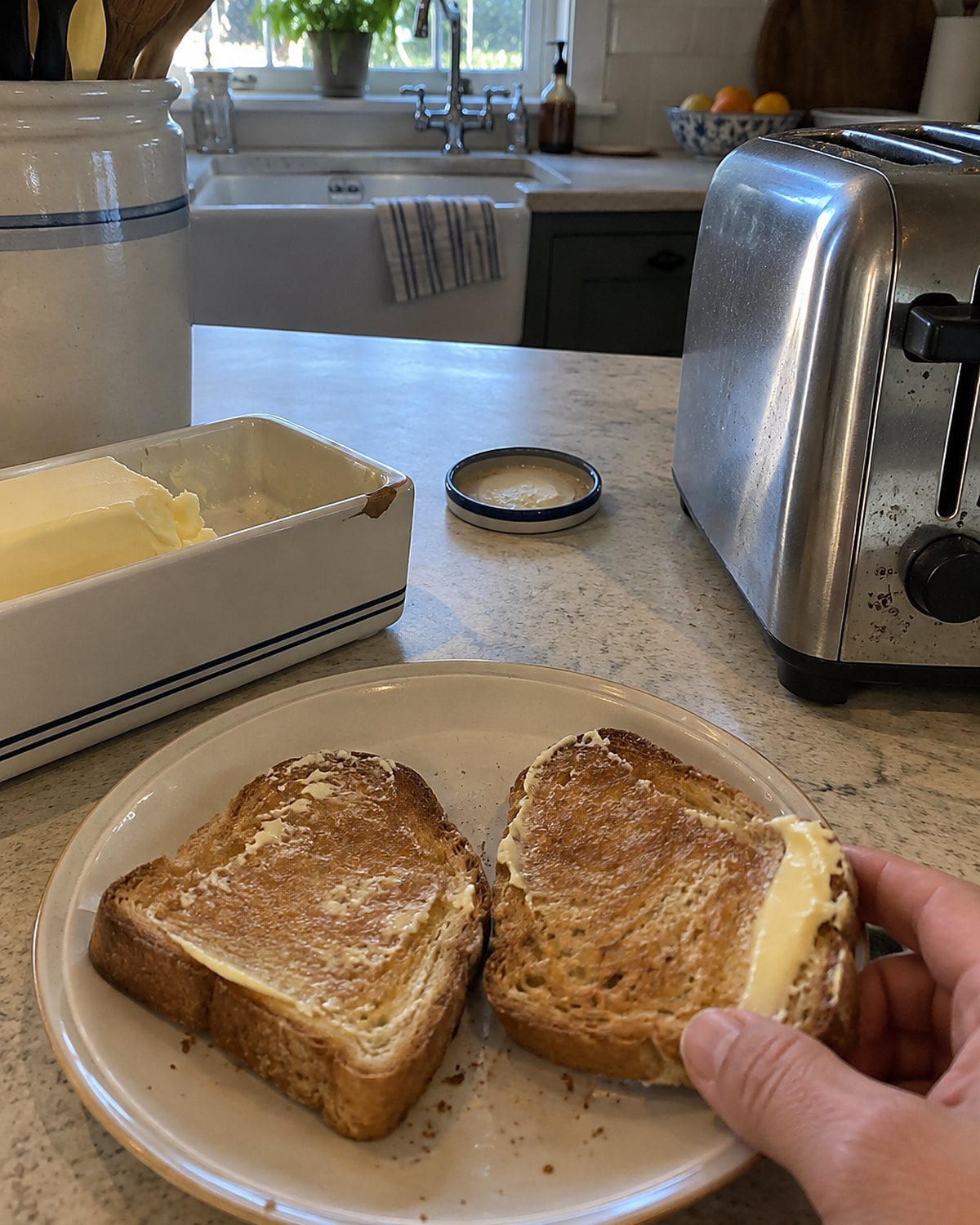
Watch what happens when toast pops. A child looks toward the butter dish before they look toward you. They know your order: plate first, hot toast next, then the knife.
If butter is too firm to spread, shave a thin piece with the knife instead of pressing hard enough to crush the toast. That small adjustment keeps a young helper from sawing at a hot slice. You handle the toaster and pass over the plate when it’s ready.
The butter dish itself might be chipped, heavy, or missing its original lid. It doesn’t matter. What sticks is the sequence, especially when breakfast comes before everyone is fully awake.
Tomorrow, set out a safe spreading knife and a plate before the toast goes down. They’ll recognize the invitation without an announcement.
#17 The Pot That Boils Over Anyway
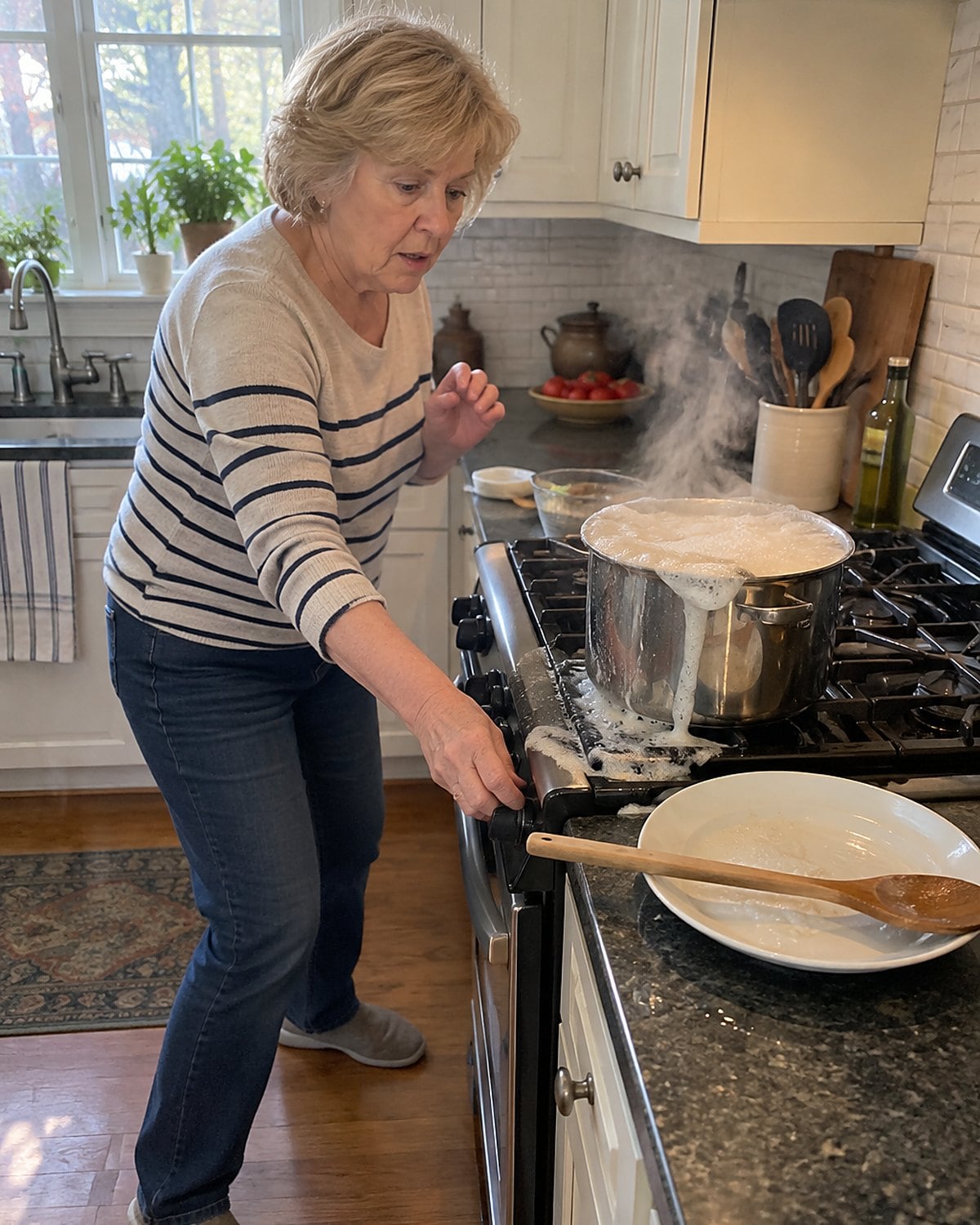
The pot starts rattling. You turn to get the colander, and a line of starchy water runs across the stove. You knew what pasta does. The colander was still across the kitchen.
A grandchild sees what comes next. You move the pot off the heat, turn the burner down, and wipe the stove after it cools. Nobody has to pretend dinner is ruined. A boil-over is a mess with a next step.
Starchy foam rises when the surface gets crowded with bubbles. A larger pot and room below the rim help. When foam reaches the rim, move the pot off the heat at once. Stay nearby instead of balancing a wooden spoon across the top and trusting it to stop the spill.
You’ve also shown them where to stand. Keep small hands clear of the hot water and carry the pot to the sink yourself. They get the useful part of this memory: a mistake happens, dinner goes on, and someone knows what to do.
#16 The Kettle Click Before Tea
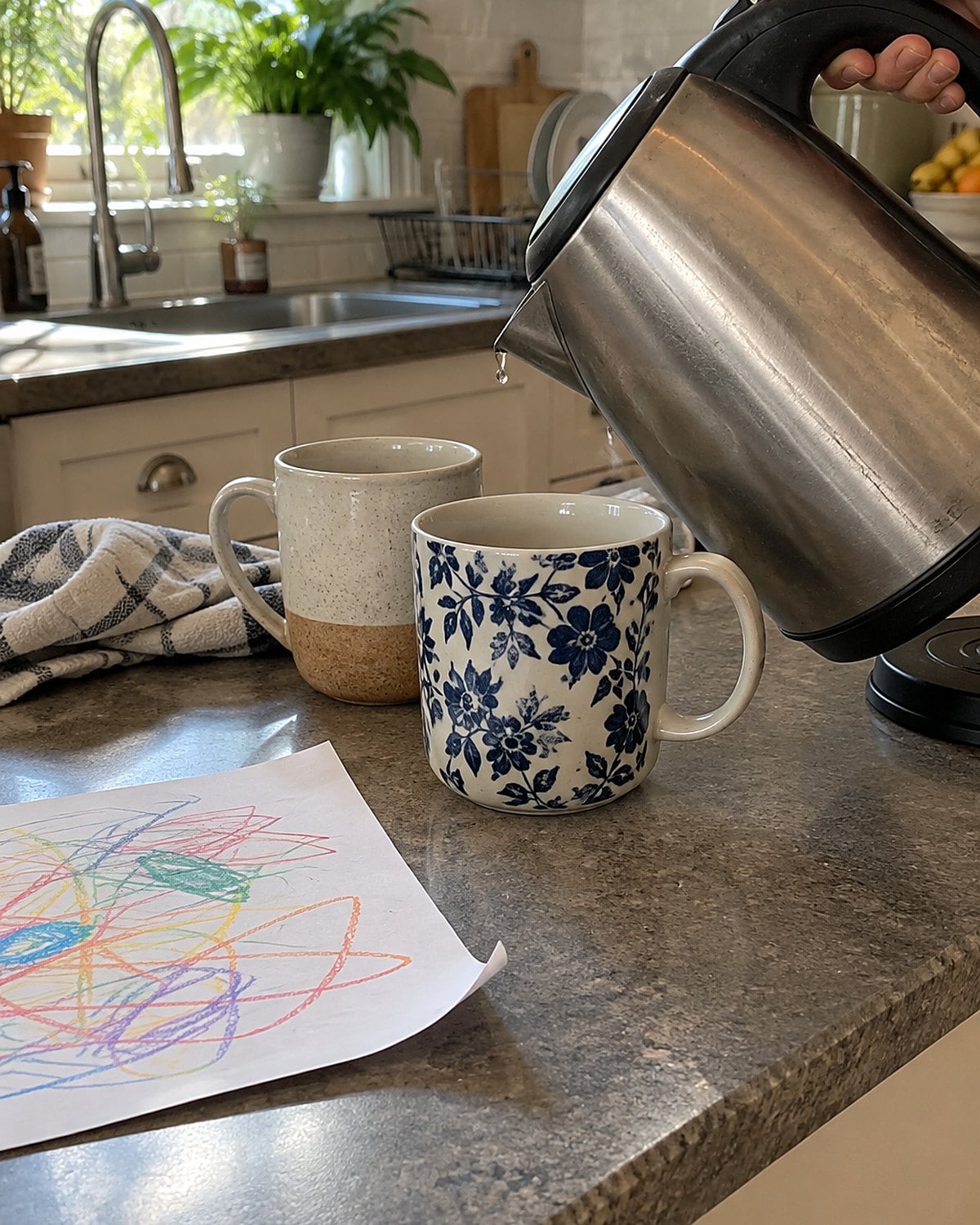
Click. The kettle switches off, and the grandchild who was drawing at the table looks up. They’ve heard what comes next: your mug comes down from its hook, and the small cup comes out too.
Keep the hot water in your hands. Let them place a tea bag in their cup or choose the mug after you’ve poured and set the kettle aside. If you serve them a drink, check its temperature before it reaches their hands.
There’s no need to turn tea into an event. Sit for a moment while it steeps. Ask about the drawing, or don’t. The click has already announced a pause in the day, and they know you’ll be there when they look up.
#15 The Green Beans in the Dented Pot
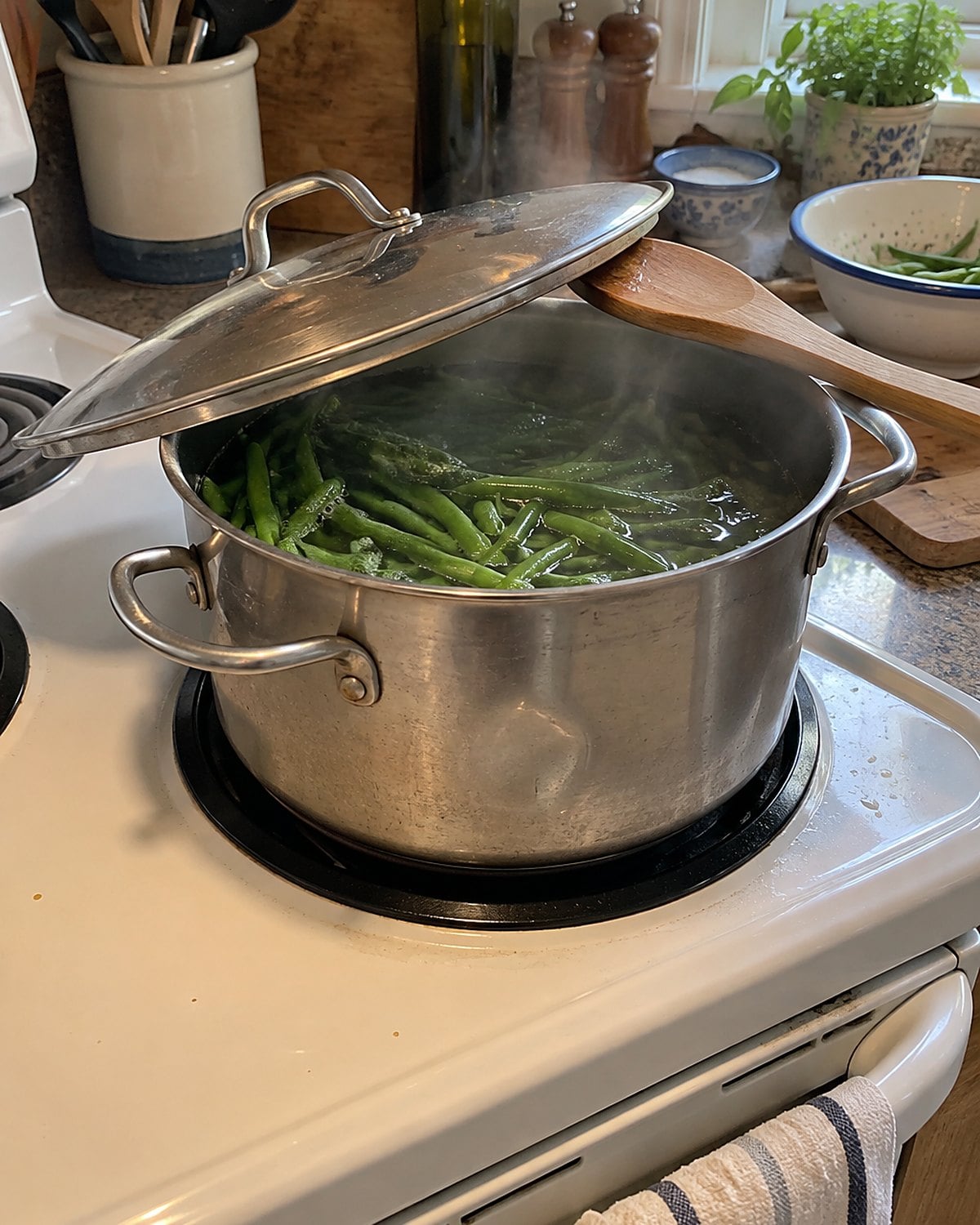
The dented pot holds green beans without complaint. When grandchildren visit, the beans are worth passing around because you’ve taught them to listen for the snap of a raw one.
Break an end and show them how a fresh bean bends before it snaps. Cooked beans need a different test: bite one. A bean should yield without turning limp, and the seasoning should still taste like the bean.
The USDA’s MyPlate vegetable guide includes frozen and canned vegetables too. The child’s memory won’t care which bag or can you opened.
If you cook canned beans, drain and taste them before adding salt. If you cook fresh ones, taste before pouring off the water. Either way, the skipped step is the same: the cook has to try a bean.
Offer a grandchild the first cooled one. “Tell me if it still has a bite.” You get an answer, and they get to make a dinner decision.
Try it: Instant Pot Green Beans With Butter & Pepper
#14 The Grocery Bag on the Floor
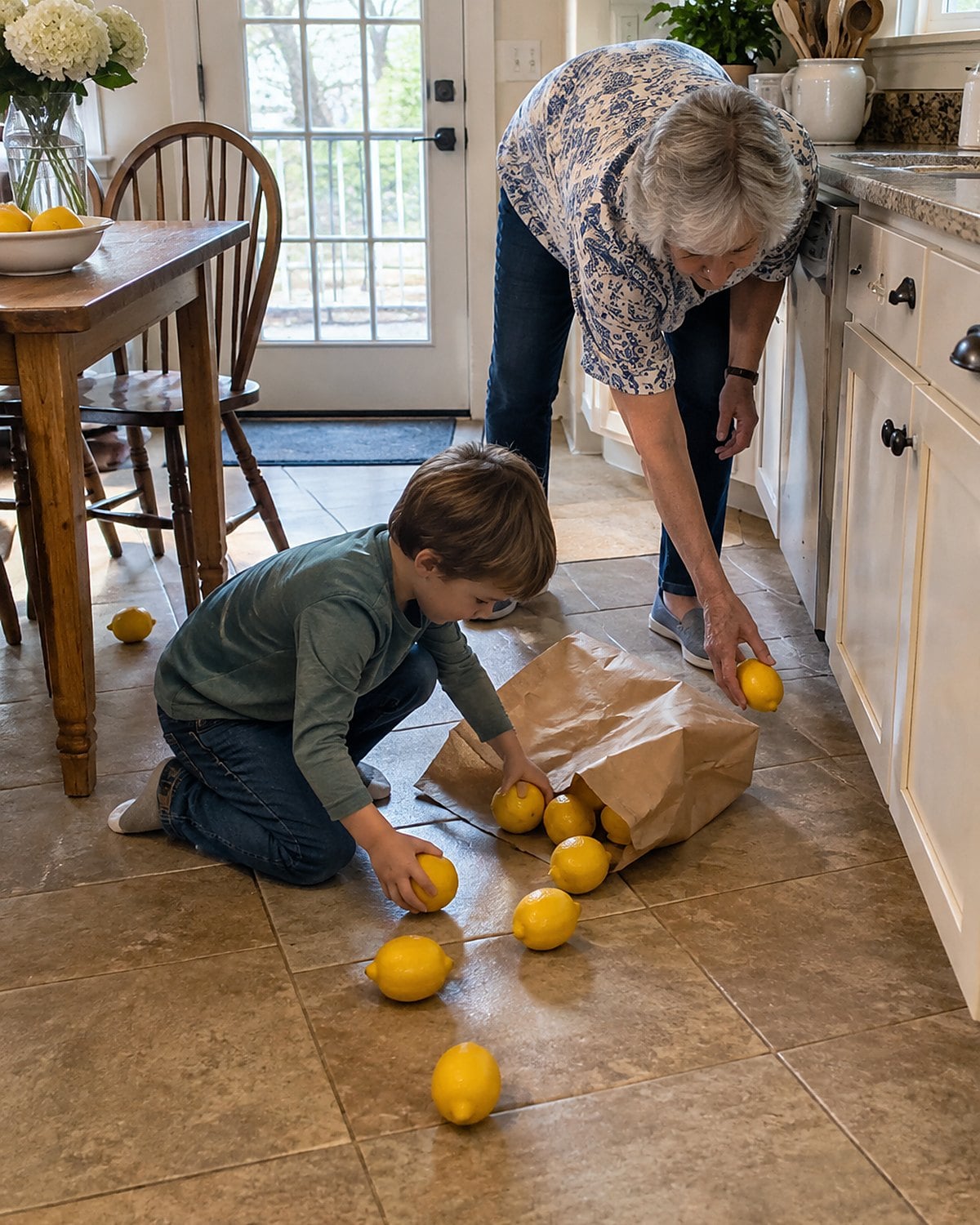
When you come back from the market, a grandchild wants to unpack everything at once. The bag tips. A lemon rolls under the cabinet, and the cold food is still waiting on the floor.
Give them a clear assignment: “Find the lemons. I’ll put away the chicken.” Raw meat stays wrapped and separate from food eaten without cooking. The FDA’s food-handling guide calls for refrigerating perishables within 2 hours, or within 1 hour when it’s above 90°F. Put cold groceries away first.
Let the child wash hands after handling grocery bags or produce that needs washing. Then ask them to count the lemons as they set them in the bowl. The market trip becomes a small shared task, not a race against the clock.
Check under the cabinet before you mop. That last lemon has a talent for waiting.
#13 The Apron Hanging Behind the Door
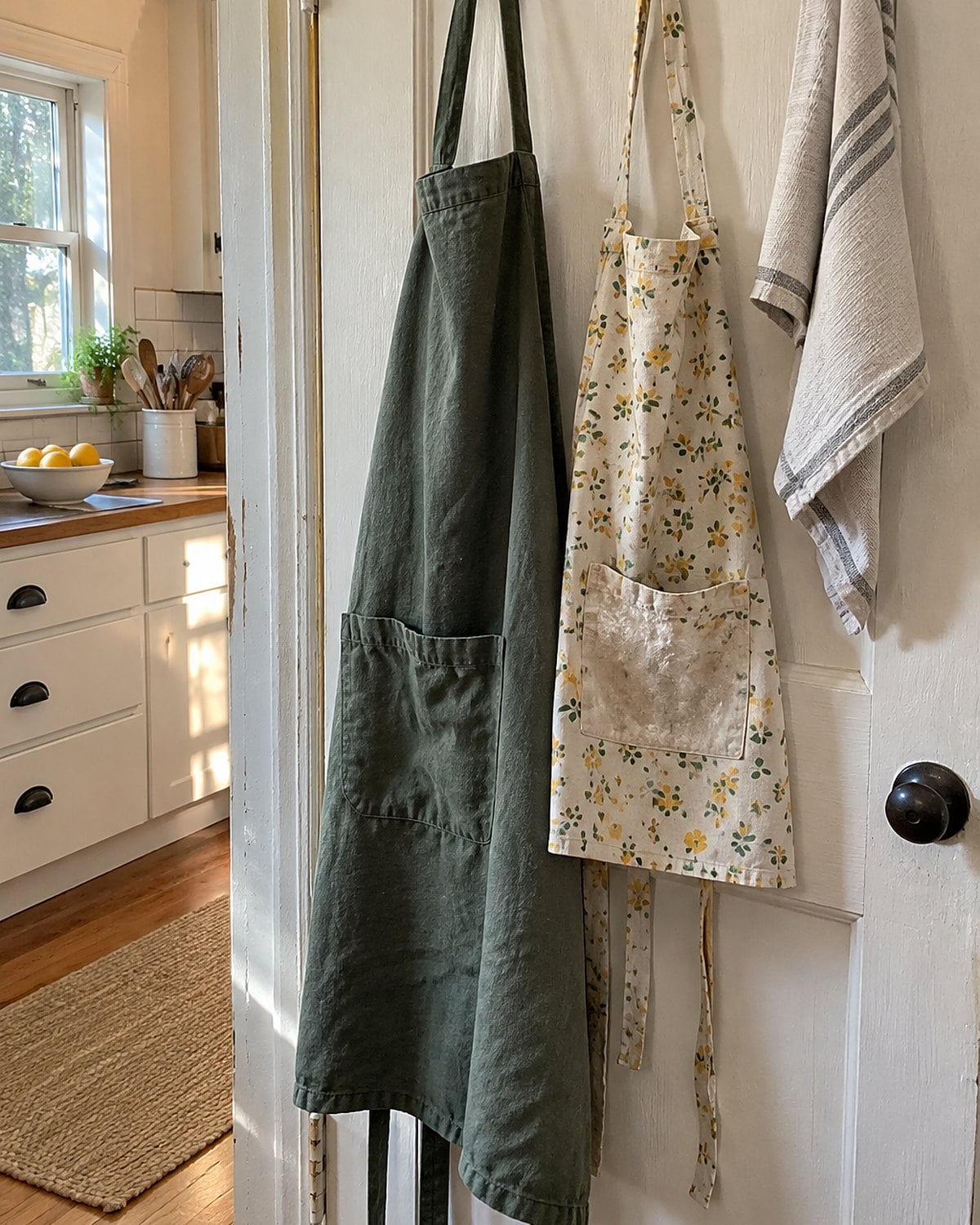
An apron hangs from a hook that nobody else uses. A grandchild has seen you put it on before flour comes out, before you wash a pile of greens, before you start a dinner with several pans.
Offer them an old apron that ties without dragging on the floor. Roll a long strap up rather than leaving it loose near the stove. The point isn’t keeping their shirt spotless. It’s letting them feel ready for a real job beside you.
Put yours on too. Then hand over a task that fits the apron: wiping mushrooms with a damp towel or crushing crackers in a sealed bag. When the job is done, hang both aprons back on their hooks.
Later, they’ll know the little pause before you start. Hook, apron, hands washed, work. A kitchen has its own way of saying “come on in,” and yours is hanging behind the door.
#12 The Sponge Squeeze at the Sink
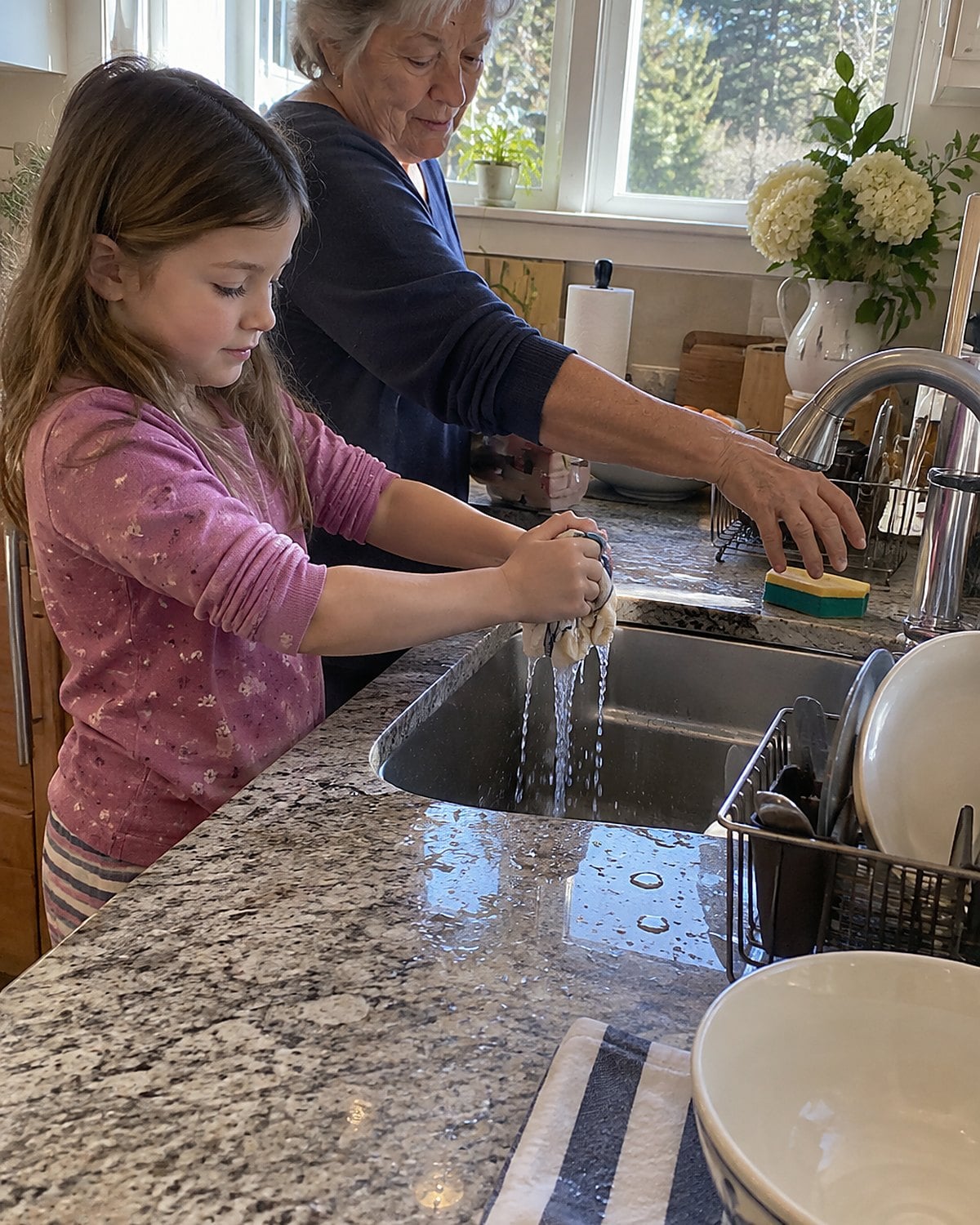
There’s a squeeze you make before setting the sponge down. Your grandchild copies it with both hands, sending water across the sink and down one sleeve. “Like this?” they ask, already soaked.
Give them a cloth for wiping the table instead. Afterward, rinse it, wring it out, and hang it where air reaches both sides. A wet wad left in the sink stays wet. Nobody wants to pick up a sour-smelling rag the next morning.
The CDC’s kitchen cleaning guidance separates cleaning from sanitizing. You handle spills from raw meat; they handle the table after the dishes are cleared. Watch them inspect the last damp patch and go back over it. Next visit, leave the cloth within reach before they ask for a job.
#11 The Soup Spoon You Blow On
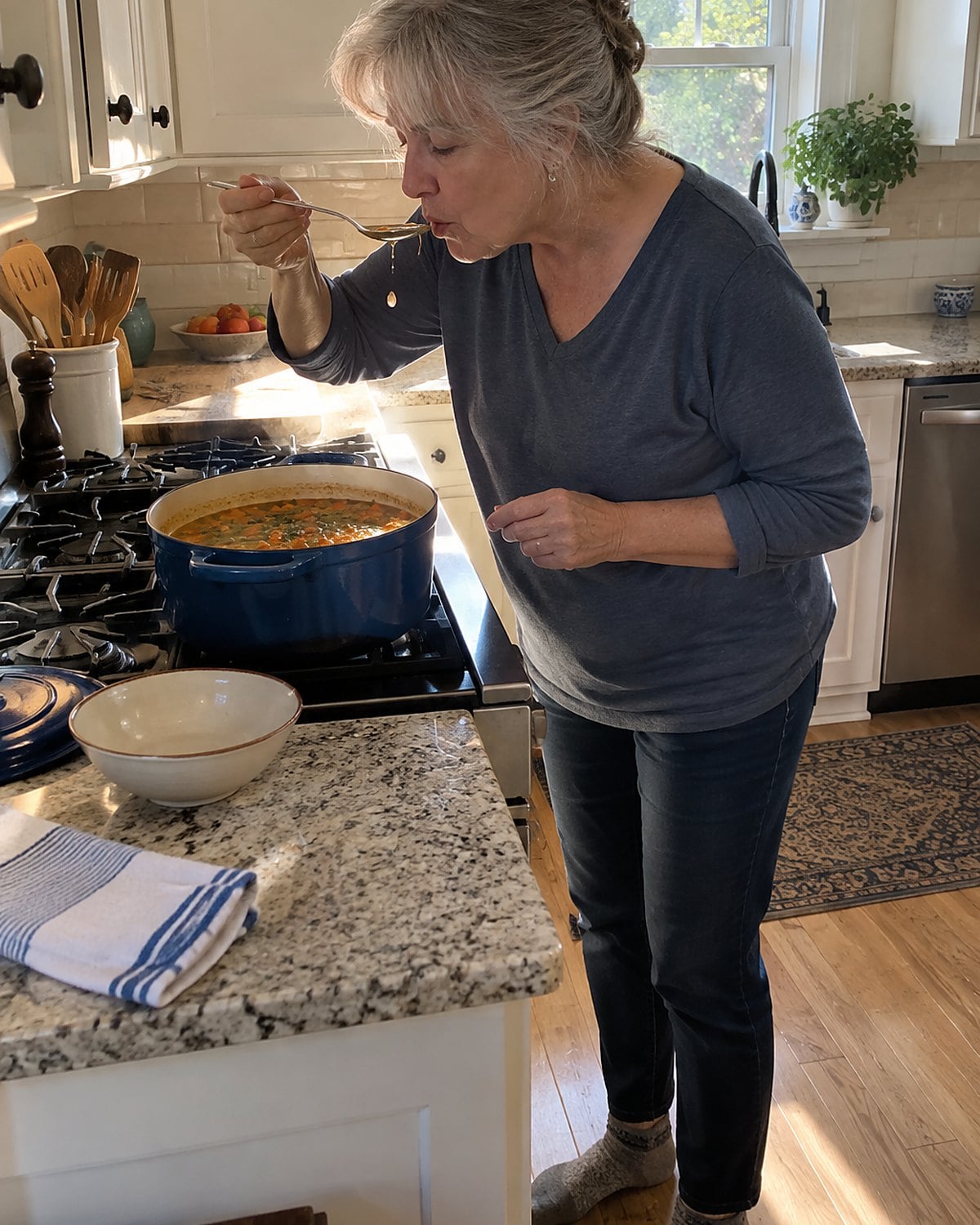
A pot of soup looks ready long before every spoonful is comfortable to eat. Your grandchild watches you lift a little from the edge, blow across it, and taste. They want to know your verdict.
Take that taste after stirring. The liquid at the top doesn’t tell you what has settled below, and salt needs a moment to spread through the pot. Taste broth with a bit of vegetable or bean in the spoon. Then decide if the soup needs salt, acid, or more cooking.
Set the spoon aside rather than dipping it back into the pot after tasting. Use a clean spoon for the next check. Let a child try a cooled sample in their own bowl and tell you what they notice.
The lesson isn’t that they have to like every soup. It’s that their tongue gets a say. “Too sharp?” “Too plain?” Those words help far more than asking if dinner is good.
#10 The Freezer Bag With the Date
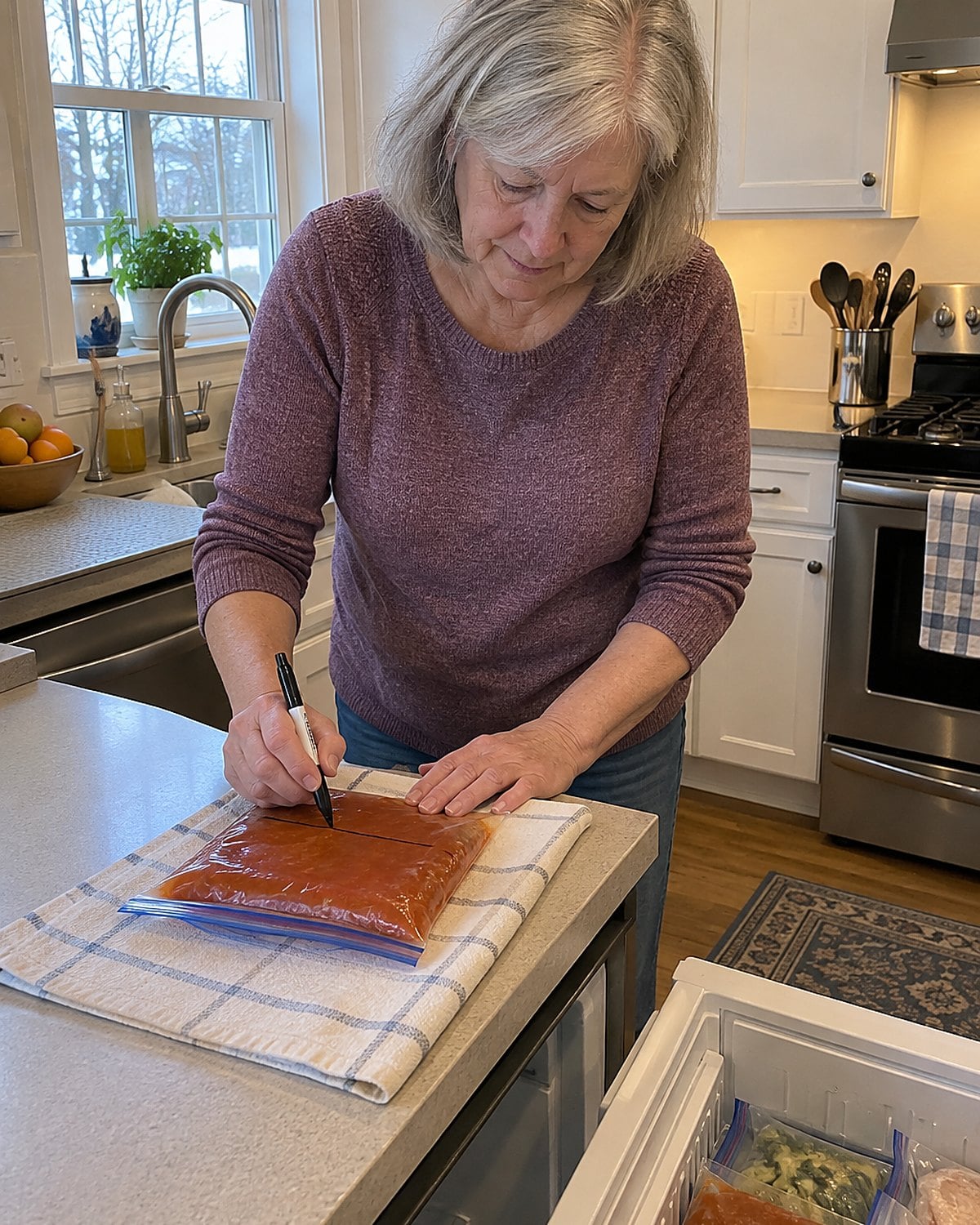
A freezer bag marked with a date looks like housework. To a grandchild searching for fruit, it’s a clue about what’s inside and when you put it there.
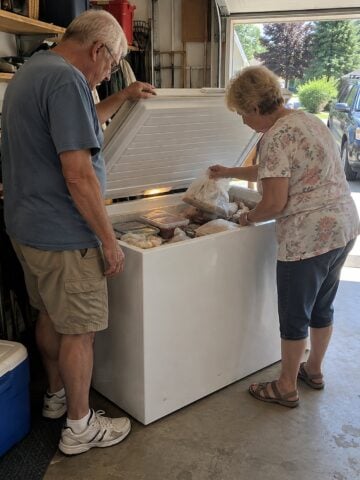
Write the food name as well as the date before the bag goes into the freezer. “Soup” is less helpful than “tomato soup,” especially when several flat bags look alike. Press out extra air, seal the bag, and lay it flat where it won’t leak onto other food.
The USDA’s FoodKeeper app gives storage guidance when you’re unsure how long to keep something. A date doesn’t make food safe by itself; it tells you what to check.
Next time a grandchild helps put away leftovers, hand them the marker. Let them write the name you call the dish at home.
#9 The Oven Light During Biscuit Time
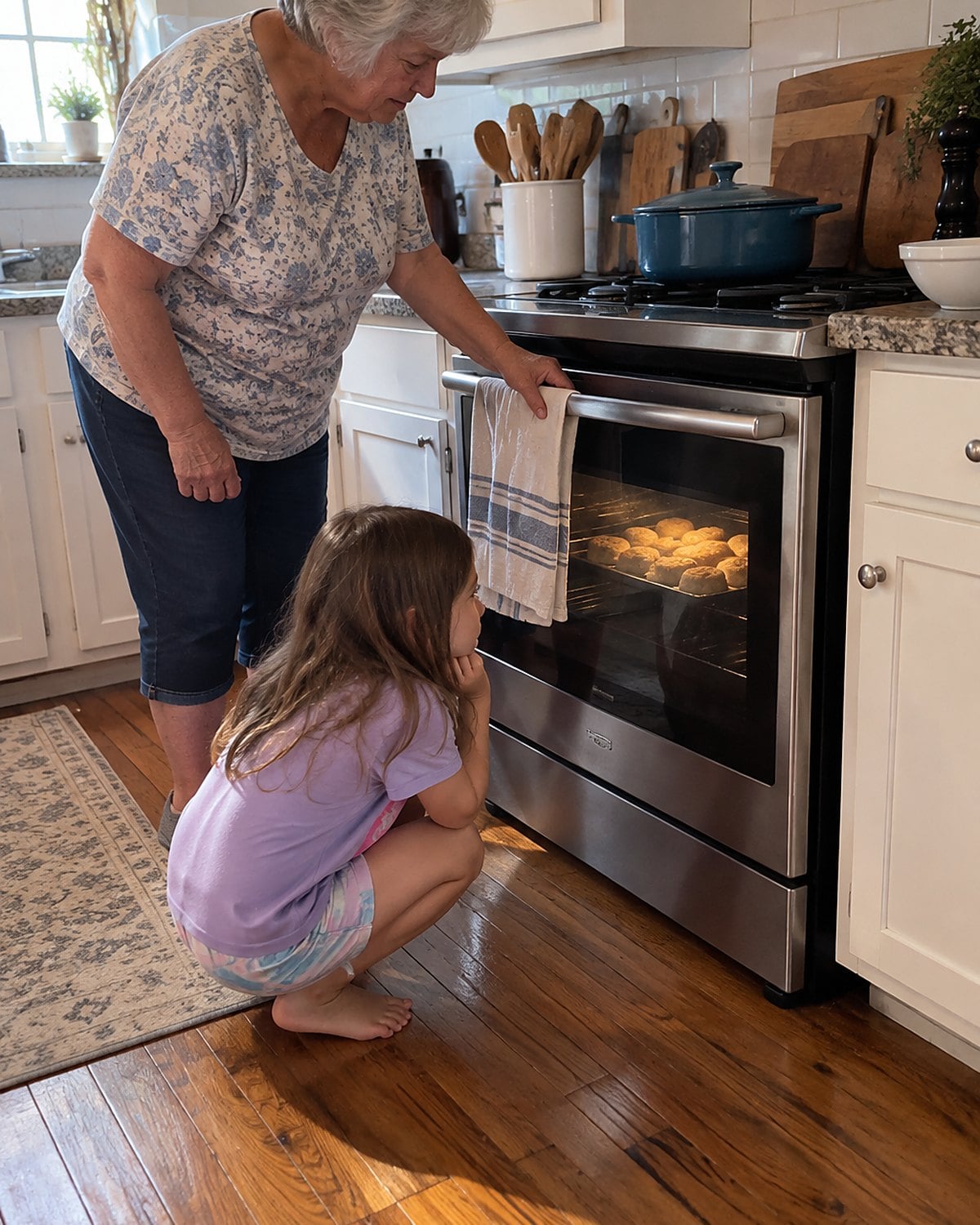
The oven light goes on. A child crouches nearby to see the biscuits rise, and you know they’ll ask to open the door.
Show them what to watch through the glass: the tops losing their wet shine, the edges taking on color, and the dough standing taller. Opening the door early drops heat right when the biscuits are setting. Leave the oven closed until they look close to done.
Turn the pan if your oven browns one side faster, but do that part yourself. Hot racks reach farther than children expect. When the biscuits come out, set the pan well back on the counter and wait before anyone takes one.
A timer tells you when to look. The tops tell you more. Let your grandchild report what they see through the glass, then compare it with the biscuit you split open after it cools. That’s a kitchen lesson they can use with their eyes.
#8 The Pickle Plate Beside Dinner
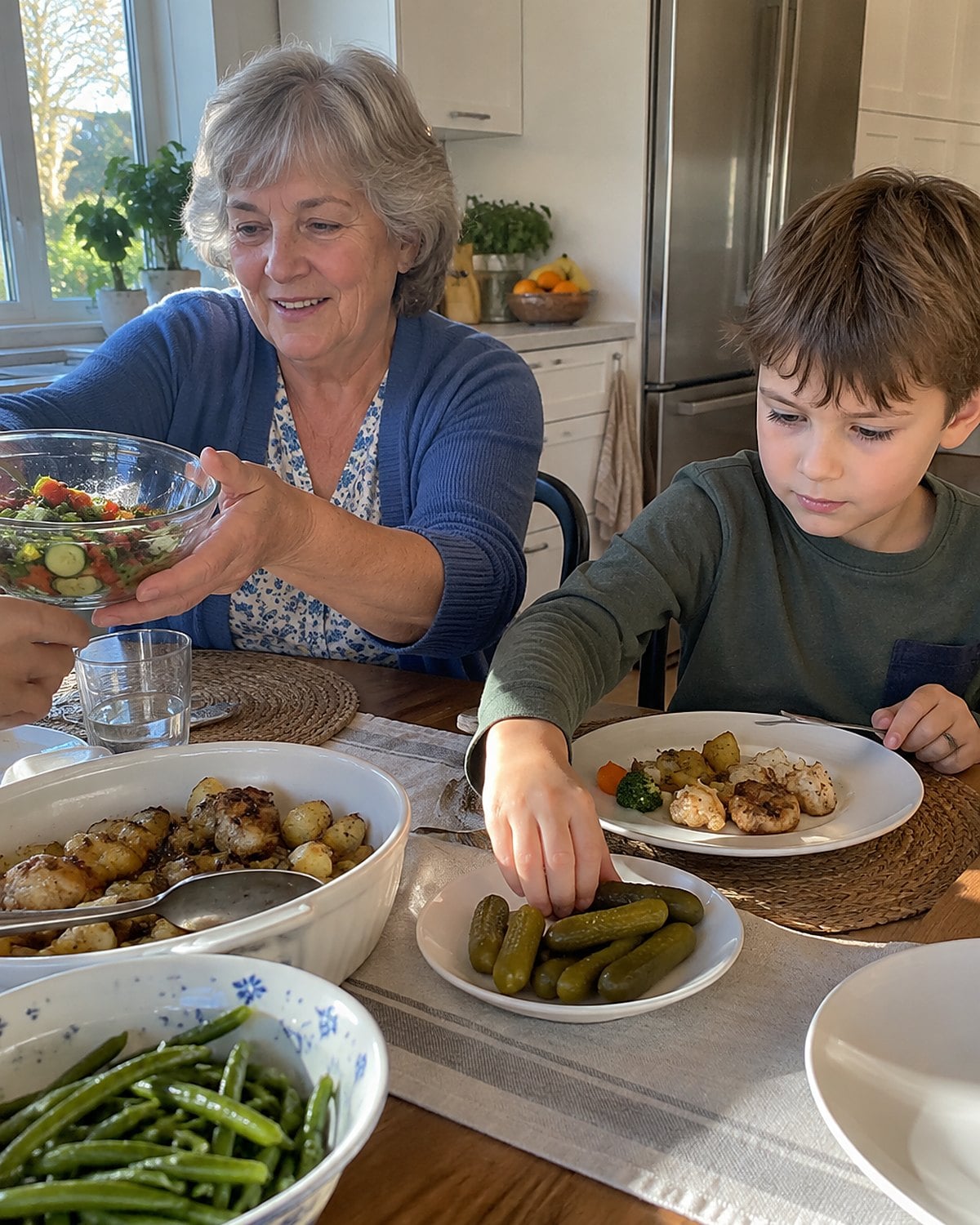
Some dinners get a little plate of pickles. No speech, no special serving dish. You put it down because you know somebody wants a crisp bite between forkfuls of supper.
That small plate gives a child a choice that doesn’t require a second dinner. They can take a pickle or leave it. The crunch and sharpness also wake up a rich meal. You know this from eating at your own table.
Ask them to carry the empty plate back after dinner, provided it’s safe for their hands. They’ll look for it the next time the same meal appears. It was an extra thing you did without fuss, and they noticed.
#7 The Measuring Cup Filled With Water
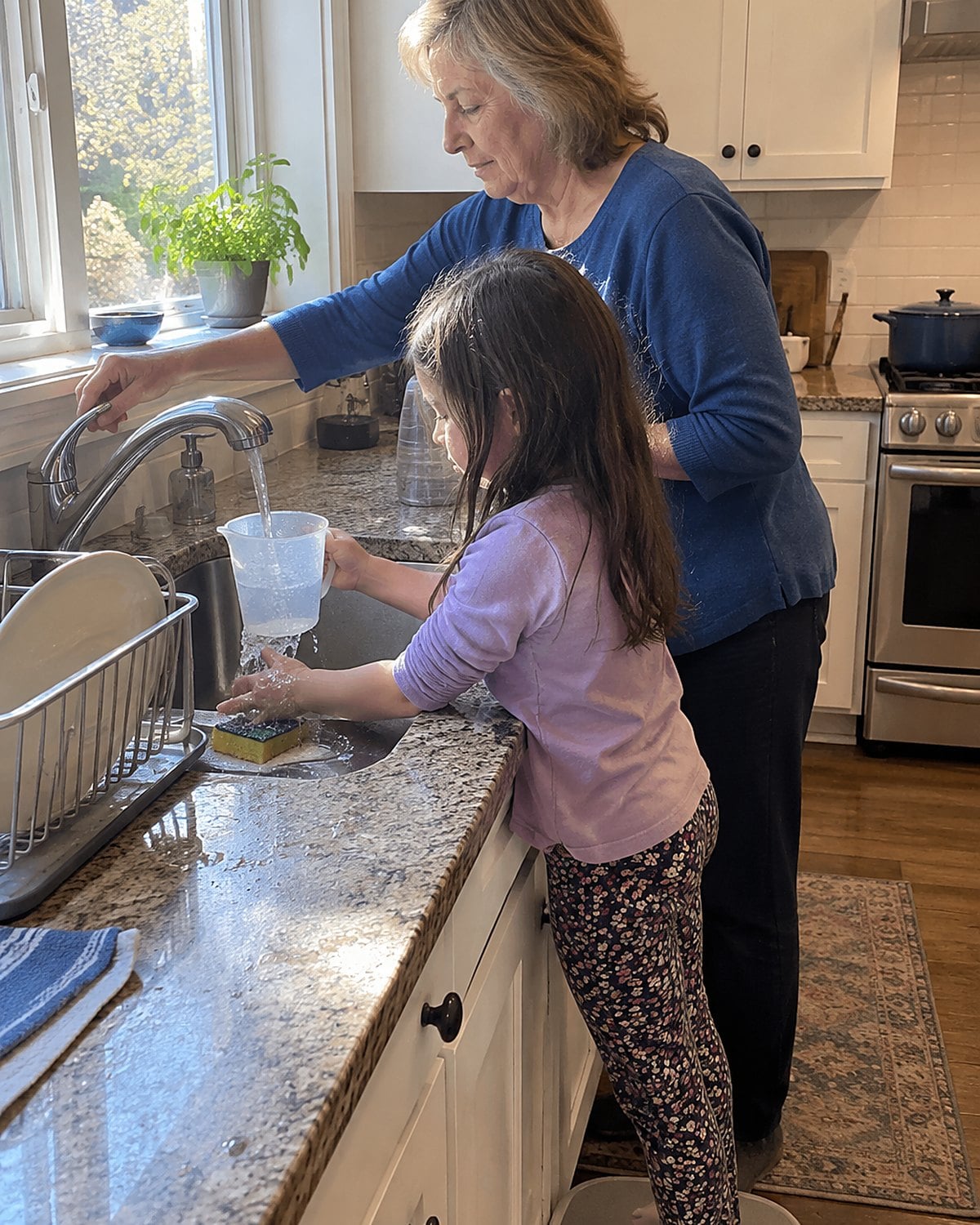
Set a measuring cup in the sink and ask a grandchild to fill it to the line. Water sloshes over their thumb. They empty some, look again, and start to understand why you set the cup on a flat counter to read it.
Show them the marked line at eye level. In a clear liquid cup, the surface curves at the edges; read the bottom of that curve. A cup held in the air is harder to judge. So is one tilted toward a grown-up for approval.
Then let them pour the water into a mixing bowl. If the recipe calls for another measure, they get another turn. This is a kitchen job with a visible answer, which makes it far more satisfying than being told to “help.”
Keep glass measuring cups out of reach for a young child and use a sturdy plastic one for this task. The water is forgiving. The habit of checking from the side stays with them when they move on to milk, broth, and pancake batter.
#6 The Thermometer in the Chicken
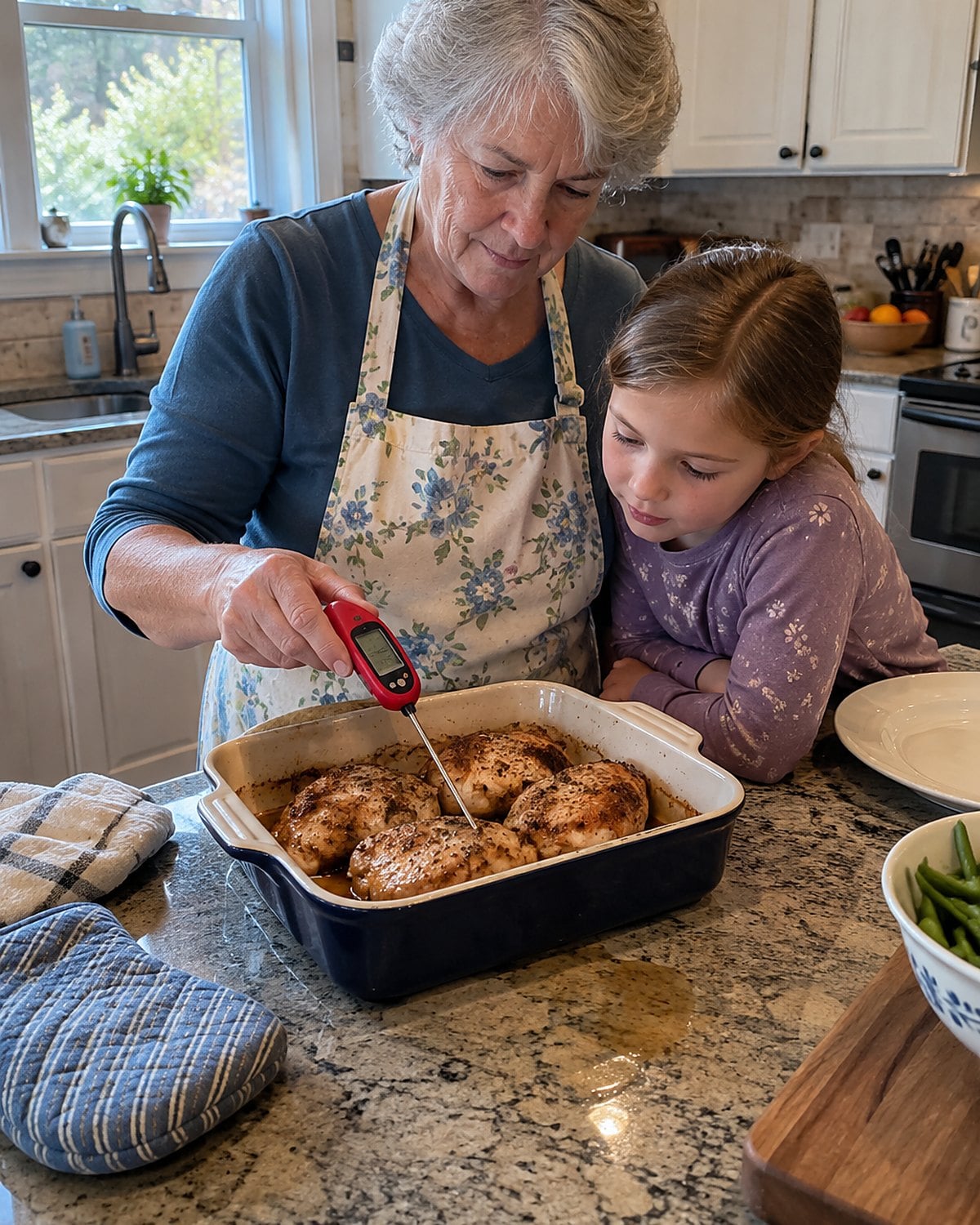
A thermometer interrupts the moment when everybody is hungry and the chicken looks done. That interruption is worth letting a grandchild see.
Push the tip into the thickest part, away from the bone. Poultry needs to reach 165°F, according to the USDA’s safe temperature chart. Color and clear juices don’t replace that reading. If the number is low, put the chicken back in the oven and check again.
Keep the hot pan and probe in your hands. Let the child read the display from a safe spot. They learn that waiting for a number is part of dinner, not a sign you’ve done something wrong. Then dinner has an answer everyone can trust.
Try it: Instant Pot Whole Chicken In 50 Minutes
#5 The Porch Step With Cherry Tomatoes
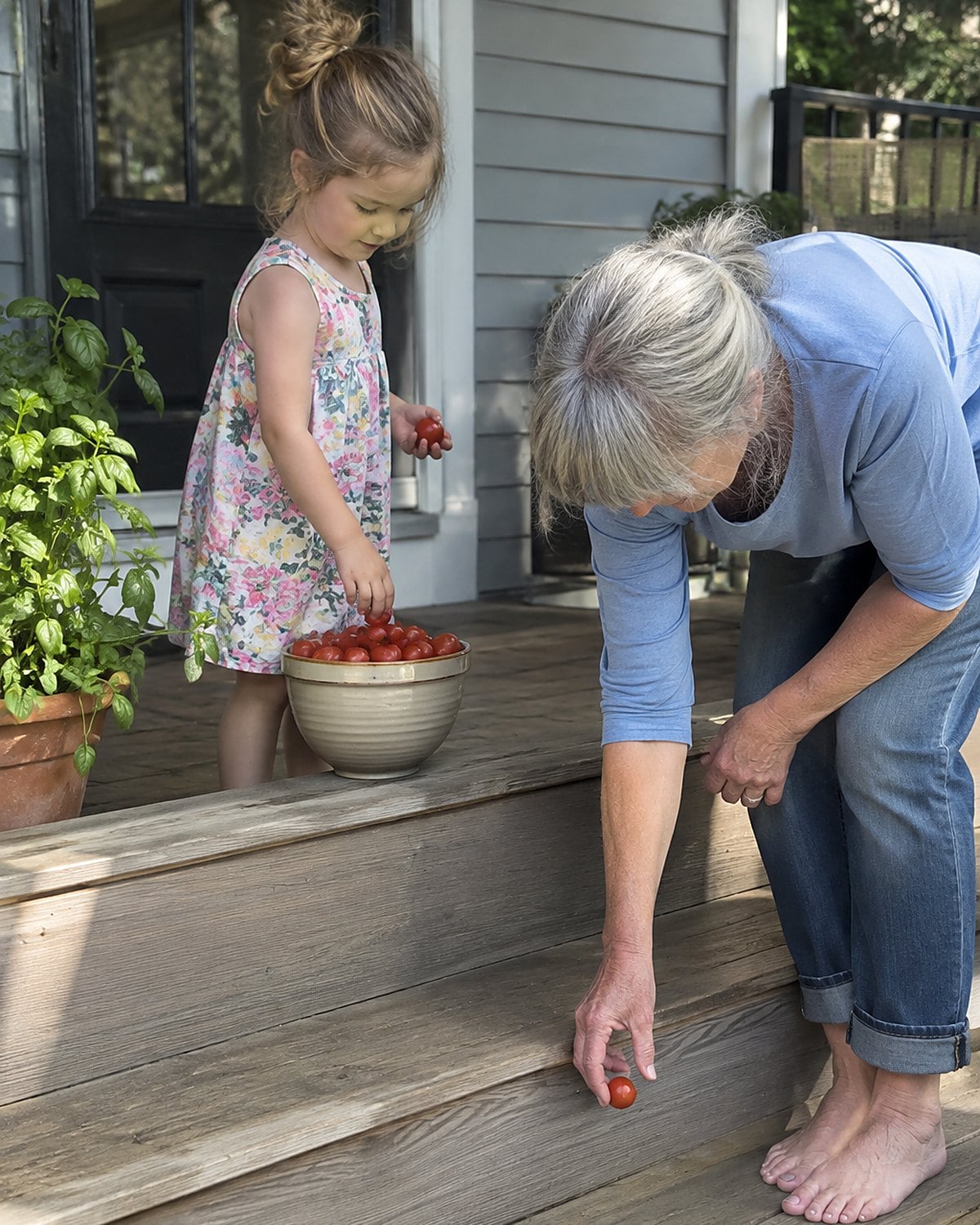
A bowl of cherry tomatoes comes in from the porch, with a leaf stuck to the side. A grandchild wants to eat the red ones first. You stop at the sink, rinse what you’ll serve under running water, and dry it on a towel.
The FDA’s produce advice says to wash produce under running water, not with soap. That’s easy for a child to see and repeat. Have them sort the washed tomatoes by color while you take care of the rest of lunch.
For young children, cut round tomatoes lengthwise into small pieces before serving. The whole, slippery shape poses a choking risk. The CDC’s choking guidance names small round foods among the hazards.
The porch trip sticks because it has a beginning and an end: pick, wash, cut, eat. You’ve given them every part they’re ready to do.
#4 The Rice Pan From Last Night
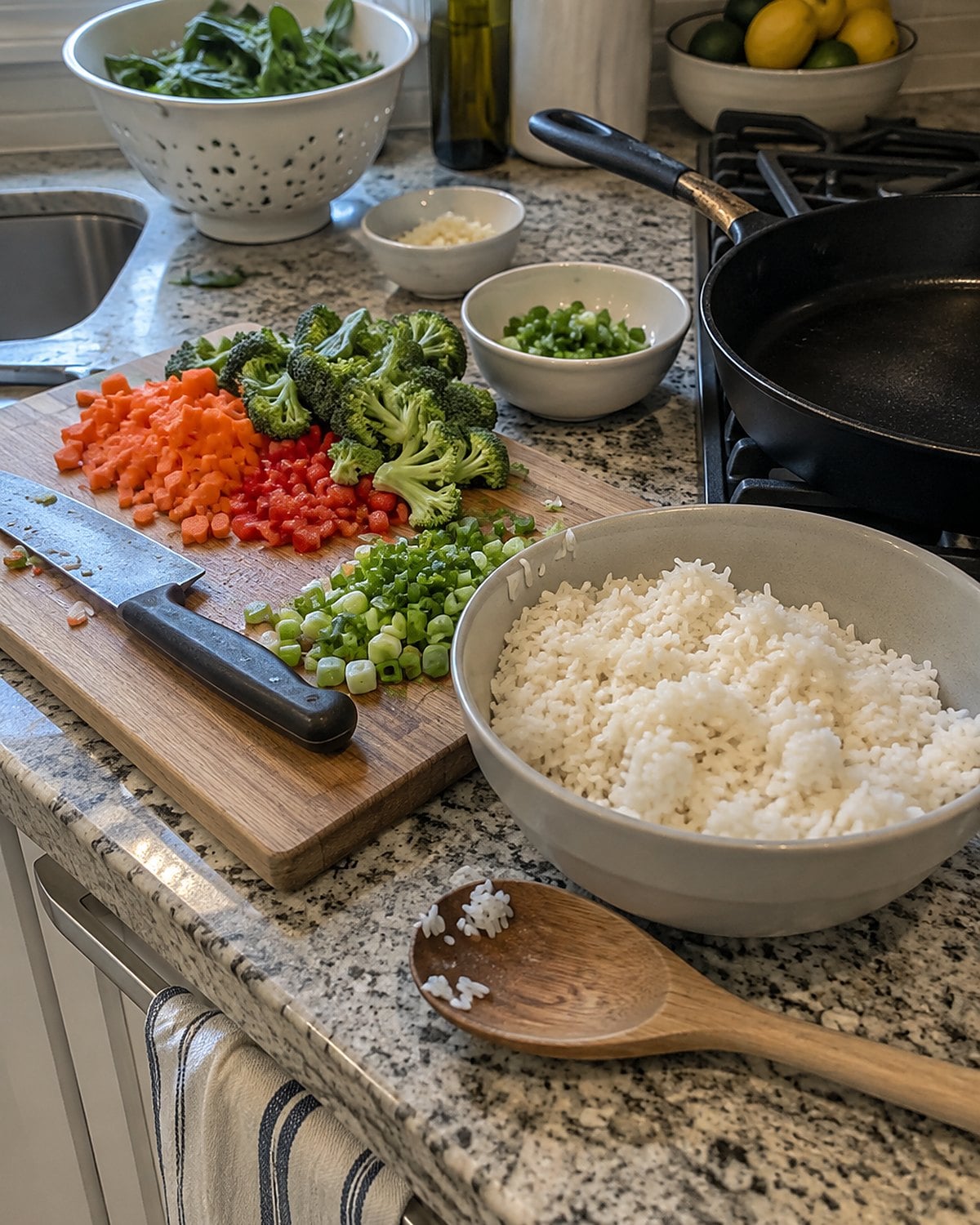
There’s leftover rice in the fridge, and you turn it into lunch with an egg and whatever vegetables need using. A grandchild sees the old dinner come back in a different pan.
Cooked rice needs prompt chilling, just like other leftovers. The USDA’s cold storage chart says most cooked leftovers keep for three to four days in a refrigerator at 40°F or below. Reheat leftovers to 165°F. If you don’t know when the rice was cooked, make something else.
In the skillet, break up cold clumps before adding sauce. Spread the rice so it heats through instead of steaming in a mound. Give a child the cooled vegetable scraps to carry to the compost, then let them choose the bowl for lunch.
They remember the transformation. You remember which container must be used tonight.
#3 The Hand Mixer Changing Pitch
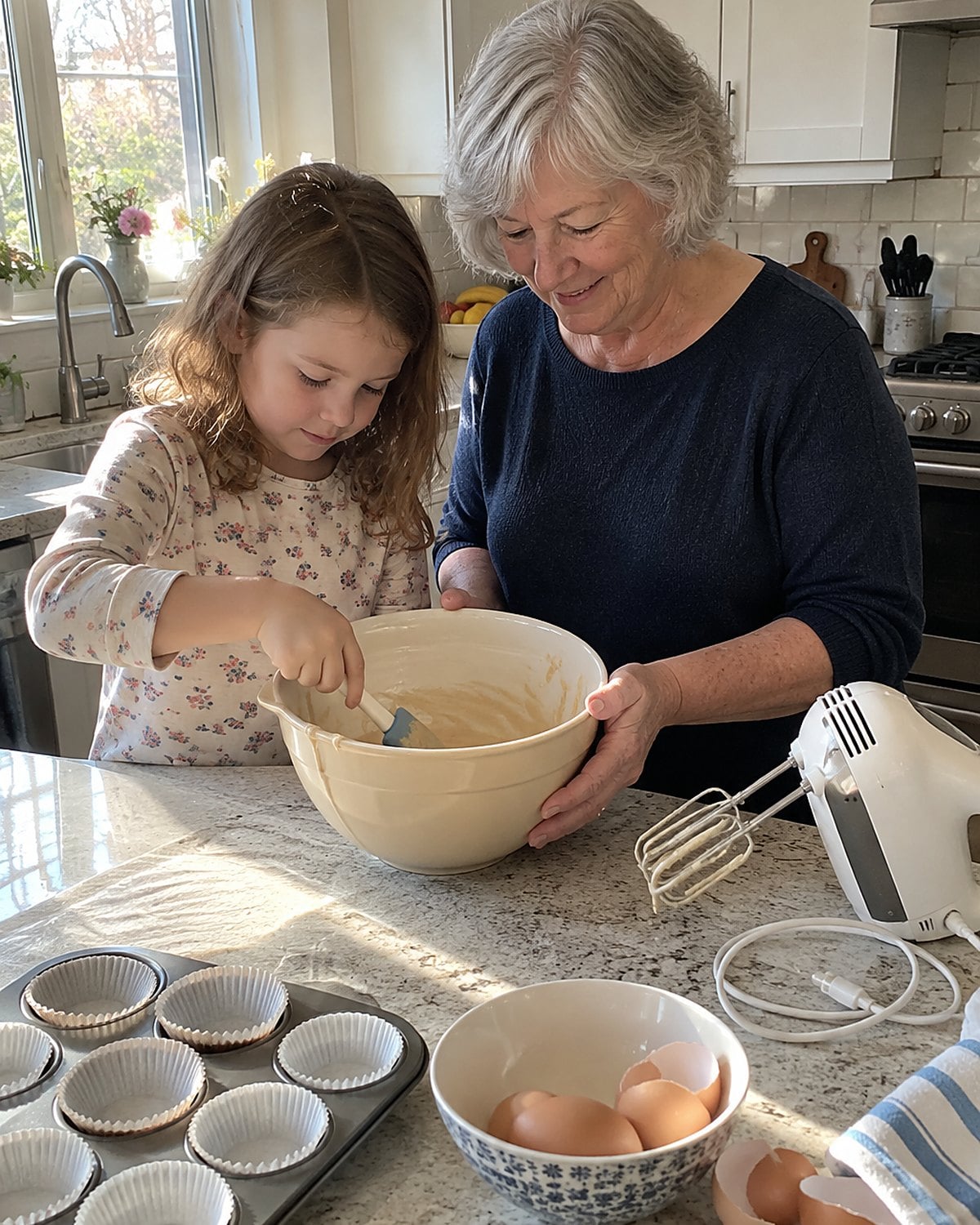
The hand mixer starts low, then its sound changes as the batter thickens. A grandchild knows the sound from the next room and appears at the counter before you’ve turned it off.
Switch the mixer off and unplug it before handing over a beater to scrape. If the batter contains raw flour or raw eggs, tasting it isn’t safe. The CDC’s raw dough advice is plain on both ingredients. Offer a safe finished bite later instead.
Let the child scrape the outside of the bowl with a spatula while the beaters are out. They’ll find the streak you missed along the bottom. Fold it in by hand so the batter looks even, then set the pan in the oven yourself.
That changing motor sound is a cue: something good is on its way, and there’s a part they can do. The beater doesn’t have to be theirs for the memory to be.
#2 The Dish Towel Over the Bread
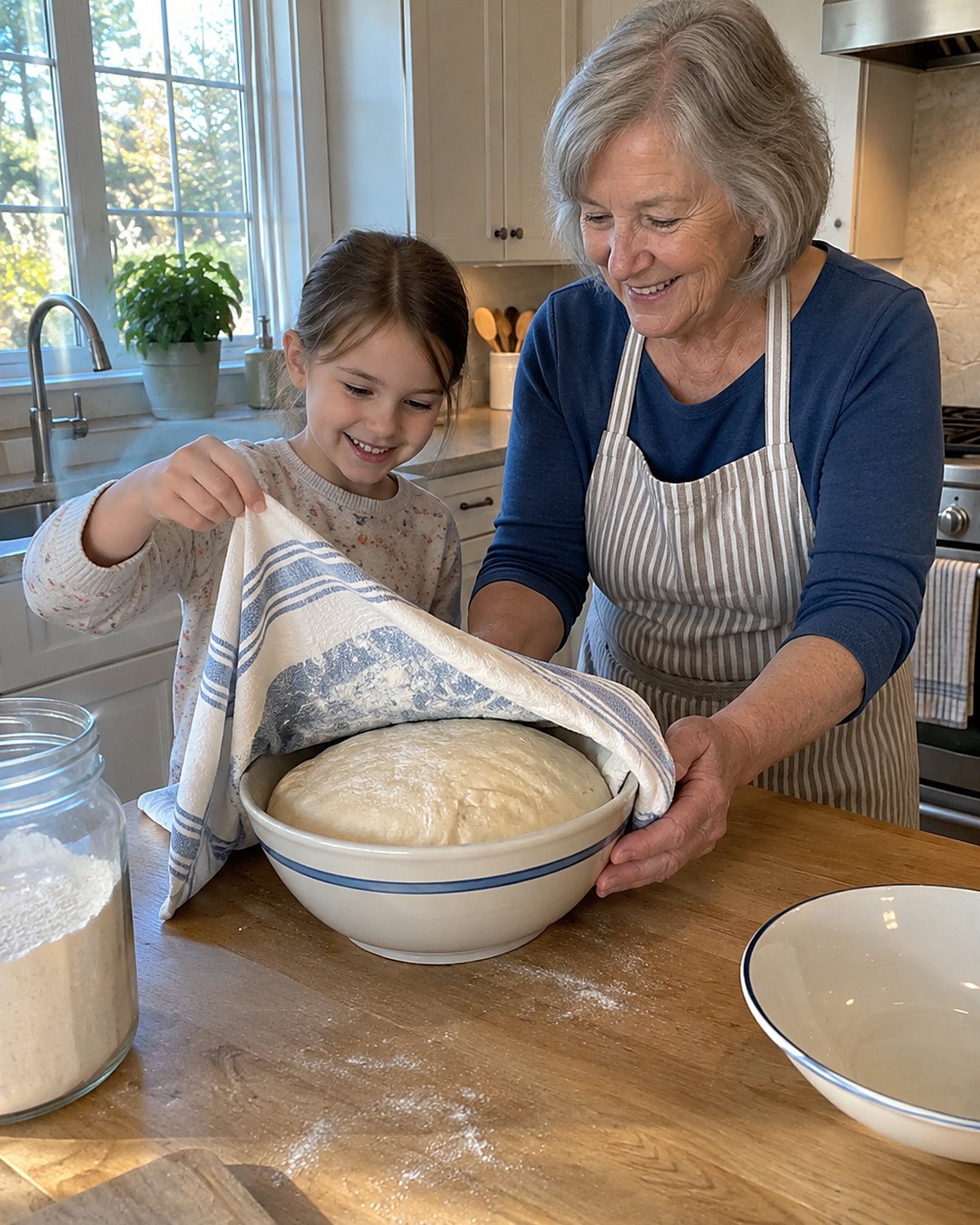
The bread is on the counter under a dish towel. A grandchild lifts one corner to look, and you ask them to put it back. There’s a reason the towel is there: it shields dough from drafts while it rises.
Invite them to check the bowl from the side instead. Mark the starting height on the outside with a piece of tape, then watch the dough climb. When it’s ready, press a floured fingertip into the surface. Dough that springs back fast needs more time; a slow return tells you to get the oven ready.
Keep the towel clean and away from any burner. Then let the child lift it when you’re ready to shape the loaf. They’ve watched the wait produce something they can see, and you haven’t had to say “be patient” once.
#1 The Spot You Save at the Counter
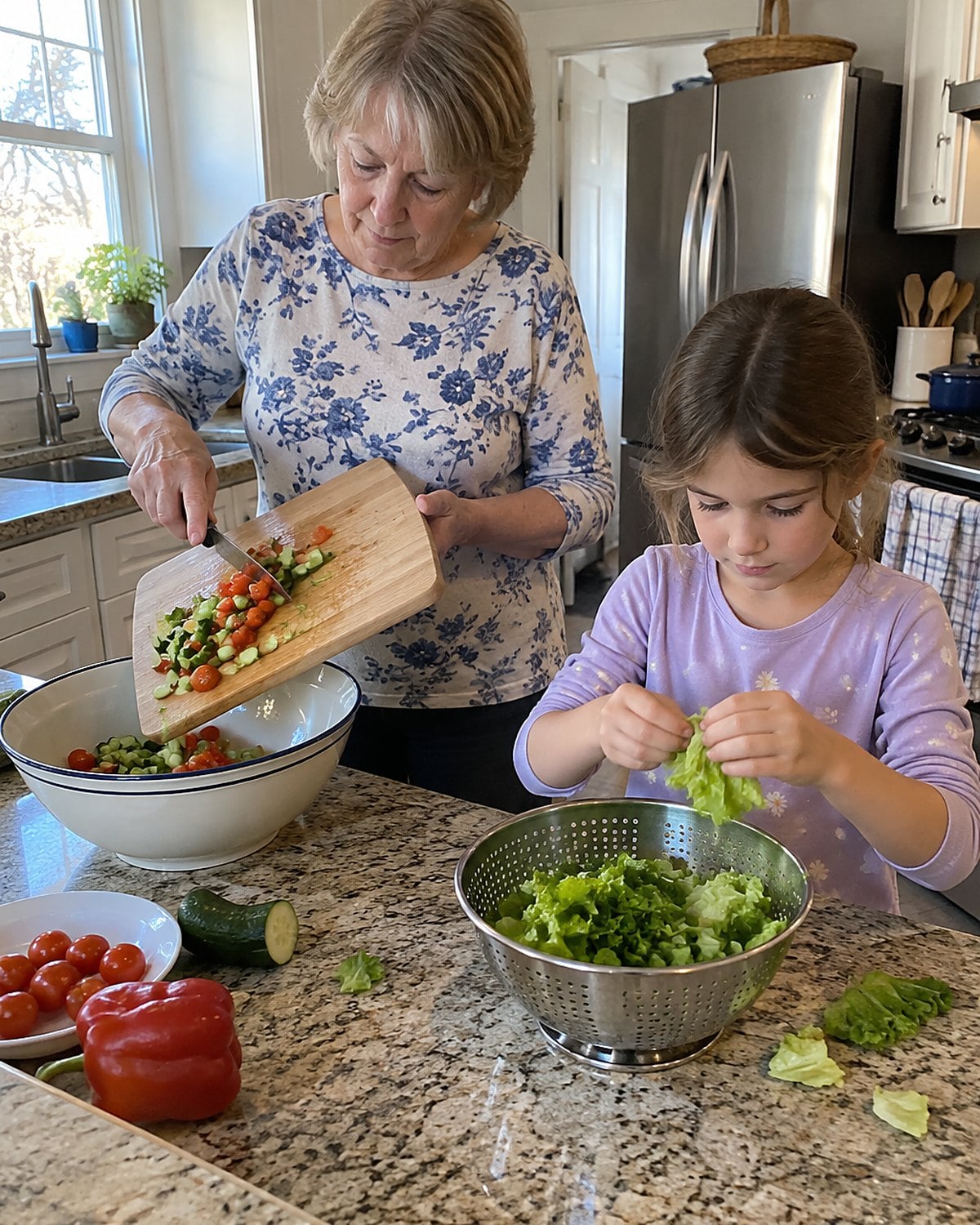
There’s a place where a grandchild stands without blocking the stove or the sink. You know it by where their elbows land. They know it because you move a bowl over before they ask.
Make that spot deliberate tonight. Clear a piece of counter, set down a sturdy bowl, and put one job there before the visit starts. Tearing lettuce works. So does snapping the ends off green beans or brushing crumbs from a cutting board. Choose a task you’ll use, not a pretend one made to keep them occupied.
Tell them where the hot zone begins. Show them where to put a finished bowl, where to wash their hands, and where to wait while you carry a pan. Then do your own work beside them. A child learns the shape of a kitchen by moving through it with you.
The birthday cake gets a photograph. This spot gets used again. Years later, they’ll walk into someone else’s kitchen and look for a clear place to stand. You gave them the idea that there would be one.
The bottom line
Grandchildren remember the parts of your kitchen they’re allowed to touch, the sounds that tell them what comes next, and the jobs that end with food on the table.
The prepared version of you has a sound stool, a safe spot at the counter, and one real task ready before the doorbell rings. Dinner still has to get made. They get to see how you make it.
Which part of your kitchen would they head for first? Notice it on their next visit, then give them a job there.
Leave a Reply