

The air fryer basket clicks shut beside the cutting board. Dinner's nearly ready, and your daughter-in-law is reaching for plates. She says the potatoes smell wonderful. She means it. She also remembers last Sunday, when she finished her water before she finished the salty gravy.
Guests bring their own habits into a kitchen with forty years of yours in it. They don't always know how to ask for a smaller scoop or a different sauce without sounding ungrateful. You don't need to change the whole meal. A few openings at the counter give them room to tell you what works.
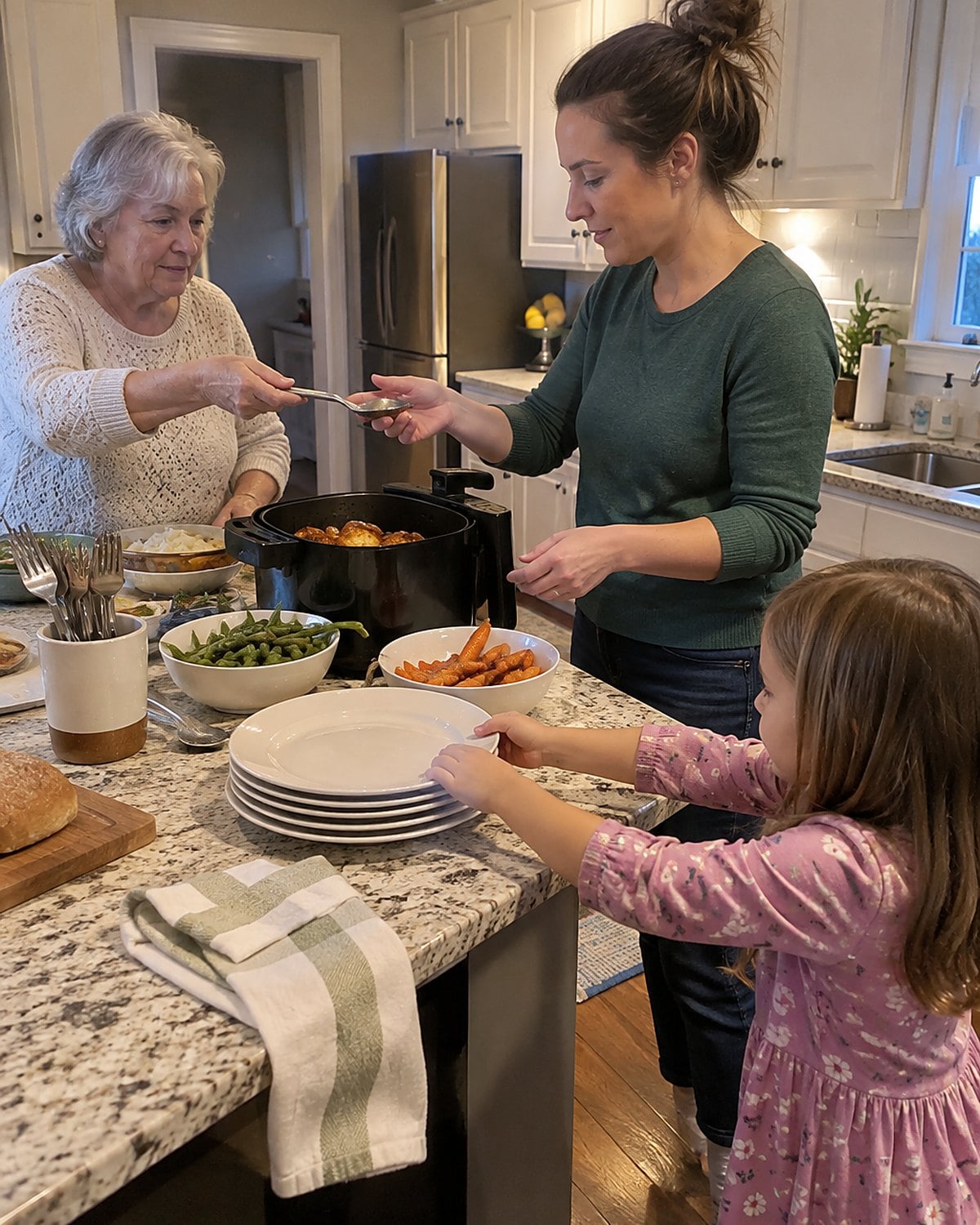
#24 The full plate handed across the counter
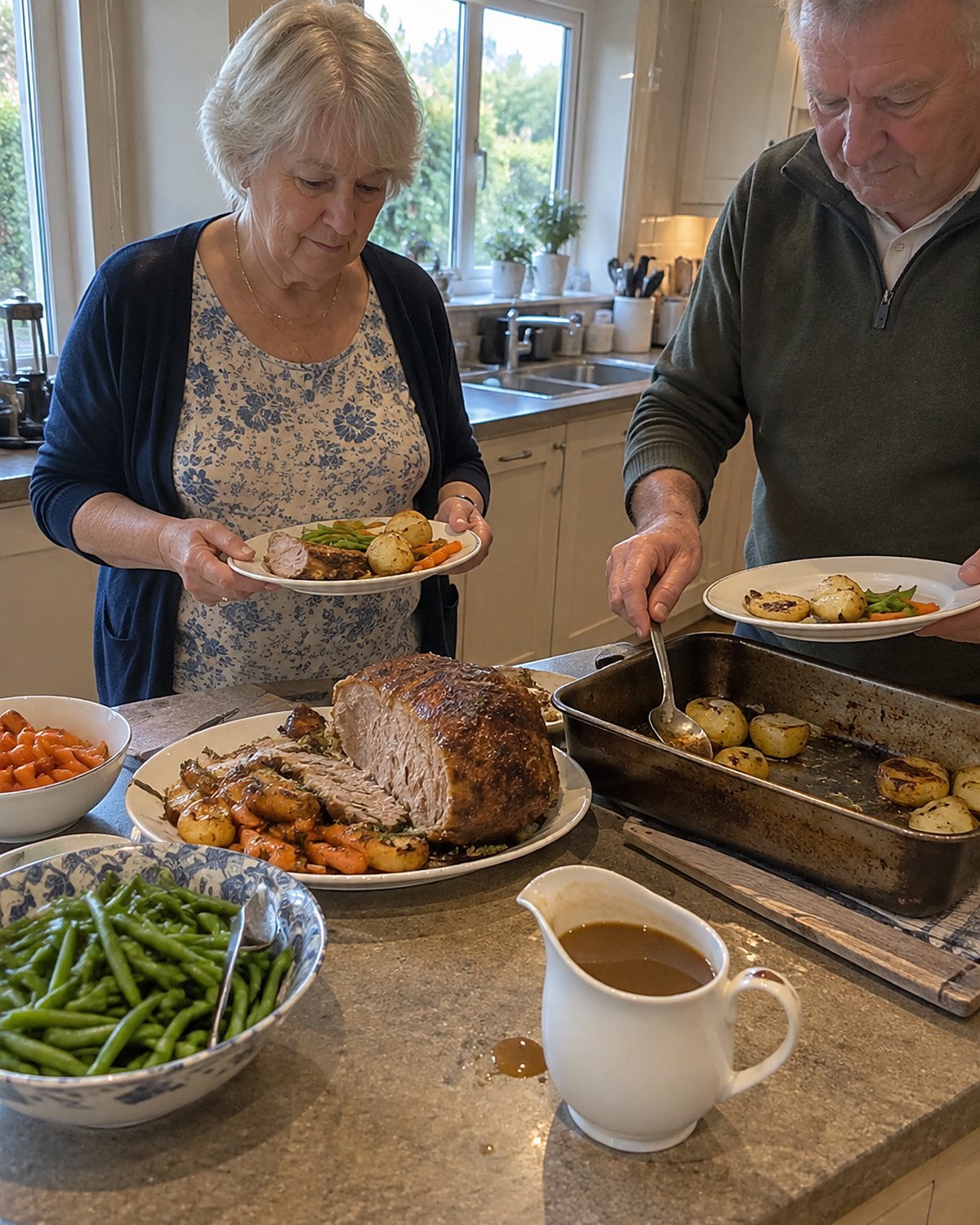
You've spent the afternoon cooking. Naturally, you want everybody fed. Then your daughter-in-law accepts a plate heaped with roast and potatoes, though she wanted half as much. Leaving food feels rude when you served it yourself.
Put the platter and spoon within reach. If you're serving at the stove, ask, “How much would you like?” and stop when she says stop. A guest who takes a small first helping still has the pleasure of coming back.
Watch what happens when the spoon stays in her hand. She takes the piece of roast she wants, adds potatoes, and leaves space for the beans. You haven't lost the pleasure of feeding her; you've let her decide what looks good tonight.
This also saves you from reading every leftover bite as a verdict. The serving was bigger than her appetite.
#23 The salt shaker beside the gravy boat
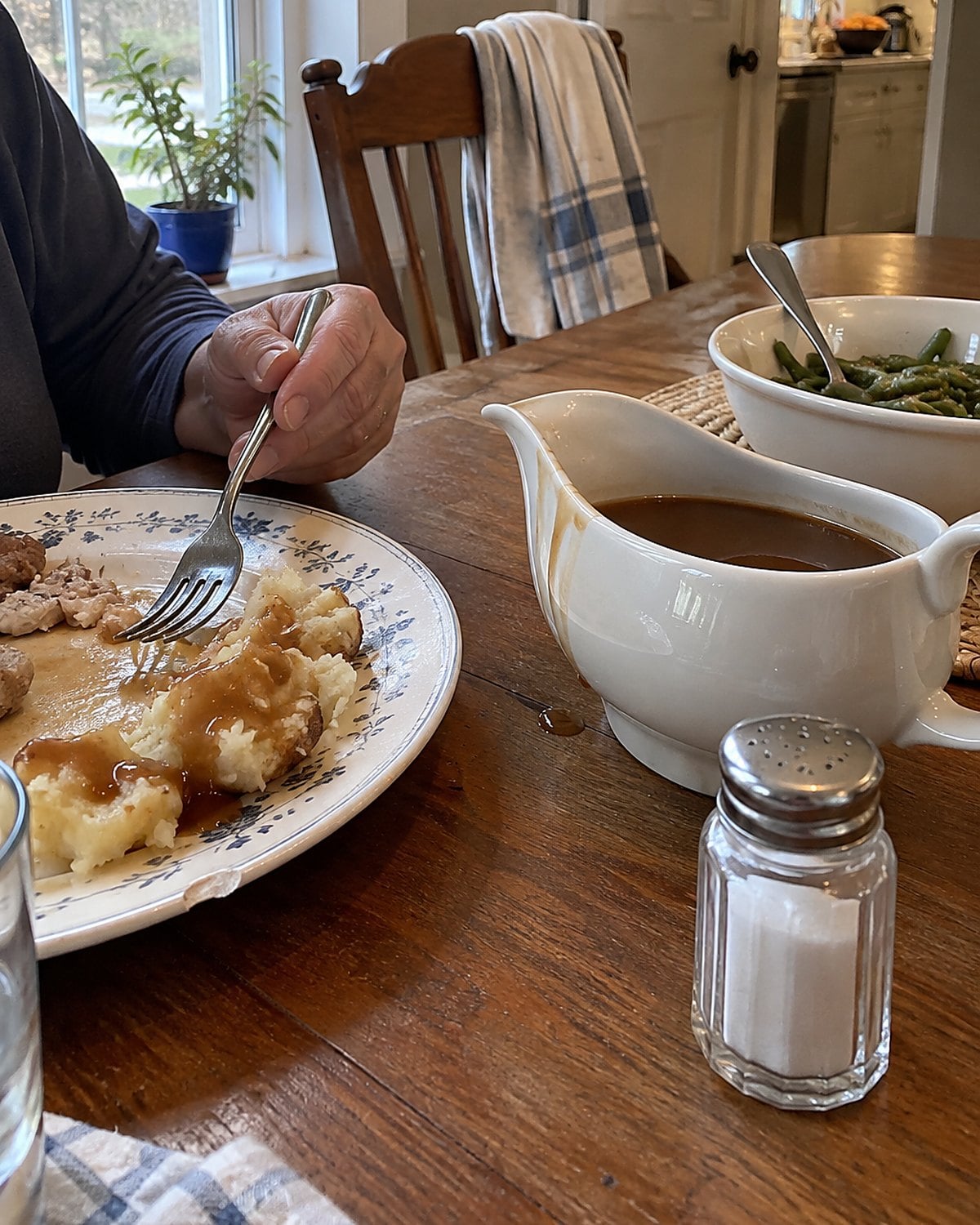
She's polite about the salt. The giveaway comes when she reaches for water, leaves gravy at the edge of her plate, and praises the carrots instead. She hasn't forgotten how much work you put into dinner. She just doesn't want to criticize it.
Gravy gets salt from more than the shaker. Stock, pan drippings, bouillon, and the roast's seasoning all end up in the same boat. If you build it from those ingredients, taste the finished gravy before adding any more.
Already too salty? Add unsalted liquid, then simmer it to bring back the texture. Keep a little plain stock nearby before the gravy is finished. It's easier to loosen a thick, salty gravy than to take salt out of one you've already poured over everyone's potatoes.
Set the shaker on the table for anyone who wants it. Your daughter-in-law gets a choice without having to ask for one.
#22 The chicken breast under the knife
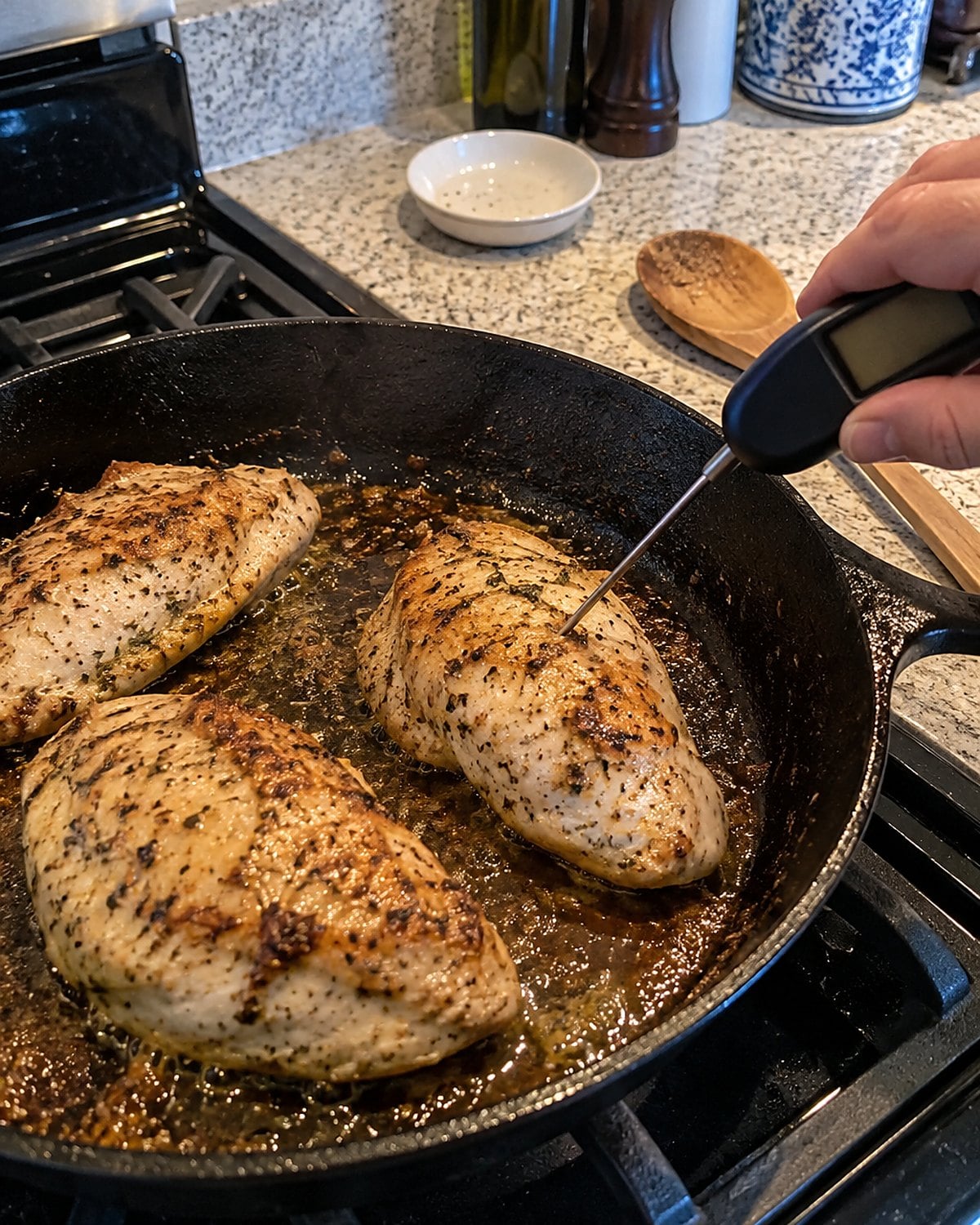
A chicken breast looks done at the thin end while the thick end is still cooking. Keep it in the pan longer, and the thin end dries out. That familiar dinner problem has an answer better than cutting into every piece.
Put an instant-read thermometer into the thickest part, away from bone. The USDA's safe temperature chart gives 165°F for poultry. Check more than one piece if their sizes differ.
If the thin end is much narrower, fold it under before cooking so the piece has a more even thickness. You still need the thermometer. The fold just gives both ends a better chance of reaching dinner together.
Your daughter-in-law won't have to decide between eating a dry breast and leaving it on the plate. Nor will you have to guess from the color of the juices. Let the thermometer settle the question before you carry dinner in.
#21 The serving spoon resting in each dish
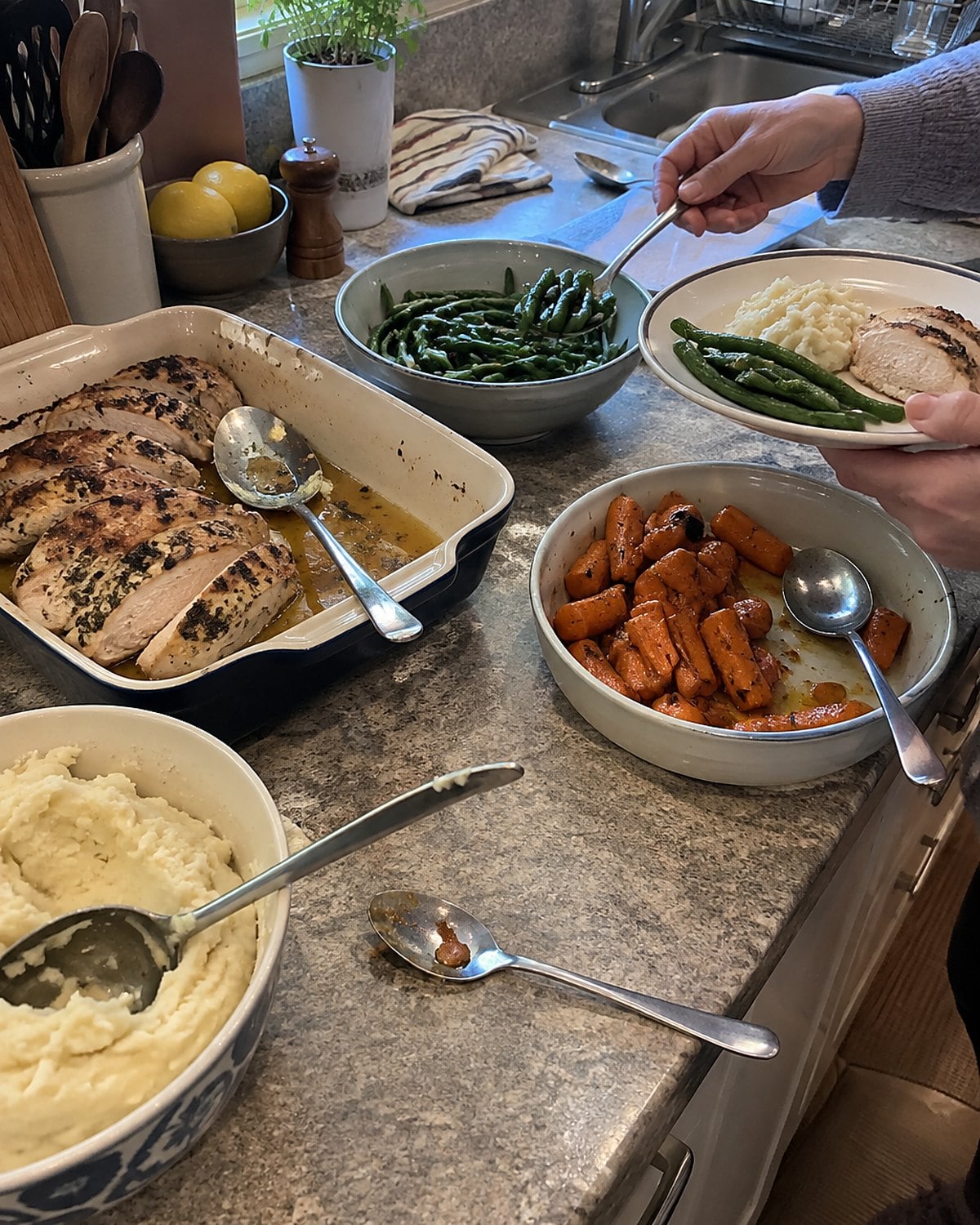
At the stove, you used the same spoon to taste the beans and stir the potatoes. You know exactly where it went. Your guests don't.
Give each dish its own serving spoon, and leave tasting spoons by the sink. That little bit of order helps people serve themselves without pausing over which utensil belongs where. It also keeps sauce from one dish out of another.
Look at the bowls from the guest's side of the counter. If a spoon has slid into the beans, set its handle where a hand reaches it without touching the food. A saucy spoon needs a saucer, not a trail across the tablecloth.
Once food reaches the table, you have better things to do than chase a spoon from bowl to bowl. Your daughter-in-law will see the thought you put into dinner without hearing a word about it.
#20 The casserole waiting on the stove
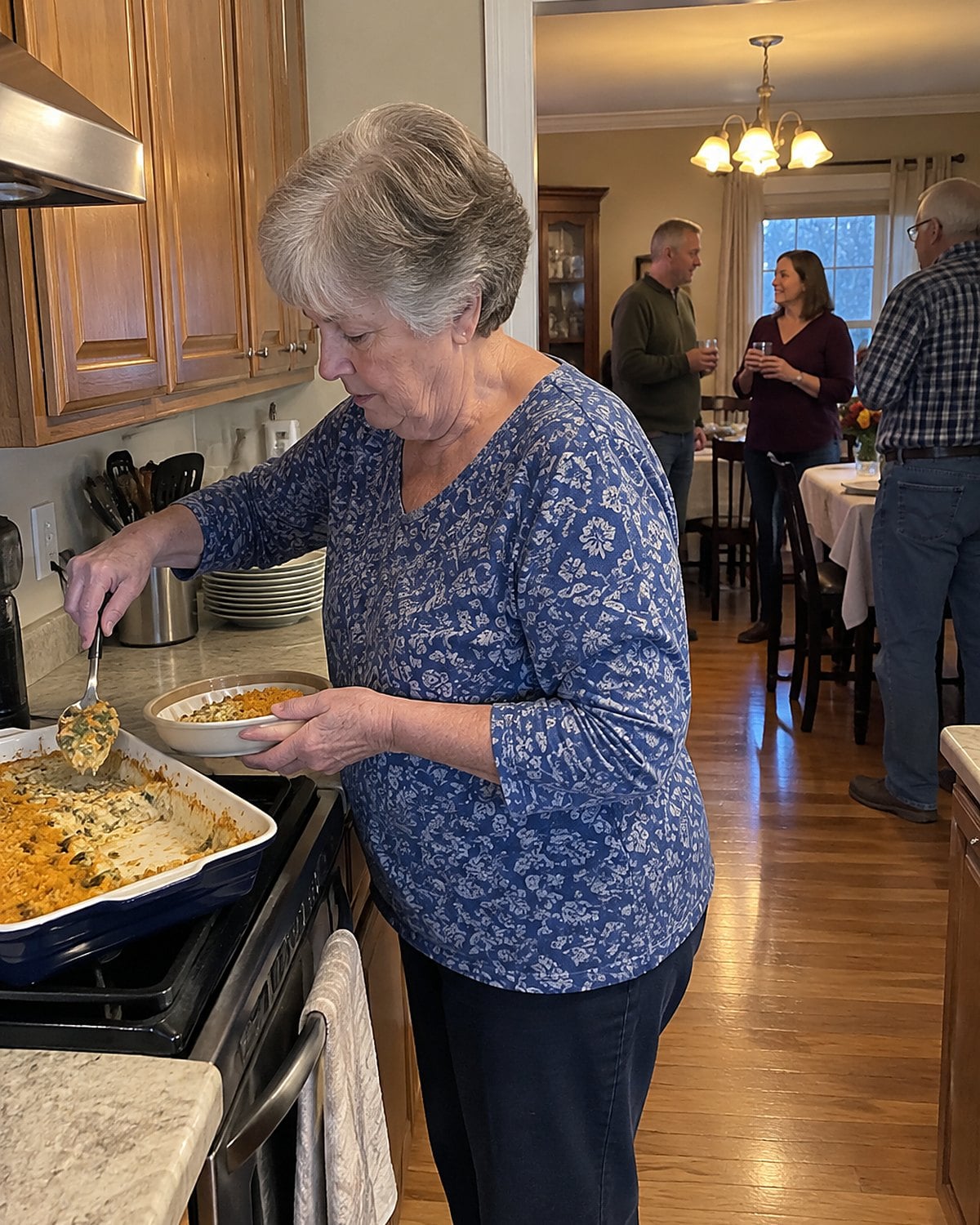
The casserole came out bubbling, so you left it on the stove while everyone caught up. Then the conversation got good. Nobody wants to break it up by asking how long dinner has been sitting there.
The USDA's leftovers guidance says to refrigerate perishable food within two hours. On a day above 90°F, that window is one hour. Set aside leftovers before the visit drifts onto the porch.
A shallow container helps hot food cool faster in the refrigerator than a deep pot does. When you're ready to serve leftovers, heat them to 165°F, using the USDA's guidance.
Put the containers where you'll see them as you clear the table. Otherwise, the empty plates go to the sink while the casserole stays behind. Your guest gets to enjoy the conversation instead of doing clock math over the dish.
#19 The green beans still in the pot
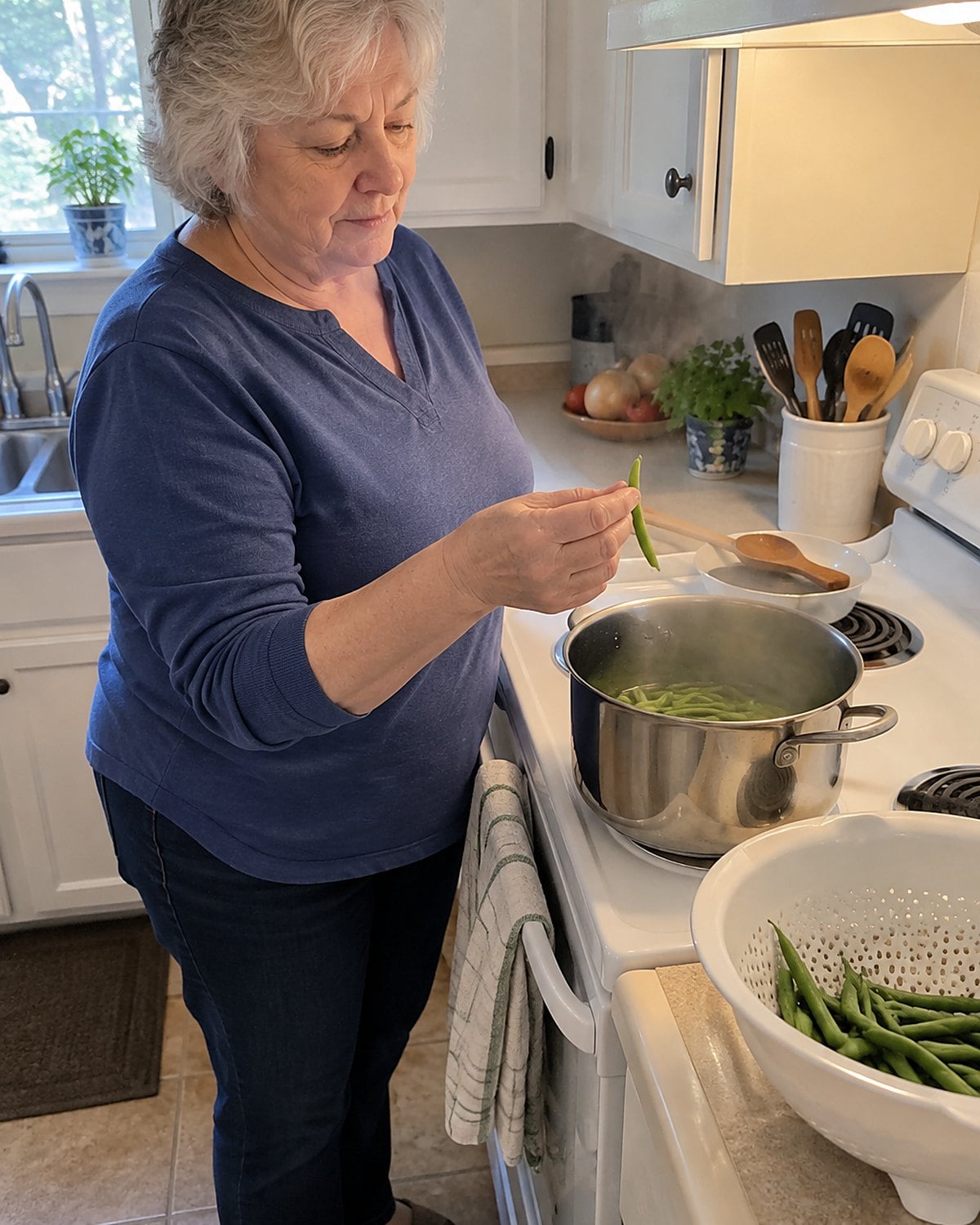
That long-simmered bean has a history. It belongs beside ham, potatoes, and a family table where somebody always asked for another spoonful. Your daughter-in-law's taste for a firmer bean doesn't erase any of that.
Take one bean from the pot before you call them done. Bite the thick end. If you want tenderness with a little resistance, stop while the bean still bends without collapsing. If your family expects the old, soft version, set aside a portion early and let the rest cook on.
Keep that early portion in its own small bowl. Otherwise, those beans end up back in the pot while you hunt for the serving dish. Ask, “Do you like yours with some bite?” She gets to answer a question about dinner, not pass judgment on your mother's beans.
You don't need a vote on whose beans are correct. You need a way to put both kinds on the table while they're hot.
Try it: Instant Pot Green Beans With Butter & Pepper
#18 The thermometer tucked behind the mitts
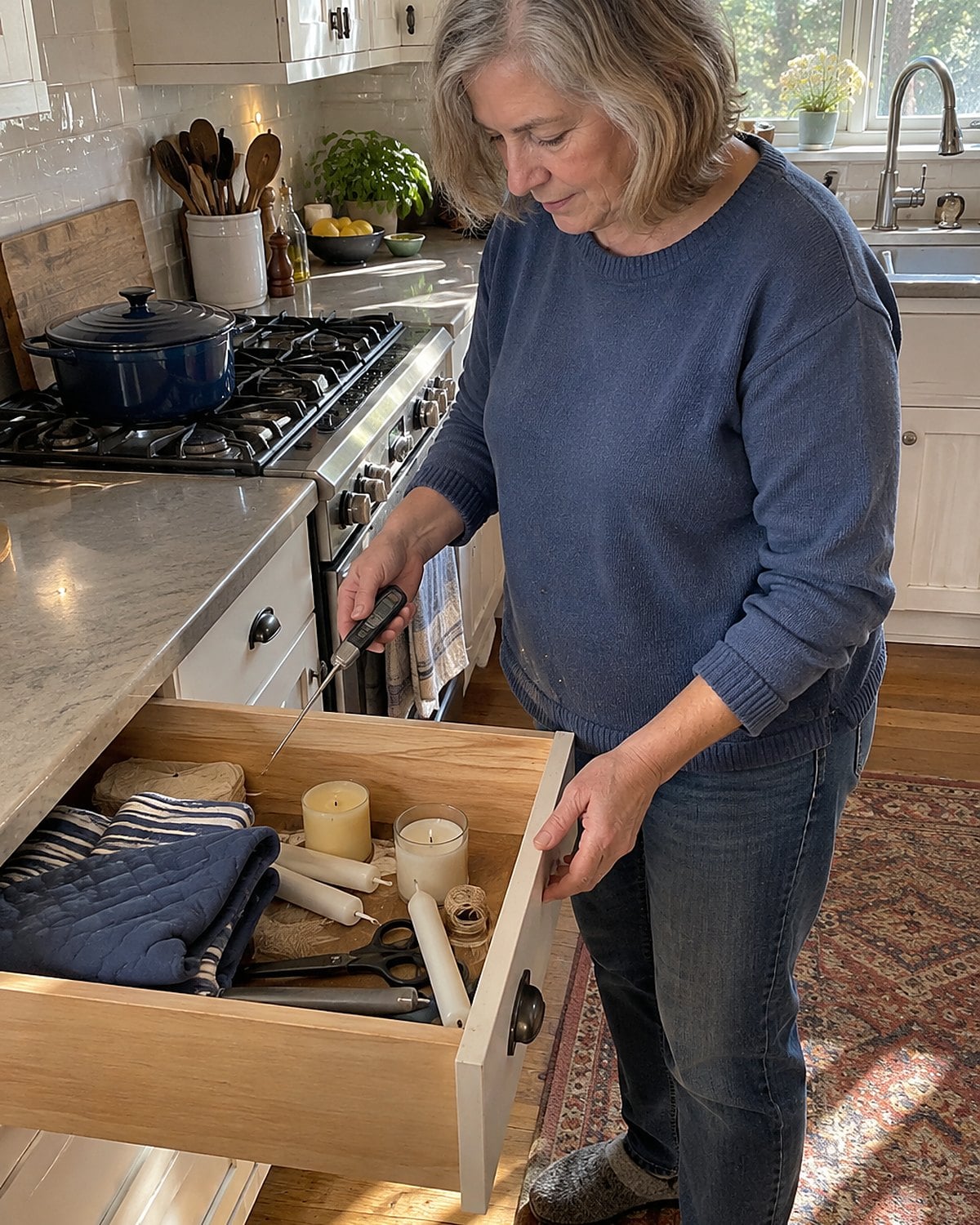
You own a thermometer, but it lives in a drawer under the oven mitts and spare candles. By the time you find it, dinner's cooling. So you press the roast with a finger and hope your years at the stove are enough.
For whole cuts of beef and pork, the USDA lists 145°F followed by a three-minute rest. Ground meat needs 160°F. Those figures answer different questions, which is why the thermometer earns a place beside your good knife.
Insert the tip into the thickest part, clear of bone and fat. Wash it after checking raw meat before using it on cooked food.
Make its drawer an easy one to open with a roasting pan in your other hand. Then ask your daughter-in-law to bring the platter over. You're ready to carve, and nobody has to wonder whether the center is done.
#17 The rolls passed around before dinner
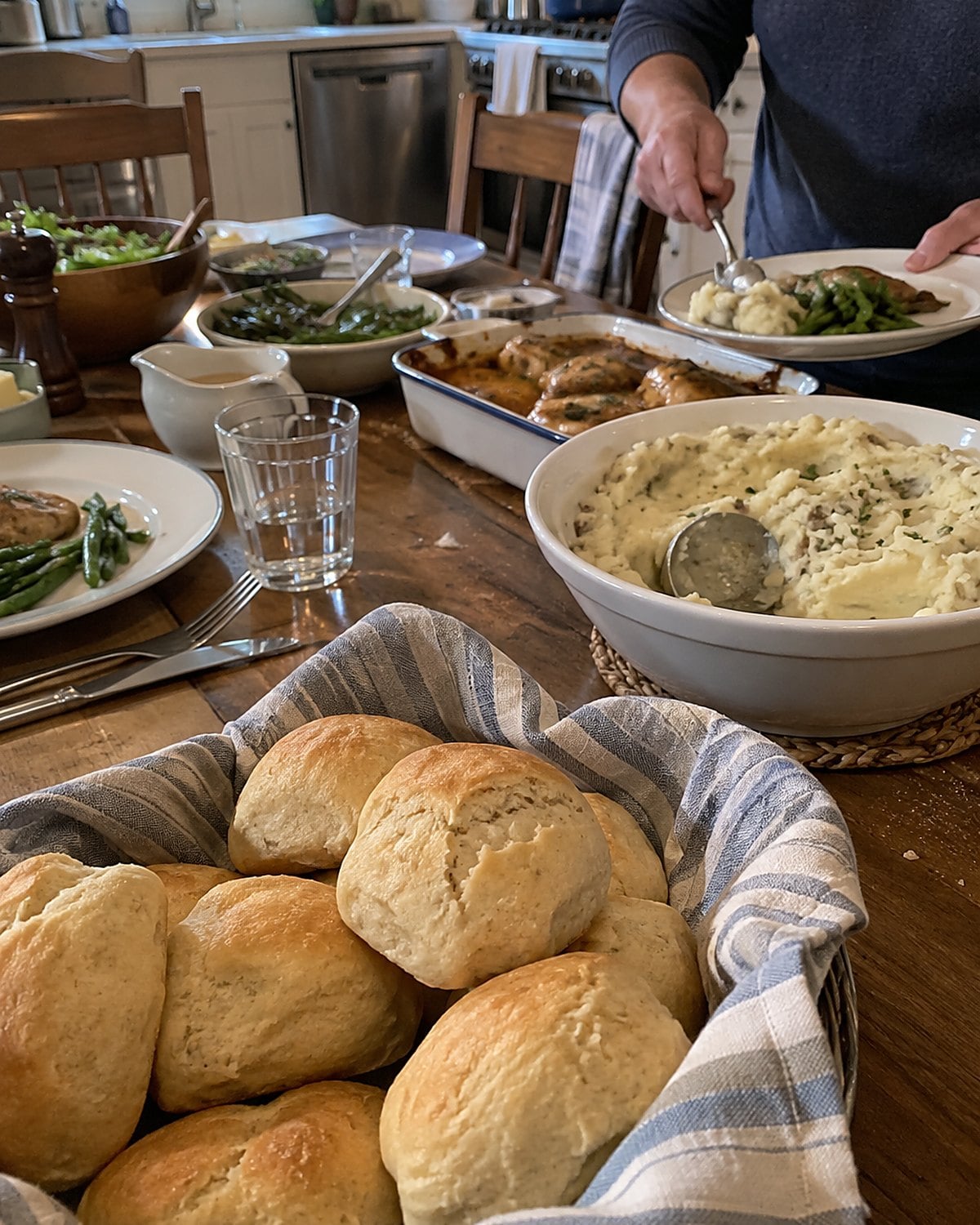
Fresh rolls smell like an invitation. They also arrive when your daughter-in-law is hungry enough to take two, just as you're bringing in a big meal. Later, she leaves half her potatoes, and you wonder what was wrong with them.
Keep the rolls with dinner rather than sending them around while the last dish finishes. Everyone sees what's on offer before filling a plate.
Picture the basket going round while you finish the roast. Hands reach for the warm bread because it's there, not because anyone has chosen bread over your dinner. Set the basket beside the roast when both are ready. Butter will wait.
If she skips a roll, leave it there. People have their own reasons for passing food, and they don't owe the table an account. Save your attention for the person asking for the butter.
#16 The onions crowded into the skillet
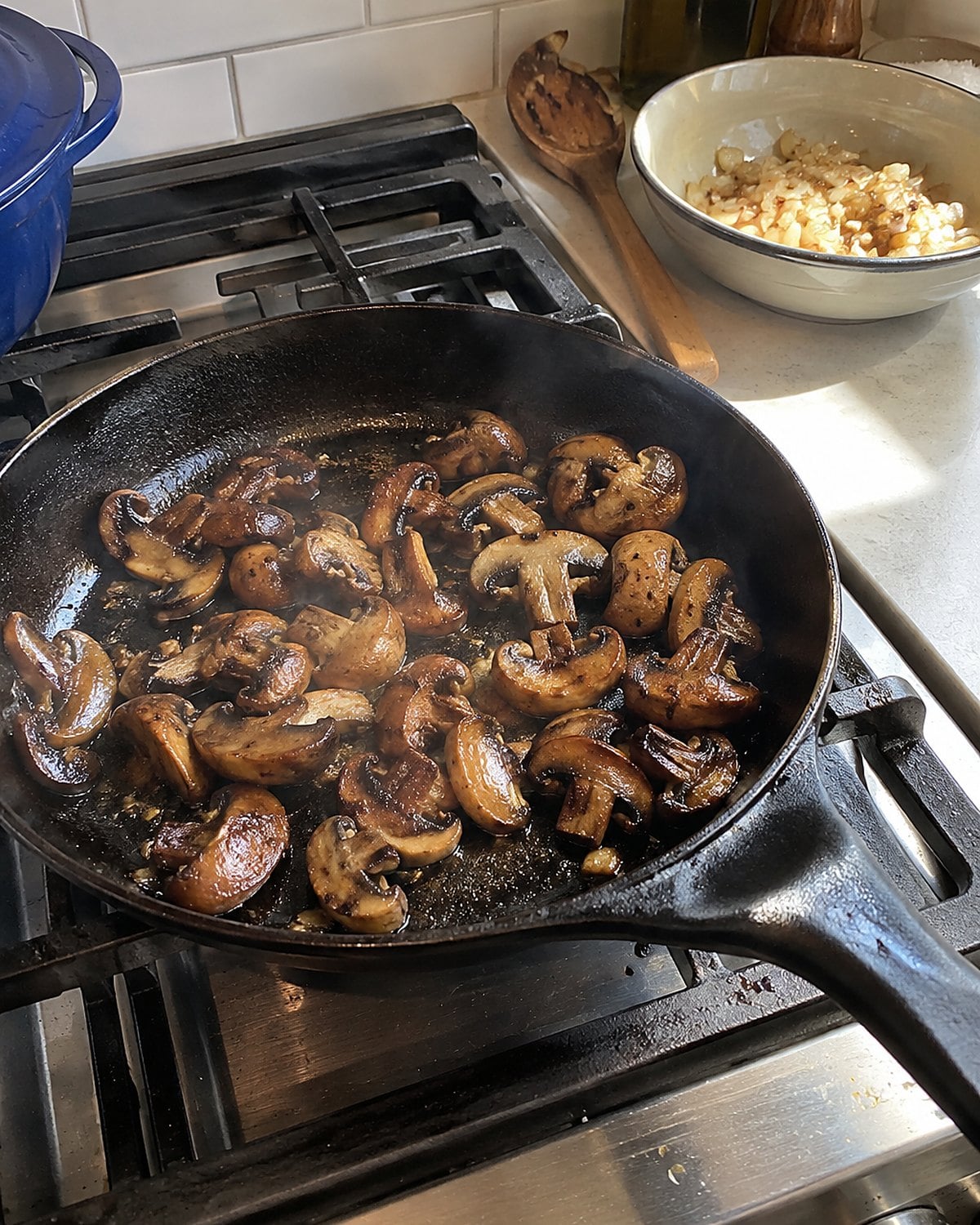
The pan stops hissing.
You've tipped chopped onions into a skillet already full of mushrooms. Liquid collects at the bottom, and both vegetables turn soft before they brown. Your daughter-in-law's small helping says less about your seasoning than that wet patch in the pan.
Browning needs contact with a hot pan and room for moisture to escape. Cook the mushrooms in batches, then set them aside while the onions take their turn. Once both have color, bring them together.
Listen when the next batch goes in. A steady sizzle tells you the pan is working. If the vegetables sit in liquid, move some to a bowl and let the rest cook. Those browned edges give the dish a deeper taste and a better texture.
The skillet is worth checking before you reach for anything else in the cupboard.
#15 The second helping offered across the table
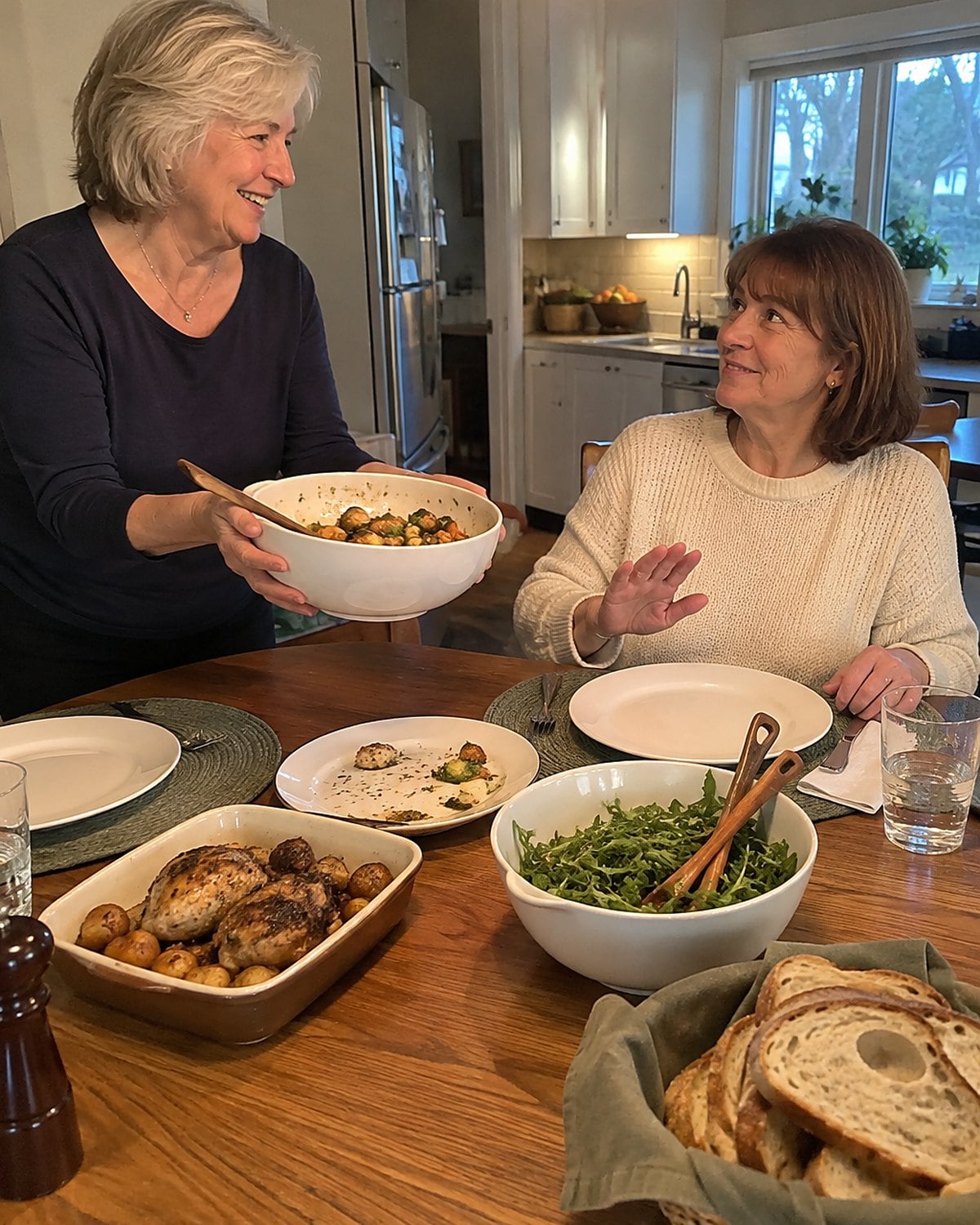
You notice her plate is empty. “Have some more,” you say, already reaching for the serving bowl. She smiles and covers her plate with a hand.
Try asking once, then take her answer. “There's more if you'd like it” gives her the information without turning dinner into a test of affection. If she says no, pass the bowl along.
You remember years when an empty plate meant a child was still hungry. An adult guest gets to decide for herself. The covered plate is an answer, even if she adds a compliment to spare your feelings.
When you clear dishes, don't ask again over the sink. Leave the remaining food where guests see it, or offer to pack some for later if it fits their plans. She'll enjoy returning next week more if finishing dinner doesn't bring another round of persuasion.
#14 The bouillon cube beside the stockpot
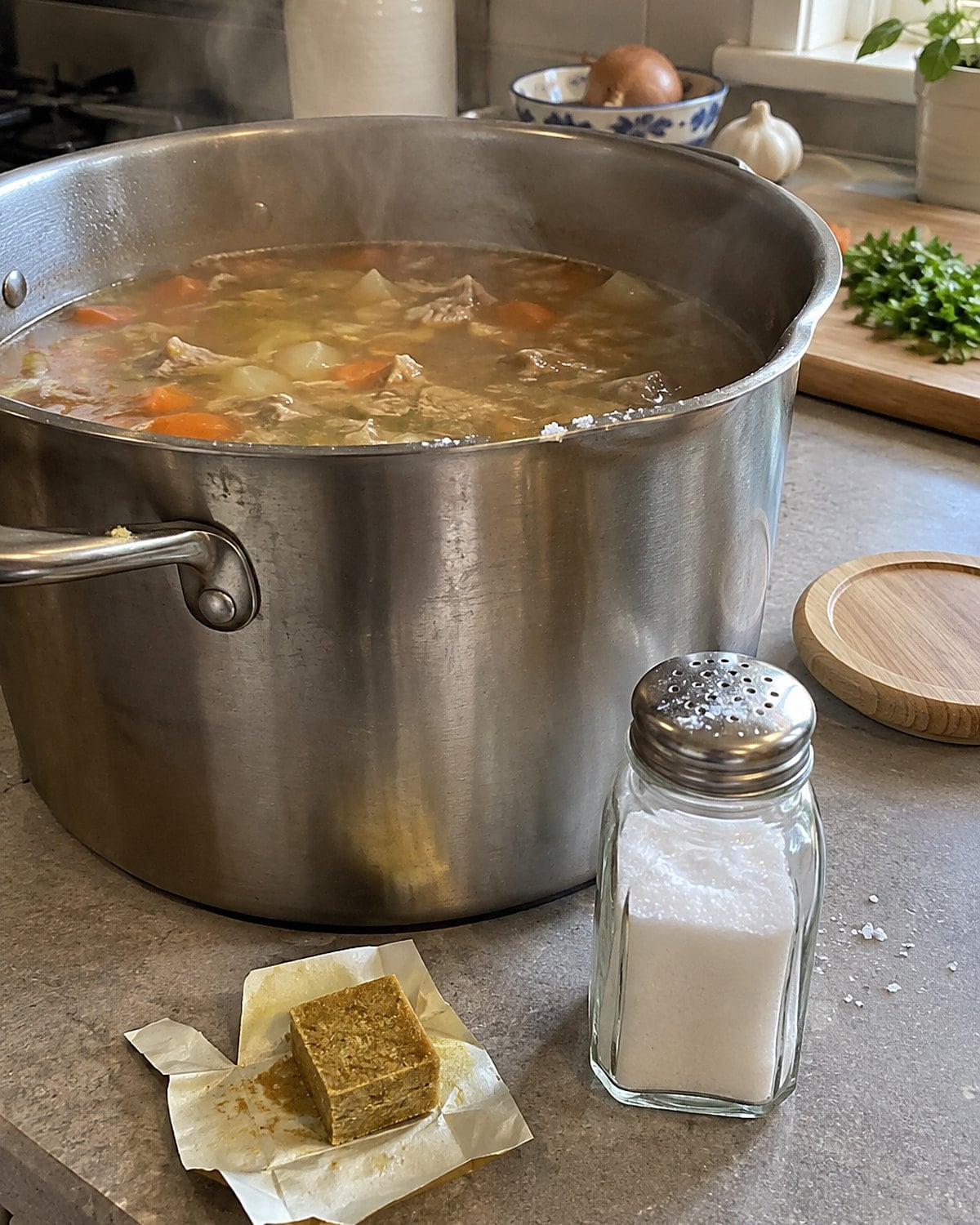
A cube is handy when the stockpot tastes flat. It also brings salt, even before the soup gets its final seasoning. Another cube deepens that salty base instead of bringing back the flavor of the vegetables.
Read the package before it goes into the pot. If the stock or bouillon is salted, hold off on adding more until the soup is finished. Lemon juice or a spoonful of vinegar at the end sharpens dull flavors without making the broth saltier.
Start with a little acid in a spoonful of soup, away from the pot. Taste the difference before changing the whole batch. If that spoonful tastes brighter, add a little to the pot and stir.
Your daughter-in-law doesn't need to know how you rescued it. She gets a bowl where she tastes the carrots and onions, not another cube.
#13 The lettuce spun at the sink
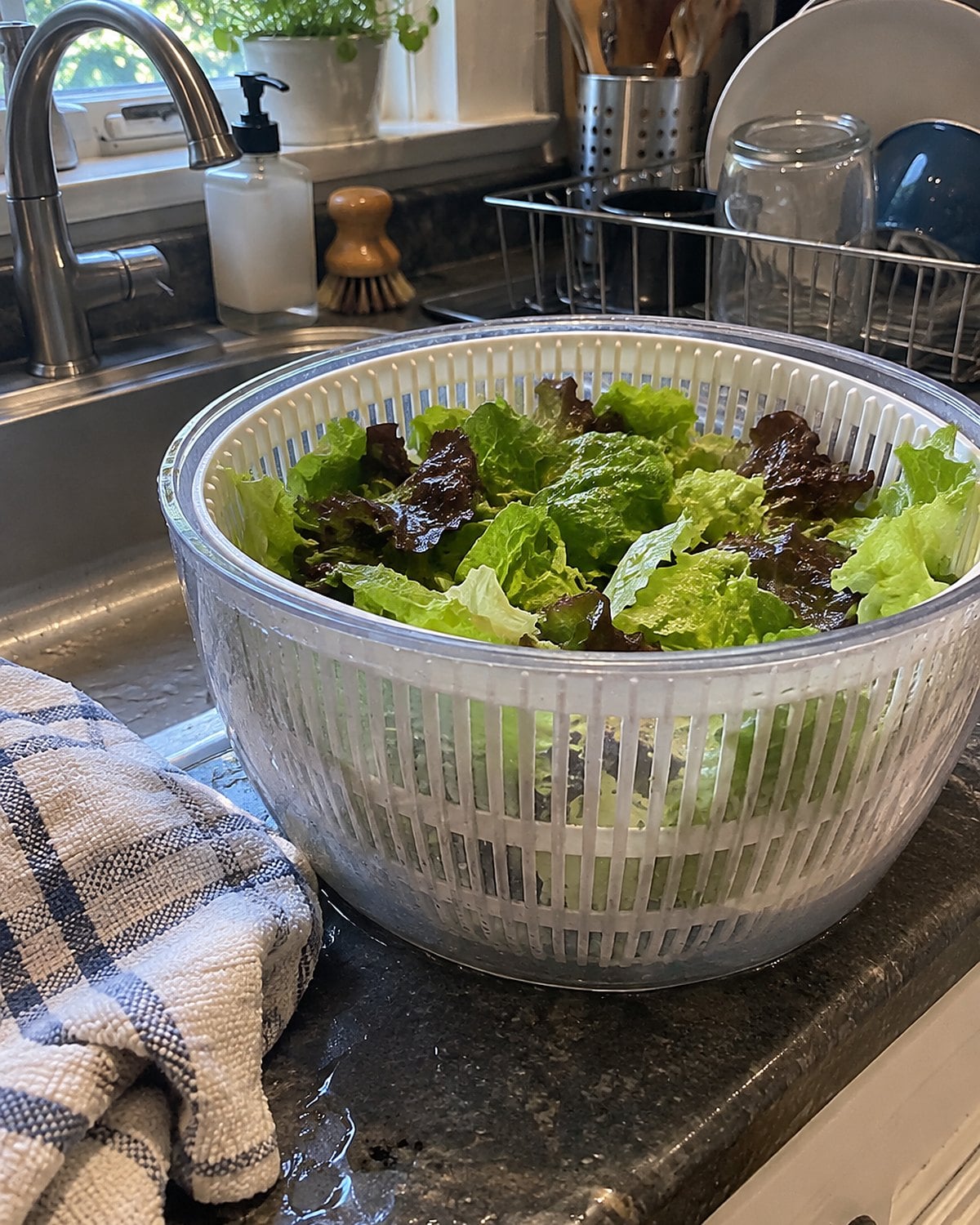
You washed the lettuce. Your daughter-in-law saw you do it, and she appreciates the care. Then dressing slides off wet leaves and pools beneath the salad.
Drying is the step that changes the bowl. Spin the leaves, or wrap them in a clean towel and shake them over the sink. Dressing clings to dry leaves instead of sinking past them.
Pick up a leaf before you put away the spinner. If it drips onto the counter, give the leaves another turn. If it feels dry against your fingers, the dressing has a surface to hold. That quick check beats wondering why the bottom of the salad bowl tastes sharper than the top.
If the salad sits while the main dish finishes, keep the dressing separate. Your guest gets crisp lettuce, and you don't have to remake a bowl that looked lovely ten minutes earlier.
#12 The leftover container leaving with guests
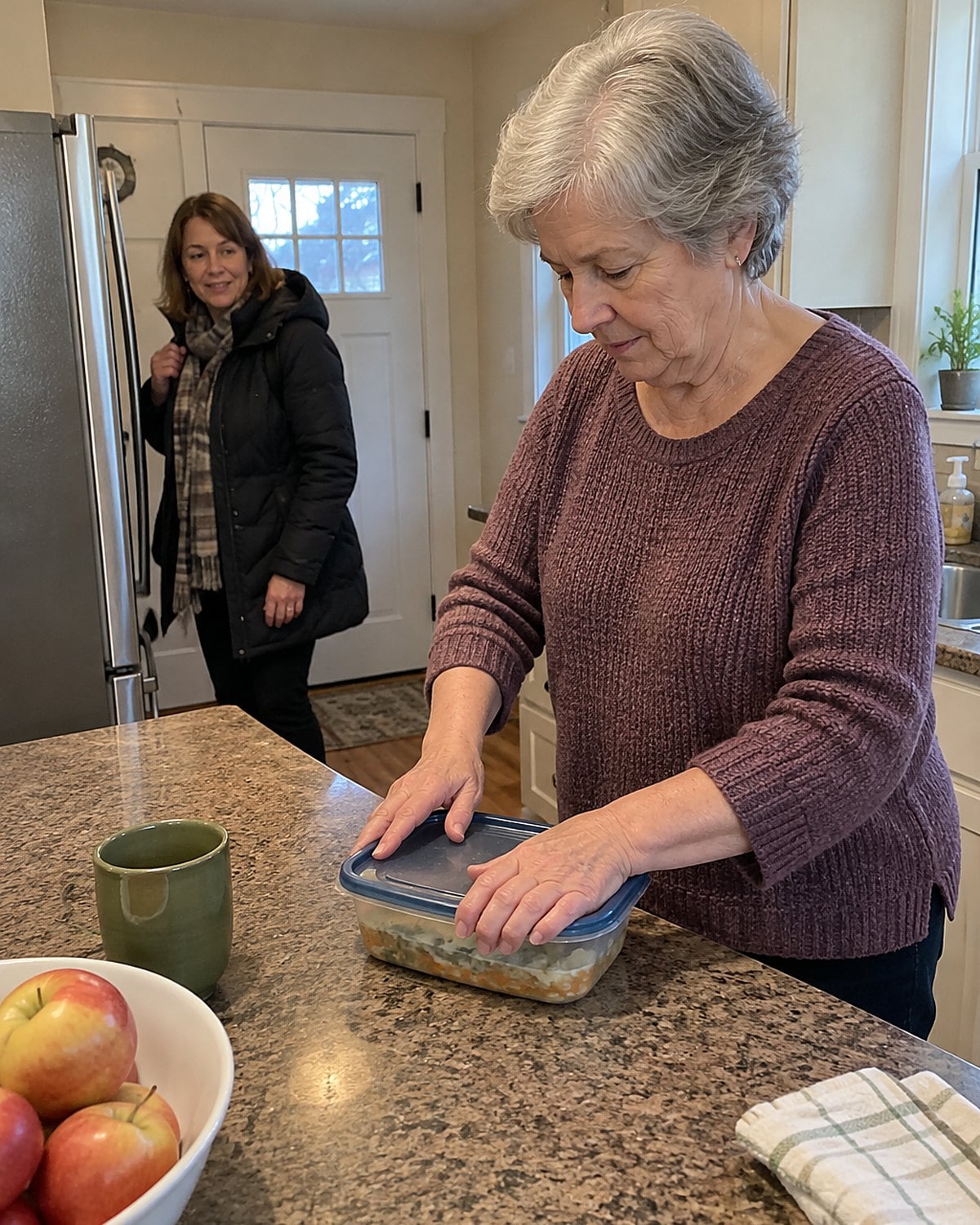
You saved her a generous portion of dinner. She thanked you at the door, then drove home with a warm container on the passenger seat. The meal was good; the trip home is what matters now.
Ask whether she has a way to keep it cold if she isn't going straight home. Put food in shallow containers and refrigerate it promptly.
At home, a refrigerator set to 40°F or below is the target. The FDA's refrigerator guidance explains why a fridge thermometer helps: the dial alone doesn't tell you the temperature.
Your gift will be more welcome when it fits her plans. If she's heading elsewhere first, offer the food another time rather than insisting she take it now. A container waiting in your fridge is a kinder offer than one she has to worry about in her car.
#11 The cake slice cut for her
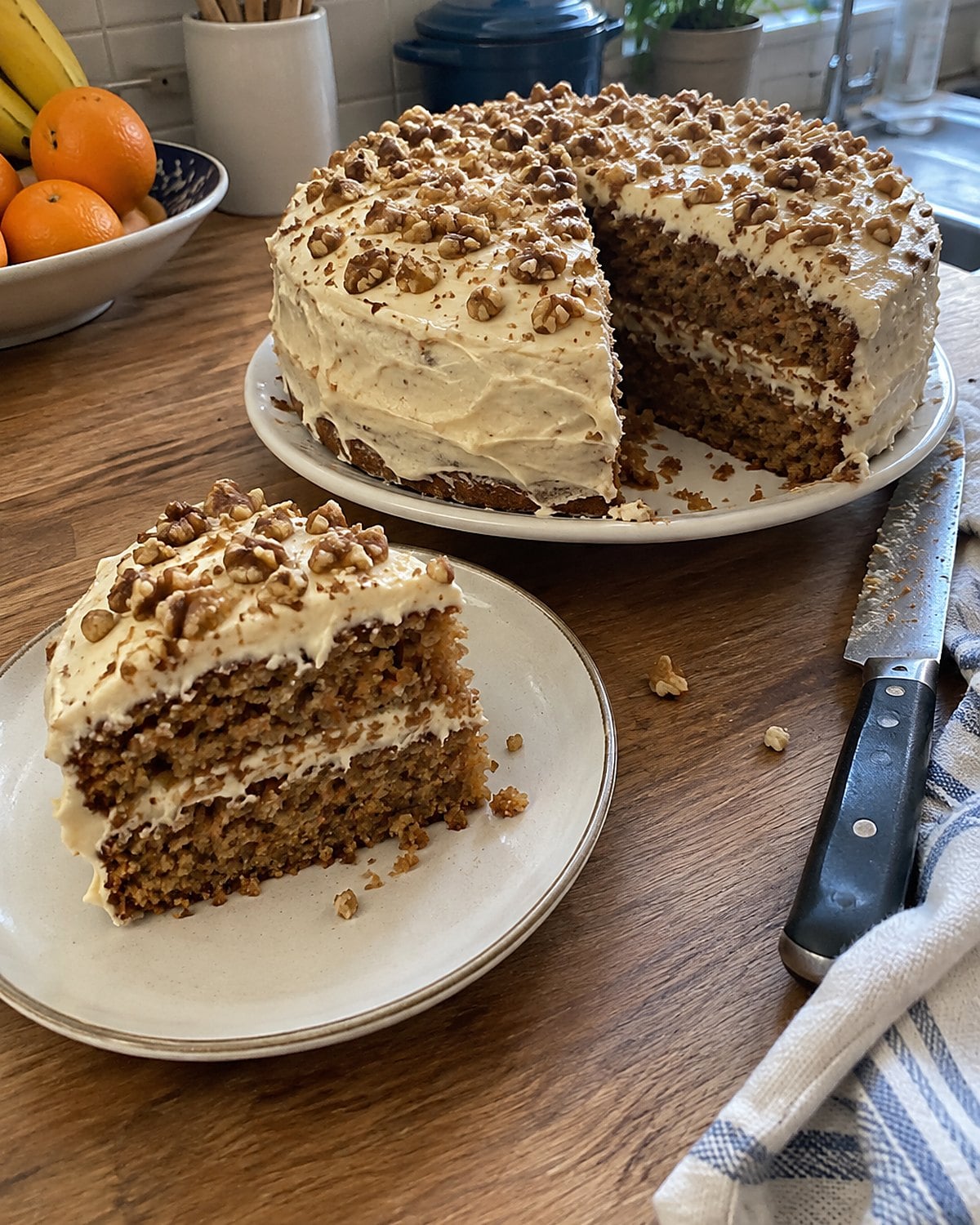
You cut the slice you would want. She asks for a smaller one, and your knife hangs over the cake while everyone listens. It takes courage to say no to a generous host, especially after a homemade dessert.
Cut a thin slice first and leave the cake nearby. Anyone who wants more gets more. A small serving lets your daughter-in-law enjoy the cake without explaining what she ate earlier.
Before you lift the slice, ask, “Is this about right?” She gets to choose without making a speech. If the cake is rich, a narrow piece still shows off the frosting and filling you spent time on.
There's another kindness here: don't ask whether she's “being good.” Dessert has nothing to do with her character. Ask whether she'd like coffee, and let the cake speak for itself.
#10 The oven dial on the old range
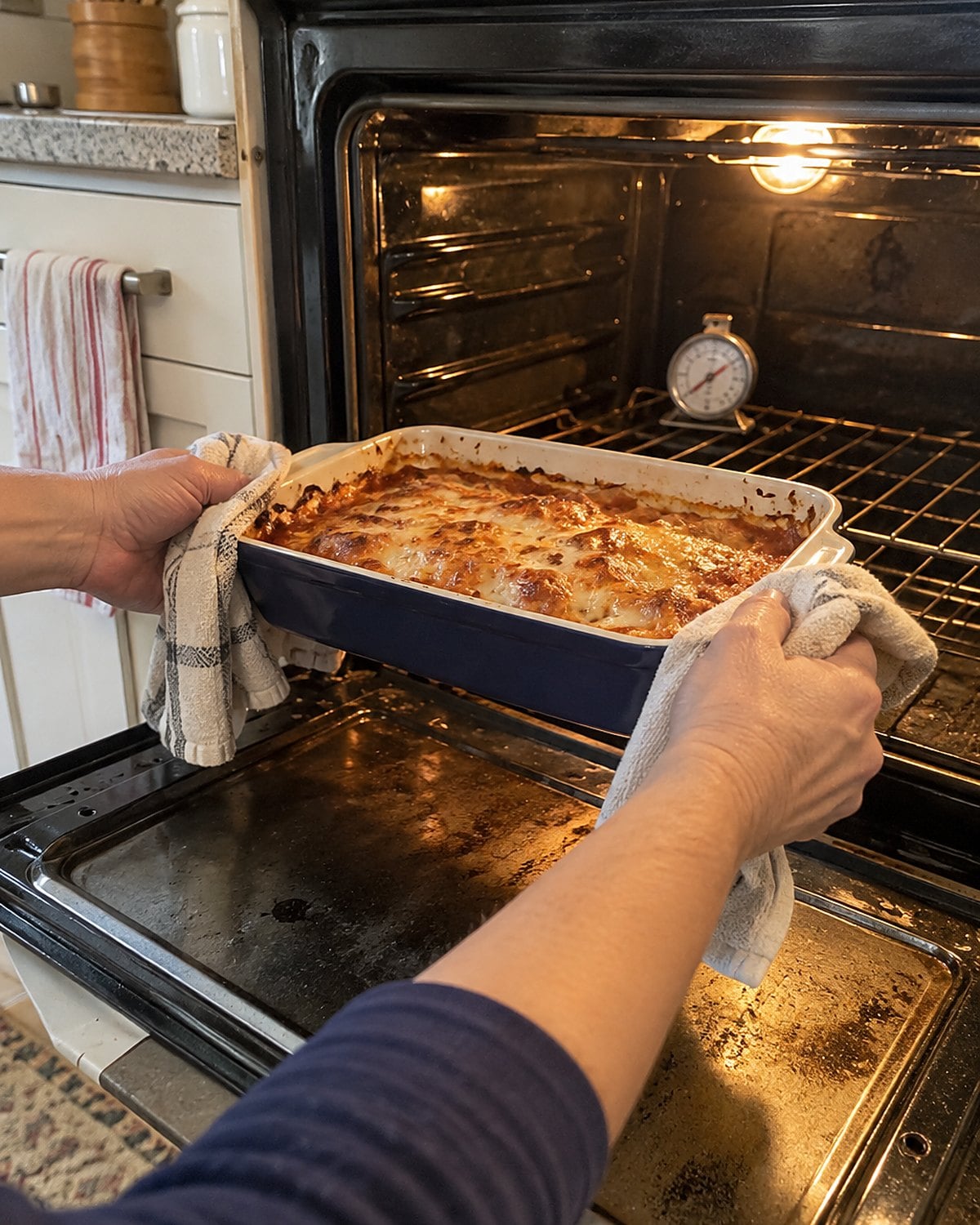
Your church cookbook says the casserole takes 30 minutes. Your old range has cooked it for years, yet the top browns before the middle is hot. You trust the recipe and give it another five minutes.
Check the oven with a separate oven thermometer. Set it in the center, let the oven heat fully, and compare its reading with the dial. If they disagree, you have a concrete reason to adjust your timing or get the range checked.
Move the thermometer to another part of the oven on a later bake. A casserole near the back wall faces different heat from one centered on the rack. That matters when its browned top tempts you to bring it straight to the table.
For a leftover casserole, use a food thermometer in the center and heat it to 165°F. A browned top tells you what happened at the surface. Your daughter-in-law notices the difference when the first spoonful is hot through.
#9 The grandchild's crowded high-chair tray
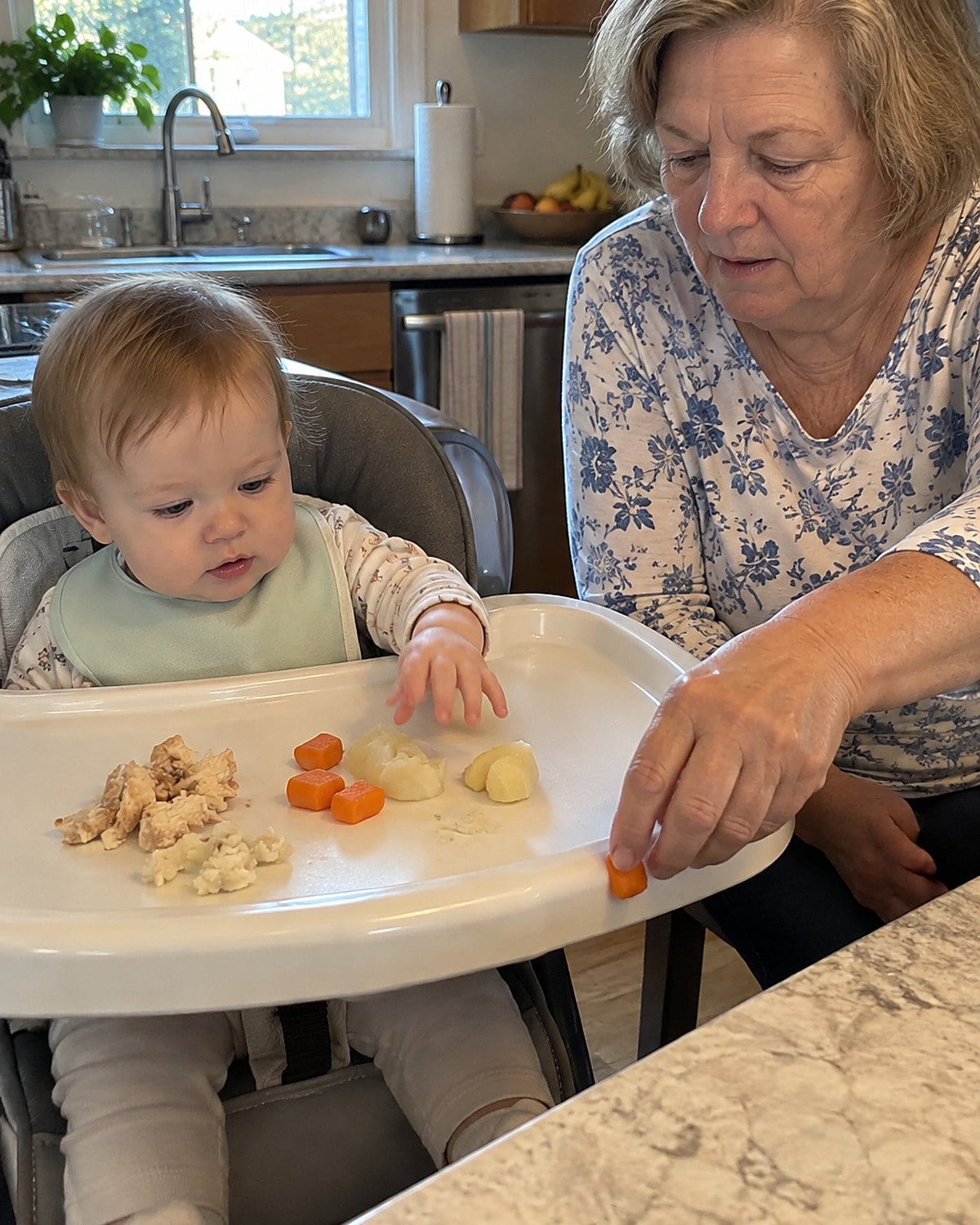
A little hand reaches for a roll while you place chicken, carrots, and potatoes across the tray. Your daughter-in-law starts moving pieces apart before the child even takes a bite. She knows what her child will try first.
Ask her how she'd like the food served. Give the child a small portion, then offer more when asked. That keeps the tray manageable and saves food from getting pushed onto the floor.
Bring the dishes within the parent's reach and let her choose what goes on the tray. If she moves the carrots aside, don't put them back between bites. She's watching the child, the food, and the chair while you're watching dinner.
Let the parent handle rules about what the child eats and how it's cut. You get to be the person who made dinner, not the person negotiating every bite.
#8 The rice beneath a heavy lid
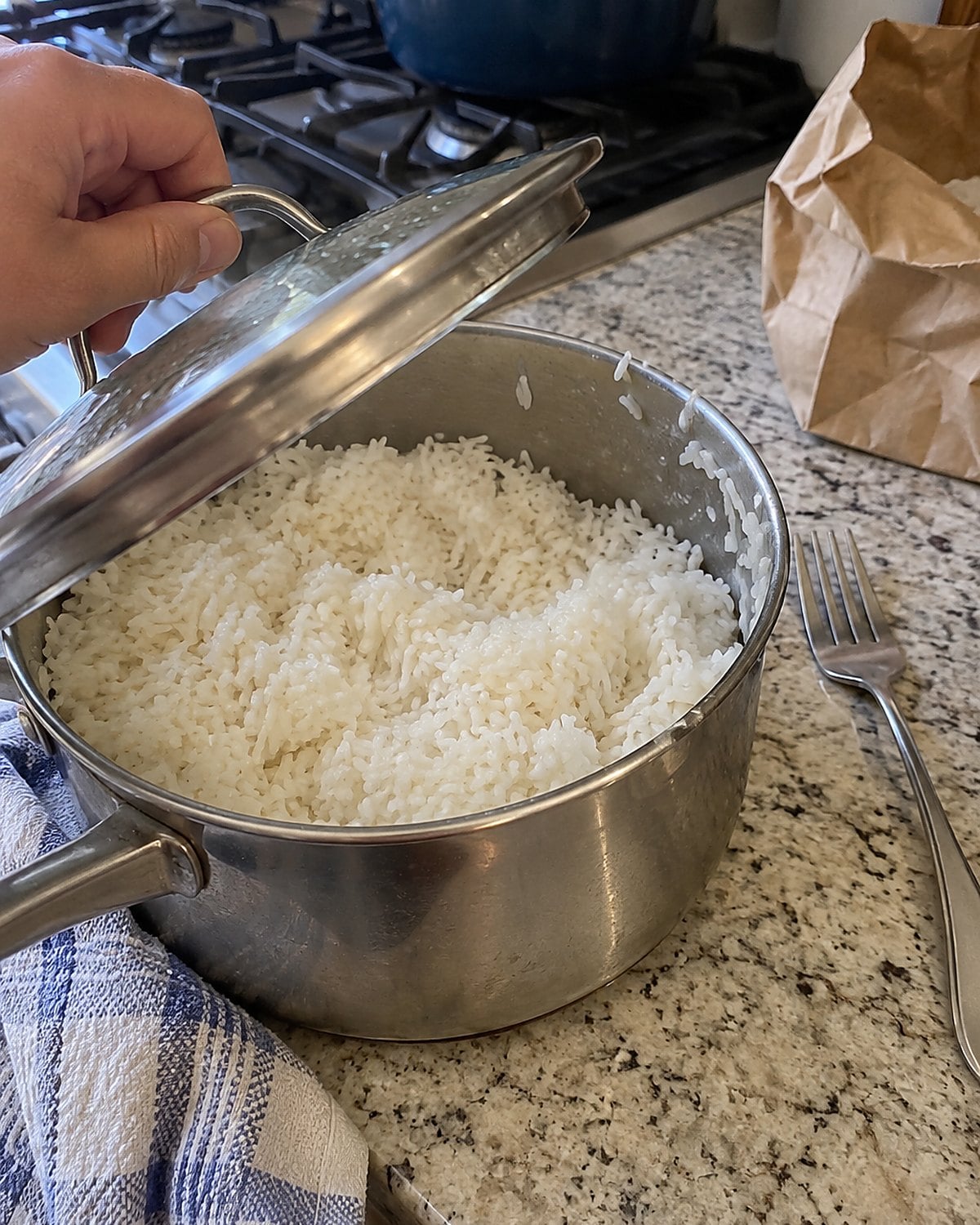
You lift the lid to see how the rice is doing. Steam escapes, the surface looks wet, and you stir to help it along. By dinner, the top is soft and the bottom is stuck to the pot.
Rice cooks as measured water turns to steam and is absorbed. Use the water amount on the package for the kind in your cupboard, bring it to a simmer, then cover it and leave the lid in place. When the listed cooking time is up, take the pot off the heat and let it rest, still covered. Fluff with a fork at the end.
Keep the bag nearby until you've cooked this rice once. The amount for a different variety isn't a promise about the one in your hand. If your daughter-in-law offers to bring the rice to the table, hand her the fork after its covered rest.
That package instruction matters more than the habit you learned for a different rice. You'll have a free hand to bring the rest of dinner over.
Try it: How To Cook Rice In Instant Pot
#7 The recipe card from her family
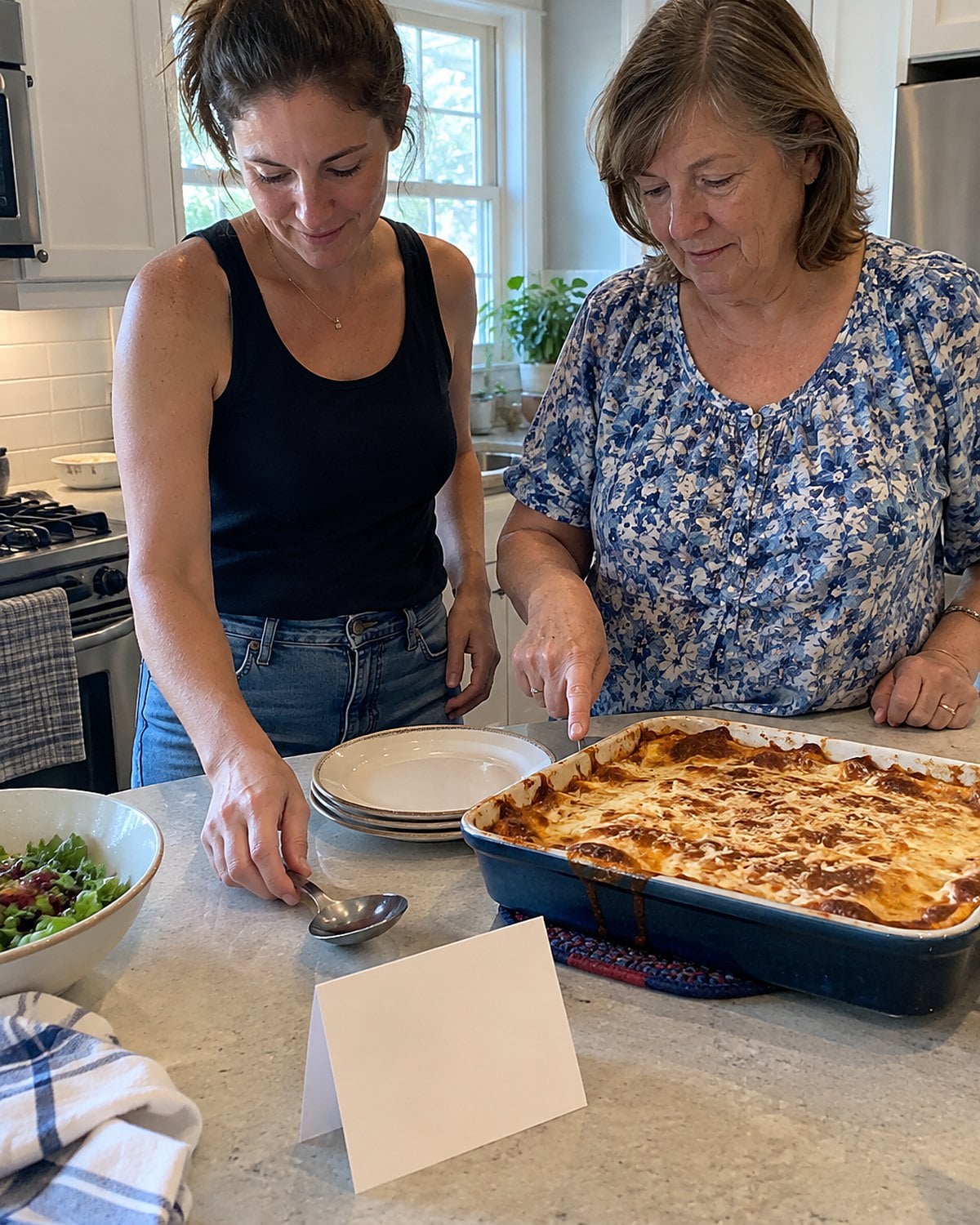
She's standing in your kitchen while you make the dish your son has loved since childhood. It hits you that she grew up eating somebody else's version. Neither of you has to pretend there's only one good way to make it.
Ask what her family puts in theirs. Listen for the detail: sour cream instead of milk, a crisp topping, onions cooked first. You don't have to change your recipe on the spot. The question tells her there's room for her history beside yours.
Keep your church cookbook open beside the dish if you want to show her where your version began. A recipe card with worn corners is an invitation to trade details, not proof that one family got it right.
If she offers to bring her family's version next time, say yes. Two dishes on the table give everyone something to talk about besides which cook won.
#6 The spice jar with the faded lid
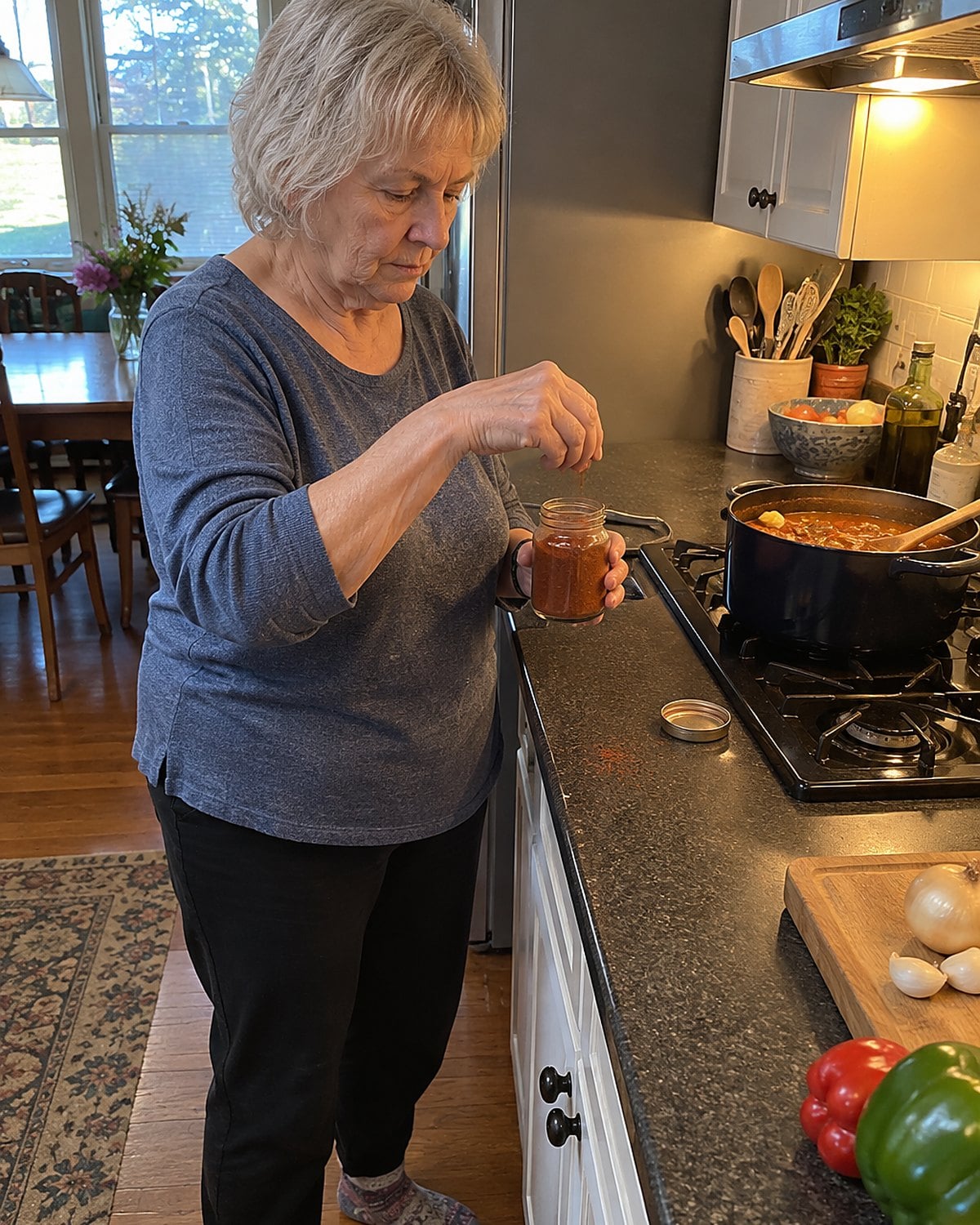
That paprika has lived beside the stove through more dinners than you can count. When you open it, the powder still looks red, but the smell is faint. Your daughter-in-law's comment that the stew “needs something” lands like a request for more salt.
Rub a pinch of the spice between your fingers and smell it. If there's little aroma, a larger shake won't restore what the jar has lost. Start with a fresh jar the next time you shop, and store it away from the heat of the stove.
Check the jar before the stew is on the burner next time. The smell test takes a moment, and it leaves you time to use a different spice already in the cupboard. A faded label tells you less than what reaches your nose.
Taste the stew after the spice has had time to mingle with the broth. You want to smell the paprika when you lift the spoon.
#5 The sauce clinging to the pan
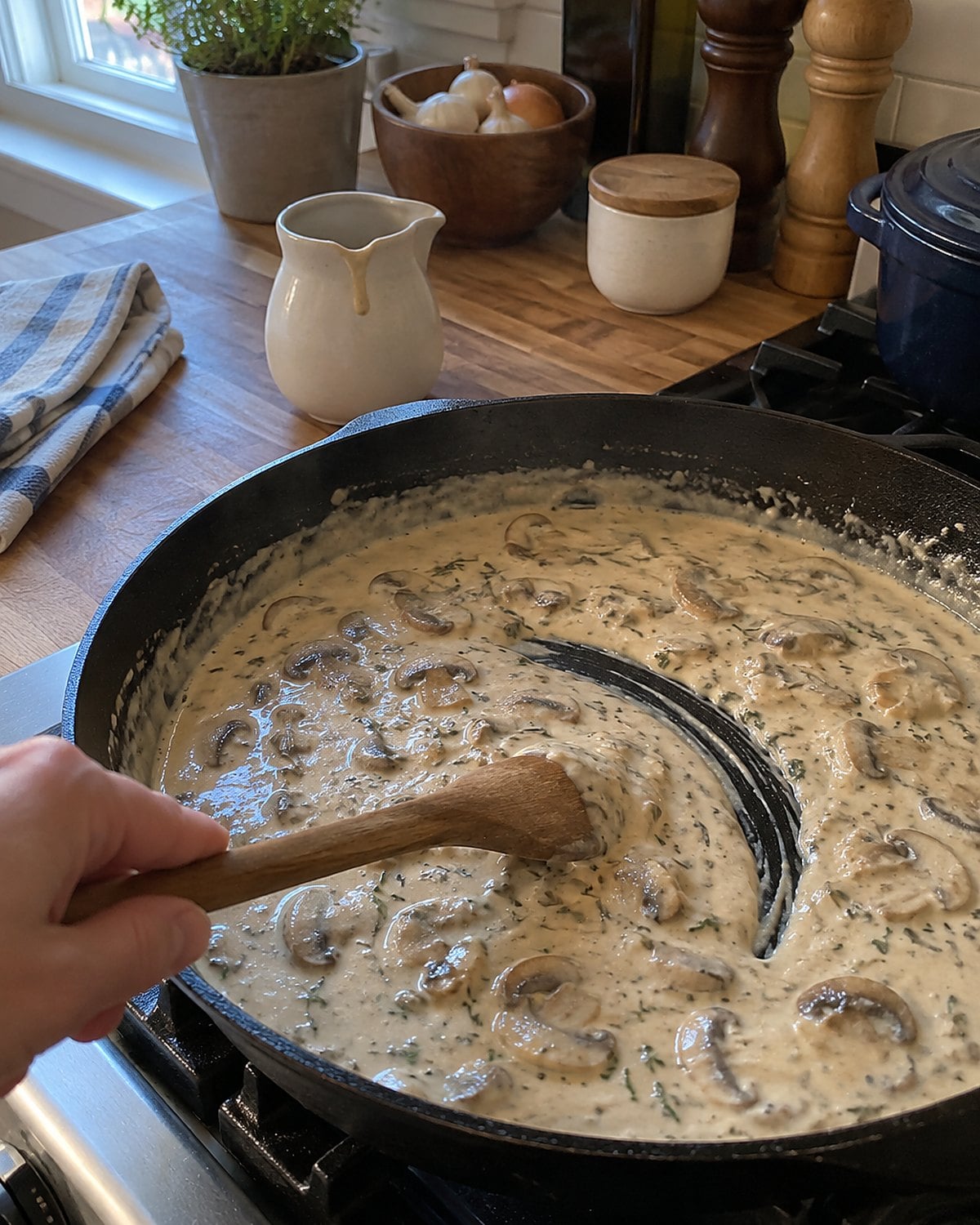
The pan sauce looks thick when you turn off the burner. By the time you pour it over dinner, it's heavier than you meant. Your daughter-in-law takes a small spoonful and leaves the rest.
Before serving, drag a spoon through the sauce. If it parts and stays parted, stir in a tablespoon of unsalted stock or water. Heat it through, then check how it falls from the spoon. Add more liquid a little at a time until it flows instead of dropping in a lump.
Use the back of a potato for one last check. A thin coating stays put; a thick mound sits on top. That tells you what she'll meet when she takes a bite.
Keep some sauce in a small pitcher rather than covering every serving in the kitchen. Someone at the table will ask for more.
#4 The dish carried into the church hall
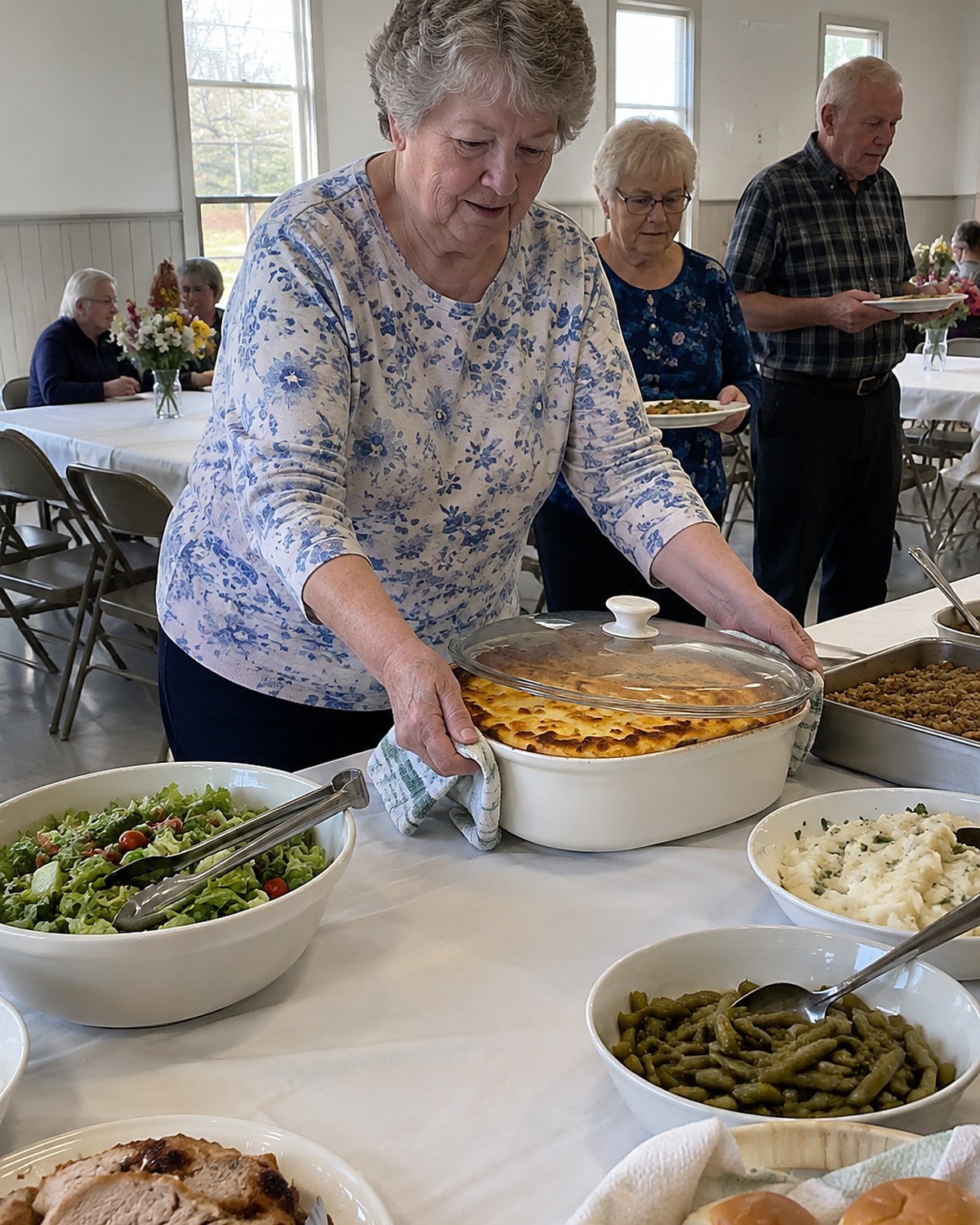
You made a casserole for a gathering, and the serving line is moving. Your daughter-in-law sees you setting down a dish everyone will enjoy. She also notices there's nowhere to tell guests what went into it.
If it contains nuts or another ingredient a guest needs to know about, tell the person tending the table and leave a clear ingredient note beside it. The FDA's food allergy information is a reminder that ingredients matter beyond taste.
Bring the utensil with the dish, then ask the organizer where the casserole should go. A crowded church hall table has its own plan for serving food. Keep hot food hot and cold food cold until serving. If you can't manage the temperature, ask the organizer where to put it.
Then step back and let people choose their portions. Your daughter-in-law won't have to answer questions about a dish she didn't make.
#3 The apron offered before dinner
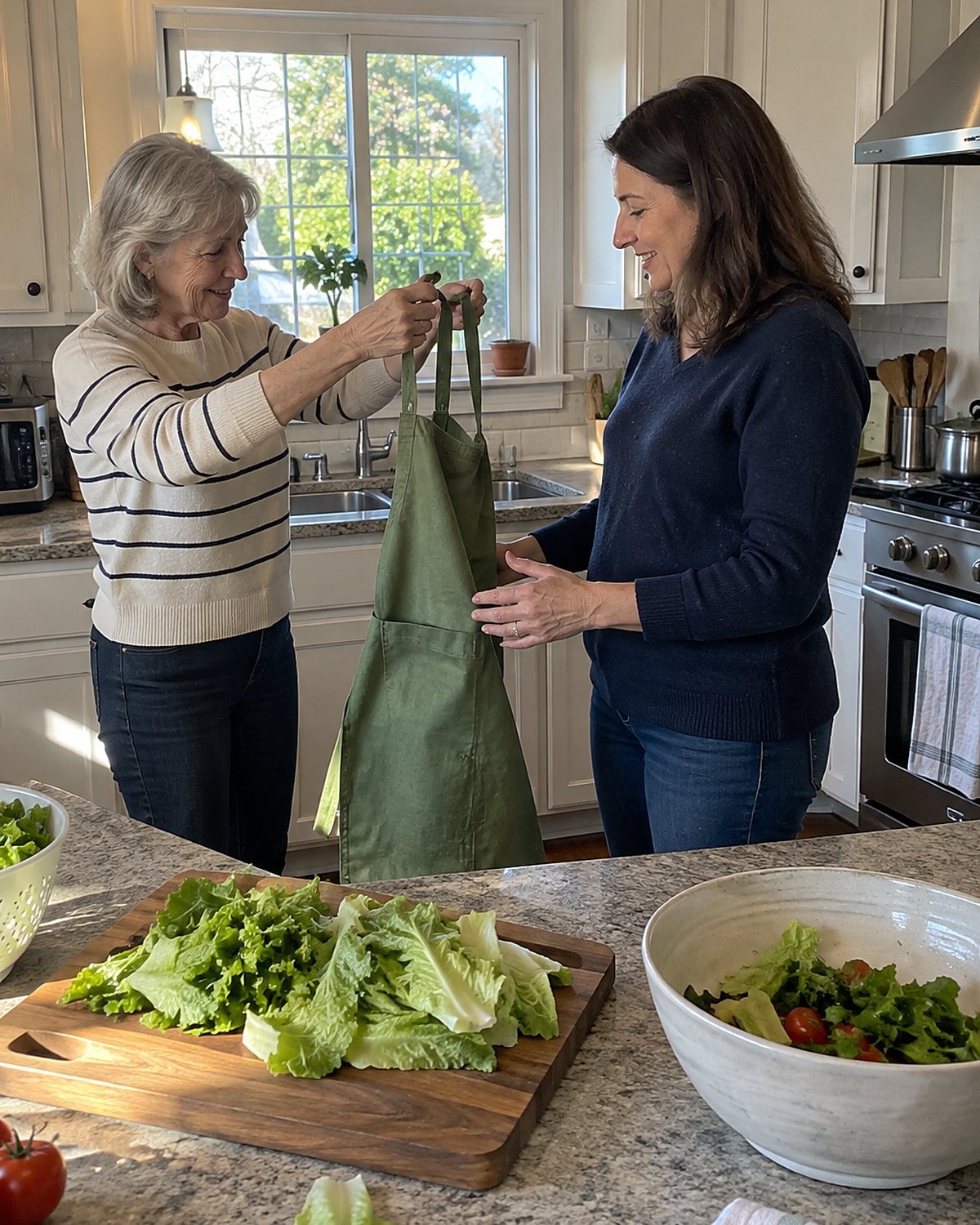
Your daughter-in-law arrives while you're chopping. She offers to help, and you say, “Oh, just sit down.” You're trying to be kind. She hears that there's no place for her in the kitchen.
Give her a real job if she wants one: tear lettuce, carry glasses, or put the butter on a plate. Tell her where the tools are, then let her do it her way. You don't need to supervise how someone fills a water pitcher.
Keep the task small enough that you still know where dinner stands. “Could you put the glasses out?” gives her a place beside you without handing over a half-finished dish. When she asks where they go, point her to the cupboard.
If you'd rather finish alone, say that plainly and invite her to keep you company. Either answer is warmer than turning away her offer while you rush from the counter to the stove.
#2 The guest's answer at the door
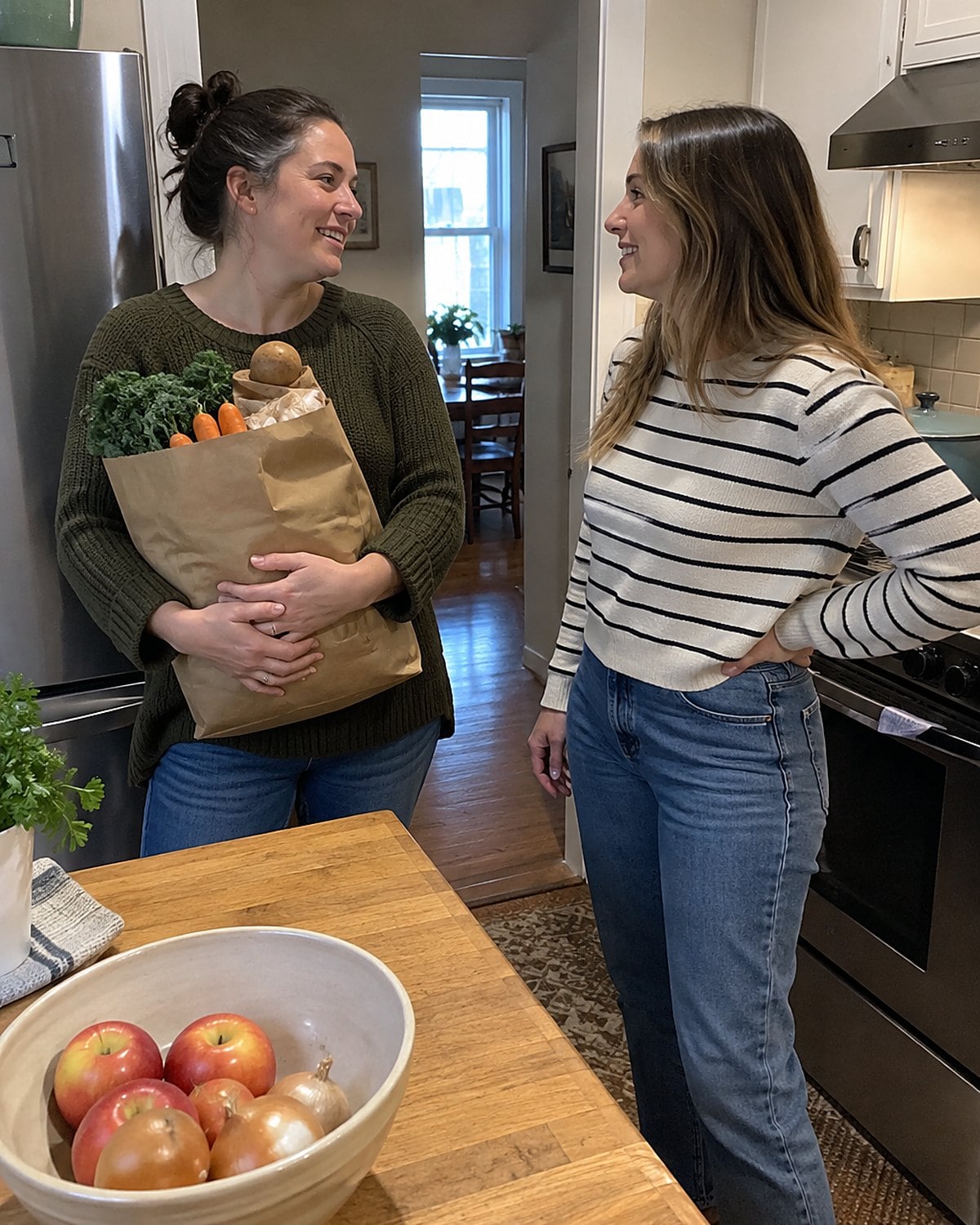
Ask about dinner before she arrives.
“What can you eat?” sounds like a simple question until someone has to explain a medical need, an allergy, or a family decision in front of everyone. Your daughter-in-law would rather settle it before coats come off.
Ask when you invite her: “Is there anything I should know before I plan dinner?” If she names an allergy, ask which ingredients and preparation steps matter. Read labels each time you use a packaged ingredient, and don't promise a dish is free of an allergen when you aren't certain.
Give her room to tell you that the menu won't work. A plain “Thanks for telling me” keeps the conversation open. Then plan with her, instead of asking her to decide at the table between politeness and a meal she trusts.
Food Allergy Research & Education has guidance on avoiding cross-contact. At home, listen to the person who lives with the allergy. She'll tell you whether the meal you've planned works for her.
#1 The tasting spoon before guests arrive
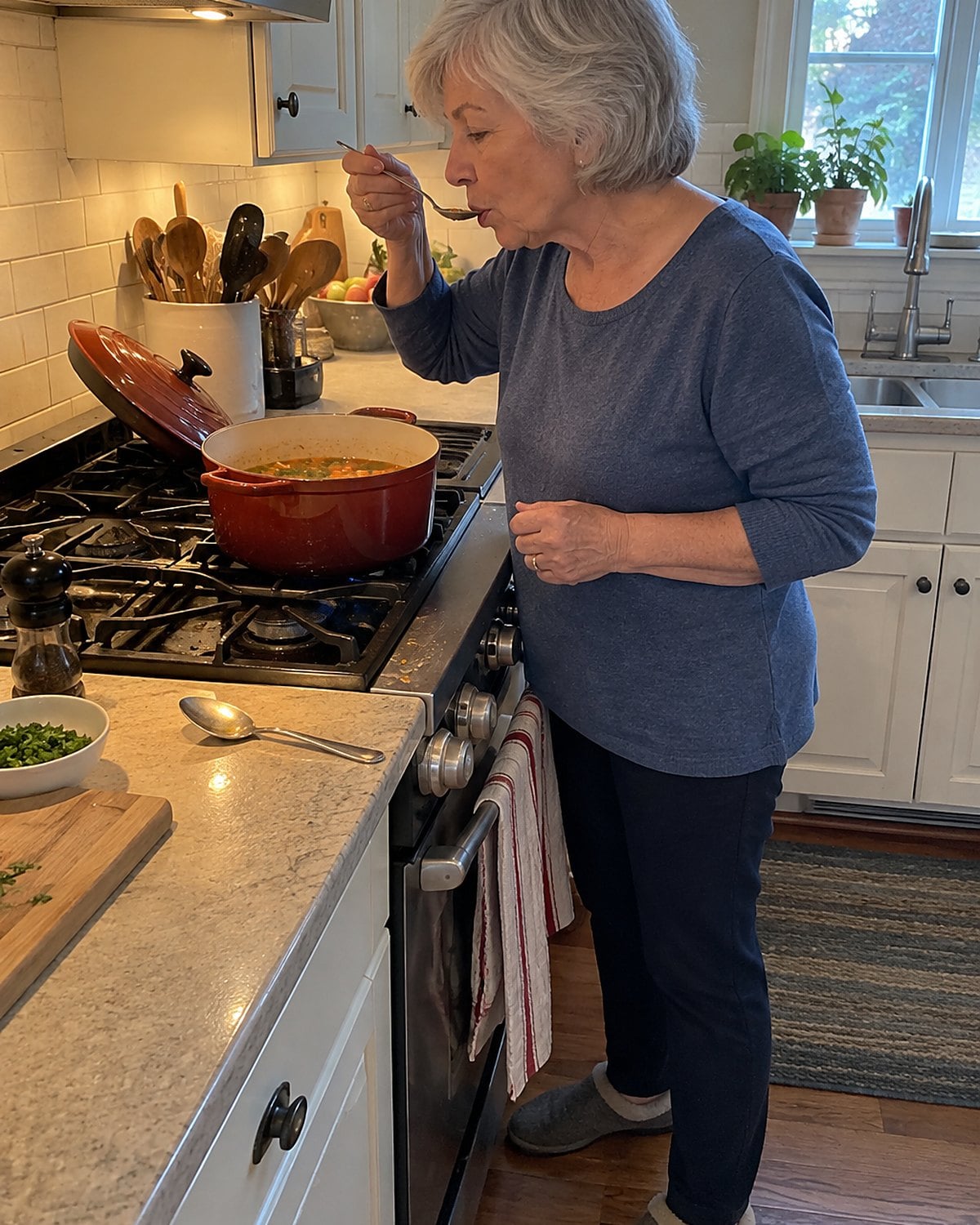
Dinner tastes different after you've spent an afternoon near it. The roast smells familiar. The soup seems fine. Then your daughter-in-law takes a bite and reaches for water, while you remember adding salt before the broth finished reducing.
Set out a clean spoon and taste the finished food just before serving. For soup or gravy, let the spoonful cool enough to taste properly. Check for salt, but ask more than that: Does it need a little acid? Did the onions sweeten the broth? Is the sauce thick enough to coat a spoon without sitting on it?
For a dish served with sauce, taste a bite with the sauce on it. That's the bite your guest will get. If it needs work, adjust a small portion first, then decide what the whole pot needs.
Put salt on the table so each person has the last word. You know your cooking better than anyone walking through the door. One finished bite tells you more than a polite face across the table.
The bottom line
Your daughter-in-law doesn't need you to guess every preference. She needs room to answer without feeling that dinner depends on her praise.
You've already done the hard work when the food is cooked and the table is ready. Taste it, offer a choice, and believe the answer you get.
Which question would make your next dinner easier for both of you?
Leave a Reply