

The drawer catches halfway. A rubber band has hooked itself around a takeout fork, and the little brass key is back where you left it. You’ve moved that key aside for years without finding its lock. Meanwhile, the scissors you need are under the grocery coupons, and the oven light still needs a new bulb.
A junk drawer earns its space when you can open it with one hand and find what you came for. Keep the odd bits that solve a real kitchen problem. Give the rest a decision.

#26 The brass key with no lock
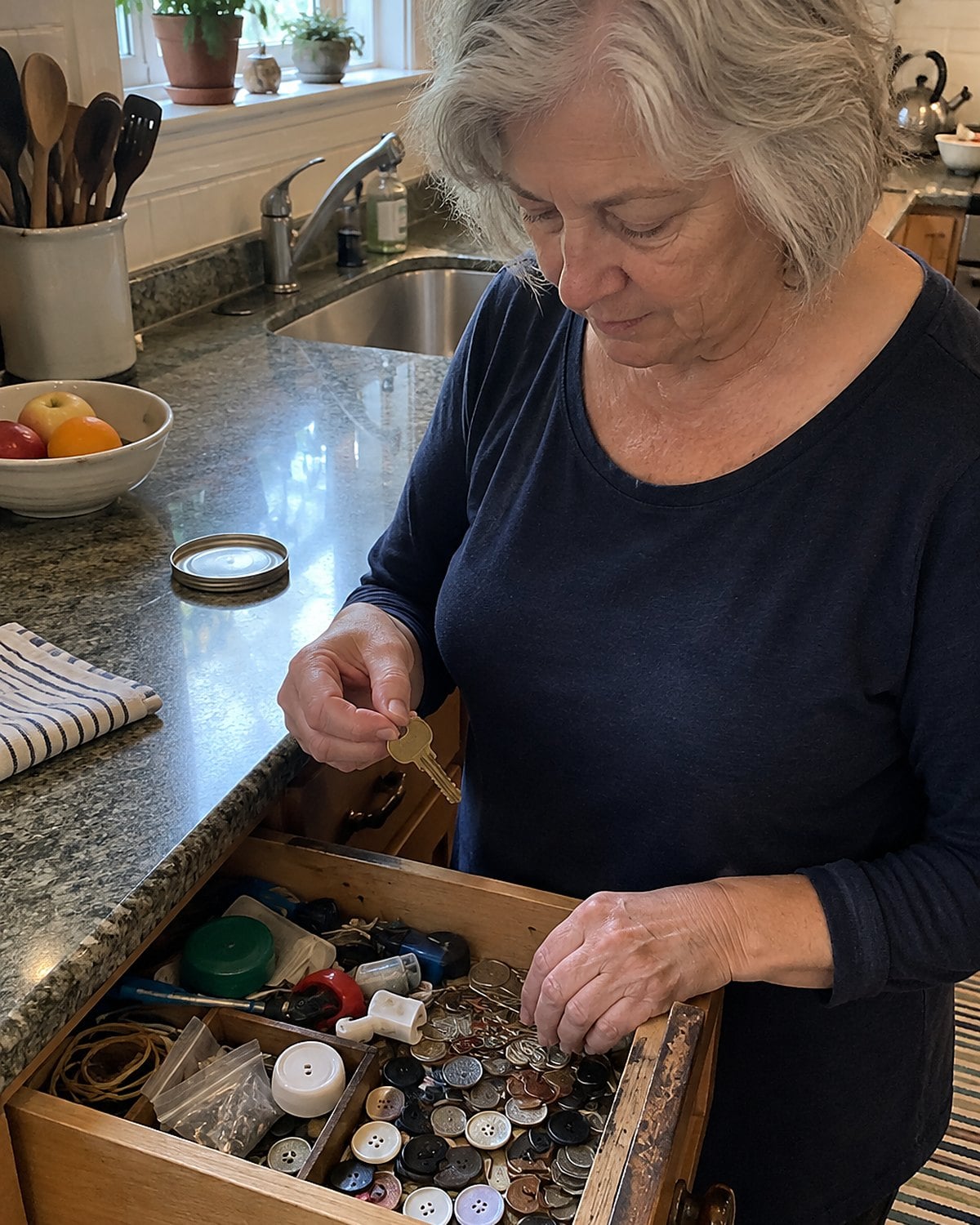
You know its weight before you recognize its shape. It lives against the drawer’s front edge, where your fingertips land while you hunt for a pen. Perhaps it belonged to a cabinet, a suitcase, or the old house.
Give it a proper search before you throw it out. Try the locks you still own, including the pantry door and that small cash box on the closet shelf. Check for a stamped number or brand on the key. If it belongs to something, label it and put it with that thing.
Still no match? Put it in an envelope marked “unknown key” outside the kitchen for a while. If nobody asks for it and no lock turns up, let it go. A key without a known lock doesn’t need the best spot in the kitchen.
#25 Rubber bands stuck to themselves
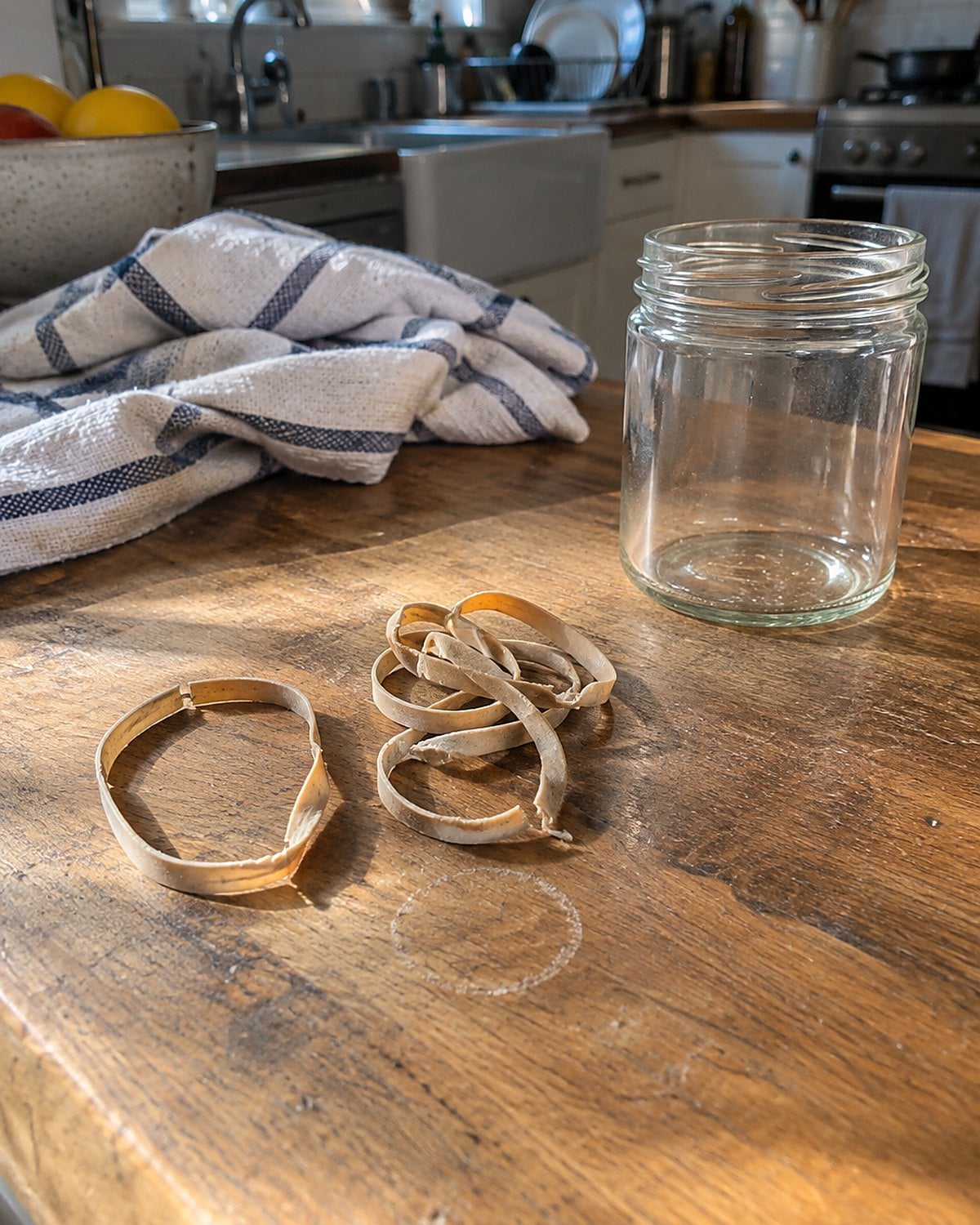
Pull one rubber band from the bundle. If it stretches and springs back, it has a job left. If it cracks, flakes, or sticks to its neighbors, it belongs in the trash.
The sticky ones have a way of coating everything near them. You reach for a pencil and come away with bits of rubber on your fingers. Clear those out before they cling to a coupon or the handle of the tape dispenser.
Keep a few sound bands in a small container if you use them to hold a stack of napkins or close a bag of dry beans. Loose bands rolling around the drawer have no business wrapping themselves around your spare keys.
#24 The orphaned takeout fork
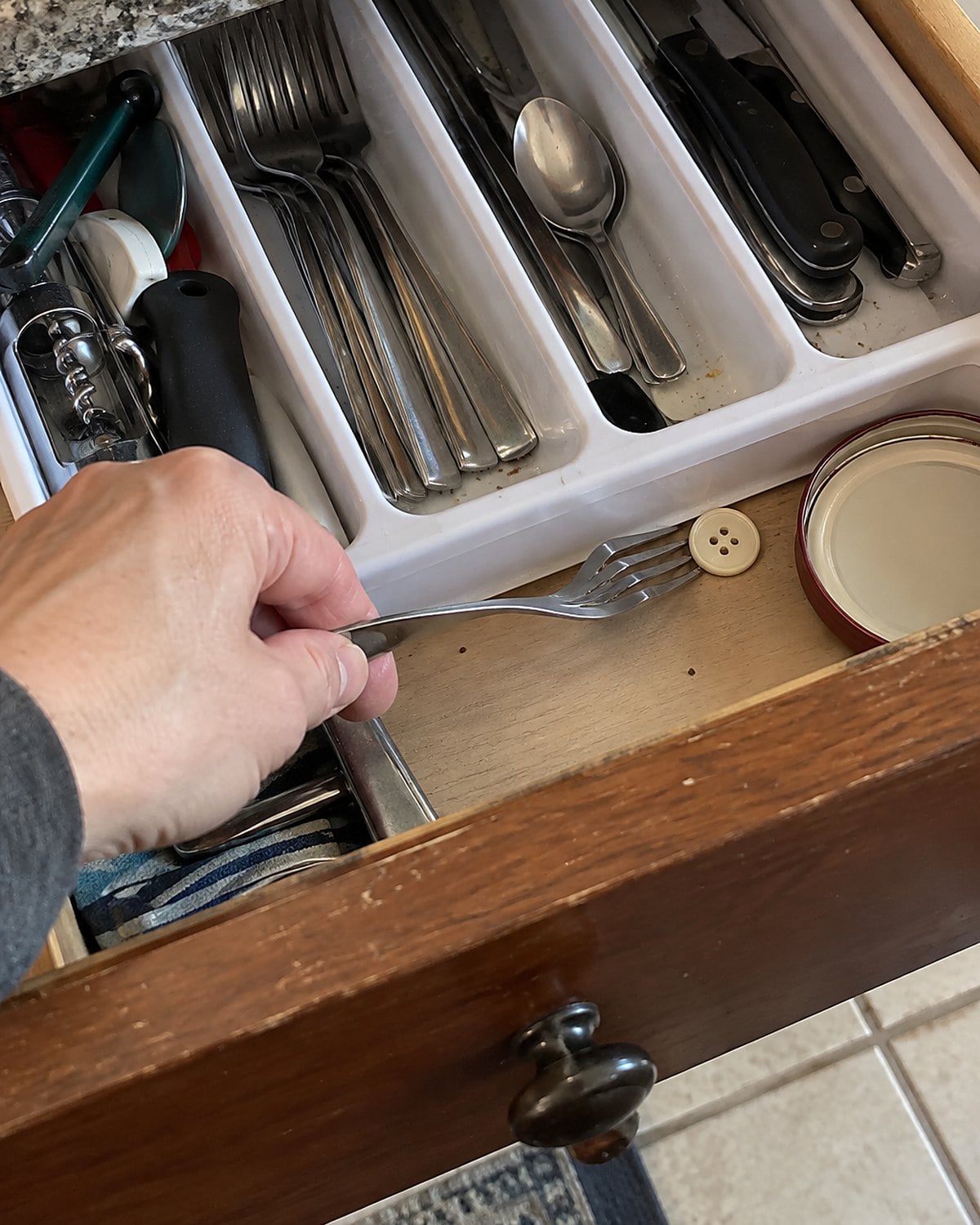
The fork arrived with a meal you ate weeks ago. Now it slides under the drawer organizer, where its tines catch on everything you pull past it. Its matching packet of napkins disappeared long before the fork did.
Put clean, sturdy extras with the picnic supplies. They’ll be easy to find when somebody wants cake on the porch. Throw away the bent forks and the ones with dried food in the tines. There’s no reason to wash a flimsy fork again when the flatware drawer is an arm’s length away.
The same test works for stray chopsticks and wrapped cutlery packets: give them a destination tied to a meal. If the drawer has become a holding pen for every takeout order, you won’t find the single utensil you actually wanted.
#23 Expired grocery coupons in a curl
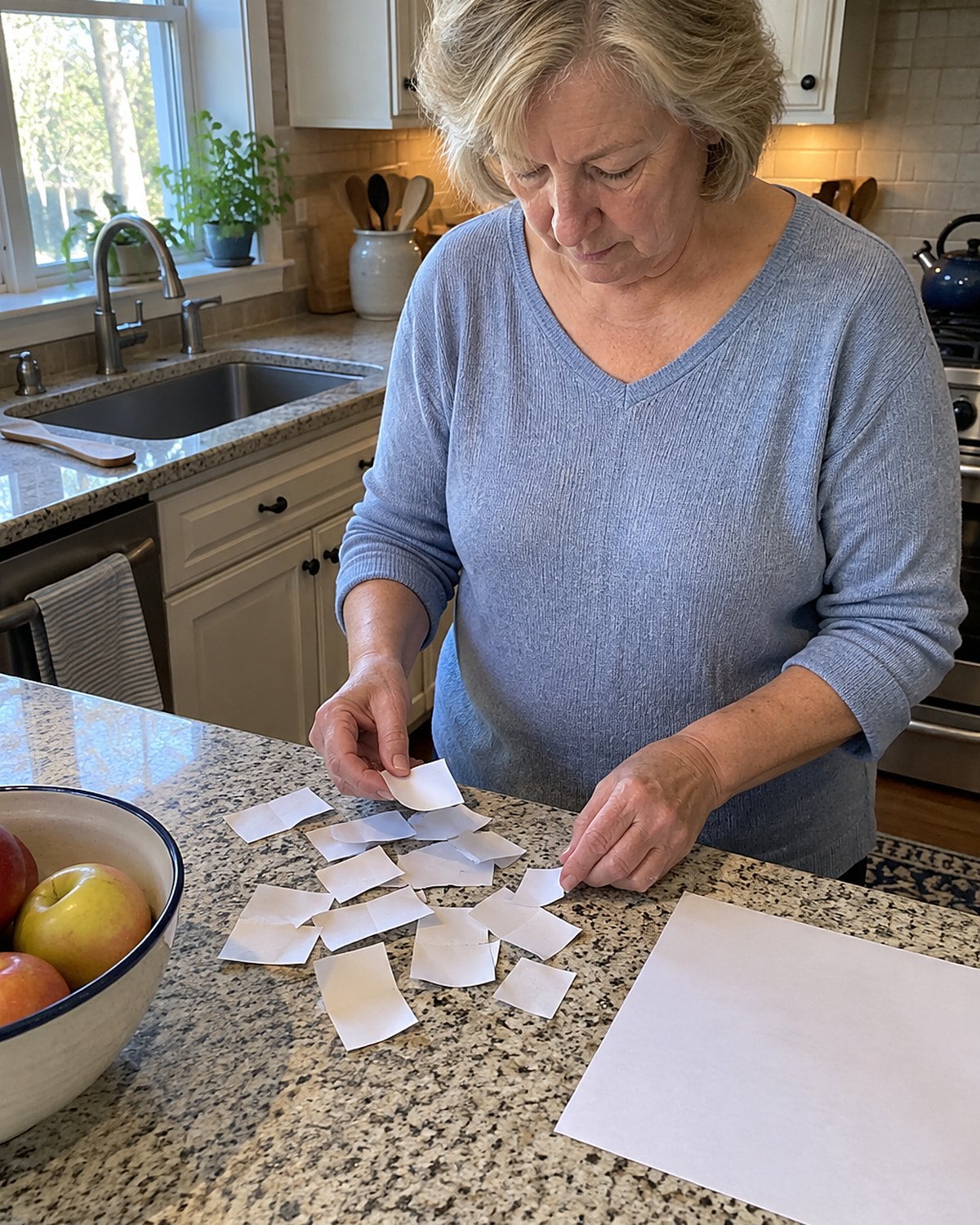
A coupon gets tucked beside the measuring spoons because you’ll use it next trip. Then the next trip comes, and the list is already in your hand. By the time you find the coupon again, its date has passed.
Turn the little stack over. Look at the expiration dates, then ask if you still buy those products. Recycle the expired paper and the offers for things that never make it into your cart.
Keep current coupons with your shopping list, in a bag you take to the store, or in the store app. The drawer is a good place to lose a discount. If you need to excavate the offer while supper waits on the stove, it was filed in the wrong place.
#22 Twist ties from bread bags
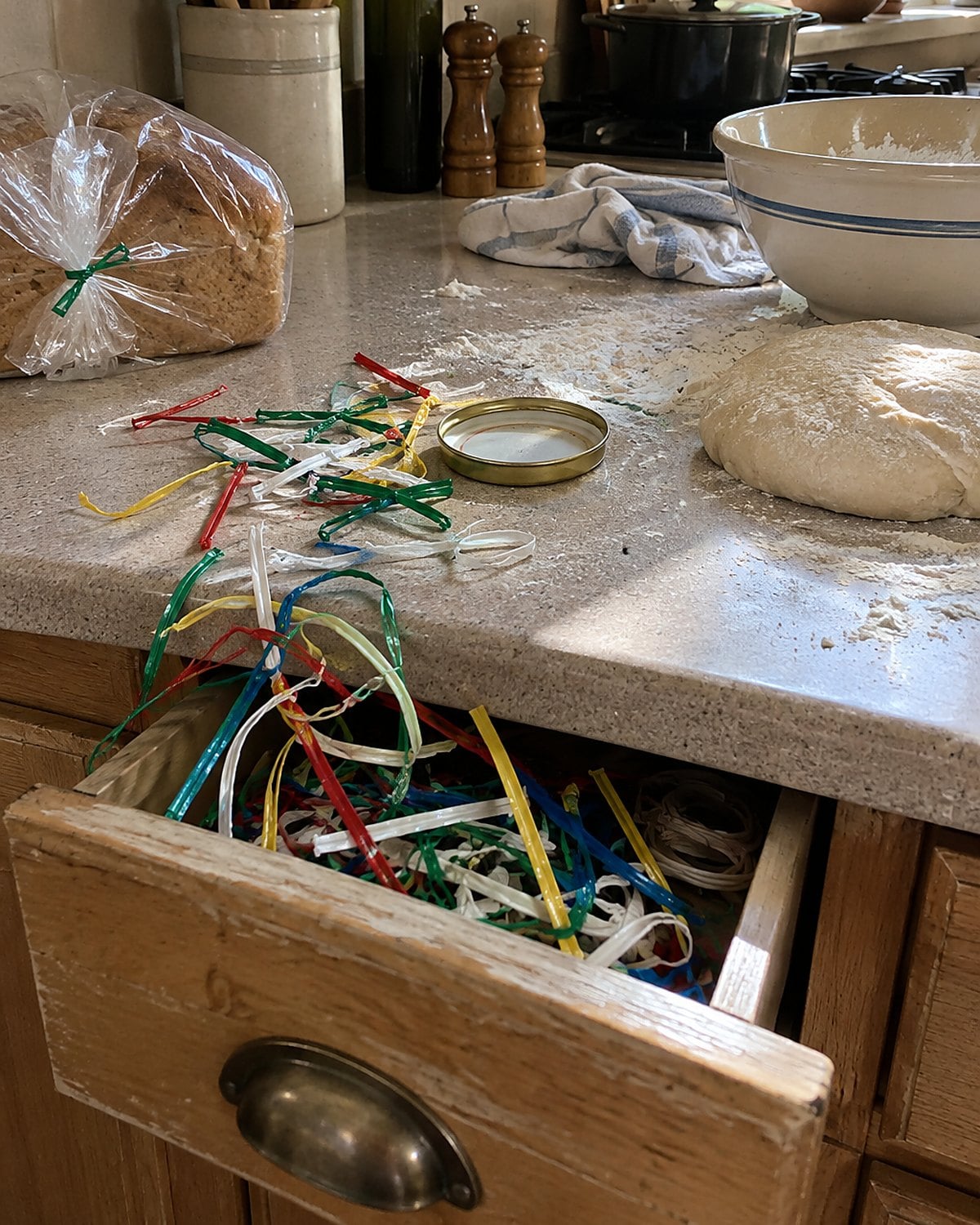
You save the ties because a bag always needs closing. Then you reach into the drawer and find a nest of wire, paper, and crumbs.
Keep a small handful in a jar or cup if they earn their keep. Straighten each tie before it goes in. A tie with exposed wire belongs in the trash, especially if it’s snagging on your fingers. Store the rest beside the bags they close, rather than under the pens.
When a freezer bag needs sealing, use its own zipper. For a bag of flour or rice, fold the top and clip it. A twist tie works well on a bread bag because the thin plastic gathers around it. That doesn’t mean every saved tie deserves a permanent address.
You’ll find the useful ones faster once they stop wrestling the rubber bands.
#21 The loose button in a coin pile
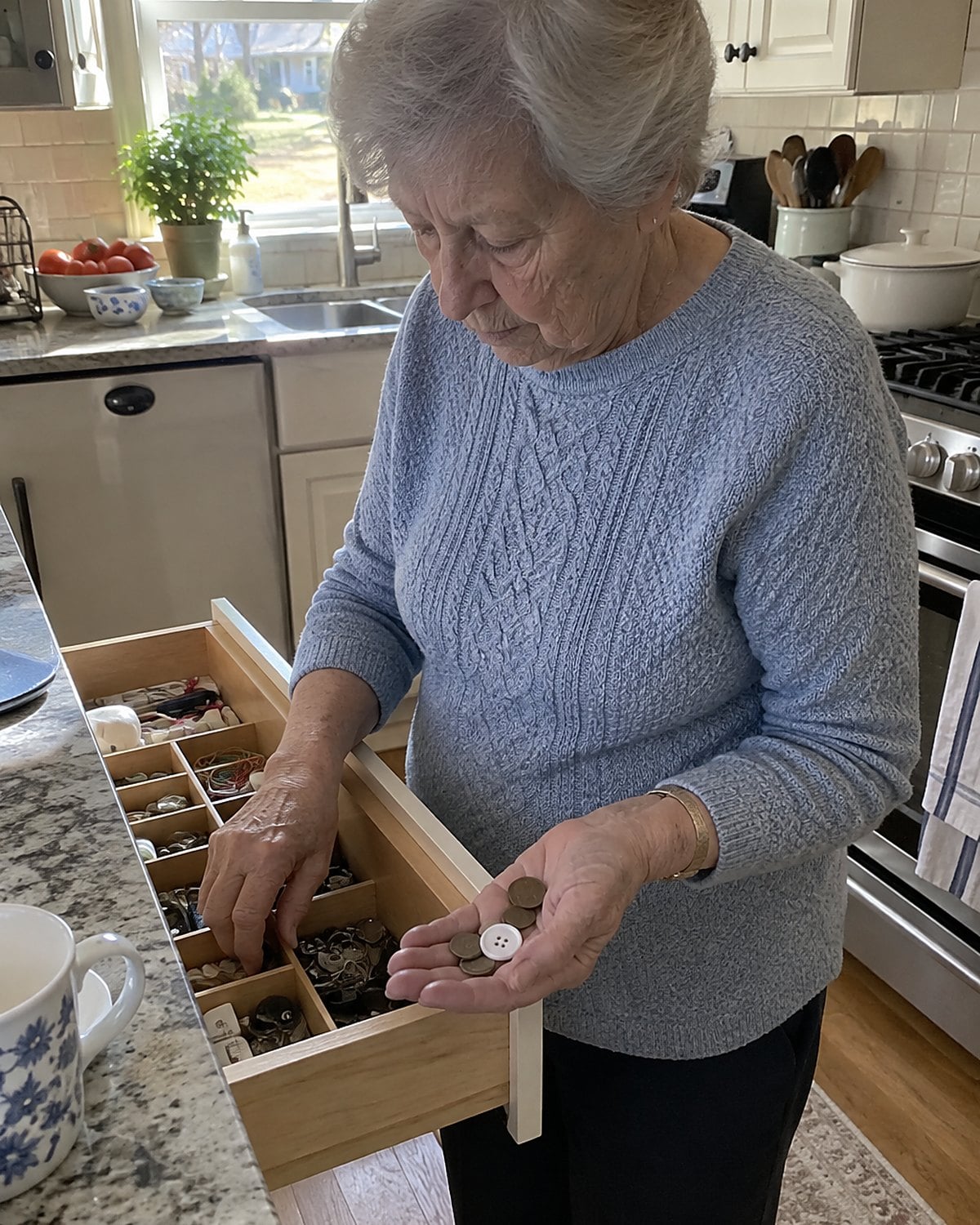
That button belongs to a coat, a shirt, or a grandchild’s cardigan. Which one?
If you recognize the garment, put the button in a small bag with a note and move it to the sewing supplies. Better yet, sew it on while you know where it goes. Check the coin pile for other things that slipped off clothing: a cuff link, a snap, a hook.
Don’t leave loose change mixed with those tiny parts. Coins have their own home, and small objects are easy to overlook when a young child visits. A dish on a high shelf beats an open drawer beside the snacks. The drawer will feel bigger as soon as its smallest tenants move out.
#20 Pens that stop halfway through a list
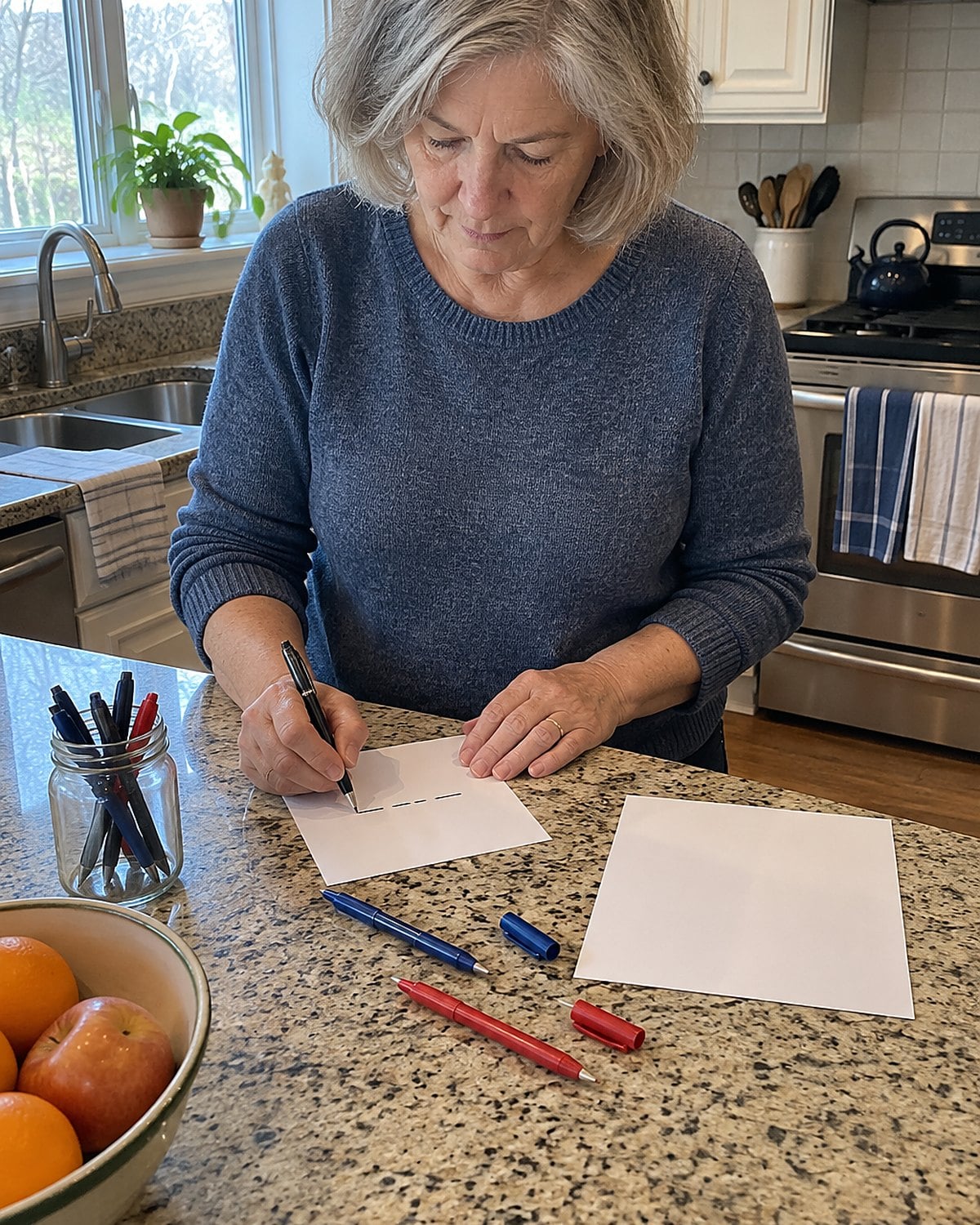
You’re writing “milk” on the back of an envelope when the ink fades at the final letter. The next pen makes a dent but no mark. Somehow both return to the drawer, ready to fail again next week.
Test every pen on scrap paper. Make a full line, not a dot. Put the ones that write in a cup near the grocery list. Throw out the failures. If you like a particular pen for labeling freezer bags, give it a cap and a spot where it won’t roll under the drawer tray.
Keep a pencil nearby, too. It writes on a shopping list even when the pen goes missing, and you can erase a meal plan after plans change.
A working pen is small, but the time it saves is real. You shouldn’t have to test the whole drawer while standing there with a phone number to write down.
#19 Dried-out marker for freezer labels
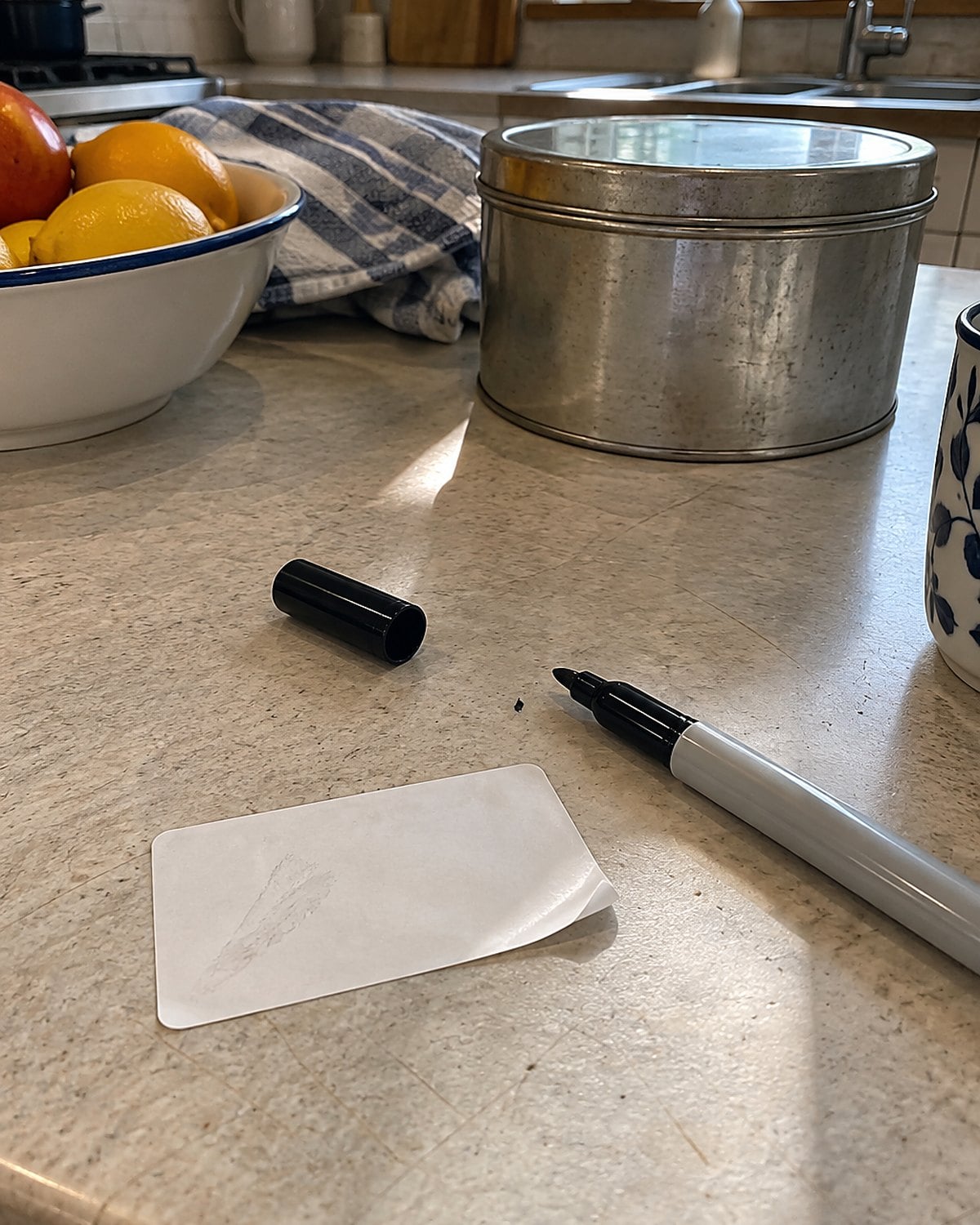
A marker with a promising cap and a pale, broken line is worse than no marker. It lets you think the container is labeled until the writing vanishes under a little freezer frost.
Write a few words on the label or tape you actually use. Let the ink dry, then rub it with a fingertip. If the date smears away, change the marker or the label. Test it on a dry container, not on cold plastic beaded with moisture.
The USDA Food Safety and Inspection Service recommends labeling frozen food with its contents and date. That little mark saves you from thawing an unidentified tub when dinner is already late.
Keep one marker that passes your test near the freezer bags. Try it on the freezer date you’ll write tonight, then check that you can read it tomorrow. The dead markers have had their turn.
#18 Restaurant napkins behind the tape
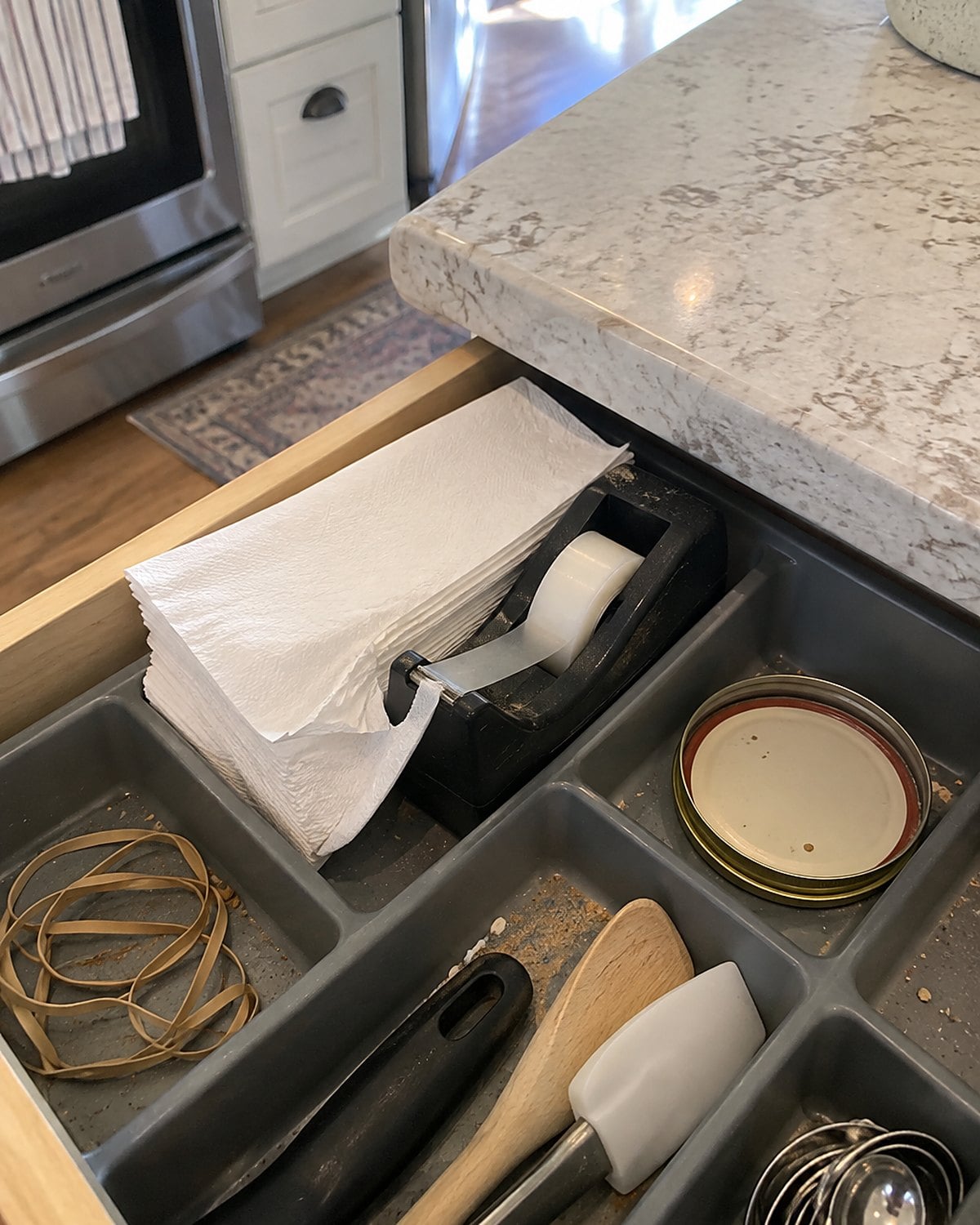
When did you last use a restaurant napkin that wasn’t already in a takeout bag? These came home with a sandwich and ended up behind the tape. You push past them whenever you need the scissors.
Use clean napkins where they make sense: in the car, in a picnic basket, or beside a takeout meal at home. Toss the stained and crumpled ones. If the pile is too thick to fit neatly in your hand, send some to their actual destination today.
There’s a difference between saving something and putting it to work. A few napkins in a bag by the door help when a grandchild drops a snack on the porch. A wad buried under old receipts helps no one.
Once they’re gone, wipe the back corner of the drawer. That patch collects crumbs because nobody sees it until the napkins move.
#17 The soy sauce packets from takeout
You open a drawer for a battery and uncover soy sauce, mustard, hot sauce, and one packet you can’t identify. A few feel sticky. One has leaked onto the paper beneath it.
Throw away leaking, swollen, damaged, or unidentifiable packets. Wipe the drawer liner before you put anything back. Don’t taste a packet to learn what it contains. The printed name and intact package should do that work.
If you regularly use the intact packets, move them with the other condiments and follow the storage directions on each package. Otherwise, take the few you want on your next picnic. Packets without a plan become a slow, messy collection. Your kitchen already has a bottle of soy sauce you know how to find.
#16 Dead batteries beside the good ones
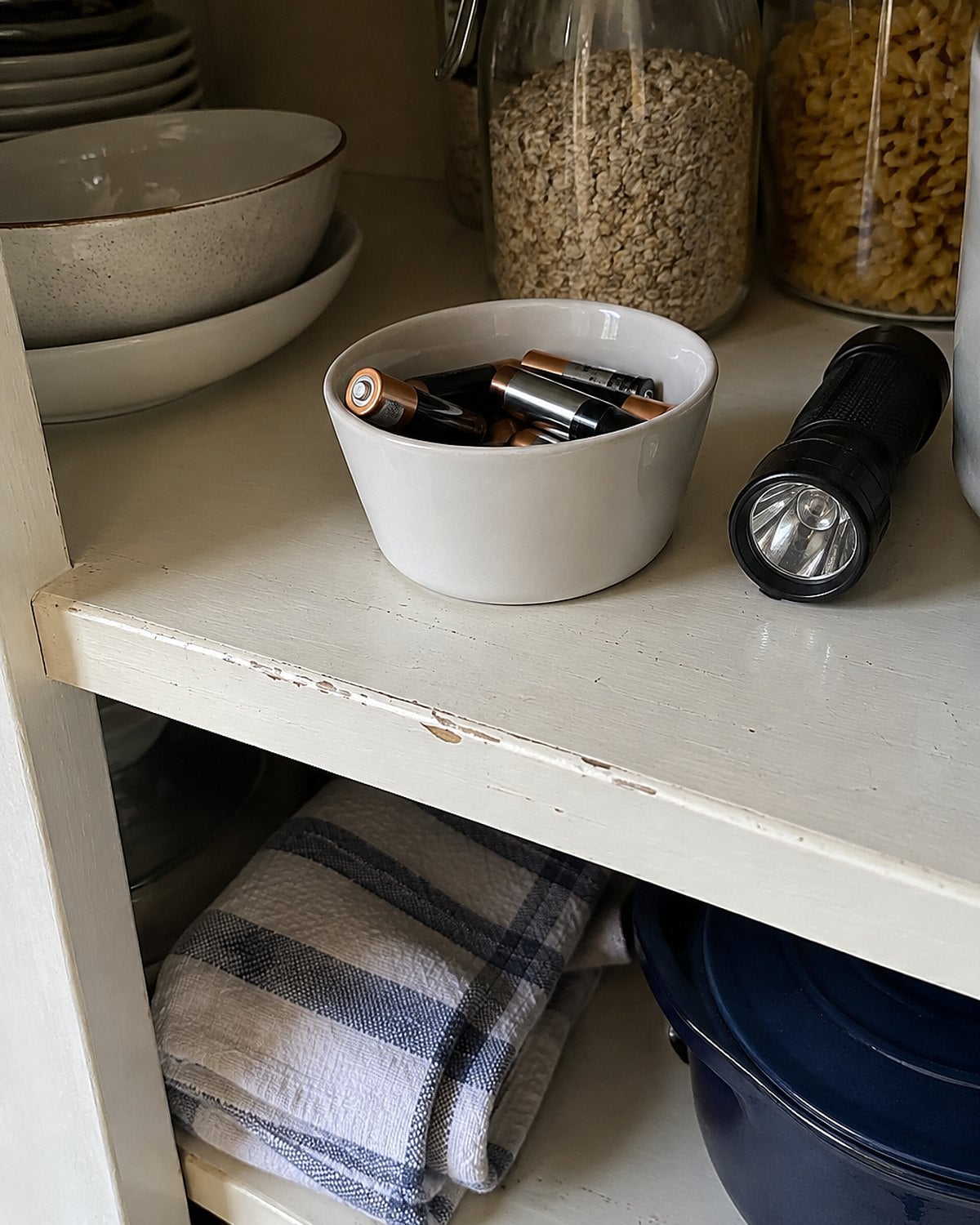
The flashlight goes dim. You take out its batteries, set them in the drawer, and plan to deal with them after supper. Later, the dead ones sit next to a new package. Now every battery needs another test.
Start with the device, not the drawer. Take the used batteries out and keep them apart from the new package. Put a reminder on your next errand list to check your town’s collection rules. The EPA’s battery guidance explains why the battery type changes how you dispose of it.
Look at the label before you decide where it goes. A button battery from a kitchen scale deserves particular care: the Consumer Product Safety Commission warns that swallowed button batteries can seriously injure children. Keep loose batteries out of their reach while you arrange disposal.
Check the device’s battery compartment, too. If you see corrosion or a loose cover, consult its instructions before you use it again. Don’t set a questionable battery beside the ones meant for the flashlight.
Keep new batteries in their package, away from loose metal objects. That small separation answers the question next time the lights go out: which ones are ready to use?
#15 Loose screws from an old appliance
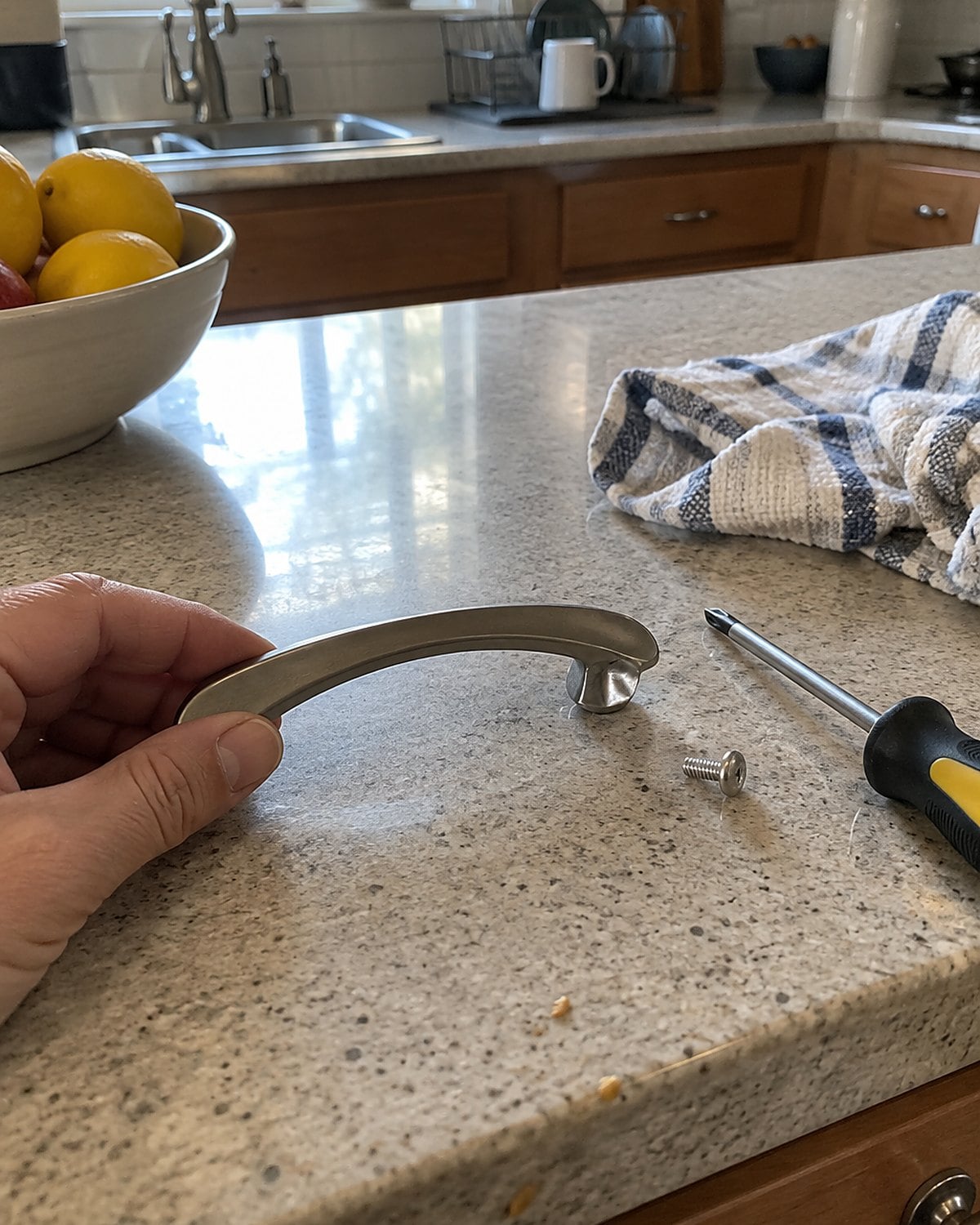
You find a screw and remember the toaster oven that left the house years ago. Or you don’t remember anything at all. Either way, the screw has spent its kitchen life rolling beneath the rubber bands.
Look at the appliances you still use. Is a handle loose? Does a drawer pull need tightening? Match the screw before you put it back to work. A piece of hardware with no known destination belongs with other spare hardware, not with food labels and pens.
Put sharp screws in a closed container, away from curious hands. If a screw has fallen out of an electrical appliance, check the appliance’s manual before running it again. Tightening a cabinet knob is one thing. Guessing where a mystery screw goes inside a toaster is another.
#14 Tape that won’t stick to containers
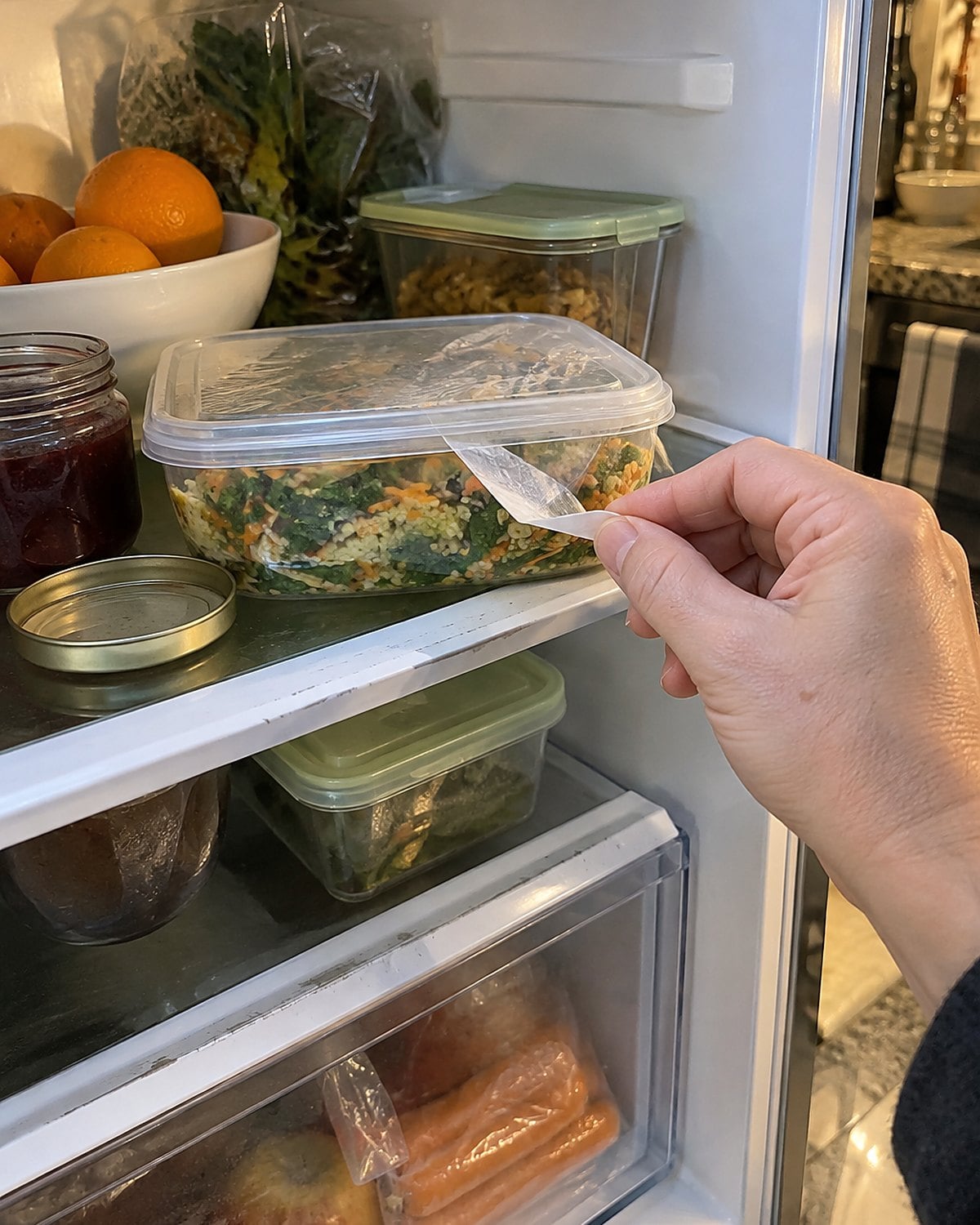
The tape looks fine on the roll. Then you press it onto a container, set the container in the fridge, and find the label curled on the shelf the next morning.
Start with a clean, dry surface. Write the contents and date on the tape before you press it down, so the marker doesn’t skid over a cold lid. Rub the edges flat with a fingertip. If the tape lifts at once, use a different roll.
For freezer containers, write directly on a label that’s made for freezing or use a marker that writes on your bag. Test your supplies on an empty container before you’ve packed six portions of soup.
A label does one plain job: it tells you what you’re holding. If it falls off before the food is used, the tape has taken up drawer space without earning it.
#13 Unlabeled freezer bags in the drawer
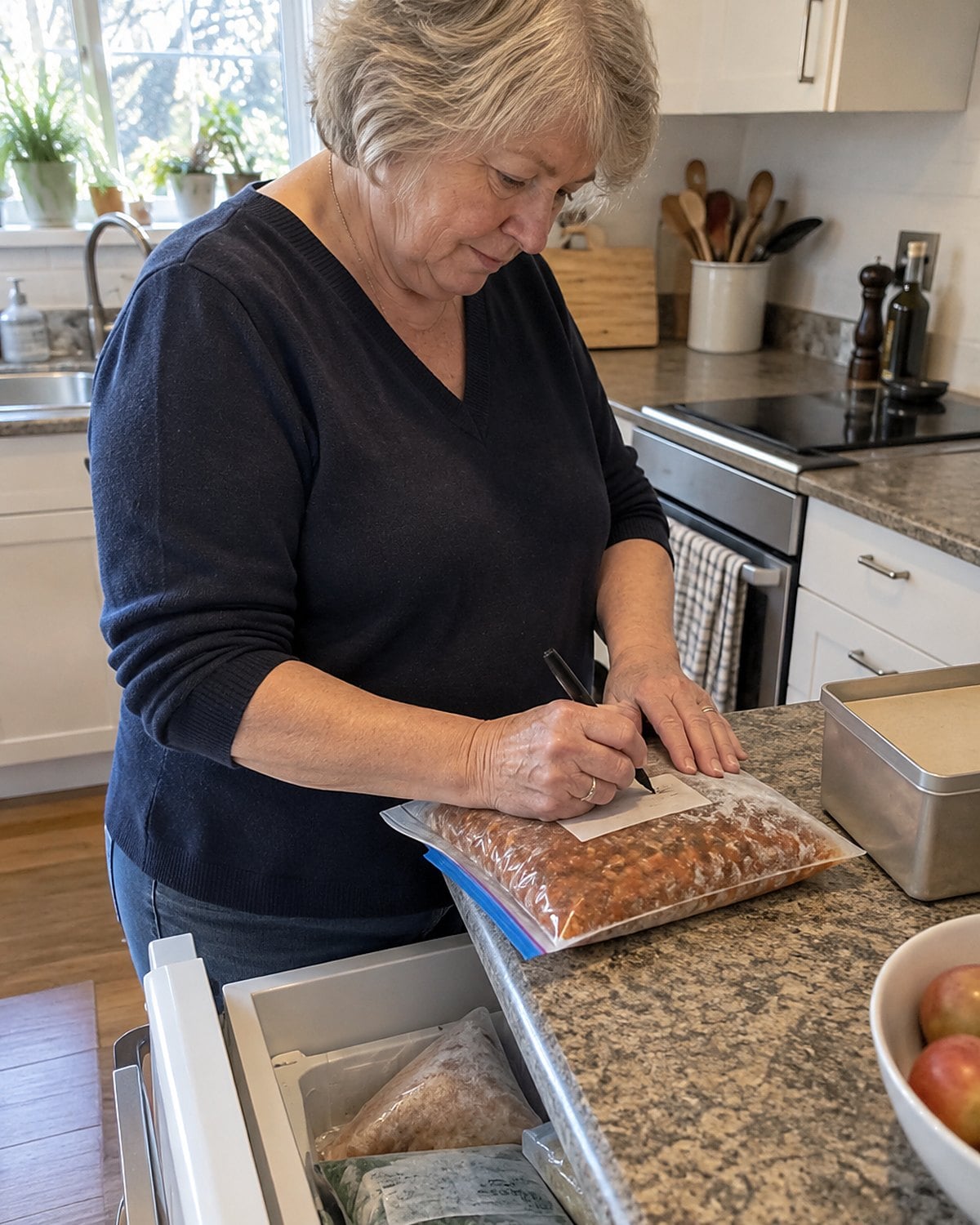
An empty freezer bag belongs with the other bags. A bag folded around a mystery clip or an old receipt needs sorting before it goes near food.
Open the box or bundle. Check for torn seams, stuck zippers, and crumbs. Save clean, unused bags for food; send bags that held nonfood items to nonfood jobs. Write the contents and date on a bag before you fill it. It lies flat, and your hand won’t have to chase lumpy lettering over frozen peas.
The USDA’s FoodKeeper tool gives storage guidance when you need to check how long a food keeps. The FDA’s freezer guidance says to keep the freezer at 0°F. Neither reference tells you what’s inside an unmarked bag.
Write the name where it shows when the bag lies flat. If you freeze several portions from one pot, add the date to each bag before stacking them. Then pull the oldest labeled portion forward when you open the freezer drawer. The writing has to survive the shuffle, not just look neat on the counter.
#12 Birthday candles from three celebrations
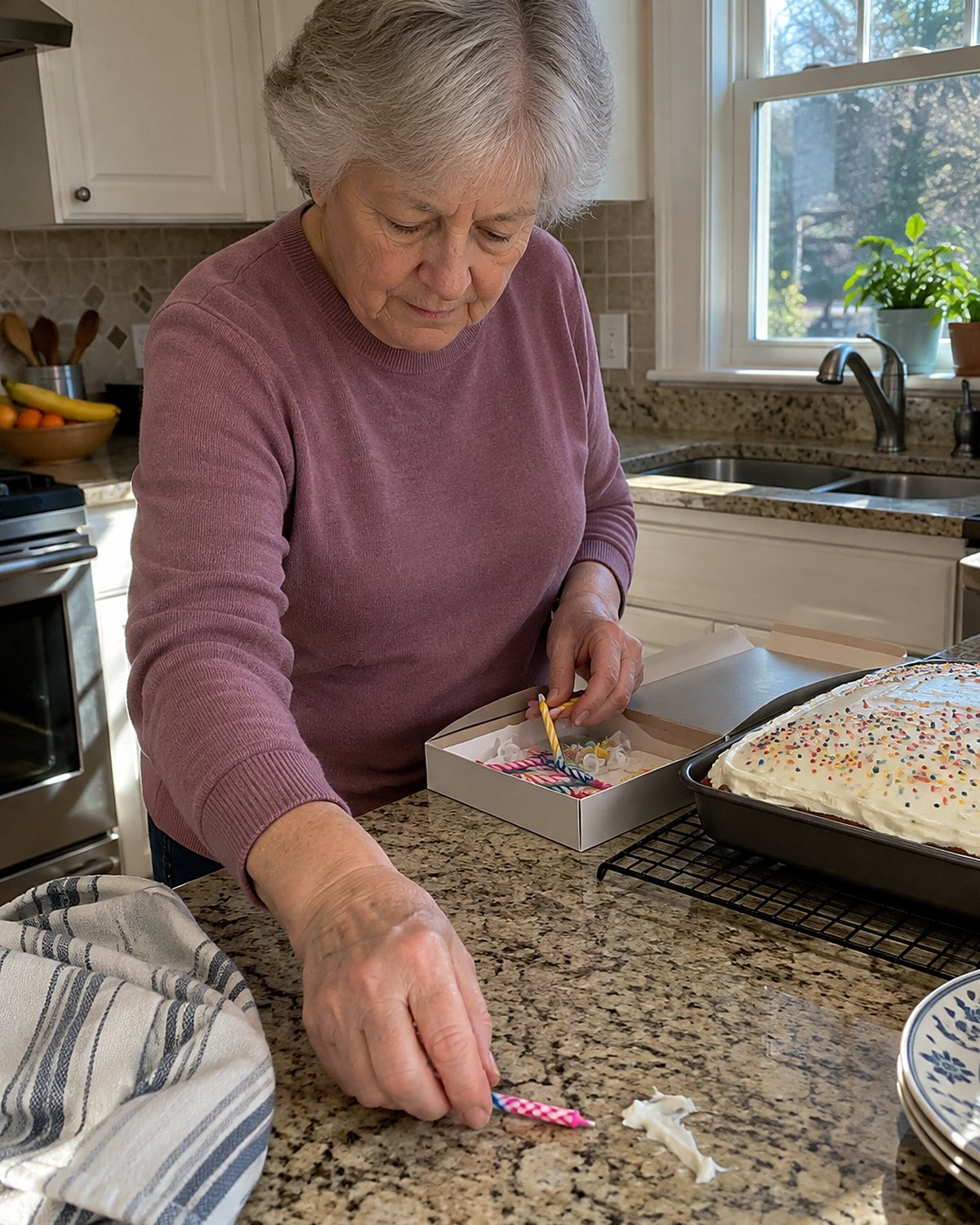
The candles come out every time the grandchildren visit. So do the broken ones, the tiny plastic holders, and a few bare wicks bent against the drawer’s side.
Sort them before the next birthday cake is cooling. Keep clean, intact candles together in a small box away from heat. Throw out broken candles and holders that no longer grip. You don’t need to save wax flakes in the drawer.
Give the matches or lighter their own spot, out of children’s reach. Then the birthday supplies can wait with the cake decorations, not between batteries and sauce packets.
When the next visit turns into an unexpected celebration, you’ll know what you have. The small box does more than tidy the drawer: it keeps you from buying candles while perfectly good ones hide under a takeout fork.
#11 The plastic bread-bag clips
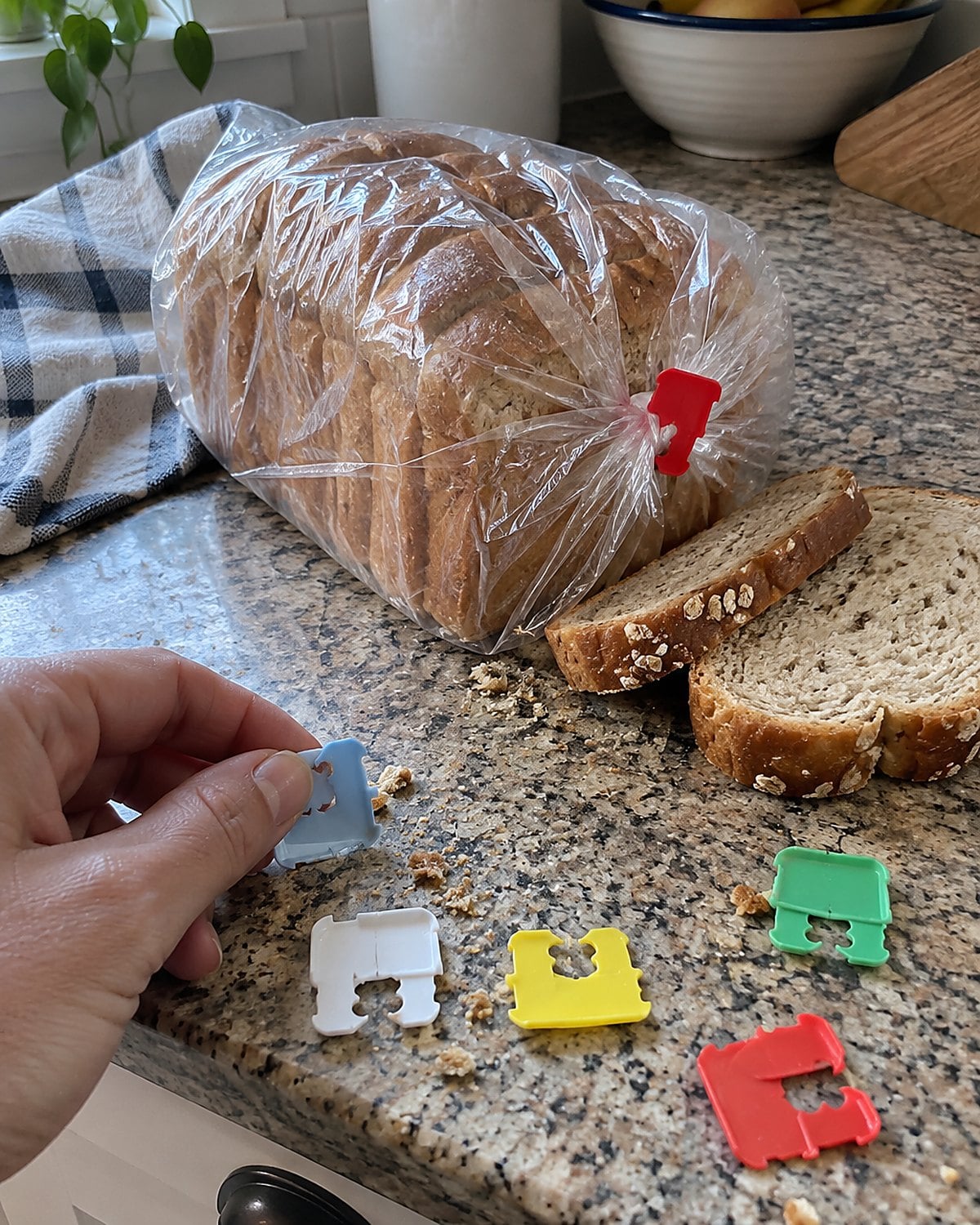
Those flat clips vanish the moment you need one and multiply when you don’t. They catch under the drawer tray and scrape along the wood when you close it.
Keep a few with the bread bags if you use them. Discard cracked clips that no longer hold the bag shut. A spring clip or the bag’s own closure does the same job for larger packages, without sending a hard little piece loose across the counter.
If a young grandchild helps unpack groceries, pick up stray clips right away. Small loose objects belong out of reach of young children. A clipped bag on a high pantry shelf is different from a clip lying where little hands reach. Give those extras a decision now.
#10 Appliance manuals with missing pages
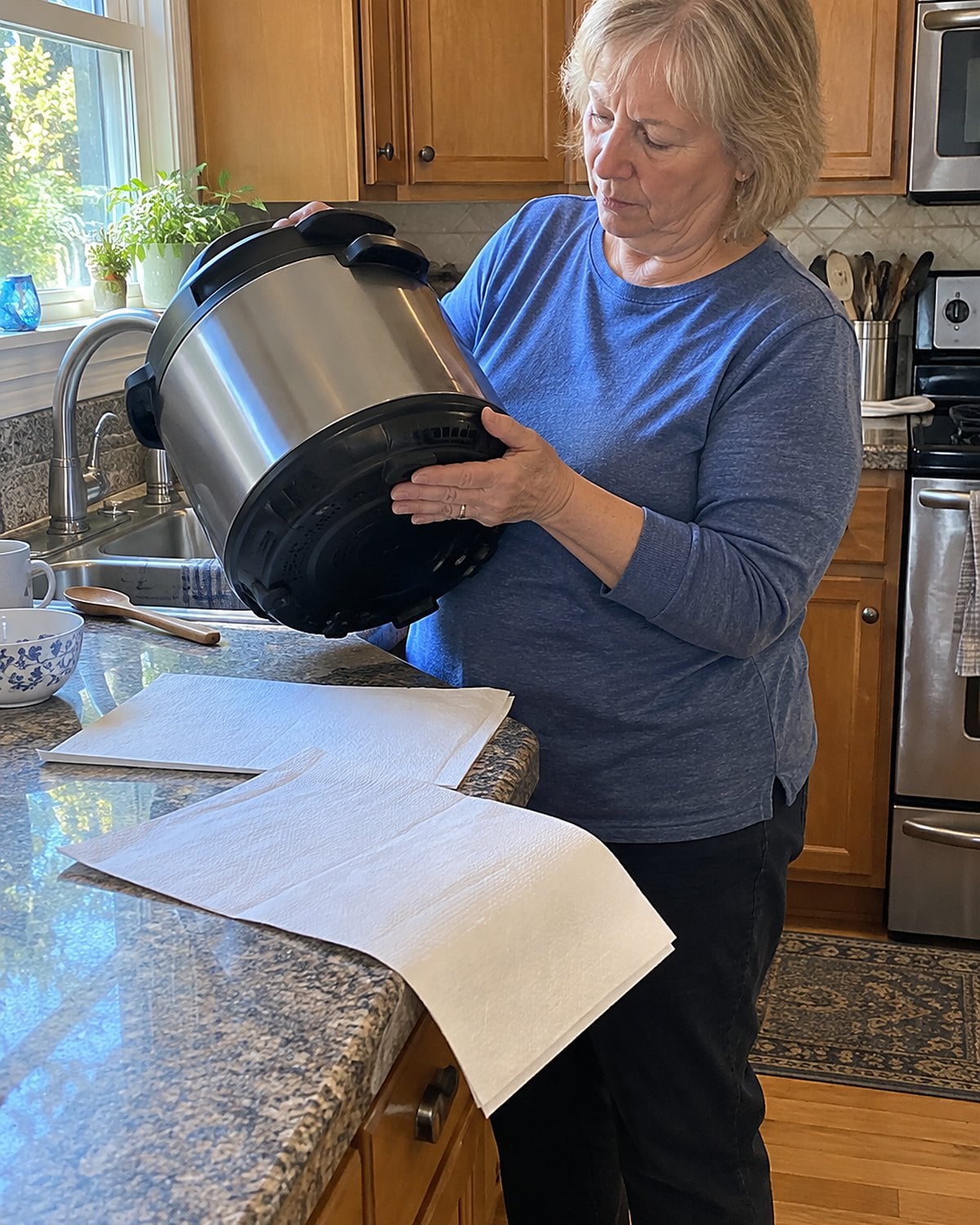
The Instant Pot starts beeping in a way you don’t remember. You pull open the drawer and find three appliance booklets, none from the model on your counter. One belongs to a coffee maker you gave away.
Find the model number on each appliance you still own. It’s printed on a label or plate, often underneath or on the back. Match each manual to that number, not to a similar-looking photo. Keep the booklet with the appliance information, or save the manufacturer’s manual on your phone.
Before you recycle anything, try finding the instructions you’d need at supper. Look for the cooking chart, cleaning directions, and troubleshooting pages. If the booklet is missing those pages, check the manufacturer’s site using the model number. A manual for a neighboring model isn’t a substitute when you’re sorting out an unfamiliar alert.
Give the booklets you keep one home. A labeled folder on a pantry shelf beats a stack wedged beneath the drawer tray. If you prefer the paper copy, slip a note inside with the model number facing out. Then you can pull the right one without turning every booklet over.
Recycle manuals for appliances that left the house. That beep at supper time is a poor moment to guess.
#9 Old receipts with faded ink
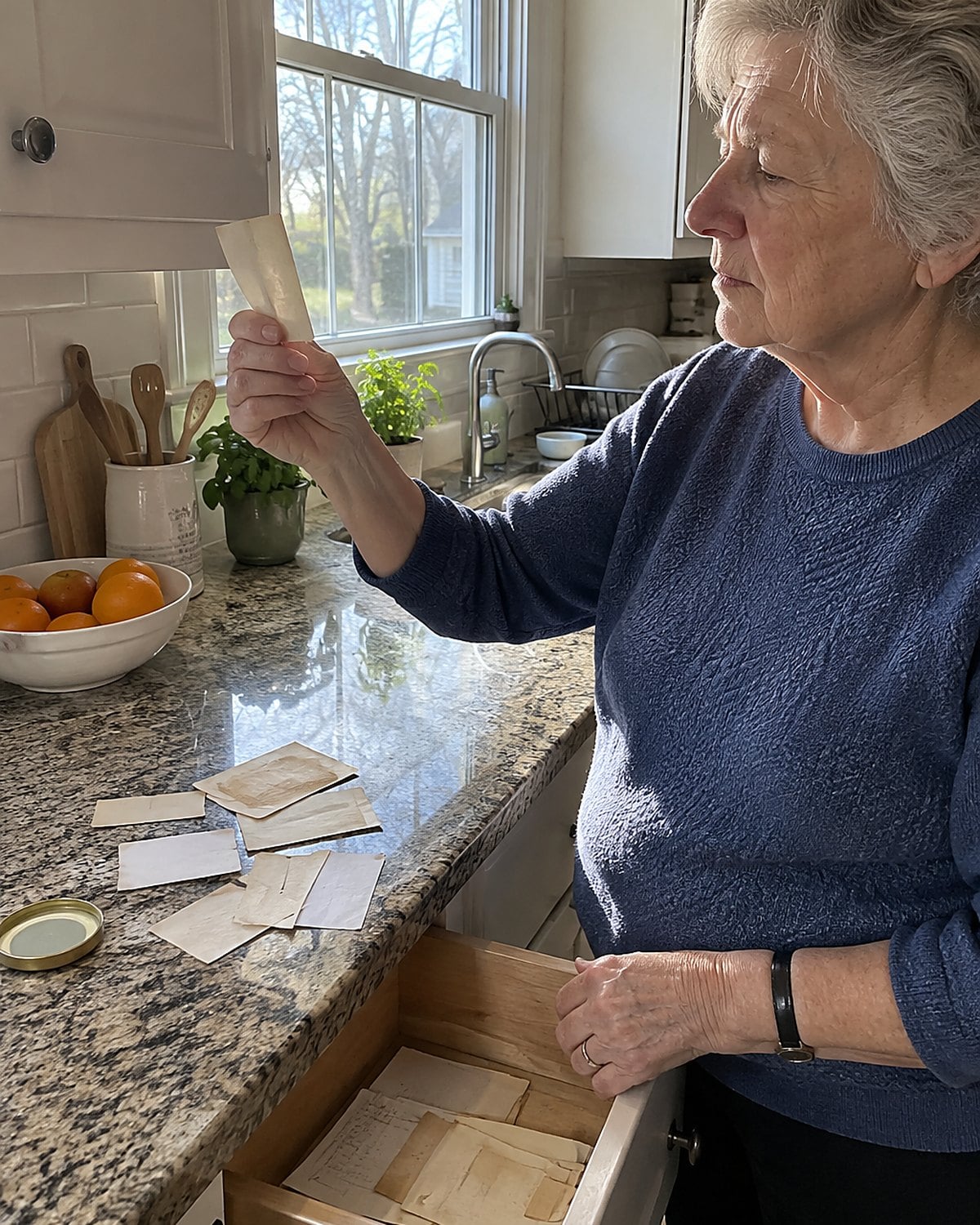
The receipt from the hardware store has a date and a long list of purchases. The grocery receipt has turned pale where it sat against the drawer liner. Neither will help much if you can’t read it.
Put receipts you need for returns or warranties with the matching item or household records. For a purchase you must document, make a clear copy while the ink is legible. Shred receipts that carry information you don’t want lying loose.
Then look at the rest. A receipt for last week’s bread doesn’t need to live beside your tape measure. Paper crowds the drawer without making the next errand easier. Give each slip a reason to stay, or let it leave with the recycling.
#8 A takeout menu for a closed restaurant
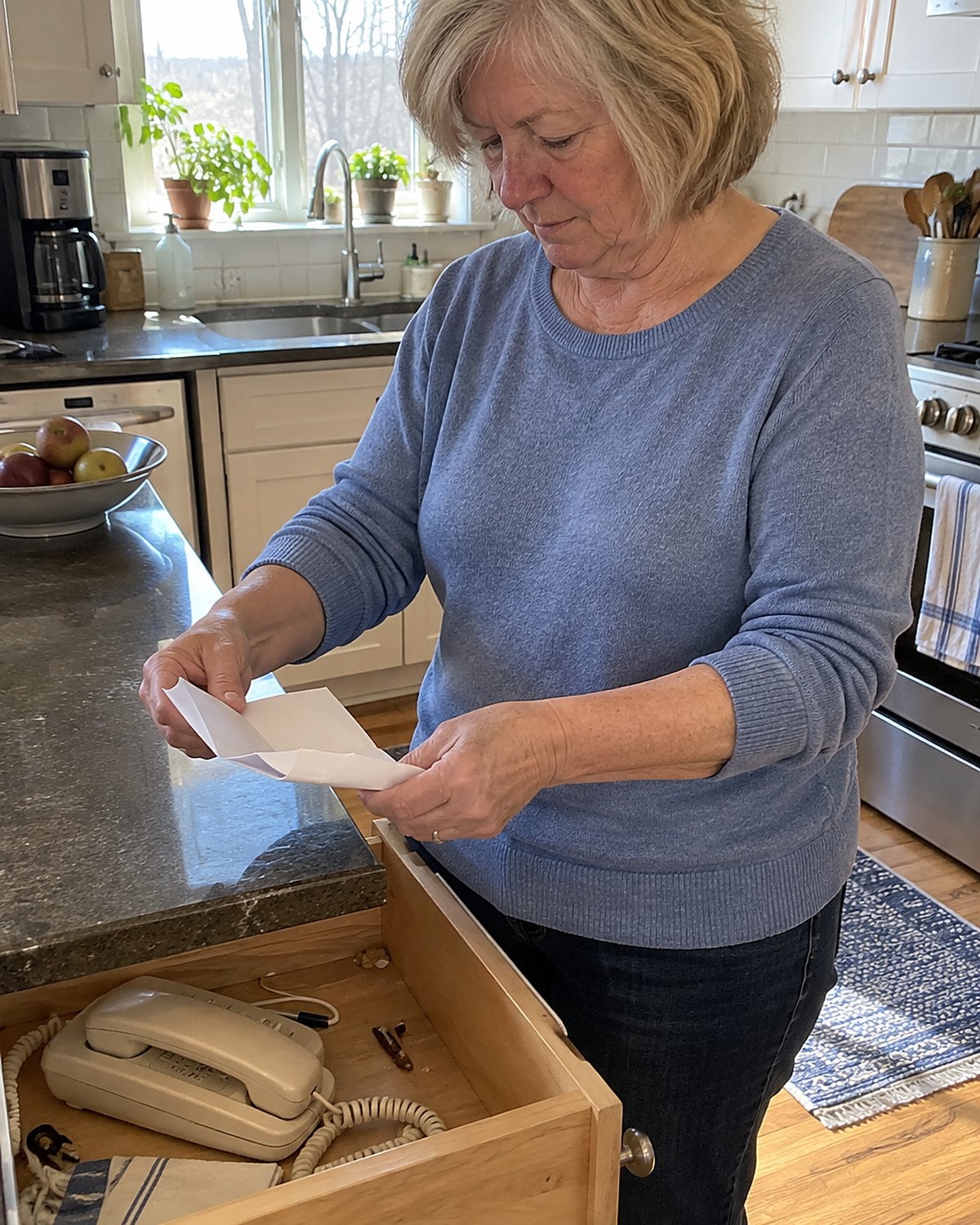
What’s that folded menu doing beside the phone? You used to read dishes aloud from it when you ordered. The restaurant has closed, but its menu still takes up space in the drawer.
Keep menus for places you still order from, and check the restaurant’s current menu before you place an order. Prices and dishes change. Recycle the rest, including duplicates.
If you keep a paper menu because it’s easier to read than your phone, put it where you make the call. Clip the ones you use together. Don’t make yourself search through coupons and old receipts just to find supper.
A closed restaurant’s menu is a memory. That’s a fair reason to keep it somewhere else, if it matters to you. It doesn’t need to sit between the scissors and the working pens.
#7 Measuring spoon that lost its ring
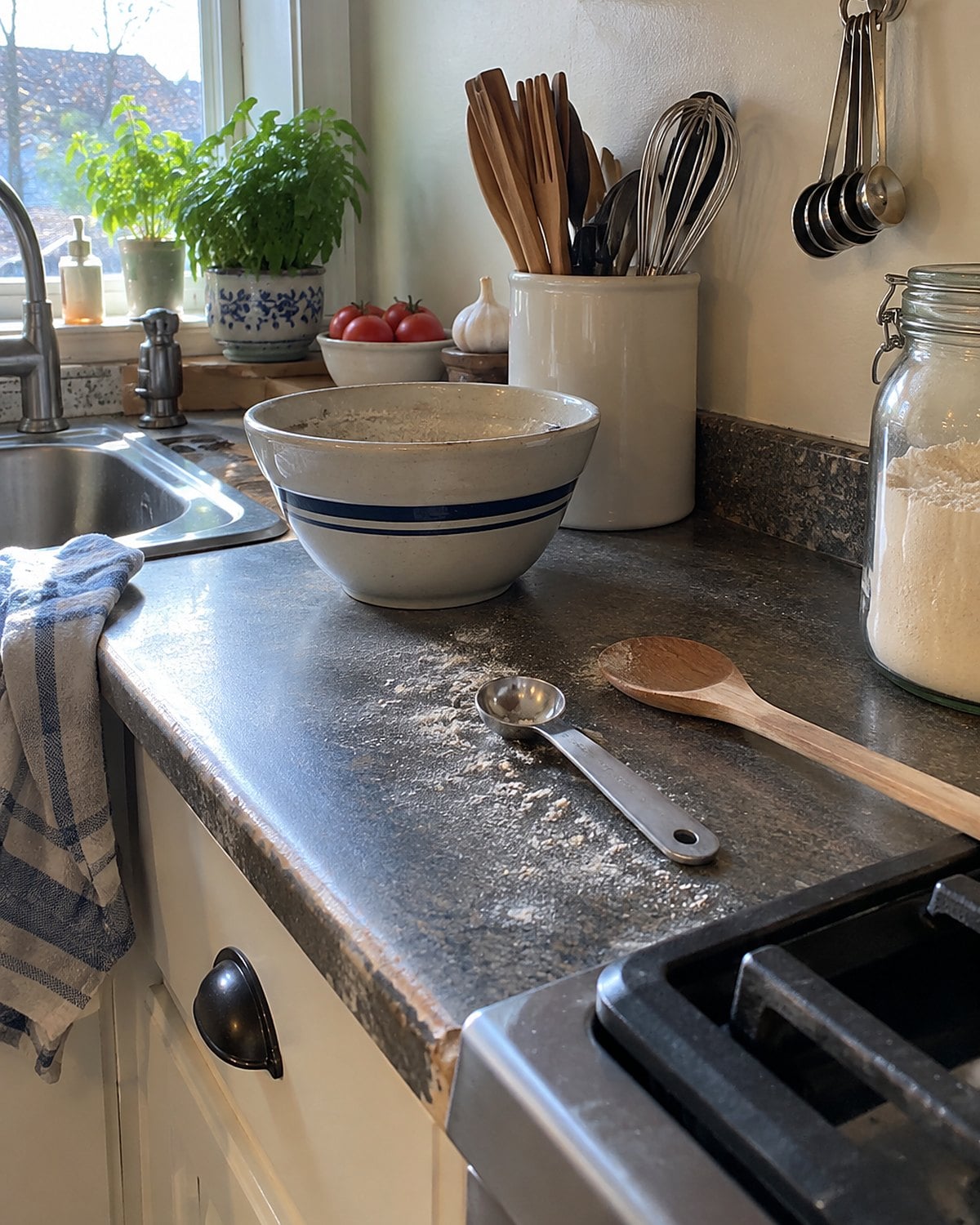
One spoon escaped the set and landed in the junk drawer. Now you rummage for it every time you need a small measure, while the rest hang together by the stove.
Wash the stray spoon and return it to the measuring cups. If its marking has worn off, compare it with a marked spoon before using it for baking. Flour, salt, and baking powder give you little room for guessing.
A spare spoon is handy for coffee or tasting a sauce, but give that spoon a place near the mugs or the stove. The drawer isn’t improved by holding tools you reach for while food is cooking. You’ll notice the difference when you’re standing over a pot and your hand goes straight to the right spot.
#6 Bent paper clips under the drawer liner
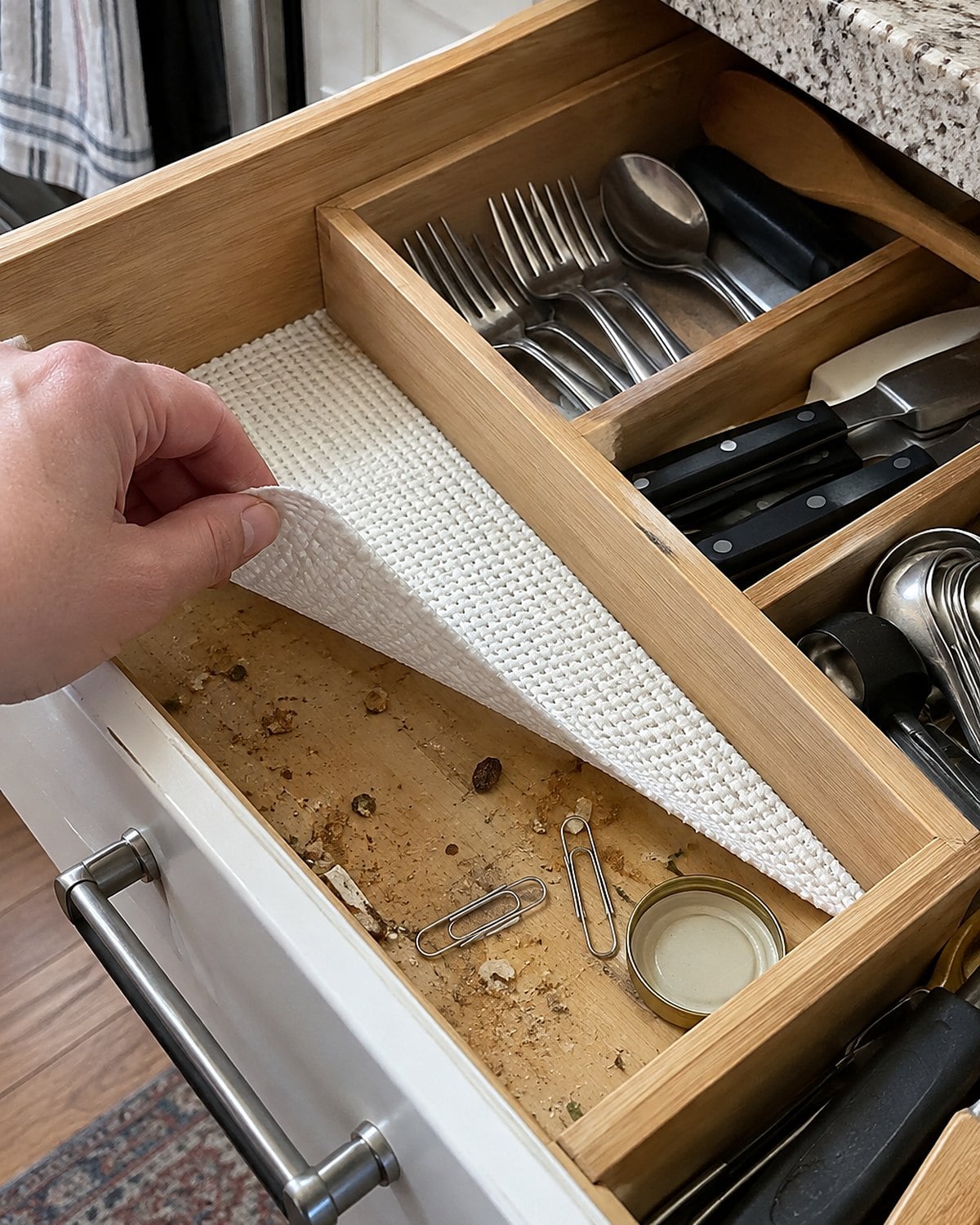
Lift the liner and you’ll find them: paper clips bent into hooks, little lengths of wire, and perhaps a staple that catches on the rag when you wipe the drawer.
Keep sound paper clips with stationery. Throw out bent ones that snag your skin or tear paper. Don’t use them to pin a food bag shut; an ordinary bag clip is easier to see and handle.
This is also a good time to clean the drawer itself. Take out the tray, tip crumbs into the trash, and wipe the bottom and sides. Let the drawer dry before you put the liner back. A damp corner under paper clutter is a poor home for anything you plan to touch while cooking.
When the drawer closes without grinding over a clip, you’ll hear the difference.
#5 The tiny screwdriver from a kit
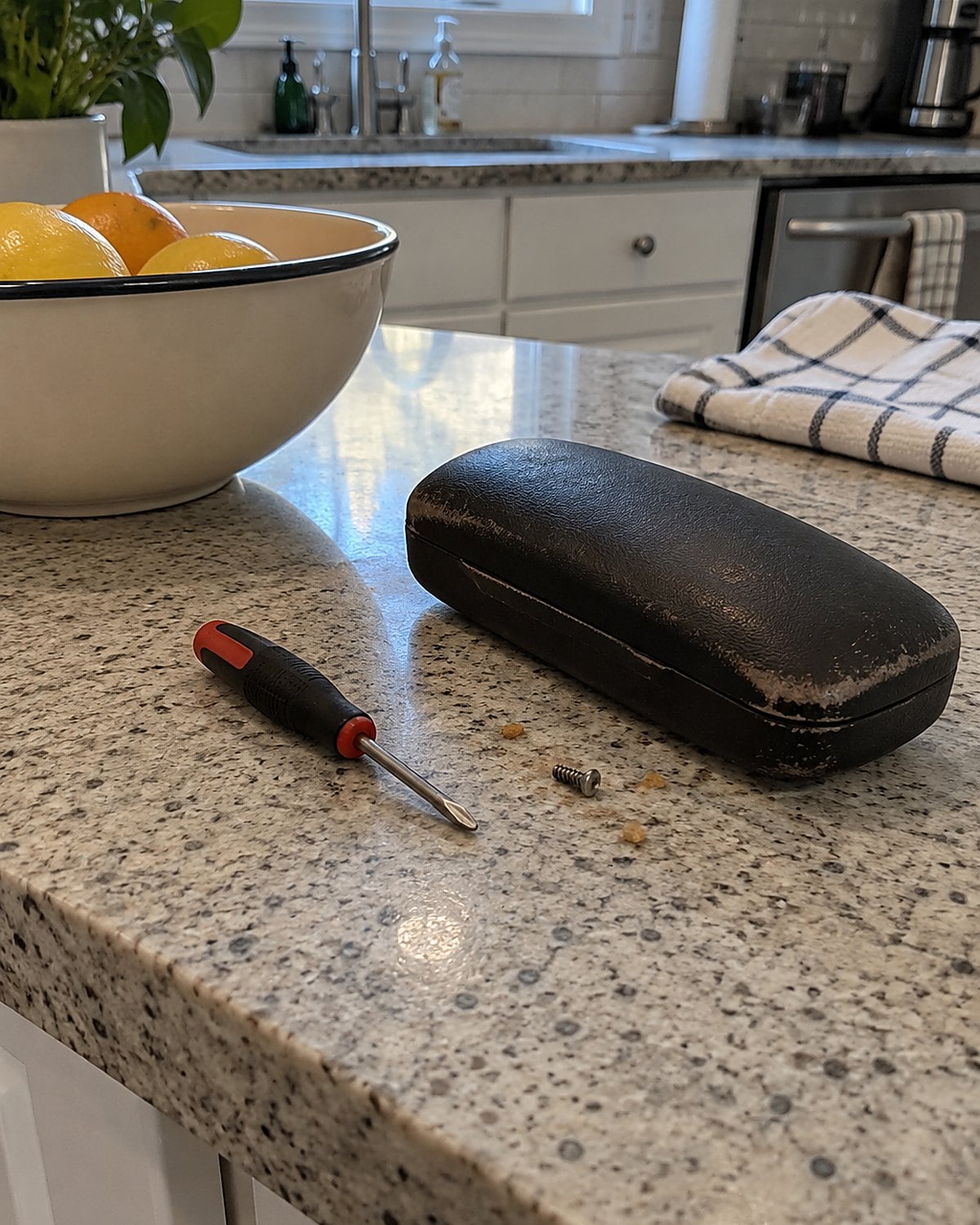
It came with a pair of glasses or a small household item. Now it lies among the pens, so thin you miss it until it pokes your fingertip.
If you use it for your glasses, put it with the glasses case. If it fits a cabinet knob or a battery cover you open, keep it with the household tools. Test the tip against the screw head before you need it. A poor fit slips and chews up the screw.
For a kitchen drawer, the useful tool is the one you can name a job for. A little screwdriver earns its place if a nearby item needs that exact tip and you know where to grab it. Otherwise, it belongs in the toolbox, where its neighbors do the same kind of work.
#4 The matchbook beside food packets
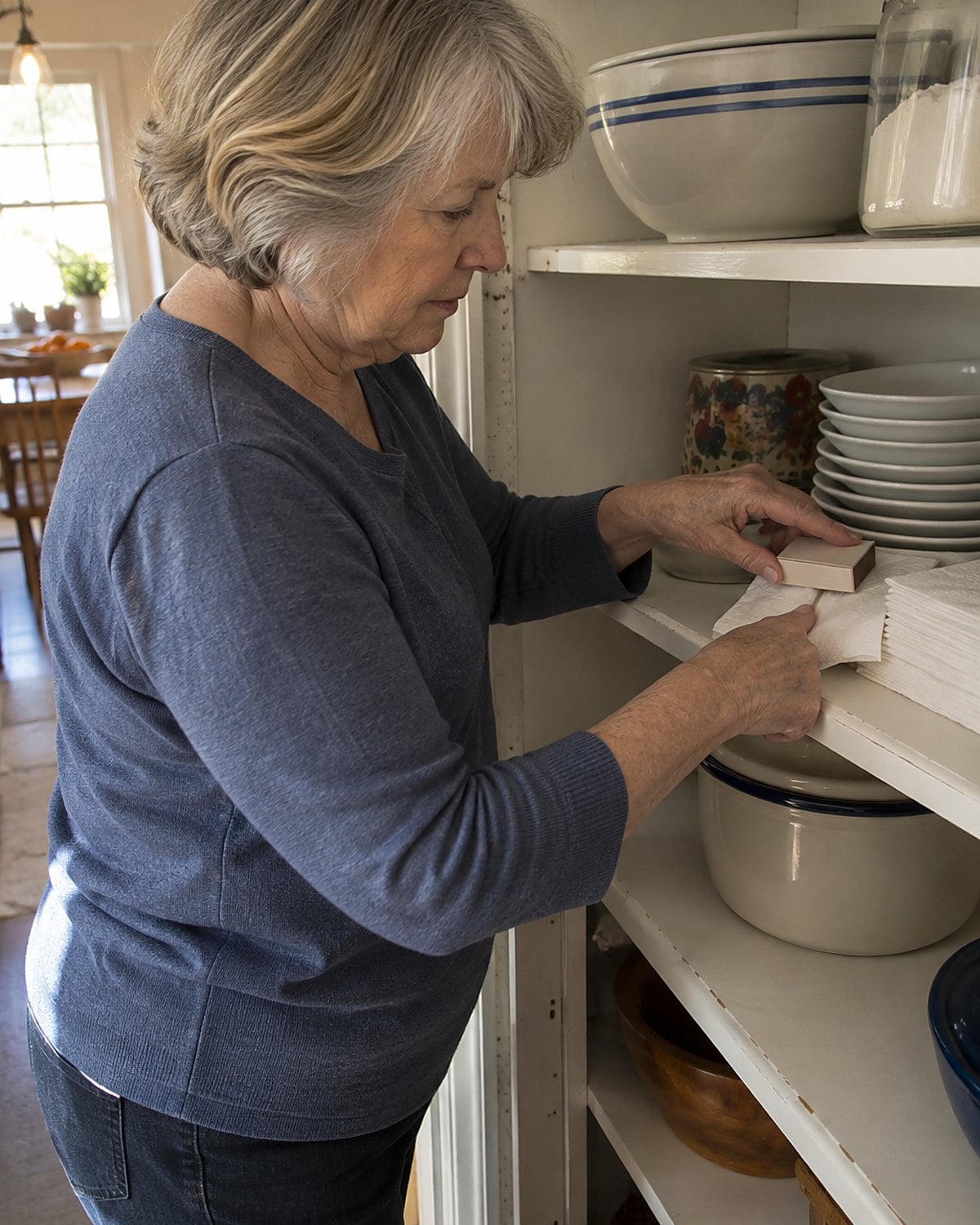
A matchbook left over from a restaurant sits against paper napkins and sauce packets. You move it aside when you look for batteries, then forget it again.
Put matches and lighters in a secure spot away from heat and children. Keep them out of the food drawer. If a matchbook is damp or damaged, don’t count on it when the power goes out. Check that you have a working flashlight where you can reach it, with fresh batteries stored separately.
The National Fire Protection Association has home fire guidance worth reading when you’re sorting where ignition sources live. In the kitchen, the immediate choice is plain: clear the matchbook away from loose paper and put it somewhere deliberate.
That drawer will still be full of small things. None of them needs an accidental spark.
#3 The good kitchen shears
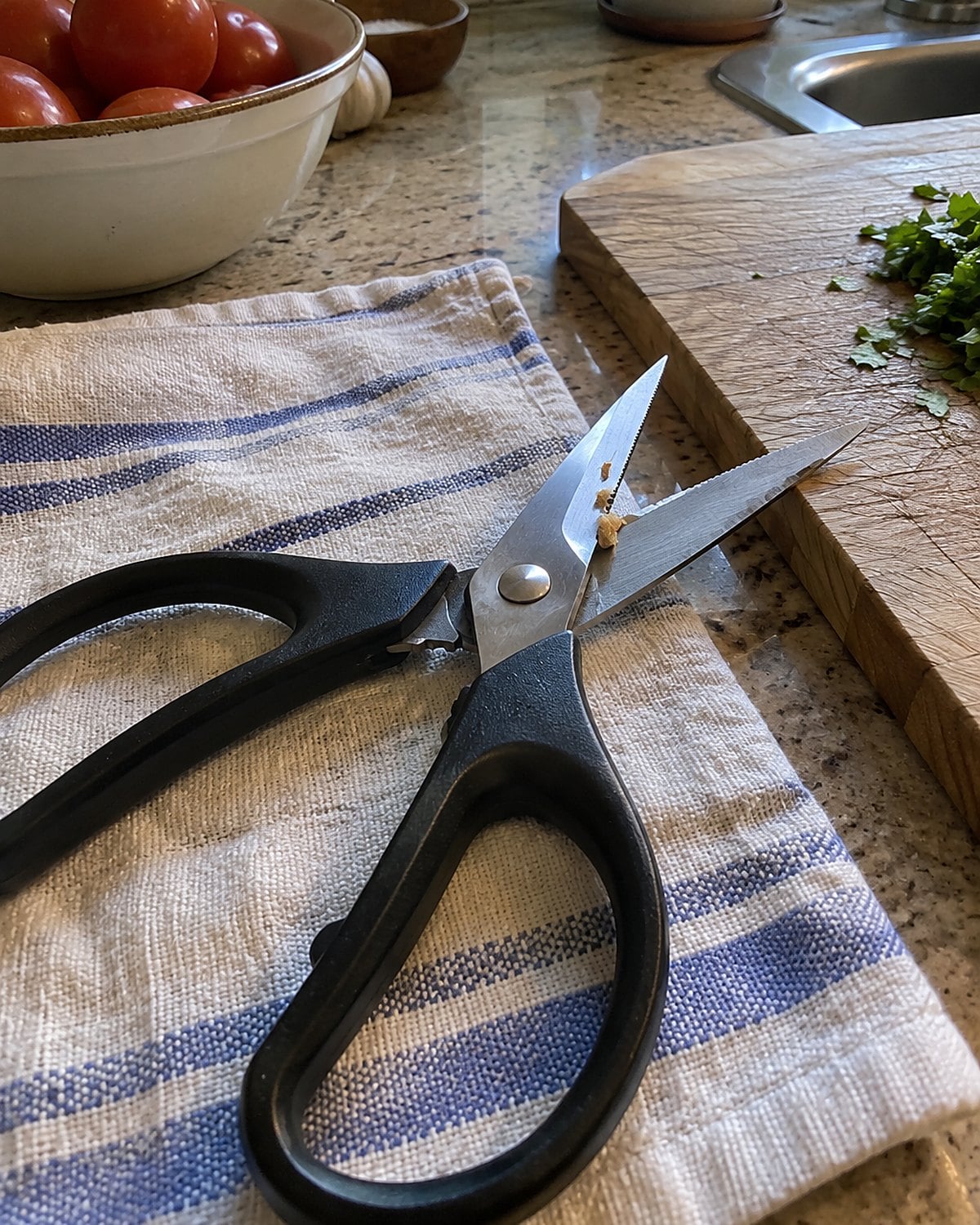
Here’s the first keeper. Kitchen shears cut open a stubborn bag, snip herbs into a bowl, and trim parchment that hangs over a baking pan. Their handles are easier to grab than the tiny scissors left from a sewing kit.
Give them a regular spot in the drawer and keep the blades clean. After cutting raw poultry or its packaging, wash the shears and anything the raw juices touched before using them on ready-to-eat food. The USDA’s food safety guidance is clear about keeping raw meat juices away from other food.
Check whether the blades come apart for washing. If they do, put them back together only when dry. If they don’t, open the blades and clean around the hinge with care.
Your shears should be easy to find with one hand. A drawer full of dead pens and loose forks makes that harder than it needs to be.
#2 A small roll of tape
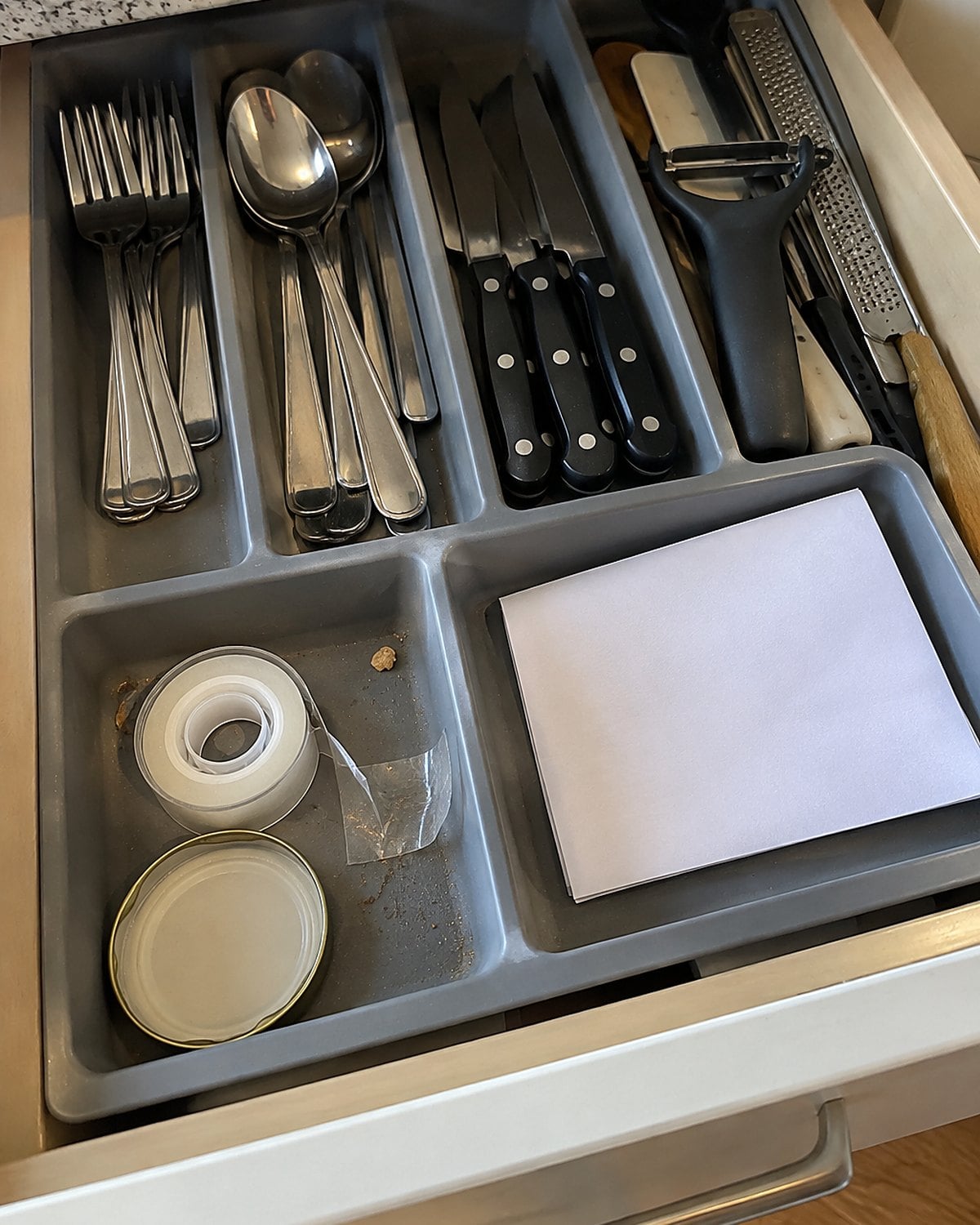
The second keeper handles jobs that would otherwise send you hunting through the house. It closes a torn envelope, secures a note to a cabinet, or holds a label on a storage bin.
Choose one roll that still sticks and fits the drawer. Keep it in a small cup or tray so its edge doesn’t collect lint. If the dispenser has a sharp cutting edge, turn that edge away from the place your hand lands.
Don’t ask ordinary desk tape to seal food bags or repair a leaking container. Use the closure made for the bag, and move food into a sound container when the old one fails.
You don’t need five half-used rolls. You need one you can find when the school note, grocery list, or freezer inventory needs to stay put long enough for someone to see it.
#1 A working instant-read thermometer

The third keeper earns the front corner of the drawer. An instant-read thermometer answers the question that a browned surface cannot: what’s happening in the center of the food?
Put the probe into the thickest part, away from bone and the pan. Wait for the reading to settle.
The USDA’s safe temperature chart sets the targets: 165°F for poultry and 160°F for ground meat. Whole cuts of beef and pork need 145°F, followed by a 3-minute rest.
Use it on the chicken breast that looks done at the edges but still needs checking in the middle. Check the meatloaf before you cut it for the two of you, or for everyone who turned up hungry on Sunday.
Wash the probe after each use. Then put the thermometer back where you’ll reach for it. A known temperature settles the dinner question faster than cutting into the food and trying to judge it by sight.
The bottom line
The drawer fills when small things arrive without a decision. Give each one a job and a place, or let it go.
The well-prepared version of you has working shears, tape, and a thermometer within reach. The rest of the drawer no longer hides them.
What’s the first thing your hand finds when you open yours?




Leave a Reply