

Before you throw out that pan of lumpy Thanksgiving gravy, give yourself another 30 seconds. With the right kitchen tool, you could have it smooth and ready to serve before anyone notices something went wrong.
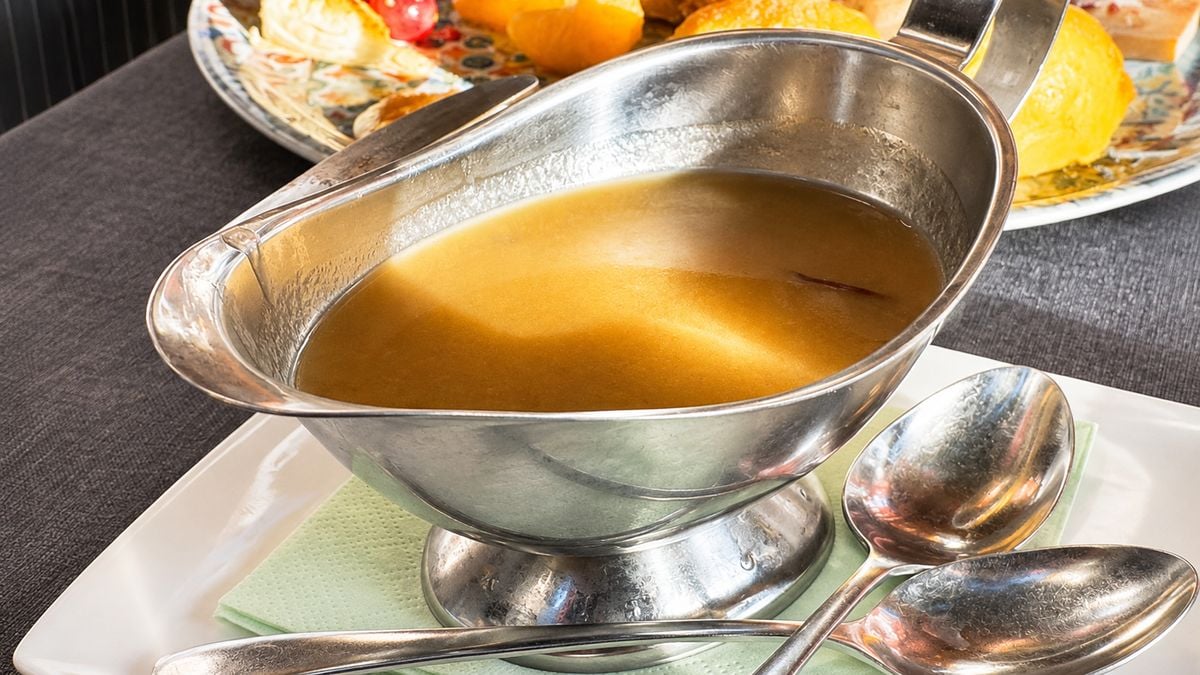
The turkey is resting, the mashed potatoes are ready, and everyone is waiting. You start adding stock to your roux, and suddenly, your gravy looks like oatmeal.
Don't panic. There are two easy ways to rescue it, and neither involves opening a jar of store-bought gravy and hiding the evidence.
The 30-Second Fix for Lumpy Gravy
An immersion blender is one of the quickest ways to rescue lumpy gravy.
“If the gravy is lumpy, a quick fix is to use an immersion blender or stick wand,” explains Michael Maddox of the Butterball Turkey Talk-Line.
Take the pan off the heat, submerge the blender head completely, and blend for approximately 20–30 seconds or until smooth. Keeping the blade submerged helps prevent hot gravy from splattering.
A countertop blender or food processor can also work if it's designed to handle hot liquids. Use a continuous liquefy or whip setting, if available, rather than repeatedly pulsing.
Follow the instructions for blending hot liquids, and avoid overblending.
No Blender? Grab a Strainer
If you don't own an immersion blender, there's another reliable solution:
A sieve, in this case a fine-mesh strainer, separates lumps from the liquid.
- Place the strainer over a clean, heatproof bowl.
- Carefully pour the gravy through it.
- Use a spoon or spatula to stir and gently press the smooth gravy through the mesh.
- Discard any stubborn lumps left behind.
Return the gravy to the saucepan and reheat gently if necessary.
It might mean washing one more kitchen utensil, but compared to the mountain of Thanksgiving dishes already waiting, what's one more?
The Real Mistake Behind Lumpy Gravy
Gravy becomes lumpy when starch begins to thicken before it's evenly distributed throughout the liquid.
The outside of a flour clump can thicken quickly, trapping dry flour inside. That's why some lumps stubbornly refuse to disappear, no matter how enthusiastically you stir.
A traditional culinary rule recommends combining hot roux with cool liquid or cool roux with hot liquid. However, both warm and cool stock can work successfully.
Extremely cold stock can cause the fat in a hot roux to solidify temporarily, while very hot liquid can cause starch to thicken before it's evenly dispersed.
There is no universal temperature difference that guarantees lump-free gravy. The most important step is adding liquid gradually while whisking continuously, allowing the starch to disperse evenly before it thickens.
How to Prevent Lumps When Making Gravy From Pan Drippings
When making traditional Thanksgiving gravy, warm stock and a little patience can save considerable frustration.
- Separate the fat from the turkey drippings.
- Cook the fat and flour together to form a smooth roux.
- Gradually add warm, rather than boiling, stock and the reserved turkey juices.
- Whisk continuously, incorporating each addition before adding more.
- Bring the gravy to a gentle simmer and cook until thickened and the raw flour taste disappears.
Use an actual whisk rather than a wooden spoon. A whisk helps distribute the flour evenly before stubborn lumps develop.
The gravy may initially resemble a thick paste. That's normal. Keep adding liquid gradually while whisking.
Roux vs. Cornstarch Slurry: What's the Difference?
Both methods thicken gravy, but they produce slightly different results.
A roux is a cooked mixture of fat and flour. It generally produces a more opaque gravy with a creamy consistency.
A cornstarch slurry combines cornstarch with cold water before being gradually whisked into hot liquid. It produces a glossier gravy that can become more gelatinous, particularly if you add too much.
Cornstarch and flour have different thickening strengths, so don't substitute them in equal quantities.
And never sprinkle dry cornstarch directly into hot gravy unless you're particularly fond of making more lumps.
Try Whisking Off the Heat First
If your gravy contains only a few small, soft lumps, you might not need a blender or strainer.
Remove the saucepan from the heat and whisk vigorously for a few minutes. The residual warmth can sometimes help soften small clumps as you incorporate them.
If the lumps refuse to cooperate, move on to blending or straining.
The Bottom Line
The secret to smooth gravy is gradually adding warm stock to your roux while whisking continuously. Temperature matters, but evenly distributing the starch before it thickens is more important.
If lumps appear, an immersion blender can smooth them out in approximately 20–30 seconds. A fine-mesh strainer is a reliable backup.
Still having Thanksgiving trouble? The Butterball Turkey Talk-Line experts offer seasonal help for holiday cooks.
Thanksgiving is stressful enough without arguing with a saucepan.

Leave a Reply