

"Freezer burn does not make food unsafe, merely dry in spots." That's the USDA's reassuring answer to those strange gray patches on frozen meat.
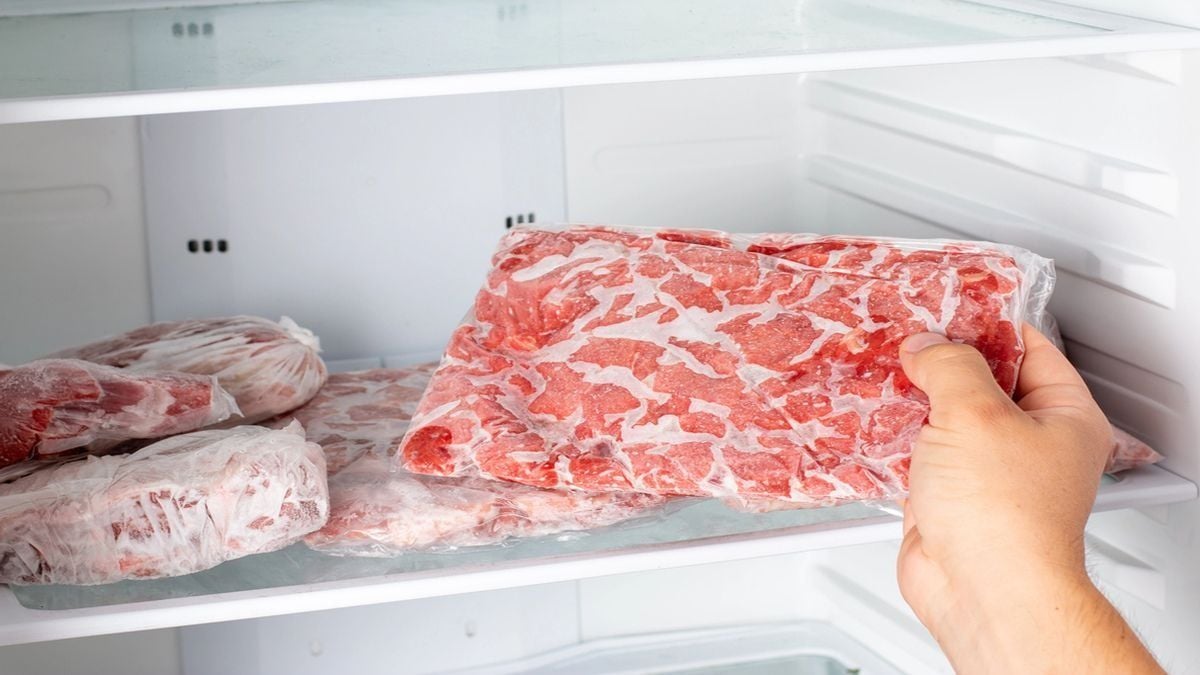
Freezer burn can ruin flavor and leave meat dry and tough, but it doesn't automatically mean dinner belongs in the trash. You can trim away damaged spots, and preventing most freezer burn is surprisingly inexpensive.
The secret? Keep air away from your food and your freezer at 0°F!
What Freezer Burn Actually Does to Meat
Ever pulled a steak from the freezer and wondered why it looks like it's been left in the desert?
According to Iowa State University Extension, freezer burn happens when tiny ice crystals on food turn directly into vapor without becoming liquid first. Scientists call this sublimation.
Poor wrapping allows moisture to escape and exposes meat to oxygen, causing dry, discolored patches and unpleasant changes in flavor.
The USDA's Freezing and Food Safety guidance explains that you can trim freezer-burned portions away before or after cooking.
Is Freezer-Burned Meat Safe to Eat?
Yes, provided the meat was handled safely and remained properly frozen.
The USDA explains that food stored continuously at 0°F remains safe indefinitely. Freezing stops bacteria from multiplying while food stays frozen, although it doesn't necessarily kill harmful microorganisms.
Freezer burn itself doesn't cause foodborne illness. However, unsafe defrosting can make meat dangerous, whether freezer burn is present or not.
If your meat was handled safely and kept frozen, those dry patches are primarily a quality problem. Trim them away and use the remaining meat.
Severely damaged meat might still taste unpleasant, but that's a quality issue rather than proof of unsafe food.
How Long Does Frozen Meat Keep Its Best Quality?
Freezing keeps food safe much longer than many people realize, but flavor and texture gradually decline.
According to FoodSafety.gov's Cold Food Storage Chart, foods held continuously at 0°F (-18°C) or below remain safe indefinitely.
The guidelines for freezer storage are for quality only.
Here are the recommended storage windows:
| Frozen food | Best quality |
| Ground beef, other ground meats, and ground poultry | 3–4 months |
| Cooked leftover meat or poultry | 2–6 months |
| Vegetable or meat soups and stews | 2–3 months |
These aren't expiration dates. They're guidelines for enjoying food before noticeable quality changes develop.
Why Freezer Burn Gets Worse Over Time
Air exposure is one problem. Temperature fluctuations are another.
Iowa State University Extension explains that freezer burn changes food's physical and chemical characteristics, affecting color, flavor, and texture.
Research discussed in The Conversation also describes ice recrystallization. When temperatures fluctuate, some ice can partially melt and refreeze into larger crystals, damaging the food's structure.
That's why frequently opening the freezer or allowing temperatures to fluctuate can make quality problems worse.
Proper wrapping and consistent freezing conditions help protect your groceries.
The Cheap Fix: Keep Air Away From Your Meat
Here's where a small purchase can save an expensive package of steaks:
The USDA says meat can be frozen in its original supermarket packaging. However, that wrapping allows air through, making it less suitable for longer storage.
For better protection:
- Wrap meat tightly. Use freezer-safe wrapping to reduce air exposure.
- Add a freezer bag. Place wrapped portions inside a heavy-duty freezer bag.
- Remove excess air. Gently press out as much air as possible before sealing.
- Seal securely. Check that the bag closes completely.
- Label everything. Write the contents and freezing date on each package.
Dollar Tree lists Sure Fresh Heavy Duty Freezer Bags for $1.50.
It's a little more than the headline's $1, but still a budget-friendly way to protect several portions of meat.
And if a package accidentally tears or opens in the freezer? Don't panic. USDA guidance says the food remains safe if it was properly handled and kept frozen. Simply rewrap it securely.
Freezer Paper vs. Vacuum Sealing
Freezer paper offers another protective barrier.
Plastic-coated freezer paper, such as Reynolds Kitchens freezer paper, is sold in rolls that typically cost several dollars rather than $1. One roll can wrap multiple portions, making it useful for stocking up.
For frequent bulk buyers, vacuum sealing offers even better protection.
By removing nearly all the air around food, vacuum sealing is one of the most effective ways to prevent freezer burn.
Don't own a vacuum sealer? The Kitchn suggests using a straw to draw excess air from a bag or trying the water-displacement method.
Both can help remove air, although neither guarantees the same seal as a vacuum machine.
The Bottom Line
Freezer burn affects quality, not safety. If meat has been handled safely and remained properly frozen, you can trim away dry patches before or after cooking instead of throwing everything away.
Keep your freezer at 0°F, wrap meat tightly, and remove as much air as possible. An inexpensive freezer bag can make a real difference.
Remember, freezer storage timelines are about best quality. Food kept continuously at 0°F or below remains safe indefinitely.
A little better wrapping today could save you from discovering another sad-looking steak six months from now.
Leave a Reply