

Your refrigerator should stay at 40°F or below, according to the USDA and FDA. But Consumer Reports recommends an average of 37°F to keep groceries fresh without accidentally freezing your lettuce.
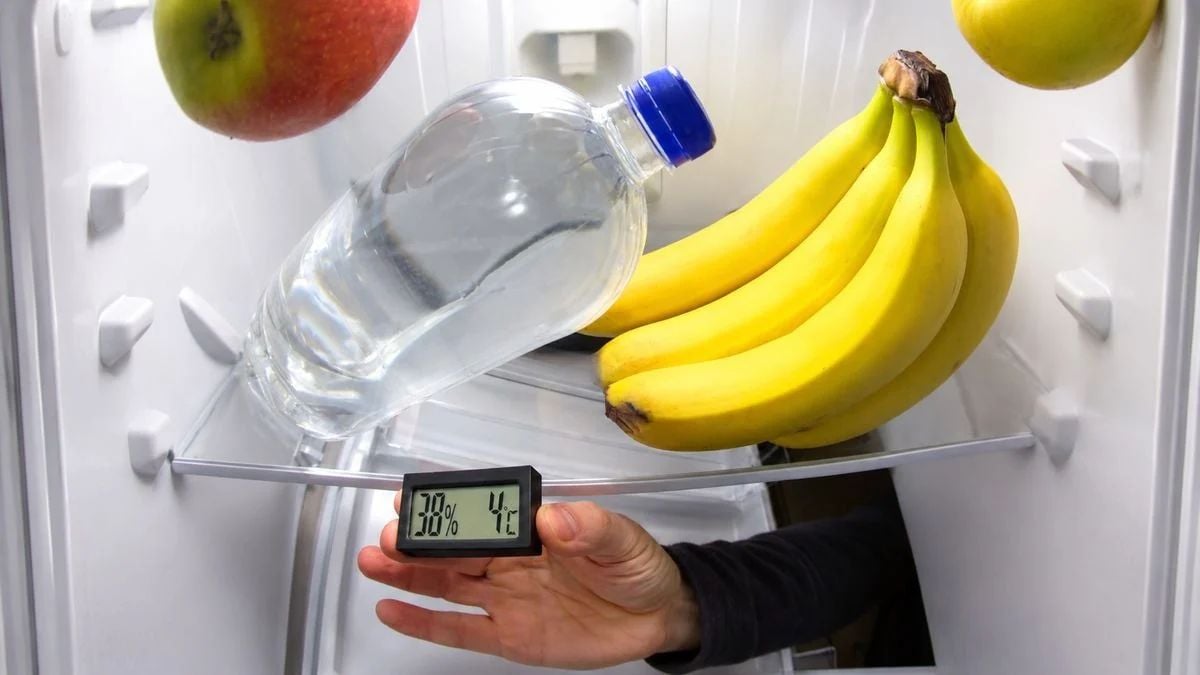
Plenty of home refrigerators run warmer than 40°F, and the door is often the warmest spot. So that milk you've always placed in the door for years? It might be spoiling faster than necessary.
The Two Refrigerator Temperatures You Need to Know
The USDA Food Safety and Inspection Service recommends refrigeration at 40°F or below to slow bacterial growth and protect perishable foods.
That's the safety ceiling, not necessarily the best temperature for freshness.
According to Consumer Reports, the ideal average is 37°F. It's cold enough to discourage bacterial growth without causing ice crystals to form on fresh produce.
Those few degrees can matter when you're trying to stretch groceries until your next shopping trip.
Why So Many Home Refrigerators Run Too Warm
You might assume your fridge is cold enough because everything feels chilled. Unfortunately, your fingers aren't thermometers!
The National Grocers Association reports that as many as 43% of home refrigerators have been found operating above 40°F, entering the food-safety danger zone.
Temperature also varies between shelves.
A peer-reviewed study of 645 household refrigerators by Fur-Chi Chen and colleagues recorded these average temperatures:
- Top shelf: 35.5°F
- Bottom shelf: 38.0°F
- Refrigerator door: 41.3°F
Using its 42.8°F (6°C) cutoff, the study classified 70% of refrigerators as too warm. More than 66% of refrigerator door measurements exceeded 40°F.
That makes the door a poor place for milk, even though many refrigerators conveniently provide space for cartons there.
Why a Few Degrees Can Make Milk Last Longer
Here's where refrigerator temperature can save you money:
A milk-spoilage study found a dramatic difference between two storage temperatures. After 21 days:
- At 42.8°F, 66% of milk was predicted to spoil.
- At 39.2°F, only 9% was predicted to spoil.
That's a substantial difference from lowering the temperature by just 3.6°F.
Separately, research summarized by Healthline found that reducing refrigerator temperature from 43°F to 39°F extended milk's shelf life by an additional nine days.
Another peer-reviewed milk shelf-life study reported:
| Storage temperature | Milk shelf life |
| 41°F (5°C) | 30 days |
| 44.6°F (7°C) | 24 days |
| 50°F (10°C) | 12 days |
These findings reflect specific research conditions, not guaranteed storage times for every carton.
Still, they show why a few degrees can make the difference between finishing your milk and pouring it down the drain.
How to Check Your Refrigerator Temperature Properly
The USDA recommends keeping an appliance thermometer inside your refrigerator rather than trusting the temperature dial alone.
Here's how to check yours:
- Get an appliance thermometer. A basic refrigerator thermometer works fine.
- Place it correctly. Position it in the center of the middle shelf, not in the door.
- Wait 24 hours. Let it sit long enough to reflect normal refrigerator conditions.
- Check the temperature. Look for a reading between 35°F and 40°F, ideally around 37°F.
- Adjust if necessary. Lower the setting slightly, wait another 24 hours, and check again.
If your middle shelf reads closer to 40°F than 37°F, adjusting the temperature slightly lower may help groceries stay fresh longer. How much longer depends on the food and how it's stored, but even a few degrees can make a difference, especially for milk and other perishables.
Keep milk on an interior shelf rather than in the warmer door. Store raw meat securely on the bottom shelf to prevent drips onto other foods.
The Bigger Problem: Refrigerators Often Hover Near the Limit
This isn't just an American household problem.
A global review of household refrigerator temperatures found an average of approximately 5.3°C (41.5°F), slightly above the 0–5°C (32–41°F) range used in that analysis.
That average also exceeds the stricter US recommendation of 40°F.
Every time you open the refrigerator, warmer air enters. Frequent openings, overcrowded shelves, and poor airflow can make maintaining consistent temperatures more difficult.
That's why checking the actual temperature matters more than assuming the dial is correct.
The Bottom Line
You don't necessarily need a new refrigerator to help your groceries last longer. Sometimes, a small temperature adjustment is enough.
Keep your refrigerator at 40°F or below, ideally averaging 37°F. Place an appliance thermometer in the center of the middle shelf, wait 24 hours, and confirm it reads between 35°F and 40°F.
And move that milk out of the door. It's a simple change that might save you from throwing away another half-full carton.


Leave a Reply