

Dishwashers can reach around 158°F (70°C), and their detergents are often highly alkaline, with a pH of roughly 10–12. Add powerful water sprays, and you've got a cleaning combination that can be surprisingly rough on certain kitchen tools.
After dinner, it's tempting to throw everything in and call it a night. But that shortcut can leave you with rusty skillets, dull knives, and wooden spoons that have seen better days. Here are five things worth washing by hand instead:
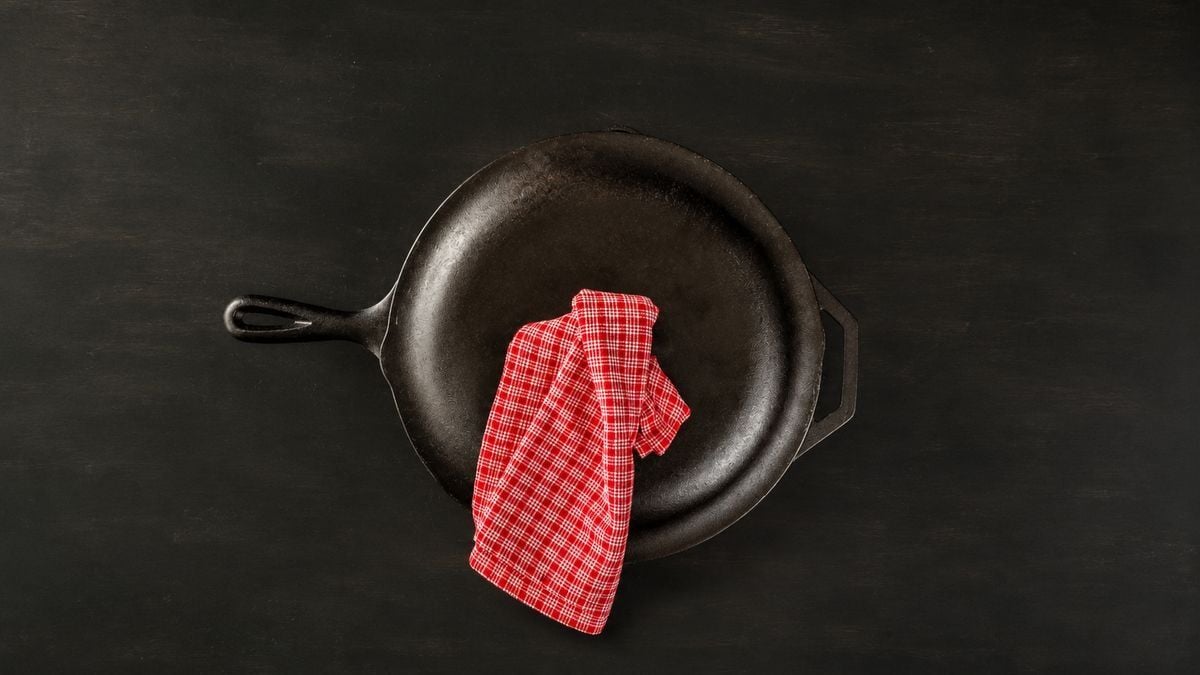
1. Cast Iron Skillets: Years of Seasoning Down the Drain
Whirlpool Corporation's Institute of Home Sciences dishwasher expert Lucinda Ottusch says, “Cast iron should NEVER go in the dishwasher.”
Seasoning protects iron from moisture and rust. Dishwasher detergent can strip it away.
Alkaline detergent (pH 10–12) and hot water near 158°F attack oils. Alkalinity can hydrolyze triglyceride bonds in fats; cured seasoning is more complex, but harsh washing still damages its protective layer.
Exposed iron may rust and shed microscopic particles as corrosion develops.
Whirlpool's dishwasher-care guidance explains why cast iron belongs outside the machine.
Do instead: Hand-wash your cast iron to protect its seasoning from harsh detergents and heat. That pan could outlive several dishwashers.
2. Nonstick Pans: The Nightly Shortcut That Adds Up
The easy-clean nonstick skillet is tempting to load after dinner.
But repeated exposure to hot water and strong detergents can wear down coatings over time. Knocking against other dishes doesn't help either. As Whirlpool advises, check whether the manufacturer specifically approves dishwasher cleaning.
PTFE coatings can begin degrading above approximately 500°F (260°C), when polymer chains break apart and may release chemical compounds.
Dishwashers run nowhere near that hot. Here, the concern is gradual cleaning-related wear, not high-temperature PTFE decomposition.
Do instead: If the maker doesn't explicitly say dishwasher-safe, hand-wash with mild soap and a soft sponge. It's cheaper than replacing a perfectly good pan.
3. Wooden Spoons: Cracks Aren't Part of the Recipe
That old wooden spoon has probably stirred more dinners than you can count. Don't send it through a hot, forceful wash cycle.
In The Kitchn's dishwasher experiment, hot water and detergent stripped natural oils from a wooden spoon, leaving it dry and no longer smooth.
Repeated moisture, heat, and water pressure can eventually warp or crack wood. Cracks can trap food and moisture, creating places for bacteria to grow.
Do instead: Hand-wash wooden spoons and dry them thoroughly. Retire deeply cracked utensils. Nobody asked for splinters with their soup.
4. Sharp Kitchen Knives: Save the Edge
A good knife belongs on the cutting board, not rattling beside the dinner plates.
Dishwasher heat, detergent, and friction dull edges, encourage corrosion, and damage handles. Loose blades also endanger whoever unloads them.
Whirlpool recommends hand-washing sharp knives to preserve their condition and avoid unnecessary damage.
Do instead: Wash knives individually, keep fingers clear of the blade, and dry them promptly. Your favorite knife deserves better than a dishwasher obstacle course.
5. Insulated Tumblers: When Cold Drinks Stop Staying Cold
Ever wondered why a tumbler suddenly struggles to keep ice from melting?
Vacuum-insulated tumblers rely on a sealed space between two walls. If dishwasher heat compromises that construction, the vacuum can be lost, and insulation suffers.
Heat-related expansion and stress may contribute to seal failure in vulnerable designs. Strong detergents can also wear down finishes and damage lid gaskets over time.
Some manufacturers approve dishwasher use.
Do instead: Unless yours is labeled dishwasher-safe, hand-wash the tumbler, lid, and seals. Don't gamble your morning coffee on a guess.
Bonus: Check Your Pressure Cooker Lid
Ottusch also warns that dishwasher cleaning can leave food particles and detergent residue lodged in pressure cooker safety valves. Check your model's instructions as some lids have dishwasher-safe components, but valves and seals need particular care.
The Simple Rule for Tonight
If your nonstick pan isn't explicitly labeled dishwasher-safe, leave it out. And remember that dishwasher heat around 158°F, alkaline detergent around pH 10–12, and forceful spray can be tough on cookware.
Hand-washing protects seasoning, coatings, knife edges, wood oils, and tumbler seals. That's cheaper than replacing cookware.


Leave a Reply